
Zoom the image with the mouse
World Cup Hosta - 1 Gallon
SKU:
2154550
UPC:
014949447390
$14.99
- 2018 American Hosta Growers' Association Hosta of the Year, recognized for its exceptional foliage, bold garden presence, and outstanding overall performance.
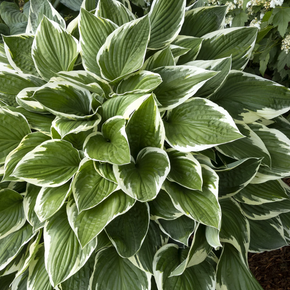
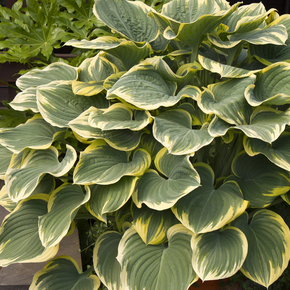
- Striking bright gold, deeply cupped and heavily corrugated oval leaves are held upright at a 45-degree angle, revealing a contrasting pale, almost white underside for a dramatic two-tone effect.
- Tall scapes carry pale purple tubular flowers in late June through mid-summer, attracting hummingbirds, native bees, and butterflies to the shade garden.
- A very large, low-maintenance herbaceous perennial that is resistant to verticillium wilt, making it a reliable and long-lived choice for woodland gardens, shaded borders, and containers.
Hosta 'World Cup' is an award-winning, very large shade perennial that commands immediate attention in any garden setting with its extraordinarily bold, bright golden-yellow foliage. The thick, heavily corrugated and deeply cupped oval leaves are held nearly upright on sturdy stems, creating a vase-shaped mound that gracefully displays the leaves' contrasting pale, almost luminous undersides — an effect that is uniquely eye-catching even from a distance. A garden hybrid selected by Doug Beilstein and Mark Zilis as a cross between 'Komodo Dragon' and 'Super Bowl', 'World Cup' inherits exceptional substance and vigor from its impressive parentage. At maturity it forms a majestic clump approximately 20 to 24 inches tall and up to 43 to 48 inches wide, making it an outstanding specimen, focal point, or large-scale ground cover for shaded landscapes. In late June through mid-summer, tall flower scapes reaching 24 to 36 inches rise well above the foliage and bear delicate pale purple tubular blooms that attract hummingbirds, honey bees, and butterflies. Perfectly at home in partial shade to full shade and adaptable across a wide hardiness range from USDA Zones 3 to 9, Hosta 'World Cup' thrives with consistent moisture, fertile well-drained soil, and minimal maintenance — making it a standout performer for Southern Oregon and Northern California shade gardens alike.
Plant Description
Hosta 'World Cup' is a very large, herbaceous perennial renowned for its dramatically cupped and corrugated bright gold foliage. Each thick, oval-to-heart-shaped leaf can reach approximately 14 inches long by 10 inches wide, and is held at a 45-degree upright angle on sturdy stems, forming an elegant vase-shaped mound. The deeply ridged, puckered texture of the leaf surface gives the foliage a sculptural quality unlike most other hostas, while the pale, almost white leaf undersides become visible due to the plant's upright habit, adding a striking two-tone dimension. In late June to mid-summer, pale purple tubular flowers emerge on scapes that tower 24 to 36 inches above the foliage, providing a beautiful contrast against the luminous golden leaves. This cultivar is a registered hybrid (AHS Registry #6190, registered 2006) originating from a cross between Hosta 'Komodo Dragon' and Hosta 'Super Bowl', selected by Doug Beilstein and Mark Zilis. It was awarded the prestigious 2018 American Hosta Growers' Association Hosta of the Year honor.
Mature Size
| Characteristic | Measurement |
|---|---|
| Plant Height | 20 to 24 inches |
| Plant Spread | 36 to 48 inches |
| Individual Leaf Length | Approximately 14 inches |
| Individual Leaf Width | Approximately 10 inches |
| Flower Scape Height | 24 to 36 inches above foliage |
| Size Classification | Very Large |
| Growth Rate | Medium |
Hardiness Zones
Hosta 'World Cup' is a remarkably cold-hardy and heat-tolerant perennial suited to USDA Hardiness Zones 3a through 9b. This broad adaptability makes it an excellent choice for gardeners across a wide range of climates, from areas with cold winters and deep freezes to the milder conditions found throughout Southern Oregon and Northern California. As a true herbaceous perennial, it dies back to the crown each winter and re-emerges reliably from the base each spring. In warmer portions of its range, providing adequate afternoon shade and consistent moisture will ensure the best foliage color and plant health throughout the growing season.
Sunlight Requirements
Hosta 'World Cup' performs best in partial shade to full shade, making it an ideal candidate for spots that receive dappled light under trees, the shadow of a structure, or consistent filtered light throughout the day. It tolerates and actually benefits from cool morning sun, which can enhance the intensity of the golden foliage color, but requires protection from harsh afternoon sun, which will scorch the leaves and fade their vibrant gold tones. In hotter inland climates common to parts of Southern Oregon and Northern California, a position with morning sun and afternoon shade — or consistent dappled shade — is strongly recommended. The gold and chartreuse foliage tends to brighten and intensify slightly with more light exposure, as long as the plant is shielded from the hottest midday and afternoon rays.
Soil and pH Preferences
Hosta 'World Cup' is adaptable to a range of soil types and is not particularly fussy about soil pH, performing well in slightly acidic to neutral conditions (approximately pH 6.0 to 7.5). However, it thrives best in fertile, organically rich, well-drained soil that retains consistent moisture without becoming waterlogged. Amending planting areas with generous amounts of compost or aged organic matter will significantly improve both soil structure and moisture retention, benefiting long-term plant health. Avoid heavy clay soils with poor drainage, as standing water around the crown can lead to rot. In sandy or lean soils, incorporating compost at planting time and applying an annual top-dressing of organic mulch will help maintain the ideal growing environment. This variety shows notable resistance to verticillium wilt, a soil-borne fungal disease that can affect other hosta cultivars.
Watering Guide
Consistent, even moisture is key to keeping Hosta 'World Cup' looking its best throughout the growing season. The soil should be kept evenly moist but never waterlogged — allow the top inch or so of soil to begin to dry slightly between waterings, but do not let the plant dry out completely, especially during summer heat. Deep, infrequent watering is preferred over frequent shallow watering, as it encourages a deeper, more robust root system. Newly planted hostas require more attentive watering until they are fully established, typically through the first full growing season. Once established, 'World Cup' develops moderate drought tolerance, though prolonged dry periods will cause leaf edges to brown and may reduce the plant's vigor. Mulching around the plant helps retain soil moisture and moderate soil temperature. Avoid overhead watering in the evening, which can encourage foliar diseases; instead, water at the base of the plant in the morning.
Fertilizing
Hosta 'World Cup' is a relatively low-maintenance feeder that benefits from modest, well-timed fertilization. For the best foliage color and growth, apply a balanced, slow-release granular fertilizer (such as a 10-10-10 or similar formulation) in early spring just as the new growth emerges from the ground. A second light application in early summer can support continued foliage development. Alternatively, incorporating a generous amount of compost into the planting area at the time of installation and top-dressing annually with compost each spring can provide adequate nutrients with minimal additional fertilization. Avoid applying fertilizer late in the season, as this can stimulate tender new growth that is vulnerable to early frost damage. Over-fertilizing with high-nitrogen products can result in lush but floppy foliage with diminished substance, so err on the side of moderation.
Planting Instructions
- Select a planting site with partial to full shade and well-drained, fertile soil. Avoid areas with standing water or intense afternoon sun.
- Dig a hole twice as wide as the root ball and approximately as deep. Amend the removed soil with compost or aged organic matter at a ratio of roughly 1 part amendment to 2 parts native soil.
- Position the plant so the crown (where the roots meet the base of the foliage) sits at or just slightly above the surrounding soil level to prevent crown rot.
- Backfill with the amended soil and gently firm around the roots to eliminate air pockets.
- Water thoroughly immediately after planting and apply a 2- to 3-inch layer of organic mulch (such as shredded bark or wood chips) around the plant, keeping mulch a few inches away from the crown to allow airflow.
- When planting in groups or masses, space individual plants approximately 24 to 36 inches apart to allow for the mature spread of 36 to 48 inches.
- Water regularly throughout the first growing season to support establishment. Mark the planting location clearly, as the crown is difficult to see in late winter before new growth emerges — take care not to disturb it during early-spring garden cleanup.
Pruning and Maintenance
Hosta 'World Cup' requires very little pruning during the growing season. Spent flower scapes may be removed after blooming if a tidier appearance is desired, though leaving them in place does not harm the plant. As the season progresses, any tattered or damaged leaves can be removed individually to keep the plant looking fresh. In autumn, after the first hard frost causes the foliage to die back, the dead leaves can be cut down to the ground and removed. Alternatively, the foliage can be left in place through winter to provide some crown insulation and then cleared away in early spring before new growth begins to push through the soil. Early spring cleanup — before the tightly coiled new shoots emerge — is the recommended approach to avoid accidentally damaging the delicate emerging foliage. Division of established clumps every 3 to 5 years in early spring or early fall can rejuvenate the plant and provide new divisions for expanding the garden.
Seasonal Interest
Hosta 'World Cup' delivers compelling garden interest from spring through autumn. In early spring, tightly rolled, bright chartreuse-gold leaf buds push up through the soil and unfurl into the season's first bold foliage display. As the weather warms, the large cupped and corrugated leaves deepen to a rich golden yellow, creating a luminous presence in shaded garden beds throughout spring and summer. From late June into mid-July, tall flower scapes rise dramatically above the mound and bear pale purple tubular blooms that attract pollinators and hummingbirds. As temperatures cool in autumn, the foliage transitions to lighter yellow and golden tones before dying back with the first hard frost, signaling the plant's return to its winter dormancy. The striking texture and color of the foliage ensure that 'World Cup' serves as a standout focal point for the longest stretch of the gardening season.
Landscape Uses
- Specimen or focal point plant in shaded garden beds and borders
- Woodland garden anchor or backdrop for smaller shade perennials
- Mass planting or large-scale ground cover under deciduous trees
- Border edging along shaded pathways, driveways, or garden beds
- Dramatic contrast plant paired with dark-foliaged or fine-textured companions
- Container growing on shaded patios, porches, or entryways
- Rain garden or moist-area planting where consistent moisture is naturally available
- Deer-resistant planting in areas with browsing pressure (hostas are generally less palatable than many other perennials when properly sited)
Companion Plants
The bold, bright golden foliage of Hosta 'World Cup' pairs beautifully with a wide range of shade-loving companions. For striking color contrast, combine it with dark-foliaged plants such as Heuchera 'Obsidian' (coral bells) or dark-leafed Astilbe varieties, where the gold and near-black tones create a dramatic visual pairing. The large, smooth or heavily textured leaves of 'World Cup' contrast elegantly with fine-textured companions such as Japanese forest grass (Hakonechloa macra 'Aureola'), ferns including Japanese painted fern (Athyrium niponicum var. pictum), or lady fern (Athyrium filix-femina). For layered seasonal interest, plant it alongside spring ephemerals such as Trillium, Dicentra (bleeding heart), or Virginia bluebells (Mertensia virginica), whose foliage fades just as the hosta matures. Shorter-growing hostas with contrasting blue or dark green foliage — such as Hosta 'Halcyon' or Hosta 'Sum and Substance' — make excellent foreground companions to 'World Cup's' impressive golden backdrop. Shade-tolerant ground covers like Epimedium and Pulmonaria (lungwort) also weave well among the base of the plant.
Pests and Diseases
Hosta 'World Cup' is notably resistant to verticillium wilt, one of the more serious soil-borne diseases that can affect hostas, making it a dependable long-term garden performer. The most common pest issue for all hostas, including 'World Cup', is slug and snail damage, which manifests as irregular holes in the leaves, particularly on young, emerging foliage in spring. To manage slugs, reduce excess moisture around the crown, avoid heavy mulch directly against the stems, hand-pick at night, or use iron phosphate-based slug baits that are safe for use around pets and wildlife. Deer are also known to browse hosta foliage, particularly in areas where deer pressure is high; physical barriers or deer repellent sprays may be warranted in such locations. Vine weevils may occasionally damage roots. Foliar diseases such as anthracnose can appear during periods of warm, wet weather, causing irregular brown spots or blotches on the leaves; improve air circulation and avoid overhead watering to reduce risk. Hail damage can cause cosmetic tearing of the large leaves but does not seriously harm the plant's health.
Container Growing
Hosta 'World Cup' can be grown successfully in large containers, making it a bold and elegant choice for shaded patios, covered porches, and entryways. Choose a container that is at least 18 to 24 inches in diameter and depth to accommodate the plant's eventual spread and root mass. Use a high-quality, well-draining potting mix amended with compost to provide the rich, moisture-retentive growing medium this hosta prefers. Container-grown hostas dry out more quickly than those planted in the ground, so more frequent watering is essential — check soil moisture regularly and water thoroughly when the top inch of soil begins to dry. Apply a balanced slow-release fertilizer at the start of the growing season or supplement with a diluted liquid fertilizer every 3 to 4 weeks during active growth. In USDA Zones 3 through 6, container-grown plants may need winter protection; move pots to an unheated garage, shed, or other frost-free but cool location to protect the roots from hard freezes. In milder climates like those of Southern Oregon and Northern California, containers can often remain outdoors year-round in a sheltered position.
Wildlife Value
Hosta 'World Cup' offers meaningful wildlife value in the shade garden, primarily through its flowers. The tall, arching flower scapes that emerge in late June to mid-summer bear pale purple tubular blooms that are particularly attractive to hummingbirds, which are drawn to tubular flower shapes. Honey bees and native bees also visit the flowers for nectar, supporting local pollinator populations during the summer months. Butterflies may be seen nectaring on the blooms as well. The large, dense mounding foliage provides ground-level shelter for small beneficial insects and toads, which in turn help manage garden pest populations. While deer may occasionally browse hosta foliage, the plant's substantial leaf substance and texture make it somewhat less preferred than more tender perennials.
Toxicity and Safety
Hosta 'World Cup', like all hostas, contains saponins that are toxic to dogs, cats, and horses if ingested. Consumption can cause symptoms including vomiting, diarrhea, and lethargy in pets. While hostas are not considered highly toxic to humans, they are not edible and should be kept away from young children who might be inclined to chew on plant material. Gardeners with pets should be mindful of where hostas are planted or take precautions to deter pets from accessing planting areas. If accidental ingestion by a pet occurs, contact your veterinarian or a pet poison control hotline promptly.
- 2018 American Hosta Growers' Association Hosta of the Year, recognized for its exceptional foliage, bold garden presence, and outstanding overall performance.
- Striking bright gold, deeply cupped and heavily corrugated oval leaves are held upright at a 45-degree angle, revealing a contrasting pale, almost white underside for a dramatic two-tone effect.
- Tall scapes carry pale purple tubular flowers in late June through mid-summer, attracting hummingbirds, native bees, and butterflies to the shade garden.
- A very large, low-maintenance herbaceous perennial that is resistant to verticillium wilt, making it a reliable and long-lived choice for woodland gardens, shaded borders, and containers.
Hosta 'World Cup' is an award-winning, very large shade perennial that commands immediate attention in any garden setting with its extraordinarily bold, bright golden-yellow foliage. The thick, heavily corrugated and deeply cupped oval leaves are held nearly upright on sturdy stems, creating a vase-shaped mound that gracefully displays the leaves' contrasting pale, almost luminous undersides — an effect that is uniquely eye-catching even from a distance. A garden hybrid selected by Doug Beilstein and Mark Zilis as a cross between 'Komodo Dragon' and 'Super Bowl', 'World Cup' inherits exceptional substance and vigor from its impressive parentage. At maturity it forms a majestic clump approximately 20 to 24 inches tall and up to 43 to 48 inches wide, making it an outstanding specimen, focal point, or large-scale ground cover for shaded landscapes. In late June through mid-summer, tall flower scapes reaching 24 to 36 inches rise well above the foliage and bear delicate pale purple tubular blooms that attract hummingbirds, honey bees, and butterflies. Perfectly at home in partial shade to full shade and adaptable across a wide hardiness range from USDA Zones 3 to 9, Hosta 'World Cup' thrives with consistent moisture, fertile well-drained soil, and minimal maintenance — making it a standout performer for Southern Oregon and Northern California shade gardens alike.
Plant Description
Hosta 'World Cup' is a very large, herbaceous perennial renowned for its dramatically cupped and corrugated bright gold foliage. Each thick, oval-to-heart-shaped leaf can reach approximately 14 inches long by 10 inches wide, and is held at a 45-degree upright angle on sturdy stems, forming an elegant vase-shaped mound. The deeply ridged, puckered texture of the leaf surface gives the foliage a sculptural quality unlike most other hostas, while the pale, almost white leaf undersides become visible due to the plant's upright habit, adding a striking two-tone dimension. In late June to mid-summer, pale purple tubular flowers emerge on scapes that tower 24 to 36 inches above the foliage, providing a beautiful contrast against the luminous golden leaves. This cultivar is a registered hybrid (AHS Registry #6190, registered 2006) originating from a cross between Hosta 'Komodo Dragon' and Hosta 'Super Bowl', selected by Doug Beilstein and Mark Zilis. It was awarded the prestigious 2018 American Hosta Growers' Association Hosta of the Year honor.
Mature Size
| Characteristic | Measurement |
|---|---|
| Plant Height | 20 to 24 inches |
| Plant Spread | 36 to 48 inches |
| Individual Leaf Length | Approximately 14 inches |
| Individual Leaf Width | Approximately 10 inches |
| Flower Scape Height | 24 to 36 inches above foliage |
| Size Classification | Very Large |
| Growth Rate | Medium |
Hardiness Zones
Hosta 'World Cup' is a remarkably cold-hardy and heat-tolerant perennial suited to USDA Hardiness Zones 3a through 9b. This broad adaptability makes it an excellent choice for gardeners across a wide range of climates, from areas with cold winters and deep freezes to the milder conditions found throughout Southern Oregon and Northern California. As a true herbaceous perennial, it dies back to the crown each winter and re-emerges reliably from the base each spring. In warmer portions of its range, providing adequate afternoon shade and consistent moisture will ensure the best foliage color and plant health throughout the growing season.
Sunlight Requirements
Hosta 'World Cup' performs best in partial shade to full shade, making it an ideal candidate for spots that receive dappled light under trees, the shadow of a structure, or consistent filtered light throughout the day. It tolerates and actually benefits from cool morning sun, which can enhance the intensity of the golden foliage color, but requires protection from harsh afternoon sun, which will scorch the leaves and fade their vibrant gold tones. In hotter inland climates common to parts of Southern Oregon and Northern California, a position with morning sun and afternoon shade — or consistent dappled shade — is strongly recommended. The gold and chartreuse foliage tends to brighten and intensify slightly with more light exposure, as long as the plant is shielded from the hottest midday and afternoon rays.
Soil and pH Preferences
Hosta 'World Cup' is adaptable to a range of soil types and is not particularly fussy about soil pH, performing well in slightly acidic to neutral conditions (approximately pH 6.0 to 7.5). However, it thrives best in fertile, organically rich, well-drained soil that retains consistent moisture without becoming waterlogged. Amending planting areas with generous amounts of compost or aged organic matter will significantly improve both soil structure and moisture retention, benefiting long-term plant health. Avoid heavy clay soils with poor drainage, as standing water around the crown can lead to rot. In sandy or lean soils, incorporating compost at planting time and applying an annual top-dressing of organic mulch will help maintain the ideal growing environment. This variety shows notable resistance to verticillium wilt, a soil-borne fungal disease that can affect other hosta cultivars.
Watering Guide
Consistent, even moisture is key to keeping Hosta 'World Cup' looking its best throughout the growing season. The soil should be kept evenly moist but never waterlogged — allow the top inch or so of soil to begin to dry slightly between waterings, but do not let the plant dry out completely, especially during summer heat. Deep, infrequent watering is preferred over frequent shallow watering, as it encourages a deeper, more robust root system. Newly planted hostas require more attentive watering until they are fully established, typically through the first full growing season. Once established, 'World Cup' develops moderate drought tolerance, though prolonged dry periods will cause leaf edges to brown and may reduce the plant's vigor. Mulching around the plant helps retain soil moisture and moderate soil temperature. Avoid overhead watering in the evening, which can encourage foliar diseases; instead, water at the base of the plant in the morning.
Fertilizing
Hosta 'World Cup' is a relatively low-maintenance feeder that benefits from modest, well-timed fertilization. For the best foliage color and growth, apply a balanced, slow-release granular fertilizer (such as a 10-10-10 or similar formulation) in early spring just as the new growth emerges from the ground. A second light application in early summer can support continued foliage development. Alternatively, incorporating a generous amount of compost into the planting area at the time of installation and top-dressing annually with compost each spring can provide adequate nutrients with minimal additional fertilization. Avoid applying fertilizer late in the season, as this can stimulate tender new growth that is vulnerable to early frost damage. Over-fertilizing with high-nitrogen products can result in lush but floppy foliage with diminished substance, so err on the side of moderation.
Planting Instructions
- Select a planting site with partial to full shade and well-drained, fertile soil. Avoid areas with standing water or intense afternoon sun.
- Dig a hole twice as wide as the root ball and approximately as deep. Amend the removed soil with compost or aged organic matter at a ratio of roughly 1 part amendment to 2 parts native soil.
- Position the plant so the crown (where the roots meet the base of the foliage) sits at or just slightly above the surrounding soil level to prevent crown rot.
- Backfill with the amended soil and gently firm around the roots to eliminate air pockets.
- Water thoroughly immediately after planting and apply a 2- to 3-inch layer of organic mulch (such as shredded bark or wood chips) around the plant, keeping mulch a few inches away from the crown to allow airflow.
- When planting in groups or masses, space individual plants approximately 24 to 36 inches apart to allow for the mature spread of 36 to 48 inches.
- Water regularly throughout the first growing season to support establishment. Mark the planting location clearly, as the crown is difficult to see in late winter before new growth emerges — take care not to disturb it during early-spring garden cleanup.
Pruning and Maintenance
Hosta 'World Cup' requires very little pruning during the growing season. Spent flower scapes may be removed after blooming if a tidier appearance is desired, though leaving them in place does not harm the plant. As the season progresses, any tattered or damaged leaves can be removed individually to keep the plant looking fresh. In autumn, after the first hard frost causes the foliage to die back, the dead leaves can be cut down to the ground and removed. Alternatively, the foliage can be left in place through winter to provide some crown insulation and then cleared away in early spring before new growth begins to push through the soil. Early spring cleanup — before the tightly coiled new shoots emerge — is the recommended approach to avoid accidentally damaging the delicate emerging foliage. Division of established clumps every 3 to 5 years in early spring or early fall can rejuvenate the plant and provide new divisions for expanding the garden.
Seasonal Interest
Hosta 'World Cup' delivers compelling garden interest from spring through autumn. In early spring, tightly rolled, bright chartreuse-gold leaf buds push up through the soil and unfurl into the season's first bold foliage display. As the weather warms, the large cupped and corrugated leaves deepen to a rich golden yellow, creating a luminous presence in shaded garden beds throughout spring and summer. From late June into mid-July, tall flower scapes rise dramatically above the mound and bear pale purple tubular blooms that attract pollinators and hummingbirds. As temperatures cool in autumn, the foliage transitions to lighter yellow and golden tones before dying back with the first hard frost, signaling the plant's return to its winter dormancy. The striking texture and color of the foliage ensure that 'World Cup' serves as a standout focal point for the longest stretch of the gardening season.
Landscape Uses
- Specimen or focal point plant in shaded garden beds and borders
- Woodland garden anchor or backdrop for smaller shade perennials
- Mass planting or large-scale ground cover under deciduous trees
- Border edging along shaded pathways, driveways, or garden beds
- Dramatic contrast plant paired with dark-foliaged or fine-textured companions
- Container growing on shaded patios, porches, or entryways
- Rain garden or moist-area planting where consistent moisture is naturally available
- Deer-resistant planting in areas with browsing pressure (hostas are generally less palatable than many other perennials when properly sited)
Companion Plants
The bold, bright golden foliage of Hosta 'World Cup' pairs beautifully with a wide range of shade-loving companions. For striking color contrast, combine it with dark-foliaged plants such as Heuchera 'Obsidian' (coral bells) or dark-leafed Astilbe varieties, where the gold and near-black tones create a dramatic visual pairing. The large, smooth or heavily textured leaves of 'World Cup' contrast elegantly with fine-textured companions such as Japanese forest grass (Hakonechloa macra 'Aureola'), ferns including Japanese painted fern (Athyrium niponicum var. pictum), or lady fern (Athyrium filix-femina). For layered seasonal interest, plant it alongside spring ephemerals such as Trillium, Dicentra (bleeding heart), or Virginia bluebells (Mertensia virginica), whose foliage fades just as the hosta matures. Shorter-growing hostas with contrasting blue or dark green foliage — such as Hosta 'Halcyon' or Hosta 'Sum and Substance' — make excellent foreground companions to 'World Cup's' impressive golden backdrop. Shade-tolerant ground covers like Epimedium and Pulmonaria (lungwort) also weave well among the base of the plant.
Pests and Diseases
Hosta 'World Cup' is notably resistant to verticillium wilt, one of the more serious soil-borne diseases that can affect hostas, making it a dependable long-term garden performer. The most common pest issue for all hostas, including 'World Cup', is slug and snail damage, which manifests as irregular holes in the leaves, particularly on young, emerging foliage in spring. To manage slugs, reduce excess moisture around the crown, avoid heavy mulch directly against the stems, hand-pick at night, or use iron phosphate-based slug baits that are safe for use around pets and wildlife. Deer are also known to browse hosta foliage, particularly in areas where deer pressure is high; physical barriers or deer repellent sprays may be warranted in such locations. Vine weevils may occasionally damage roots. Foliar diseases such as anthracnose can appear during periods of warm, wet weather, causing irregular brown spots or blotches on the leaves; improve air circulation and avoid overhead watering to reduce risk. Hail damage can cause cosmetic tearing of the large leaves but does not seriously harm the plant's health.
Container Growing
Hosta 'World Cup' can be grown successfully in large containers, making it a bold and elegant choice for shaded patios, covered porches, and entryways. Choose a container that is at least 18 to 24 inches in diameter and depth to accommodate the plant's eventual spread and root mass. Use a high-quality, well-draining potting mix amended with compost to provide the rich, moisture-retentive growing medium this hosta prefers. Container-grown hostas dry out more quickly than those planted in the ground, so more frequent watering is essential — check soil moisture regularly and water thoroughly when the top inch of soil begins to dry. Apply a balanced slow-release fertilizer at the start of the growing season or supplement with a diluted liquid fertilizer every 3 to 4 weeks during active growth. In USDA Zones 3 through 6, container-grown plants may need winter protection; move pots to an unheated garage, shed, or other frost-free but cool location to protect the roots from hard freezes. In milder climates like those of Southern Oregon and Northern California, containers can often remain outdoors year-round in a sheltered position.
Wildlife Value
Hosta 'World Cup' offers meaningful wildlife value in the shade garden, primarily through its flowers. The tall, arching flower scapes that emerge in late June to mid-summer bear pale purple tubular blooms that are particularly attractive to hummingbirds, which are drawn to tubular flower shapes. Honey bees and native bees also visit the flowers for nectar, supporting local pollinator populations during the summer months. Butterflies may be seen nectaring on the blooms as well. The large, dense mounding foliage provides ground-level shelter for small beneficial insects and toads, which in turn help manage garden pest populations. While deer may occasionally browse hosta foliage, the plant's substantial leaf substance and texture make it somewhat less preferred than more tender perennials.
Toxicity and Safety
Hosta 'World Cup', like all hostas, contains saponins that are toxic to dogs, cats, and horses if ingested. Consumption can cause symptoms including vomiting, diarrhea, and lethargy in pets. While hostas are not considered highly toxic to humans, they are not edible and should be kept away from young children who might be inclined to chew on plant material. Gardeners with pets should be mindful of where hostas are planted or take precautions to deter pets from accessing planting areas. If accidental ingestion by a pet occurs, contact your veterinarian or a pet poison control hotline promptly.
Related Products