Zoom the image with the mouse
Sagae Hosta - 1 Gallon
SKU:
2154530
UPC:
14949418611
$14.99
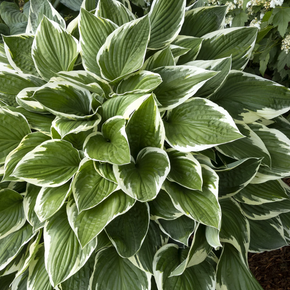
- A bold, award-winning giant hosta — named Hosta of the Year in 2000 and recipient of the Royal Horticultural Society's Award of Garden Merit — with spectacular frosted blue-green leaves adorned with eye-catching wide creamy-white to golden-yellow margins.
- Impressive vase-shaped mounds grow 2 to 3 feet tall and spread up to 4 to 5 feet wide, making 'Sagae' one of the most dramatic statement plants available for shade gardens.
- Thick, slug-resistant foliage holds its bold variegation from spring through fall, while tall scapes rise above the mound in midsummer carrying elegant lavender-tinged white bell-shaped blooms that attract hummingbirds.
- Exceptionally low-maintenance and cold-hardy to USDA Zone 3, this reliable herbaceous perennial thrives in part shade to full shade and returns year after year with increasing size and vigor.
Hosta fluctuans 'Sagae' is widely regarded as one of the most magnificent variegated hostas ever introduced, and its impressive list of accolades — including the American Hosta Growers Association Hosta of the Year award and the Royal Horticultural Society's Award of Garden Merit — speaks to its enduring, garden-proven excellence. This large, clump-forming herbaceous perennial produces a stately vase-shaped mound of broadly oval, wavy-edged leaves that are a frosty blue-green at the center, transitioning through soft celadon streaks to broad, irregular margins that emerge bright golden-yellow in spring and gradually fade to a rich creamy-white by midsummer. The foliage is notably thick, lending it better resistance to slug damage than many hosta varieties. In summer, elegant scapes shoot upward to nearly 4 feet above the mound and bear graceful racemes of funnel-shaped, lavender-tinged white flowers beloved by hummingbirds. Slow to establish but increasingly spectacular with each passing season, 'Sagae' is a commanding specimen plant, a lush ground cover, and a stunning backdrop for shade borders, woodland gardens, and courtyard plantings across USDA Zones 3 through 8. Also known botanically as Hosta fluctuans 'Variegated', this plantain lily is a low-maintenance perennial that brings bold foliage color, architectural presence, and multi-season interest to any shaded garden space.
Plant Description
Hosta 'Sagae' is a large, vase-shaped, clump-forming herbaceous perennial in the family Asparagaceae. Its most striking feature is its foliage: broadly oval, wavy-edged leaves that are thick and prominently veined, displaying a frosted blue-green center that transitions through soft celadon streaks to wide, irregular margins. The margins emerge bright golden-yellow in early spring and age to a rich creamy-white as summer progresses, providing dynamic color change throughout the growing season. The texture of the leaf surface is notably robust and slightly corrugated, contributing to the plant's exceptional slug resistance. In midsummer, tall, unbranched scapes rise dramatically above the foliage mound, reaching nearly 4 feet in height, and carry one-sided racemes of funnel-shaped, white flowers tinged with soft lavender. The plant dies back completely to the ground each winter and re-emerges reliably each spring, growing larger and more impressive with each passing year. Formerly synonymous with Hosta fluctuans 'Variegated', this cultivar was introduced by K. Watanabe in 1996.
Mature Size
| Attribute | Measurement |
|---|---|
| Foliage Height | 22 to 28 inches (approximately 2 to 3 feet) |
| Foliage Spread | 48 to 60 inches (4 to 5 feet) at full maturity |
| Flower Scape Height | Up to 49 inches (approximately 4 feet) above the ground |
| Growth Rate | Slow to establish; accelerates after the first 2 to 3 seasons |
| Recommended Spacing | 60 inches (5 feet) from other plants or structures |
Because 'Sagae' is slow to establish, gardeners should be patient. The plant puts energy into developing a strong root system in its first few seasons before producing its characteristically wide, sweeping mound. Allow ample space from the start to accommodate its eventual impressive spread.
Hardiness and Climate Zones
Hosta 'Sagae' is exceptionally cold-hardy and widely adaptable across a broad range of climates. It is suited for the following zones:
- USDA Hardiness Zones: 3 through 8
- AHS Heat Zones: 1 through 9
- Sunset Climate Zones: 1, 1A, 1B, 2, 2A, 2B, 3, 3A, 3B, 4, 5, 6, 7, 8, 9, 10, 14, 15, 16, 17, 18, 19, 20, 21
In Southern Oregon and Northern California, 'Sagae' performs beautifully across a wide range of elevations and microclimates. It thrives in the cool, moist conditions typical of coastal and valley regions and handles the colder mountain winters with ease. In hotter inland areas, additional afternoon shade and consistent moisture are especially important for maintaining leaf quality.
Sunlight Requirements
Hosta 'Sagae' performs best in partial shade to full shade. Ideal light conditions include:
- Best exposure: Dappled shade or morning sun with afternoon shade — typically 2 to 4 hours of gentle sunlight per day.
- Tolerates: Full shade, including heavy shade under deciduous canopies.
- Avoid: Hot afternoon sun, which can scorch the large leaves and cause the creamy-white margins to bleach out or brown at the edges.
The variegated foliage of 'Sagae' benefits from a small amount of filtered morning light, which helps maintain the vibrancy of the golden-yellow spring margins and encourages strong, upright leaf posture. Plant in locations sheltered from strong, drying winds, which can also cause leaf damage regardless of sun exposure.
Soil and pH Preferences
Hosta 'Sagae' is adaptable to a range of soil types but thrives under the following conditions:
- Preferred soil types: Rich loam or clay-loam with high organic matter content.
- Soil pH: Acidic to neutral, ideally between 6.0 and 7.5.
- Drainage: Moist but well-drained. Consistently waterlogged soil can lead to crown and root rot.
- Organic amendment: Incorporate generous amounts of compost or well-aged organic matter at planting to improve both moisture retention and drainage.
- Tolerance note: Established plants have some tolerance for dry shade, especially given their thick leaves, but consistent moisture always produces the best quality foliage.
- Black walnut tolerance: 'Sagae' is tolerant of juglone, the allelopathic compound produced by black walnut trees, making it a useful option where many other plants struggle.
Watering Guide
Consistent moisture is key to achieving the full, lush mound that makes 'Sagae' so spectacular. Follow these guidelines:
- Newly planted: Water deeply at planting and maintain consistent soil moisture throughout the first growing season while the root system establishes.
- Established plants: Aim for approximately 1 inch of water per week from rainfall or supplemental irrigation. Increase frequency during hot or dry spells.
- Watering method: Apply water directly to the soil at the base of the plant rather than overhead. Wet foliage can promote foliar disease and encourages slugs and snails.
- Mulching: Apply a 2 to 3 inch layer of organic mulch (shredded bark, wood chips, or compost) around the base of the plant to retain soil moisture, regulate soil temperature, and suppress weeds. Keep mulch a few inches away from the crown to prevent rot.
- Drought caution: While established plants can tolerate occasional dry spells, prolonged drought causes the large leaves to wilt and the leaf margins to brown, diminishing the plant's ornamental appeal.
Fertilizing
Hosta 'Sagae' is not a heavy feeder, but it responds well to a modest fertility program, especially in soils of average quality:
- Spring application: Apply a balanced, slow-release granular fertilizer (such as a 10-10-10 or similar formulation) in early spring as the new shoots emerge from the ground. Work lightly into the soil surface around the plant and water in well.
- Organic option: Top-dressing with a 1 to 2 inch layer of compost in early spring is an excellent alternative or supplement to synthetic fertilizers and improves soil structure over time.
- Avoid late-season feeding: Do not fertilize after mid-July. Late applications of fertilizer promote soft new growth that is vulnerable to early frost damage and can interfere with the plant's natural preparation for dormancy.
- Rich soil: In organically rich soils, little to no supplemental fertilizer may be needed. Overfertilizing can cause excessive, lush growth that is more attractive to slugs and less structurally sound.
Planting Instructions
- Timing: Plant in spring after the last frost or in early fall, allowing the plant at least 6 weeks to establish before the ground freezes.
- Site selection: Choose a location with partial to full shade and shelter from strong winds. Remember that 'Sagae' spreads up to 5 feet wide at maturity, so plan accordingly.
- Soil preparation: Loosen the soil to a depth of 12 to 15 inches and work in a generous amount of compost or other organic matter to improve fertility and drainage.
- Planting depth: Dig a hole approximately twice as wide as the root ball and only as deep. Set the plant so the crown (where the roots meet the foliage) sits at or just slightly below the soil surface. Planting too deep can cause crown rot.
- Spacing: Space individual plants at least 5 feet apart to allow for full mound development.
- Backfill and water: Backfill with amended soil, firm gently to eliminate air pockets, and water thoroughly.
- Mulch: Apply a 2 to 3 inch layer of mulch around the plant, keeping it a few inches away from the crown.
- Wind protection: Newly planted hostas in exposed locations benefit from temporary windbreaks to prevent desiccation while the root system establishes.
Pruning and Maintenance
Hosta 'Sagae' is a genuinely low-maintenance perennial. Here is a simple care schedule to keep it looking its best:
- During the growing season: Remove any damaged, yellowing, or pest-damaged leaves as they appear to maintain the plant's attractive appearance and improve air circulation.
- After blooming: Trim the flower scapes off at the base once the blooms have faded. This directs the plant's energy back into foliage growth and prevents self-seeding, keeping the garden tidy.
- Fall cleanup: Cut back all foliage to just above ground level after it has been killed by frost. This removes overwintering sites for slugs and snail eggs and keeps the garden looking neat.
- Spring cleanup: Alternatively, leave the dead foliage in place through winter and cut it back in late winter or very early spring before new growth emerges.
- Division: Divide clumps every 5 to 7 years, or when the center of the mound begins to die out. The best times to divide are early spring, just as the new shoots ("noses") are emerging, or early fall. Each division should include at least one crown and a good portion of the roots. Replant divisions at the same depth and water in well.
Seasonal Interest
| Season | Ornamental Feature |
|---|---|
| Early to Mid Spring | Tightly furled new shoots emerge with vivid golden-yellow margins, unfurling into large, dramatically variegated leaves with a frosted blue-green center. |
| Late Spring to Early Summer | The foliage mound reaches its full, impressive vase-shaped form. Leaf margins begin their seasonal transition from golden-yellow toward creamy-white. |
| Midsummer (July to August) | Tall scapes rise nearly 4 feet above the mound, bearing showy racemes of funnel-shaped, lavender-tinged white flowers that attract hummingbirds and pollinators. Margins are at their creamy-white stage. |
| Late Summer to Fall | Foliage mound remains full and attractive. Leaves turn soft golden-yellow as temperatures cool, providing warm fall color before dormancy. |
| Winter | Plant is fully dormant and dies back to the ground; crown is underground and cold-hardy to Zone 3. |
Landscape Uses
The imposing size, elegant variegation, and proven adaptability of Hosta 'Sagae' make it one of the most versatile large perennials available for shaded landscapes. Consider these applications:
- Specimen plant: Use as a bold focal point in a shaded courtyard, entryway planting, or mixed border where its grand mound and dramatic leaf variegation can be fully appreciated.
- Shade garden anchor: Its large size makes it an ideal structural backbone for shade borders and woodland garden compositions, providing a strong contrast to finer-textured plants.
- Mass planting and ground cover: When planted in groups or masses, 'Sagae' creates a lush, weed-suppressing carpet of bold foliage under deciduous trees or along shaded pathways.
- Underplanting: Excellent for underplanting open-canopied shrubs, flowering trees, rhododendrons, azaleas, and large roses where filtered light and root competition are managed with adequate organic matter and moisture.
- Slope stabilization: Its dense root system and spreading mound make it useful on shaded slopes to minimize erosion.
- City and courtyard gardens: Tolerates urban conditions well, thriving in sheltered, shaded city garden spaces.
- Pondside and rain garden edges: The plant's love of consistent moisture makes it a beautiful edging plant alongside water features where it won't be flooded but enjoys perpetual soil moisture.
Companion Plants
Hosta 'Sagae' pairs beautifully with a wide range of shade-tolerant perennials, grasses, ferns, and shrubs. Its bold, light-colored margins and large leaf texture create stunning contrasts with the following companions:
- Hakonechloa macra 'Aureola' (Japanese Forest Grass): The fine, arching golden-green foliage of this ornamental grass creates a graceful, flowing contrast to 'Sagae's' broad, upright leaves.
- Astilbe varieties: Feathery plumes in shades of pink, red, or white rise above astilbe's ferny foliage in summer, providing vertical flower interest alongside 'Sagae's' horizontal presence.
- Bleeding Heart (Lamprocapnos spectabilis): Arching wands of heart-shaped blooms in spring complement 'Sagae's' emerging golden foliage perfectly; the dying back of bleeding heart foliage in summer is hidden by 'Sagae's' expanding mound.
- Ferns (Dryopteris, Athyrium, Osmunda): The delicate, lacy texture of fern fronds provides a beautiful counterpoint to 'Sagae's' bold, broad leaves in a woodland setting.
- Actaea simplex 'Hillside Black Beauty' (Bugbane): The deep purple-black foliage and tall white late-season flower spikes create a dramatic, high-contrast combination with 'Sagae's' pale margins.
- Hellebores: These evergreen perennials provide late-winter and early-spring interest before 'Sagae' emerges, and they harmonize well as companion groundcovers in shaded beds.
- Rhododendrons and azaleas: The bold hosta foliage fills in admirably beneath the canopy of these flowering shrubs, creating a lush layered effect.
- Tiarella and Heuchera (Coral Bells): Lower-growing shade perennials with interesting foliage textures and colors work well as a front-of-border edging to 'Sagae's' impressive mound.
Pests and Diseases
Hosta 'Sagae' is notably more resistant to slug damage than many hostas, owing to its thick leaf texture. However, gardeners should be aware of the following potential issues:
- Slugs and snails: The most common hosta pest. They feed nocturnally, leaving irregular, smooth-edged holes in the leaves. Although 'Sagae's' thick leaves offer some resistance, slug pressure can still be significant. Control measures include iron phosphate baits (pet-safe), diatomaceous earth applied around the crown, beer traps, and removing daytime hiding spots such as boards, debris, and thick mulch piled against the crown.
- Deer and rabbits: Both are attracted to hosta foliage and can cause severe, rapid damage. Deer can consume an entire clump overnight. Use deer repellent sprays, motion-activated deterrents, or physical barriers where deer pressure is high.
- Foliar nematodes: These microscopic worms feed between leaf veins, causing distinctive interveinal brown streaking or browning that follows the veins. Remove and destroy affected leaves. Avoid overhead watering. There is no chemical cure; prevention through good garden hygiene is key.
- Hosta Virus X (HVX): A serious viral disease spread by contaminated cutting tools or infected plant material. Symptoms include blue-green blotchy mottling or "ink bleed" patterning in the leaf tissue. Infected plants must be immediately removed and destroyed. Never propagate from infected divisions. Purchase plants only from reputable sources.
- Crown rot and root rot: Less frequent but possible in poorly drained soils or where crowns are buried too deeply or smothered by mulch. Ensure good drainage and proper planting depth.
- Leaf scorch: Not a disease but an environmental condition caused by too much direct sun or drying winds. Protect 'Sagae' from afternoon sun and strong winds to prevent browning leaf margins.
Wildlife Value
Despite its reputation as a deer and rabbit target (requiring some protective measures in areas with heavy wildlife pressure), Hosta 'Sagae' offers meaningful wildlife benefits in the garden:
- Hummingbirds: The tall scapes of funnel-shaped, lavender-white flowers in July and August are attractive to ruby-throated and other hummingbirds, providing an important midsummer nectar source.
- Pollinators: The tubular flowers also attract bees and other pollinators seeking nectar during the summer bloom period.
- Beneficial insects: The dense mound of foliage provides shelter and microhabitat for ground beetles, spiders, and other beneficial predatory insects that help manage garden pest populations.
- Toxicity warning: All parts of Hosta 'Sagae' are toxic to dogs, cats, and horses. The plant contains saponins, which can cause vomiting, diarrhea, and lethargy in pets if ingested. Plant in locations inaccessible to pets, or supervise accordingly.
Container Growing
While Hosta 'Sagae' is best suited to in-ground planting due to its large mature size, it can be grown successfully in containers with the right approach:
- Container size: Choose a large, sturdy container — at least 24 to 30 inches in diameter and of similar depth — to accommodate the extensive root system and eventual spread. Larger is always better for this big-growing cultivar.
- Potting mix: Use a high-quality, moisture-retentive potting mix amended with extra perlite for drainage and compost for fertility. Avoid heavy garden soil, which compacts in containers and impedes drainage.
- Watering: Containers dry out much faster than garden beds. Check soil moisture frequently — daily in summer heat — and water thoroughly when the top inch of soil feels dry. Never allow the container to dry out completely.
- Fertilizing in containers: Container-grown plants deplete nutrients more quickly. Apply a balanced slow-release fertilizer at planting and supplement with a diluted liquid fertilizer every 3 to 4 weeks during the growing season, stopping by mid-July.
- Winter protection: Container roots are far more vulnerable to freezing than in-ground roots. In cold climates (Zones 3 to 5), move containers to an unheated garage or shed during winter or insulate them with burlap and mulch to prevent the root ball from freezing solid.
- Repotting: Divide and repot every 2 to 3 years, or when the plant becomes visibly root-bound and growth slows noticeably, to refresh the soil and reinvigorate the plant.
- A bold, award-winning giant hosta — named Hosta of the Year in 2000 and recipient of the Royal Horticultural Society's Award of Garden Merit — with spectacular frosted blue-green leaves adorned with eye-catching wide creamy-white to golden-yellow margins.
- Impressive vase-shaped mounds grow 2 to 3 feet tall and spread up to 4 to 5 feet wide, making 'Sagae' one of the most dramatic statement plants available for shade gardens.
- Thick, slug-resistant foliage holds its bold variegation from spring through fall, while tall scapes rise above the mound in midsummer carrying elegant lavender-tinged white bell-shaped blooms that attract hummingbirds.
- Exceptionally low-maintenance and cold-hardy to USDA Zone 3, this reliable herbaceous perennial thrives in part shade to full shade and returns year after year with increasing size and vigor.
Hosta fluctuans 'Sagae' is widely regarded as one of the most magnificent variegated hostas ever introduced, and its impressive list of accolades — including the American Hosta Growers Association Hosta of the Year award and the Royal Horticultural Society's Award of Garden Merit — speaks to its enduring, garden-proven excellence. This large, clump-forming herbaceous perennial produces a stately vase-shaped mound of broadly oval, wavy-edged leaves that are a frosty blue-green at the center, transitioning through soft celadon streaks to broad, irregular margins that emerge bright golden-yellow in spring and gradually fade to a rich creamy-white by midsummer. The foliage is notably thick, lending it better resistance to slug damage than many hosta varieties. In summer, elegant scapes shoot upward to nearly 4 feet above the mound and bear graceful racemes of funnel-shaped, lavender-tinged white flowers beloved by hummingbirds. Slow to establish but increasingly spectacular with each passing season, 'Sagae' is a commanding specimen plant, a lush ground cover, and a stunning backdrop for shade borders, woodland gardens, and courtyard plantings across USDA Zones 3 through 8. Also known botanically as Hosta fluctuans 'Variegated', this plantain lily is a low-maintenance perennial that brings bold foliage color, architectural presence, and multi-season interest to any shaded garden space.
Plant Description
Hosta 'Sagae' is a large, vase-shaped, clump-forming herbaceous perennial in the family Asparagaceae. Its most striking feature is its foliage: broadly oval, wavy-edged leaves that are thick and prominently veined, displaying a frosted blue-green center that transitions through soft celadon streaks to wide, irregular margins. The margins emerge bright golden-yellow in early spring and age to a rich creamy-white as summer progresses, providing dynamic color change throughout the growing season. The texture of the leaf surface is notably robust and slightly corrugated, contributing to the plant's exceptional slug resistance. In midsummer, tall, unbranched scapes rise dramatically above the foliage mound, reaching nearly 4 feet in height, and carry one-sided racemes of funnel-shaped, white flowers tinged with soft lavender. The plant dies back completely to the ground each winter and re-emerges reliably each spring, growing larger and more impressive with each passing year. Formerly synonymous with Hosta fluctuans 'Variegated', this cultivar was introduced by K. Watanabe in 1996.
Mature Size
| Attribute | Measurement |
|---|---|
| Foliage Height | 22 to 28 inches (approximately 2 to 3 feet) |
| Foliage Spread | 48 to 60 inches (4 to 5 feet) at full maturity |
| Flower Scape Height | Up to 49 inches (approximately 4 feet) above the ground |
| Growth Rate | Slow to establish; accelerates after the first 2 to 3 seasons |
| Recommended Spacing | 60 inches (5 feet) from other plants or structures |
Because 'Sagae' is slow to establish, gardeners should be patient. The plant puts energy into developing a strong root system in its first few seasons before producing its characteristically wide, sweeping mound. Allow ample space from the start to accommodate its eventual impressive spread.
Hardiness and Climate Zones
Hosta 'Sagae' is exceptionally cold-hardy and widely adaptable across a broad range of climates. It is suited for the following zones:
- USDA Hardiness Zones: 3 through 8
- AHS Heat Zones: 1 through 9
- Sunset Climate Zones: 1, 1A, 1B, 2, 2A, 2B, 3, 3A, 3B, 4, 5, 6, 7, 8, 9, 10, 14, 15, 16, 17, 18, 19, 20, 21
In Southern Oregon and Northern California, 'Sagae' performs beautifully across a wide range of elevations and microclimates. It thrives in the cool, moist conditions typical of coastal and valley regions and handles the colder mountain winters with ease. In hotter inland areas, additional afternoon shade and consistent moisture are especially important for maintaining leaf quality.
Sunlight Requirements
Hosta 'Sagae' performs best in partial shade to full shade. Ideal light conditions include:
- Best exposure: Dappled shade or morning sun with afternoon shade — typically 2 to 4 hours of gentle sunlight per day.
- Tolerates: Full shade, including heavy shade under deciduous canopies.
- Avoid: Hot afternoon sun, which can scorch the large leaves and cause the creamy-white margins to bleach out or brown at the edges.
The variegated foliage of 'Sagae' benefits from a small amount of filtered morning light, which helps maintain the vibrancy of the golden-yellow spring margins and encourages strong, upright leaf posture. Plant in locations sheltered from strong, drying winds, which can also cause leaf damage regardless of sun exposure.
Soil and pH Preferences
Hosta 'Sagae' is adaptable to a range of soil types but thrives under the following conditions:
- Preferred soil types: Rich loam or clay-loam with high organic matter content.
- Soil pH: Acidic to neutral, ideally between 6.0 and 7.5.
- Drainage: Moist but well-drained. Consistently waterlogged soil can lead to crown and root rot.
- Organic amendment: Incorporate generous amounts of compost or well-aged organic matter at planting to improve both moisture retention and drainage.
- Tolerance note: Established plants have some tolerance for dry shade, especially given their thick leaves, but consistent moisture always produces the best quality foliage.
- Black walnut tolerance: 'Sagae' is tolerant of juglone, the allelopathic compound produced by black walnut trees, making it a useful option where many other plants struggle.
Watering Guide
Consistent moisture is key to achieving the full, lush mound that makes 'Sagae' so spectacular. Follow these guidelines:
- Newly planted: Water deeply at planting and maintain consistent soil moisture throughout the first growing season while the root system establishes.
- Established plants: Aim for approximately 1 inch of water per week from rainfall or supplemental irrigation. Increase frequency during hot or dry spells.
- Watering method: Apply water directly to the soil at the base of the plant rather than overhead. Wet foliage can promote foliar disease and encourages slugs and snails.
- Mulching: Apply a 2 to 3 inch layer of organic mulch (shredded bark, wood chips, or compost) around the base of the plant to retain soil moisture, regulate soil temperature, and suppress weeds. Keep mulch a few inches away from the crown to prevent rot.
- Drought caution: While established plants can tolerate occasional dry spells, prolonged drought causes the large leaves to wilt and the leaf margins to brown, diminishing the plant's ornamental appeal.
Fertilizing
Hosta 'Sagae' is not a heavy feeder, but it responds well to a modest fertility program, especially in soils of average quality:
- Spring application: Apply a balanced, slow-release granular fertilizer (such as a 10-10-10 or similar formulation) in early spring as the new shoots emerge from the ground. Work lightly into the soil surface around the plant and water in well.
- Organic option: Top-dressing with a 1 to 2 inch layer of compost in early spring is an excellent alternative or supplement to synthetic fertilizers and improves soil structure over time.
- Avoid late-season feeding: Do not fertilize after mid-July. Late applications of fertilizer promote soft new growth that is vulnerable to early frost damage and can interfere with the plant's natural preparation for dormancy.
- Rich soil: In organically rich soils, little to no supplemental fertilizer may be needed. Overfertilizing can cause excessive, lush growth that is more attractive to slugs and less structurally sound.
Planting Instructions
- Timing: Plant in spring after the last frost or in early fall, allowing the plant at least 6 weeks to establish before the ground freezes.
- Site selection: Choose a location with partial to full shade and shelter from strong winds. Remember that 'Sagae' spreads up to 5 feet wide at maturity, so plan accordingly.
- Soil preparation: Loosen the soil to a depth of 12 to 15 inches and work in a generous amount of compost or other organic matter to improve fertility and drainage.
- Planting depth: Dig a hole approximately twice as wide as the root ball and only as deep. Set the plant so the crown (where the roots meet the foliage) sits at or just slightly below the soil surface. Planting too deep can cause crown rot.
- Spacing: Space individual plants at least 5 feet apart to allow for full mound development.
- Backfill and water: Backfill with amended soil, firm gently to eliminate air pockets, and water thoroughly.
- Mulch: Apply a 2 to 3 inch layer of mulch around the plant, keeping it a few inches away from the crown.
- Wind protection: Newly planted hostas in exposed locations benefit from temporary windbreaks to prevent desiccation while the root system establishes.
Pruning and Maintenance
Hosta 'Sagae' is a genuinely low-maintenance perennial. Here is a simple care schedule to keep it looking its best:
- During the growing season: Remove any damaged, yellowing, or pest-damaged leaves as they appear to maintain the plant's attractive appearance and improve air circulation.
- After blooming: Trim the flower scapes off at the base once the blooms have faded. This directs the plant's energy back into foliage growth and prevents self-seeding, keeping the garden tidy.
- Fall cleanup: Cut back all foliage to just above ground level after it has been killed by frost. This removes overwintering sites for slugs and snail eggs and keeps the garden looking neat.
- Spring cleanup: Alternatively, leave the dead foliage in place through winter and cut it back in late winter or very early spring before new growth emerges.
- Division: Divide clumps every 5 to 7 years, or when the center of the mound begins to die out. The best times to divide are early spring, just as the new shoots ("noses") are emerging, or early fall. Each division should include at least one crown and a good portion of the roots. Replant divisions at the same depth and water in well.
Seasonal Interest
| Season | Ornamental Feature |
|---|---|
| Early to Mid Spring | Tightly furled new shoots emerge with vivid golden-yellow margins, unfurling into large, dramatically variegated leaves with a frosted blue-green center. |
| Late Spring to Early Summer | The foliage mound reaches its full, impressive vase-shaped form. Leaf margins begin their seasonal transition from golden-yellow toward creamy-white. |
| Midsummer (July to August) | Tall scapes rise nearly 4 feet above the mound, bearing showy racemes of funnel-shaped, lavender-tinged white flowers that attract hummingbirds and pollinators. Margins are at their creamy-white stage. |
| Late Summer to Fall | Foliage mound remains full and attractive. Leaves turn soft golden-yellow as temperatures cool, providing warm fall color before dormancy. |
| Winter | Plant is fully dormant and dies back to the ground; crown is underground and cold-hardy to Zone 3. |
Landscape Uses
The imposing size, elegant variegation, and proven adaptability of Hosta 'Sagae' make it one of the most versatile large perennials available for shaded landscapes. Consider these applications:
- Specimen plant: Use as a bold focal point in a shaded courtyard, entryway planting, or mixed border where its grand mound and dramatic leaf variegation can be fully appreciated.
- Shade garden anchor: Its large size makes it an ideal structural backbone for shade borders and woodland garden compositions, providing a strong contrast to finer-textured plants.
- Mass planting and ground cover: When planted in groups or masses, 'Sagae' creates a lush, weed-suppressing carpet of bold foliage under deciduous trees or along shaded pathways.
- Underplanting: Excellent for underplanting open-canopied shrubs, flowering trees, rhododendrons, azaleas, and large roses where filtered light and root competition are managed with adequate organic matter and moisture.
- Slope stabilization: Its dense root system and spreading mound make it useful on shaded slopes to minimize erosion.
- City and courtyard gardens: Tolerates urban conditions well, thriving in sheltered, shaded city garden spaces.
- Pondside and rain garden edges: The plant's love of consistent moisture makes it a beautiful edging plant alongside water features where it won't be flooded but enjoys perpetual soil moisture.
Companion Plants
Hosta 'Sagae' pairs beautifully with a wide range of shade-tolerant perennials, grasses, ferns, and shrubs. Its bold, light-colored margins and large leaf texture create stunning contrasts with the following companions:
- Hakonechloa macra 'Aureola' (Japanese Forest Grass): The fine, arching golden-green foliage of this ornamental grass creates a graceful, flowing contrast to 'Sagae's' broad, upright leaves.
- Astilbe varieties: Feathery plumes in shades of pink, red, or white rise above astilbe's ferny foliage in summer, providing vertical flower interest alongside 'Sagae's' horizontal presence.
- Bleeding Heart (Lamprocapnos spectabilis): Arching wands of heart-shaped blooms in spring complement 'Sagae's' emerging golden foliage perfectly; the dying back of bleeding heart foliage in summer is hidden by 'Sagae's' expanding mound.
- Ferns (Dryopteris, Athyrium, Osmunda): The delicate, lacy texture of fern fronds provides a beautiful counterpoint to 'Sagae's' bold, broad leaves in a woodland setting.
- Actaea simplex 'Hillside Black Beauty' (Bugbane): The deep purple-black foliage and tall white late-season flower spikes create a dramatic, high-contrast combination with 'Sagae's' pale margins.
- Hellebores: These evergreen perennials provide late-winter and early-spring interest before 'Sagae' emerges, and they harmonize well as companion groundcovers in shaded beds.
- Rhododendrons and azaleas: The bold hosta foliage fills in admirably beneath the canopy of these flowering shrubs, creating a lush layered effect.
- Tiarella and Heuchera (Coral Bells): Lower-growing shade perennials with interesting foliage textures and colors work well as a front-of-border edging to 'Sagae's' impressive mound.
Pests and Diseases
Hosta 'Sagae' is notably more resistant to slug damage than many hostas, owing to its thick leaf texture. However, gardeners should be aware of the following potential issues:
- Slugs and snails: The most common hosta pest. They feed nocturnally, leaving irregular, smooth-edged holes in the leaves. Although 'Sagae's' thick leaves offer some resistance, slug pressure can still be significant. Control measures include iron phosphate baits (pet-safe), diatomaceous earth applied around the crown, beer traps, and removing daytime hiding spots such as boards, debris, and thick mulch piled against the crown.
- Deer and rabbits: Both are attracted to hosta foliage and can cause severe, rapid damage. Deer can consume an entire clump overnight. Use deer repellent sprays, motion-activated deterrents, or physical barriers where deer pressure is high.
- Foliar nematodes: These microscopic worms feed between leaf veins, causing distinctive interveinal brown streaking or browning that follows the veins. Remove and destroy affected leaves. Avoid overhead watering. There is no chemical cure; prevention through good garden hygiene is key.
- Hosta Virus X (HVX): A serious viral disease spread by contaminated cutting tools or infected plant material. Symptoms include blue-green blotchy mottling or "ink bleed" patterning in the leaf tissue. Infected plants must be immediately removed and destroyed. Never propagate from infected divisions. Purchase plants only from reputable sources.
- Crown rot and root rot: Less frequent but possible in poorly drained soils or where crowns are buried too deeply or smothered by mulch. Ensure good drainage and proper planting depth.
- Leaf scorch: Not a disease but an environmental condition caused by too much direct sun or drying winds. Protect 'Sagae' from afternoon sun and strong winds to prevent browning leaf margins.
Wildlife Value
Despite its reputation as a deer and rabbit target (requiring some protective measures in areas with heavy wildlife pressure), Hosta 'Sagae' offers meaningful wildlife benefits in the garden:
- Hummingbirds: The tall scapes of funnel-shaped, lavender-white flowers in July and August are attractive to ruby-throated and other hummingbirds, providing an important midsummer nectar source.
- Pollinators: The tubular flowers also attract bees and other pollinators seeking nectar during the summer bloom period.
- Beneficial insects: The dense mound of foliage provides shelter and microhabitat for ground beetles, spiders, and other beneficial predatory insects that help manage garden pest populations.
- Toxicity warning: All parts of Hosta 'Sagae' are toxic to dogs, cats, and horses. The plant contains saponins, which can cause vomiting, diarrhea, and lethargy in pets if ingested. Plant in locations inaccessible to pets, or supervise accordingly.
Container Growing
While Hosta 'Sagae' is best suited to in-ground planting due to its large mature size, it can be grown successfully in containers with the right approach:
- Container size: Choose a large, sturdy container — at least 24 to 30 inches in diameter and of similar depth — to accommodate the extensive root system and eventual spread. Larger is always better for this big-growing cultivar.
- Potting mix: Use a high-quality, moisture-retentive potting mix amended with extra perlite for drainage and compost for fertility. Avoid heavy garden soil, which compacts in containers and impedes drainage.
- Watering: Containers dry out much faster than garden beds. Check soil moisture frequently — daily in summer heat — and water thoroughly when the top inch of soil feels dry. Never allow the container to dry out completely.
- Fertilizing in containers: Container-grown plants deplete nutrients more quickly. Apply a balanced slow-release fertilizer at planting and supplement with a diluted liquid fertilizer every 3 to 4 weeks during the growing season, stopping by mid-July.
- Winter protection: Container roots are far more vulnerable to freezing than in-ground roots. In cold climates (Zones 3 to 5), move containers to an unheated garage or shed during winter or insulate them with burlap and mulch to prevent the root ball from freezing solid.
- Repotting: Divide and repot every 2 to 3 years, or when the plant becomes visibly root-bound and growth slows noticeably, to refresh the soil and reinvigorate the plant.
Related Products