
Zoom the image with the mouse
Francee Hosta - 1 Gallon
SKU:
528820
UPC:
757992658099
$9.99
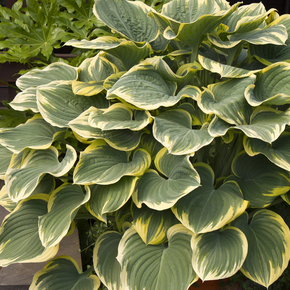
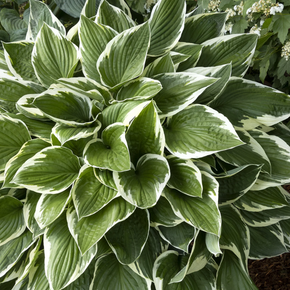
- Classic variegated foliage with rich forest-green, heart-shaped leaves boldly edged in clean, crisp white — a timeless, high-contrast look all season long
- Exceptionally cold-hardy and adaptable perennial, thriving in USDA Zones 3-9 and re-emerging reliably year after year with minimal care
- Surprisingly sun-tolerant for a hosta — performs best in partial shade but holds its striking variegation better in brighter light than many other varieties
- Multiple prestigious awards including the Royal Horticultural Society Award of Garden Merit and the American Hosta Society Best Green Hosta in a Garden Award
Hosta 'Francee' is one of the most celebrated and widely planted hosta cultivars ever introduced, and it's easy to see why — this medium-sized, mounding perennial delivers bold, four-season landscape presence with remarkably little effort. Developed by Minnie Klopping of Nebraska in the 1970s and introduced through the American Hosta Society in 1986 as a naturally occurring sport of Hosta albomarginata, 'Francee' has earned a permanent place in shade gardens across North America. Its large, heavily textured, heart-shaped leaves are a deep, lustrous forest green adorned with clean, narrow white margins that hold their color and crispness throughout the growing season. The foliage forms a dense, wide-spreading, low mound that serves equally well as a groundcover, border edging, mass planting, or specimen accent in shaded beds and woodland gardens. In midsummer to late summer, elegant lavender-purple, bell-shaped flowers rise on tall scapes up to 30 inches above the foliage, attracting hummingbirds and adding a delicate vertical element to the planting. A rapid grower that fills in beautifully over several seasons, Hosta 'Francee' is prized by beginner and experienced gardeners alike for its toughness, adaptability, and unmatched foliage impact in part shade to full shade landscapes.
Plant Description
Hosta 'Francee' is a medium-sized, herbaceous perennial prized for its dramatic variegated foliage. The large, heart-shaped leaves are a rich, deep forest green with a slightly glossy, heavily veined, and textured surface. Each leaf is outlined by a narrow but distinctly clean white margin that maintains excellent color and clarity from spring emergence through fall dormancy. The fresh new shoots that emerge in early spring display a striking near-purple hue, adding early-season intrigue to the garden. As the plant matures through the season, it forms a dense, symmetrical, wide-spreading mound of layered foliage. In midsummer through late summer, slender scapes rise 28 to 30 inches above the mound, bearing nodding, bell-shaped, pale lavender to lilac-purple flowers. 'Francee' was introduced as a naturally occurring sport mutation of Hosta albomarginata and has since become a parent variety for other popular cultivars, including 'Patriot' and 'Fire and Ice.'
Mature Size
| Attribute | Measurement |
|---|---|
| Foliage Height | Approximately 14 inches tall |
| Spread (Width) | 36 to 48 inches wide at maturity |
| Flower Scape Height | 28 to 30 inches above foliage mound |
| Growth Rate | Rapid; reaches full size in approximately 4 to 5 years |
| Form | Dense, low, wide-spreading mound |
Hardiness Zones
Hosta 'Francee' is a remarkably cold-hardy and heat-tolerant perennial suited to a very wide range of climates. It is rated for USDA Hardiness Zones 3 through 9, making it one of the most broadly adaptable hostas available. It withstands the deep cold of northern winters with ease and can also tolerate the heat of warmer climates in Zones 8 and 9, provided it receives adequate moisture and is sited in full or partial shade. In the mildest zones, all-day shade is recommended to protect the foliage from heat stress. In cooler zones, a light layer of shredded organic mulch applied in late fall helps insulate the crown and prevent frost heaving.
Sunlight Requirements
Hosta 'Francee' performs best in partial shade, receiving approximately 2 to 6 hours of direct sun per day, ideally in the morning with protection from the harsh afternoon sun. It is notable among hostas for its above-average sun tolerance — the white leaf margins hold their clean, bright color particularly well in brighter light conditions, unlike many other variegated hostas that tend to bleach or burn. In full shade, the plant grows vigorously but may produce slightly less vivid variegation. Hot, direct afternoon sun should always be avoided, as it can cause leaf scorch and browning of the white margins. Dappled or high-filtered light beneath deciduous trees is considered ideal. In Zones 8 and 9, full shade is strongly recommended throughout the hottest months.
Soil and pH Preferences
For optimal growth, plant Hosta 'Francee' in moist, well-drained soil that is rich in organic matter. Sandy loam is preferred over heavy clay, as it provides better aeration for the root system and helps prevent waterlogging. Amending poor or compacted soils with compost or aged organic matter before planting will significantly improve plant health and vigor. 'Francee' grows best in soils with a slightly acidic to neutral pH, ideally between 5.5 and 7.0. Soils that are too alkaline can limit nutrient availability and result in pale or yellowing foliage. Avoid planting in areas with consistently wet or waterlogged soil, as prolonged moisture around the crown can encourage root rot.
Watering Guide
Consistent moisture is key to keeping Hosta 'Francee' looking its best. Aim to provide approximately 1 inch of water per week, either from rainfall or supplemental irrigation. Water deeply at the base of the plant rather than overhead to keep foliage dry and reduce the risk of fungal issues and slug activity. Drip irrigation is an excellent choice, as it delivers moisture directly to the root zone. Water in the morning so that any moisture on the foliage can evaporate during the day. Keep the soil evenly moist during the first growing season to encourage deep, healthy root establishment. Once established, 'Francee' has moderate drought tolerance, but extended dry periods can force early dormancy and reduce plant vigor the following year. Drying out is especially problematic during heat waves — brown margins on the white edges are often the first sign of moisture stress.
Fertilizing
Hosta 'Francee' benefits from a light annual fertilization to support its lush, rapid foliage growth. Apply a balanced, slow-release granular fertilizer in early spring just as the new shoots begin to emerge. Avoid allowing granular fertilizers to contact the crown of the plant directly, as this can cause injury — liquid fertilizers or a top-dressed slow-release product are safest. A mid-summer application of a balanced liquid fertilizer can give an additional boost for sustained health. Avoid applying high-nitrogen fertilizers in late summer or fall, as this can push tender new growth that may not harden off before the first frost. Organic fertilizers such as compost top-dressings or fish emulsion are excellent, gentle options that also improve overall soil health over time. Over-fertilizing can lead to root damage and is best avoided.
Planting Instructions
- Select a shaded or partially shaded location with protection from hot afternoon sun and good air circulation.
- Amend the planting area generously with compost or organic matter, especially in heavy clay or sandy soils.
- Dig a hole twice as wide as the root ball and only as deep as the root ball — shallow planting is important.
- Remove the plant from its pot and gently loosen and spread the roots outward.
- Position the plant so that the crown (the growing point where roots meet shoots) sits at or just slightly below the soil surface — do not bury the crown deeply.
- Backfill with amended soil and firm gently around the roots to eliminate air pockets.
- Water thoroughly immediately after planting to settle the soil.
- Apply 2 to 3 inches of shredded organic mulch around the base, keeping it a few inches away from the crown to discourage rot and slug habitat.
- Space multiple plants 24 to 36 inches apart to allow for their substantial mature spread.
- Spring planting is preferred, though fall planting is also successful when done early enough to allow root establishment before frost.
Pruning and Maintenance
Hosta 'Francee' requires minimal pruning and is considered a low-maintenance perennial. In early spring, before new growth begins to emerge, cut back any remaining old foliage from the previous season at the base. The plant is deciduous and its foliage will die back naturally with the first hard frost each fall. Many gardeners choose to remove the spent foliage in late fall after it has died back completely, which helps eliminate overwintering sites for slugs, snails, and other pests. Flower scapes can be removed after blooming if desired for a tidier appearance, or left in place as they do not detract significantly from the plant. Throughout the growing season, simply remove any damaged, scorched, or unattractive leaves as needed. Division every 3 to 5 years in spring or fall will rejuvenate older clumps and provide new plants for the garden.
Seasonal Interest
Hosta 'Francee' offers multi-season visual interest that begins the moment it breaks dormancy in early spring. The emerging shoots have a notable near-purple hue as they push through the soil, making this one of the more ornamental hostas during the early spring emergence phase. As the season progresses, the foliage expands into its signature forest-green-and-white variegated form, creating a lush, cooling effect in the shade garden throughout spring and summer. In midsummer to late summer, tall lavender-purple flower scapes rise dramatically above the foliage, adding color and height. In fall, the foliage transitions to golden yellow tones before the plant enters its winter dormancy. Even in winter, the empty garden bed where 'Francee' grew serves as a reminder of the lush display to come the following spring.
Landscape Uses
The versatility of Hosta 'Francee' in the landscape is one of its greatest strengths. Its wide, mounding, ground-hugging form makes it an outstanding groundcover for shaded areas where lawn grass struggles to thrive. It is equally effective as a bold edging plant along shaded walkways, driveways, or the front of mixed shade borders. Planted in masses, it creates a dramatic, weed-suppressing sweep of variegated foliage in woodland gardens and naturalized areas. As a specimen plant, a single large, mature clump commands attention as a focal point in a shaded bed. 'Francee' also works beautifully to hide the fading foliage of spring-blooming bulbs, as its large leaves expand just as the bulb foliage begins to yellow and collapse. It thrives in urban garden settings tolerant of air pollution, and its large leaves provide excellent coverage in difficult-to-fill shaded zones under trees or along north-facing walls.
Container Growing
Hosta 'Francee' adapts very well to container culture and makes a stunning patio or deck plant for shaded outdoor spaces. Choose a large container — at least 12 to 18 inches in diameter — with excellent drainage holes to prevent waterlogging. Use a rich, well-draining potting mix amended with organic compost. Container-grown hostas dry out much more quickly than in-ground plants, so more frequent watering is essential, especially during warm weather. Liquid fertilizer applied regularly throughout the growing season will compensate for nutrients lost through watering. In winter, container-grown hostas in colder climates should be protected from extreme freeze-thaw cycles by moving pots into an unheated garage, shed, or cold frame. Repot into a larger container every 2 to 3 years or when roots become crowded, spreading and fanning the roots out into the fresh soil mix at repotting time.
Pests and Diseases
The most common pest challenge for Hosta 'Francee' is slugs and snails, which are attracted to the lush foliage and find ideal habitat under the leaf canopy and nearby mulch. Irregular holes chewed in the interior of leaves are a telltale sign. Beer traps, diatomaceous earth, copper tape barriers, and iron phosphate-based slug baits are effective, low-impact controls. Apply slug bait in early spring when new growth first emerges. Aphids can cluster on new growth and may cause distorted, curled foliage if populations are high; treat with insecticidal soap or neem oil. Deer are notorious for browsing hostas heavily, particularly in spring when foliage is tender — deer repellent sprays, motion-activated deterrents, or physical fencing may be necessary in high-pressure areas. On the disease front, hosta anthracnose (caused by Colletotrichum hostae) can produce large, irregular brown or black spots with yellow halos on the leaves; improve air circulation and avoid overhead watering to reduce risk. Root rot can occur in poorly draining or consistently waterlogged soils. Hosta Virus X (HVX) is a serious viral disease causing foliage mottling and distortion — there is no cure, and infected plants must be removed and destroyed. Always purchase plants from reputable sources to avoid introducing HVX into the garden.
Wildlife Value and Deer Resistance
Hosta 'Francee' attracts hummingbirds to the garden when its tall lavender flower scapes bloom in mid to late summer — the tubular, nodding flowers are well-suited to hummingbird foraging. Bees and other pollinators may also visit the blooms. Unfortunately, hostas as a group are highly attractive to deer, and 'Francee' is no exception. Deer find the large, lush leaves to be a very palatable food source, particularly in spring and early summer. In areas with moderate to high deer pressure, protective measures are recommended, including the use of deer repellent sprays reapplied after rain, surrounding plantings of less palatable plants, motion-activated sprinklers, or physical fencing. Slugs and snails are also drawn to the foliage, so maintaining good garden hygiene by removing debris and old foliage in fall will help reduce pest populations year over year.
Division and Propagation
Hosta 'Francee' is easily propagated by division, which is best performed in early spring just as the new shoots ("eyes") begin to emerge from the soil, or alternatively in early fall at least 6 weeks before the first expected frost. Allow the plant to mature for 3 to 5 years before attempting division to ensure each division will have enough root mass and growing points. Water the clump thoroughly the day before dividing. Use a sharp spade to cut straight down around the perimeter of the clump well away from the crown to preserve as many roots as possible. Lift the entire clump and use a spade, garden fork, or sharp knife to divide it into sections — each section should have at least 3 "eyes" (visible growing points) and a healthy portion of roots. Replant divisions immediately at the same depth as the parent plant, water thoroughly, and mulch to retain moisture. Avoid dividing during the heat of summer, as the stress can set plants back significantly.
Awards and Recognition
- American Hosta Society Best Green Hosta in a Garden Award (1976)
- American Hosta Society Eunice Fisher Award for Best Large-Leaf Hosta
- Royal Horticultural Society Award of Garden Merit (1993)
- American Hosta Society Benedict Garden Performance Award Honorable Mention (2006)
- American Hosta Society Benedict Garden Performance Award of Merit (2009)
Companion Plants
Hosta 'Francee' pairs beautifully with a wide range of shade-loving perennials and shrubs that share its preference for moist, organically rich, partially shaded conditions. The bold, variegated foliage of 'Francee' provides an excellent backdrop or contrast for finer-textured plants. Ideal companions include astilbes, whose feathery plumes in pink, red, and white add vertical color above the hosta mound; brunnera with its heart-shaped silver-marked leaves and tiny blue forget-me-not flowers; and sedges such as Carex 'Ice Dance,' which echo the white-margined foliage theme in a finer texture. Goat's beard (Aruncus dioicus) provides bold height and creamy white plumes. Solomon's seal (Polygonatum) adds graceful arching stems with dangling white flowers. Ferns of all kinds are classic companions, providing soft, feathery texture that complements the bold hosta leaves. Spring-blooming bulbs such as daffodils and tulips planted among hostas are cleverly hidden as the hosta foliage expands to cover the dying bulb leaves in late spring.
- Classic variegated foliage with rich forest-green, heart-shaped leaves boldly edged in clean, crisp white — a timeless, high-contrast look all season long
- Exceptionally cold-hardy and adaptable perennial, thriving in USDA Zones 3-9 and re-emerging reliably year after year with minimal care
- Surprisingly sun-tolerant for a hosta — performs best in partial shade but holds its striking variegation better in brighter light than many other varieties
- Multiple prestigious awards including the Royal Horticultural Society Award of Garden Merit and the American Hosta Society Best Green Hosta in a Garden Award
Hosta 'Francee' is one of the most celebrated and widely planted hosta cultivars ever introduced, and it's easy to see why — this medium-sized, mounding perennial delivers bold, four-season landscape presence with remarkably little effort. Developed by Minnie Klopping of Nebraska in the 1970s and introduced through the American Hosta Society in 1986 as a naturally occurring sport of Hosta albomarginata, 'Francee' has earned a permanent place in shade gardens across North America. Its large, heavily textured, heart-shaped leaves are a deep, lustrous forest green adorned with clean, narrow white margins that hold their color and crispness throughout the growing season. The foliage forms a dense, wide-spreading, low mound that serves equally well as a groundcover, border edging, mass planting, or specimen accent in shaded beds and woodland gardens. In midsummer to late summer, elegant lavender-purple, bell-shaped flowers rise on tall scapes up to 30 inches above the foliage, attracting hummingbirds and adding a delicate vertical element to the planting. A rapid grower that fills in beautifully over several seasons, Hosta 'Francee' is prized by beginner and experienced gardeners alike for its toughness, adaptability, and unmatched foliage impact in part shade to full shade landscapes.
Plant Description
Hosta 'Francee' is a medium-sized, herbaceous perennial prized for its dramatic variegated foliage. The large, heart-shaped leaves are a rich, deep forest green with a slightly glossy, heavily veined, and textured surface. Each leaf is outlined by a narrow but distinctly clean white margin that maintains excellent color and clarity from spring emergence through fall dormancy. The fresh new shoots that emerge in early spring display a striking near-purple hue, adding early-season intrigue to the garden. As the plant matures through the season, it forms a dense, symmetrical, wide-spreading mound of layered foliage. In midsummer through late summer, slender scapes rise 28 to 30 inches above the mound, bearing nodding, bell-shaped, pale lavender to lilac-purple flowers. 'Francee' was introduced as a naturally occurring sport mutation of Hosta albomarginata and has since become a parent variety for other popular cultivars, including 'Patriot' and 'Fire and Ice.'
Mature Size
| Attribute | Measurement |
|---|---|
| Foliage Height | Approximately 14 inches tall |
| Spread (Width) | 36 to 48 inches wide at maturity |
| Flower Scape Height | 28 to 30 inches above foliage mound |
| Growth Rate | Rapid; reaches full size in approximately 4 to 5 years |
| Form | Dense, low, wide-spreading mound |
Hardiness Zones
Hosta 'Francee' is a remarkably cold-hardy and heat-tolerant perennial suited to a very wide range of climates. It is rated for USDA Hardiness Zones 3 through 9, making it one of the most broadly adaptable hostas available. It withstands the deep cold of northern winters with ease and can also tolerate the heat of warmer climates in Zones 8 and 9, provided it receives adequate moisture and is sited in full or partial shade. In the mildest zones, all-day shade is recommended to protect the foliage from heat stress. In cooler zones, a light layer of shredded organic mulch applied in late fall helps insulate the crown and prevent frost heaving.
Sunlight Requirements
Hosta 'Francee' performs best in partial shade, receiving approximately 2 to 6 hours of direct sun per day, ideally in the morning with protection from the harsh afternoon sun. It is notable among hostas for its above-average sun tolerance — the white leaf margins hold their clean, bright color particularly well in brighter light conditions, unlike many other variegated hostas that tend to bleach or burn. In full shade, the plant grows vigorously but may produce slightly less vivid variegation. Hot, direct afternoon sun should always be avoided, as it can cause leaf scorch and browning of the white margins. Dappled or high-filtered light beneath deciduous trees is considered ideal. In Zones 8 and 9, full shade is strongly recommended throughout the hottest months.
Soil and pH Preferences
For optimal growth, plant Hosta 'Francee' in moist, well-drained soil that is rich in organic matter. Sandy loam is preferred over heavy clay, as it provides better aeration for the root system and helps prevent waterlogging. Amending poor or compacted soils with compost or aged organic matter before planting will significantly improve plant health and vigor. 'Francee' grows best in soils with a slightly acidic to neutral pH, ideally between 5.5 and 7.0. Soils that are too alkaline can limit nutrient availability and result in pale or yellowing foliage. Avoid planting in areas with consistently wet or waterlogged soil, as prolonged moisture around the crown can encourage root rot.
Watering Guide
Consistent moisture is key to keeping Hosta 'Francee' looking its best. Aim to provide approximately 1 inch of water per week, either from rainfall or supplemental irrigation. Water deeply at the base of the plant rather than overhead to keep foliage dry and reduce the risk of fungal issues and slug activity. Drip irrigation is an excellent choice, as it delivers moisture directly to the root zone. Water in the morning so that any moisture on the foliage can evaporate during the day. Keep the soil evenly moist during the first growing season to encourage deep, healthy root establishment. Once established, 'Francee' has moderate drought tolerance, but extended dry periods can force early dormancy and reduce plant vigor the following year. Drying out is especially problematic during heat waves — brown margins on the white edges are often the first sign of moisture stress.
Fertilizing
Hosta 'Francee' benefits from a light annual fertilization to support its lush, rapid foliage growth. Apply a balanced, slow-release granular fertilizer in early spring just as the new shoots begin to emerge. Avoid allowing granular fertilizers to contact the crown of the plant directly, as this can cause injury — liquid fertilizers or a top-dressed slow-release product are safest. A mid-summer application of a balanced liquid fertilizer can give an additional boost for sustained health. Avoid applying high-nitrogen fertilizers in late summer or fall, as this can push tender new growth that may not harden off before the first frost. Organic fertilizers such as compost top-dressings or fish emulsion are excellent, gentle options that also improve overall soil health over time. Over-fertilizing can lead to root damage and is best avoided.
Planting Instructions
- Select a shaded or partially shaded location with protection from hot afternoon sun and good air circulation.
- Amend the planting area generously with compost or organic matter, especially in heavy clay or sandy soils.
- Dig a hole twice as wide as the root ball and only as deep as the root ball — shallow planting is important.
- Remove the plant from its pot and gently loosen and spread the roots outward.
- Position the plant so that the crown (the growing point where roots meet shoots) sits at or just slightly below the soil surface — do not bury the crown deeply.
- Backfill with amended soil and firm gently around the roots to eliminate air pockets.
- Water thoroughly immediately after planting to settle the soil.
- Apply 2 to 3 inches of shredded organic mulch around the base, keeping it a few inches away from the crown to discourage rot and slug habitat.
- Space multiple plants 24 to 36 inches apart to allow for their substantial mature spread.
- Spring planting is preferred, though fall planting is also successful when done early enough to allow root establishment before frost.
Pruning and Maintenance
Hosta 'Francee' requires minimal pruning and is considered a low-maintenance perennial. In early spring, before new growth begins to emerge, cut back any remaining old foliage from the previous season at the base. The plant is deciduous and its foliage will die back naturally with the first hard frost each fall. Many gardeners choose to remove the spent foliage in late fall after it has died back completely, which helps eliminate overwintering sites for slugs, snails, and other pests. Flower scapes can be removed after blooming if desired for a tidier appearance, or left in place as they do not detract significantly from the plant. Throughout the growing season, simply remove any damaged, scorched, or unattractive leaves as needed. Division every 3 to 5 years in spring or fall will rejuvenate older clumps and provide new plants for the garden.
Seasonal Interest
Hosta 'Francee' offers multi-season visual interest that begins the moment it breaks dormancy in early spring. The emerging shoots have a notable near-purple hue as they push through the soil, making this one of the more ornamental hostas during the early spring emergence phase. As the season progresses, the foliage expands into its signature forest-green-and-white variegated form, creating a lush, cooling effect in the shade garden throughout spring and summer. In midsummer to late summer, tall lavender-purple flower scapes rise dramatically above the foliage, adding color and height. In fall, the foliage transitions to golden yellow tones before the plant enters its winter dormancy. Even in winter, the empty garden bed where 'Francee' grew serves as a reminder of the lush display to come the following spring.
Landscape Uses
The versatility of Hosta 'Francee' in the landscape is one of its greatest strengths. Its wide, mounding, ground-hugging form makes it an outstanding groundcover for shaded areas where lawn grass struggles to thrive. It is equally effective as a bold edging plant along shaded walkways, driveways, or the front of mixed shade borders. Planted in masses, it creates a dramatic, weed-suppressing sweep of variegated foliage in woodland gardens and naturalized areas. As a specimen plant, a single large, mature clump commands attention as a focal point in a shaded bed. 'Francee' also works beautifully to hide the fading foliage of spring-blooming bulbs, as its large leaves expand just as the bulb foliage begins to yellow and collapse. It thrives in urban garden settings tolerant of air pollution, and its large leaves provide excellent coverage in difficult-to-fill shaded zones under trees or along north-facing walls.
Container Growing
Hosta 'Francee' adapts very well to container culture and makes a stunning patio or deck plant for shaded outdoor spaces. Choose a large container — at least 12 to 18 inches in diameter — with excellent drainage holes to prevent waterlogging. Use a rich, well-draining potting mix amended with organic compost. Container-grown hostas dry out much more quickly than in-ground plants, so more frequent watering is essential, especially during warm weather. Liquid fertilizer applied regularly throughout the growing season will compensate for nutrients lost through watering. In winter, container-grown hostas in colder climates should be protected from extreme freeze-thaw cycles by moving pots into an unheated garage, shed, or cold frame. Repot into a larger container every 2 to 3 years or when roots become crowded, spreading and fanning the roots out into the fresh soil mix at repotting time.
Pests and Diseases
The most common pest challenge for Hosta 'Francee' is slugs and snails, which are attracted to the lush foliage and find ideal habitat under the leaf canopy and nearby mulch. Irregular holes chewed in the interior of leaves are a telltale sign. Beer traps, diatomaceous earth, copper tape barriers, and iron phosphate-based slug baits are effective, low-impact controls. Apply slug bait in early spring when new growth first emerges. Aphids can cluster on new growth and may cause distorted, curled foliage if populations are high; treat with insecticidal soap or neem oil. Deer are notorious for browsing hostas heavily, particularly in spring when foliage is tender — deer repellent sprays, motion-activated deterrents, or physical fencing may be necessary in high-pressure areas. On the disease front, hosta anthracnose (caused by Colletotrichum hostae) can produce large, irregular brown or black spots with yellow halos on the leaves; improve air circulation and avoid overhead watering to reduce risk. Root rot can occur in poorly draining or consistently waterlogged soils. Hosta Virus X (HVX) is a serious viral disease causing foliage mottling and distortion — there is no cure, and infected plants must be removed and destroyed. Always purchase plants from reputable sources to avoid introducing HVX into the garden.
Wildlife Value and Deer Resistance
Hosta 'Francee' attracts hummingbirds to the garden when its tall lavender flower scapes bloom in mid to late summer — the tubular, nodding flowers are well-suited to hummingbird foraging. Bees and other pollinators may also visit the blooms. Unfortunately, hostas as a group are highly attractive to deer, and 'Francee' is no exception. Deer find the large, lush leaves to be a very palatable food source, particularly in spring and early summer. In areas with moderate to high deer pressure, protective measures are recommended, including the use of deer repellent sprays reapplied after rain, surrounding plantings of less palatable plants, motion-activated sprinklers, or physical fencing. Slugs and snails are also drawn to the foliage, so maintaining good garden hygiene by removing debris and old foliage in fall will help reduce pest populations year over year.
Division and Propagation
Hosta 'Francee' is easily propagated by division, which is best performed in early spring just as the new shoots ("eyes") begin to emerge from the soil, or alternatively in early fall at least 6 weeks before the first expected frost. Allow the plant to mature for 3 to 5 years before attempting division to ensure each division will have enough root mass and growing points. Water the clump thoroughly the day before dividing. Use a sharp spade to cut straight down around the perimeter of the clump well away from the crown to preserve as many roots as possible. Lift the entire clump and use a spade, garden fork, or sharp knife to divide it into sections — each section should have at least 3 "eyes" (visible growing points) and a healthy portion of roots. Replant divisions immediately at the same depth as the parent plant, water thoroughly, and mulch to retain moisture. Avoid dividing during the heat of summer, as the stress can set plants back significantly.
Awards and Recognition
- American Hosta Society Best Green Hosta in a Garden Award (1976)
- American Hosta Society Eunice Fisher Award for Best Large-Leaf Hosta
- Royal Horticultural Society Award of Garden Merit (1993)
- American Hosta Society Benedict Garden Performance Award Honorable Mention (2006)
- American Hosta Society Benedict Garden Performance Award of Merit (2009)
Companion Plants
Hosta 'Francee' pairs beautifully with a wide range of shade-loving perennials and shrubs that share its preference for moist, organically rich, partially shaded conditions. The bold, variegated foliage of 'Francee' provides an excellent backdrop or contrast for finer-textured plants. Ideal companions include astilbes, whose feathery plumes in pink, red, and white add vertical color above the hosta mound; brunnera with its heart-shaped silver-marked leaves and tiny blue forget-me-not flowers; and sedges such as Carex 'Ice Dance,' which echo the white-margined foliage theme in a finer texture. Goat's beard (Aruncus dioicus) provides bold height and creamy white plumes. Solomon's seal (Polygonatum) adds graceful arching stems with dangling white flowers. Ferns of all kinds are classic companions, providing soft, feathery texture that complements the bold hosta leaves. Spring-blooming bulbs such as daffodils and tulips planted among hostas are cleverly hidden as the hosta foliage expands to cover the dying bulb leaves in late spring.
Related Products