
Zoom the image with the mouse
Hosta Orange Marmalade - 1 Gallon
SKU:
2054010
UPC:
753768081810
$14.99
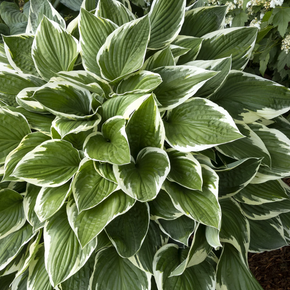
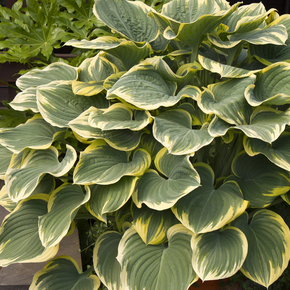
- Stunning medio-variegated foliage emerges green in spring then quickly transitions to a vivid golden-yellow center with warm orange overtones and contrasting deep green margins, delivering season-long color in shady spots.
- A medium-sized, mounding perennial that grows 16 to 18 inches tall and spreads 29 to 33 inches wide, making it ideal as a bold accent, ground cover, or mass planting under trees and in shade borders.
- Exceptionally cold-hardy in USDA Zones 3 through 9, easy to grow, and low-maintenance — simply cut back dormant foliage in fall or early spring and enjoy a fresh, colorful display year after year.
- Soft pale lavender blooms rise on tall scapes in midsummer, attracting bees, butterflies, and hummingbirds, while the plant's somewhat unpalatable foliage texture offers modest resistance to deer browsing.
Hosta 'Orange Marmalade' is a captivating medio-variegated shade perennial that delivers one of the most dynamic and eye-catching color shows in the hosta world. A sport of Hosta 'Paul's Glory' bred by renowned hybridizer Bob Solberg, this medium-sized cultivar forms a tidy, symmetrical mound of slightly quilted, heart-shaped leaves that begin the season as fresh green before rapidly transforming to feature a glowing golden-yellow center with a distinct warm orange tint and bold, contrasting dark green margins. As summer progresses the centers gradually lighten toward a creamy off-white, ensuring visual interest from the moment leaves emerge in spring all the way through the season. In midsummer, slender scapes rise above the foliage to bear elegant, bell-shaped pale lavender flowers that attract pollinators including bees, butterflies, and hummingbirds. Thriving in partial to full shade in USDA Hardiness Zones 3 through 9, Hosta 'Orange Marmalade' is an adaptable and low-maintenance perennial that performs beautifully in shaded borders, woodland gardens, along pathways, and in mixed container plantings. Its exceptional cold hardiness, reliable growth habit, and spectacular foliage coloration make it an outstanding choice for gardeners throughout Southern Oregon and Northern California seeking a long-lived, high-impact shade plant.
Plant Description
Hosta 'Orange Marmalade' is a deciduous herbaceous perennial prized for its spectacular, ever-changing foliage. It forms a dense, symmetrical mound of slightly quilted, heart-shaped leaves. The foliage is medio-variegated, meaning the center of each leaf carries the contrasting color while the margins remain a deep, rich green. Early in the season, leaves unfurl green before quickly developing a vivid golden-yellow center with a warm, luminous orange cast — giving the variety its evocative name. As summer advances into fall, the leaf centers transition from golden-yellow to a soft creamy off-white, while the dark green margins persist throughout the growing season. This cultivar is a sport (mutation) of Hosta 'Paul's Glory', selected and introduced by noted hosta breeder Bob Solberg. It is protected by U.S. Plant Patent USPP#16742.
Mature Size
| Attribute | Measurement |
|---|---|
| Height (foliage mound) | 16 to 18 inches |
| Spread (width) | 29 to 33 inches |
| AHS Size Classification | Medium |
| Growth Rate | Medium |
| Plant Habit | Clumping, mounding |
Hardiness Zones
Hosta 'Orange Marmalade' is reliably cold-hardy in USDA Plant Hardiness Zones 3 through 9. This exceptionally wide range means it will thrive in the cold winters of Southern Oregon as well as the milder winters of the Northern California coastal regions. It requires a period of winter dormancy with temperatures dipping below 40 degrees Fahrenheit for at least a couple of months in order to perform at its best the following season. Once established, it will return faithfully each spring for many years with virtually no winter protection needed in Zones 3 through 9.
Sunlight Requirements
This cultivar grows best in partial shade to full shade. It thrives under the dappled light of deciduous trees or in spots that receive morning sun followed by afternoon shade. In the warmer climates of Northern California, providing afternoon shade is especially important to prevent leaf scorch and to preserve the vibrant color contrast in the foliage. While hostas with yellow and gold tones like 'Orange Marmalade' can tolerate a bit more light than blue-leafed varieties, too much direct afternoon sun will cause the leaf centers to bleach out and the margins to scorch. Aim for 2 to 4 hours of gentle morning sun with protection from hot afternoon rays for the best color and plant health.
Soil and pH Preferences
- Soil type: Performs well in normal, sandy, or clay soils as long as drainage is adequate. Rich, organically amended soil produces the most vigorous growth.
- Soil pH: Adaptable to a range from slightly acidic (below 6.0) to neutral (6.0 to 8.0) and even mildly alkaline conditions. A slightly acidic to neutral pH of 6.0 to 7.5 is ideal.
- Drainage: Good drainage is essential. Hosta 'Orange Marmalade' is intolerant of consistently soggy or waterlogged soil, particularly during winter dormancy, which can lead to root and crown rot.
- Organic matter: Incorporating compost or aged bark at planting time will improve moisture retention in sandy soils, loosen compacted clay soils, and provide a slow-release source of nutrients.
Watering Guide
Hosta 'Orange Marmalade' prefers consistently moist soil and performs best with regular watering throughout the growing season, especially during dry summer spells common in Southern Oregon and Northern California. Water deeply and thoroughly at the base of the plant, allowing the top inch or two of soil to dry slightly between waterings. Avoid overhead irrigation when possible, as wet foliage can invite fungal diseases and creates an inviting environment for slugs and snails. A 2- to 3-inch layer of organic mulch spread around (but not directly against) the crown of the plant will help retain soil moisture, moderate soil temperature, and reduce the frequency of watering needed. During the winter dormancy period, supplemental watering is generally not necessary.
Fertilizing
For the most vigorous growth and vivid foliage color, feed Hosta 'Orange Marmalade' in early spring just as the new leaves begin to emerge from the ground. A balanced, slow-release granular fertilizer formulated for perennials (such as a 10-10-10 or similar analysis) worked lightly into the soil around the drip line of the plant works very well. Alternatively, a top-dressing of compost in spring provides a gentle, organic nutrient boost. A second light application can be made in early summer if desired. Avoid fertilizing after midsummer, as this can stimulate tender late-season growth that may be vulnerable to early frosts. Over-fertilization with high-nitrogen products can cause lush but weak growth and may diminish the striking foliage color contrast.
Pruning and Maintenance
Hosta 'Orange Marmalade' is a low-maintenance perennial that requires very little pruning. As a deciduous plant, the foliage will naturally yellow and die back to the ground in fall when temperatures drop. The spent foliage can be trimmed away at any time after it begins to collapse — either in the fall after a hard frost or in early spring before new growth emerges, but no later than mid-spring. Removing the old foliage in fall can help reduce overwintering habitat for slugs, snails, and other pests. Dividing the clumps every 3 to 5 years in early spring as the "eyes" (emerging leaf buds) are just beginning to show is beneficial for rejuvenating older plants and provides additional starts for other garden areas.
Planting Instructions
- Choose a site with partial to full shade and well-drained, organically rich soil.
- Dig a planting hole twice as wide as the root ball and equal to its depth, so that the crown of the plant sits at or very slightly above the surrounding soil grade.
- Amend the removed soil with compost or aged organic matter at a ratio of roughly one part amendment to two parts native soil, and backfill around the root ball.
- Firm the soil gently to eliminate air pockets, then water thoroughly to settle the roots.
- Apply a 2- to 3-inch layer of mulch (shredded bark, wood chips, or compost) around the plant, keeping it several inches away from the crown to prevent rot.
- Space multiple plants approximately 30 to 36 inches apart to allow for their mature spread and good air circulation.
- Water regularly throughout the first growing season to help establish a strong root system.
Seasonal Interest
Hosta 'Orange Marmalade' delivers visual interest across multiple seasons. In spring, the tightly furled leaf shoots push through the soil with their characteristic olive-green coloring before rapidly unfurling into leaves that quickly take on the golden-yellow center with warm orange tones that give this variety its name. By early to midsummer, tall, slender flower scapes rise above the foliage, topped with racemes of elegant, bell-shaped pale lavender blooms that add delicate vertical interest to the shade garden. As summer progresses and temperatures rise, the leaf centers gradually soften to creamy off-white while the dark green margins remain richly colored. In fall, the foliage takes on soft yellow tones before going fully dormant after frost. The dried seed capsules can add minor textural interest in early winter before the plant disappears until the following spring.
Landscape Uses
- Shaded borders: Outstanding as a mid-border specimen or repeated accent plant in mixed perennial and shrub borders beneath deciduous trees.
- Woodland gardens: A natural fit in woodland-style plantings alongside ferns, astilbes, and hellebores.
- Ground cover: Effective when mass-planted to cover and suppress weeds under trees or along the shaded side of structures.
- Pathway edging: Its neat, mounding habit and bold foliage make it a striking edging plant along shaded walkways and garden paths.
- Container gardening: Well-suited to large pots and mixed patio containers, where the dramatic foliage can be showcased up close on shaded decks or patios.
- Rock gardens: Can be used in sheltered, lightly shaded areas of a rock garden to add bold foliage contrast.
- Slope stabilization: Dense root systems help stabilize shaded slopes when planted in masses.
Companion Plants
Hosta 'Orange Marmalade' pairs beautifully with a wide range of shade-tolerant perennials and shrubs. The warm golden and orange tones of its foliage are beautifully complemented by the feathery plumes of astilbe in shades of white, pink, or red. Ferns — such as Japanese painted fern, autumn fern, or ostrich fern — provide fine-textured contrast to the hosta's bold, broad leaves. Heuchera (coral bells) with deep burgundy or lime-green foliage creates a striking color combination at the front of the border. Hellebores provide early spring interest before the hosta fully emerges. Bleeding heart (Dicentra) offers a delicate, airy texture and early-season blooms that complement the hosta's emergence. For structural contrast, shade-tolerant shrubs like Japanese forest grass (Hakonechloa macra), oakleaf hydrangea, or rhododendron make excellent backdrop companions.
Pests and Diseases
The most common pest challenges for Hosta 'Orange Marmalade' are slugs and snails, which are attracted to the tender foliage and thrive in the moist, shaded conditions the plant prefers. Reducing ground-level moisture, removing old foliage in fall, and applying iron phosphate-based slug bait are effective management strategies. Deer are known to browse hosta foliage, though 'Orange Marmalade' is reported to be somewhat less palatable than many other varieties. Rabbits and voles can also cause occasional damage. From a disease standpoint, root and crown rot can occur in poorly drained soils — proper site selection is the best prevention. Hosta Virus X (HVX) is a serious viral disease that causes mottled, distorted foliage; affected plants should be removed and destroyed immediately, and tools should be sanitized between plants. Anthracnose can cause irregular brown-edged spots on leaves in humid conditions and is best managed by improving air circulation and avoiding overhead watering.
Container Growing
Hosta 'Orange Marmalade' adapts well to container culture, making it an excellent choice for shaded patios, decks, and entryways. Select a large container — at least 14 to 16 inches in diameter — with adequate drainage holes to prevent waterlogging. Use a high-quality, well-draining potting mix amended with compost. Container-grown plants dry out more quickly than those in the ground, so check soil moisture regularly and water more frequently during warm weather. Fertilize container plants monthly through the growing season with a balanced liquid fertilizer. In winter, containers in Zone 7 and colder should be moved to an unheated garage or sheltered location to protect the roots from hard freezes, as container plants are more vulnerable to freeze damage than those planted in the ground. Repot every two to three years or when the plant becomes root-bound.
Wildlife Value
While Hosta 'Orange Marmalade' is primarily grown as an ornamental foliage plant, it does offer meaningful wildlife value in the shade garden. The pale lavender summer flowers are visited by bees, butterflies, and hummingbirds seeking nectar. The tall flower scapes can also attract hummingbird moths. The dense foliage canopy provides shelter for ground-dwelling beneficial insects and small amphibians like frogs and toads, which are natural predators of slugs and garden pests. It is important to note that all parts of the hosta plant are toxic to cats, dogs, and horses, so care should be taken in gardens frequented by pets.
- Stunning medio-variegated foliage emerges green in spring then quickly transitions to a vivid golden-yellow center with warm orange overtones and contrasting deep green margins, delivering season-long color in shady spots.
- A medium-sized, mounding perennial that grows 16 to 18 inches tall and spreads 29 to 33 inches wide, making it ideal as a bold accent, ground cover, or mass planting under trees and in shade borders.
- Exceptionally cold-hardy in USDA Zones 3 through 9, easy to grow, and low-maintenance — simply cut back dormant foliage in fall or early spring and enjoy a fresh, colorful display year after year.
- Soft pale lavender blooms rise on tall scapes in midsummer, attracting bees, butterflies, and hummingbirds, while the plant's somewhat unpalatable foliage texture offers modest resistance to deer browsing.
Hosta 'Orange Marmalade' is a captivating medio-variegated shade perennial that delivers one of the most dynamic and eye-catching color shows in the hosta world. A sport of Hosta 'Paul's Glory' bred by renowned hybridizer Bob Solberg, this medium-sized cultivar forms a tidy, symmetrical mound of slightly quilted, heart-shaped leaves that begin the season as fresh green before rapidly transforming to feature a glowing golden-yellow center with a distinct warm orange tint and bold, contrasting dark green margins. As summer progresses the centers gradually lighten toward a creamy off-white, ensuring visual interest from the moment leaves emerge in spring all the way through the season. In midsummer, slender scapes rise above the foliage to bear elegant, bell-shaped pale lavender flowers that attract pollinators including bees, butterflies, and hummingbirds. Thriving in partial to full shade in USDA Hardiness Zones 3 through 9, Hosta 'Orange Marmalade' is an adaptable and low-maintenance perennial that performs beautifully in shaded borders, woodland gardens, along pathways, and in mixed container plantings. Its exceptional cold hardiness, reliable growth habit, and spectacular foliage coloration make it an outstanding choice for gardeners throughout Southern Oregon and Northern California seeking a long-lived, high-impact shade plant.
Plant Description
Hosta 'Orange Marmalade' is a deciduous herbaceous perennial prized for its spectacular, ever-changing foliage. It forms a dense, symmetrical mound of slightly quilted, heart-shaped leaves. The foliage is medio-variegated, meaning the center of each leaf carries the contrasting color while the margins remain a deep, rich green. Early in the season, leaves unfurl green before quickly developing a vivid golden-yellow center with a warm, luminous orange cast — giving the variety its evocative name. As summer advances into fall, the leaf centers transition from golden-yellow to a soft creamy off-white, while the dark green margins persist throughout the growing season. This cultivar is a sport (mutation) of Hosta 'Paul's Glory', selected and introduced by noted hosta breeder Bob Solberg. It is protected by U.S. Plant Patent USPP#16742.
Mature Size
| Attribute | Measurement |
|---|---|
| Height (foliage mound) | 16 to 18 inches |
| Spread (width) | 29 to 33 inches |
| AHS Size Classification | Medium |
| Growth Rate | Medium |
| Plant Habit | Clumping, mounding |
Hardiness Zones
Hosta 'Orange Marmalade' is reliably cold-hardy in USDA Plant Hardiness Zones 3 through 9. This exceptionally wide range means it will thrive in the cold winters of Southern Oregon as well as the milder winters of the Northern California coastal regions. It requires a period of winter dormancy with temperatures dipping below 40 degrees Fahrenheit for at least a couple of months in order to perform at its best the following season. Once established, it will return faithfully each spring for many years with virtually no winter protection needed in Zones 3 through 9.
Sunlight Requirements
This cultivar grows best in partial shade to full shade. It thrives under the dappled light of deciduous trees or in spots that receive morning sun followed by afternoon shade. In the warmer climates of Northern California, providing afternoon shade is especially important to prevent leaf scorch and to preserve the vibrant color contrast in the foliage. While hostas with yellow and gold tones like 'Orange Marmalade' can tolerate a bit more light than blue-leafed varieties, too much direct afternoon sun will cause the leaf centers to bleach out and the margins to scorch. Aim for 2 to 4 hours of gentle morning sun with protection from hot afternoon rays for the best color and plant health.
Soil and pH Preferences
- Soil type: Performs well in normal, sandy, or clay soils as long as drainage is adequate. Rich, organically amended soil produces the most vigorous growth.
- Soil pH: Adaptable to a range from slightly acidic (below 6.0) to neutral (6.0 to 8.0) and even mildly alkaline conditions. A slightly acidic to neutral pH of 6.0 to 7.5 is ideal.
- Drainage: Good drainage is essential. Hosta 'Orange Marmalade' is intolerant of consistently soggy or waterlogged soil, particularly during winter dormancy, which can lead to root and crown rot.
- Organic matter: Incorporating compost or aged bark at planting time will improve moisture retention in sandy soils, loosen compacted clay soils, and provide a slow-release source of nutrients.
Watering Guide
Hosta 'Orange Marmalade' prefers consistently moist soil and performs best with regular watering throughout the growing season, especially during dry summer spells common in Southern Oregon and Northern California. Water deeply and thoroughly at the base of the plant, allowing the top inch or two of soil to dry slightly between waterings. Avoid overhead irrigation when possible, as wet foliage can invite fungal diseases and creates an inviting environment for slugs and snails. A 2- to 3-inch layer of organic mulch spread around (but not directly against) the crown of the plant will help retain soil moisture, moderate soil temperature, and reduce the frequency of watering needed. During the winter dormancy period, supplemental watering is generally not necessary.
Fertilizing
For the most vigorous growth and vivid foliage color, feed Hosta 'Orange Marmalade' in early spring just as the new leaves begin to emerge from the ground. A balanced, slow-release granular fertilizer formulated for perennials (such as a 10-10-10 or similar analysis) worked lightly into the soil around the drip line of the plant works very well. Alternatively, a top-dressing of compost in spring provides a gentle, organic nutrient boost. A second light application can be made in early summer if desired. Avoid fertilizing after midsummer, as this can stimulate tender late-season growth that may be vulnerable to early frosts. Over-fertilization with high-nitrogen products can cause lush but weak growth and may diminish the striking foliage color contrast.
Pruning and Maintenance
Hosta 'Orange Marmalade' is a low-maintenance perennial that requires very little pruning. As a deciduous plant, the foliage will naturally yellow and die back to the ground in fall when temperatures drop. The spent foliage can be trimmed away at any time after it begins to collapse — either in the fall after a hard frost or in early spring before new growth emerges, but no later than mid-spring. Removing the old foliage in fall can help reduce overwintering habitat for slugs, snails, and other pests. Dividing the clumps every 3 to 5 years in early spring as the "eyes" (emerging leaf buds) are just beginning to show is beneficial for rejuvenating older plants and provides additional starts for other garden areas.
Planting Instructions
- Choose a site with partial to full shade and well-drained, organically rich soil.
- Dig a planting hole twice as wide as the root ball and equal to its depth, so that the crown of the plant sits at or very slightly above the surrounding soil grade.
- Amend the removed soil with compost or aged organic matter at a ratio of roughly one part amendment to two parts native soil, and backfill around the root ball.
- Firm the soil gently to eliminate air pockets, then water thoroughly to settle the roots.
- Apply a 2- to 3-inch layer of mulch (shredded bark, wood chips, or compost) around the plant, keeping it several inches away from the crown to prevent rot.
- Space multiple plants approximately 30 to 36 inches apart to allow for their mature spread and good air circulation.
- Water regularly throughout the first growing season to help establish a strong root system.
Seasonal Interest
Hosta 'Orange Marmalade' delivers visual interest across multiple seasons. In spring, the tightly furled leaf shoots push through the soil with their characteristic olive-green coloring before rapidly unfurling into leaves that quickly take on the golden-yellow center with warm orange tones that give this variety its name. By early to midsummer, tall, slender flower scapes rise above the foliage, topped with racemes of elegant, bell-shaped pale lavender blooms that add delicate vertical interest to the shade garden. As summer progresses and temperatures rise, the leaf centers gradually soften to creamy off-white while the dark green margins remain richly colored. In fall, the foliage takes on soft yellow tones before going fully dormant after frost. The dried seed capsules can add minor textural interest in early winter before the plant disappears until the following spring.
Landscape Uses
- Shaded borders: Outstanding as a mid-border specimen or repeated accent plant in mixed perennial and shrub borders beneath deciduous trees.
- Woodland gardens: A natural fit in woodland-style plantings alongside ferns, astilbes, and hellebores.
- Ground cover: Effective when mass-planted to cover and suppress weeds under trees or along the shaded side of structures.
- Pathway edging: Its neat, mounding habit and bold foliage make it a striking edging plant along shaded walkways and garden paths.
- Container gardening: Well-suited to large pots and mixed patio containers, where the dramatic foliage can be showcased up close on shaded decks or patios.
- Rock gardens: Can be used in sheltered, lightly shaded areas of a rock garden to add bold foliage contrast.
- Slope stabilization: Dense root systems help stabilize shaded slopes when planted in masses.
Companion Plants
Hosta 'Orange Marmalade' pairs beautifully with a wide range of shade-tolerant perennials and shrubs. The warm golden and orange tones of its foliage are beautifully complemented by the feathery plumes of astilbe in shades of white, pink, or red. Ferns — such as Japanese painted fern, autumn fern, or ostrich fern — provide fine-textured contrast to the hosta's bold, broad leaves. Heuchera (coral bells) with deep burgundy or lime-green foliage creates a striking color combination at the front of the border. Hellebores provide early spring interest before the hosta fully emerges. Bleeding heart (Dicentra) offers a delicate, airy texture and early-season blooms that complement the hosta's emergence. For structural contrast, shade-tolerant shrubs like Japanese forest grass (Hakonechloa macra), oakleaf hydrangea, or rhododendron make excellent backdrop companions.
Pests and Diseases
The most common pest challenges for Hosta 'Orange Marmalade' are slugs and snails, which are attracted to the tender foliage and thrive in the moist, shaded conditions the plant prefers. Reducing ground-level moisture, removing old foliage in fall, and applying iron phosphate-based slug bait are effective management strategies. Deer are known to browse hosta foliage, though 'Orange Marmalade' is reported to be somewhat less palatable than many other varieties. Rabbits and voles can also cause occasional damage. From a disease standpoint, root and crown rot can occur in poorly drained soils — proper site selection is the best prevention. Hosta Virus X (HVX) is a serious viral disease that causes mottled, distorted foliage; affected plants should be removed and destroyed immediately, and tools should be sanitized between plants. Anthracnose can cause irregular brown-edged spots on leaves in humid conditions and is best managed by improving air circulation and avoiding overhead watering.
Container Growing
Hosta 'Orange Marmalade' adapts well to container culture, making it an excellent choice for shaded patios, decks, and entryways. Select a large container — at least 14 to 16 inches in diameter — with adequate drainage holes to prevent waterlogging. Use a high-quality, well-draining potting mix amended with compost. Container-grown plants dry out more quickly than those in the ground, so check soil moisture regularly and water more frequently during warm weather. Fertilize container plants monthly through the growing season with a balanced liquid fertilizer. In winter, containers in Zone 7 and colder should be moved to an unheated garage or sheltered location to protect the roots from hard freezes, as container plants are more vulnerable to freeze damage than those planted in the ground. Repot every two to three years or when the plant becomes root-bound.
Wildlife Value
While Hosta 'Orange Marmalade' is primarily grown as an ornamental foliage plant, it does offer meaningful wildlife value in the shade garden. The pale lavender summer flowers are visited by bees, butterflies, and hummingbirds seeking nectar. The tall flower scapes can also attract hummingbird moths. The dense foliage canopy provides shelter for ground-dwelling beneficial insects and small amphibians like frogs and toads, which are natural predators of slugs and garden pests. It is important to note that all parts of the hosta plant are toxic to cats, dogs, and horses, so care should be taken in gardens frequented by pets.
Related Products