
Zoom the image with the mouse
Western White Clematis - 1 Gallon
SKU:
2056640
UPC:
014949272817
$21.99
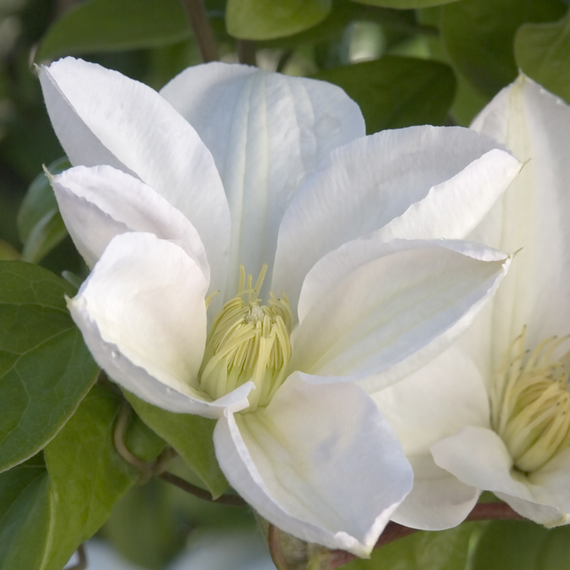
- A vigorous, native Western deciduous vine that blankets supports in masses of fragrant, creamy-white star-shaped flowers from late spring through late summer, followed by ornamental silky, feathery seed heads that provide stunning winter interest.
- Deeply rooted in western North America, this drought-tolerant, deer-resistant vine is perfectly adapted to the soils, climate, and conditions of Southern Oregon and Northern California gardens.
- Exceptionally wildlife-friendly — the blooms draw bees, butterflies, and hummingbirds, while the fluffy seed plumes are prized nesting material for songbirds and the dense vine canopy provides shelter for birds and beneficial insects.
- Low-maintenance and wide-ranging in use — train it over arbors, trellises, fences, or rocky slopes, or let it scramble naturally through native shrubs and trees for a dramatic, naturalistic effect.
Western White Clematis (Clematis ligusticifolia), also known as Virgin's Bower or Pepper Vine, is one of the most ecologically valuable and ornamentally rewarding native vines in the American West. A vigorous, deciduous perennial climber belonging to the Ranunculaceae (buttercup) family, it produces spectacular, densely packed clusters of small, fragrant, creamy-white, four-sepaled flowers — each about 1 inch across — so abundantly that they nearly smother the lush pinnately compound foliage from late spring through late summer. As the blooms fade, female plants develop the vine's second season of beauty: billowing, silky-plumed seed heads that shimmer and catch the light well into winter, earning it the nickname "Old Man's Beard." Native across the western United States from the Pacific Coast to the Rocky Mountains and Great Plains, this adaptable climber thrives in a broad range of soil types — including the alkaline and clay-heavy soils common throughout Southern Oregon and Northern California — and becomes impressively drought-tolerant once established. Growing anywhere from 10 to 30 feet depending on conditions and support, Western White Clematis is an outstanding choice for covering arbors, pergolas, trellises, fences, and rock-faced slopes, and plays a vital ecological role by supporting native pollinators, hummingbirds, and nesting songbirds throughout the growing season. With low maintenance requirements, strong disease resistance, and a bold, naturalistic character, it is a standout performer in cottage gardens, wildlife gardens, riparian plantings, and any landscape where a fast-growing, season-long beauty of a native vine is desired.
Plant Description
Western White Clematis (Clematis ligusticifolia) is a robust, woody to semi-woody deciduous perennial vine that climbs using its twisting leaf petioles, which coil around any available support — twigs, wire, fencing, or bark — with impressive tenacity. The foliage is pinnately compound, with 5 to 7 medium-green leaflets per leaf, each leaflet 1 to 3 inches long with slightly toothed or lobed margins, giving the vine a lush, textured appearance throughout the growing season. The flowers are not technically petaled; the showy white parts are four petal-like sepals surrounding a prominent central cluster of stamens, creating a star-shaped appearance. Individual flowers are small — roughly 1 inch in diameter — but they are produced in such extraordinary abundance in branched panicles that the entire vine appears clothed in white during peak bloom. The vine is dioecious, meaning male and female flowers occur on separate plants. Female plants produce the ornamental feathery seed heads — dense clusters of silky, elongated plumes that persist through fall and winter. Stems become increasingly woody at the base with age, forming a semi-permanent structural framework that re-sprouts vigorously each spring.
Mature Size
| Attribute | Measurement |
|---|---|
| Vine Length (Height) | 10 to 30 feet (3 to 9 meters), depending on support and conditions |
| Spread | 2 to 6 feet (60 cm to 180 cm) |
| Annual Growth Rate | Very fast — can grow 10 to 15 feet in a single season under favorable conditions |
| Growth Habit | Climbing, twining via leaf petioles; woody at the base with age |
| Lifespan | Long-lived perennial; re-sprouts vigorously each spring after pruning |
Hardiness Zones and Climate
Western White Clematis is hardy in USDA Zones 4 through 9, making it well-suited to the full range of climates encountered across Southern Oregon and Northern California — from the cooler, higher-elevation Siskiyou and Cascade foothills to the warmer valley floors of the Rogue, Umpqua, Klamath, and Sacramento drainages. As a native species with one of the broadest distributions of any vine in the American West — spanning from British Columbia and Alberta south through the Pacific States, the Rocky Mountains, and into the desert Southwest — it is exceptionally well-adapted to the regional conditions of the Pacific Northwest and Northern California. It tolerates hard winters, late frosts, and hot, dry summers with equal composure once established. In very hot, low-elevation locations, afternoon shade helps maintain peak vigor and bloom.
Sunlight Requirements
Western White Clematis performs best in full sun to partial shade, ideally receiving 6 to 8 hours of direct sunlight per day. Like most clematis, it thrives with its "head in the sun and feet in the shade" — meaning the climbing stems should reach into good light while the root zone is kept cool and shaded by mulch or low companion plantings. In the warmer interior valleys of Southern Oregon and Northern California, afternoon shade is especially beneficial, helping the vine maintain strong growth and prolific flowering without heat stress. In cooler coastal and higher-elevation settings, full sun exposure is ideal. Avoid deep, dense shade, which significantly reduces flowering and overall vigor.
Soil and pH Preferences
One of the most adaptable features of Western White Clematis is its tolerance of a wide range of soil types — a key advantage over many cultivated hybrid clematis that can be finicky about soil conditions. This native vine grows well in clay, loam, and sandy loam soils and tolerates the alkaline, calcareous soils common throughout much of Southern Oregon and Northern California, where many hybrid clematis struggle. It prefers moist but well-drained conditions and does not tolerate prolonged waterlogging or standing water around the roots. Ideal soil pH ranges from approximately 6.5 to 7.5 (slightly acidic to neutral to mildly alkaline). Amending the planting hole with organic compost at planting time improves moisture retention in sandy soils and improves drainage and structure in heavy clay soils. Mulching the root zone at a depth of 2 to 3 inches helps maintain consistent soil moisture and keeps roots cool.
Watering Guide
Young plants require regular, consistent watering during their first one to two growing seasons to establish a deep, healthy root system. Water deeply — soaking the root zone to a depth of several inches — rather than shallowly and frequently. Once established, Western White Clematis becomes notably drought-tolerant, drawing on deep soil moisture reserves. However, in the hotter, drier interior valleys of Southern Oregon and Northern California, supplemental irrigation during the peak of summer helps maintain lush foliage and prolific blooming. Allow the top few inches of soil to dry slightly between waterings during the growing season, but never allow the root zone to dry out completely during the vine's first two years. Reduce watering significantly in fall and winter as the vine goes dormant. Avoid overwatering, which can lead to root rot and yellowing foliage — good drainage is essential at all times.
Fertilizing
Western White Clematis is not a heavy feeder, especially when planted in organically amended soil. For best results, apply a balanced, slow-release granular fertilizer (such as a 10-10-10 or similar balanced formula) in early spring just as new growth begins to emerge. A light topdressing of compost around the root zone each spring provides a slow, steady source of organic nutrients and improves soil structure over time. Avoid high-nitrogen fertilizers, which encourage excessive leafy growth at the expense of flowering. A second, lighter feeding with a low-nitrogen, bloom-boosting fertilizer (higher in phosphorus and potassium) can be applied in early summer to support peak flowering. Do not fertilize after midsummer, as late-season feeding can stimulate tender new growth that may be damaged by early fall frosts.
Pruning and Maintenance
Western White Clematis belongs to Pruning Group 3 (also called the "hard prune" group) — it blooms on new growth produced in the current season, so it benefits from and tolerates a dramatic cutback each year. The recommended approach is to prune all stems back hard in late winter or early spring — before new growth begins — cutting them down to approximately 12 to 24 inches above ground level, just above a pair of strong, healthy buds. This hard annual pruning encourages the most vigorous new growth and the most prolific bloom display each season. Without regular pruning, the vine can become a dense, tangled, top-heavy mass with flowers concentrated well above eye level and a bare, woody lower structure. Western White Clematis recovers rapidly from even the most severe pruning, typically reaching its full seasonal length by midsummer. Where unwanted self-seeding is a concern, deadhead spent flowers or cut the vine back immediately after flowering before seed heads fully develop.
Planting Instructions
- Choose a planting site with full sun to partial shade and well-drained soil. Ensure a sturdy trellis, arbor, fence, pergola, or large shrub is in place before planting — this vine grows quickly and needs substantial support.
- Dig a planting hole approximately twice as wide and as deep as the root ball. Mix generous amounts of compost or aged organic matter into the backfill soil to improve drainage and nutrient availability.
- Plant the vine slightly deeper than it was growing in its nursery container — burying the crown 2 to 3 inches below the soil surface helps protect the crown from damage and encourages new shoots to sprout from below ground.
- Backfill the hole, firm the soil gently around the root ball, and water thoroughly to settle the soil and eliminate air pockets.
- Apply a 2- to 3-inch layer of organic mulch (wood chips, straw, or shredded bark) over the root zone, keeping mulch a few inches away from the main stem to prevent crown rot.
- Guide initial stems toward the support structure and loosely secure them with soft plant ties. Once the vine's petioles begin to clasp the support, it will climb on its own.
- The ideal planting time is early spring or fall when temperatures are moderate and the vine can establish before the stress of summer heat.
Seasonal Interest
Western White Clematis delivers multi-season ornamental interest throughout the year. In spring, attractive fresh green compound foliage emerges quickly, clothing the support structure with lush, textured leaves. From late spring through late summer — typically May through September depending on location and elevation — the vine puts on its spectacular floral show: masses of small, fragrant, creamy-white star-shaped flowers that cover the plant so densely the foliage can be nearly hidden beneath the blooms. As the flowers fade in late summer and fall, female plants transform into an equally dramatic display of billowing, silky-plumed seed heads that shimmer in the autumn light and persist well into winter, catching morning frost and glowing in low-angle sunlight. The foliage turns yellow to golden-tan in fall before dropping, adding one final note of seasonal color. Even in winter, the woody stem framework and persistent plumes lend structure and textural interest to the dormant garden.
Landscape Uses
- Arbors and Pergolas: Rapidly covers large overhead structures with lush summer foliage and spectacular white bloom, creating a shaded, fragrant outdoor room.
- Trellises and Fences: Ideal for covering chain-link, wooden, or wire fences — transforms utilitarian structures into a flowering garden feature.
- Privacy Screening: Dense deciduous foliage provides effective summer privacy when trained on a fence or freestanding trellis structure.
- Hillside and Slope Stabilization: Vigorous root system and spreading growth help stabilize slopes, stream banks, and erosion-prone areas.
- Native and Wildlife Gardens: An outstanding choice for naturalistic and native plant gardens throughout Southern Oregon and Northern California, providing exceptional ecological value for pollinators and birds.
- Riparian Plantings: Naturally at home along stream banks, pond edges, and in moist riparian corridors, where it mirrors its wild habitat beautifully.
- Cottage and Informal Gardens: The romantic, cloud-like white bloom and graceful seed plumes suit informal, cottage-style, and meadow garden designs.
- Covering Unsightly Structures: Fast-growing habit quickly conceals old sheds, utility boxes, rock piles, or other landscape eyesores with attractive foliage and bloom.
Wildlife Value
Western White Clematis is one of the most ecologically valuable native vines in the western United States, supporting a remarkable diversity of wildlife throughout the seasons. The profuse late-spring to late-summer flowers are an important nectar source for native bees — including bumble bees, mining bees, and sweat bees — as well as butterflies and hummingbirds. The late-season bloom period is particularly valuable for pollinators building energy reserves heading into fall. After flowering, the silky, feathery seed plumes are actively sought by nesting birds — hummingbirds, bushtits, Yellow Warblers, and various other songbirds incorporate the soft fibers into their cup nests. The dense vine canopy provides excellent cover and nesting habitat for songbirds, and small birds and mammals use the thicket-like structure for shelter and protection. Deer may browse the foliage where accessible, but the plant is generally considered deer-tolerant and recovers readily from browsing.
Companion Plants
Western White Clematis pairs beautifully with a wide range of native and ornamental plants that complement its vigorous, late-season white bloom and naturalistic character. Consider these companions for Southern Oregon and Northern California gardens:
- Western Wild Rose (Rosa woodsii): A classic native pairing — the clematis climbs through and over the rose, combining fragrant white and pink blooms in the same space.
- Big Sagebrush (Artemisia tridentata): The silvery-gray foliage and aromatic character of sagebrush creates a striking textural and color contrast with the vine's white flowers.
- Chokecherry (Prunus virginiana): A native shrub or small tree that serves as a natural host for the vine to climb, just as it does in the wild.
- Idaho Fescue (Festuca idahoensis): Low-growing native bunchgrass provides attractive ground-level contrast and helps shade the vine's root zone.
- Black Hawthorn (Crataegus douglasii): A sturdy native shrub that supports the vine naturally while providing complementary wildlife value.
- Ponderosa Pine (Pinus ponderosa): Allows the vine to climb naturally in the manner of its wild riparian forest habitat, where it drapes through the canopies of large native trees.
Pests and Diseases
Western White Clematis is notably disease-resistant and largely pest-free — one of its most appreciated attributes for low-maintenance gardening. No serious pest or disease problems are typically encountered. On rare occasions, the following minor issues may be observed:
- Powdery Mildew: Can occasionally appear on foliage in areas with poor air circulation or during periods of high humidity. Improve airflow around the vine and avoid overhead watering to minimize risk. Typically a cosmetic issue only and does not significantly harm a healthy, established plant.
- Aphids: Occasionally congregate on new growth in spring. A strong spray of water or an application of insecticidal soap resolves minor infestations without harm to the plant or beneficial insects.
- Leaf Spot: Minor fungal leaf spotting can appear in persistently wet conditions. Good drainage and adequate spacing prevent most occurrences.
- Root Rot: The most common serious issue, caused by consistently waterlogged soil. Ensure excellent drainage at the planting site to prevent this problem entirely.
- Deer Browsing: While the plant is generally considered deer-tolerant and contains mildly irritating compounds, deer may browse tender new growth, especially in areas with high deer pressure. The vine typically recovers quickly.
Toxicity and Safety
All parts of Western White Clematis contain protoanemonin, a mildly toxic compound found throughout the Ranunculaceae (buttercup) family. Gardeners should be aware of the following safety considerations:
- Humans: The plant is considered mildly toxic if consumed. Ingestion of plant material can cause mouth pain, burning, and irritation of the digestive tract. Contact with the sap during extensive handling may cause skin irritation in sensitive individuals. Wear gloves when pruning or handling the vine extensively, especially if you have sensitive skin.
- Pets — Dogs and Cats: All parts of the plant are considered mildly toxic to dogs and cats. Ingestion may cause gastrointestinal symptoms including vomiting and diarrhea. Keep pets away from the plant and contact a veterinarian promptly if ingestion is suspected.
- Horses: Also considered toxic to horses. Do not plant in or adjacent to horse enclosures or pastures.
- Children: Educate children to avoid handling or tasting any part of the plant.
Native Range and Ecological Background
Clematis ligusticifolia is one of the most ecologically wide-ranging native vines in North America. Its native range extends from British Columbia and Alberta in Canada south through Washington, Oregon, Idaho, Montana, Wyoming, Colorado, Utah, Nevada, Arizona, New Mexico, and into northern Mexico, and east across the Great Plains into the Dakotas, Nebraska, and Kansas. In Southern Oregon and Northern California, it is a characteristic component of native riparian plant communities, naturally occurring along perennial and intermittent streams, in canyon bottoms, on moist rocky slopes, and climbing through the canopies of native cottonwoods, willows, alders, and oaks. As a regionally native species, it is superbly adapted to local soils — including the alkaline, volcanic, and clay-heavy substrates of the Siskiyou, Klamath, and Cascade regions — as well as to local climate patterns, including wet winters, dry summers, and late-spring frosts at higher elevations. Choosing regionally native plants like Western White Clematis supports local biodiversity, reduces the need for supplemental irrigation and amendments, and creates garden habitats that connect meaningfully to the surrounding natural landscape.
- A vigorous, native Western deciduous vine that blankets supports in masses of fragrant, creamy-white star-shaped flowers from late spring through late summer, followed by ornamental silky, feathery seed heads that provide stunning winter interest.
- Deeply rooted in western North America, this drought-tolerant, deer-resistant vine is perfectly adapted to the soils, climate, and conditions of Southern Oregon and Northern California gardens.
- Exceptionally wildlife-friendly — the blooms draw bees, butterflies, and hummingbirds, while the fluffy seed plumes are prized nesting material for songbirds and the dense vine canopy provides shelter for birds and beneficial insects.
- Low-maintenance and wide-ranging in use — train it over arbors, trellises, fences, or rocky slopes, or let it scramble naturally through native shrubs and trees for a dramatic, naturalistic effect.
Western White Clematis (Clematis ligusticifolia), also known as Virgin's Bower or Pepper Vine, is one of the most ecologically valuable and ornamentally rewarding native vines in the American West. A vigorous, deciduous perennial climber belonging to the Ranunculaceae (buttercup) family, it produces spectacular, densely packed clusters of small, fragrant, creamy-white, four-sepaled flowers — each about 1 inch across — so abundantly that they nearly smother the lush pinnately compound foliage from late spring through late summer. As the blooms fade, female plants develop the vine's second season of beauty: billowing, silky-plumed seed heads that shimmer and catch the light well into winter, earning it the nickname "Old Man's Beard." Native across the western United States from the Pacific Coast to the Rocky Mountains and Great Plains, this adaptable climber thrives in a broad range of soil types — including the alkaline and clay-heavy soils common throughout Southern Oregon and Northern California — and becomes impressively drought-tolerant once established. Growing anywhere from 10 to 30 feet depending on conditions and support, Western White Clematis is an outstanding choice for covering arbors, pergolas, trellises, fences, and rock-faced slopes, and plays a vital ecological role by supporting native pollinators, hummingbirds, and nesting songbirds throughout the growing season. With low maintenance requirements, strong disease resistance, and a bold, naturalistic character, it is a standout performer in cottage gardens, wildlife gardens, riparian plantings, and any landscape where a fast-growing, season-long beauty of a native vine is desired.
Plant Description
Western White Clematis (Clematis ligusticifolia) is a robust, woody to semi-woody deciduous perennial vine that climbs using its twisting leaf petioles, which coil around any available support — twigs, wire, fencing, or bark — with impressive tenacity. The foliage is pinnately compound, with 5 to 7 medium-green leaflets per leaf, each leaflet 1 to 3 inches long with slightly toothed or lobed margins, giving the vine a lush, textured appearance throughout the growing season. The flowers are not technically petaled; the showy white parts are four petal-like sepals surrounding a prominent central cluster of stamens, creating a star-shaped appearance. Individual flowers are small — roughly 1 inch in diameter — but they are produced in such extraordinary abundance in branched panicles that the entire vine appears clothed in white during peak bloom. The vine is dioecious, meaning male and female flowers occur on separate plants. Female plants produce the ornamental feathery seed heads — dense clusters of silky, elongated plumes that persist through fall and winter. Stems become increasingly woody at the base with age, forming a semi-permanent structural framework that re-sprouts vigorously each spring.
Mature Size
| Attribute | Measurement |
|---|---|
| Vine Length (Height) | 10 to 30 feet (3 to 9 meters), depending on support and conditions |
| Spread | 2 to 6 feet (60 cm to 180 cm) |
| Annual Growth Rate | Very fast — can grow 10 to 15 feet in a single season under favorable conditions |
| Growth Habit | Climbing, twining via leaf petioles; woody at the base with age |
| Lifespan | Long-lived perennial; re-sprouts vigorously each spring after pruning |
Hardiness Zones and Climate
Western White Clematis is hardy in USDA Zones 4 through 9, making it well-suited to the full range of climates encountered across Southern Oregon and Northern California — from the cooler, higher-elevation Siskiyou and Cascade foothills to the warmer valley floors of the Rogue, Umpqua, Klamath, and Sacramento drainages. As a native species with one of the broadest distributions of any vine in the American West — spanning from British Columbia and Alberta south through the Pacific States, the Rocky Mountains, and into the desert Southwest — it is exceptionally well-adapted to the regional conditions of the Pacific Northwest and Northern California. It tolerates hard winters, late frosts, and hot, dry summers with equal composure once established. In very hot, low-elevation locations, afternoon shade helps maintain peak vigor and bloom.
Sunlight Requirements
Western White Clematis performs best in full sun to partial shade, ideally receiving 6 to 8 hours of direct sunlight per day. Like most clematis, it thrives with its "head in the sun and feet in the shade" — meaning the climbing stems should reach into good light while the root zone is kept cool and shaded by mulch or low companion plantings. In the warmer interior valleys of Southern Oregon and Northern California, afternoon shade is especially beneficial, helping the vine maintain strong growth and prolific flowering without heat stress. In cooler coastal and higher-elevation settings, full sun exposure is ideal. Avoid deep, dense shade, which significantly reduces flowering and overall vigor.
Soil and pH Preferences
One of the most adaptable features of Western White Clematis is its tolerance of a wide range of soil types — a key advantage over many cultivated hybrid clematis that can be finicky about soil conditions. This native vine grows well in clay, loam, and sandy loam soils and tolerates the alkaline, calcareous soils common throughout much of Southern Oregon and Northern California, where many hybrid clematis struggle. It prefers moist but well-drained conditions and does not tolerate prolonged waterlogging or standing water around the roots. Ideal soil pH ranges from approximately 6.5 to 7.5 (slightly acidic to neutral to mildly alkaline). Amending the planting hole with organic compost at planting time improves moisture retention in sandy soils and improves drainage and structure in heavy clay soils. Mulching the root zone at a depth of 2 to 3 inches helps maintain consistent soil moisture and keeps roots cool.
Watering Guide
Young plants require regular, consistent watering during their first one to two growing seasons to establish a deep, healthy root system. Water deeply — soaking the root zone to a depth of several inches — rather than shallowly and frequently. Once established, Western White Clematis becomes notably drought-tolerant, drawing on deep soil moisture reserves. However, in the hotter, drier interior valleys of Southern Oregon and Northern California, supplemental irrigation during the peak of summer helps maintain lush foliage and prolific blooming. Allow the top few inches of soil to dry slightly between waterings during the growing season, but never allow the root zone to dry out completely during the vine's first two years. Reduce watering significantly in fall and winter as the vine goes dormant. Avoid overwatering, which can lead to root rot and yellowing foliage — good drainage is essential at all times.
Fertilizing
Western White Clematis is not a heavy feeder, especially when planted in organically amended soil. For best results, apply a balanced, slow-release granular fertilizer (such as a 10-10-10 or similar balanced formula) in early spring just as new growth begins to emerge. A light topdressing of compost around the root zone each spring provides a slow, steady source of organic nutrients and improves soil structure over time. Avoid high-nitrogen fertilizers, which encourage excessive leafy growth at the expense of flowering. A second, lighter feeding with a low-nitrogen, bloom-boosting fertilizer (higher in phosphorus and potassium) can be applied in early summer to support peak flowering. Do not fertilize after midsummer, as late-season feeding can stimulate tender new growth that may be damaged by early fall frosts.
Pruning and Maintenance
Western White Clematis belongs to Pruning Group 3 (also called the "hard prune" group) — it blooms on new growth produced in the current season, so it benefits from and tolerates a dramatic cutback each year. The recommended approach is to prune all stems back hard in late winter or early spring — before new growth begins — cutting them down to approximately 12 to 24 inches above ground level, just above a pair of strong, healthy buds. This hard annual pruning encourages the most vigorous new growth and the most prolific bloom display each season. Without regular pruning, the vine can become a dense, tangled, top-heavy mass with flowers concentrated well above eye level and a bare, woody lower structure. Western White Clematis recovers rapidly from even the most severe pruning, typically reaching its full seasonal length by midsummer. Where unwanted self-seeding is a concern, deadhead spent flowers or cut the vine back immediately after flowering before seed heads fully develop.
Planting Instructions
- Choose a planting site with full sun to partial shade and well-drained soil. Ensure a sturdy trellis, arbor, fence, pergola, or large shrub is in place before planting — this vine grows quickly and needs substantial support.
- Dig a planting hole approximately twice as wide and as deep as the root ball. Mix generous amounts of compost or aged organic matter into the backfill soil to improve drainage and nutrient availability.
- Plant the vine slightly deeper than it was growing in its nursery container — burying the crown 2 to 3 inches below the soil surface helps protect the crown from damage and encourages new shoots to sprout from below ground.
- Backfill the hole, firm the soil gently around the root ball, and water thoroughly to settle the soil and eliminate air pockets.
- Apply a 2- to 3-inch layer of organic mulch (wood chips, straw, or shredded bark) over the root zone, keeping mulch a few inches away from the main stem to prevent crown rot.
- Guide initial stems toward the support structure and loosely secure them with soft plant ties. Once the vine's petioles begin to clasp the support, it will climb on its own.
- The ideal planting time is early spring or fall when temperatures are moderate and the vine can establish before the stress of summer heat.
Seasonal Interest
Western White Clematis delivers multi-season ornamental interest throughout the year. In spring, attractive fresh green compound foliage emerges quickly, clothing the support structure with lush, textured leaves. From late spring through late summer — typically May through September depending on location and elevation — the vine puts on its spectacular floral show: masses of small, fragrant, creamy-white star-shaped flowers that cover the plant so densely the foliage can be nearly hidden beneath the blooms. As the flowers fade in late summer and fall, female plants transform into an equally dramatic display of billowing, silky-plumed seed heads that shimmer in the autumn light and persist well into winter, catching morning frost and glowing in low-angle sunlight. The foliage turns yellow to golden-tan in fall before dropping, adding one final note of seasonal color. Even in winter, the woody stem framework and persistent plumes lend structure and textural interest to the dormant garden.
Landscape Uses
- Arbors and Pergolas: Rapidly covers large overhead structures with lush summer foliage and spectacular white bloom, creating a shaded, fragrant outdoor room.
- Trellises and Fences: Ideal for covering chain-link, wooden, or wire fences — transforms utilitarian structures into a flowering garden feature.
- Privacy Screening: Dense deciduous foliage provides effective summer privacy when trained on a fence or freestanding trellis structure.
- Hillside and Slope Stabilization: Vigorous root system and spreading growth help stabilize slopes, stream banks, and erosion-prone areas.
- Native and Wildlife Gardens: An outstanding choice for naturalistic and native plant gardens throughout Southern Oregon and Northern California, providing exceptional ecological value for pollinators and birds.
- Riparian Plantings: Naturally at home along stream banks, pond edges, and in moist riparian corridors, where it mirrors its wild habitat beautifully.
- Cottage and Informal Gardens: The romantic, cloud-like white bloom and graceful seed plumes suit informal, cottage-style, and meadow garden designs.
- Covering Unsightly Structures: Fast-growing habit quickly conceals old sheds, utility boxes, rock piles, or other landscape eyesores with attractive foliage and bloom.
Wildlife Value
Western White Clematis is one of the most ecologically valuable native vines in the western United States, supporting a remarkable diversity of wildlife throughout the seasons. The profuse late-spring to late-summer flowers are an important nectar source for native bees — including bumble bees, mining bees, and sweat bees — as well as butterflies and hummingbirds. The late-season bloom period is particularly valuable for pollinators building energy reserves heading into fall. After flowering, the silky, feathery seed plumes are actively sought by nesting birds — hummingbirds, bushtits, Yellow Warblers, and various other songbirds incorporate the soft fibers into their cup nests. The dense vine canopy provides excellent cover and nesting habitat for songbirds, and small birds and mammals use the thicket-like structure for shelter and protection. Deer may browse the foliage where accessible, but the plant is generally considered deer-tolerant and recovers readily from browsing.
Companion Plants
Western White Clematis pairs beautifully with a wide range of native and ornamental plants that complement its vigorous, late-season white bloom and naturalistic character. Consider these companions for Southern Oregon and Northern California gardens:
- Western Wild Rose (Rosa woodsii): A classic native pairing — the clematis climbs through and over the rose, combining fragrant white and pink blooms in the same space.
- Big Sagebrush (Artemisia tridentata): The silvery-gray foliage and aromatic character of sagebrush creates a striking textural and color contrast with the vine's white flowers.
- Chokecherry (Prunus virginiana): A native shrub or small tree that serves as a natural host for the vine to climb, just as it does in the wild.
- Idaho Fescue (Festuca idahoensis): Low-growing native bunchgrass provides attractive ground-level contrast and helps shade the vine's root zone.
- Black Hawthorn (Crataegus douglasii): A sturdy native shrub that supports the vine naturally while providing complementary wildlife value.
- Ponderosa Pine (Pinus ponderosa): Allows the vine to climb naturally in the manner of its wild riparian forest habitat, where it drapes through the canopies of large native trees.
Pests and Diseases
Western White Clematis is notably disease-resistant and largely pest-free — one of its most appreciated attributes for low-maintenance gardening. No serious pest or disease problems are typically encountered. On rare occasions, the following minor issues may be observed:
- Powdery Mildew: Can occasionally appear on foliage in areas with poor air circulation or during periods of high humidity. Improve airflow around the vine and avoid overhead watering to minimize risk. Typically a cosmetic issue only and does not significantly harm a healthy, established plant.
- Aphids: Occasionally congregate on new growth in spring. A strong spray of water or an application of insecticidal soap resolves minor infestations without harm to the plant or beneficial insects.
- Leaf Spot: Minor fungal leaf spotting can appear in persistently wet conditions. Good drainage and adequate spacing prevent most occurrences.
- Root Rot: The most common serious issue, caused by consistently waterlogged soil. Ensure excellent drainage at the planting site to prevent this problem entirely.
- Deer Browsing: While the plant is generally considered deer-tolerant and contains mildly irritating compounds, deer may browse tender new growth, especially in areas with high deer pressure. The vine typically recovers quickly.
Toxicity and Safety
All parts of Western White Clematis contain protoanemonin, a mildly toxic compound found throughout the Ranunculaceae (buttercup) family. Gardeners should be aware of the following safety considerations:
- Humans: The plant is considered mildly toxic if consumed. Ingestion of plant material can cause mouth pain, burning, and irritation of the digestive tract. Contact with the sap during extensive handling may cause skin irritation in sensitive individuals. Wear gloves when pruning or handling the vine extensively, especially if you have sensitive skin.
- Pets — Dogs and Cats: All parts of the plant are considered mildly toxic to dogs and cats. Ingestion may cause gastrointestinal symptoms including vomiting and diarrhea. Keep pets away from the plant and contact a veterinarian promptly if ingestion is suspected.
- Horses: Also considered toxic to horses. Do not plant in or adjacent to horse enclosures or pastures.
- Children: Educate children to avoid handling or tasting any part of the plant.
Native Range and Ecological Background
Clematis ligusticifolia is one of the most ecologically wide-ranging native vines in North America. Its native range extends from British Columbia and Alberta in Canada south through Washington, Oregon, Idaho, Montana, Wyoming, Colorado, Utah, Nevada, Arizona, New Mexico, and into northern Mexico, and east across the Great Plains into the Dakotas, Nebraska, and Kansas. In Southern Oregon and Northern California, it is a characteristic component of native riparian plant communities, naturally occurring along perennial and intermittent streams, in canyon bottoms, on moist rocky slopes, and climbing through the canopies of native cottonwoods, willows, alders, and oaks. As a regionally native species, it is superbly adapted to local soils — including the alkaline, volcanic, and clay-heavy substrates of the Siskiyou, Klamath, and Cascade regions — as well as to local climate patterns, including wet winters, dry summers, and late-spring frosts at higher elevations. Choosing regionally native plants like Western White Clematis supports local biodiversity, reduces the need for supplemental irrigation and amendments, and creates garden habitats that connect meaningfully to the surrounding natural landscape.