
Zoom the image with the mouse
Jackman's Clematis - 1 Gallon
SKU:
1954340
UPC:
014949272619
$21.99
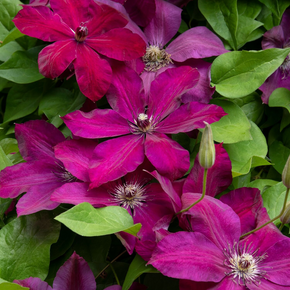
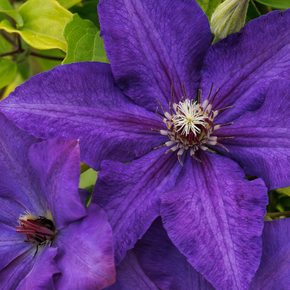
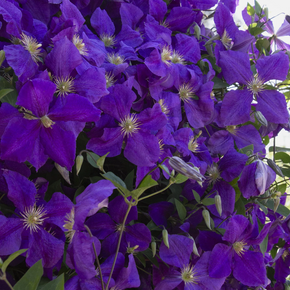
- Iconic deciduous climbing vine producing a magnificent flush of velvety, dark purple-to-violet blooms from early through late summer, each flower measuring 3-4 inches across
- Vigorous grower reaching 8-12 feet tall with a 4-6 foot spread, ideal for draping trellises, arbors, fences, pergolas, and garden walls with lush seasonal color
- Hardy in USDA Zones 4-9, low maintenance, and resistant to browsing deer and rabbits, making it one of the most reliable and rewarding flowering vines available
- A Royal Horticultural Society Award of Garden Merit recipient first introduced in 1862, and still widely regarded as the gold standard of large-flowered clematis hybrids
Clematis 'Jackmanii' — commonly known as Jackman's Clematis — is a timeless deciduous perennial vine that has captivated gardeners since its introduction in England in 1862, and for good reason: from early to late summer, this vigorous climber smothers itself in an extraordinary profusion of broad, 4-petaled blossoms in deep, velvety purple that gradually fade to rich violet, each flower showcasing a striking contrast of creamy greenish-yellow anthers at the center. A hybrid cross of Clematis lanuginosa and Clematis viticella, 'Jackmanii' is celebrated as much for its adaptability and ease of care as for its sheer floral impact, thriving in USDA Hardiness Zones 4 through 9 in full sun to partial shade and growing 8-12 feet in a single season when given a sturdy support structure to climb. Belonging to Pruning Group 3, it blooms exclusively on new wood, meaning an annual hard prune in late winter or early spring rewards gardeners with a fresh, vigorous canopy of blooms each summer without fail. Whether trained up a fence, trellis, arbor, or pergola, or allowed to weave through climbing roses and other companion plants for a romantic layered effect, Jackman's Clematis brings unmatched vertical drama and season-long color to the Southern Oregon and Northern California landscape.
Plant Description
Clematis 'Jackmanii' is a deciduous perennial climbing vine and one of the most celebrated flowering vines in horticulture. First introduced in 1862 by British nurseryman George Jackman, it was created by crossing Clematis lanuginosa with Clematis viticella and quickly became a garden staple that endures to this day. The plant is a member of the Ranunculaceae (Buttercup) family and climbs by twisting its leaf petioles around any available support. Its flowers are its defining glory: bold, wide-open, 4-petaled blossoms measuring 3-4 inches across in deep, velvety purple that gracefully fade to rich violet as they age, each one beautifully set off by contrasting creamy greenish-yellow anthers at the center. Foliage is medium green and pinnately compound. The vine dies back to near ground level each winter and re-emerges with great vigor in spring, putting on its spectacular summer flower show before going dormant again in fall. It earned the prestigious Award of Garden Merit from the Royal Horticultural Society, a testament to its reliability and outstanding ornamental qualities.
Mature Size
| Characteristic | Detail |
|---|---|
| Mature Height | 8-12 feet |
| Mature Spread | 4-6 feet |
| Growth Rate | Fast; can achieve most of its seasonal height in a single growing season |
| Plant Type | Deciduous perennial climbing vine |
| Spacing (when planting multiples) | 48-72 inches apart |
Hardiness Zones and Climate
Jackman's Clematis is hardy in USDA Hardiness Zones 4 through 9, making it an excellent choice for gardeners across a wide geographic range, including the mild to moderately warm climates of Southern Oregon and Northern California. It also performs well across Sunset Climate Zones 2-11 and 14-24. It is remarkably cold-tolerant in winter, dying back to the ground or near ground level in hard-freeze zones and re-emerging vigorously in spring. In hotter summer regions (Zone 8-9), it appreciates afternoon shade to protect both foliage and flowers from scorching. A generous layer of mulch over the root zone helps insulate roots from temperature extremes in both winter cold and summer heat.
Sunlight Requirements
Jackman's Clematis thrives in full sun to partial shade. For the most prolific bloom production, provide a minimum of 6 hours of direct sunlight per day. The classic clematis growing philosophy is "head in the sun, feet in the shade" — meaning the vine's upper growth and flowers perform best with ample sun exposure, while the root zone benefits from being kept cool and shaded. This can be achieved by planting low-growing perennials, ornamental grasses, or ground covers around the base of the plant, or by applying a thick layer of mulch. In the warmer parts of Zones 8 and 9, a site that receives morning sun and afternoon shade will protect the blooms from fading too quickly and help keep the root zone from overheating.
Soil and pH Preferences
'Jackmanii' performs best in rich, fertile, well-drained soil that retains moderate moisture without becoming waterlogged. It is adaptable to chalk, clay, loam, and sandy soils, provided drainage is adequate. Heavy clay soils should be amended with organic matter and coarse grit to improve drainage before planting. Sandy soils benefit from the addition of compost or well-rotted organic material to improve moisture retention and fertility. Soil pH should be neutral to slightly alkaline, generally in the range of 6.5 to 7.5. Avoid extremely acidic soils. Incorporating a generous amount of compost or aged organic matter into the planting hole gives the vine an excellent nutritional foundation at establishment.
Watering Guide
Clematis 'Jackmanii' prefers consistently moist — but never waterlogged — soil. During the growing season, water deeply and regularly, particularly during hot, dry stretches. Deep watering encourages the development of a robust root system rather than shallow surface roots. Allow the top inch of soil to approach dryness between waterings, but never allow the root zone to dry out completely, as this can cause wilting and stress. During periods of extended rain, reduce supplemental irrigation to prevent root and crown rot, which this vine is susceptible to in poorly drained conditions. Applying a 2-3 inch layer of mulch around the base (but not directly against the crown) greatly helps retain soil moisture between waterings and moderates soil temperature.
Fertilizing
As a vigorous and floriferous vine, Jackman's Clematis is a heavy feeder and responds well to regular fertilization throughout the growing season. Begin fertilizing in early spring as new growth emerges. Apply a balanced, general-purpose fertilizer (such as a 10-10-10 NPK formula) once per month from spring through late summer, following label directions for rates. Organic slow-release fertilizers are also effective and gentle on the root system. It is best to hold off on fertilizing when the plant is in peak bloom, as heavy feeding during flowering can stimulate excessive vegetative growth at the expense of continued flower production. Discontinue all fertilizing in fall to allow the plant to harden off naturally before winter.
Pruning and Maintenance — Pruning Group 3
Clematis 'Jackmanii' belongs to Pruning Group 3 (also called Late-Flowering Group), which includes all clematis that bloom only on the current season's new growth. This makes pruning straightforward and forgiving. Follow these steps each year:
- Prune in late winter or very early spring, before new growth begins — typically February to March in Southern Oregon and Northern California.
- Cut all stems back hard to approximately 12 inches (about 1 foot) above ground level, pruning just above a healthy, visible pair of leaf buds.
- Remove all dead, damaged, or tangled old stems completely.
- After pruning, apply a fresh layer of mulch around the base and a balanced fertilizer to encourage vigorous new growth.
This hard annual pruning encourages the plant to produce a strong framework of new shoots that will carry the summer's flower display. Without annual pruning, the vine becomes congested with bare, woody stems at the base and flowers only at the top, well out of eye level.
Planting Instructions
- Choose a planting site with at least 6 hours of sun and good soil drainage. Install your support structure (trellis, arbor, fence) before planting if possible.
- Dig a planting hole approximately twice the width of the root ball and deep enough to allow the crown of the plant to sit 2-3 inches below the soil surface. Planting slightly deeper than the original container depth encourages new shoots to emerge from below ground and helps the plant recover from clematis wilt if it occurs.
- Amend the backfill soil with generous amounts of compost or well-rotted organic matter. Mix in a slow-release starter fertilizer if desired.
- Gently remove the plant from its container, loosen any circling roots, and set the root ball in the hole. Backfill with amended soil, firming gently to eliminate air pockets.
- Water thoroughly and deeply immediately after planting.
- Apply a 2-3 inch layer of mulch over the root zone, keeping mulch a few inches away from the crown to prevent rot.
- Loosely tie the initial stems to the support structure with soft garden ties or gently weave them through the trellis to guide early growth.
The best time to plant is early spring or fall when temperatures are mild. Avoid planting during the peak heat of summer if possible.
Seasonal Interest
| Season | What to Expect |
|---|---|
| Spring | Vigorous new stems emerge from the base following the late-winter pruning; rich green foliage fills in rapidly and the vine climbs quickly up its support |
| Early Summer | First flush of large, velvety dark purple flowers begins to open; blooming intensifies as the season progresses |
| Mid to Late Summer | Peak bloom season with the vine covered in a profusion of 3-4 inch wide violet-purple flowers; continuous bloom through July and into August |
| Fall | Foliage remains attractive; fluffy, silvery seed heads develop and provide ornamental interest into autumn; vine begins to die back |
| Winter | Dormant; stems die back; bare support structure remains until late-winter pruning |
Landscape Uses
Clematis 'Jackmanii' is one of the most versatile flowering vines available for the home landscape. Its vigorous climbing habit and spectacular summer bloom make it a standout in many garden settings:
- Trellises and Obelisks: A classic pairing — the vine climbs readily and covers vertical garden structures with a dense curtain of purple blooms
- Arbors and Pergolas: Train over the top for a dramatic overhead canopy of summer flowers and dappled shade
- Walls and Fences: Cover an unsightly fence or a bare garden wall with lush, colorful foliage and flowers all summer long
- Climbing Through Shrubs or Roses: Allow 'Jackmanii' to weave through a large shrub or climbing rose for a layered, cottage-garden look with complementary colors and textures
- Perennial Borders: Plant at the back of a border against a fence or trellis to provide vertical height and summer color
- Container Gardens: Can be grown in large containers on patios or decks with a robust support structure; requires more frequent watering and fertilizing than in-ground plants
- Ground Cover: In areas without vertical support, the vine can be allowed to sprawl as a ground cover across a slope or over low structures
Companion Plants
Jackman's Clematis pairs beautifully with a wide range of garden plants. Combining it thoughtfully can enhance both its visual impact and its cultural requirements (such as keeping the root zone shaded and cool):
- Climbing Roses (especially light-colored varieties like blush pink or white) — A classic and romantic pairing; the clematis weaves through rose canes and the two bloom simultaneously in summer
- Salvia and Lavender — Low-growing, fragrant perennials that shade the clematis root zone while providing a complementary color palette of blues and purples
- Ornamental Grasses — Low clumping grasses planted at the base keep roots cool and add textural contrast
- Hostas — Bold, shade-tolerant foliage plants that work well at the base to cool the root zone in partially shaded spots
- Catmint (Nepeta) — Spills beautifully at the base of the vine, shading roots and offering a complementary blue-purple floral harmony
- Other Late-Flowering Clematis (such as 'Ernest Markham' or 'Ville de Lyon') — Plant adjacent to extend the range of colors on the same support structure
Pests and Diseases
Clematis 'Jackmanii' is generally robust and not heavily troubled by pests or diseases. However, gardeners should be aware of the following potential issues:
- Clematis Wilt: The most serious disease, caused by the fungus Calophoma clematidina. Entire stems or the whole plant may suddenly blacken, wilt, and collapse. Prune affected stems back to healthy tissue at or below soil level and dispose of infected material. Because 'Jackmanii' is planted with its crown slightly below soil level, new shoots can often emerge from the base even after wilt strikes.
- Powdery Mildew: A white, powdery fungal coating on leaves, more common in dry conditions with poor air circulation. Improve spacing and airflow; treat with a sulfur-based or copper-based fungicide if severe.
- Leaf Spot: Dark spots on leaves caused by fungal infection. Remove and dispose of affected leaves promptly; avoid overhead watering to keep foliage dry.
- Root and Crown Rot: Caused by consistently wet soil. Prevent by ensuring excellent drainage at planting time and never overwatering.
- Aphids and Spider Mites: Occasional visitors, especially in hot, dry weather. Treat with a strong stream of water or an insecticidal soap spray.
- Earwigs and Vine Weevils: May nibble on foliage or roots; traps and targeted treatments can help manage populations.
Wildlife Value
Despite being toxic to mammals if ingested, Clematis 'Jackmanii' offers meaningful value to beneficial garden wildlife:
- Pollinators: The large, open flowers are highly attractive to bees and butterflies, which readily visit the blooms for nectar and pollen throughout the summer.
- Hummingbirds: The vibrant purple flowers attract hummingbirds, making this vine an excellent addition to a hummingbird garden.
- Birds: The fluffy, ornamental seed heads that develop in late summer and fall provide nesting material for birds.
- Deer and Rabbit Resistance: The plant is generally left alone by deer and rabbits, making it a smart choice for gardens where browsing pressure is a concern.
Toxicity and Safety
All parts of Clematis 'Jackmanii' are considered toxic if ingested by people, dogs, cats, and horses. The plant contains irritating compounds (including protoanemonin) that can cause drooling, vomiting, diarrhea, and skin or eye irritation upon contact with plant sap. Gardeners should wear gloves when pruning or handling the plant, particularly those with sensitive skin. Keep children and pets away from the plant, and do not allow animals to chew on any part of the vine. Despite these precautions, 'Jackmanii' is widely and safely grown in residential gardens as long as basic awareness is maintained.
Container Growing
While Jackman's Clematis is most at home in the ground where its roots have ample room, it can be grown successfully in a large container on a patio, deck, or balcony. Follow these guidelines for container success:
- Choose a container that is at least 18-24 inches in diameter and equally deep to accommodate the vigorous root system.
- Use a high-quality, well-draining potting mix amended with compost. Ensure the container has adequate drainage holes.
- Provide a sturdy trellis, obelisk, or other support structure within or directly behind the container.
- Container plants dry out much more quickly than in-ground plants — check soil moisture daily in warm weather and water thoroughly when the top inch of soil feels dry.
- Fertilize more frequently in containers — every 2-3 weeks during the growing season with a balanced liquid fertilizer — since nutrients are depleted more rapidly with regular watering.
- Refresh the potting mix or repot into a larger container every 2-3 years to maintain vigorous growth.
- In colder zones, move containers to a sheltered location or insulate them during winter to protect roots from hard freezes.
- Iconic deciduous climbing vine producing a magnificent flush of velvety, dark purple-to-violet blooms from early through late summer, each flower measuring 3-4 inches across
- Vigorous grower reaching 8-12 feet tall with a 4-6 foot spread, ideal for draping trellises, arbors, fences, pergolas, and garden walls with lush seasonal color
- Hardy in USDA Zones 4-9, low maintenance, and resistant to browsing deer and rabbits, making it one of the most reliable and rewarding flowering vines available
- A Royal Horticultural Society Award of Garden Merit recipient first introduced in 1862, and still widely regarded as the gold standard of large-flowered clematis hybrids
Clematis 'Jackmanii' — commonly known as Jackman's Clematis — is a timeless deciduous perennial vine that has captivated gardeners since its introduction in England in 1862, and for good reason: from early to late summer, this vigorous climber smothers itself in an extraordinary profusion of broad, 4-petaled blossoms in deep, velvety purple that gradually fade to rich violet, each flower showcasing a striking contrast of creamy greenish-yellow anthers at the center. A hybrid cross of Clematis lanuginosa and Clematis viticella, 'Jackmanii' is celebrated as much for its adaptability and ease of care as for its sheer floral impact, thriving in USDA Hardiness Zones 4 through 9 in full sun to partial shade and growing 8-12 feet in a single season when given a sturdy support structure to climb. Belonging to Pruning Group 3, it blooms exclusively on new wood, meaning an annual hard prune in late winter or early spring rewards gardeners with a fresh, vigorous canopy of blooms each summer without fail. Whether trained up a fence, trellis, arbor, or pergola, or allowed to weave through climbing roses and other companion plants for a romantic layered effect, Jackman's Clematis brings unmatched vertical drama and season-long color to the Southern Oregon and Northern California landscape.
Plant Description
Clematis 'Jackmanii' is a deciduous perennial climbing vine and one of the most celebrated flowering vines in horticulture. First introduced in 1862 by British nurseryman George Jackman, it was created by crossing Clematis lanuginosa with Clematis viticella and quickly became a garden staple that endures to this day. The plant is a member of the Ranunculaceae (Buttercup) family and climbs by twisting its leaf petioles around any available support. Its flowers are its defining glory: bold, wide-open, 4-petaled blossoms measuring 3-4 inches across in deep, velvety purple that gracefully fade to rich violet as they age, each one beautifully set off by contrasting creamy greenish-yellow anthers at the center. Foliage is medium green and pinnately compound. The vine dies back to near ground level each winter and re-emerges with great vigor in spring, putting on its spectacular summer flower show before going dormant again in fall. It earned the prestigious Award of Garden Merit from the Royal Horticultural Society, a testament to its reliability and outstanding ornamental qualities.
Mature Size
| Characteristic | Detail |
|---|---|
| Mature Height | 8-12 feet |
| Mature Spread | 4-6 feet |
| Growth Rate | Fast; can achieve most of its seasonal height in a single growing season |
| Plant Type | Deciduous perennial climbing vine |
| Spacing (when planting multiples) | 48-72 inches apart |
Hardiness Zones and Climate
Jackman's Clematis is hardy in USDA Hardiness Zones 4 through 9, making it an excellent choice for gardeners across a wide geographic range, including the mild to moderately warm climates of Southern Oregon and Northern California. It also performs well across Sunset Climate Zones 2-11 and 14-24. It is remarkably cold-tolerant in winter, dying back to the ground or near ground level in hard-freeze zones and re-emerging vigorously in spring. In hotter summer regions (Zone 8-9), it appreciates afternoon shade to protect both foliage and flowers from scorching. A generous layer of mulch over the root zone helps insulate roots from temperature extremes in both winter cold and summer heat.
Sunlight Requirements
Jackman's Clematis thrives in full sun to partial shade. For the most prolific bloom production, provide a minimum of 6 hours of direct sunlight per day. The classic clematis growing philosophy is "head in the sun, feet in the shade" — meaning the vine's upper growth and flowers perform best with ample sun exposure, while the root zone benefits from being kept cool and shaded. This can be achieved by planting low-growing perennials, ornamental grasses, or ground covers around the base of the plant, or by applying a thick layer of mulch. In the warmer parts of Zones 8 and 9, a site that receives morning sun and afternoon shade will protect the blooms from fading too quickly and help keep the root zone from overheating.
Soil and pH Preferences
'Jackmanii' performs best in rich, fertile, well-drained soil that retains moderate moisture without becoming waterlogged. It is adaptable to chalk, clay, loam, and sandy soils, provided drainage is adequate. Heavy clay soils should be amended with organic matter and coarse grit to improve drainage before planting. Sandy soils benefit from the addition of compost or well-rotted organic material to improve moisture retention and fertility. Soil pH should be neutral to slightly alkaline, generally in the range of 6.5 to 7.5. Avoid extremely acidic soils. Incorporating a generous amount of compost or aged organic matter into the planting hole gives the vine an excellent nutritional foundation at establishment.
Watering Guide
Clematis 'Jackmanii' prefers consistently moist — but never waterlogged — soil. During the growing season, water deeply and regularly, particularly during hot, dry stretches. Deep watering encourages the development of a robust root system rather than shallow surface roots. Allow the top inch of soil to approach dryness between waterings, but never allow the root zone to dry out completely, as this can cause wilting and stress. During periods of extended rain, reduce supplemental irrigation to prevent root and crown rot, which this vine is susceptible to in poorly drained conditions. Applying a 2-3 inch layer of mulch around the base (but not directly against the crown) greatly helps retain soil moisture between waterings and moderates soil temperature.
Fertilizing
As a vigorous and floriferous vine, Jackman's Clematis is a heavy feeder and responds well to regular fertilization throughout the growing season. Begin fertilizing in early spring as new growth emerges. Apply a balanced, general-purpose fertilizer (such as a 10-10-10 NPK formula) once per month from spring through late summer, following label directions for rates. Organic slow-release fertilizers are also effective and gentle on the root system. It is best to hold off on fertilizing when the plant is in peak bloom, as heavy feeding during flowering can stimulate excessive vegetative growth at the expense of continued flower production. Discontinue all fertilizing in fall to allow the plant to harden off naturally before winter.
Pruning and Maintenance — Pruning Group 3
Clematis 'Jackmanii' belongs to Pruning Group 3 (also called Late-Flowering Group), which includes all clematis that bloom only on the current season's new growth. This makes pruning straightforward and forgiving. Follow these steps each year:
- Prune in late winter or very early spring, before new growth begins — typically February to March in Southern Oregon and Northern California.
- Cut all stems back hard to approximately 12 inches (about 1 foot) above ground level, pruning just above a healthy, visible pair of leaf buds.
- Remove all dead, damaged, or tangled old stems completely.
- After pruning, apply a fresh layer of mulch around the base and a balanced fertilizer to encourage vigorous new growth.
This hard annual pruning encourages the plant to produce a strong framework of new shoots that will carry the summer's flower display. Without annual pruning, the vine becomes congested with bare, woody stems at the base and flowers only at the top, well out of eye level.
Planting Instructions
- Choose a planting site with at least 6 hours of sun and good soil drainage. Install your support structure (trellis, arbor, fence) before planting if possible.
- Dig a planting hole approximately twice the width of the root ball and deep enough to allow the crown of the plant to sit 2-3 inches below the soil surface. Planting slightly deeper than the original container depth encourages new shoots to emerge from below ground and helps the plant recover from clematis wilt if it occurs.
- Amend the backfill soil with generous amounts of compost or well-rotted organic matter. Mix in a slow-release starter fertilizer if desired.
- Gently remove the plant from its container, loosen any circling roots, and set the root ball in the hole. Backfill with amended soil, firming gently to eliminate air pockets.
- Water thoroughly and deeply immediately after planting.
- Apply a 2-3 inch layer of mulch over the root zone, keeping mulch a few inches away from the crown to prevent rot.
- Loosely tie the initial stems to the support structure with soft garden ties or gently weave them through the trellis to guide early growth.
The best time to plant is early spring or fall when temperatures are mild. Avoid planting during the peak heat of summer if possible.
Seasonal Interest
| Season | What to Expect |
|---|---|
| Spring | Vigorous new stems emerge from the base following the late-winter pruning; rich green foliage fills in rapidly and the vine climbs quickly up its support |
| Early Summer | First flush of large, velvety dark purple flowers begins to open; blooming intensifies as the season progresses |
| Mid to Late Summer | Peak bloom season with the vine covered in a profusion of 3-4 inch wide violet-purple flowers; continuous bloom through July and into August |
| Fall | Foliage remains attractive; fluffy, silvery seed heads develop and provide ornamental interest into autumn; vine begins to die back |
| Winter | Dormant; stems die back; bare support structure remains until late-winter pruning |
Landscape Uses
Clematis 'Jackmanii' is one of the most versatile flowering vines available for the home landscape. Its vigorous climbing habit and spectacular summer bloom make it a standout in many garden settings:
- Trellises and Obelisks: A classic pairing — the vine climbs readily and covers vertical garden structures with a dense curtain of purple blooms
- Arbors and Pergolas: Train over the top for a dramatic overhead canopy of summer flowers and dappled shade
- Walls and Fences: Cover an unsightly fence or a bare garden wall with lush, colorful foliage and flowers all summer long
- Climbing Through Shrubs or Roses: Allow 'Jackmanii' to weave through a large shrub or climbing rose for a layered, cottage-garden look with complementary colors and textures
- Perennial Borders: Plant at the back of a border against a fence or trellis to provide vertical height and summer color
- Container Gardens: Can be grown in large containers on patios or decks with a robust support structure; requires more frequent watering and fertilizing than in-ground plants
- Ground Cover: In areas without vertical support, the vine can be allowed to sprawl as a ground cover across a slope or over low structures
Companion Plants
Jackman's Clematis pairs beautifully with a wide range of garden plants. Combining it thoughtfully can enhance both its visual impact and its cultural requirements (such as keeping the root zone shaded and cool):
- Climbing Roses (especially light-colored varieties like blush pink or white) — A classic and romantic pairing; the clematis weaves through rose canes and the two bloom simultaneously in summer
- Salvia and Lavender — Low-growing, fragrant perennials that shade the clematis root zone while providing a complementary color palette of blues and purples
- Ornamental Grasses — Low clumping grasses planted at the base keep roots cool and add textural contrast
- Hostas — Bold, shade-tolerant foliage plants that work well at the base to cool the root zone in partially shaded spots
- Catmint (Nepeta) — Spills beautifully at the base of the vine, shading roots and offering a complementary blue-purple floral harmony
- Other Late-Flowering Clematis (such as 'Ernest Markham' or 'Ville de Lyon') — Plant adjacent to extend the range of colors on the same support structure
Pests and Diseases
Clematis 'Jackmanii' is generally robust and not heavily troubled by pests or diseases. However, gardeners should be aware of the following potential issues:
- Clematis Wilt: The most serious disease, caused by the fungus Calophoma clematidina. Entire stems or the whole plant may suddenly blacken, wilt, and collapse. Prune affected stems back to healthy tissue at or below soil level and dispose of infected material. Because 'Jackmanii' is planted with its crown slightly below soil level, new shoots can often emerge from the base even after wilt strikes.
- Powdery Mildew: A white, powdery fungal coating on leaves, more common in dry conditions with poor air circulation. Improve spacing and airflow; treat with a sulfur-based or copper-based fungicide if severe.
- Leaf Spot: Dark spots on leaves caused by fungal infection. Remove and dispose of affected leaves promptly; avoid overhead watering to keep foliage dry.
- Root and Crown Rot: Caused by consistently wet soil. Prevent by ensuring excellent drainage at planting time and never overwatering.
- Aphids and Spider Mites: Occasional visitors, especially in hot, dry weather. Treat with a strong stream of water or an insecticidal soap spray.
- Earwigs and Vine Weevils: May nibble on foliage or roots; traps and targeted treatments can help manage populations.
Wildlife Value
Despite being toxic to mammals if ingested, Clematis 'Jackmanii' offers meaningful value to beneficial garden wildlife:
- Pollinators: The large, open flowers are highly attractive to bees and butterflies, which readily visit the blooms for nectar and pollen throughout the summer.
- Hummingbirds: The vibrant purple flowers attract hummingbirds, making this vine an excellent addition to a hummingbird garden.
- Birds: The fluffy, ornamental seed heads that develop in late summer and fall provide nesting material for birds.
- Deer and Rabbit Resistance: The plant is generally left alone by deer and rabbits, making it a smart choice for gardens where browsing pressure is a concern.
Toxicity and Safety
All parts of Clematis 'Jackmanii' are considered toxic if ingested by people, dogs, cats, and horses. The plant contains irritating compounds (including protoanemonin) that can cause drooling, vomiting, diarrhea, and skin or eye irritation upon contact with plant sap. Gardeners should wear gloves when pruning or handling the plant, particularly those with sensitive skin. Keep children and pets away from the plant, and do not allow animals to chew on any part of the vine. Despite these precautions, 'Jackmanii' is widely and safely grown in residential gardens as long as basic awareness is maintained.
Container Growing
While Jackman's Clematis is most at home in the ground where its roots have ample room, it can be grown successfully in a large container on a patio, deck, or balcony. Follow these guidelines for container success:
- Choose a container that is at least 18-24 inches in diameter and equally deep to accommodate the vigorous root system.
- Use a high-quality, well-draining potting mix amended with compost. Ensure the container has adequate drainage holes.
- Provide a sturdy trellis, obelisk, or other support structure within or directly behind the container.
- Container plants dry out much more quickly than in-ground plants — check soil moisture daily in warm weather and water thoroughly when the top inch of soil feels dry.
- Fertilize more frequently in containers — every 2-3 weeks during the growing season with a balanced liquid fertilizer — since nutrients are depleted more rapidly with regular watering.
- Refresh the potting mix or repot into a larger container every 2-3 years to maintain vigorous growth.
- In colder zones, move containers to a sheltered location or insulate them during winter to protect roots from hard freezes.
Related Products