
Zoom the image with the mouse
Royal Cascade Clematis - 1 Gallon
SKU:
2012110
UPC:
014949481660
$21.99
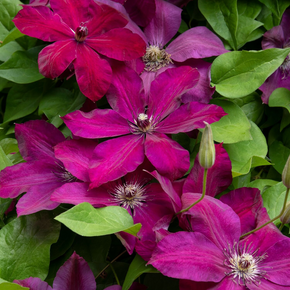
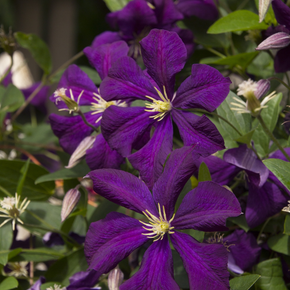
- Stunning deep purple blooms with rich red tones appear in late spring and again in fall, delivering two spectacular seasons of color on a single vine.
- Vigorous yet manageable climber reaching 6-7 feet tall, ideal for trellises, fences, mailbox posts, or rambling through mixed shrub borders.
- Cold-hardy and adaptable across USDA Zones 4-9, tolerating harsh winters while thriving in the warm summers of Southern Oregon and Northern California.
- Pruning Group 2 (B) means minimal pruning is needed - simply tidy in late winter and enjoy the repeat show on both old and new wood each year.
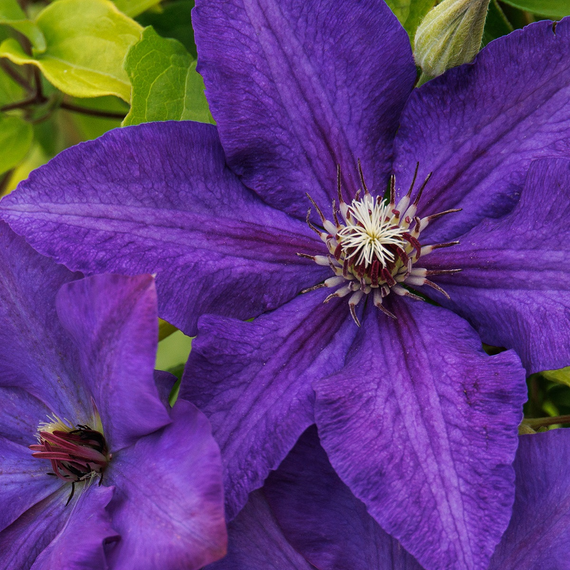
Clematis Royal Cascade (Clematis PP15,124) is a breathtaking deciduous vine that earns its regal name with an abundance of large, deep purple flowers accented by rich red tones, making it one of the most striking large-flowered clematis hybrids available today. Blooming first in late spring on the previous season's wood, then reblooming in fall on new growth, Royal Cascade delivers two impressive floral displays per year - a hallmark of its Pruning Group 2 classification. The star-shaped flowers measure an impressive 6 to 9 inches across, commanding attention on trellises, arbors, fences, and pergolas, or left to cascade and ramble gracefully through shrub beds and mixed borders. Growing 6 to 7 feet in height, this vigorous yet well-behaved vine is a standout performer across a wide range of climates, thriving in USDA Hardiness Zones 4 through 9 and tolerating temperatures as low as -30 degrees F. Its deciduous habit keeps it tidy in the off-season, while its deep green compound foliage provides a lush backdrop for the dramatic blooms. Whether you're adding vertical interest to a small urban garden, dressing up a fence line, or creating a romantic focal point in a cottage-style landscape, Clematis Royal Cascade is an outstanding choice for gardeners who want maximum color impact with minimal fuss.
Plant Description
Clematis Royal Cascade is a large-flowered deciduous climbing vine belonging to the Ranunculaceae (buttercup) family. Trademarked and patented (PP15,124), this hybrid clematis produces spectacular star-shaped blooms that measure approximately 6 to 9 inches (15-22 cm) across. The flowers are a rich, velvety deep purple suffused with warm red tones at the petal bases, creating a layered, jewel-like color effect. Each flower features broad, overlapping tepals (petals) surrounding a central cluster of creamy stamens that provides an elegant contrast to the deep flower color. The compound, mid-green leaves add a fine-textured backdrop throughout the growing season. As a deciduous vine, Royal Cascade goes dormant in winter, dying back to a woody framework before pushing vigorous new growth in spring. This clematis climbs by wrapping its leaf petioles around any available support, making it perfectly suited to trellises, wire, lattice, and other fine-structured supports.
Mature Size
| Attribute | Measurement |
|---|---|
| Mature Height | 6-7 feet |
| Spread / Width | 2-4 feet |
| Flower Size | 6-9 inches (15-22 cm) across |
| Growth Rate | Moderate to vigorous |
| Plant Type | Deciduous climbing vine |
Hardiness Zones and Temperature Tolerance
Clematis Royal Cascade is rated for USDA Hardiness Zones 4a through 9b, making it one of the more widely adaptable large-flowered clematis cultivars available. It can withstand minimum winter temperatures as low as -30 degrees F (-34 degrees C), providing excellent cold hardiness in northern climates. On the warm end of the spectrum, it tolerates summer heat up to approximately 100 degrees F (38 degrees C), though in the hottest parts of Zone 9 it benefits from afternoon shade and consistent soil moisture to prevent heat stress and maintain vigorous flowering. In Southern Oregon and Northern California gardens, Royal Cascade is a superb year-round performer, easily overwintering in the ground and reliably re-leafing and reblooming each year with minimal protection needed.
Sunlight Requirements
Royal Cascade Clematis performs best in a location that receives full sun to partial sun, ideally a minimum of 6 hours of direct sunlight per day for the most prolific bloom production. While it will tolerate partial shade (4-6 hours of sun), flowering may be somewhat reduced in lower light conditions. One important care principle unique to clematis is the "head in the sun, feet in the shade" rule: the vine thrives with its foliage and flowers in bright sun while the root zone is kept cool and shaded. Achieve this by planting low-growing perennials, groundcovers, or a 2-3 inch layer of mulch around the base of the plant. Avoid deep shade, as insufficient light will result in weak, leggy growth and very few flowers.
Soil and pH Preferences
Like most clematis, Royal Cascade performs best in fertile, well-draining soil with a neutral to slightly alkaline pH, ideally in the range of 6.5 to 7.5. Heavy clay soils should be amended with generous quantities of compost or aged organic matter to improve drainage and aeration, as standing water around the roots can quickly lead to crown rot and the devastating clematis wilt fungal disease. Sandy soils benefit from organic matter additions to improve moisture retention. At planting time, incorporating bone meal, a slow-release balanced fertilizer, or well-aged compost into the backfill will give the young plant an excellent nutritional foundation. Royal Cascade does not thrive in highly acidic soils; if your native soil is acidic (below 6.0 pH), a lime application before planting will help bring it into the ideal range.
Watering Guide
Consistent moisture is key to establishing and maintaining a healthy Clematis Royal Cascade, particularly during its first one to two growing seasons in the ground. Water deeply and thoroughly once or twice per week during dry periods, allowing water to penetrate 12 inches into the soil to encourage deep root development. Once established, Royal Cascade is moderately drought tolerant but will reward regular watering with more vigorous growth and more prolific blooming, especially during the spring bloom flush and in the heat of summer. Avoid both overwatering and allowing the soil to completely dry out, as both extremes can stress the plant and lead to foliage problems. Drip irrigation or soaker hoses directed at the root zone are ideal, as keeping the foliage dry reduces the risk of fungal diseases such as powdery mildew. Mulching helps retain soil moisture and regulate root temperature between waterings.
Fertilizing
To support the energetic growth and impressive repeat blooming of Royal Cascade, a regular fertilizing routine is recommended. Begin feeding in early spring as new growth emerges, using a balanced, slow-release granular fertilizer (such as a 5-10-10 or 10-10-10 formulation) worked lightly into the soil around the root zone. A second application after the first flush of late spring blooms fades will encourage strong new growth and a robust fall rebloom. Avoid over-applying high-nitrogen fertilizers, as excessive nitrogen promotes leafy vegetative growth at the expense of flower production. A top-dressing of compost around the plant each spring also provides a steady, gentle supply of nutrients while improving soil structure. During the growing season, monthly applications of a liquid balanced fertilizer or fish emulsion can supplement the granular feeding program. Stop fertilizing in late summer to allow the plant to begin hardening off for winter dormancy.
Pruning and Maintenance
Clematis Royal Cascade belongs to Pruning Group 2 (also called Group B), which is the most rewarding group because the vine blooms twice - first in late spring on the previous year's stems, and again in late summer through fall on new growth produced in the current season. Proper pruning respects both bloom cycles:
- Late winter to early spring (before growth begins): Remove any dead, damaged, or weak stems back to a pair of healthy, swelling buds. Avoid hard cutting at this stage, as you will remove the buds that carry the first flush of spring blooms.
- After the spring bloom flush (late spring to early summer): Lightly deadhead spent flowers and remove any crossing or overcrowded stems to improve airflow and encourage the production of new flowering shoots for the fall display.
- Fall: After the vine goes dormant, remove old foliage and any dead material. A light tidy is all that is needed before winter.
- Avoid cutting the entire plant to the ground in Group 2 clematis, as this removes the flower-bearing old wood and will sacrifice the spring bloom season.
Planting Instructions
- Choose a site with at least 6 hours of sun per day and well-draining soil. Position near a trellis, fence, or support structure the vine can climb.
- Dig a planting hole 2 to 3 times the width of the root ball and about 4-6 inches deeper than the root ball height.
- Amend the removed soil with compost, aged manure, or a quality planting mix. Add a handful of bone meal or balanced slow-release fertilizer to the backfill.
- Set the plant in the hole so that the crown (where stems meet roots) sits approximately 2-4 inches below the soil surface. This deep planting encourages new shoots to develop from below ground, which helps the vine recover if stems are damaged by clematis wilt or frost.
- Backfill with the amended soil, firm gently, and water thoroughly to eliminate air pockets.
- Apply a 2-3 inch layer of mulch (bark, straw, or compost) over the root zone, keeping mulch a few inches away from the stems to prevent rot. This keeps roots cool, retains moisture, and suppresses weeds.
- Guide young stems toward the support structure and loosely tie if needed. The vine will begin attaching itself as it grows.
- For best establishment, water regularly for the first full growing season.
Seasonal Interest
| Season | What to Expect |
|---|---|
| Spring (March-May) | Fresh green compound foliage emerges from woody stems; large deep purple and red-toned blooms appear by late spring, often covering the vine in spectacular fashion. |
| Summer (June-August) | Lush foliage continues to clothe the vine; old spent blooms may develop feathery seed heads adding textural interest; new growth sets up the fall bloom. |
| Fall (September-November) | A second flush of large purple blooms appears on new growth, often extending well into autumn; silvery-wispy seed heads add further ornamental value. |
| Winter (December-February) | Vine goes dormant and loses its leaves; dried seed heads may persist and add interest; woody framework remains on the support structure. |
Landscape Uses
The versatility of Clematis Royal Cascade makes it a valuable plant in a wide range of garden settings and design styles:
- Trellises and arbors: The classic use - train Royal Cascade up a decorative trellis or arbor for an elegant vertical focal point draped in deep purple blooms.
- Fences and walls: Planted along a fence with wire or lattice supports, it creates a spectacular flowering privacy screen or decorative backdrop.
- Mailbox or post planting: One of the best clematis for wrapping a mailbox post or lamppost with cascading color.
- Rambling through shrubs: Allow Royal Cascade to weave through the branches of large shrubs such as roses, viburnum, or ornamental grasses for a naturalistic, layered effect.
- Cottage and romantic gardens: Its large, richly colored flowers are perfectly at home in cottage garden designs alongside roses, foxgloves, and salvias.
- Container growing: With proper support, Royal Cascade can be grown in a large patio container to add vertical drama to an outdoor living space.
- Slope and bank coverage: Allowed to ramble rather than climb, it can sprawl as a flowering groundcover on gentle slopes.
Companion Plants
Royal Cascade pairs beautifully with a wide range of garden plants. When selecting companions, consider plants that share similar sun and soil preferences, while providing a complementary or contrasting visual effect:
- Climbing roses: A classic pairing - the deep purple of Royal Cascade looks stunning woven through a pink, white, or cream climbing rose.
- Salvia (Sage): Blue and purple salvias echo and amplify the cool tones of the clematis blooms below.
- Catmint (Nepeta): Low-growing mounds of lavender-blue flowers at the base of the vine help shade the roots while creating a harmonious color palette.
- Roses (shrub types): Bushy roses provide a strong support structure while their flowers complement the deep purple clematis blooms.
- Lavender: The silvery foliage and purple flower spikes of lavender planted at the base of the vine keep roots cool and reinforce the purple color theme.
- Allium: Tall ornamental onion globes in purple or white emerging among the clematis stems create a spectacular spring combination.
- Geranium (Cranesbill): Hardy geraniums at the vine's base shade roots, suppress weeds, and offer a complementary low bloom.
- Ornamental grasses: Fine-textured grasses planted nearby provide a beautiful textural contrast to the large, bold clematis flowers.
Pests and Diseases
Clematis Royal Cascade is generally a robust and healthy plant, but like all clematis, it can be affected by a handful of common pests and diseases. Early detection and good cultural practices are the best defense:
- Clematis Wilt (Phoma clematidina): The most feared clematis disease - stems suddenly collapse and blacken as though wilted, even when the soil is moist. Cut affected stems back to healthy tissue at or just below soil level and dispose of cuttings (do not compost). The deep planting of the crown encourages new shoots to emerge from below ground. Improve drainage to reduce recurrence.
- Powdery Mildew: White powdery coating on leaves, especially in warm, dry conditions with poor air circulation. Improve spacing, avoid overhead watering, and treat with a horticultural oil or neem-based fungicide if needed.
- Aphids: Small clusters of soft-bodied insects on new growth and buds. Knock off with a strong spray of water or treat with insecticidal soap.
- Spider Mites: Fine webbing and stippled foliage, most common in hot, dry conditions. Increase humidity around the plant and treat with neem oil or insecticidal soap.
- Slugs and Snails: Can damage young emerging shoots in spring. Use iron phosphate-based baits or set beer traps near the base of the plant.
- Scale Insects: Waxy bumps on stems that weaken the vine over time; treat with horticultural oil in late winter before growth begins.
- Vine Weevils: Adults notch leaf edges; larvae feed on roots. Use beneficial nematodes in soil as a preventive treatment.
Container Growing
Clematis Royal Cascade can be successfully grown in a large container, making it an excellent option for patios, decks, and courtyard gardens where in-ground planting is not possible. For best results, follow these guidelines:
- Select a container that is at least 18-24 inches in diameter and has excellent drainage holes. Larger is always better for clematis, as the roots need room to expand and stay cool.
- Use a high-quality, well-draining potting mix amended with perlite or coarse grit (approximately 20-30% by volume) to ensure excellent drainage. A slightly moisture-retentive mix works better than a very fast-draining cactus mix.
- Install a sturdy trellis, obelisk, or stake within the container at planting time to provide climbing support as the vine grows.
- Container-grown clematis dries out much faster than in-ground plants. Check soil moisture regularly and water thoroughly when the top inch of soil feels dry, especially during summer heat.
- Feed container plants more frequently than in-ground specimens - a balanced liquid fertilizer every 2-3 weeks during the growing season is ideal, as nutrients leach out with frequent watering.
- In regions with harsh winters, move containers to a sheltered location (an unheated garage or shed) to protect the roots from freezing solid, as container-grown roots have less insulation than in-ground roots.
- Repot into a larger container every 2-3 years or when the plant becomes severely root-bound, refreshing the potting mix at the same time.
Wildlife Value
Clematis Royal Cascade offers meaningful value to beneficial wildlife in the garden throughout its growing season. The large, open, richly colored flowers are attractive to a variety of pollinators including bumblebees, honeybees, and other native bee species that visit for pollen and nectar. Butterflies are drawn to the blooms as well, making Royal Cascade a welcome addition to pollinator-friendly garden designs. After the flowers fade, the ornamental feathery seed heads that develop in late summer and fall provide food and nesting material for small songbirds, particularly finches, which will pick through the dried seed heads during the colder months. The vine itself, when grown over a sturdy support or rambling through shrubs, provides a degree of shelter and habitat structure for small beneficial insects and birds. Importantly, all parts of the clematis plant are toxic if ingested and generally resistant to browsing by deer and rabbits, making it a good choice for gardens where deer pressure is a concern.
Toxicity and Safety
All parts of Clematis Royal Cascade, including the leaves, stems, and flowers, contain irritant compounds (protoanemonin) that are toxic if ingested by humans or animals. Contact with the plant's sap can cause skin irritation or mild dermatitis in sensitive individuals, so wearing gloves when handling or pruning is advisable. Keep this plant out of reach of children, dogs, and cats. Ingestion can cause mouth irritation, drooling, vomiting, and gastrointestinal discomfort in pets. If you suspect a person or animal has ingested any part of this plant, contact Poison Control at (800) 222-1222 or your veterinarian immediately. Despite its toxicity to mammals, the plant poses no risk to birds or most beneficial insects that visit the flowers for pollen and nectar.
- Stunning deep purple blooms with rich red tones appear in late spring and again in fall, delivering two spectacular seasons of color on a single vine.
- Vigorous yet manageable climber reaching 6-7 feet tall, ideal for trellises, fences, mailbox posts, or rambling through mixed shrub borders.
- Cold-hardy and adaptable across USDA Zones 4-9, tolerating harsh winters while thriving in the warm summers of Southern Oregon and Northern California.
- Pruning Group 2 (B) means minimal pruning is needed - simply tidy in late winter and enjoy the repeat show on both old and new wood each year.
Clematis Royal Cascade (Clematis PP15,124) is a breathtaking deciduous vine that earns its regal name with an abundance of large, deep purple flowers accented by rich red tones, making it one of the most striking large-flowered clematis hybrids available today. Blooming first in late spring on the previous season's wood, then reblooming in fall on new growth, Royal Cascade delivers two impressive floral displays per year - a hallmark of its Pruning Group 2 classification. The star-shaped flowers measure an impressive 6 to 9 inches across, commanding attention on trellises, arbors, fences, and pergolas, or left to cascade and ramble gracefully through shrub beds and mixed borders. Growing 6 to 7 feet in height, this vigorous yet well-behaved vine is a standout performer across a wide range of climates, thriving in USDA Hardiness Zones 4 through 9 and tolerating temperatures as low as -30 degrees F. Its deciduous habit keeps it tidy in the off-season, while its deep green compound foliage provides a lush backdrop for the dramatic blooms. Whether you're adding vertical interest to a small urban garden, dressing up a fence line, or creating a romantic focal point in a cottage-style landscape, Clematis Royal Cascade is an outstanding choice for gardeners who want maximum color impact with minimal fuss.
Plant Description
Clematis Royal Cascade is a large-flowered deciduous climbing vine belonging to the Ranunculaceae (buttercup) family. Trademarked and patented (PP15,124), this hybrid clematis produces spectacular star-shaped blooms that measure approximately 6 to 9 inches (15-22 cm) across. The flowers are a rich, velvety deep purple suffused with warm red tones at the petal bases, creating a layered, jewel-like color effect. Each flower features broad, overlapping tepals (petals) surrounding a central cluster of creamy stamens that provides an elegant contrast to the deep flower color. The compound, mid-green leaves add a fine-textured backdrop throughout the growing season. As a deciduous vine, Royal Cascade goes dormant in winter, dying back to a woody framework before pushing vigorous new growth in spring. This clematis climbs by wrapping its leaf petioles around any available support, making it perfectly suited to trellises, wire, lattice, and other fine-structured supports.
Mature Size
| Attribute | Measurement |
|---|---|
| Mature Height | 6-7 feet |
| Spread / Width | 2-4 feet |
| Flower Size | 6-9 inches (15-22 cm) across |
| Growth Rate | Moderate to vigorous |
| Plant Type | Deciduous climbing vine |
Hardiness Zones and Temperature Tolerance
Clematis Royal Cascade is rated for USDA Hardiness Zones 4a through 9b, making it one of the more widely adaptable large-flowered clematis cultivars available. It can withstand minimum winter temperatures as low as -30 degrees F (-34 degrees C), providing excellent cold hardiness in northern climates. On the warm end of the spectrum, it tolerates summer heat up to approximately 100 degrees F (38 degrees C), though in the hottest parts of Zone 9 it benefits from afternoon shade and consistent soil moisture to prevent heat stress and maintain vigorous flowering. In Southern Oregon and Northern California gardens, Royal Cascade is a superb year-round performer, easily overwintering in the ground and reliably re-leafing and reblooming each year with minimal protection needed.
Sunlight Requirements
Royal Cascade Clematis performs best in a location that receives full sun to partial sun, ideally a minimum of 6 hours of direct sunlight per day for the most prolific bloom production. While it will tolerate partial shade (4-6 hours of sun), flowering may be somewhat reduced in lower light conditions. One important care principle unique to clematis is the "head in the sun, feet in the shade" rule: the vine thrives with its foliage and flowers in bright sun while the root zone is kept cool and shaded. Achieve this by planting low-growing perennials, groundcovers, or a 2-3 inch layer of mulch around the base of the plant. Avoid deep shade, as insufficient light will result in weak, leggy growth and very few flowers.
Soil and pH Preferences
Like most clematis, Royal Cascade performs best in fertile, well-draining soil with a neutral to slightly alkaline pH, ideally in the range of 6.5 to 7.5. Heavy clay soils should be amended with generous quantities of compost or aged organic matter to improve drainage and aeration, as standing water around the roots can quickly lead to crown rot and the devastating clematis wilt fungal disease. Sandy soils benefit from organic matter additions to improve moisture retention. At planting time, incorporating bone meal, a slow-release balanced fertilizer, or well-aged compost into the backfill will give the young plant an excellent nutritional foundation. Royal Cascade does not thrive in highly acidic soils; if your native soil is acidic (below 6.0 pH), a lime application before planting will help bring it into the ideal range.
Watering Guide
Consistent moisture is key to establishing and maintaining a healthy Clematis Royal Cascade, particularly during its first one to two growing seasons in the ground. Water deeply and thoroughly once or twice per week during dry periods, allowing water to penetrate 12 inches into the soil to encourage deep root development. Once established, Royal Cascade is moderately drought tolerant but will reward regular watering with more vigorous growth and more prolific blooming, especially during the spring bloom flush and in the heat of summer. Avoid both overwatering and allowing the soil to completely dry out, as both extremes can stress the plant and lead to foliage problems. Drip irrigation or soaker hoses directed at the root zone are ideal, as keeping the foliage dry reduces the risk of fungal diseases such as powdery mildew. Mulching helps retain soil moisture and regulate root temperature between waterings.
Fertilizing
To support the energetic growth and impressive repeat blooming of Royal Cascade, a regular fertilizing routine is recommended. Begin feeding in early spring as new growth emerges, using a balanced, slow-release granular fertilizer (such as a 5-10-10 or 10-10-10 formulation) worked lightly into the soil around the root zone. A second application after the first flush of late spring blooms fades will encourage strong new growth and a robust fall rebloom. Avoid over-applying high-nitrogen fertilizers, as excessive nitrogen promotes leafy vegetative growth at the expense of flower production. A top-dressing of compost around the plant each spring also provides a steady, gentle supply of nutrients while improving soil structure. During the growing season, monthly applications of a liquid balanced fertilizer or fish emulsion can supplement the granular feeding program. Stop fertilizing in late summer to allow the plant to begin hardening off for winter dormancy.
Pruning and Maintenance
Clematis Royal Cascade belongs to Pruning Group 2 (also called Group B), which is the most rewarding group because the vine blooms twice - first in late spring on the previous year's stems, and again in late summer through fall on new growth produced in the current season. Proper pruning respects both bloom cycles:
- Late winter to early spring (before growth begins): Remove any dead, damaged, or weak stems back to a pair of healthy, swelling buds. Avoid hard cutting at this stage, as you will remove the buds that carry the first flush of spring blooms.
- After the spring bloom flush (late spring to early summer): Lightly deadhead spent flowers and remove any crossing or overcrowded stems to improve airflow and encourage the production of new flowering shoots for the fall display.
- Fall: After the vine goes dormant, remove old foliage and any dead material. A light tidy is all that is needed before winter.
- Avoid cutting the entire plant to the ground in Group 2 clematis, as this removes the flower-bearing old wood and will sacrifice the spring bloom season.
Planting Instructions
- Choose a site with at least 6 hours of sun per day and well-draining soil. Position near a trellis, fence, or support structure the vine can climb.
- Dig a planting hole 2 to 3 times the width of the root ball and about 4-6 inches deeper than the root ball height.
- Amend the removed soil with compost, aged manure, or a quality planting mix. Add a handful of bone meal or balanced slow-release fertilizer to the backfill.
- Set the plant in the hole so that the crown (where stems meet roots) sits approximately 2-4 inches below the soil surface. This deep planting encourages new shoots to develop from below ground, which helps the vine recover if stems are damaged by clematis wilt or frost.
- Backfill with the amended soil, firm gently, and water thoroughly to eliminate air pockets.
- Apply a 2-3 inch layer of mulch (bark, straw, or compost) over the root zone, keeping mulch a few inches away from the stems to prevent rot. This keeps roots cool, retains moisture, and suppresses weeds.
- Guide young stems toward the support structure and loosely tie if needed. The vine will begin attaching itself as it grows.
- For best establishment, water regularly for the first full growing season.
Seasonal Interest
| Season | What to Expect |
|---|---|
| Spring (March-May) | Fresh green compound foliage emerges from woody stems; large deep purple and red-toned blooms appear by late spring, often covering the vine in spectacular fashion. |
| Summer (June-August) | Lush foliage continues to clothe the vine; old spent blooms may develop feathery seed heads adding textural interest; new growth sets up the fall bloom. |
| Fall (September-November) | A second flush of large purple blooms appears on new growth, often extending well into autumn; silvery-wispy seed heads add further ornamental value. |
| Winter (December-February) | Vine goes dormant and loses its leaves; dried seed heads may persist and add interest; woody framework remains on the support structure. |
Landscape Uses
The versatility of Clematis Royal Cascade makes it a valuable plant in a wide range of garden settings and design styles:
- Trellises and arbors: The classic use - train Royal Cascade up a decorative trellis or arbor for an elegant vertical focal point draped in deep purple blooms.
- Fences and walls: Planted along a fence with wire or lattice supports, it creates a spectacular flowering privacy screen or decorative backdrop.
- Mailbox or post planting: One of the best clematis for wrapping a mailbox post or lamppost with cascading color.
- Rambling through shrubs: Allow Royal Cascade to weave through the branches of large shrubs such as roses, viburnum, or ornamental grasses for a naturalistic, layered effect.
- Cottage and romantic gardens: Its large, richly colored flowers are perfectly at home in cottage garden designs alongside roses, foxgloves, and salvias.
- Container growing: With proper support, Royal Cascade can be grown in a large patio container to add vertical drama to an outdoor living space.
- Slope and bank coverage: Allowed to ramble rather than climb, it can sprawl as a flowering groundcover on gentle slopes.
Companion Plants
Royal Cascade pairs beautifully with a wide range of garden plants. When selecting companions, consider plants that share similar sun and soil preferences, while providing a complementary or contrasting visual effect:
- Climbing roses: A classic pairing - the deep purple of Royal Cascade looks stunning woven through a pink, white, or cream climbing rose.
- Salvia (Sage): Blue and purple salvias echo and amplify the cool tones of the clematis blooms below.
- Catmint (Nepeta): Low-growing mounds of lavender-blue flowers at the base of the vine help shade the roots while creating a harmonious color palette.
- Roses (shrub types): Bushy roses provide a strong support structure while their flowers complement the deep purple clematis blooms.
- Lavender: The silvery foliage and purple flower spikes of lavender planted at the base of the vine keep roots cool and reinforce the purple color theme.
- Allium: Tall ornamental onion globes in purple or white emerging among the clematis stems create a spectacular spring combination.
- Geranium (Cranesbill): Hardy geraniums at the vine's base shade roots, suppress weeds, and offer a complementary low bloom.
- Ornamental grasses: Fine-textured grasses planted nearby provide a beautiful textural contrast to the large, bold clematis flowers.
Pests and Diseases
Clematis Royal Cascade is generally a robust and healthy plant, but like all clematis, it can be affected by a handful of common pests and diseases. Early detection and good cultural practices are the best defense:
- Clematis Wilt (Phoma clematidina): The most feared clematis disease - stems suddenly collapse and blacken as though wilted, even when the soil is moist. Cut affected stems back to healthy tissue at or just below soil level and dispose of cuttings (do not compost). The deep planting of the crown encourages new shoots to emerge from below ground. Improve drainage to reduce recurrence.
- Powdery Mildew: White powdery coating on leaves, especially in warm, dry conditions with poor air circulation. Improve spacing, avoid overhead watering, and treat with a horticultural oil or neem-based fungicide if needed.
- Aphids: Small clusters of soft-bodied insects on new growth and buds. Knock off with a strong spray of water or treat with insecticidal soap.
- Spider Mites: Fine webbing and stippled foliage, most common in hot, dry conditions. Increase humidity around the plant and treat with neem oil or insecticidal soap.
- Slugs and Snails: Can damage young emerging shoots in spring. Use iron phosphate-based baits or set beer traps near the base of the plant.
- Scale Insects: Waxy bumps on stems that weaken the vine over time; treat with horticultural oil in late winter before growth begins.
- Vine Weevils: Adults notch leaf edges; larvae feed on roots. Use beneficial nematodes in soil as a preventive treatment.
Container Growing
Clematis Royal Cascade can be successfully grown in a large container, making it an excellent option for patios, decks, and courtyard gardens where in-ground planting is not possible. For best results, follow these guidelines:
- Select a container that is at least 18-24 inches in diameter and has excellent drainage holes. Larger is always better for clematis, as the roots need room to expand and stay cool.
- Use a high-quality, well-draining potting mix amended with perlite or coarse grit (approximately 20-30% by volume) to ensure excellent drainage. A slightly moisture-retentive mix works better than a very fast-draining cactus mix.
- Install a sturdy trellis, obelisk, or stake within the container at planting time to provide climbing support as the vine grows.
- Container-grown clematis dries out much faster than in-ground plants. Check soil moisture regularly and water thoroughly when the top inch of soil feels dry, especially during summer heat.
- Feed container plants more frequently than in-ground specimens - a balanced liquid fertilizer every 2-3 weeks during the growing season is ideal, as nutrients leach out with frequent watering.
- In regions with harsh winters, move containers to a sheltered location (an unheated garage or shed) to protect the roots from freezing solid, as container-grown roots have less insulation than in-ground roots.
- Repot into a larger container every 2-3 years or when the plant becomes severely root-bound, refreshing the potting mix at the same time.
Wildlife Value
Clematis Royal Cascade offers meaningful value to beneficial wildlife in the garden throughout its growing season. The large, open, richly colored flowers are attractive to a variety of pollinators including bumblebees, honeybees, and other native bee species that visit for pollen and nectar. Butterflies are drawn to the blooms as well, making Royal Cascade a welcome addition to pollinator-friendly garden designs. After the flowers fade, the ornamental feathery seed heads that develop in late summer and fall provide food and nesting material for small songbirds, particularly finches, which will pick through the dried seed heads during the colder months. The vine itself, when grown over a sturdy support or rambling through shrubs, provides a degree of shelter and habitat structure for small beneficial insects and birds. Importantly, all parts of the clematis plant are toxic if ingested and generally resistant to browsing by deer and rabbits, making it a good choice for gardens where deer pressure is a concern.
Toxicity and Safety
All parts of Clematis Royal Cascade, including the leaves, stems, and flowers, contain irritant compounds (protoanemonin) that are toxic if ingested by humans or animals. Contact with the plant's sap can cause skin irritation or mild dermatitis in sensitive individuals, so wearing gloves when handling or pruning is advisable. Keep this plant out of reach of children, dogs, and cats. Ingestion can cause mouth irritation, drooling, vomiting, and gastrointestinal discomfort in pets. If you suspect a person or animal has ingested any part of this plant, contact Poison Control at (800) 222-1222 or your veterinarian immediately. Despite its toxicity to mammals, the plant poses no risk to birds or most beneficial insects that visit the flowers for pollen and nectar.
Related Products