
Zoom the image with the mouse
Toki Clematis - 1 Gallon
SKU:
1954350
UPC:
014949060803
$17.99
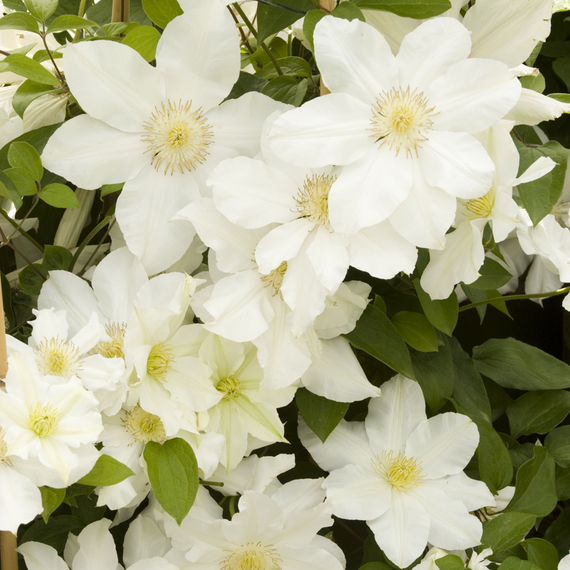
- Spectacular pure white, 5-7 inch blooms with soft buttery-yellow stamens are among the very first clematis flowers to open each season, creating a show-stopping early-spring display.
- A true repeat-bloomer — flowers emerge in late spring on previous season's wood, then return again in late summer to early fall for a second flush of color.
- Compact and versatile, reaching just 8-10 feet tall with a tidy 2-foot spread, making it ideal for trellises, arbors, fences, retaining walls, and large patio containers.
- Hardy in USDA Zones 4a-9b, this cold-tough deciduous vine attracts bees and hummingbirds while thriving across a wide range of climates, including Southern Oregon and Northern California.
Clematis 'Toki' is an elegant Japanese-bred deciduous climbing vine that stands out in the garden with its exceptionally large, pure white flowers — each bloom stretching 5 to 7 inches across and showcasing a luminous cluster of soft buttery-yellow stamens at its center. As one of the earliest clematis cultivars to flower, 'Toki' ushers in the growing season with a breathtaking late-spring bloom display, then rewards patient gardeners with a second flush of blossoms in late summer or early fall, making it a true repeat-bloomer of exceptional value. Belonging to Pruning Group 2, 'Toki' blooms primarily on the previous year's wood before pushing new growth that carries the second wave of flowers. Growing at a moderate pace to a manageable 8-10 feet in height with a slender 2-foot spread, this refined climber is perfectly suited to smaller gardens, narrow fence lines, obelisks, and decorative outdoor containers. Its twining stems and medium-green compound foliage provide a lush, clean backdrop that makes the pristine white blooms truly glow — especially when planted against a dark fence, wall, or woven through dark-leaved shrubs. Cold hardy down to USDA Zone 4a and heat tolerant through Zone 9b, Clematis 'Toki' is an outstanding choice for gardeners across a wide range of climates who want a long-blooming, low-maintenance flowering vine that delivers consistent, season-long beauty year after year.
Plant Description
Clematis 'Toki' is a deciduous, woody climbing vine bred in Japan and belonging to the buttercup family (Ranunculaceae). It is celebrated for producing some of the largest and purest white flowers in the clematis world, with each bloom spanning an impressive 5 to 7 inches in diameter. The flowers are composed of six broad, slightly overlapping white tepals that curl gently at their tips, surrounding a tight central cluster of soft, buttery-yellow stamens that provide a refined, elegant contrast. Thin, twining stems carry medium-green compound foliage throughout the growing season, giving the plant a lush, full appearance. The vine is deciduous, dropping its leaves in winter and re-emerging in spring with fresh growth. 'Toki' is classified as a Pruning Group 2 (Type 2) clematis, meaning it blooms first on old wood from the previous season, then produces a second flush of bloom on new growth later in the season. Its clean, bright flowers are especially effective when displayed against dark-colored fences, walls, or mixed with dark-foliaged companion plants.
Mature Size
| Characteristic | Measurement |
|---|---|
| Mature Height | 8 to 10 feet |
| Mature Spread | approximately 2 feet |
| Growth Rate | Moderate |
| Habit | Twining, climbing vine; leggy near base |
| Lifespan | Approximately 20 years under ideal conditions |
Because 'Toki' tends to be somewhat leggy near the base, it is best practice to underplant it with low-growing companion plants to fill in the lower portion of the display and keep roots cool and shaded.
Hardiness Zones
Clematis 'Toki' is cold hardy and widely adaptable, performing reliably across a broad range of North American climates.
| Attribute | Detail |
|---|---|
| USDA Hardiness Zones | 4a through 9b |
| Minimum Cold Hardiness | Zone 4a (down to approximately -30 degrees F) |
| Heat Tolerance | Through Zone 9b |
| Local Suitability | Excellent for Southern Oregon and Northern California gardens |
In colder climates, applying a generous 2-3 inch layer of mulch over the root zone in late fall will help insulate roots and protect the crown from hard freezes. The vine may die back to the ground in harsher winters but will reliably re-emerge from the roots in spring.
Sunlight Requirements
Clematis 'Toki' performs best with ample sunlight to fuel strong flowering, though it tolerates some afternoon shade — particularly in hotter, drier climates.
- Ideal exposure: Full sun to partial shade, with a minimum of 6 hours of direct sunlight per day for optimal bloom production.
- Root shading: While the top of the vine appreciates full sun, the root zone benefits from being kept cool and shaded. Mulching heavily around the base or underplanting with low-growing perennials or ground covers achieves this naturally.
- In hot climates: A site with morning sun and light afternoon shade can help prevent heat stress on foliage while still delivering excellent flower production.
- Avoid deep shade: Insufficient light will significantly reduce flowering and can weaken the vine over time.
Soil and pH Preferences
Clematis 'Toki' is adaptable to a range of soil conditions but performs best in fertile, well-drained soil with consistent moisture. The following guidelines will help establish the healthiest plants:
- Soil type: Average to rich, well-drained garden soil. Amend heavy clay soils with compost or grit to improve drainage and aeration. Sandy soils benefit from the incorporation of organic matter to improve moisture retention.
- Soil pH: Prefers a neutral to slightly alkaline pH, ideally between 6.5 and 7.0. It is fairly tolerant of a range of pH conditions and is not considered highly pH-sensitive.
- Drainage: Good drainage is essential — 'Toki' will not tolerate standing water or waterlogged soil, which can lead to root rot.
- Organic matter: Enriching the planting hole and surrounding soil with compost provides nutrients, improves soil structure, and supports healthy root development.
- Urban tolerance: Moderately tolerant of urban soil conditions and air pollution, making it suitable for city and suburban gardens.
Watering Guide
Consistent soil moisture is key to establishing Clematis 'Toki' and maintaining strong growth and repeat blooming. Follow these watering principles for best results:
- First growing season: Water regularly and consistently to develop a strong, deep root system. Allow the top inch or two of soil to dry slightly between waterings, but do not allow the soil to dry out completely.
- Established plants: Once established, 'Toki' requires average to evenly moist conditions. Deep, infrequent watering encourages deeper root growth compared to frequent shallow watering.
- Avoid waterlogging: Never allow water to pool around the root zone. Standing water leads to root rot and can quickly decline an otherwise healthy vine.
- Mulching: Applying a 2-3 inch layer of organic mulch around the base of the plant helps retain soil moisture, regulate root-zone temperature, and reduce the frequency of needed watering — especially during summer heat.
- Container plants: Clematis grown in containers dry out more rapidly than those in the ground and will require more frequent watering, especially during warm weather. Check soil moisture daily during summer.
Fertilizing
Feeding Clematis 'Toki' at the right times with the right nutrients encourages vigorous growth and maximizes both flushes of bloom each season.
- Early spring: Begin feeding as new growth emerges with a balanced, slow-release granular fertilizer or a general-purpose fertilizer to support root and foliage development.
- Pre-bloom and mid-season: Switch to a fertilizer higher in potassium and phosphorus (low in nitrogen) to promote flowering rather than excessive leafy growth. Formulas with a higher middle (phosphorus) and last (potassium) number — such as a 5-10-10 or tomato-type fertilizer — work well for this purpose.
- After first bloom flush: Apply another light feeding after the spring flowers fade to help fuel the second wave of late-summer blooms.
- Avoid excess nitrogen: High-nitrogen fertilizers stimulate lush foliage at the expense of flower production and should be avoided once the plant is established.
- Frequency: Feeding every 4-6 weeks through the active growing season is generally sufficient. Reduce or stop feeding in late summer to allow the plant to begin hardening off for winter.
Pruning and Maintenance
Clematis 'Toki' belongs to Pruning Group 2 (also referred to as Type B1 or Light Pruning Group). Understanding this classification is essential to preserving both bloom flushes each season.
- When to prune: Prune lightly in late winter or very early spring (February-March), before new growth begins. Avoid heavy pruning, as this removes the old wood that carries the first flush of spring flowers.
- How to prune: Remove any dead, weak, or damaged stems back to the nearest healthy bud. Cut remaining stems back to the first set of plump, healthy buds. Do not cut all stems to the ground as you would with Group 3 clematis — this will eliminate the spring bloom.
- After first bloom: Once the main spring flush of flowers fades, a light trim of spent blooms and the tips of stems can help encourage the second flush of blooms in late summer or early fall.
- Training: Guide new stems onto a trellis, fence, arbor, or obelisk as they emerge in spring. The twining stems will naturally grip but benefit from being loosely tied or guided in the desired direction when young.
- General maintenance: Apply mulch annually to protect roots and retain moisture. Remove any dead foliage at the base of the plant in late fall or early spring to keep the garden tidy and reduce disease risk.
Planting Instructions
- Choose the right location: Select a spot that receives at least 6 hours of sun daily, with access to a fence, trellis, wall, or other structure the vine can climb. Ideally, the root zone should be in shade or easily shaded with mulch or companion plants.
- Timing: Plant in spring after the danger of hard frost has passed, or in fall at least 6 weeks before the first expected frost to allow the roots to establish before winter.
- Dig the planting hole: Dig a hole approximately twice as wide and slightly deeper than the root ball — roughly 2-3 inches deeper than the plant was growing in its container. Planting slightly deep encourages new stems to sprout from below the soil surface, which is important for recovery in case of clematis wilt.
- Amend the soil: Mix generous amounts of compost or well-rotted organic matter into the backfill soil to enrich the planting environment.
- Position the plant: Set the plant in the hole so the top of the root ball sits 2-3 inches below the soil surface. This deeper planting helps protect the crown from damage and encourages robust re-growth if stems are affected by wilt.
- Backfill and water: Fill the hole with amended soil, firm gently to eliminate air pockets, and water deeply and thoroughly.
- Mulch: Apply a 2-3 inch layer of organic mulch around the base of the plant, keeping mulch a few inches away from the main stem to prevent crown rot. Mulch keeps roots cool, shaded, and consistently moist.
- Install support: Ensure a trellis, arbor, fence, or obelisk is in place at planting time so the vine can begin climbing immediately as it establishes.
Seasonal Interest
| Season | What to Expect |
|---|---|
| Early to Late Spring | Main bloom flush — spectacular large pure white flowers with buttery-yellow stamens open on previous season's wood; among the earliest clematis to bloom |
| Summer | Lush medium-green compound foliage provides attractive vertical coverage on structures; vine grows actively |
| Late Summer to Early Fall | Second flush of white blooms emerges on new wood, extending the ornamental season well into fall |
| Fall | Foliage begins to yellow and drop; feathery seed heads may form after blooms fade, adding delicate textural interest |
| Winter | Dormant; deciduous stems remain on the structure; woody framework is visible |
Landscape Uses
The refined form and compact size of Clematis 'Toki' make it one of the most versatile flowering vines available for garden design. Recommended uses include:
- Trellis and fence coverage: Train up a decorative trellis, picket fence, or split-rail fence for elegant vertical interest.
- Arbors and pergolas: Allow to weave through the structure of an arbor or pergola for a romantic overhead floral display.
- Obelisks and garden structures: Compact enough to be trained over a tall garden obelisk as a striking specimen accent in a border or mixed bed.
- Against dark walls or fences: Planting 'Toki' against a dark-painted fence or stone wall dramatically highlights the pure white blooms.
- Through dark-leaved shrubs: Allow to clamber through dark-foliaged plants such as smoke bush or dark-leafed roses for a stunning contrast.
- Retaining walls: Can be used as a trailer over the edge of a retaining wall or slope.
- White and moon gardens: A natural fit for all-white or moon garden themes, where its luminous blooms glow in evening light.
- Container planting: Well-suited to large decorative pots and containers on patios or decks, particularly when paired with a supporting obelisk.
- Accent plant: Used as a specimen accent in small garden spaces where limited square footage calls for maximum visual impact.
Companion Plants
Clematis 'Toki' pairs beautifully with a wide variety of garden plants. The following companions complement its white blooms, cover its leggy base, and share compatible growing conditions:
- Climbing roses: Classic partners — especially deep red, burgundy, or purple-toned climbing roses that provide strong color contrast with 'Toki's white blooms, while both appreciate similar sun and watering requirements.
- Dark-foliaged shrubs: Smokebush (Cotinus coggygria 'Royal Purple'), purple-leaf ninebark, or dark-leafed barberry create a dramatic backdrop that makes the white flowers pop.
- Low-growing perennials at the base: Creeping phlox, hardy geraniums (Geranium spp.), ajuga, or catmint planted around the base cover the leggy lower stems and help shade the root zone.
- Lavender: Planted nearby, lavender's silvery-purple color complements the white flowers beautifully and shares the preference for well-drained soil and sun.
- Salvia: Blue or purple salvias growing in front of the vine create a gorgeous color echo with the purple-toned stamens of 'Toki' in some light conditions.
- Hostas or ferns: Planted at the base in part-shade positions, these bold-foliaged plants provide ground coverage and root cooling.
- Alliums: Tall ornamental alliums blooming at the same time as 'Toki' add vertical interest at the base while bridging the spring to summer transition.
Container Growing
Clematis 'Toki' is an excellent choice for container culture on patios, decks, and balconies. Its compact spread and moderate height make it manageable in a pot, and a decorative container paired with a tall obelisk creates a stunning stand-alone accent piece.
- Container size: Choose a large, sturdy container — at least 18-24 inches in diameter and depth — to allow ample root room and reduce the frequency of watering needed.
- Potting mix: Use a high-quality, well-draining potting mix enriched with compost. Avoid garden soil alone in containers, as it compacts and drains poorly.
- Support: Install an obelisk or trellis insert directly in the container at planting time so the vine can begin climbing immediately.
- Watering: Container-grown clematis dries out much more quickly than in-ground plants. Check soil moisture daily in warm weather and water thoroughly whenever the top inch or two of soil feels dry.
- Fertilizing: Container plants deplete nutrients more quickly than in-ground specimens. Feed regularly through the growing season with a balanced fertilizer, transitioning to a bloom-promoting, lower-nitrogen formula before flowering.
- Winter care in containers: In colder climates (Zone 6 and below), move containers to a sheltered, frost-free location such as an unheated garage for winter protection, or insulate the pot with burlap and mulch if leaving outdoors.
- Note: Performance in containers may vary slightly from in-ground plants, and the vine may not reach its full potential height when container-grown.
Pests and Diseases
Clematis 'Toki' is generally a robust, low-maintenance vine with few serious pest or disease problems. Being aware of common issues allows for prompt, effective management:
- Clematis wilt (Phoma clematidina): The most notable disease affecting large-flowered clematis. Symptoms appear as a sudden wilting and blackening of stems, often in spring. If wilt occurs, cut all affected stems back to healthy growth at or below soil level. The plant typically recovers and re-sprouts from the roots. Planting the crown 2-3 inches below soil level at the time of planting helps the plant recover more vigorously from wilt episodes.
- Aphids: May cluster on young, tender stems and buds. Treat with a strong spray of water to dislodge them, or apply insecticidal soap or neem oil for persistent infestations.
- Slugs and snails: Can damage young emerging shoots in spring, particularly in moist conditions. Use slug bait, diatomaceous earth, or copper tape barriers around the base of the plant.
- Powdery mildew: Occasional in humid conditions or when air circulation is poor. Ensure adequate spacing from other plants and structures and avoid overhead watering. Apply a fungicide approved for ornamental use if needed.
- Earwigs and spider mites: Infrequent but possible in dry, hot conditions. Maintain consistent watering and inspect foliage regularly.
- Prevention tips: Good air circulation, correct watering practices, and clean garden hygiene (removing dead stems and fallen leaves) go a long way toward preventing most common problems with this plant.
Wildlife Value
Clematis 'Toki' provides genuine ecological value in the garden, attracting beneficial wildlife with its generous floral display:
- Bees: The open, accessible flowers with prominent stamens are highly attractive to bumblebees, honeybees, and native solitary bees foraging for nectar and pollen during the spring and late-summer bloom periods.
- Hummingbirds: The vine is noted as a hummingbird-attracting plant, making it a great addition to pollinator or hummingbird gardens — particularly important for supporting Anna's hummingbirds, which are year-round residents in parts of Southern Oregon and Northern California.
- Butterflies and other pollinators: The open flower form provides easy access to a broad range of pollinators, supporting local pollinator populations across the bloom season.
- Fragrance note: Clematis 'Toki' does not produce significant fragrance, so its primary wildlife appeal is visual and as a pollen and nectar resource rather than as a scent-based attractor.
- Toxicity caution: All parts of Clematis 'Toki' are toxic if ingested by humans, dogs, or cats. Site the plant thoughtfully if children or pets have access to the garden, and contact Poison Control or a veterinarian immediately if ingestion occurs.
- Spectacular pure white, 5-7 inch blooms with soft buttery-yellow stamens are among the very first clematis flowers to open each season, creating a show-stopping early-spring display.
- A true repeat-bloomer — flowers emerge in late spring on previous season's wood, then return again in late summer to early fall for a second flush of color.
- Compact and versatile, reaching just 8-10 feet tall with a tidy 2-foot spread, making it ideal for trellises, arbors, fences, retaining walls, and large patio containers.
- Hardy in USDA Zones 4a-9b, this cold-tough deciduous vine attracts bees and hummingbirds while thriving across a wide range of climates, including Southern Oregon and Northern California.
Clematis 'Toki' is an elegant Japanese-bred deciduous climbing vine that stands out in the garden with its exceptionally large, pure white flowers — each bloom stretching 5 to 7 inches across and showcasing a luminous cluster of soft buttery-yellow stamens at its center. As one of the earliest clematis cultivars to flower, 'Toki' ushers in the growing season with a breathtaking late-spring bloom display, then rewards patient gardeners with a second flush of blossoms in late summer or early fall, making it a true repeat-bloomer of exceptional value. Belonging to Pruning Group 2, 'Toki' blooms primarily on the previous year's wood before pushing new growth that carries the second wave of flowers. Growing at a moderate pace to a manageable 8-10 feet in height with a slender 2-foot spread, this refined climber is perfectly suited to smaller gardens, narrow fence lines, obelisks, and decorative outdoor containers. Its twining stems and medium-green compound foliage provide a lush, clean backdrop that makes the pristine white blooms truly glow — especially when planted against a dark fence, wall, or woven through dark-leaved shrubs. Cold hardy down to USDA Zone 4a and heat tolerant through Zone 9b, Clematis 'Toki' is an outstanding choice for gardeners across a wide range of climates who want a long-blooming, low-maintenance flowering vine that delivers consistent, season-long beauty year after year.
Plant Description
Clematis 'Toki' is a deciduous, woody climbing vine bred in Japan and belonging to the buttercup family (Ranunculaceae). It is celebrated for producing some of the largest and purest white flowers in the clematis world, with each bloom spanning an impressive 5 to 7 inches in diameter. The flowers are composed of six broad, slightly overlapping white tepals that curl gently at their tips, surrounding a tight central cluster of soft, buttery-yellow stamens that provide a refined, elegant contrast. Thin, twining stems carry medium-green compound foliage throughout the growing season, giving the plant a lush, full appearance. The vine is deciduous, dropping its leaves in winter and re-emerging in spring with fresh growth. 'Toki' is classified as a Pruning Group 2 (Type 2) clematis, meaning it blooms first on old wood from the previous season, then produces a second flush of bloom on new growth later in the season. Its clean, bright flowers are especially effective when displayed against dark-colored fences, walls, or mixed with dark-foliaged companion plants.
Mature Size
| Characteristic | Measurement |
|---|---|
| Mature Height | 8 to 10 feet |
| Mature Spread | approximately 2 feet |
| Growth Rate | Moderate |
| Habit | Twining, climbing vine; leggy near base |
| Lifespan | Approximately 20 years under ideal conditions |
Because 'Toki' tends to be somewhat leggy near the base, it is best practice to underplant it with low-growing companion plants to fill in the lower portion of the display and keep roots cool and shaded.
Hardiness Zones
Clematis 'Toki' is cold hardy and widely adaptable, performing reliably across a broad range of North American climates.
| Attribute | Detail |
|---|---|
| USDA Hardiness Zones | 4a through 9b |
| Minimum Cold Hardiness | Zone 4a (down to approximately -30 degrees F) |
| Heat Tolerance | Through Zone 9b |
| Local Suitability | Excellent for Southern Oregon and Northern California gardens |
In colder climates, applying a generous 2-3 inch layer of mulch over the root zone in late fall will help insulate roots and protect the crown from hard freezes. The vine may die back to the ground in harsher winters but will reliably re-emerge from the roots in spring.
Sunlight Requirements
Clematis 'Toki' performs best with ample sunlight to fuel strong flowering, though it tolerates some afternoon shade — particularly in hotter, drier climates.
- Ideal exposure: Full sun to partial shade, with a minimum of 6 hours of direct sunlight per day for optimal bloom production.
- Root shading: While the top of the vine appreciates full sun, the root zone benefits from being kept cool and shaded. Mulching heavily around the base or underplanting with low-growing perennials or ground covers achieves this naturally.
- In hot climates: A site with morning sun and light afternoon shade can help prevent heat stress on foliage while still delivering excellent flower production.
- Avoid deep shade: Insufficient light will significantly reduce flowering and can weaken the vine over time.
Soil and pH Preferences
Clematis 'Toki' is adaptable to a range of soil conditions but performs best in fertile, well-drained soil with consistent moisture. The following guidelines will help establish the healthiest plants:
- Soil type: Average to rich, well-drained garden soil. Amend heavy clay soils with compost or grit to improve drainage and aeration. Sandy soils benefit from the incorporation of organic matter to improve moisture retention.
- Soil pH: Prefers a neutral to slightly alkaline pH, ideally between 6.5 and 7.0. It is fairly tolerant of a range of pH conditions and is not considered highly pH-sensitive.
- Drainage: Good drainage is essential — 'Toki' will not tolerate standing water or waterlogged soil, which can lead to root rot.
- Organic matter: Enriching the planting hole and surrounding soil with compost provides nutrients, improves soil structure, and supports healthy root development.
- Urban tolerance: Moderately tolerant of urban soil conditions and air pollution, making it suitable for city and suburban gardens.
Watering Guide
Consistent soil moisture is key to establishing Clematis 'Toki' and maintaining strong growth and repeat blooming. Follow these watering principles for best results:
- First growing season: Water regularly and consistently to develop a strong, deep root system. Allow the top inch or two of soil to dry slightly between waterings, but do not allow the soil to dry out completely.
- Established plants: Once established, 'Toki' requires average to evenly moist conditions. Deep, infrequent watering encourages deeper root growth compared to frequent shallow watering.
- Avoid waterlogging: Never allow water to pool around the root zone. Standing water leads to root rot and can quickly decline an otherwise healthy vine.
- Mulching: Applying a 2-3 inch layer of organic mulch around the base of the plant helps retain soil moisture, regulate root-zone temperature, and reduce the frequency of needed watering — especially during summer heat.
- Container plants: Clematis grown in containers dry out more rapidly than those in the ground and will require more frequent watering, especially during warm weather. Check soil moisture daily during summer.
Fertilizing
Feeding Clematis 'Toki' at the right times with the right nutrients encourages vigorous growth and maximizes both flushes of bloom each season.
- Early spring: Begin feeding as new growth emerges with a balanced, slow-release granular fertilizer or a general-purpose fertilizer to support root and foliage development.
- Pre-bloom and mid-season: Switch to a fertilizer higher in potassium and phosphorus (low in nitrogen) to promote flowering rather than excessive leafy growth. Formulas with a higher middle (phosphorus) and last (potassium) number — such as a 5-10-10 or tomato-type fertilizer — work well for this purpose.
- After first bloom flush: Apply another light feeding after the spring flowers fade to help fuel the second wave of late-summer blooms.
- Avoid excess nitrogen: High-nitrogen fertilizers stimulate lush foliage at the expense of flower production and should be avoided once the plant is established.
- Frequency: Feeding every 4-6 weeks through the active growing season is generally sufficient. Reduce or stop feeding in late summer to allow the plant to begin hardening off for winter.
Pruning and Maintenance
Clematis 'Toki' belongs to Pruning Group 2 (also referred to as Type B1 or Light Pruning Group). Understanding this classification is essential to preserving both bloom flushes each season.
- When to prune: Prune lightly in late winter or very early spring (February-March), before new growth begins. Avoid heavy pruning, as this removes the old wood that carries the first flush of spring flowers.
- How to prune: Remove any dead, weak, or damaged stems back to the nearest healthy bud. Cut remaining stems back to the first set of plump, healthy buds. Do not cut all stems to the ground as you would with Group 3 clematis — this will eliminate the spring bloom.
- After first bloom: Once the main spring flush of flowers fades, a light trim of spent blooms and the tips of stems can help encourage the second flush of blooms in late summer or early fall.
- Training: Guide new stems onto a trellis, fence, arbor, or obelisk as they emerge in spring. The twining stems will naturally grip but benefit from being loosely tied or guided in the desired direction when young.
- General maintenance: Apply mulch annually to protect roots and retain moisture. Remove any dead foliage at the base of the plant in late fall or early spring to keep the garden tidy and reduce disease risk.
Planting Instructions
- Choose the right location: Select a spot that receives at least 6 hours of sun daily, with access to a fence, trellis, wall, or other structure the vine can climb. Ideally, the root zone should be in shade or easily shaded with mulch or companion plants.
- Timing: Plant in spring after the danger of hard frost has passed, or in fall at least 6 weeks before the first expected frost to allow the roots to establish before winter.
- Dig the planting hole: Dig a hole approximately twice as wide and slightly deeper than the root ball — roughly 2-3 inches deeper than the plant was growing in its container. Planting slightly deep encourages new stems to sprout from below the soil surface, which is important for recovery in case of clematis wilt.
- Amend the soil: Mix generous amounts of compost or well-rotted organic matter into the backfill soil to enrich the planting environment.
- Position the plant: Set the plant in the hole so the top of the root ball sits 2-3 inches below the soil surface. This deeper planting helps protect the crown from damage and encourages robust re-growth if stems are affected by wilt.
- Backfill and water: Fill the hole with amended soil, firm gently to eliminate air pockets, and water deeply and thoroughly.
- Mulch: Apply a 2-3 inch layer of organic mulch around the base of the plant, keeping mulch a few inches away from the main stem to prevent crown rot. Mulch keeps roots cool, shaded, and consistently moist.
- Install support: Ensure a trellis, arbor, fence, or obelisk is in place at planting time so the vine can begin climbing immediately as it establishes.
Seasonal Interest
| Season | What to Expect |
|---|---|
| Early to Late Spring | Main bloom flush — spectacular large pure white flowers with buttery-yellow stamens open on previous season's wood; among the earliest clematis to bloom |
| Summer | Lush medium-green compound foliage provides attractive vertical coverage on structures; vine grows actively |
| Late Summer to Early Fall | Second flush of white blooms emerges on new wood, extending the ornamental season well into fall |
| Fall | Foliage begins to yellow and drop; feathery seed heads may form after blooms fade, adding delicate textural interest |
| Winter | Dormant; deciduous stems remain on the structure; woody framework is visible |
Landscape Uses
The refined form and compact size of Clematis 'Toki' make it one of the most versatile flowering vines available for garden design. Recommended uses include:
- Trellis and fence coverage: Train up a decorative trellis, picket fence, or split-rail fence for elegant vertical interest.
- Arbors and pergolas: Allow to weave through the structure of an arbor or pergola for a romantic overhead floral display.
- Obelisks and garden structures: Compact enough to be trained over a tall garden obelisk as a striking specimen accent in a border or mixed bed.
- Against dark walls or fences: Planting 'Toki' against a dark-painted fence or stone wall dramatically highlights the pure white blooms.
- Through dark-leaved shrubs: Allow to clamber through dark-foliaged plants such as smoke bush or dark-leafed roses for a stunning contrast.
- Retaining walls: Can be used as a trailer over the edge of a retaining wall or slope.
- White and moon gardens: A natural fit for all-white or moon garden themes, where its luminous blooms glow in evening light.
- Container planting: Well-suited to large decorative pots and containers on patios or decks, particularly when paired with a supporting obelisk.
- Accent plant: Used as a specimen accent in small garden spaces where limited square footage calls for maximum visual impact.
Companion Plants
Clematis 'Toki' pairs beautifully with a wide variety of garden plants. The following companions complement its white blooms, cover its leggy base, and share compatible growing conditions:
- Climbing roses: Classic partners — especially deep red, burgundy, or purple-toned climbing roses that provide strong color contrast with 'Toki's white blooms, while both appreciate similar sun and watering requirements.
- Dark-foliaged shrubs: Smokebush (Cotinus coggygria 'Royal Purple'), purple-leaf ninebark, or dark-leafed barberry create a dramatic backdrop that makes the white flowers pop.
- Low-growing perennials at the base: Creeping phlox, hardy geraniums (Geranium spp.), ajuga, or catmint planted around the base cover the leggy lower stems and help shade the root zone.
- Lavender: Planted nearby, lavender's silvery-purple color complements the white flowers beautifully and shares the preference for well-drained soil and sun.
- Salvia: Blue or purple salvias growing in front of the vine create a gorgeous color echo with the purple-toned stamens of 'Toki' in some light conditions.
- Hostas or ferns: Planted at the base in part-shade positions, these bold-foliaged plants provide ground coverage and root cooling.
- Alliums: Tall ornamental alliums blooming at the same time as 'Toki' add vertical interest at the base while bridging the spring to summer transition.
Container Growing
Clematis 'Toki' is an excellent choice for container culture on patios, decks, and balconies. Its compact spread and moderate height make it manageable in a pot, and a decorative container paired with a tall obelisk creates a stunning stand-alone accent piece.
- Container size: Choose a large, sturdy container — at least 18-24 inches in diameter and depth — to allow ample root room and reduce the frequency of watering needed.
- Potting mix: Use a high-quality, well-draining potting mix enriched with compost. Avoid garden soil alone in containers, as it compacts and drains poorly.
- Support: Install an obelisk or trellis insert directly in the container at planting time so the vine can begin climbing immediately.
- Watering: Container-grown clematis dries out much more quickly than in-ground plants. Check soil moisture daily in warm weather and water thoroughly whenever the top inch or two of soil feels dry.
- Fertilizing: Container plants deplete nutrients more quickly than in-ground specimens. Feed regularly through the growing season with a balanced fertilizer, transitioning to a bloom-promoting, lower-nitrogen formula before flowering.
- Winter care in containers: In colder climates (Zone 6 and below), move containers to a sheltered, frost-free location such as an unheated garage for winter protection, or insulate the pot with burlap and mulch if leaving outdoors.
- Note: Performance in containers may vary slightly from in-ground plants, and the vine may not reach its full potential height when container-grown.
Pests and Diseases
Clematis 'Toki' is generally a robust, low-maintenance vine with few serious pest or disease problems. Being aware of common issues allows for prompt, effective management:
- Clematis wilt (Phoma clematidina): The most notable disease affecting large-flowered clematis. Symptoms appear as a sudden wilting and blackening of stems, often in spring. If wilt occurs, cut all affected stems back to healthy growth at or below soil level. The plant typically recovers and re-sprouts from the roots. Planting the crown 2-3 inches below soil level at the time of planting helps the plant recover more vigorously from wilt episodes.
- Aphids: May cluster on young, tender stems and buds. Treat with a strong spray of water to dislodge them, or apply insecticidal soap or neem oil for persistent infestations.
- Slugs and snails: Can damage young emerging shoots in spring, particularly in moist conditions. Use slug bait, diatomaceous earth, or copper tape barriers around the base of the plant.
- Powdery mildew: Occasional in humid conditions or when air circulation is poor. Ensure adequate spacing from other plants and structures and avoid overhead watering. Apply a fungicide approved for ornamental use if needed.
- Earwigs and spider mites: Infrequent but possible in dry, hot conditions. Maintain consistent watering and inspect foliage regularly.
- Prevention tips: Good air circulation, correct watering practices, and clean garden hygiene (removing dead stems and fallen leaves) go a long way toward preventing most common problems with this plant.
Wildlife Value
Clematis 'Toki' provides genuine ecological value in the garden, attracting beneficial wildlife with its generous floral display:
- Bees: The open, accessible flowers with prominent stamens are highly attractive to bumblebees, honeybees, and native solitary bees foraging for nectar and pollen during the spring and late-summer bloom periods.
- Hummingbirds: The vine is noted as a hummingbird-attracting plant, making it a great addition to pollinator or hummingbird gardens — particularly important for supporting Anna's hummingbirds, which are year-round residents in parts of Southern Oregon and Northern California.
- Butterflies and other pollinators: The open flower form provides easy access to a broad range of pollinators, supporting local pollinator populations across the bloom season.
- Fragrance note: Clematis 'Toki' does not produce significant fragrance, so its primary wildlife appeal is visual and as a pollen and nectar resource rather than as a scent-based attractor.
- Toxicity caution: All parts of Clematis 'Toki' are toxic if ingested by humans, dogs, or cats. Site the plant thoughtfully if children or pets have access to the garden, and contact Poison Control or a veterinarian immediately if ingestion occurs.