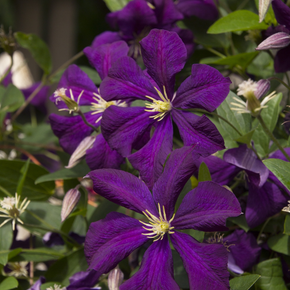
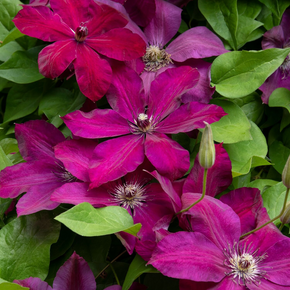
Zoom the image with the mouse
Little Duckling Clematis - 1 Gallon
SKU:
1827515
UPC:
014949041574
$21.99
- Stunning double and semi-double pale mauve-pink blooms in late spring give way to a second flush of single flowers in late summer, delivering two distinct and breathtaking floral displays per season.
- One of the most floriferous clematis cultivars ever introduced, 'Piilu' produces blooms so profuse they nearly obscure the foliage, earning it the prestigious Plantarium Gold Medal in 1998.
- Compact, well-behaved habit reaching just 3 to 6 feet tall makes 'Piilu' equally at home climbing a trellis or fence as it is showcased in a patio container or small garden space.
- Cold hardy to USDA Zone 4 and resistant to deer and rabbits, this low-maintenance Estonian cultivar is an exceptional choice for gardeners across a wide range of climates.
Clematis 'Piilu', affectionately named 'Little Duckling' in its native Estonian, is a compact and extraordinarily free-flowering large-flowered hybrid clematis that has captivated gardeners since its introduction in the late 1980s. Belonging to Pruning Group 2, this deciduous climbing vine is renowned for delivering two spectacular bloom cycles per growing season: the first flush in late spring features gorgeous double and semi-double ruffled flowers, 3 to 4 inches across, in pale mauve-pink with a bold rose-pink central bar on each sepal and a contrasting boss of creamy-white to pale yellow anthers, all borne on last year's wood; the second flush arrives in late summer on new growth and produces elegant single flowers that are equally charming. Widely regarded as one of the finest clematis varieties for container gardening ever introduced, 'Piilu' maintains a tidy, well-behaved habit of 3 to 6 feet tall and 3 to 4 feet wide, making it a versatile performer in patio planters, cottage garden borders, along trellises and arbors, or scrambling through climbing roses. It thrives in full sun to partial shade in fertile, moist but well-drained soil, preferring its roots cool and shaded while its upper growth basks in the sun. Hardy in USDA Zones 4 through 9, tolerant of deer and rabbits, and a magnet for butterflies, bees, and hummingbirds, Clematis 'Piilu' is a must-have flowering vine that delivers season-long color and undeniable curb appeal with surprisingly little effort.
Plant Description
Clematis 'Piilu' is a vigorous, compact deciduous climbing vine belonging to the Early Large-Flowered Group (Pruning Group 2) of the Ranunculaceae family. What sets 'Piilu' apart from most clematis is its remarkable ability to produce two distinctly different flower forms on the same plant each season. The first flush, borne on the previous year's old wood in late spring, displays fully double to semi-double flowers resembling ruffled rosettes, while the second flush on new growth in late summer produces single, open, star-shaped blooms. Flowers measure 3 to 4 inches (7 to 10 cm) in diameter and are pale mauve-pink with a prominent rose-pink central bar running the length of each sepal, edged with delicately ruffled, lighter-toned margins. The central boss is formed by a cluster of creamy-white to pale yellow anthers that beautifully complement the cool pink tones of the petals. Foliage is fresh, bright green with pinnate, oval leaves tapering to a point, providing an attractive backdrop that is often completely obscured by the profusion of blooms. The name 'Piilu' translates to 'Little Duckling' in Estonian, a nod to the cultivar's country of origin. It was developed by Estonian breeder Uno Kivistik in the late 1980s and officially introduced for cultivation after nearly a decade of trials. In 1998, 'Piilu' was awarded the prestigious Plantarium Gold Medal, recognizing it as one of the finest clematis introductions of its era.
Mature Size
| Attribute | Measurement |
|---|---|
| Mature Height | 3 to 6 feet (90 to 180 cm) |
| Mature Spread | 3 to 4 feet (90 to 120 cm) |
| Growth Rate | Moderate |
| Time to Maturity | 2 to 5 years to reach full size |
| Plant Type | Deciduous climbing vine |
'Piilu' is considered one of the most compact large-flowered clematis available, rarely exceeding 6 feet even under ideal conditions. In colder climates with shorter growing seasons, plants may top out at just 3 feet. This restrained, well-behaved habit makes it ideal for small gardens, patio containers, or any space where a large, vigorous clematis would be impractical. The vine climbs by twining its leaf petioles around a support structure rather than by using adhesive roots or holdfasts, so a trellis, wire frame, or other slim-material support is needed.
Hardiness Zones and Climate
Clematis 'Piilu' is cold hardy in USDA Hardiness Zones 4 through 9, tolerating minimum winter temperatures as low as -30 degrees F (-34 degrees C). It is an exceptionally hardy cultivar developed in Estonia, a country well known for its frigid winters, and the genetics of the plant reflect that toughness. In the warmer end of its range (Zones 8 and 9, including much of Southern Oregon and Northern California), afternoon shade is important to prevent flower color from fading and to keep the root zone cool. In very hot summer climates, siting the plant where it receives morning sun and afternoon shade will extend bloom longevity and prevent heat stress. In cooler climates with milder summers, 'Piilu' can bloom nearly continuously from late spring through early fall. Container-grown plants in colder zones should be given additional winter protection, as roots in pots are more exposed to freezing temperatures than those in the ground. Moving pots to a sheltered, unheated garage or wrapping the pot with frost protection fabric and mulching the root zone generously can help see them safely through winter.
Sunlight Requirements
Clematis 'Piilu' performs best in full sun to partial shade, ideally receiving at least 6 hours of direct sunlight per day. The classic clematis adage applies perfectly here: give the plant its "head in the sun and its feet in the shade." The upper portions of the vine, where the flowers form, benefit from good light exposure to fuel bud development and maximize bloom count. However, the root zone must be kept cool and shaded to prevent heat stress and moisture loss. This can be achieved by underplanting with low-growing perennials, ornamental grasses, or ground covers that shade the soil without competing aggressively for nutrients. Alternatively, a layer of flat stones, river pebbles, or a thick mulch applied around the base of the plant can serve the same purpose. In the warmer climates of Southern Oregon and Northern California, it is especially important to protect the plant from harsh midday and afternoon sun, as intense heat can cause flower colors to fade quickly and may stress the plant. A location with morning sun and dappled afternoon shade is often ideal in these regions.
Soil and pH Preferences
This clematis thrives in fertile, moist but well-drained soil. It is adaptable to a variety of soil textures, including chalk, clay, loam, and sand, as long as drainage is adequate — standing water or waterlogged conditions are detrimental and can cause root rot and increase susceptibility to fungal diseases. For optimal performance, amend heavy clay soils with coarse sand, grit, or perlite to improve drainage. Sandy or fast-draining soils should be enriched with generous amounts of compost or aged organic matter to improve moisture retention and nutrient availability. The preferred soil pH is neutral to slightly alkaline, with an ideal range of approximately 6.5 to 7.5. 'Piilu' has good lime tolerance and will grow well in soils that would challenge more pH-sensitive plants. A deep, humus-rich planting bed that allows the root system to explore well below the surface is ideal, as established plants develop extensive root systems that can sustain the vine through periods of heat or mild drought. Mulching the root zone with a 2- to 4-inch layer of organic material such as shredded bark, wood chips, or compost helps conserve moisture, moderate soil temperature, and suppress weeds.
Watering Guide
Consistent moisture is key to keeping Clematis 'Piilu' healthy and blooming at its best. The soil should remain evenly moist but never soggy, as both drought stress and waterlogging can harm the plant. During the first growing season after planting, water deeply every two to three days during warm or dry weather to help the root system establish — young plants may require 5 to 8 gallons per watering session. Once established, mature in-ground plants have deeper root systems and are more drought-tolerant, but they still benefit from regular, deep watering during hot, dry periods. Check soil moisture by pressing a finger 1 to 2 inches into the soil near the base; if it feels dry at that depth, it is time to water. Container-grown specimens dry out more quickly than in-ground plants and may need daily checking during summer heat, especially in Southern Oregon and Northern California climates. Always water at the base of the plant, avoiding wetting the foliage, which can encourage fungal diseases. A drip irrigation system or soaker hose is an excellent choice for maintaining consistent soil moisture while keeping leaves dry.
Fertilizing
Clematis 'Piilu' is a vigorous, repeat-blooming vine that benefits from a consistent fertilizing program to sustain its heavy floral output season after season. Begin fertilizing in early spring as new growth emerges, using a balanced slow-release granular fertilizer formulated for flowering shrubs or climbing plants. As the growing season progresses, switch to a fertilizer higher in potassium (the third number in the N-P-K ratio) to support strong flower production and stem hardiness — rose fertilizers or high-potassium tomato fertilizers work particularly well for this purpose. A general schedule of fertilizing every 4 to 6 weeks throughout the active growing season is recommended, tapering off in late summer to avoid pushing tender new growth that could be damaged by early frosts. Incorporating compost or aged manure around the base of the plant each spring also provides a slow, steady supply of organic nutrients. Container-grown plants should be fertilized more frequently with a liquid fertilizer during the growing season, as nutrients leach out of potting mix with regular watering. Avoid over-fertilizing with nitrogen, which can promote lush leafy growth at the expense of flower production.
Pruning and Maintenance (Group 2)
Clematis 'Piilu' belongs to Pruning Group 2, which means it blooms first on old wood from the previous season and then again on new growth produced in the current season. Because of this dual-flowering habit, pruning must be done carefully to avoid sacrificing the first flush of double blooms. Follow this two-stage pruning approach for best results:
- Late Winter / Early Spring (February to March): Before new growth begins, inspect all stems from the top down. Remove any dead, damaged, or spindly stems entirely. When you reach a pair of healthy, plump buds, prune just above them. Avoid cutting back hard at this stage, as this will remove the buds that will produce the first, double-flowered flush.
- After the First Flush of Blooms (late spring / early summer): Once the first flowering period has finished, deadhead spent blooms by cutting back the flowering stems to a strong pair of buds or a vigorous side shoot just below the flowers. This encourages the plant to redirect energy into producing the second flush of single blooms on new growth later in summer.
- Renovation Pruning (every 4 to 5 years): If the plant becomes overgrown or tangled, a harder pruning can be done every few years. Cut stems back to 18 to 24 inches from the ground after the first bloom flush. The plant will sacrifice its second bloom for that season but will return vigorously the following year.
In fall before winter, trim remaining stems back to approximately 18 to 36 inches above the ground to tidy the plant and reduce wind damage. Always remove fallen leaves and debris from around the base to minimize disease risk over winter.
Planting Instructions
- Choose a location with 6 or more hours of sunlight where the root zone can be kept cool and shaded by surrounding plants, mulch, or stones.
- Dig a planting hole approximately 1.5 times as wide and as deep as the root ball — typically about 18 to 24 inches deep and wide.
- Amend the excavated soil with compost or aged organic matter to improve fertility and drainage. If planting in clay soil, incorporate coarse sand or grit.
- Soak the root ball in water for 15 minutes before planting to ensure it is well hydrated.
- Set the plant in the hole so that the crown and the first 2 to 4 inches of the lower stems are below the soil surface. This deep planting protects dormant buds from frost damage and from clematis wilt fungi — if the stems are affected, the buried buds can regenerate new shoots from below ground.
- Backfill with the amended soil, firming gently around the roots to eliminate air pockets. Water in thoroughly.
- Apply a 2- to 4-inch layer of mulch around the base, keeping it several inches away from the main stem to prevent rot.
- Install a trellis, wire frame, bamboo canes, or other slim-material support structure at planting time to avoid disturbing roots later. Initially, gently guide and loosely tie new shoots to the support to help the vine begin climbing.
- Space multiple plants 36 to 48 inches apart. Best planting times are spring after the last frost or late summer in mild climates.
Container Growing
Clematis 'Piilu' is widely regarded as one of the best clematis cultivars in the world for container gardening, thanks to its compact habit, extraordinary bloom count, and adaptability to confined root spaces. To grow 'Piilu' successfully in a container, keep the following guidelines in mind:
- Container Size: Choose a pot at least 18 inches deep and 12 to 18 inches wide with ample drainage holes. Unglazed clay or terracotta pots are ideal as they allow moisture transpiration and prevent waterlogging. Avoid plastic or sealed resin pots that hold moisture too long.
- Potting Mix: Use a rich, well-draining potting mix. A blend of 2 parts quality potting soil, 1 part compost or aged manure, and 1 part perlite or coarse sand works well to provide fertility, aeration, and drainage.
- Drainage Layer: Add a 2- to 3-inch layer of coarse gravel at the bottom of the container to encourage good drainage.
- Root Shading: Underplant the container with low-growing companions such as trailing lobelia, creeping phlox, or sweet alyssum to shade the root zone and keep it cool.
- Support: Insert a trellis, obelisk, or wire cage into the container at planting time to give the vine something to climb.
- Watering: Check moisture daily during warm weather and water whenever the top inch of soil feels dry. Container plants dry out much faster than in-ground plants.
- Fertilizing: Feed container plants with a liquid high-potassium fertilizer every 2 to 4 weeks during the growing season.
- Repotting: Refresh the potting mix every 2 to 3 years and move up to the next pot size as the root system expands.
- Winter Care: In zones 4 to 6, move the container to a sheltered, unheated garage or shed for winter, or wrap the pot in frost protection fabric and mulch the root zone heavily.
Seasonal Interest
| Season | What to Expect |
|---|---|
| Spring (Late) | First flush of stunning double to semi-double, ruffled mauve-pink blooms on old wood; foliage fully leafed out in fresh green |
| Summer (Early to Mid) | Continued blooming and transition between flushes; deadheading encourages the second bloom cycle |
| Summer (Late) to Early Fall | Second flush of single, open, star-shaped pale pink flowers on new growth; attractive fluffy seed heads begin to form as blooms finish |
| Fall | Silky, ornamental seed heads add textural interest; foliage begins to yellow and drop as the plant enters dormancy |
| Winter | Dormant; bare stems; root system resting below ground or under mulch protection |
Landscape Uses
The compact size and prolific blooming habit of Clematis 'Piilu' make it one of the most versatile flowering vines available for home landscapes. Consider the following applications:
- Trellis and Fence Accent: Train 'Piilu' up a wooden or wire trellis, picket fence, or garden screen to create a stunning vertical floral display.
- Arbor and Pergola Decoration: The vine can be trained over a small garden arbor or pergola, where its cascading blooms will create a breathtaking overhead canopy.
- Patio and Container Feature Plant: Its compact form makes it ideal as a showpiece container plant on decks, patios, balconies, and entryways.
- Rose Companion: One of the classic landscape pairings, 'Piilu' is spectacular when grown to weave through a climbing or pillar rose. Choose a rose that has had a 2 to 3 year head start so it can support the clematis without being overwhelmed.
- Mixed Border: Plant 'Piilu' at the back of a perennial or mixed shrub border with a slim obelisk or cane support, where its blooms add height and color contrast.
- Cottage Garden: The ruffled, romantic blooms are a natural fit for informal cottage-style garden designs alongside foxglove, catmint, and delphinium.
- Small Gardens and Urban Spaces: Its modest footprint makes 'Piilu' an excellent choice for townhouse gardens, courtyard gardens, and narrow side yards where space is at a premium.
Companion Plants
'Piilu' pairs beautifully with plants that can shade its root zone while complementing its pale mauve-pink blooms with contrasting or harmonizing colors and textures. Consider these companion plant ideas:
- Climbing Roses: Deep red, burgundy, or soft white climbing roses make spectacular partners for 'Piilu', creating a layered display of intertwining blooms. 'Piilu' blooms at a similar time to many once-blooming shrub roses, making for a coordinated floral show.
- Hostas: Large-leaved hostas planted at the base of 'Piilu' provide excellent root shade and their bold, textured foliage contrasts beautifully with the delicate clematis flowers above.
- Catmint (Nepeta): Low, mounding catmint with its cool lavender-blue flowers harmonizes wonderfully with the pink tones of 'Piilu' while shading the root zone.
- Coreopsis 'Moonbeam': Soft, pale yellow flowers of this compact perennial provide a gentle color contrast and serve as an attractive base planting.
- Bearded Iris: Reblooming bearded iris varieties share the dual-season flowering interest of 'Piilu', extending combined garden interest from spring through fall.
- Ornamental Grasses: Compact grasses such as blue oat grass or 'Elijah Blue' fescue offer textural contrast and effective root shading without aggressive competition.
- Creeping Phlox or Blue Cushion (Aubrieta): Excellent low-growing underplanting options for containers that keep roots shaded while adding additional color.
Pests and Diseases
Clematis 'Piilu' is generally a healthy and robust plant, but it can occasionally be affected by the following pests and diseases. Early detection and proper cultural practices are the best defense.
- Clematis Wilt (Phoma clematidina): The most serious disease threat to large-flowered clematis. Infected stems collapse and wilt suddenly, often appearing to die back rapidly from the tips. Cut all affected stems back to healthy tissue at or below ground level and dispose of them in the trash (not compost). The deep-planting technique — setting the crown 2 to 4 inches below soil level — encourages the plant to regenerate new shoots from buried buds even after a severe wilt attack.
- Fusarium Wilt: A soilborne fungal disease that blocks the plant's vascular system, causing it to look as if it is drying out despite regular watering. Remove and discard affected parts and cut the plant back hard to encourage new growth from healthy wood.
- Powdery Mildew: White powdery coating on leaves, most common in hot, dry conditions with poor air circulation. Improve airflow around the plant, avoid overhead watering, and treat with a fungicide if needed.
- Aphids: Clusters of small soft-bodied insects on new growth tips and buds. Knock off with a strong stream of water or treat with insecticidal soap.
- Slugs and Snails: May chew new shoots and foliage, especially in moist conditions. Use iron phosphate slug bait or diatomaceous earth around the base of the plant.
- Earwigs: Can damage petals and young foliage at night. Trapping with damp rolled newspaper or cardboard helps control populations.
- Scale Insects and Caterpillars: Occasional pests that can be managed with targeted insecticidal treatments or by hand-picking.
Note: All parts of Clematis 'Piilu' are toxic if ingested by humans, dogs, cats, and horses. Wear gloves when handling, as the sap can cause mild skin irritation in sensitive individuals.
Wildlife Value
Clematis 'Piilu' is a valuable wildlife plant that actively supports pollinators and beneficial insects throughout its long blooming season. The open, nectar-rich flowers are particularly attractive to bees, including native bumblebees and honeybees, which are drawn to the accessible pollen and nectar. Butterflies — including swallowtails, skippers, and fritillaries — frequently visit the blooms, making 'Piilu' a beautiful addition to any pollinator garden. Hummingbirds are also known to visit the flowers in search of nectar, especially the tubular buds before they fully open. The fluffy, ornamental seed heads that follow the blooms in fall and winter provide textural interest and may attract seed-foraging birds. The dense foliage of the vine offers cover and nesting habitat for small songbirds. As an added bonus, 'Piilu' demonstrates good resistance to browsing by deer and rabbits, making it a reliable choice for gardens in areas where these animals are common, without sacrificing its significant value to pollinators and other beneficial wildlife.
Toxicity and Safety
Clematis 'Piilu', like all clematis species, contains irritating compounds — primarily ranunculin, which converts to the toxic substance protoanemonin upon plant damage — that make it toxic to humans and animals if ingested. Key safety information to keep in mind:
- Humans: All parts of the plant, including leaves, stems, and flowers, are considered toxic. Ingestion can cause nausea, vomiting, and gastrointestinal irritation. Contact with the sap may cause skin and eye irritation, particularly in individuals with sensitive skin. Always wear gloves when pruning or handling the plant.
- Dogs and Cats: Toxic if ingested. Symptoms may include drooling, vomiting, and diarrhea. Keep pets away from plants and promptly dispose of pruned clippings.
- Horses: Harmful if eaten. While horses generally avoid eating clematis due to its acrid taste, care should be taken in areas where horses have access to garden plantings.
- Rabbits: Harmful if eaten; however, 'Piilu' demonstrates good resistance to rabbit browsing in the landscape under normal conditions.
Despite its toxicity concerns, Clematis 'Piilu' poses minimal risk when planted thoughtfully and is a perfectly safe and spectacular choice for most ornamental garden settings.
- Stunning double and semi-double pale mauve-pink blooms in late spring give way to a second flush of single flowers in late summer, delivering two distinct and breathtaking floral displays per season.
- One of the most floriferous clematis cultivars ever introduced, 'Piilu' produces blooms so profuse they nearly obscure the foliage, earning it the prestigious Plantarium Gold Medal in 1998.
- Compact, well-behaved habit reaching just 3 to 6 feet tall makes 'Piilu' equally at home climbing a trellis or fence as it is showcased in a patio container or small garden space.
- Cold hardy to USDA Zone 4 and resistant to deer and rabbits, this low-maintenance Estonian cultivar is an exceptional choice for gardeners across a wide range of climates.
Clematis 'Piilu', affectionately named 'Little Duckling' in its native Estonian, is a compact and extraordinarily free-flowering large-flowered hybrid clematis that has captivated gardeners since its introduction in the late 1980s. Belonging to Pruning Group 2, this deciduous climbing vine is renowned for delivering two spectacular bloom cycles per growing season: the first flush in late spring features gorgeous double and semi-double ruffled flowers, 3 to 4 inches across, in pale mauve-pink with a bold rose-pink central bar on each sepal and a contrasting boss of creamy-white to pale yellow anthers, all borne on last year's wood; the second flush arrives in late summer on new growth and produces elegant single flowers that are equally charming. Widely regarded as one of the finest clematis varieties for container gardening ever introduced, 'Piilu' maintains a tidy, well-behaved habit of 3 to 6 feet tall and 3 to 4 feet wide, making it a versatile performer in patio planters, cottage garden borders, along trellises and arbors, or scrambling through climbing roses. It thrives in full sun to partial shade in fertile, moist but well-drained soil, preferring its roots cool and shaded while its upper growth basks in the sun. Hardy in USDA Zones 4 through 9, tolerant of deer and rabbits, and a magnet for butterflies, bees, and hummingbirds, Clematis 'Piilu' is a must-have flowering vine that delivers season-long color and undeniable curb appeal with surprisingly little effort.
Plant Description
Clematis 'Piilu' is a vigorous, compact deciduous climbing vine belonging to the Early Large-Flowered Group (Pruning Group 2) of the Ranunculaceae family. What sets 'Piilu' apart from most clematis is its remarkable ability to produce two distinctly different flower forms on the same plant each season. The first flush, borne on the previous year's old wood in late spring, displays fully double to semi-double flowers resembling ruffled rosettes, while the second flush on new growth in late summer produces single, open, star-shaped blooms. Flowers measure 3 to 4 inches (7 to 10 cm) in diameter and are pale mauve-pink with a prominent rose-pink central bar running the length of each sepal, edged with delicately ruffled, lighter-toned margins. The central boss is formed by a cluster of creamy-white to pale yellow anthers that beautifully complement the cool pink tones of the petals. Foliage is fresh, bright green with pinnate, oval leaves tapering to a point, providing an attractive backdrop that is often completely obscured by the profusion of blooms. The name 'Piilu' translates to 'Little Duckling' in Estonian, a nod to the cultivar's country of origin. It was developed by Estonian breeder Uno Kivistik in the late 1980s and officially introduced for cultivation after nearly a decade of trials. In 1998, 'Piilu' was awarded the prestigious Plantarium Gold Medal, recognizing it as one of the finest clematis introductions of its era.
Mature Size
| Attribute | Measurement |
|---|---|
| Mature Height | 3 to 6 feet (90 to 180 cm) |
| Mature Spread | 3 to 4 feet (90 to 120 cm) |
| Growth Rate | Moderate |
| Time to Maturity | 2 to 5 years to reach full size |
| Plant Type | Deciduous climbing vine |
'Piilu' is considered one of the most compact large-flowered clematis available, rarely exceeding 6 feet even under ideal conditions. In colder climates with shorter growing seasons, plants may top out at just 3 feet. This restrained, well-behaved habit makes it ideal for small gardens, patio containers, or any space where a large, vigorous clematis would be impractical. The vine climbs by twining its leaf petioles around a support structure rather than by using adhesive roots or holdfasts, so a trellis, wire frame, or other slim-material support is needed.
Hardiness Zones and Climate
Clematis 'Piilu' is cold hardy in USDA Hardiness Zones 4 through 9, tolerating minimum winter temperatures as low as -30 degrees F (-34 degrees C). It is an exceptionally hardy cultivar developed in Estonia, a country well known for its frigid winters, and the genetics of the plant reflect that toughness. In the warmer end of its range (Zones 8 and 9, including much of Southern Oregon and Northern California), afternoon shade is important to prevent flower color from fading and to keep the root zone cool. In very hot summer climates, siting the plant where it receives morning sun and afternoon shade will extend bloom longevity and prevent heat stress. In cooler climates with milder summers, 'Piilu' can bloom nearly continuously from late spring through early fall. Container-grown plants in colder zones should be given additional winter protection, as roots in pots are more exposed to freezing temperatures than those in the ground. Moving pots to a sheltered, unheated garage or wrapping the pot with frost protection fabric and mulching the root zone generously can help see them safely through winter.
Sunlight Requirements
Clematis 'Piilu' performs best in full sun to partial shade, ideally receiving at least 6 hours of direct sunlight per day. The classic clematis adage applies perfectly here: give the plant its "head in the sun and its feet in the shade." The upper portions of the vine, where the flowers form, benefit from good light exposure to fuel bud development and maximize bloom count. However, the root zone must be kept cool and shaded to prevent heat stress and moisture loss. This can be achieved by underplanting with low-growing perennials, ornamental grasses, or ground covers that shade the soil without competing aggressively for nutrients. Alternatively, a layer of flat stones, river pebbles, or a thick mulch applied around the base of the plant can serve the same purpose. In the warmer climates of Southern Oregon and Northern California, it is especially important to protect the plant from harsh midday and afternoon sun, as intense heat can cause flower colors to fade quickly and may stress the plant. A location with morning sun and dappled afternoon shade is often ideal in these regions.
Soil and pH Preferences
This clematis thrives in fertile, moist but well-drained soil. It is adaptable to a variety of soil textures, including chalk, clay, loam, and sand, as long as drainage is adequate — standing water or waterlogged conditions are detrimental and can cause root rot and increase susceptibility to fungal diseases. For optimal performance, amend heavy clay soils with coarse sand, grit, or perlite to improve drainage. Sandy or fast-draining soils should be enriched with generous amounts of compost or aged organic matter to improve moisture retention and nutrient availability. The preferred soil pH is neutral to slightly alkaline, with an ideal range of approximately 6.5 to 7.5. 'Piilu' has good lime tolerance and will grow well in soils that would challenge more pH-sensitive plants. A deep, humus-rich planting bed that allows the root system to explore well below the surface is ideal, as established plants develop extensive root systems that can sustain the vine through periods of heat or mild drought. Mulching the root zone with a 2- to 4-inch layer of organic material such as shredded bark, wood chips, or compost helps conserve moisture, moderate soil temperature, and suppress weeds.
Watering Guide
Consistent moisture is key to keeping Clematis 'Piilu' healthy and blooming at its best. The soil should remain evenly moist but never soggy, as both drought stress and waterlogging can harm the plant. During the first growing season after planting, water deeply every two to three days during warm or dry weather to help the root system establish — young plants may require 5 to 8 gallons per watering session. Once established, mature in-ground plants have deeper root systems and are more drought-tolerant, but they still benefit from regular, deep watering during hot, dry periods. Check soil moisture by pressing a finger 1 to 2 inches into the soil near the base; if it feels dry at that depth, it is time to water. Container-grown specimens dry out more quickly than in-ground plants and may need daily checking during summer heat, especially in Southern Oregon and Northern California climates. Always water at the base of the plant, avoiding wetting the foliage, which can encourage fungal diseases. A drip irrigation system or soaker hose is an excellent choice for maintaining consistent soil moisture while keeping leaves dry.
Fertilizing
Clematis 'Piilu' is a vigorous, repeat-blooming vine that benefits from a consistent fertilizing program to sustain its heavy floral output season after season. Begin fertilizing in early spring as new growth emerges, using a balanced slow-release granular fertilizer formulated for flowering shrubs or climbing plants. As the growing season progresses, switch to a fertilizer higher in potassium (the third number in the N-P-K ratio) to support strong flower production and stem hardiness — rose fertilizers or high-potassium tomato fertilizers work particularly well for this purpose. A general schedule of fertilizing every 4 to 6 weeks throughout the active growing season is recommended, tapering off in late summer to avoid pushing tender new growth that could be damaged by early frosts. Incorporating compost or aged manure around the base of the plant each spring also provides a slow, steady supply of organic nutrients. Container-grown plants should be fertilized more frequently with a liquid fertilizer during the growing season, as nutrients leach out of potting mix with regular watering. Avoid over-fertilizing with nitrogen, which can promote lush leafy growth at the expense of flower production.
Pruning and Maintenance (Group 2)
Clematis 'Piilu' belongs to Pruning Group 2, which means it blooms first on old wood from the previous season and then again on new growth produced in the current season. Because of this dual-flowering habit, pruning must be done carefully to avoid sacrificing the first flush of double blooms. Follow this two-stage pruning approach for best results:
- Late Winter / Early Spring (February to March): Before new growth begins, inspect all stems from the top down. Remove any dead, damaged, or spindly stems entirely. When you reach a pair of healthy, plump buds, prune just above them. Avoid cutting back hard at this stage, as this will remove the buds that will produce the first, double-flowered flush.
- After the First Flush of Blooms (late spring / early summer): Once the first flowering period has finished, deadhead spent blooms by cutting back the flowering stems to a strong pair of buds or a vigorous side shoot just below the flowers. This encourages the plant to redirect energy into producing the second flush of single blooms on new growth later in summer.
- Renovation Pruning (every 4 to 5 years): If the plant becomes overgrown or tangled, a harder pruning can be done every few years. Cut stems back to 18 to 24 inches from the ground after the first bloom flush. The plant will sacrifice its second bloom for that season but will return vigorously the following year.
In fall before winter, trim remaining stems back to approximately 18 to 36 inches above the ground to tidy the plant and reduce wind damage. Always remove fallen leaves and debris from around the base to minimize disease risk over winter.
Planting Instructions
- Choose a location with 6 or more hours of sunlight where the root zone can be kept cool and shaded by surrounding plants, mulch, or stones.
- Dig a planting hole approximately 1.5 times as wide and as deep as the root ball — typically about 18 to 24 inches deep and wide.
- Amend the excavated soil with compost or aged organic matter to improve fertility and drainage. If planting in clay soil, incorporate coarse sand or grit.
- Soak the root ball in water for 15 minutes before planting to ensure it is well hydrated.
- Set the plant in the hole so that the crown and the first 2 to 4 inches of the lower stems are below the soil surface. This deep planting protects dormant buds from frost damage and from clematis wilt fungi — if the stems are affected, the buried buds can regenerate new shoots from below ground.
- Backfill with the amended soil, firming gently around the roots to eliminate air pockets. Water in thoroughly.
- Apply a 2- to 4-inch layer of mulch around the base, keeping it several inches away from the main stem to prevent rot.
- Install a trellis, wire frame, bamboo canes, or other slim-material support structure at planting time to avoid disturbing roots later. Initially, gently guide and loosely tie new shoots to the support to help the vine begin climbing.
- Space multiple plants 36 to 48 inches apart. Best planting times are spring after the last frost or late summer in mild climates.
Container Growing
Clematis 'Piilu' is widely regarded as one of the best clematis cultivars in the world for container gardening, thanks to its compact habit, extraordinary bloom count, and adaptability to confined root spaces. To grow 'Piilu' successfully in a container, keep the following guidelines in mind:
- Container Size: Choose a pot at least 18 inches deep and 12 to 18 inches wide with ample drainage holes. Unglazed clay or terracotta pots are ideal as they allow moisture transpiration and prevent waterlogging. Avoid plastic or sealed resin pots that hold moisture too long.
- Potting Mix: Use a rich, well-draining potting mix. A blend of 2 parts quality potting soil, 1 part compost or aged manure, and 1 part perlite or coarse sand works well to provide fertility, aeration, and drainage.
- Drainage Layer: Add a 2- to 3-inch layer of coarse gravel at the bottom of the container to encourage good drainage.
- Root Shading: Underplant the container with low-growing companions such as trailing lobelia, creeping phlox, or sweet alyssum to shade the root zone and keep it cool.
- Support: Insert a trellis, obelisk, or wire cage into the container at planting time to give the vine something to climb.
- Watering: Check moisture daily during warm weather and water whenever the top inch of soil feels dry. Container plants dry out much faster than in-ground plants.
- Fertilizing: Feed container plants with a liquid high-potassium fertilizer every 2 to 4 weeks during the growing season.
- Repotting: Refresh the potting mix every 2 to 3 years and move up to the next pot size as the root system expands.
- Winter Care: In zones 4 to 6, move the container to a sheltered, unheated garage or shed for winter, or wrap the pot in frost protection fabric and mulch the root zone heavily.
Seasonal Interest
| Season | What to Expect |
|---|---|
| Spring (Late) | First flush of stunning double to semi-double, ruffled mauve-pink blooms on old wood; foliage fully leafed out in fresh green |
| Summer (Early to Mid) | Continued blooming and transition between flushes; deadheading encourages the second bloom cycle |
| Summer (Late) to Early Fall | Second flush of single, open, star-shaped pale pink flowers on new growth; attractive fluffy seed heads begin to form as blooms finish |
| Fall | Silky, ornamental seed heads add textural interest; foliage begins to yellow and drop as the plant enters dormancy |
| Winter | Dormant; bare stems; root system resting below ground or under mulch protection |
Landscape Uses
The compact size and prolific blooming habit of Clematis 'Piilu' make it one of the most versatile flowering vines available for home landscapes. Consider the following applications:
- Trellis and Fence Accent: Train 'Piilu' up a wooden or wire trellis, picket fence, or garden screen to create a stunning vertical floral display.
- Arbor and Pergola Decoration: The vine can be trained over a small garden arbor or pergola, where its cascading blooms will create a breathtaking overhead canopy.
- Patio and Container Feature Plant: Its compact form makes it ideal as a showpiece container plant on decks, patios, balconies, and entryways.
- Rose Companion: One of the classic landscape pairings, 'Piilu' is spectacular when grown to weave through a climbing or pillar rose. Choose a rose that has had a 2 to 3 year head start so it can support the clematis without being overwhelmed.
- Mixed Border: Plant 'Piilu' at the back of a perennial or mixed shrub border with a slim obelisk or cane support, where its blooms add height and color contrast.
- Cottage Garden: The ruffled, romantic blooms are a natural fit for informal cottage-style garden designs alongside foxglove, catmint, and delphinium.
- Small Gardens and Urban Spaces: Its modest footprint makes 'Piilu' an excellent choice for townhouse gardens, courtyard gardens, and narrow side yards where space is at a premium.
Companion Plants
'Piilu' pairs beautifully with plants that can shade its root zone while complementing its pale mauve-pink blooms with contrasting or harmonizing colors and textures. Consider these companion plant ideas:
- Climbing Roses: Deep red, burgundy, or soft white climbing roses make spectacular partners for 'Piilu', creating a layered display of intertwining blooms. 'Piilu' blooms at a similar time to many once-blooming shrub roses, making for a coordinated floral show.
- Hostas: Large-leaved hostas planted at the base of 'Piilu' provide excellent root shade and their bold, textured foliage contrasts beautifully with the delicate clematis flowers above.
- Catmint (Nepeta): Low, mounding catmint with its cool lavender-blue flowers harmonizes wonderfully with the pink tones of 'Piilu' while shading the root zone.
- Coreopsis 'Moonbeam': Soft, pale yellow flowers of this compact perennial provide a gentle color contrast and serve as an attractive base planting.
- Bearded Iris: Reblooming bearded iris varieties share the dual-season flowering interest of 'Piilu', extending combined garden interest from spring through fall.
- Ornamental Grasses: Compact grasses such as blue oat grass or 'Elijah Blue' fescue offer textural contrast and effective root shading without aggressive competition.
- Creeping Phlox or Blue Cushion (Aubrieta): Excellent low-growing underplanting options for containers that keep roots shaded while adding additional color.
Pests and Diseases
Clematis 'Piilu' is generally a healthy and robust plant, but it can occasionally be affected by the following pests and diseases. Early detection and proper cultural practices are the best defense.
- Clematis Wilt (Phoma clematidina): The most serious disease threat to large-flowered clematis. Infected stems collapse and wilt suddenly, often appearing to die back rapidly from the tips. Cut all affected stems back to healthy tissue at or below ground level and dispose of them in the trash (not compost). The deep-planting technique — setting the crown 2 to 4 inches below soil level — encourages the plant to regenerate new shoots from buried buds even after a severe wilt attack.
- Fusarium Wilt: A soilborne fungal disease that blocks the plant's vascular system, causing it to look as if it is drying out despite regular watering. Remove and discard affected parts and cut the plant back hard to encourage new growth from healthy wood.
- Powdery Mildew: White powdery coating on leaves, most common in hot, dry conditions with poor air circulation. Improve airflow around the plant, avoid overhead watering, and treat with a fungicide if needed.
- Aphids: Clusters of small soft-bodied insects on new growth tips and buds. Knock off with a strong stream of water or treat with insecticidal soap.
- Slugs and Snails: May chew new shoots and foliage, especially in moist conditions. Use iron phosphate slug bait or diatomaceous earth around the base of the plant.
- Earwigs: Can damage petals and young foliage at night. Trapping with damp rolled newspaper or cardboard helps control populations.
- Scale Insects and Caterpillars: Occasional pests that can be managed with targeted insecticidal treatments or by hand-picking.
Note: All parts of Clematis 'Piilu' are toxic if ingested by humans, dogs, cats, and horses. Wear gloves when handling, as the sap can cause mild skin irritation in sensitive individuals.
Wildlife Value
Clematis 'Piilu' is a valuable wildlife plant that actively supports pollinators and beneficial insects throughout its long blooming season. The open, nectar-rich flowers are particularly attractive to bees, including native bumblebees and honeybees, which are drawn to the accessible pollen and nectar. Butterflies — including swallowtails, skippers, and fritillaries — frequently visit the blooms, making 'Piilu' a beautiful addition to any pollinator garden. Hummingbirds are also known to visit the flowers in search of nectar, especially the tubular buds before they fully open. The fluffy, ornamental seed heads that follow the blooms in fall and winter provide textural interest and may attract seed-foraging birds. The dense foliage of the vine offers cover and nesting habitat for small songbirds. As an added bonus, 'Piilu' demonstrates good resistance to browsing by deer and rabbits, making it a reliable choice for gardens in areas where these animals are common, without sacrificing its significant value to pollinators and other beneficial wildlife.
Toxicity and Safety
Clematis 'Piilu', like all clematis species, contains irritating compounds — primarily ranunculin, which converts to the toxic substance protoanemonin upon plant damage — that make it toxic to humans and animals if ingested. Key safety information to keep in mind:
- Humans: All parts of the plant, including leaves, stems, and flowers, are considered toxic. Ingestion can cause nausea, vomiting, and gastrointestinal irritation. Contact with the sap may cause skin and eye irritation, particularly in individuals with sensitive skin. Always wear gloves when pruning or handling the plant.
- Dogs and Cats: Toxic if ingested. Symptoms may include drooling, vomiting, and diarrhea. Keep pets away from plants and promptly dispose of pruned clippings.
- Horses: Harmful if eaten. While horses generally avoid eating clematis due to its acrid taste, care should be taken in areas where horses have access to garden plantings.
- Rabbits: Harmful if eaten; however, 'Piilu' demonstrates good resistance to rabbit browsing in the landscape under normal conditions.
Despite its toxicity concerns, Clematis 'Piilu' poses minimal risk when planted thoughtfully and is a perfectly safe and spectacular choice for most ornamental garden settings.