

Zoom the image with the mouse
Tanager Terracotta Gazania - 1 Gallon
SKU:
2325105
UPC:
014949368046
$13.99
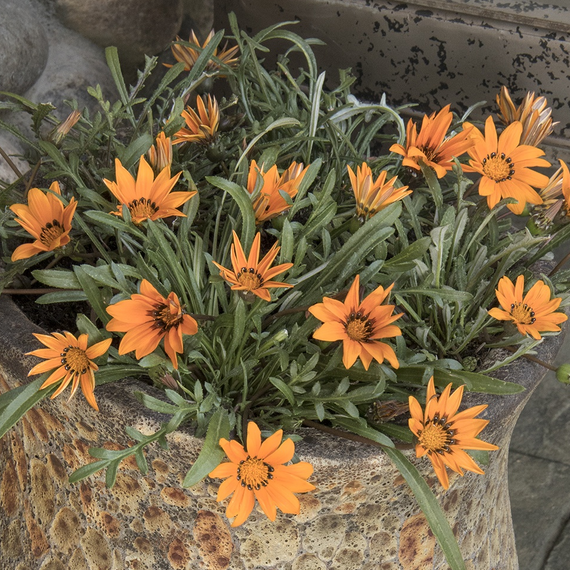
- Brilliant fluorescent orange, terracotta-toned daisy blooms with intricate dark brown and black speckled markings at the center — flowering continuously from early spring through late autumn
- Exceptionally drought tolerant and low-maintenance, thriving in hot, dry conditions where many other perennials struggle
- Glossy, dark green deeply lobed foliage with attractive silver-gray undersides that takes on a rich purple tinge through the winter months for year-round visual interest
- Deer resistant, rabbit resistant, and salt tolerant — a tough, versatile groundcover ideal for rock gardens, slopes, borders, and container displays
Gazania Tanager (Gazania krebsiana 'Tanager') is a striking South African perennial that delivers season-long color with its large, fluorescent orange daisy-like blooms measuring up to 3 inches across, each petal adorned with intricate speckled black and brown markings near the center that give it an almost exotic, jewel-like quality. Originating from the rugged, sun-baked landscapes of Namaqualand in South Africa's western region, this tough and adaptable clump-forming groundcover has been bred for outstanding garden performance across a wide range of climates, earning its place as a beloved xeriscape and waterwise perennial. Compact and low-growing, Tanager Gazania forms a neat, spreading tuft of glossy, deeply lobed dark green foliage — silvery white on the undersides — that remains attractive even when the plant is not in bloom, and transitions to a lovely purple hue during cooler winter months. Its extraordinarily long bloom season, spanning early spring well into fall, makes it one of the most reliable sources of vivid color in the landscape, and its ability to reseed lightly ensures continued colony spread over time. Whether massed as a groundcover on a dry sunny slope, tucked into a rock garden, planted along a border edge, or showcased in a patio container, Tanager Gazania rewards gardeners with maximum color for minimal effort, drawing in bees, butterflies, beetles, and songbirds throughout the season.
Plant Description
Gazania Tanager is a perennial herbaceous groundcover in the Asteraceae (daisy) family, native to the wild flower regions of Namaqualand in South Africa. It forms a low, clumping tuft of foliage topped by showy, upward-facing daisy flowers in a warm fluorescent orange-terracotta color — a shade so vivid and distinctive that the common name "terracotta gazania" was coined to describe it. Each flower head is 2 to 3 inches in diameter and features 7 to 20 ray petals surrounding a central disc, with characteristic dark brown to black speckled markings at the base of the petals that add depth and intrigue. The flowers are borne on erect stems and open wide in full sun, but close at night and on overcast days — a natural response that protects the reproductive parts of the bloom. The foliage is composed of narrow, deeply pinnately lobed leaves that are glossy dark green on top and covered with soft silvery-white wool on the undersides, creating a two-toned effect. In cooler months the leaves develop an attractive purple tinge. The plant has a shallow, fibrous root system that allows it to respond rapidly to rainfall and irrigation.
Mature Size
| Dimension | Measurement |
|---|---|
| Mature Height | 4 to 8 inches |
| Mature Spread | 8 to 14 inches |
| Growth Rate | Medium |
| Growth Habit | Clumping, low-spreading groundcover |
| Leaf Length | 3 to 6 inches |
| Flower Diameter | 2 to 3 inches |
Hardiness Zones and Climate
Gazania Tanager is hardy in USDA Zones 7a through 10b, performing as a true perennial across most of the Pacific Coast, the South, and mild-winter regions of the West. In Zones 6 and colder it may be treated as a tender perennial or annual. In Southern Oregon and Northern California it typically overwinters reliably in the ground, especially when planted in a well-drained site with good air circulation. It is marginally hardy at the colder edges of its range, so planting in spring — rather than fall — allows roots to establish fully before cold weather sets in. The plant is frost tolerant to a degree and can handle light freezes, but sustained wet and cold conditions in winter are more damaging than frost itself. It thrives at elevations up to approximately 6,200 feet in dry, sunny climates. Its origins in Namaqualand, a region of dramatic heat, aridity, and bright sunshine, make it exceptionally well suited to hot, sunny western gardens.
Sunlight Requirements
Tanager Gazania demands full sun to perform at its best. It should receive a minimum of 6 hours of direct sunlight per day, and it positively thrives in hot, unobstructed sun all day long. It will tolerate partial shade (2 to 4 hours of direct sun) but flowering will be noticeably reduced and the plant may become more open and leggy in habit. An important characteristic to understand is that the flowers naturally close in low-light conditions — they will not open on heavily overcast days or at night. This is a normal and healthy behavior, not a sign of stress. For the most prolific and continuously open blooms, situate this plant in the sunniest, most open position available in the garden, such as south- or west-facing slopes, rock gardens, or south-facing borders.
Soil and pH Preferences
This plant is highly adaptable to a range of soil types but absolutely requires excellent drainage — it does not tolerate soggy or waterlogged soil, especially in winter. It performs well in sandy, loamy, or even clay soils as long as drainage is adequate. Amending heavy clay with grit, coarse sand, or gravel at planting time will significantly improve its long-term success. Tanager Gazania is tolerant of lean, low-fertility soils and does not require rich organic amendments. In fact, overly fertile or moisture-retentive soils tend to encourage lush foliage at the expense of flowers. Preferred soil pH is neutral to slightly alkaline (6.0 to 8.0+), though it will also tolerate mildly acidic conditions. It is notably salt tolerant, making it a great choice for coastal gardens and roadside plantings where salt spray or road salt is a concern.
Watering Guide
Tanager Gazania is highly drought tolerant once established and is well suited to xeriscape and low-water landscapes. Proper watering technique is key to keeping this plant healthy:
- Establishment period: Water regularly (every 2 to 3 days) for the first 4 to 6 weeks after planting to help roots settle in. Gradually reduce frequency as the plant becomes established.
- Established plants: Water deeply but infrequently, allowing the soil to dry out completely between waterings. Once established, it can thrive on moderate to very low supplemental irrigation.
- Summer: Even in hot, dry summer conditions, established plants require very little water. In native habitats, plants are adapted to dry summers and may go semi-dormant, conserving moisture by curling their leaves — this is normal behavior, not cause for alarm.
- Winter: Reduce or eliminate supplemental watering in winter. Wet winter soil is the most common cause of decline and root rot. Good drainage at this time of year is more important than any other care consideration.
- Avoid: Overhead watering that keeps foliage wet for extended periods, and any situation where water pools around the crown of the plant.
Fertilizing
Tanager Gazania is a low-fertility plant by nature and does not require heavy feeding. Overfertilizing — especially with nitrogen-rich products — will produce lush, overly soft foliage at the expense of flowers and can make the plant more susceptible to pest and disease problems. Follow these guidelines for best results:
- At planting, incorporate a slow-release, balanced granular fertilizer (such as a 10-10-10 or similar) lightly into the backfill soil.
- Established in-ground plants generally need no more than one light application of a balanced, low-nitrogen fertilizer in early spring as new growth emerges.
- For container-grown plants, use a diluted liquid balanced fertilizer once every 4 to 6 weeks during the active growing season (spring through early fall), then discontinue feeding in winter.
- Avoid fertilizing in late summer or fall, as this can stimulate soft new growth that is vulnerable to cold damage.
Pruning and Maintenance
Tanager Gazania is relatively low maintenance but benefits from a few simple tasks throughout the year to keep it looking its best and blooming prolifically:
- Deadheading: Removing spent flower stems at the base encourages continuous bloom production throughout the long flowering season. This is especially important in mid-summer to keep plants tidy and flowering vigorously.
- Spring cleanup: In late winter or early spring, remove any dead, tattered, or frost-damaged leaves from the crown. This refreshes the plant's appearance and allows new growth to emerge cleanly. A light shearing or tidying of the clump can be done at this time as well.
- Dividing: Established clumps can be divided every 2 to 3 years in spring to rejuvenate older plants, increase vigor, and propagate new specimens. Division is the most reliable method of vegetative propagation.
- Reseeding: Tanager Gazania is a light to moderate self-seeder. If you wish to contain its spread, deadhead consistently before seed heads mature. Alternatively, allow some seed heads to develop to encourage natural colony spread in informal plantings.
- Avoid: Heavy pruning into the crown during hot, dry summer weather.
Planting Instructions
- Timing: Plant in spring after the last frost date for your area. Spring planting is strongly preferred over fall planting, as it allows the root system to become fully established before cold winter conditions arrive.
- Site selection: Choose the sunniest, best-drained spot available. Avoid low spots or areas where water pools after rain.
- Soil preparation: If soil drainage is questionable, work in a 2 to 4 inch layer of coarse sand, grit, or fine gravel before planting. Raised beds and sloped sites are ideal. Avoid adding excessive compost or rich organic matter.
- Spacing: Space plants 10 to 14 inches apart for a groundcover effect, or 8 to 12 inches apart for quicker fill. They will spread to cover gaps over time.
- Planting depth: Set the plant at the same depth it was growing in its nursery container. Do not plant too deep, and ensure the crown of the plant sits at or slightly above the surrounding soil level to promote drainage away from the crown.
- Watering in: Water thoroughly at planting, then continue with regular, moderate watering through the establishment period. Taper off to a low-water schedule once roots are established (typically 4 to 6 weeks).
- Mulching: A light layer (1 inch or less) of gravel or decomposed granite mulch around plants looks attractive, conserves moisture without retaining excess water at the crown, and reflects heat that gazanias enjoy. Avoid deep organic mulch piled against the crown.
Seasonal Interest
| Season | What to Expect |
|---|---|
| Spring | One of the earliest perennials to begin blooming; fluorescent orange flowers open as temperatures warm, often as early as March or April. Fresh new foliage is a glossy, bright dark green. |
| Summer | Peak bloom season with prolific, continuous flowering in full sun. Foliage may curl slightly during extreme heat as a natural water-conserving response. |
| Fall | Blooming continues well into autumn, often one of the last perennials still in flower. Foliage begins to take on a purple tinge as temperatures cool. |
| Winter | Foliage develops a deep, attractive purple-lavender tint that provides subtle winter interest. The plant goes semi-dormant but remains evergreen to semi-evergreen in mild climates. |
Landscape Uses
Tanager Gazania is one of the most versatile and hardworking low-growing perennials available for western gardens. Its adaptability to heat, drought, poor soil, and coastal conditions makes it suitable for a wide range of landscape applications:
- Rock gardens and rocky slopes: Ideal tucked between stones or cascading over rock walls, where excellent drainage and reflected heat suit it perfectly.
- Groundcover and mass plantings: When planted en masse, it creates a stunning carpet of vivid orange color over a long season. Excellent for large areas where a low-water, low-maintenance groundcover is needed.
- Border edging: Its compact, low profile makes it an excellent choice for the front of a mixed border, along walkways, or edging a sunny driveway bed.
- Containers and patio planters: Well suited to pots, window boxes, and raised planters, especially where the well-drained conditions containers provide are an advantage.
- Xeriscape and water-wise gardens: A keystone plant for drought-tolerant and water-wise landscape designs.
- Coastal gardens: Its salt tolerance makes it a strong performer near the coast.
- Meadow and naturalistic plantings: Works well in short-grass meadows or naturalistic dry garden settings, where it can reseed and spread gently over time.
- Erosion control on slopes: The spreading habit and mat-forming quality make it useful for stabilizing dry, sunny banks and slopes.
Companion Plants
Tanager Gazania pairs beautifully with other sun-loving, drought-tolerant plants that share its preference for fast-draining soil and minimal summer water. Consider combining it with:
- Lavender (Lavandula spp.) — Complementary bloom times, similar water needs, and contrasting purple-blue flowers against Tanager's orange create a striking color combination.
- Osteospermum (African Daisy) — Shares similar South African origins and growing conditions; mixed planting of daisy family plants creates a colorful, cohesive display.
- Agapanthus — Provides bold upright foliage and blue-violet summer blooms as a striking contrast to the low, spreading Tanager in mixed borders.
- Creeping thyme (Thymus serpyllum) — A low-growing, fragrant, drought-tolerant companion that fills in gaps and softens edges between bolder plants.
- Sedum and Stonecrop (Sedum spp.) — Excellent rock garden companions with similarly lean soil and drought preferences.
- Lampranthus (Ice Plant) — A natural companion from South African habitats; both thrive in full sun with excellent drainage and bloom in complementary warm tones.
- Ornamental grasses (e.g., Blue Fescue, Festuca glauca) — Provide textural contrast with silvery-blue fine-textured foliage against Tanager's bolder, glossy green leaves and vivid flowers.
- Salvia (Salvia spp.) — Upright, fragrant, and pollinator-friendly; pairs well both visually and ecologically with Tanager Gazania.
Wildlife Value
Tanager Gazania is a genuinely valuable plant for beneficial garden wildlife, offering nectar, pollen, and habitat across its extraordinarily long bloom season:
- Bees: The large, open flower heads are highly attractive to honeybees and native bees, providing easy access to abundant pollen and nectar from early spring through fall.
- Butterflies: The bright orange flowers act as a visual beacon for a wide variety of butterfly species looking for nectar sources throughout the season.
- Beetles: Various beneficial pollen-feeding beetles, including native species, are frequently found on the flowers.
- Songbirds: As seed heads mature, small songbirds will visit the plant to feed on the seeds. The silky-haired achene fruits are also wind-dispersed, attracting foraging birds.
- Ants: Ants play a role in seed dispersal, carrying the small seeds back to their nests and contributing to the plant's natural spread.
- Deer and Rabbit Resistance: While the plant attracts beneficial wildlife, it is notably resistant to browsing by deer and rabbits, making it reliable in gardens where these animals are a concern.
Pests and Diseases
Tanager Gazania is a tough, generally problem-free plant when grown in appropriate conditions. The vast majority of issues arise from improper cultural conditions rather than true pest or disease pressure.
- Root rot (Pythium, Phytophthora): The most significant threat to this plant. Caused by poorly drained or overly moist soil, particularly in winter. Prevention through excellent drainage is the most effective strategy. Avoid overwatering at all times.
- Powdery mildew: Occasionally an issue in humid conditions or when air circulation around the plant is poor. Plant in open, well-ventilated locations and avoid overhead watering.
- Aphids: May occasionally infest new shoot tips, particularly in spring. A strong blast of water from a hose or an application of insecticidal soap is usually sufficient to control minor infestations.
- Thrips: Can cause distorted or discolored petals in some seasons. Keep plants healthy and well-maintained; remove and discard heavily infested flower heads.
- Caterpillars/Leafhoppers: Occasional feeding damage to foliage; typically minor and not life-threatening to established plants. Hand-pick or treat with appropriate organic insecticides if damage is significant.
- General prevention tips: Ensure excellent drainage, plant in full sun, avoid crowding, and do not over-fertilize. Healthy, well-sited plants rarely suffer serious pest or disease problems.
Container Growing
Tanager Gazania is an outstanding choice for container gardening, and in many ways containers suit this plant perfectly — they provide the outstanding drainage that it demands, the reflected heat that it loves, and the flexibility to move it to the sunniest spot available. Here are tips for success in containers:
- Container selection: Choose a container with multiple, large drainage holes. Terra cotta or unglazed ceramic pots are excellent choices as they allow soil to breathe and dry out between waterings. Avoid large, deep pots that retain excess moisture.
- Potting mix: Use a well-draining cactus/succulent mix, or blend a standard potting soil with 25 to 30% perlite or coarse horticultural grit to improve drainage significantly.
- Placement: Position in the sunniest location possible — a south- or west-facing patio, deck, or balcony is ideal.
- Watering: Allow the potting mix to dry out almost completely between waterings. When you do water, water thoroughly until it drains freely from the bottom. In summer heat, containers may need watering more frequently than in-ground plants.
- Fertilizing in containers: Apply a diluted balanced liquid fertilizer every 4 to 6 weeks during the growing season (spring through early fall). Stop feeding in winter.
- Overwintering in containers: In climates at the edge of its hardiness range, containers can be moved to a sheltered, frost-protected location (such as an unheated garage or covered porch) for the winter. Keep nearly dry during dormancy.
- Combination plantings: Pairs beautifully in mixed containers with other drought-tolerant sun-lovers such as portulaca, trailing verbena, dusty miller, and ornamental grasses.
- Brilliant fluorescent orange, terracotta-toned daisy blooms with intricate dark brown and black speckled markings at the center — flowering continuously from early spring through late autumn
- Exceptionally drought tolerant and low-maintenance, thriving in hot, dry conditions where many other perennials struggle
- Glossy, dark green deeply lobed foliage with attractive silver-gray undersides that takes on a rich purple tinge through the winter months for year-round visual interest
- Deer resistant, rabbit resistant, and salt tolerant — a tough, versatile groundcover ideal for rock gardens, slopes, borders, and container displays
Gazania Tanager (Gazania krebsiana 'Tanager') is a striking South African perennial that delivers season-long color with its large, fluorescent orange daisy-like blooms measuring up to 3 inches across, each petal adorned with intricate speckled black and brown markings near the center that give it an almost exotic, jewel-like quality. Originating from the rugged, sun-baked landscapes of Namaqualand in South Africa's western region, this tough and adaptable clump-forming groundcover has been bred for outstanding garden performance across a wide range of climates, earning its place as a beloved xeriscape and waterwise perennial. Compact and low-growing, Tanager Gazania forms a neat, spreading tuft of glossy, deeply lobed dark green foliage — silvery white on the undersides — that remains attractive even when the plant is not in bloom, and transitions to a lovely purple hue during cooler winter months. Its extraordinarily long bloom season, spanning early spring well into fall, makes it one of the most reliable sources of vivid color in the landscape, and its ability to reseed lightly ensures continued colony spread over time. Whether massed as a groundcover on a dry sunny slope, tucked into a rock garden, planted along a border edge, or showcased in a patio container, Tanager Gazania rewards gardeners with maximum color for minimal effort, drawing in bees, butterflies, beetles, and songbirds throughout the season.
Plant Description
Gazania Tanager is a perennial herbaceous groundcover in the Asteraceae (daisy) family, native to the wild flower regions of Namaqualand in South Africa. It forms a low, clumping tuft of foliage topped by showy, upward-facing daisy flowers in a warm fluorescent orange-terracotta color — a shade so vivid and distinctive that the common name "terracotta gazania" was coined to describe it. Each flower head is 2 to 3 inches in diameter and features 7 to 20 ray petals surrounding a central disc, with characteristic dark brown to black speckled markings at the base of the petals that add depth and intrigue. The flowers are borne on erect stems and open wide in full sun, but close at night and on overcast days — a natural response that protects the reproductive parts of the bloom. The foliage is composed of narrow, deeply pinnately lobed leaves that are glossy dark green on top and covered with soft silvery-white wool on the undersides, creating a two-toned effect. In cooler months the leaves develop an attractive purple tinge. The plant has a shallow, fibrous root system that allows it to respond rapidly to rainfall and irrigation.
Mature Size
| Dimension | Measurement |
|---|---|
| Mature Height | 4 to 8 inches |
| Mature Spread | 8 to 14 inches |
| Growth Rate | Medium |
| Growth Habit | Clumping, low-spreading groundcover |
| Leaf Length | 3 to 6 inches |
| Flower Diameter | 2 to 3 inches |
Hardiness Zones and Climate
Gazania Tanager is hardy in USDA Zones 7a through 10b, performing as a true perennial across most of the Pacific Coast, the South, and mild-winter regions of the West. In Zones 6 and colder it may be treated as a tender perennial or annual. In Southern Oregon and Northern California it typically overwinters reliably in the ground, especially when planted in a well-drained site with good air circulation. It is marginally hardy at the colder edges of its range, so planting in spring — rather than fall — allows roots to establish fully before cold weather sets in. The plant is frost tolerant to a degree and can handle light freezes, but sustained wet and cold conditions in winter are more damaging than frost itself. It thrives at elevations up to approximately 6,200 feet in dry, sunny climates. Its origins in Namaqualand, a region of dramatic heat, aridity, and bright sunshine, make it exceptionally well suited to hot, sunny western gardens.
Sunlight Requirements
Tanager Gazania demands full sun to perform at its best. It should receive a minimum of 6 hours of direct sunlight per day, and it positively thrives in hot, unobstructed sun all day long. It will tolerate partial shade (2 to 4 hours of direct sun) but flowering will be noticeably reduced and the plant may become more open and leggy in habit. An important characteristic to understand is that the flowers naturally close in low-light conditions — they will not open on heavily overcast days or at night. This is a normal and healthy behavior, not a sign of stress. For the most prolific and continuously open blooms, situate this plant in the sunniest, most open position available in the garden, such as south- or west-facing slopes, rock gardens, or south-facing borders.
Soil and pH Preferences
This plant is highly adaptable to a range of soil types but absolutely requires excellent drainage — it does not tolerate soggy or waterlogged soil, especially in winter. It performs well in sandy, loamy, or even clay soils as long as drainage is adequate. Amending heavy clay with grit, coarse sand, or gravel at planting time will significantly improve its long-term success. Tanager Gazania is tolerant of lean, low-fertility soils and does not require rich organic amendments. In fact, overly fertile or moisture-retentive soils tend to encourage lush foliage at the expense of flowers. Preferred soil pH is neutral to slightly alkaline (6.0 to 8.0+), though it will also tolerate mildly acidic conditions. It is notably salt tolerant, making it a great choice for coastal gardens and roadside plantings where salt spray or road salt is a concern.
Watering Guide
Tanager Gazania is highly drought tolerant once established and is well suited to xeriscape and low-water landscapes. Proper watering technique is key to keeping this plant healthy:
- Establishment period: Water regularly (every 2 to 3 days) for the first 4 to 6 weeks after planting to help roots settle in. Gradually reduce frequency as the plant becomes established.
- Established plants: Water deeply but infrequently, allowing the soil to dry out completely between waterings. Once established, it can thrive on moderate to very low supplemental irrigation.
- Summer: Even in hot, dry summer conditions, established plants require very little water. In native habitats, plants are adapted to dry summers and may go semi-dormant, conserving moisture by curling their leaves — this is normal behavior, not cause for alarm.
- Winter: Reduce or eliminate supplemental watering in winter. Wet winter soil is the most common cause of decline and root rot. Good drainage at this time of year is more important than any other care consideration.
- Avoid: Overhead watering that keeps foliage wet for extended periods, and any situation where water pools around the crown of the plant.
Fertilizing
Tanager Gazania is a low-fertility plant by nature and does not require heavy feeding. Overfertilizing — especially with nitrogen-rich products — will produce lush, overly soft foliage at the expense of flowers and can make the plant more susceptible to pest and disease problems. Follow these guidelines for best results:
- At planting, incorporate a slow-release, balanced granular fertilizer (such as a 10-10-10 or similar) lightly into the backfill soil.
- Established in-ground plants generally need no more than one light application of a balanced, low-nitrogen fertilizer in early spring as new growth emerges.
- For container-grown plants, use a diluted liquid balanced fertilizer once every 4 to 6 weeks during the active growing season (spring through early fall), then discontinue feeding in winter.
- Avoid fertilizing in late summer or fall, as this can stimulate soft new growth that is vulnerable to cold damage.
Pruning and Maintenance
Tanager Gazania is relatively low maintenance but benefits from a few simple tasks throughout the year to keep it looking its best and blooming prolifically:
- Deadheading: Removing spent flower stems at the base encourages continuous bloom production throughout the long flowering season. This is especially important in mid-summer to keep plants tidy and flowering vigorously.
- Spring cleanup: In late winter or early spring, remove any dead, tattered, or frost-damaged leaves from the crown. This refreshes the plant's appearance and allows new growth to emerge cleanly. A light shearing or tidying of the clump can be done at this time as well.
- Dividing: Established clumps can be divided every 2 to 3 years in spring to rejuvenate older plants, increase vigor, and propagate new specimens. Division is the most reliable method of vegetative propagation.
- Reseeding: Tanager Gazania is a light to moderate self-seeder. If you wish to contain its spread, deadhead consistently before seed heads mature. Alternatively, allow some seed heads to develop to encourage natural colony spread in informal plantings.
- Avoid: Heavy pruning into the crown during hot, dry summer weather.
Planting Instructions
- Timing: Plant in spring after the last frost date for your area. Spring planting is strongly preferred over fall planting, as it allows the root system to become fully established before cold winter conditions arrive.
- Site selection: Choose the sunniest, best-drained spot available. Avoid low spots or areas where water pools after rain.
- Soil preparation: If soil drainage is questionable, work in a 2 to 4 inch layer of coarse sand, grit, or fine gravel before planting. Raised beds and sloped sites are ideal. Avoid adding excessive compost or rich organic matter.
- Spacing: Space plants 10 to 14 inches apart for a groundcover effect, or 8 to 12 inches apart for quicker fill. They will spread to cover gaps over time.
- Planting depth: Set the plant at the same depth it was growing in its nursery container. Do not plant too deep, and ensure the crown of the plant sits at or slightly above the surrounding soil level to promote drainage away from the crown.
- Watering in: Water thoroughly at planting, then continue with regular, moderate watering through the establishment period. Taper off to a low-water schedule once roots are established (typically 4 to 6 weeks).
- Mulching: A light layer (1 inch or less) of gravel or decomposed granite mulch around plants looks attractive, conserves moisture without retaining excess water at the crown, and reflects heat that gazanias enjoy. Avoid deep organic mulch piled against the crown.
Seasonal Interest
| Season | What to Expect |
|---|---|
| Spring | One of the earliest perennials to begin blooming; fluorescent orange flowers open as temperatures warm, often as early as March or April. Fresh new foliage is a glossy, bright dark green. |
| Summer | Peak bloom season with prolific, continuous flowering in full sun. Foliage may curl slightly during extreme heat as a natural water-conserving response. |
| Fall | Blooming continues well into autumn, often one of the last perennials still in flower. Foliage begins to take on a purple tinge as temperatures cool. |
| Winter | Foliage develops a deep, attractive purple-lavender tint that provides subtle winter interest. The plant goes semi-dormant but remains evergreen to semi-evergreen in mild climates. |
Landscape Uses
Tanager Gazania is one of the most versatile and hardworking low-growing perennials available for western gardens. Its adaptability to heat, drought, poor soil, and coastal conditions makes it suitable for a wide range of landscape applications:
- Rock gardens and rocky slopes: Ideal tucked between stones or cascading over rock walls, where excellent drainage and reflected heat suit it perfectly.
- Groundcover and mass plantings: When planted en masse, it creates a stunning carpet of vivid orange color over a long season. Excellent for large areas where a low-water, low-maintenance groundcover is needed.
- Border edging: Its compact, low profile makes it an excellent choice for the front of a mixed border, along walkways, or edging a sunny driveway bed.
- Containers and patio planters: Well suited to pots, window boxes, and raised planters, especially where the well-drained conditions containers provide are an advantage.
- Xeriscape and water-wise gardens: A keystone plant for drought-tolerant and water-wise landscape designs.
- Coastal gardens: Its salt tolerance makes it a strong performer near the coast.
- Meadow and naturalistic plantings: Works well in short-grass meadows or naturalistic dry garden settings, where it can reseed and spread gently over time.
- Erosion control on slopes: The spreading habit and mat-forming quality make it useful for stabilizing dry, sunny banks and slopes.
Companion Plants
Tanager Gazania pairs beautifully with other sun-loving, drought-tolerant plants that share its preference for fast-draining soil and minimal summer water. Consider combining it with:
- Lavender (Lavandula spp.) — Complementary bloom times, similar water needs, and contrasting purple-blue flowers against Tanager's orange create a striking color combination.
- Osteospermum (African Daisy) — Shares similar South African origins and growing conditions; mixed planting of daisy family plants creates a colorful, cohesive display.
- Agapanthus — Provides bold upright foliage and blue-violet summer blooms as a striking contrast to the low, spreading Tanager in mixed borders.
- Creeping thyme (Thymus serpyllum) — A low-growing, fragrant, drought-tolerant companion that fills in gaps and softens edges between bolder plants.
- Sedum and Stonecrop (Sedum spp.) — Excellent rock garden companions with similarly lean soil and drought preferences.
- Lampranthus (Ice Plant) — A natural companion from South African habitats; both thrive in full sun with excellent drainage and bloom in complementary warm tones.
- Ornamental grasses (e.g., Blue Fescue, Festuca glauca) — Provide textural contrast with silvery-blue fine-textured foliage against Tanager's bolder, glossy green leaves and vivid flowers.
- Salvia (Salvia spp.) — Upright, fragrant, and pollinator-friendly; pairs well both visually and ecologically with Tanager Gazania.
Wildlife Value
Tanager Gazania is a genuinely valuable plant for beneficial garden wildlife, offering nectar, pollen, and habitat across its extraordinarily long bloom season:
- Bees: The large, open flower heads are highly attractive to honeybees and native bees, providing easy access to abundant pollen and nectar from early spring through fall.
- Butterflies: The bright orange flowers act as a visual beacon for a wide variety of butterfly species looking for nectar sources throughout the season.
- Beetles: Various beneficial pollen-feeding beetles, including native species, are frequently found on the flowers.
- Songbirds: As seed heads mature, small songbirds will visit the plant to feed on the seeds. The silky-haired achene fruits are also wind-dispersed, attracting foraging birds.
- Ants: Ants play a role in seed dispersal, carrying the small seeds back to their nests and contributing to the plant's natural spread.
- Deer and Rabbit Resistance: While the plant attracts beneficial wildlife, it is notably resistant to browsing by deer and rabbits, making it reliable in gardens where these animals are a concern.
Pests and Diseases
Tanager Gazania is a tough, generally problem-free plant when grown in appropriate conditions. The vast majority of issues arise from improper cultural conditions rather than true pest or disease pressure.
- Root rot (Pythium, Phytophthora): The most significant threat to this plant. Caused by poorly drained or overly moist soil, particularly in winter. Prevention through excellent drainage is the most effective strategy. Avoid overwatering at all times.
- Powdery mildew: Occasionally an issue in humid conditions or when air circulation around the plant is poor. Plant in open, well-ventilated locations and avoid overhead watering.
- Aphids: May occasionally infest new shoot tips, particularly in spring. A strong blast of water from a hose or an application of insecticidal soap is usually sufficient to control minor infestations.
- Thrips: Can cause distorted or discolored petals in some seasons. Keep plants healthy and well-maintained; remove and discard heavily infested flower heads.
- Caterpillars/Leafhoppers: Occasional feeding damage to foliage; typically minor and not life-threatening to established plants. Hand-pick or treat with appropriate organic insecticides if damage is significant.
- General prevention tips: Ensure excellent drainage, plant in full sun, avoid crowding, and do not over-fertilize. Healthy, well-sited plants rarely suffer serious pest or disease problems.
Container Growing
Tanager Gazania is an outstanding choice for container gardening, and in many ways containers suit this plant perfectly — they provide the outstanding drainage that it demands, the reflected heat that it loves, and the flexibility to move it to the sunniest spot available. Here are tips for success in containers:
- Container selection: Choose a container with multiple, large drainage holes. Terra cotta or unglazed ceramic pots are excellent choices as they allow soil to breathe and dry out between waterings. Avoid large, deep pots that retain excess moisture.
- Potting mix: Use a well-draining cactus/succulent mix, or blend a standard potting soil with 25 to 30% perlite or coarse horticultural grit to improve drainage significantly.
- Placement: Position in the sunniest location possible — a south- or west-facing patio, deck, or balcony is ideal.
- Watering: Allow the potting mix to dry out almost completely between waterings. When you do water, water thoroughly until it drains freely from the bottom. In summer heat, containers may need watering more frequently than in-ground plants.
- Fertilizing in containers: Apply a diluted balanced liquid fertilizer every 4 to 6 weeks during the growing season (spring through early fall). Stop feeding in winter.
- Overwintering in containers: In climates at the edge of its hardiness range, containers can be moved to a sheltered, frost-protected location (such as an unheated garage or covered porch) for the winter. Keep nearly dry during dormancy.
- Combination plantings: Pairs beautifully in mixed containers with other drought-tolerant sun-lovers such as portulaca, trailing verbena, dusty miller, and ornamental grasses.
Related Products