Zoom the image with the mouse
Scallywag Holly - 1 Gallon
SKU:
2094795
UPC:
014949351987
$22.99
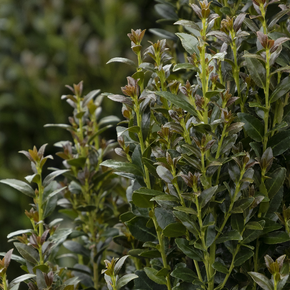
- Compact, dense, and naturally rounded evergreen shrub with shiny, dark green foliage that develops striking purple-burgundy tones in fall and winter for year-round garden appeal.
- A hardy Meserve Holly hybrid (Ilex x meserveae) renowned for improved disease resistance and slow, tidy growth — reaching just 4 feet tall by 3 feet wide at maturity.
- An essential male pollenizer for female Meserve Holly varieties such as Blue Princess, enabling berry production on nearby female plants without bearing berries itself.
- Deer resistant and highly adaptable, thriving in full sun to partial shade across USDA Zones 5-9 — an excellent low-maintenance choice for foundations, hedges, borders, and containers.
Scallywag Holly (Ilex x meserveae 'Monnieves' PP #21,941) is a standout compact evergreen shrub and an improved sport of Little Rascal Holly, distinguished by its slightly more upright, densely rounded habit and exceptional year-round ornamental value. Its glossy, dark green, spiny-edged leaves take on rich purple-burgundy tones as temperatures drop in autumn and winter, bringing bold color to the landscape when many other plants have faded. A slow grower that tops out around 4 feet tall and 3 feet wide, Scallywag Holly is an ideal foundation plant, low hedge specimen, or accent shrub for small-space gardens in USDA Hardiness Zones 5 through 9. As a male Meserve Holly, it serves as a critical pollenizer for nearby female hollies such as Blue Princess or Blue Girl, enabling them to set their showy red berries — a vital wildlife food source for songbirds through winter. Small, white, lightly fragrant flowers emerge in spring, providing nectar for bees and other pollinators before the season heats up. This cultivar demonstrates improved disease resistance compared to older blue holly varieties, tolerates urban conditions, and adapts well to a range of soil types as long as drainage is adequate and pH remains slightly acidic. With minimal pruning requirements and outstanding cold hardiness, Scallywag Holly delivers lasting structure, seasonal color, and ecological benefit in gardens across Southern Oregon and Northern California.
Plant Description
Scallywag Holly is a broadleaf evergreen shrub and a patented improved selection within the Meserve Holly group (Ilex x meserveae), a hybrid derived from a cross between English Holly (Ilex aquifolium) and the East Asian species Ilex rugosa. The cultivar name 'Monnieves' distinguishes this male selection, which was developed as a sport of the popular Little Rascal Holly. It shares the same naturally dense, rounded form as its parent but exhibits a slightly more upright growth habit. The shiny, dark green leaves are ovate with soft yet pronounced spiny margins — appearing formidable but remaining relatively flexible to the touch. From late fall through winter, the foliage transitions to attractive shades of purple and burgundy, adding dramatic seasonal interest. Small, white, lightly fragrant flowers appear in spring, followed — on nearby female plants — by the classic brilliant red holly berries that persist well into winter. Scallywag Holly itself, being a male plant, does not produce berries.
Mature Size and Growth Rate
| Characteristic | Details |
|---|---|
| Mature Height | Approximately 4 feet |
| Mature Spread | Approximately 3 feet |
| Growth Rate | Slow — typically less than 1 foot per year |
| Habit | Dense, compact, and rounded with a slightly upright form |
| Longevity | Under ideal conditions, can be expected to live 40 years or more |
Because of its slow, tidy growth rate, Scallywag Holly rarely requires heavy pruning to maintain its naturally attractive rounded shape. It fills in densely from the base to the ground, making it an excellent shrub that does not require filler plants in front of it.
Hardiness Zones
Scallywag Holly is cold hardy in USDA Plant Hardiness Zones 5 through 9, making it one of the most cold-tolerant broadleaf evergreen hollies available. It thrives across much of the continental United States, including the Pacific Northwest, the Mountain West, and coastal California. In colder microclimates or exposed sites, applying a layer of mulch around the root zone in late fall helps protect the root system and retain soil moisture during freezes. In warmer parts of Zone 9, siting the plant where it receives some afternoon shade and protection from reflected heat is beneficial.
Sunlight Requirements
Scallywag Holly performs best in full sun to partial shade, ideally receiving 4 to 6 hours of direct sunlight per day. Full sun exposure (6 or more hours) encourages the densest growth and the most pronounced fall and winter foliage coloration. In hot summer climates, afternoon shade is recommended to prevent leaf scorch, particularly when the shrub is planted near heat-reflecting surfaces such as light-colored walls or pavement. Avoid deeply shaded locations, which can reduce the density of the plant and diminish its ornamental qualities.
Soil and pH Preferences
This holly performs best in organically rich, slightly acidic, evenly moist, and well-drained soils. The ideal soil pH range is below 6.0 (acidic). Alkaline or high-pH soils can cause chlorosis — a yellowing of the foliage — because the plant cannot efficiently absorb iron and other micronutrients under those conditions. While Scallywag Holly is adaptable to a range of soil textures including clay, loam, and sandy soils, good drainage is essential, as the roots will not tolerate standing water. Amending planting beds with compost or aged organic matter before planting improves both moisture retention and drainage while supporting the slightly acidic pH this plant prefers. A soil acidifier or sulfur amendment can be used to lower pH in neutral or alkaline garden soils.
Watering Guide
During the first growing season, water Scallywag Holly deeply and regularly to help it establish a deep, extensive root system. Once established, it requires average to moderate moisture and is moderately drought tolerant, though it should not be allowed to dry out completely for extended periods. A good rule of thumb is to allow the top 2 inches of soil to dry out between watering sessions once the plant is established. Avoid overwatering or planting in low spots where water collects, as prolonged wet conditions can lead to root rot. Applying a 2- to 3-inch layer of organic mulch around the base of the plant (keeping it away from the main stem) helps conserve soil moisture, moderate soil temperature, and reduce watering frequency.
Fertilizing
Feed Scallywag Holly with a fertilizer formulated for acid-loving plants or hollies. A slow-release granular holly fertilizer applied once in early spring before new growth begins is the most common and effective approach. A second, lighter application can be made in early fall to support root development heading into winter. Avoid fertilizing in late summer or after midsummer, as this can stimulate tender new growth that may be damaged by early frosts. Yellowing foliage during the growing season — especially between the leaf veins — may indicate iron chlorosis caused by alkaline soil; in this case, apply a chelated iron supplement along with a soil acidifier rather than increasing the standard fertilizer rate.
Pruning and Maintenance
Scallywag Holly is a low-maintenance shrub that largely maintains its naturally rounded, dense form without significant intervention. When pruning is desired for shape or size control, the best time is in late winter or very early spring, just before new growth emerges. Avoid heavy pruning in fall or late summer, which can stimulate growth that is vulnerable to frost damage. Light shaping throughout the growing season is acceptable. Because this cultivar grows slowly, annual light pruning is typically all that is needed to keep it looking tidy. Always use clean, sharp pruning shears to make smooth cuts and reduce the risk of disease transmission.
Planting Instructions
- Choose a site with full sun to partial shade and well-drained, slightly acidic soil. Avoid low areas where water pools after rain.
- Dig a planting hole two to three times as wide as the root ball and equal in depth. This wide, shallow hole encourages lateral root expansion.
- Amend the backfill soil with compost or peat moss to enrich organic matter and support an acidic pH if needed.
- Place the plant so the top of the root ball sits level with or very slightly above the surrounding soil grade to promote drainage away from the crown.
- Backfill with the amended soil, firming gently as you go to eliminate air pockets.
- Water thoroughly immediately after planting to settle the soil around the roots.
- Apply a 2- to 3-inch layer of organic mulch (such as shredded bark or wood chips) around the base of the plant, keeping mulch a few inches away from the main stem.
- Space plants approximately 3 feet apart for a dense hedge or massed planting effect.
- The best times to plant are spring and fall when temperatures are moderate and root establishment is easiest.
Role as a Pollenizer
Scallywag Holly is a male (staminate) plant, which means it produces pollen-bearing flowers but does not set fruit or berries of its own. Its primary landscape role — beyond its ornamental value — is as a pollenizer for nearby female Meserve Holly cultivars, including Blue Princess, Blue Girl, and similar Ilex x meserveae varieties. Without a compatible male plant nearby, female hollies will not produce their signature bright red berries. As a general guideline, one male holly such as Scallywag is sufficient to pollinate 3 to 5 female holly plants within approximately 50 feet. Planting Scallywag Holly alongside female blue hollies transforms the surrounding garden into a vibrant fall and winter display of red berries while the male plant itself contributes handsome year-round evergreen foliage and seasonal color.
Seasonal Interest
| Season | Ornamental Features |
|---|---|
| Spring | Small, white, lightly fragrant flowers emerge, attracting bees and early pollinators |
| Summer | Dense, glossy, dark green foliage provides lush evergreen structure and texture |
| Fall | Foliage transitions to deep purple-burgundy tones as temperatures cool |
| Winter | Purple-burgundy foliage persists, offering bold color contrast against winter landscapes; evergreen structure provides year-round presence |
Landscape Uses
Scallywag Holly is a highly versatile landscape shrub suited to a wide variety of garden applications:
- Foundation Plantings: Its compact, rounded form and slow growth make it an ideal choice along home foundations without overcrowding windows or pathways.
- Low Hedges and Borders: Plant 3 feet apart for a dense, formal or informal evergreen hedge or garden border with year-round structure.
- Mass Plantings: Grouped plantings create a dramatic, unified display of deep green summer foliage and rich fall color.
- Accent Specimen: Use as a single focal point in a mixed shrub border or perennial garden for structure and four-season interest.
- Pollinator Pairing: Plant alongside female Meserve Hollies such as Blue Princess to enable berry production and create a wildlife-friendly planting.
- Container Gardening: Well-suited for large outdoor pots and containers on patios and entryways, where it acts as a structural "thriller" element.
- Screening: Densely branched habit provides a degree of visual screening and the spiny foliage offers a deterrent to people and large animals.
Companion Plants
Scallywag Holly pairs beautifully with a wide range of plants that share its preference for slightly acidic, well-drained soils and partial to full sun conditions. Some excellent companions include:
- Blue Princess Holly (Ilex x meserveae 'Blue Princess'): The ideal female counterpart — plant nearby so Scallywag can serve as its pollenizer and enable a spectacular winter berry display.
- Hydrangeas (Hydrangea spp.): Share the preference for acidic soil and complement Scallywag's dense evergreen structure with seasonal blooms.
- Azaleas and Rhododendrons: Acid-loving companions that thrive in similar conditions and provide bold spring flower color against holly's evergreen backdrop.
- Viburnum (Viburnum spp.): Multi-season interest shrubs that blend well in mixed borders alongside hollies.
- Ornamental Grasses: Fine-textured grasses provide a contrasting foliage texture alongside the bold, spiny holly leaves.
- Nandina (Nandina domestica): Similar fall and winter foliage color and complementary year-round interest in mixed borders.
Pests and Diseases
Scallywag Holly has improved disease resistance compared to older Meserve Holly varieties and is generally considered a low-maintenance, resilient shrub. However, gardeners should be aware of the following potential issues:
- Holly Leafminers: Small larvae that tunnel between leaf surfaces, leaving visible trails. Control with horticultural oil or systemic insecticides if infestations are heavy.
- Spider Mites: Can occur in hot, dry conditions. Regular irrigation and good air circulation help prevent outbreaks; treat with insecticidal soap or miticide if needed.
- Scale Insects: Occasionally appear on stems and leaves. Horticultural oil applied in late winter or early spring is effective.
- Whiteflies: Rare but possible; control with insecticidal soap or yellow sticky traps.
- Leaf Spot and Tar Spot: Fungal diseases encouraged by poor air circulation or prolonged wet foliage. Avoid overhead irrigation and prune for airflow.
- Chlorosis: Yellowing of leaves between the veins is typically caused by iron deficiency in alkaline soils. Correct by acidifying the soil and applying chelated iron.
- Root Rot: Can occur in poorly drained soils or overwatered conditions. Ensure excellent drainage at planting.
This cultivar is notably deer resistant, making it a particularly valuable landscape plant in areas with high deer pressure.
Container Growing
Scallywag Holly adapts well to life in large outdoor containers and makes a striking "thriller" element in mixed patio plantings or as a standalone specimen in a decorative pot. For best results in containers:
- Select a large container with ample drainage holes — at least 16 to 18 inches in diameter to allow root development.
- Use a high-quality, well-draining potting mix amended with peat moss or an acidifying agent to maintain the slightly acidic pH this plant prefers.
- Container-grown hollies dry out more quickly than in-ground plants; check soil moisture frequently and water when the top inch becomes dry, especially during warm weather.
- Fertilize with a slow-release, acid-forming holly fertilizer in early spring.
- In USDA Zones 5 and 6, move containers to a sheltered location or unheated garage during the coldest winter months, as the roots of container plants are more vulnerable to freeze damage than in-ground roots.
- Repot every 2 to 3 years as needed to refresh the soil and accommodate root growth.
Wildlife Value
Although Scallywag Holly is a male plant and does not produce berries itself, it plays an essential ecological role as a pollenizer that enables nearby female hollies to bear the bright red berries that sustain many wildlife species through fall and winter. The small white spring flowers attract bees — including native specialist bees in the genus Colletes — and other early-season pollinators seeking nectar and pollen. When planted alongside berry-producing female Meserve Holly cultivars, the combination supports a rich wildlife habitat that attracts a variety of songbirds, including American robins, cedar waxwings, and mockingbirds, which rely on persistent holly berries as an important winter food source. The dense, spiny foliage also provides excellent nesting cover and protection for small birds seeking shelter from predators and harsh weather.
Note: Holly berries and leaves contain saponins and are considered mildly toxic to humans and pets if ingested in quantity. Keep this in mind when siting the plant in gardens frequented by small children or animals.
- Compact, dense, and naturally rounded evergreen shrub with shiny, dark green foliage that develops striking purple-burgundy tones in fall and winter for year-round garden appeal.
- A hardy Meserve Holly hybrid (Ilex x meserveae) renowned for improved disease resistance and slow, tidy growth — reaching just 4 feet tall by 3 feet wide at maturity.
- An essential male pollenizer for female Meserve Holly varieties such as Blue Princess, enabling berry production on nearby female plants without bearing berries itself.
- Deer resistant and highly adaptable, thriving in full sun to partial shade across USDA Zones 5-9 — an excellent low-maintenance choice for foundations, hedges, borders, and containers.
Scallywag Holly (Ilex x meserveae 'Monnieves' PP #21,941) is a standout compact evergreen shrub and an improved sport of Little Rascal Holly, distinguished by its slightly more upright, densely rounded habit and exceptional year-round ornamental value. Its glossy, dark green, spiny-edged leaves take on rich purple-burgundy tones as temperatures drop in autumn and winter, bringing bold color to the landscape when many other plants have faded. A slow grower that tops out around 4 feet tall and 3 feet wide, Scallywag Holly is an ideal foundation plant, low hedge specimen, or accent shrub for small-space gardens in USDA Hardiness Zones 5 through 9. As a male Meserve Holly, it serves as a critical pollenizer for nearby female hollies such as Blue Princess or Blue Girl, enabling them to set their showy red berries — a vital wildlife food source for songbirds through winter. Small, white, lightly fragrant flowers emerge in spring, providing nectar for bees and other pollinators before the season heats up. This cultivar demonstrates improved disease resistance compared to older blue holly varieties, tolerates urban conditions, and adapts well to a range of soil types as long as drainage is adequate and pH remains slightly acidic. With minimal pruning requirements and outstanding cold hardiness, Scallywag Holly delivers lasting structure, seasonal color, and ecological benefit in gardens across Southern Oregon and Northern California.
Plant Description
Scallywag Holly is a broadleaf evergreen shrub and a patented improved selection within the Meserve Holly group (Ilex x meserveae), a hybrid derived from a cross between English Holly (Ilex aquifolium) and the East Asian species Ilex rugosa. The cultivar name 'Monnieves' distinguishes this male selection, which was developed as a sport of the popular Little Rascal Holly. It shares the same naturally dense, rounded form as its parent but exhibits a slightly more upright growth habit. The shiny, dark green leaves are ovate with soft yet pronounced spiny margins — appearing formidable but remaining relatively flexible to the touch. From late fall through winter, the foliage transitions to attractive shades of purple and burgundy, adding dramatic seasonal interest. Small, white, lightly fragrant flowers appear in spring, followed — on nearby female plants — by the classic brilliant red holly berries that persist well into winter. Scallywag Holly itself, being a male plant, does not produce berries.
Mature Size and Growth Rate
| Characteristic | Details |
|---|---|
| Mature Height | Approximately 4 feet |
| Mature Spread | Approximately 3 feet |
| Growth Rate | Slow — typically less than 1 foot per year |
| Habit | Dense, compact, and rounded with a slightly upright form |
| Longevity | Under ideal conditions, can be expected to live 40 years or more |
Because of its slow, tidy growth rate, Scallywag Holly rarely requires heavy pruning to maintain its naturally attractive rounded shape. It fills in densely from the base to the ground, making it an excellent shrub that does not require filler plants in front of it.
Hardiness Zones
Scallywag Holly is cold hardy in USDA Plant Hardiness Zones 5 through 9, making it one of the most cold-tolerant broadleaf evergreen hollies available. It thrives across much of the continental United States, including the Pacific Northwest, the Mountain West, and coastal California. In colder microclimates or exposed sites, applying a layer of mulch around the root zone in late fall helps protect the root system and retain soil moisture during freezes. In warmer parts of Zone 9, siting the plant where it receives some afternoon shade and protection from reflected heat is beneficial.
Sunlight Requirements
Scallywag Holly performs best in full sun to partial shade, ideally receiving 4 to 6 hours of direct sunlight per day. Full sun exposure (6 or more hours) encourages the densest growth and the most pronounced fall and winter foliage coloration. In hot summer climates, afternoon shade is recommended to prevent leaf scorch, particularly when the shrub is planted near heat-reflecting surfaces such as light-colored walls or pavement. Avoid deeply shaded locations, which can reduce the density of the plant and diminish its ornamental qualities.
Soil and pH Preferences
This holly performs best in organically rich, slightly acidic, evenly moist, and well-drained soils. The ideal soil pH range is below 6.0 (acidic). Alkaline or high-pH soils can cause chlorosis — a yellowing of the foliage — because the plant cannot efficiently absorb iron and other micronutrients under those conditions. While Scallywag Holly is adaptable to a range of soil textures including clay, loam, and sandy soils, good drainage is essential, as the roots will not tolerate standing water. Amending planting beds with compost or aged organic matter before planting improves both moisture retention and drainage while supporting the slightly acidic pH this plant prefers. A soil acidifier or sulfur amendment can be used to lower pH in neutral or alkaline garden soils.
Watering Guide
During the first growing season, water Scallywag Holly deeply and regularly to help it establish a deep, extensive root system. Once established, it requires average to moderate moisture and is moderately drought tolerant, though it should not be allowed to dry out completely for extended periods. A good rule of thumb is to allow the top 2 inches of soil to dry out between watering sessions once the plant is established. Avoid overwatering or planting in low spots where water collects, as prolonged wet conditions can lead to root rot. Applying a 2- to 3-inch layer of organic mulch around the base of the plant (keeping it away from the main stem) helps conserve soil moisture, moderate soil temperature, and reduce watering frequency.
Fertilizing
Feed Scallywag Holly with a fertilizer formulated for acid-loving plants or hollies. A slow-release granular holly fertilizer applied once in early spring before new growth begins is the most common and effective approach. A second, lighter application can be made in early fall to support root development heading into winter. Avoid fertilizing in late summer or after midsummer, as this can stimulate tender new growth that may be damaged by early frosts. Yellowing foliage during the growing season — especially between the leaf veins — may indicate iron chlorosis caused by alkaline soil; in this case, apply a chelated iron supplement along with a soil acidifier rather than increasing the standard fertilizer rate.
Pruning and Maintenance
Scallywag Holly is a low-maintenance shrub that largely maintains its naturally rounded, dense form without significant intervention. When pruning is desired for shape or size control, the best time is in late winter or very early spring, just before new growth emerges. Avoid heavy pruning in fall or late summer, which can stimulate growth that is vulnerable to frost damage. Light shaping throughout the growing season is acceptable. Because this cultivar grows slowly, annual light pruning is typically all that is needed to keep it looking tidy. Always use clean, sharp pruning shears to make smooth cuts and reduce the risk of disease transmission.
Planting Instructions
- Choose a site with full sun to partial shade and well-drained, slightly acidic soil. Avoid low areas where water pools after rain.
- Dig a planting hole two to three times as wide as the root ball and equal in depth. This wide, shallow hole encourages lateral root expansion.
- Amend the backfill soil with compost or peat moss to enrich organic matter and support an acidic pH if needed.
- Place the plant so the top of the root ball sits level with or very slightly above the surrounding soil grade to promote drainage away from the crown.
- Backfill with the amended soil, firming gently as you go to eliminate air pockets.
- Water thoroughly immediately after planting to settle the soil around the roots.
- Apply a 2- to 3-inch layer of organic mulch (such as shredded bark or wood chips) around the base of the plant, keeping mulch a few inches away from the main stem.
- Space plants approximately 3 feet apart for a dense hedge or massed planting effect.
- The best times to plant are spring and fall when temperatures are moderate and root establishment is easiest.
Role as a Pollenizer
Scallywag Holly is a male (staminate) plant, which means it produces pollen-bearing flowers but does not set fruit or berries of its own. Its primary landscape role — beyond its ornamental value — is as a pollenizer for nearby female Meserve Holly cultivars, including Blue Princess, Blue Girl, and similar Ilex x meserveae varieties. Without a compatible male plant nearby, female hollies will not produce their signature bright red berries. As a general guideline, one male holly such as Scallywag is sufficient to pollinate 3 to 5 female holly plants within approximately 50 feet. Planting Scallywag Holly alongside female blue hollies transforms the surrounding garden into a vibrant fall and winter display of red berries while the male plant itself contributes handsome year-round evergreen foliage and seasonal color.
Seasonal Interest
| Season | Ornamental Features |
|---|---|
| Spring | Small, white, lightly fragrant flowers emerge, attracting bees and early pollinators |
| Summer | Dense, glossy, dark green foliage provides lush evergreen structure and texture |
| Fall | Foliage transitions to deep purple-burgundy tones as temperatures cool |
| Winter | Purple-burgundy foliage persists, offering bold color contrast against winter landscapes; evergreen structure provides year-round presence |
Landscape Uses
Scallywag Holly is a highly versatile landscape shrub suited to a wide variety of garden applications:
- Foundation Plantings: Its compact, rounded form and slow growth make it an ideal choice along home foundations without overcrowding windows or pathways.
- Low Hedges and Borders: Plant 3 feet apart for a dense, formal or informal evergreen hedge or garden border with year-round structure.
- Mass Plantings: Grouped plantings create a dramatic, unified display of deep green summer foliage and rich fall color.
- Accent Specimen: Use as a single focal point in a mixed shrub border or perennial garden for structure and four-season interest.
- Pollinator Pairing: Plant alongside female Meserve Hollies such as Blue Princess to enable berry production and create a wildlife-friendly planting.
- Container Gardening: Well-suited for large outdoor pots and containers on patios and entryways, where it acts as a structural "thriller" element.
- Screening: Densely branched habit provides a degree of visual screening and the spiny foliage offers a deterrent to people and large animals.
Companion Plants
Scallywag Holly pairs beautifully with a wide range of plants that share its preference for slightly acidic, well-drained soils and partial to full sun conditions. Some excellent companions include:
- Blue Princess Holly (Ilex x meserveae 'Blue Princess'): The ideal female counterpart — plant nearby so Scallywag can serve as its pollenizer and enable a spectacular winter berry display.
- Hydrangeas (Hydrangea spp.): Share the preference for acidic soil and complement Scallywag's dense evergreen structure with seasonal blooms.
- Azaleas and Rhododendrons: Acid-loving companions that thrive in similar conditions and provide bold spring flower color against holly's evergreen backdrop.
- Viburnum (Viburnum spp.): Multi-season interest shrubs that blend well in mixed borders alongside hollies.
- Ornamental Grasses: Fine-textured grasses provide a contrasting foliage texture alongside the bold, spiny holly leaves.
- Nandina (Nandina domestica): Similar fall and winter foliage color and complementary year-round interest in mixed borders.
Pests and Diseases
Scallywag Holly has improved disease resistance compared to older Meserve Holly varieties and is generally considered a low-maintenance, resilient shrub. However, gardeners should be aware of the following potential issues:
- Holly Leafminers: Small larvae that tunnel between leaf surfaces, leaving visible trails. Control with horticultural oil or systemic insecticides if infestations are heavy.
- Spider Mites: Can occur in hot, dry conditions. Regular irrigation and good air circulation help prevent outbreaks; treat with insecticidal soap or miticide if needed.
- Scale Insects: Occasionally appear on stems and leaves. Horticultural oil applied in late winter or early spring is effective.
- Whiteflies: Rare but possible; control with insecticidal soap or yellow sticky traps.
- Leaf Spot and Tar Spot: Fungal diseases encouraged by poor air circulation or prolonged wet foliage. Avoid overhead irrigation and prune for airflow.
- Chlorosis: Yellowing of leaves between the veins is typically caused by iron deficiency in alkaline soils. Correct by acidifying the soil and applying chelated iron.
- Root Rot: Can occur in poorly drained soils or overwatered conditions. Ensure excellent drainage at planting.
This cultivar is notably deer resistant, making it a particularly valuable landscape plant in areas with high deer pressure.
Container Growing
Scallywag Holly adapts well to life in large outdoor containers and makes a striking "thriller" element in mixed patio plantings or as a standalone specimen in a decorative pot. For best results in containers:
- Select a large container with ample drainage holes — at least 16 to 18 inches in diameter to allow root development.
- Use a high-quality, well-draining potting mix amended with peat moss or an acidifying agent to maintain the slightly acidic pH this plant prefers.
- Container-grown hollies dry out more quickly than in-ground plants; check soil moisture frequently and water when the top inch becomes dry, especially during warm weather.
- Fertilize with a slow-release, acid-forming holly fertilizer in early spring.
- In USDA Zones 5 and 6, move containers to a sheltered location or unheated garage during the coldest winter months, as the roots of container plants are more vulnerable to freeze damage than in-ground roots.
- Repot every 2 to 3 years as needed to refresh the soil and accommodate root growth.
Wildlife Value
Although Scallywag Holly is a male plant and does not produce berries itself, it plays an essential ecological role as a pollenizer that enables nearby female hollies to bear the bright red berries that sustain many wildlife species through fall and winter. The small white spring flowers attract bees — including native specialist bees in the genus Colletes — and other early-season pollinators seeking nectar and pollen. When planted alongside berry-producing female Meserve Holly cultivars, the combination supports a rich wildlife habitat that attracts a variety of songbirds, including American robins, cedar waxwings, and mockingbirds, which rely on persistent holly berries as an important winter food source. The dense, spiny foliage also provides excellent nesting cover and protection for small birds seeking shelter from predators and harsh weather.
Note: Holly berries and leaves contain saponins and are considered mildly toxic to humans and pets if ingested in quantity. Keep this in mind when siting the plant in gardens frequented by small children or animals.