Zoom the image with the mouse
Lace Aloe - 1 Gallon
SKU:
2165275
UPC:
014949056332
$15.99
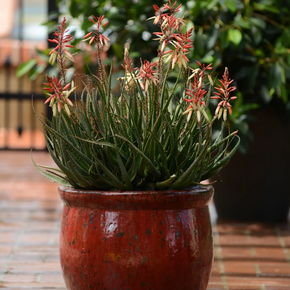
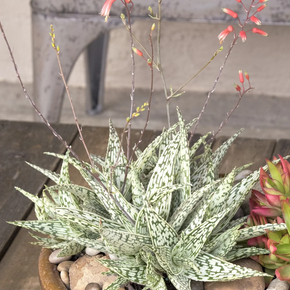
- A strikingly ornamental succulent rosette adorned with dark gray-green leaves flecked with white tubercles and delicate lacy white bristles along the leaf margins - an eye-catching texture that stands out in any garden or indoor setting.
- Remarkably cold-hardy for an aloe relative, thriving as a perennial outdoors in USDA Zones 7-10 and tolerating brief temperature dips well below freezing - far more winter-resilient than most succulents in its family.
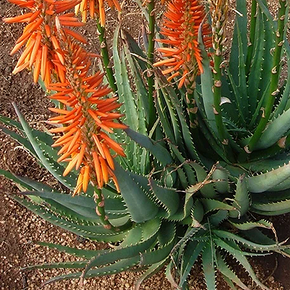
- Erupts in summer with tall, torch-like flower stalks rising up to 20 inches, bearing clusters of tubular coral-orange blooms that attract hummingbirds and pollinators to the garden.
- Exceptionally low-maintenance and drought-tolerant once established, making it a perfect choice for water-wise xeriscape gardens, rock gardens, containers, or sunny windowsills with minimal care required.
Lace Aloe (Aristaloe aristata, formerly Aloe aristata) is a captivating, compact evergreen succulent native to the mountainous grasslands and rocky slopes of southern Africa, including Lesotho and the Eastern and Western Cape provinces of South Africa, where it naturally thrives in well-drained soils at high elevations with intense sun and occasional frost. Forming tidy, symmetrical rosettes typically 6-9 inches tall and up to 8 inches across, the plant spreads over time into handsome clumps of 8-10 rosettes that can reach 2 feet wide, creating a lush, low-growing ground cover effect. The triangular, fleshy leaves are a rich dark gray-green decorated with raised white spots and soft, thread-like white cilia along their toothed margins - markings so unique they also earn this plant the common name guinea fowl plant. In late spring through summer, mature rosettes send up slender flowering stalks to 20 inches tall topped with pendant, tubular coral-orange blossoms that hummingbirds and bees find irresistible. Unlike most members of the broader aloe family, Lace Aloe is hardy into USDA Zone 7, making it a versatile choice for gardeners throughout Southern Oregon and Northern California who want to bring a striking desert aesthetic to rock gardens, xeriscape beds, succulent borders, and patio containers without sacrificing cold-season performance. Its low water needs, tolerance of poor soils, resistance to deer, and ease of propagation from abundant offsets make it one of the most rewarding and beginner-friendly succulents available for both indoor and outdoor cultivation.
Plant Description
Lace Aloe (Aristaloe aristata) is a stemless, rosette-forming evergreen succulent and the sole species in the genus Aristaloe. Once classified within the broader Aloe genus, it was reclassified in 2014 following molecular analysis that confirmed its distinct lineage - one more closely related to Haworthia than to true aloes. Its triangular, lanceolate leaves are thick and fleshy, colored deep gray-green, and densely covered on both surfaces with raised white tubercles that give the plant its characteristic spotted, lace-like appearance. Soft white cilia line the leaf margins and tips, which inspired both the common name Lace Aloe and the botanical epithet aristata, meaning "bearing bristles or a beard." The overall effect is remarkably ornamental, with each rosette displaying the geometric precision of a living sculpture. As the plant matures, it naturally produces numerous offsets (pups) around the base, eventually forming dense, spreading clumps with a low-mounded profile. In some light conditions or during periods of mild stress, the leaf tips may take on subtle reddish or bronzed tones, adding further seasonal interest to the foliage.
Mature Size
| Attribute | Measurement |
|---|---|
| Rosette Height | 6-9 inches |
| Rosette Diameter | Up to 8 inches |
| Clump Spread | 1-2 feet (8-10 rosettes) |
| Flower Stalk Height | Up to 20 inches |
| Individual Leaf Length | Up to 6 inches |
| Growth Rate | Slow to moderate |
Lace Aloe stays compact and well-behaved in the garden, never becoming invasive. Its slow-to-moderate growth rate means it fills in gradually, making it ideal for small spaces, rock garden pockets, and container plantings where its scale remains manageable for many years.
Hardiness Zones and Temperature Tolerance
Lace Aloe is reliably hardy as an outdoor perennial in USDA Hardiness Zones 7-10, making it one of the most cold-tolerant plants in the succulent world. This is a standout trait that sets it apart from the majority of aloe relatives, which are limited to Zones 9-11. It can withstand brief temperature drops to approximately 23°F (-5°C) and is reported to tolerate extreme cold spikes down to around 1.4°F (-17°C) under ideal dry conditions - a remarkable feat for any succulent. However, prolonged freezing temperatures combined with wet soil are far more dangerous than cold alone. In Zone 7, growing in a container that can be moved to a sheltered location during severe winters is advisable. In the mild climates of Southern Oregon and Northern California (primarily Zones 7b-9b), Lace Aloe performs excellently as an evergreen perennial in the landscape year-round in most locations. Gardeners in Zone 7 should provide some winter shelter or use a frost cloth during extended hard freezes to ensure the best results.
Sunlight Requirements
Lace Aloe thrives in full sun to partial shade. In the mild, Mediterranean-influenced climates of Southern Oregon and Northern California, a site that receives direct morning sun with some afternoon shade is ideal, as the afternoon sun during peak summer can scorch the leaves in the hottest microclimates. In coastal zones with naturally moderated summer temperatures, full sun all day is well tolerated. In hot inland valleys, provide light afternoon shade to protect the foliage from browning or bleaching. When grown indoors, position the plant in the brightest available location - a south- or west-facing window is ideal. Rotate the pot a quarter turn every week or two to ensure all sides of the rosette receive even light exposure and prevent the plant from leaning toward the light source. Insufficient light will cause the rosette to stretch and etiolate, losing its characteristic tight, symmetrical form.
Soil and pH Preferences
Excellent drainage is the single most important soil requirement for Lace Aloe. In the ground, plant in sandy loam, gravelly soil, or any well-drained native soil amended with coarse sand or perlite to ensure water moves through quickly. Heavy clay soils must be amended significantly or avoided entirely, as standing moisture at the root zone is the primary cause of plant death. A soil pH between 6.0 and 7.5 (slightly acidic to neutral) is optimal and supports good nutrient availability. For container growing, use a commercial cactus and succulent potting mix, or blend your own by combining three parts standard potting soil with one part coarse sand or perlite and one part pumice or fine gravel. Avoid mixes that contain moisture-retaining gel beads or high amounts of peat moss, as these encourage root rot. Top-dressing the soil surface with a thin layer of small gravel or decomposed granite is beneficial - it keeps moisture from collecting around the base of the rosette and mimics the plant's natural rocky habitat.
Watering Guide
Lace Aloe stores water in its thick, fleshy leaves and is naturally adapted to periods of drought. The "soak and dry" method is the best approach: water thoroughly until the excess drains freely from the pot or the surrounding soil is moistened to the root zone, then allow the soil to dry completely before watering again. During the active growing season (spring through early fall), watering every 10-14 days outdoors is generally appropriate, though this varies with temperature, sunlight, and soil type. In the ground during hot, dry Southern Oregon and Northern California summers, established plants may need supplemental water every 1-2 weeks. Always check that the top 2 inches of soil are completely dry before watering again. During winter, dramatically reduce watering - once every 3-4 weeks is typically sufficient to keep the plant healthy without promoting rot. Critically, never allow water to pool and sit inside the rosette, as trapped moisture between the tightly packed leaves can quickly cause crown rot. Always direct water at the base of the plant rather than overhead.
Fertilizing
Lace Aloe is a light feeder and does not require heavy fertilization to thrive. In fact, over-fertilizing can cause the rosette to lose its compact, tidy form and may result in soft, weak growth that is more susceptible to pests and disease. For best results, apply a balanced, water-soluble fertilizer formulated for cacti and succulents, diluted to half the label-recommended strength, once a month during the active growing season (spring through summer). Taper off fertilizing in late summer, and do not feed the plant at all during fall and winter when it is resting. For plants growing in the ground in native or amended soil with good organic content, fertilizing once or twice per growing season may be sufficient. Avoid fertilizers with a high nitrogen content, as these promote lush but structurally weak growth. A low-nitrogen, higher-phosphorus formula supports healthy root development and encourages the summer blooming cycle.
Pruning and Maintenance
Lace Aloe is a remarkably low-maintenance plant that requires very little grooming. The main maintenance tasks are:
- Remove spent flower stalks at their base after blooming is complete to keep the plant tidy and encourage energy to return to the rosette.
- Peel away any dried, papery outer leaves from the base of the rosette as they naturally die back - these can usually be removed by hand with a gentle tug.
- Trim any leaves that have been damaged by frost, sunburn, or mechanical injury, cutting cleanly at the base with sterilized scissors or a sharp knife.
- Divide and remove offsets (pups) when they become crowded or when propagation is desired - this also rejuvenates the parent clump.
- Do not cut back healthy green leaves, as the plant does not regenerate from cut leaf tips in the same way as some other succulents.
Overall, once sited correctly in well-drained soil with appropriate sun exposure, Lace Aloe largely takes care of itself with minimal intervention needed throughout the year.
Planting Instructions
Follow these steps for the best start when planting your Lace Aloe outdoors or in a container:
- Choose a site with excellent drainage and full sun to part shade. Avoid low spots or areas where water collects after rain.
- Prepare the soil by loosening it to a depth of 10-12 inches and mixing in generous amounts of coarse sand, perlite, or fine gravel if drainage is not naturally excellent.
- Dig a planting hole just wide and deep enough to accommodate the root ball, keeping the crown of the plant at or slightly above the surrounding soil level to prevent moisture from pooling around the base.
- Backfill around the roots with the amended soil mix, gently firming it in place to eliminate air pockets without compressing the soil heavily.
- Top-dress with a thin layer of small gravel or decomposed granite around the base of the plant to improve drainage and reduce crown moisture.
- Water lightly after planting and then allow the soil to dry before the next watering cycle begins.
- For container planting, select an unglazed terra cotta or porous pot with drainage holes, sized just 1-2 inches larger than the root ball. Fill with a cactus and succulent potting mix and position the crown at or slightly above the soil surface.
Seasonal Interest
Lace Aloe provides year-round ornamental interest, making it a valuable plant for the garden in all seasons:
- Spring: New growth emerges on the rosettes, and offsets (pups) begin to appear around the base of established plants. This is the ideal time for division and repotting.
- Summer: The showiest season for Lace Aloe - slender flowering stalks rise up to 20 inches from mature rosettes, topped with elegant, pendulous clusters of tubular coral-orange to orange-red blossoms that attract hummingbirds, bees, and butterflies over several weeks.
- Fall: The rosette remains lush and evergreen. As temperatures cool, the leaf tips may develop subtle reddish or bronzed tints, adding warm autumnal color to container arrangements and garden beds.
- Winter: Unlike many perennials, Lace Aloe maintains its attractive, fully leafed rosette through winter in Zones 7-10, providing green structure and visual interest in the garden when most other plants have died back. Its white-dotted, textured foliage is particularly striking dusted lightly with frost on cold mornings.
Landscape Uses
Lace Aloe is a versatile landscape plant suited to a wide range of garden styles and applications in Southern Oregon and Northern California:
- Rock Gardens: Perfectly at home nestled among boulders and gravel, where drainage is naturally excellent and the desert aesthetic is enhanced by its sculptural rosettes.
- Xeriscape and Drought-Tolerant Gardens: An ideal choice for water-wise planting schemes, paired with other drought-adapted succulents, ornamental grasses, and Mediterranean herbs.
- Succulent and Cactus Gardens: Provides bold texture contrast alongside upright or sprawling succulents of varying form and color.
- Border Edging: Its compact, mounding habit and year-round evergreen foliage make it an effective, low-growing border plant along pathways and garden beds.
- Mass Plantings: When planted in groups, the spreading clumps merge into a striking, low-maintenance ground cover that suppresses weeds and requires little supplemental irrigation once established.
- Container and Patio Gardens: Excellent in pots and planters on patios, decks, and entryways. Pairs beautifully with contrasting upright succulents in mixed arrangements.
- Indoor and Houseplant Use: Thrives on a bright windowsill as a distinctive, architectural houseplant.
Companion Plants
Lace Aloe pairs beautifully with other drought-tolerant and Mediterranean-climate plants that share its preference for well-drained soil, full to part sun, and low water needs. Excellent companions include:
- Agave species - Bold, structural rosettes that create dramatic textural contrast at a larger scale.
- Echeveria species - Softer, colorful rosettes in pinks, purples, and blues that complement the gray-green of Lace Aloe beautifully in container arrangements.
- Sedum (Stonecrop) species - Low-growing, drought-tolerant groundcovers that fill in around Lace Aloe clumps in rock gardens.
- Festuca glauca (Blue Fescue) - The fine, icy-blue texture of this ornamental grass creates a striking foil for the spotted rosettes of Lace Aloe.
- Lavandula species (Lavender) - Shares similar drainage and sun requirements while providing fragrant seasonal color and pollinator appeal.
- Euphorbia rigida or E. characias - Upright, blue-gray architectural shrubs that frame Lace Aloe nicely in a Mediterranean or xeriscape border.
- Haworthia species - Similar in scale and cultural needs, with complementary textures for container or shaded garden arrangements.
Container Growing
Lace Aloe is an outstanding container plant for patios, decks, and bright indoor spaces. Its compact size and slow growth rate mean it will thrive in the same pot for several years before requiring repotting. For best results:
- Choose an unglazed terra cotta pot with drainage holes - terra cotta's porous walls allow excess moisture to evaporate more quickly than glazed ceramic or plastic, reducing the risk of root rot.
- Select a pot only 1-2 inches larger in diameter than the plant's root ball. Oversized pots retain excess moisture in unused soil around the roots.
- Fill with a fast-draining cactus and succulent potting mix. Add extra perlite or pumice if the mix feels dense.
- Position the crown of the plant at or just above the soil surface and top-dress with a layer of fine gravel to keep the base of the rosette dry.
- Repot every 1-2 years in spring when the plant becomes rootbound or the clump of offsets fills the pot.
- Containers can be moved indoors to a bright window to protect the plant during unusual cold snaps, making this an excellent option for gardeners in Zone 7 or borderline areas.
- Mixed succulent arrangements featuring Lace Aloe as the centerpiece or "thriller" element, with trailing or mounding companions, are especially striking on patios and entryways.
Wildlife Value
Despite its compact size, Lace Aloe provides meaningful wildlife value, particularly during its summer blooming period. The tubular, pendulous coral-orange flowers are perfectly shaped for hummingbirds, which visit the blooms for nectar and serve as natural pollinators. The flowering stalks also attract native bees, honeybees, and other beneficial pollinating insects. The plant is reported to be largely unappealing to deer, making it an excellent low-maintenance choice in areas with significant deer pressure. It is similarly resistant to damage from squirrels and voles. Because it is a compact, non-spreading plant that does not self-seed aggressively in most garden settings, it poses minimal risk of becoming invasive and does not crowd out native plants when used thoughtfully in cultivated borders and xeriscape gardens.
Pests and Diseases
Lace Aloe is generally a hardy and pest-resistant plant, but a few issues can arise, particularly under suboptimal growing conditions:
- Root Rot (Pythium, Phytophthora, and Fusarium species): The most serious and common problem, caused by overwatering or poorly draining soil. Symptoms include a soft, brown, mushy base and yellowing or collapsing leaves. Prevention through proper drainage and restrained watering is the best approach. If rot is detected early, remove the plant from its soil, trim away all blackened roots, allow to dry for several days, and replant in fresh, dry, well-draining mix.
- Mealybugs: Small, white, cottony insects that cluster at leaf axils and on root surfaces. More common on indoor plants. Treat by dabbing affected areas with a cotton swab dipped in rubbing alcohol, or apply a diluted neem oil spray. Inspect new plants carefully before introducing them near established collections.
- Scale Insects: Appear as small brown or white waxy bumps on leaves and stems. Physically remove with a soft cloth or toothbrush dipped in isopropyl alcohol, and follow up with a neem oil application.
- Crown Rot: Distinct from root rot, this occurs when water collects and sits in the center of the rosette. Always water at the base of the plant and avoid overhead irrigation.
- Sunscald: Bleached, papery patches on leaves caused by sudden exposure to intense direct sun after being grown in lower-light conditions. Acclimate plants gradually when transitioning from indoors to outdoors in spring.
Propagation
Lace Aloe is easy to propagate and naturally produces an abundance of offsets (pups) around the base of mature rosettes, making vegetative propagation the simplest and most reliable method:
- Offset Division (Recommended): In spring, when pups have formed their own small rosettes of leaves, use a clean, sharp knife or your fingers to gently separate them from the mother plant at the base. Allow the cut end to callus in a dry, shaded location for 1-2 days, then plant into a small pot of cactus and succulent mix. Keep lightly moist and in bright indirect light until roots establish over the following few weeks.
- Leaf Cuttings: Remove a healthy leaf cleanly at its base with a sterilized knife. Allow the cut end to callus overnight, then place cut-side down in moist seed-starting or succulent mix. Mist lightly to keep the surface barely moist until roots and a new rosette form. This method is slower and less reliable than using pups but is possible.
- Seed: Lace Aloe can be grown from seed sown in a sandy, well-draining seed-starting mix. Seeds require warmth and light to germinate and the process is significantly slower than vegetative propagation. Best suited for experienced growers or those wanting to produce large numbers of plants.
- A strikingly ornamental succulent rosette adorned with dark gray-green leaves flecked with white tubercles and delicate lacy white bristles along the leaf margins - an eye-catching texture that stands out in any garden or indoor setting.
- Remarkably cold-hardy for an aloe relative, thriving as a perennial outdoors in USDA Zones 7-10 and tolerating brief temperature dips well below freezing - far more winter-resilient than most succulents in its family.
- Erupts in summer with tall, torch-like flower stalks rising up to 20 inches, bearing clusters of tubular coral-orange blooms that attract hummingbirds and pollinators to the garden.
- Exceptionally low-maintenance and drought-tolerant once established, making it a perfect choice for water-wise xeriscape gardens, rock gardens, containers, or sunny windowsills with minimal care required.
Lace Aloe (Aristaloe aristata, formerly Aloe aristata) is a captivating, compact evergreen succulent native to the mountainous grasslands and rocky slopes of southern Africa, including Lesotho and the Eastern and Western Cape provinces of South Africa, where it naturally thrives in well-drained soils at high elevations with intense sun and occasional frost. Forming tidy, symmetrical rosettes typically 6-9 inches tall and up to 8 inches across, the plant spreads over time into handsome clumps of 8-10 rosettes that can reach 2 feet wide, creating a lush, low-growing ground cover effect. The triangular, fleshy leaves are a rich dark gray-green decorated with raised white spots and soft, thread-like white cilia along their toothed margins - markings so unique they also earn this plant the common name guinea fowl plant. In late spring through summer, mature rosettes send up slender flowering stalks to 20 inches tall topped with pendant, tubular coral-orange blossoms that hummingbirds and bees find irresistible. Unlike most members of the broader aloe family, Lace Aloe is hardy into USDA Zone 7, making it a versatile choice for gardeners throughout Southern Oregon and Northern California who want to bring a striking desert aesthetic to rock gardens, xeriscape beds, succulent borders, and patio containers without sacrificing cold-season performance. Its low water needs, tolerance of poor soils, resistance to deer, and ease of propagation from abundant offsets make it one of the most rewarding and beginner-friendly succulents available for both indoor and outdoor cultivation.
Plant Description
Lace Aloe (Aristaloe aristata) is a stemless, rosette-forming evergreen succulent and the sole species in the genus Aristaloe. Once classified within the broader Aloe genus, it was reclassified in 2014 following molecular analysis that confirmed its distinct lineage - one more closely related to Haworthia than to true aloes. Its triangular, lanceolate leaves are thick and fleshy, colored deep gray-green, and densely covered on both surfaces with raised white tubercles that give the plant its characteristic spotted, lace-like appearance. Soft white cilia line the leaf margins and tips, which inspired both the common name Lace Aloe and the botanical epithet aristata, meaning "bearing bristles or a beard." The overall effect is remarkably ornamental, with each rosette displaying the geometric precision of a living sculpture. As the plant matures, it naturally produces numerous offsets (pups) around the base, eventually forming dense, spreading clumps with a low-mounded profile. In some light conditions or during periods of mild stress, the leaf tips may take on subtle reddish or bronzed tones, adding further seasonal interest to the foliage.
Mature Size
| Attribute | Measurement |
|---|---|
| Rosette Height | 6-9 inches |
| Rosette Diameter | Up to 8 inches |
| Clump Spread | 1-2 feet (8-10 rosettes) |
| Flower Stalk Height | Up to 20 inches |
| Individual Leaf Length | Up to 6 inches |
| Growth Rate | Slow to moderate |
Lace Aloe stays compact and well-behaved in the garden, never becoming invasive. Its slow-to-moderate growth rate means it fills in gradually, making it ideal for small spaces, rock garden pockets, and container plantings where its scale remains manageable for many years.
Hardiness Zones and Temperature Tolerance
Lace Aloe is reliably hardy as an outdoor perennial in USDA Hardiness Zones 7-10, making it one of the most cold-tolerant plants in the succulent world. This is a standout trait that sets it apart from the majority of aloe relatives, which are limited to Zones 9-11. It can withstand brief temperature drops to approximately 23°F (-5°C) and is reported to tolerate extreme cold spikes down to around 1.4°F (-17°C) under ideal dry conditions - a remarkable feat for any succulent. However, prolonged freezing temperatures combined with wet soil are far more dangerous than cold alone. In Zone 7, growing in a container that can be moved to a sheltered location during severe winters is advisable. In the mild climates of Southern Oregon and Northern California (primarily Zones 7b-9b), Lace Aloe performs excellently as an evergreen perennial in the landscape year-round in most locations. Gardeners in Zone 7 should provide some winter shelter or use a frost cloth during extended hard freezes to ensure the best results.
Sunlight Requirements
Lace Aloe thrives in full sun to partial shade. In the mild, Mediterranean-influenced climates of Southern Oregon and Northern California, a site that receives direct morning sun with some afternoon shade is ideal, as the afternoon sun during peak summer can scorch the leaves in the hottest microclimates. In coastal zones with naturally moderated summer temperatures, full sun all day is well tolerated. In hot inland valleys, provide light afternoon shade to protect the foliage from browning or bleaching. When grown indoors, position the plant in the brightest available location - a south- or west-facing window is ideal. Rotate the pot a quarter turn every week or two to ensure all sides of the rosette receive even light exposure and prevent the plant from leaning toward the light source. Insufficient light will cause the rosette to stretch and etiolate, losing its characteristic tight, symmetrical form.
Soil and pH Preferences
Excellent drainage is the single most important soil requirement for Lace Aloe. In the ground, plant in sandy loam, gravelly soil, or any well-drained native soil amended with coarse sand or perlite to ensure water moves through quickly. Heavy clay soils must be amended significantly or avoided entirely, as standing moisture at the root zone is the primary cause of plant death. A soil pH between 6.0 and 7.5 (slightly acidic to neutral) is optimal and supports good nutrient availability. For container growing, use a commercial cactus and succulent potting mix, or blend your own by combining three parts standard potting soil with one part coarse sand or perlite and one part pumice or fine gravel. Avoid mixes that contain moisture-retaining gel beads or high amounts of peat moss, as these encourage root rot. Top-dressing the soil surface with a thin layer of small gravel or decomposed granite is beneficial - it keeps moisture from collecting around the base of the rosette and mimics the plant's natural rocky habitat.
Watering Guide
Lace Aloe stores water in its thick, fleshy leaves and is naturally adapted to periods of drought. The "soak and dry" method is the best approach: water thoroughly until the excess drains freely from the pot or the surrounding soil is moistened to the root zone, then allow the soil to dry completely before watering again. During the active growing season (spring through early fall), watering every 10-14 days outdoors is generally appropriate, though this varies with temperature, sunlight, and soil type. In the ground during hot, dry Southern Oregon and Northern California summers, established plants may need supplemental water every 1-2 weeks. Always check that the top 2 inches of soil are completely dry before watering again. During winter, dramatically reduce watering - once every 3-4 weeks is typically sufficient to keep the plant healthy without promoting rot. Critically, never allow water to pool and sit inside the rosette, as trapped moisture between the tightly packed leaves can quickly cause crown rot. Always direct water at the base of the plant rather than overhead.
Fertilizing
Lace Aloe is a light feeder and does not require heavy fertilization to thrive. In fact, over-fertilizing can cause the rosette to lose its compact, tidy form and may result in soft, weak growth that is more susceptible to pests and disease. For best results, apply a balanced, water-soluble fertilizer formulated for cacti and succulents, diluted to half the label-recommended strength, once a month during the active growing season (spring through summer). Taper off fertilizing in late summer, and do not feed the plant at all during fall and winter when it is resting. For plants growing in the ground in native or amended soil with good organic content, fertilizing once or twice per growing season may be sufficient. Avoid fertilizers with a high nitrogen content, as these promote lush but structurally weak growth. A low-nitrogen, higher-phosphorus formula supports healthy root development and encourages the summer blooming cycle.
Pruning and Maintenance
Lace Aloe is a remarkably low-maintenance plant that requires very little grooming. The main maintenance tasks are:
- Remove spent flower stalks at their base after blooming is complete to keep the plant tidy and encourage energy to return to the rosette.
- Peel away any dried, papery outer leaves from the base of the rosette as they naturally die back - these can usually be removed by hand with a gentle tug.
- Trim any leaves that have been damaged by frost, sunburn, or mechanical injury, cutting cleanly at the base with sterilized scissors or a sharp knife.
- Divide and remove offsets (pups) when they become crowded or when propagation is desired - this also rejuvenates the parent clump.
- Do not cut back healthy green leaves, as the plant does not regenerate from cut leaf tips in the same way as some other succulents.
Overall, once sited correctly in well-drained soil with appropriate sun exposure, Lace Aloe largely takes care of itself with minimal intervention needed throughout the year.
Planting Instructions
Follow these steps for the best start when planting your Lace Aloe outdoors or in a container:
- Choose a site with excellent drainage and full sun to part shade. Avoid low spots or areas where water collects after rain.
- Prepare the soil by loosening it to a depth of 10-12 inches and mixing in generous amounts of coarse sand, perlite, or fine gravel if drainage is not naturally excellent.
- Dig a planting hole just wide and deep enough to accommodate the root ball, keeping the crown of the plant at or slightly above the surrounding soil level to prevent moisture from pooling around the base.
- Backfill around the roots with the amended soil mix, gently firming it in place to eliminate air pockets without compressing the soil heavily.
- Top-dress with a thin layer of small gravel or decomposed granite around the base of the plant to improve drainage and reduce crown moisture.
- Water lightly after planting and then allow the soil to dry before the next watering cycle begins.
- For container planting, select an unglazed terra cotta or porous pot with drainage holes, sized just 1-2 inches larger than the root ball. Fill with a cactus and succulent potting mix and position the crown at or slightly above the soil surface.
Seasonal Interest
Lace Aloe provides year-round ornamental interest, making it a valuable plant for the garden in all seasons:
- Spring: New growth emerges on the rosettes, and offsets (pups) begin to appear around the base of established plants. This is the ideal time for division and repotting.
- Summer: The showiest season for Lace Aloe - slender flowering stalks rise up to 20 inches from mature rosettes, topped with elegant, pendulous clusters of tubular coral-orange to orange-red blossoms that attract hummingbirds, bees, and butterflies over several weeks.
- Fall: The rosette remains lush and evergreen. As temperatures cool, the leaf tips may develop subtle reddish or bronzed tints, adding warm autumnal color to container arrangements and garden beds.
- Winter: Unlike many perennials, Lace Aloe maintains its attractive, fully leafed rosette through winter in Zones 7-10, providing green structure and visual interest in the garden when most other plants have died back. Its white-dotted, textured foliage is particularly striking dusted lightly with frost on cold mornings.
Landscape Uses
Lace Aloe is a versatile landscape plant suited to a wide range of garden styles and applications in Southern Oregon and Northern California:
- Rock Gardens: Perfectly at home nestled among boulders and gravel, where drainage is naturally excellent and the desert aesthetic is enhanced by its sculptural rosettes.
- Xeriscape and Drought-Tolerant Gardens: An ideal choice for water-wise planting schemes, paired with other drought-adapted succulents, ornamental grasses, and Mediterranean herbs.
- Succulent and Cactus Gardens: Provides bold texture contrast alongside upright or sprawling succulents of varying form and color.
- Border Edging: Its compact, mounding habit and year-round evergreen foliage make it an effective, low-growing border plant along pathways and garden beds.
- Mass Plantings: When planted in groups, the spreading clumps merge into a striking, low-maintenance ground cover that suppresses weeds and requires little supplemental irrigation once established.
- Container and Patio Gardens: Excellent in pots and planters on patios, decks, and entryways. Pairs beautifully with contrasting upright succulents in mixed arrangements.
- Indoor and Houseplant Use: Thrives on a bright windowsill as a distinctive, architectural houseplant.
Companion Plants
Lace Aloe pairs beautifully with other drought-tolerant and Mediterranean-climate plants that share its preference for well-drained soil, full to part sun, and low water needs. Excellent companions include:
- Agave species - Bold, structural rosettes that create dramatic textural contrast at a larger scale.
- Echeveria species - Softer, colorful rosettes in pinks, purples, and blues that complement the gray-green of Lace Aloe beautifully in container arrangements.
- Sedum (Stonecrop) species - Low-growing, drought-tolerant groundcovers that fill in around Lace Aloe clumps in rock gardens.
- Festuca glauca (Blue Fescue) - The fine, icy-blue texture of this ornamental grass creates a striking foil for the spotted rosettes of Lace Aloe.
- Lavandula species (Lavender) - Shares similar drainage and sun requirements while providing fragrant seasonal color and pollinator appeal.
- Euphorbia rigida or E. characias - Upright, blue-gray architectural shrubs that frame Lace Aloe nicely in a Mediterranean or xeriscape border.
- Haworthia species - Similar in scale and cultural needs, with complementary textures for container or shaded garden arrangements.
Container Growing
Lace Aloe is an outstanding container plant for patios, decks, and bright indoor spaces. Its compact size and slow growth rate mean it will thrive in the same pot for several years before requiring repotting. For best results:
- Choose an unglazed terra cotta pot with drainage holes - terra cotta's porous walls allow excess moisture to evaporate more quickly than glazed ceramic or plastic, reducing the risk of root rot.
- Select a pot only 1-2 inches larger in diameter than the plant's root ball. Oversized pots retain excess moisture in unused soil around the roots.
- Fill with a fast-draining cactus and succulent potting mix. Add extra perlite or pumice if the mix feels dense.
- Position the crown of the plant at or just above the soil surface and top-dress with a layer of fine gravel to keep the base of the rosette dry.
- Repot every 1-2 years in spring when the plant becomes rootbound or the clump of offsets fills the pot.
- Containers can be moved indoors to a bright window to protect the plant during unusual cold snaps, making this an excellent option for gardeners in Zone 7 or borderline areas.
- Mixed succulent arrangements featuring Lace Aloe as the centerpiece or "thriller" element, with trailing or mounding companions, are especially striking on patios and entryways.
Wildlife Value
Despite its compact size, Lace Aloe provides meaningful wildlife value, particularly during its summer blooming period. The tubular, pendulous coral-orange flowers are perfectly shaped for hummingbirds, which visit the blooms for nectar and serve as natural pollinators. The flowering stalks also attract native bees, honeybees, and other beneficial pollinating insects. The plant is reported to be largely unappealing to deer, making it an excellent low-maintenance choice in areas with significant deer pressure. It is similarly resistant to damage from squirrels and voles. Because it is a compact, non-spreading plant that does not self-seed aggressively in most garden settings, it poses minimal risk of becoming invasive and does not crowd out native plants when used thoughtfully in cultivated borders and xeriscape gardens.
Pests and Diseases
Lace Aloe is generally a hardy and pest-resistant plant, but a few issues can arise, particularly under suboptimal growing conditions:
- Root Rot (Pythium, Phytophthora, and Fusarium species): The most serious and common problem, caused by overwatering or poorly draining soil. Symptoms include a soft, brown, mushy base and yellowing or collapsing leaves. Prevention through proper drainage and restrained watering is the best approach. If rot is detected early, remove the plant from its soil, trim away all blackened roots, allow to dry for several days, and replant in fresh, dry, well-draining mix.
- Mealybugs: Small, white, cottony insects that cluster at leaf axils and on root surfaces. More common on indoor plants. Treat by dabbing affected areas with a cotton swab dipped in rubbing alcohol, or apply a diluted neem oil spray. Inspect new plants carefully before introducing them near established collections.
- Scale Insects: Appear as small brown or white waxy bumps on leaves and stems. Physically remove with a soft cloth or toothbrush dipped in isopropyl alcohol, and follow up with a neem oil application.
- Crown Rot: Distinct from root rot, this occurs when water collects and sits in the center of the rosette. Always water at the base of the plant and avoid overhead irrigation.
- Sunscald: Bleached, papery patches on leaves caused by sudden exposure to intense direct sun after being grown in lower-light conditions. Acclimate plants gradually when transitioning from indoors to outdoors in spring.
Propagation
Lace Aloe is easy to propagate and naturally produces an abundance of offsets (pups) around the base of mature rosettes, making vegetative propagation the simplest and most reliable method:
- Offset Division (Recommended): In spring, when pups have formed their own small rosettes of leaves, use a clean, sharp knife or your fingers to gently separate them from the mother plant at the base. Allow the cut end to callus in a dry, shaded location for 1-2 days, then plant into a small pot of cactus and succulent mix. Keep lightly moist and in bright indirect light until roots establish over the following few weeks.
- Leaf Cuttings: Remove a healthy leaf cleanly at its base with a sterilized knife. Allow the cut end to callus overnight, then place cut-side down in moist seed-starting or succulent mix. Mist lightly to keep the surface barely moist until roots and a new rosette form. This method is slower and less reliable than using pups but is possible.
- Seed: Lace Aloe can be grown from seed sown in a sandy, well-draining seed-starting mix. Seeds require warmth and light to germinate and the process is significantly slower than vegetative propagation. Best suited for experienced growers or those wanting to produce large numbers of plants.
Related Products