
Zoom the image with the mouse
Surreal Sienna Semponium - 1 Gallon
SKU:
2325190
UPC:
014949044889
$19.99
- A true horticultural first — Surreal Sienna (x Semponium 'Sienna', PP #34,201) is the world's first officially recognized intergeneric hybrid between Aeonium and Sempervivum, blending bold Aeonium rosette architecture with improved frost tolerance inherited from Sempervivum.
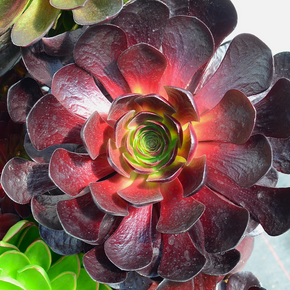
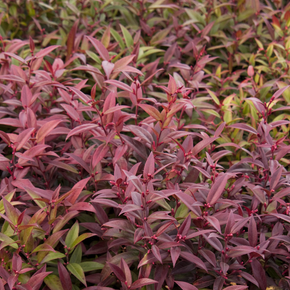
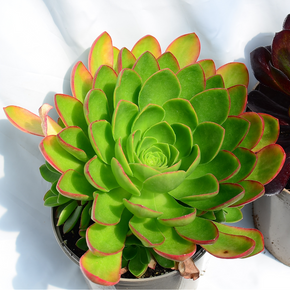
- Spectacular, season-long color show — foliage transitions from vivid sienna-red with lime-green rosette centers in spring and summer, through green-purple in autumn, to deep dark burgundy-red in late winter, making this plant a year-round focal point.
- Architectural pyramid form — tightly tiered rosettes stack in concentric whorls around a central main rosette, building a dense, conical silhouette up to 16 inches tall and wide; a single head typically produces around 12 offsets for a full, lush cluster.
- Low-maintenance and pet-safe — drought-tolerant once established, evergreen, and not listed as toxic to dogs or cats, making it an excellent choice for patio containers, rock gardens, and sunny borders in warm-climate gardens.
Surreal Sienna Semponium (x Semponium 'Sienna' PP #34,201) is a groundbreaking, patent-protected intergeneric hybrid that crosses the sculptural elegance of Aeonium with the toughness of Sempervivum, resulting in a completely new genus of succulent unlike anything previously available to home gardeners. Developed by breeder Daniel Michael of Surreal Succulents in Penzance, Cornwall, UK, 'Sienna' emerged from a 2016 cross between Aeonium 'Ice Warrior' as the female parent and Sempervivum ciliosum 'Green Ice' as the male parent, with the cultivar selected in 2018 and officially debuted to the world at the Chelsea Flower Show in 2021. The plant grows in a uniformly neat, conical shape with tightly packed, whorled rings of succulent rosettes building upward from a dense basal cluster — a form reminiscent of a living architectural sculpture. Its thick, glossy, narrowly spathulate leaves are arranged in rosettes averaging 80 to 100 leaves each, and the entire plant performs a mesmerizing seasonal color transformation: bright sienna-red with light-green rosette centers from late spring through autumn, shifting to green-purple tones as temperatures cool in fall, and then deepening to rich, dark burgundy-red in late winter and early spring. Color intensity is directly enhanced by stronger sunlight, making a south- or west-facing placement ideal. Unlike its Sempervivum parent, 'Sienna' does not go fully dormant in winter, remaining evergreen and ornamental year-round. It thrives in USDA Hardiness Zones 9b–11, tolerating light frost down to approximately 23°F (-5°C), and is perfectly suited to the mild winters of Southern Oregon and Northern California. With its fast establishment rate, low water needs, pest resistance, and stunning all-season presence, Surreal Sienna Semponium is an extraordinary, collector-worthy succulent that delivers maximum visual impact with minimal effort in containers, rock gardens, patio displays, and Mediterranean-style landscapes.
Plant Description
Surreal Sienna (x Semponium 'Sienna') is an evergreen, succulent subshrub perennial belonging to the family Crassulaceae. It is the world's first officially recognized intergeneric hybrid between the genera Aeonium and Sempervivum, creating an entirely new genus: x Semponium. The plant has the bold, glossy, layered rosette form of Aeonium combined with the compact, multi-rosette, offsetting habit of Sempervivum. Leaves are narrowly spathulate (spatula-shaped), thick and succulent, smooth and waxy on both surfaces, with finely ciliate (hair-fringed) margins. Each mature rosette contains an average of 80 to 100 leaves arranged in a tight, symmetrical whorl. Individual apical rosettes measure up to approximately 10 inches across, while lateral offset rosettes typically reach about 7 inches across. The plant forms a beautiful, tiered, conical or pyramid-shaped cluster as it matures, with rings of lateral branch rosettes stacked concentrically around and below the main central rosette. Unlike Sempervivum, which is monocarpic (dies after flowering), x Semponium 'Sienna' has not been observed to flower, meaning the main rosette does not die after a season. The plant is also evergreen with no true dormancy period, remaining ornamental throughout all four seasons.
Mature Size
| Characteristic | Measurement |
|---|---|
| Mature Height | 15 to 16 inches (up to 40 cm) |
| Mature Spread | 15 to 16 inches (up to 40 cm) |
| Apical (Central) Rosette Diameter | Up to approximately 10 inches (26 cm) |
| Lateral Offset Rosette Diameter | Approximately 7 inches (17 cm) |
| Average Offsets Per Head | Approximately 12 |
| Leaf Length | Average 3 inches (7.5 cm) |
| Leaf Width | Average 0.75 inches (2 cm) |
| Time to Mature Size | 2 to 5 years under optimal conditions |
| Growth Rate | Moderate; faster than typical Sempervivum |
Hardiness Zones and Temperature Tolerance
Surreal Sienna Semponium is rated for USDA Hardiness Zones 9b through 11, making it well-suited to the mild-winter climates of Southern Oregon and Northern California. It can tolerate light frost, with cold hardiness tested to approximately 23°F (-5°C). It is not recommended for outdoor year-round planting in Zone 8 or below without winter protection. Unlike its Sempervivum parent — which can survive temperatures as low as -20°F (-29°C) — 'Sienna' inherited more cold sensitivity from its Aeonium parent, and should be protected from hard, prolonged freezes. In borderline zones, growing the plant in a container and moving it to a frost-free location (such as an unheated garage or bright indoor windowsill) during hard freeze events is the best strategy. The plant does not experience a true dormancy period and remains actively growing and evergreen through winter in suitable climates.
Sunlight Requirements
Surreal Sienna Semponium thrives in full sun to partial shade. For the most intense and vivid sienna-red and burgundy foliage coloration, position the plant in a spot that receives at least 4 to 6 hours of direct sunlight daily. South-facing, east-facing, or west-facing exposures are ideal. In climates with very intense summer heat — such as inland valleys — some afternoon shade can help prevent leaf scorch while still maintaining excellent color. In lower-light conditions, the plant will shift toward greener tones and may become slightly more open in habit. For container-grown plants kept indoors, place them in the brightest available window or supplement with a full-spectrum grow light for at least 6 hours per day to maintain compact form and colorful foliage.
Soil and pH Preferences
Like all succulents, Surreal Sienna Semponium demands excellent drainage above all else. Standing water or consistently moist soil around the roots will quickly lead to root rot and plant decline. Use a gritty, well-draining succulent or cactus mix amended with 50% or more coarse mineral material such as pumice, perlite, or coarse horticultural sand. Avoid standard potting soil used alone, as it retains too much moisture. In the ground, amend native soil heavily with decomposed granite, pumice, or coarse sand to ensure fast drainage. Loamy or sandy loam soil types are preferred. The plant is adaptable across a wide soil pH range — acid, neutral, or alkaline soils are all acceptable — provided drainage is adequate. Avoid heavy clay soils unless substantially amended.
Watering Guide
Surreal Sienna Semponium follows the classic "soak and dry" watering method favored for succulents. Water thoroughly and deeply, allowing water to flow freely from the drainage holes of the container, then allow the soil to dry out completely before watering again. During the active growing season (spring through early fall), this typically means watering every 7 to 14 days depending on temperature, humidity, and pot size. In cooler winter months, reduce watering frequency significantly — approximately once every 3 to 4 weeks is usually sufficient, as the plant's water needs decrease with lower temperatures and slower growth. Yellowing, translucent, or mushy leaves are a sign of overwatering. Wrinkled or shriveled leaves indicate the plant needs water. Always water at the soil level to keep foliage dry and minimize the risk of fungal issues. Outdoor in-ground plants in well-draining soil are more drought-tolerant once established and may need only occasional supplemental irrigation.
Fertilizing
Surreal Sienna Semponium is not a heavy feeder, but it will benefit from light fertilization during its active growing season. Apply a balanced, water-soluble fertilizer formulated for succulents or cacti (low in nitrogen, such as a 2-7-7 or similar ratio) diluted to half the recommended strength once a month from spring through early fall. Alternatively, a balanced 10-10-10 fertilizer diluted to half strength can be used. Avoid over-fertilizing with nitrogen-heavy fertilizers, as this promotes weak, etiolated growth and can wash out the plant's vibrant foliage color. Do not fertilize during winter months when the plant's growth naturally slows. For in-ground plants in reasonably fertile soil, annual fertilization may be sufficient. Top-dressing container plants with a slow-release granular succulent fertilizer at the start of spring is a convenient low-maintenance option.
Pruning and Maintenance
Surreal Sienna Semponium requires very little pruning. The main maintenance tasks include:
- Removing dead or damaged leaves: Peel away any dried, papery lower leaves from the base of the rosette as needed to keep the plant tidy and to improve airflow.
- Offset management: Each mature head produces an average of 12 offsets (pups). These can be left to grow and fill out the cluster for a full, dense mounding effect, or carefully removed at the stem with a clean, sharp blade to propagate new plants.
- No deadheading required: As no flowers have been observed on 'Sienna' to date, deadheading is not applicable.
- Repotting containers: Repot into a slightly larger container when the root system has filled the pot or roots begin to circle the drainage hole, typically every 2 to 3 years. Repot in spring at the start of the growing season.
- Seasonal cleanup: In early spring, remove any foliage that was damaged by winter cold or rain to refresh the plant's appearance before new growth begins.
Planting Instructions
Follow these steps when planting or transplanting your Surreal Sienna Semponium:
- Choose the right time: Spring or early fall are the best times to plant. Avoid planting during the hottest peak of summer or just before a frost.
- Select the site: Choose a location with full sun to partial shade and excellent drainage. Raised beds, rock gardens, sloped areas, and elevated containers are ideal.
- Prepare the soil: Amend in-ground soil with generous amounts of coarse pumice, perlite, or decomposed granite to ensure fast drainage. For containers, use a quality succulent and cactus mix with added mineral grit (50% or more grit by volume).
- Plant at the right depth: Set the plant at the same depth it was growing in its nursery container. Do not bury the rosette base; it should sit at or slightly above soil level.
- Top dress: Apply a layer of coarse gravel, crushed granite, or pumice around the base to keep the lowest leaves dry and improve drainage at the crown.
- Initial watering: Water in gently to settle the soil around the roots, then allow the soil to dry before the next watering to encourage root establishment.
- Container selection: Always use containers with drainage holes. Terra cotta pots are an excellent choice as they allow excess moisture to evaporate through the walls.
Seasonal Interest and Color Calendar
| Season | Foliage Color and Appearance |
|---|---|
| Late Spring to Summer | Vivid sienna-red to bright orange-red with light lime-green centers in each rosette; color most intense in full sun |
| Early to Mid-Autumn | Foliage shifts toward green-purple or reddish-purple tones as temperatures begin to cool |
| Late Autumn to Early Winter | Deepening green-purple tones; color continues to evolve |
| Late Winter to Early Spring | Rich, dark burgundy-red with dark purple-brown margins and light green centers; perhaps the most dramatic and jewel-like display of the year |
| Mid-Spring (Transition) | Purple-brown tones as the plant transitions back to its summer red palette |
This year-round foliage color show, driven by temperature and light intensity, makes Surreal Sienna Semponium one of the most dynamic and ever-changing succulents available. No two seasons look exactly alike, and the plant is never dull.
Landscape Uses
Surreal Sienna Semponium is a remarkably versatile plant that makes a striking impact in a wide range of garden settings:
- Rock gardens and dry garden beds: Its architectural form and drought tolerance make it a standout specimen in xeriscape and Mediterranean-style rock garden designs.
- Patio and container gardens: Excellent as a thriller centerpiece or dramatic solo specimen in containers on patios, decks, balconies, and terraces.
- Raised beds and borders: Works beautifully as a bold accent or focal point in low-water perennial borders with other sun-loving succulents and drought-tolerant plants.
- Coastal gardens: Tolerates coastal conditions and sea-influenced climates well.
- City and courtyard gardens: Compact size and low-maintenance nature make it ideal for small urban spaces.
- Mixed succulent displays: Creates spectacular mixed planting compositions when grouped with other colorful succulents, contrasting different textures, forms, and colors.
- Indoor specimen plant: Can be grown as a houseplant in a very bright, sunny window or under grow lights, though outdoor conditions produce the best color and most compact growth.
Companion Plants
Surreal Sienna Semponium pairs beautifully with other plants that share its preference for full sun, excellent drainage, and low-water conditions. Consider these companion planting combinations:
- Aeonium 'Zwartkop' (Black Rose Aeonium): The near-black rosettes of 'Zwartkop' create a stunning contrast with Sienna's vivid red tones.
- Echeveria subsessilis or Echeveria 'Perle von Nurnberg': Pastel-toned Echeveria rosettes complement the boldness of Sienna without competing for attention.
- Sedum rupestre 'Angelina': The golden-yellow, needle-like foliage of 'Angelina' stonecrop creates a vivid color contrast and shares the same well-drained, sunny growing preferences.
- Agave parryi or Agave attenuata: The bold, structural form of compact agaves provides architectural contrast and scale in mixed succulent beds.
- Delosperma (Ice Plant): Low-growing, flowering ice plants spread attractively around the base of Sienna in rock gardens, filling space and adding seasonal bloom color.
- Festuca glauca (Blue Fescue): The cool blue-gray of ornamental fescue grasses provides a soft, textural foil to Sienna's bold reds and burgundies.
- Lavandula (Lavender): Drought-tolerant and fragrant, lavender shares the same cultural conditions and provides beautiful seasonal contrast in purple and silver-gray tones.
Container Growing
Surreal Sienna Semponium is exceptionally well-suited to container culture and in many ways performs most reliably when grown in a pot, where soil drainage and moisture levels can be precisely controlled.
- Container choice: Use a pot with at least one large drainage hole. Terra cotta and unglazed ceramic containers are preferred because they are porous and allow the root zone to breathe and dry more quickly between waterings. Decorative ceramic, resin, and wood containers work well too, provided they drain freely.
- Pot size: Choose a container only slightly larger than the plant's root ball — 1 to 2 inches wider in diameter. Oversized pots hold excess moisture around the roots and increase the risk of root rot.
- Soil mix: Use a succulent and cactus potting mix amended with 50% to 70% coarse mineral grit (pumice, perlite, or coarse sand) for optimal drainage.
- Placement: Position containers in the brightest available location for best color. Containers can be moved to a sheltered spot or brought indoors during hard frosts.
- Repotting: Repot every 2 to 3 years in spring when the roots have filled the container, stepping up to the next pot size and refreshing the soil mix at the same time.
- Watering in containers: Monitor soil moisture carefully. The smaller the container, the faster it dries — adjust watering frequency accordingly. Always allow soil to dry fully between waterings.
Propagation
Surreal Sienna Semponium is most reliably propagated through its naturally produced offsets (pups) or stem cuttings. Because it is a patented cultivar (US Plant Patent #34,201), vegetative propagation for resale or commercial distribution is prohibited without a license. Home gardeners may propagate for personal use.
- Offsets (Pups): Each mature head produces an average of 12 offsets. Once an offset has developed its own small rosette and is at least 1 to 2 inches across, it can be carefully separated from the parent stem using a clean, sharp blade or by gently twisting it free. Allow the cut end to callous over in a dry, shaded spot for 24 to 48 hours, then plant in a well-draining succulent mix. Keep barely moist until roots develop, typically within 4 to 6 weeks.
- Stem cuttings: Take cuttings of healthy stems at least 4 inches long. Allow the cut end to dry and callous for 1 to 2 days before placing in a well-draining rooting medium (equal parts perlite and succulent mix). Roots typically initiate within 6 weeks and the young plant is fully rooted in approximately 2 months. Keep at approximately 65°F (18°C) and barely moist until rooting is established.
- Seeds: Seed propagation is not typically practical for this cultivar, as no flowering has been observed to date and it would not reproduce true to type from seed even if seeds were produced.
Pests and Diseases
Surreal Sienna Semponium is notably robust and generally resistant to most pests and diseases when cultural conditions — particularly drainage and airflow — are correct. The following are the most common issues to watch for:
- Mealybugs: White, cottony clusters can appear in the crevices between leaves, particularly on plants grown under glass or with limited airflow. Treat by dabbing affected areas with a cotton swab dipped in 70% isopropyl alcohol, or apply a spray of insecticidal soap or neem oil, ensuring thorough coverage between leaves. Repeat every 7 to 10 days until clear.
- Aphids: Small, soft-bodied insects that may appear on new growth or under leaves. Knock them off with a strong stream of water, or treat with insecticidal soap spray.
- Spider mites: Indicated by fine webbing and a stippled, dusty appearance on leaf surfaces, especially in hot, dry conditions. Neem oil or insecticidal soap sprays are effective. Improve airflow and avoid water stress to discourage infestations.
- Root rot: The most serious threat to this plant, caused by overwatering or poor drainage. Symptoms include soft, translucent, yellowing lower leaves, a mushy stem base, and wilting despite moist soil. Remove the plant from its container, trim all blackened or mushy roots back to healthy white tissue with sterilized scissors, allow to dry for 24 to 48 hours, and repot in fresh, dry succulent soil.
- Fungal issues: Generally disease-free, but standing water on foliage in cool, humid conditions can promote fungal spotting. Water at soil level and ensure good airflow to prevent these problems.
Wildlife Value and Pet Safety
Surreal Sienna Semponium has the following wildlife and household safety profile:
- Pet safety: x Semponium 'Sienna' is not listed as toxic to dogs or cats by major pet poison control authorities, making it a pet-friendly choice for households and gardens with animals. As with any plant, ingestion in large quantities may cause mild gastrointestinal upset, so keeping the plant out of reach of pets that like to chew on plants is still advisable as a precaution.
- Human safety: The plant is not considered toxic to humans. Minor skin irritation is possible in highly sensitive individuals upon repeated handling.
- Pollinators: No flowers have been observed on this cultivar to date, so it does not currently provide nectar or pollen resources for bees, butterflies, or other pollinators.
- Deer and rabbits: Like many succulents, Semponium 'Sienna' may be browsed by deer or rabbits in areas with heavy wildlife pressure, particularly when other food sources are scarce. Physical barriers or deer-repellent sprays may be needed in high-pressure areas.
- A true horticultural first — Surreal Sienna (x Semponium 'Sienna', PP #34,201) is the world's first officially recognized intergeneric hybrid between Aeonium and Sempervivum, blending bold Aeonium rosette architecture with improved frost tolerance inherited from Sempervivum.
- Spectacular, season-long color show — foliage transitions from vivid sienna-red with lime-green rosette centers in spring and summer, through green-purple in autumn, to deep dark burgundy-red in late winter, making this plant a year-round focal point.
- Architectural pyramid form — tightly tiered rosettes stack in concentric whorls around a central main rosette, building a dense, conical silhouette up to 16 inches tall and wide; a single head typically produces around 12 offsets for a full, lush cluster.
- Low-maintenance and pet-safe — drought-tolerant once established, evergreen, and not listed as toxic to dogs or cats, making it an excellent choice for patio containers, rock gardens, and sunny borders in warm-climate gardens.
Surreal Sienna Semponium (x Semponium 'Sienna' PP #34,201) is a groundbreaking, patent-protected intergeneric hybrid that crosses the sculptural elegance of Aeonium with the toughness of Sempervivum, resulting in a completely new genus of succulent unlike anything previously available to home gardeners. Developed by breeder Daniel Michael of Surreal Succulents in Penzance, Cornwall, UK, 'Sienna' emerged from a 2016 cross between Aeonium 'Ice Warrior' as the female parent and Sempervivum ciliosum 'Green Ice' as the male parent, with the cultivar selected in 2018 and officially debuted to the world at the Chelsea Flower Show in 2021. The plant grows in a uniformly neat, conical shape with tightly packed, whorled rings of succulent rosettes building upward from a dense basal cluster — a form reminiscent of a living architectural sculpture. Its thick, glossy, narrowly spathulate leaves are arranged in rosettes averaging 80 to 100 leaves each, and the entire plant performs a mesmerizing seasonal color transformation: bright sienna-red with light-green rosette centers from late spring through autumn, shifting to green-purple tones as temperatures cool in fall, and then deepening to rich, dark burgundy-red in late winter and early spring. Color intensity is directly enhanced by stronger sunlight, making a south- or west-facing placement ideal. Unlike its Sempervivum parent, 'Sienna' does not go fully dormant in winter, remaining evergreen and ornamental year-round. It thrives in USDA Hardiness Zones 9b–11, tolerating light frost down to approximately 23°F (-5°C), and is perfectly suited to the mild winters of Southern Oregon and Northern California. With its fast establishment rate, low water needs, pest resistance, and stunning all-season presence, Surreal Sienna Semponium is an extraordinary, collector-worthy succulent that delivers maximum visual impact with minimal effort in containers, rock gardens, patio displays, and Mediterranean-style landscapes.
Plant Description
Surreal Sienna (x Semponium 'Sienna') is an evergreen, succulent subshrub perennial belonging to the family Crassulaceae. It is the world's first officially recognized intergeneric hybrid between the genera Aeonium and Sempervivum, creating an entirely new genus: x Semponium. The plant has the bold, glossy, layered rosette form of Aeonium combined with the compact, multi-rosette, offsetting habit of Sempervivum. Leaves are narrowly spathulate (spatula-shaped), thick and succulent, smooth and waxy on both surfaces, with finely ciliate (hair-fringed) margins. Each mature rosette contains an average of 80 to 100 leaves arranged in a tight, symmetrical whorl. Individual apical rosettes measure up to approximately 10 inches across, while lateral offset rosettes typically reach about 7 inches across. The plant forms a beautiful, tiered, conical or pyramid-shaped cluster as it matures, with rings of lateral branch rosettes stacked concentrically around and below the main central rosette. Unlike Sempervivum, which is monocarpic (dies after flowering), x Semponium 'Sienna' has not been observed to flower, meaning the main rosette does not die after a season. The plant is also evergreen with no true dormancy period, remaining ornamental throughout all four seasons.
Mature Size
| Characteristic | Measurement |
|---|---|
| Mature Height | 15 to 16 inches (up to 40 cm) |
| Mature Spread | 15 to 16 inches (up to 40 cm) |
| Apical (Central) Rosette Diameter | Up to approximately 10 inches (26 cm) |
| Lateral Offset Rosette Diameter | Approximately 7 inches (17 cm) |
| Average Offsets Per Head | Approximately 12 |
| Leaf Length | Average 3 inches (7.5 cm) |
| Leaf Width | Average 0.75 inches (2 cm) |
| Time to Mature Size | 2 to 5 years under optimal conditions |
| Growth Rate | Moderate; faster than typical Sempervivum |
Hardiness Zones and Temperature Tolerance
Surreal Sienna Semponium is rated for USDA Hardiness Zones 9b through 11, making it well-suited to the mild-winter climates of Southern Oregon and Northern California. It can tolerate light frost, with cold hardiness tested to approximately 23°F (-5°C). It is not recommended for outdoor year-round planting in Zone 8 or below without winter protection. Unlike its Sempervivum parent — which can survive temperatures as low as -20°F (-29°C) — 'Sienna' inherited more cold sensitivity from its Aeonium parent, and should be protected from hard, prolonged freezes. In borderline zones, growing the plant in a container and moving it to a frost-free location (such as an unheated garage or bright indoor windowsill) during hard freeze events is the best strategy. The plant does not experience a true dormancy period and remains actively growing and evergreen through winter in suitable climates.
Sunlight Requirements
Surreal Sienna Semponium thrives in full sun to partial shade. For the most intense and vivid sienna-red and burgundy foliage coloration, position the plant in a spot that receives at least 4 to 6 hours of direct sunlight daily. South-facing, east-facing, or west-facing exposures are ideal. In climates with very intense summer heat — such as inland valleys — some afternoon shade can help prevent leaf scorch while still maintaining excellent color. In lower-light conditions, the plant will shift toward greener tones and may become slightly more open in habit. For container-grown plants kept indoors, place them in the brightest available window or supplement with a full-spectrum grow light for at least 6 hours per day to maintain compact form and colorful foliage.
Soil and pH Preferences
Like all succulents, Surreal Sienna Semponium demands excellent drainage above all else. Standing water or consistently moist soil around the roots will quickly lead to root rot and plant decline. Use a gritty, well-draining succulent or cactus mix amended with 50% or more coarse mineral material such as pumice, perlite, or coarse horticultural sand. Avoid standard potting soil used alone, as it retains too much moisture. In the ground, amend native soil heavily with decomposed granite, pumice, or coarse sand to ensure fast drainage. Loamy or sandy loam soil types are preferred. The plant is adaptable across a wide soil pH range — acid, neutral, or alkaline soils are all acceptable — provided drainage is adequate. Avoid heavy clay soils unless substantially amended.
Watering Guide
Surreal Sienna Semponium follows the classic "soak and dry" watering method favored for succulents. Water thoroughly and deeply, allowing water to flow freely from the drainage holes of the container, then allow the soil to dry out completely before watering again. During the active growing season (spring through early fall), this typically means watering every 7 to 14 days depending on temperature, humidity, and pot size. In cooler winter months, reduce watering frequency significantly — approximately once every 3 to 4 weeks is usually sufficient, as the plant's water needs decrease with lower temperatures and slower growth. Yellowing, translucent, or mushy leaves are a sign of overwatering. Wrinkled or shriveled leaves indicate the plant needs water. Always water at the soil level to keep foliage dry and minimize the risk of fungal issues. Outdoor in-ground plants in well-draining soil are more drought-tolerant once established and may need only occasional supplemental irrigation.
Fertilizing
Surreal Sienna Semponium is not a heavy feeder, but it will benefit from light fertilization during its active growing season. Apply a balanced, water-soluble fertilizer formulated for succulents or cacti (low in nitrogen, such as a 2-7-7 or similar ratio) diluted to half the recommended strength once a month from spring through early fall. Alternatively, a balanced 10-10-10 fertilizer diluted to half strength can be used. Avoid over-fertilizing with nitrogen-heavy fertilizers, as this promotes weak, etiolated growth and can wash out the plant's vibrant foliage color. Do not fertilize during winter months when the plant's growth naturally slows. For in-ground plants in reasonably fertile soil, annual fertilization may be sufficient. Top-dressing container plants with a slow-release granular succulent fertilizer at the start of spring is a convenient low-maintenance option.
Pruning and Maintenance
Surreal Sienna Semponium requires very little pruning. The main maintenance tasks include:
- Removing dead or damaged leaves: Peel away any dried, papery lower leaves from the base of the rosette as needed to keep the plant tidy and to improve airflow.
- Offset management: Each mature head produces an average of 12 offsets (pups). These can be left to grow and fill out the cluster for a full, dense mounding effect, or carefully removed at the stem with a clean, sharp blade to propagate new plants.
- No deadheading required: As no flowers have been observed on 'Sienna' to date, deadheading is not applicable.
- Repotting containers: Repot into a slightly larger container when the root system has filled the pot or roots begin to circle the drainage hole, typically every 2 to 3 years. Repot in spring at the start of the growing season.
- Seasonal cleanup: In early spring, remove any foliage that was damaged by winter cold or rain to refresh the plant's appearance before new growth begins.
Planting Instructions
Follow these steps when planting or transplanting your Surreal Sienna Semponium:
- Choose the right time: Spring or early fall are the best times to plant. Avoid planting during the hottest peak of summer or just before a frost.
- Select the site: Choose a location with full sun to partial shade and excellent drainage. Raised beds, rock gardens, sloped areas, and elevated containers are ideal.
- Prepare the soil: Amend in-ground soil with generous amounts of coarse pumice, perlite, or decomposed granite to ensure fast drainage. For containers, use a quality succulent and cactus mix with added mineral grit (50% or more grit by volume).
- Plant at the right depth: Set the plant at the same depth it was growing in its nursery container. Do not bury the rosette base; it should sit at or slightly above soil level.
- Top dress: Apply a layer of coarse gravel, crushed granite, or pumice around the base to keep the lowest leaves dry and improve drainage at the crown.
- Initial watering: Water in gently to settle the soil around the roots, then allow the soil to dry before the next watering to encourage root establishment.
- Container selection: Always use containers with drainage holes. Terra cotta pots are an excellent choice as they allow excess moisture to evaporate through the walls.
Seasonal Interest and Color Calendar
| Season | Foliage Color and Appearance |
|---|---|
| Late Spring to Summer | Vivid sienna-red to bright orange-red with light lime-green centers in each rosette; color most intense in full sun |
| Early to Mid-Autumn | Foliage shifts toward green-purple or reddish-purple tones as temperatures begin to cool |
| Late Autumn to Early Winter | Deepening green-purple tones; color continues to evolve |
| Late Winter to Early Spring | Rich, dark burgundy-red with dark purple-brown margins and light green centers; perhaps the most dramatic and jewel-like display of the year |
| Mid-Spring (Transition) | Purple-brown tones as the plant transitions back to its summer red palette |
This year-round foliage color show, driven by temperature and light intensity, makes Surreal Sienna Semponium one of the most dynamic and ever-changing succulents available. No two seasons look exactly alike, and the plant is never dull.
Landscape Uses
Surreal Sienna Semponium is a remarkably versatile plant that makes a striking impact in a wide range of garden settings:
- Rock gardens and dry garden beds: Its architectural form and drought tolerance make it a standout specimen in xeriscape and Mediterranean-style rock garden designs.
- Patio and container gardens: Excellent as a thriller centerpiece or dramatic solo specimen in containers on patios, decks, balconies, and terraces.
- Raised beds and borders: Works beautifully as a bold accent or focal point in low-water perennial borders with other sun-loving succulents and drought-tolerant plants.
- Coastal gardens: Tolerates coastal conditions and sea-influenced climates well.
- City and courtyard gardens: Compact size and low-maintenance nature make it ideal for small urban spaces.
- Mixed succulent displays: Creates spectacular mixed planting compositions when grouped with other colorful succulents, contrasting different textures, forms, and colors.
- Indoor specimen plant: Can be grown as a houseplant in a very bright, sunny window or under grow lights, though outdoor conditions produce the best color and most compact growth.
Companion Plants
Surreal Sienna Semponium pairs beautifully with other plants that share its preference for full sun, excellent drainage, and low-water conditions. Consider these companion planting combinations:
- Aeonium 'Zwartkop' (Black Rose Aeonium): The near-black rosettes of 'Zwartkop' create a stunning contrast with Sienna's vivid red tones.
- Echeveria subsessilis or Echeveria 'Perle von Nurnberg': Pastel-toned Echeveria rosettes complement the boldness of Sienna without competing for attention.
- Sedum rupestre 'Angelina': The golden-yellow, needle-like foliage of 'Angelina' stonecrop creates a vivid color contrast and shares the same well-drained, sunny growing preferences.
- Agave parryi or Agave attenuata: The bold, structural form of compact agaves provides architectural contrast and scale in mixed succulent beds.
- Delosperma (Ice Plant): Low-growing, flowering ice plants spread attractively around the base of Sienna in rock gardens, filling space and adding seasonal bloom color.
- Festuca glauca (Blue Fescue): The cool blue-gray of ornamental fescue grasses provides a soft, textural foil to Sienna's bold reds and burgundies.
- Lavandula (Lavender): Drought-tolerant and fragrant, lavender shares the same cultural conditions and provides beautiful seasonal contrast in purple and silver-gray tones.
Container Growing
Surreal Sienna Semponium is exceptionally well-suited to container culture and in many ways performs most reliably when grown in a pot, where soil drainage and moisture levels can be precisely controlled.
- Container choice: Use a pot with at least one large drainage hole. Terra cotta and unglazed ceramic containers are preferred because they are porous and allow the root zone to breathe and dry more quickly between waterings. Decorative ceramic, resin, and wood containers work well too, provided they drain freely.
- Pot size: Choose a container only slightly larger than the plant's root ball — 1 to 2 inches wider in diameter. Oversized pots hold excess moisture around the roots and increase the risk of root rot.
- Soil mix: Use a succulent and cactus potting mix amended with 50% to 70% coarse mineral grit (pumice, perlite, or coarse sand) for optimal drainage.
- Placement: Position containers in the brightest available location for best color. Containers can be moved to a sheltered spot or brought indoors during hard frosts.
- Repotting: Repot every 2 to 3 years in spring when the roots have filled the container, stepping up to the next pot size and refreshing the soil mix at the same time.
- Watering in containers: Monitor soil moisture carefully. The smaller the container, the faster it dries — adjust watering frequency accordingly. Always allow soil to dry fully between waterings.
Propagation
Surreal Sienna Semponium is most reliably propagated through its naturally produced offsets (pups) or stem cuttings. Because it is a patented cultivar (US Plant Patent #34,201), vegetative propagation for resale or commercial distribution is prohibited without a license. Home gardeners may propagate for personal use.
- Offsets (Pups): Each mature head produces an average of 12 offsets. Once an offset has developed its own small rosette and is at least 1 to 2 inches across, it can be carefully separated from the parent stem using a clean, sharp blade or by gently twisting it free. Allow the cut end to callous over in a dry, shaded spot for 24 to 48 hours, then plant in a well-draining succulent mix. Keep barely moist until roots develop, typically within 4 to 6 weeks.
- Stem cuttings: Take cuttings of healthy stems at least 4 inches long. Allow the cut end to dry and callous for 1 to 2 days before placing in a well-draining rooting medium (equal parts perlite and succulent mix). Roots typically initiate within 6 weeks and the young plant is fully rooted in approximately 2 months. Keep at approximately 65°F (18°C) and barely moist until rooting is established.
- Seeds: Seed propagation is not typically practical for this cultivar, as no flowering has been observed to date and it would not reproduce true to type from seed even if seeds were produced.
Pests and Diseases
Surreal Sienna Semponium is notably robust and generally resistant to most pests and diseases when cultural conditions — particularly drainage and airflow — are correct. The following are the most common issues to watch for:
- Mealybugs: White, cottony clusters can appear in the crevices between leaves, particularly on plants grown under glass or with limited airflow. Treat by dabbing affected areas with a cotton swab dipped in 70% isopropyl alcohol, or apply a spray of insecticidal soap or neem oil, ensuring thorough coverage between leaves. Repeat every 7 to 10 days until clear.
- Aphids: Small, soft-bodied insects that may appear on new growth or under leaves. Knock them off with a strong stream of water, or treat with insecticidal soap spray.
- Spider mites: Indicated by fine webbing and a stippled, dusty appearance on leaf surfaces, especially in hot, dry conditions. Neem oil or insecticidal soap sprays are effective. Improve airflow and avoid water stress to discourage infestations.
- Root rot: The most serious threat to this plant, caused by overwatering or poor drainage. Symptoms include soft, translucent, yellowing lower leaves, a mushy stem base, and wilting despite moist soil. Remove the plant from its container, trim all blackened or mushy roots back to healthy white tissue with sterilized scissors, allow to dry for 24 to 48 hours, and repot in fresh, dry succulent soil.
- Fungal issues: Generally disease-free, but standing water on foliage in cool, humid conditions can promote fungal spotting. Water at soil level and ensure good airflow to prevent these problems.
Wildlife Value and Pet Safety
Surreal Sienna Semponium has the following wildlife and household safety profile:
- Pet safety: x Semponium 'Sienna' is not listed as toxic to dogs or cats by major pet poison control authorities, making it a pet-friendly choice for households and gardens with animals. As with any plant, ingestion in large quantities may cause mild gastrointestinal upset, so keeping the plant out of reach of pets that like to chew on plants is still advisable as a precaution.
- Human safety: The plant is not considered toxic to humans. Minor skin irritation is possible in highly sensitive individuals upon repeated handling.
- Pollinators: No flowers have been observed on this cultivar to date, so it does not currently provide nectar or pollen resources for bees, butterflies, or other pollinators.
- Deer and rabbits: Like many succulents, Semponium 'Sienna' may be browsed by deer or rabbits in areas with heavy wildlife pressure, particularly when other food sources are scarce. Physical barriers or deer-repellent sprays may be needed in high-pressure areas.
Related Products