
Zoom the image with the mouse
Surreal Diamond Semponium - 1 Gallon
SKU:
2325185
UPC:
014949040386
$19.99
- A groundbreaking intergeneric hybrid between Aeonium and Sempervivum, Surreal Diamond delivers the bold, architectural look of an Aeonium rosette with greater cold tolerance than either parent plant alone.
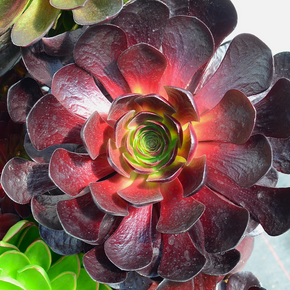
- Eye-catching, jewel-like rosettes display bright lime-green, geometrically pointed leaves outlined in vivid red margins that deepen and intensify with more sun exposure.
- A low-maintenance, drought-tolerant evergreen that produces offsets freely at the base, ensuring the colony carries on beautifully even after the monocarpic main rosette flowers and sets seed.
- Thrives in rock gardens, gravel beds, coastal gardens, patio containers, and mixed succulent plantings, making it one of the most versatile and striking succulents available for mild-climate gardens.
Semponium Surreal Diamond (x Semponium 'Diamond', PP #35,564) is a truly revolutionary succulent — the first officially recognized intergeneric hybrid between Aeonium and Sempervivum, developed by the pioneering breeders at Surreal Succulents. By crossing the dramatic, glossy rosette beauty of Aeonium with the cold-hardier, compact constitution of Sempervivum, Surreal Diamond delivers the best of both genera in a single, show-stopping plant. The symmetrical, geometric rosettes are composed of thick, fleshy, diamond-shaped leaves in a vivid lime green, each leaf outlined in a contrasting fiery red margin that becomes richer and bolder when the plant is grown in full sun. Mature heads can reach up to 12 to 15 inches (30 to 35 cm) across, and as the plant establishes over a few seasons, it branches and sends out offsets at the base to form a lush, multi-headed specimen up to 12 to 15 inches in height and spread. Like its Sempervivum parent, the main rosette is monocarpic, producing a dramatic, large head of bright yellow flowers after 2 to 3 years before completing its life cycle — but not before generously supplying offsets that continue the colony. Unlike many Aeonium relatives, Surreal Diamond does not go fully dormant in summer, making it an evergreen, year-round performer in the garden. Hardy in USDA Zones 9a through 11b, this patent-protected variety is an ideal choice for rock gardens, gravel beds, seaside plantings, containers, and mixed succulent borders throughout Southern Oregon and Northern California, where its bold color and architectural structure make it a standout focal point in any succulent collection.
Plant Description
Surreal Diamond is a vigorous, rosette-forming, evergreen succulent belonging to the newly created intergeneric hybrid genus x Semponium — a cross between Aeonium and Sempervivum in the family Crassulaceae. The plant is named for its perfectly geometric, diamond-shaped foliage that is especially pronounced and jewel-like in the center of the rosette. Thick, overlapping, pointed leaves are arranged in a tight, symmetrical spiral, creating a clean and architectural appearance. The foliage is bright lime green with bold, contrasting red margins that become more vivid and fiery with increased sun exposure. The overall effect is at once modern, sculptural, and intensely colorful. As the plant matures, it branches at the base to produce multiple heads and a full, bushy form. This variety holds Plant Breeder's Rights (PBR) protection, reflecting the novelty and significance of this hybridization achievement.
Mature Size
| Dimension | Measurement |
|---|---|
| Mature Height | 12 to 15 inches (30 to 40 cm) |
| Mature Spread | 12 to 15 inches (30 to 40 cm) |
| Individual Rosette Diameter | Up to 13 to 14 inches (35 cm) |
| Time to Mature Size | 2 to 5 years |
| Growth Rate | Moderate; establishes and grows quickly for a succulent |
Hardiness and Temperature
Surreal Diamond is hardy in USDA Hardiness Zones 9a through 11b, tolerating minimum temperatures down to approximately 25 to 28°F (-3 to -4°C). It inherits better cold tolerance than its Aeonium parent, though it is not as frost-hardy as a true Sempervivum. In Southern Oregon and Northern California climates, it can typically be grown as a year-round outdoor plant in milder coastal and valley locations. In areas with occasional harder frosts, providing a frost cloth or moving container-grown specimens to a sheltered spot during freezing nights is recommended. The plant does not tolerate prolonged freezing or hard, sustained frosts. Unlike many succulents, Surreal Diamond does not enter a true summer dormancy period, actively growing and remaining evergreen throughout the year under appropriate conditions.
Sunlight Requirements
Surreal Diamond performs best in full sun, defined as 5 or more hours of direct sunlight per day. Full sun exposure is essential for producing the most vivid red leaf margins and the most compact, tightly structured rosette form. In partial shade (3 to 5 hours of sun), the plant will still grow healthily and maintain its green coloration, but the contrast of the red edges will be less pronounced and the rosette may be slightly more open and elongated. Avoid deep shade, which will cause leggy, weak growth and loss of the characteristic jewel-like leaf form. In hot inland areas of Southern Oregon and Northern California, some afternoon shade protection during peak summer heat can help prevent leaf scorch and sunburn. An east- or south-facing exposure is ideal for most garden settings.
Soil and pH Preferences
Like all members of the Crassulaceae family, Surreal Diamond demands excellent drainage above all else. Wet, poorly draining soil is the most common cause of failure with this plant, leading to root rot. Use a gritty, free-draining growing medium such as a commercial cactus and succulent potting mix, or amend standard garden soil or potting mix by blending in 50% or more coarse mineral material such as pumice, perlite, horticultural grit, or coarse sand. In the ground, raised beds, rock gardens, and sloped sites with naturally fast drainage are ideal planting locations. A gritty top-dressing of decomposed granite or fine gravel around the base of the rosettes helps keep foliage dry and further promotes drainage. Surreal Diamond tolerates a wide pH range from mildly acidic to alkaline (approximately pH 5.5 to 7.5) and grows well in sandy loam or loam-based soils provided drainage is adequate.
Watering Guide
Surreal Diamond is drought tolerant once established and should be watered using a deep soak-and-dry method. Allow the soil to dry out partially or fully between waterings before applying water again. During the active growing season in spring and fall, water once or twice per week under dry conditions, adjusting based on weather, heat, and soil type. During summer heat waves, the plant may enter a semi-dormant state and requires less frequent watering — reduce accordingly to prevent rot. In winter, especially when temperatures drop or rainfall increases, significantly reduce or even pause supplemental watering for plants in the ground. For container-grown specimens, water sparingly in winter when the plant is not actively growing. Always water at the base of the plant directly into the soil, and avoid allowing water to pool in the center of the rosette, which can promote crown rot. Never allow the plant to sit in standing water.
Fertilizing
Surreal Diamond benefits from light, periodic feeding during its active growing period in spring and summer, but does not require heavy fertilization. Apply a diluted, balanced liquid fertilizer formulated for cacti and succulents once every 4 to 6 weeks during the growing season. Alternatively, a diluted general-purpose fertilizer at half strength works well. Do not fertilize in winter or during heat-induced summer dormancy, as the plant is not actively putting on growth and excess nutrients can encourage weak, leggy stems. Over-fertilizing leads to stretched, floppy rosettes and diminishes the compact, jewel-like form that makes this variety so attractive. A light, annual top-dress of compost around outdoor plants can also provide gentle, slow-release nutrition.
Flowering and the Monocarpic Life Cycle
Surreal Diamond is monocarpic at the rosette level, meaning each individual rosette blooms once and then dies — a life cycle inherited from its Sempervivum parent. After approximately 2 to 3 years of growth, a mature rosette will send up a tall, dramatic flower stalk topped with a large, showy cluster of bright yellow flowers. After flowering and setting seed, that individual rosette completes its life cycle and declines. However, before and during the flowering process, the plant will have already produced offsets (pups) at the base of the main rosette. These offsets grow on to replace the parent rosette, ensuring that the colony continues and even expands. This natural renewal process means the plant is effectively long-lived as a clumping specimen, even though individual heads are monocarpic. Simply remove the spent rosette after flowering is complete and allow the offsets to fill in.
Propagation
The most reliable and easiest method of propagating Surreal Diamond is by separating the offsets (pups) that the plant produces naturally at its base. Once an offset has developed its own small root system or has grown to a reasonable size, it can be gently detached from the mother plant using a clean, sharp knife or by hand. Allow the cut end to callus over in a dry, shaded location for 1 to 2 days before potting up or planting out in well-draining succulent mix. Rosette cuttings can also be taken, allowed to callus, and then rooted in barely moist gritty mix kept at around 65°F (18°C). Avoid keeping the rooting medium wet while the cuttings establish roots. This variety is protected by Plant Breeder's Rights and a US plant patent (PP #35,564), so propagation for commercial sale or distribution is prohibited without authorization from the patent holder.
Pruning and Maintenance
Surreal Diamond is a naturally tidy, low-maintenance plant that requires very little pruning. Routine maintenance is largely limited to removing any dead, damaged, or browning outer leaves as needed to keep the rosette looking its best. After a monocarpic rosette flowers and dies back, remove the spent flower stalk and the collapsed rosette cleanly at the base to allow the surrounding offsets room to grow. No other formal pruning is necessary. Periodically check that the center of the rosette is free of debris, dried leaves, or standing water, which can harbor pests or cause rot. The plant does not need deadheading to rebloom, as each rosette blooms only once.
Planting Instructions
- Choose a site with full sun exposure and excellent drainage, such as a raised bed, rock garden, slope, or container with drainage holes.
- Amend heavy or clay-based soils generously with coarse sand, pumice, or perlite to ensure rapid drainage before planting.
- Dig a planting hole approximately twice the width and the same depth as the root ball.
- Set the plant so the base of the rosette sits at or slightly above the surrounding soil surface to prevent crown rot from moisture accumulation.
- Backfill with amended gritty soil and firm gently around the roots.
- Apply a top-dressing of coarse gravel or decomposed granite around the base of the plant to keep the crown dry and suppress weeds.
- Water thoroughly at planting to settle the soil around the roots, then allow the soil to dry before the next watering.
- During the first few weeks of establishment, water more regularly to help the root system settle in, then gradually transition to a normal drought-tolerant watering schedule.
Landscape Uses
Surreal Diamond is an exceptionally versatile landscape plant for mild-climate gardens in Southern Oregon and Northern California. Its bold, jewel-like rosettes make it a natural focal point in rock gardens, alpine gardens, and gravel gardens, where its architectural form contrasts beautifully with stones and pebbles. It excels in patio containers, window boxes, and mixed succulent pots, adding dramatic color and structure to outdoor living spaces. It is well suited to coastal gardens, performing admirably in windswept, sandy, or well-drained seaside conditions. It works beautifully in low-water, drought-tolerant landscape designs, including xeriscape plantings and Mediterranean-style gardens. Use it as a bold specimen plant, a ground-covering accent, or as part of a tapestry planting alongside other succulents for a striking year-round display. It also adapts to conservatory and greenhouse growing and can be maintained as an indoor plant in very bright, sunny window conditions.
Companion Plants
- Sempervivum (Hens and Chicks) - A natural companion as one of Surreal Diamond's parent genera, sharing similar soil and sun requirements and creating a layered succulent tapestry in rock gardens.
- Aeonium cultivars - Fellow rosette succulents from the other parent genus; combine for a bold mix of rosette sizes and colors in containers or garden beds.
- Sedum (Stonecrop) - Low-growing, drought-tolerant sedums fill in beautifully around the base of Diamond rosettes and share identical soil drainage needs.
- Echeveria - Compact, colorful rosette-forming succulents that pair harmoniously with Surreal Diamond in patio containers and mixed succulent displays.
- Delosperma (Ice Plant) - Spreading, drought-tolerant ground cover with colorful flowers that complements the vertical rosette structure of Surreal Diamond in rock gardens.
- Festuca glauca (Blue Fescue) - The steely blue, fine-textured mounding grass provides a striking textural and color contrast alongside the bold green-and-red Diamond rosettes.
- Lavandula (Lavender) - Drought-tolerant, fragrant perennial that thrives in the same full sun and well-drained conditions, providing soft purple color contrast.
Pests and Diseases
Surreal Diamond is generally robust and disease-resistant when grown in appropriate conditions. The most significant pest threats are aphids and mealybugs, particularly on plants grown in sheltered, enclosed environments such as conservatories or greenhouses. Inspect plants regularly, especially in the tight center of the rosette and along the undersides of leaves, where these pests tend to hide. Treat infestations early with a strong spray of water to dislodge aphids, or apply insecticidal soap or neem oil for more persistent problems. Root rot caused by overwatering or poorly draining soil is the most common disease issue and is entirely preventable with proper gritty soil and a disciplined watering routine. Fungal crown rot can develop if water is allowed to pool in the center of the rosette, especially in cool, damp conditions. Ensure good air circulation around plants to reduce fungal risk. Slugs and snails may occasionally graze on tender new growth, especially after rain; apply slug bait or use physical barriers as needed in the garden.
Container Growing
Surreal Diamond is an outstanding container plant and is often most impactful when displayed up close in a pot where its jewel-like detail can be fully appreciated. Use a container with at least one large drainage hole — never allow this plant to sit in a saucer of standing water. Fill with a gritty cactus and succulent potting mix, or blend a standard potting mix with 50% or more pumice, perlite, or coarse horticultural grit. Terra cotta and unglazed ceramic pots are excellent choices, as their porous walls help wick away excess moisture and promote healthy root aeration. A top-dressing of decorative pebbles or coarse gravel completes the look and helps keep the crown dry. Container plants in Southern Oregon should be moved to a sheltered location or indoors if hard frosts are forecast, as containers freeze through more quickly than in-ground plantings. Repot every 2 to 3 years or when the plant becomes root-bound, stepping up one pot size at a time and refreshing the growing medium.
Toxicity and Pet Safety
Surreal Diamond (x Semponium 'Diamond') is not known to be toxic to humans, dogs, or cats. It is generally considered a pet-safe and child-safe plant. However, as with any plant material, ingestion of large quantities may cause mild digestive upset in sensitive individuals or animals. It is always good practice to keep plants out of reach of young children and pets who may chew on foliage. If you suspect that a person or animal has ingested a significant amount of plant material and is showing signs of distress, consult a physician or veterinarian promptly.
- A groundbreaking intergeneric hybrid between Aeonium and Sempervivum, Surreal Diamond delivers the bold, architectural look of an Aeonium rosette with greater cold tolerance than either parent plant alone.
- Eye-catching, jewel-like rosettes display bright lime-green, geometrically pointed leaves outlined in vivid red margins that deepen and intensify with more sun exposure.
- A low-maintenance, drought-tolerant evergreen that produces offsets freely at the base, ensuring the colony carries on beautifully even after the monocarpic main rosette flowers and sets seed.
- Thrives in rock gardens, gravel beds, coastal gardens, patio containers, and mixed succulent plantings, making it one of the most versatile and striking succulents available for mild-climate gardens.
Semponium Surreal Diamond (x Semponium 'Diamond', PP #35,564) is a truly revolutionary succulent — the first officially recognized intergeneric hybrid between Aeonium and Sempervivum, developed by the pioneering breeders at Surreal Succulents. By crossing the dramatic, glossy rosette beauty of Aeonium with the cold-hardier, compact constitution of Sempervivum, Surreal Diamond delivers the best of both genera in a single, show-stopping plant. The symmetrical, geometric rosettes are composed of thick, fleshy, diamond-shaped leaves in a vivid lime green, each leaf outlined in a contrasting fiery red margin that becomes richer and bolder when the plant is grown in full sun. Mature heads can reach up to 12 to 15 inches (30 to 35 cm) across, and as the plant establishes over a few seasons, it branches and sends out offsets at the base to form a lush, multi-headed specimen up to 12 to 15 inches in height and spread. Like its Sempervivum parent, the main rosette is monocarpic, producing a dramatic, large head of bright yellow flowers after 2 to 3 years before completing its life cycle — but not before generously supplying offsets that continue the colony. Unlike many Aeonium relatives, Surreal Diamond does not go fully dormant in summer, making it an evergreen, year-round performer in the garden. Hardy in USDA Zones 9a through 11b, this patent-protected variety is an ideal choice for rock gardens, gravel beds, seaside plantings, containers, and mixed succulent borders throughout Southern Oregon and Northern California, where its bold color and architectural structure make it a standout focal point in any succulent collection.
Plant Description
Surreal Diamond is a vigorous, rosette-forming, evergreen succulent belonging to the newly created intergeneric hybrid genus x Semponium — a cross between Aeonium and Sempervivum in the family Crassulaceae. The plant is named for its perfectly geometric, diamond-shaped foliage that is especially pronounced and jewel-like in the center of the rosette. Thick, overlapping, pointed leaves are arranged in a tight, symmetrical spiral, creating a clean and architectural appearance. The foliage is bright lime green with bold, contrasting red margins that become more vivid and fiery with increased sun exposure. The overall effect is at once modern, sculptural, and intensely colorful. As the plant matures, it branches at the base to produce multiple heads and a full, bushy form. This variety holds Plant Breeder's Rights (PBR) protection, reflecting the novelty and significance of this hybridization achievement.
Mature Size
| Dimension | Measurement |
|---|---|
| Mature Height | 12 to 15 inches (30 to 40 cm) |
| Mature Spread | 12 to 15 inches (30 to 40 cm) |
| Individual Rosette Diameter | Up to 13 to 14 inches (35 cm) |
| Time to Mature Size | 2 to 5 years |
| Growth Rate | Moderate; establishes and grows quickly for a succulent |
Hardiness and Temperature
Surreal Diamond is hardy in USDA Hardiness Zones 9a through 11b, tolerating minimum temperatures down to approximately 25 to 28°F (-3 to -4°C). It inherits better cold tolerance than its Aeonium parent, though it is not as frost-hardy as a true Sempervivum. In Southern Oregon and Northern California climates, it can typically be grown as a year-round outdoor plant in milder coastal and valley locations. In areas with occasional harder frosts, providing a frost cloth or moving container-grown specimens to a sheltered spot during freezing nights is recommended. The plant does not tolerate prolonged freezing or hard, sustained frosts. Unlike many succulents, Surreal Diamond does not enter a true summer dormancy period, actively growing and remaining evergreen throughout the year under appropriate conditions.
Sunlight Requirements
Surreal Diamond performs best in full sun, defined as 5 or more hours of direct sunlight per day. Full sun exposure is essential for producing the most vivid red leaf margins and the most compact, tightly structured rosette form. In partial shade (3 to 5 hours of sun), the plant will still grow healthily and maintain its green coloration, but the contrast of the red edges will be less pronounced and the rosette may be slightly more open and elongated. Avoid deep shade, which will cause leggy, weak growth and loss of the characteristic jewel-like leaf form. In hot inland areas of Southern Oregon and Northern California, some afternoon shade protection during peak summer heat can help prevent leaf scorch and sunburn. An east- or south-facing exposure is ideal for most garden settings.
Soil and pH Preferences
Like all members of the Crassulaceae family, Surreal Diamond demands excellent drainage above all else. Wet, poorly draining soil is the most common cause of failure with this plant, leading to root rot. Use a gritty, free-draining growing medium such as a commercial cactus and succulent potting mix, or amend standard garden soil or potting mix by blending in 50% or more coarse mineral material such as pumice, perlite, horticultural grit, or coarse sand. In the ground, raised beds, rock gardens, and sloped sites with naturally fast drainage are ideal planting locations. A gritty top-dressing of decomposed granite or fine gravel around the base of the rosettes helps keep foliage dry and further promotes drainage. Surreal Diamond tolerates a wide pH range from mildly acidic to alkaline (approximately pH 5.5 to 7.5) and grows well in sandy loam or loam-based soils provided drainage is adequate.
Watering Guide
Surreal Diamond is drought tolerant once established and should be watered using a deep soak-and-dry method. Allow the soil to dry out partially or fully between waterings before applying water again. During the active growing season in spring and fall, water once or twice per week under dry conditions, adjusting based on weather, heat, and soil type. During summer heat waves, the plant may enter a semi-dormant state and requires less frequent watering — reduce accordingly to prevent rot. In winter, especially when temperatures drop or rainfall increases, significantly reduce or even pause supplemental watering for plants in the ground. For container-grown specimens, water sparingly in winter when the plant is not actively growing. Always water at the base of the plant directly into the soil, and avoid allowing water to pool in the center of the rosette, which can promote crown rot. Never allow the plant to sit in standing water.
Fertilizing
Surreal Diamond benefits from light, periodic feeding during its active growing period in spring and summer, but does not require heavy fertilization. Apply a diluted, balanced liquid fertilizer formulated for cacti and succulents once every 4 to 6 weeks during the growing season. Alternatively, a diluted general-purpose fertilizer at half strength works well. Do not fertilize in winter or during heat-induced summer dormancy, as the plant is not actively putting on growth and excess nutrients can encourage weak, leggy stems. Over-fertilizing leads to stretched, floppy rosettes and diminishes the compact, jewel-like form that makes this variety so attractive. A light, annual top-dress of compost around outdoor plants can also provide gentle, slow-release nutrition.
Flowering and the Monocarpic Life Cycle
Surreal Diamond is monocarpic at the rosette level, meaning each individual rosette blooms once and then dies — a life cycle inherited from its Sempervivum parent. After approximately 2 to 3 years of growth, a mature rosette will send up a tall, dramatic flower stalk topped with a large, showy cluster of bright yellow flowers. After flowering and setting seed, that individual rosette completes its life cycle and declines. However, before and during the flowering process, the plant will have already produced offsets (pups) at the base of the main rosette. These offsets grow on to replace the parent rosette, ensuring that the colony continues and even expands. This natural renewal process means the plant is effectively long-lived as a clumping specimen, even though individual heads are monocarpic. Simply remove the spent rosette after flowering is complete and allow the offsets to fill in.
Propagation
The most reliable and easiest method of propagating Surreal Diamond is by separating the offsets (pups) that the plant produces naturally at its base. Once an offset has developed its own small root system or has grown to a reasonable size, it can be gently detached from the mother plant using a clean, sharp knife or by hand. Allow the cut end to callus over in a dry, shaded location for 1 to 2 days before potting up or planting out in well-draining succulent mix. Rosette cuttings can also be taken, allowed to callus, and then rooted in barely moist gritty mix kept at around 65°F (18°C). Avoid keeping the rooting medium wet while the cuttings establish roots. This variety is protected by Plant Breeder's Rights and a US plant patent (PP #35,564), so propagation for commercial sale or distribution is prohibited without authorization from the patent holder.
Pruning and Maintenance
Surreal Diamond is a naturally tidy, low-maintenance plant that requires very little pruning. Routine maintenance is largely limited to removing any dead, damaged, or browning outer leaves as needed to keep the rosette looking its best. After a monocarpic rosette flowers and dies back, remove the spent flower stalk and the collapsed rosette cleanly at the base to allow the surrounding offsets room to grow. No other formal pruning is necessary. Periodically check that the center of the rosette is free of debris, dried leaves, or standing water, which can harbor pests or cause rot. The plant does not need deadheading to rebloom, as each rosette blooms only once.
Planting Instructions
- Choose a site with full sun exposure and excellent drainage, such as a raised bed, rock garden, slope, or container with drainage holes.
- Amend heavy or clay-based soils generously with coarse sand, pumice, or perlite to ensure rapid drainage before planting.
- Dig a planting hole approximately twice the width and the same depth as the root ball.
- Set the plant so the base of the rosette sits at or slightly above the surrounding soil surface to prevent crown rot from moisture accumulation.
- Backfill with amended gritty soil and firm gently around the roots.
- Apply a top-dressing of coarse gravel or decomposed granite around the base of the plant to keep the crown dry and suppress weeds.
- Water thoroughly at planting to settle the soil around the roots, then allow the soil to dry before the next watering.
- During the first few weeks of establishment, water more regularly to help the root system settle in, then gradually transition to a normal drought-tolerant watering schedule.
Landscape Uses
Surreal Diamond is an exceptionally versatile landscape plant for mild-climate gardens in Southern Oregon and Northern California. Its bold, jewel-like rosettes make it a natural focal point in rock gardens, alpine gardens, and gravel gardens, where its architectural form contrasts beautifully with stones and pebbles. It excels in patio containers, window boxes, and mixed succulent pots, adding dramatic color and structure to outdoor living spaces. It is well suited to coastal gardens, performing admirably in windswept, sandy, or well-drained seaside conditions. It works beautifully in low-water, drought-tolerant landscape designs, including xeriscape plantings and Mediterranean-style gardens. Use it as a bold specimen plant, a ground-covering accent, or as part of a tapestry planting alongside other succulents for a striking year-round display. It also adapts to conservatory and greenhouse growing and can be maintained as an indoor plant in very bright, sunny window conditions.
Companion Plants
- Sempervivum (Hens and Chicks) - A natural companion as one of Surreal Diamond's parent genera, sharing similar soil and sun requirements and creating a layered succulent tapestry in rock gardens.
- Aeonium cultivars - Fellow rosette succulents from the other parent genus; combine for a bold mix of rosette sizes and colors in containers or garden beds.
- Sedum (Stonecrop) - Low-growing, drought-tolerant sedums fill in beautifully around the base of Diamond rosettes and share identical soil drainage needs.
- Echeveria - Compact, colorful rosette-forming succulents that pair harmoniously with Surreal Diamond in patio containers and mixed succulent displays.
- Delosperma (Ice Plant) - Spreading, drought-tolerant ground cover with colorful flowers that complements the vertical rosette structure of Surreal Diamond in rock gardens.
- Festuca glauca (Blue Fescue) - The steely blue, fine-textured mounding grass provides a striking textural and color contrast alongside the bold green-and-red Diamond rosettes.
- Lavandula (Lavender) - Drought-tolerant, fragrant perennial that thrives in the same full sun and well-drained conditions, providing soft purple color contrast.
Pests and Diseases
Surreal Diamond is generally robust and disease-resistant when grown in appropriate conditions. The most significant pest threats are aphids and mealybugs, particularly on plants grown in sheltered, enclosed environments such as conservatories or greenhouses. Inspect plants regularly, especially in the tight center of the rosette and along the undersides of leaves, where these pests tend to hide. Treat infestations early with a strong spray of water to dislodge aphids, or apply insecticidal soap or neem oil for more persistent problems. Root rot caused by overwatering or poorly draining soil is the most common disease issue and is entirely preventable with proper gritty soil and a disciplined watering routine. Fungal crown rot can develop if water is allowed to pool in the center of the rosette, especially in cool, damp conditions. Ensure good air circulation around plants to reduce fungal risk. Slugs and snails may occasionally graze on tender new growth, especially after rain; apply slug bait or use physical barriers as needed in the garden.
Container Growing
Surreal Diamond is an outstanding container plant and is often most impactful when displayed up close in a pot where its jewel-like detail can be fully appreciated. Use a container with at least one large drainage hole — never allow this plant to sit in a saucer of standing water. Fill with a gritty cactus and succulent potting mix, or blend a standard potting mix with 50% or more pumice, perlite, or coarse horticultural grit. Terra cotta and unglazed ceramic pots are excellent choices, as their porous walls help wick away excess moisture and promote healthy root aeration. A top-dressing of decorative pebbles or coarse gravel completes the look and helps keep the crown dry. Container plants in Southern Oregon should be moved to a sheltered location or indoors if hard frosts are forecast, as containers freeze through more quickly than in-ground plantings. Repot every 2 to 3 years or when the plant becomes root-bound, stepping up one pot size at a time and refreshing the growing medium.
Toxicity and Pet Safety
Surreal Diamond (x Semponium 'Diamond') is not known to be toxic to humans, dogs, or cats. It is generally considered a pet-safe and child-safe plant. However, as with any plant material, ingestion of large quantities may cause mild digestive upset in sensitive individuals or animals. It is always good practice to keep plants out of reach of young children and pets who may chew on foliage. If you suspect that a person or animal has ingested a significant amount of plant material and is showing signs of distress, consult a physician or veterinarian promptly.
Related Products