
Zoom the image with the mouse
Streibs Findling Cotoneaster - 1 Gallon
SKU:
2121665
UPC:
014949302514
$14.99
- Exceptionally low-growing evergreen groundcover that hugs the ground at just 6-8 inches tall while spreading up to 6-8 feet wide, making it one of the flattest-growing cotoneasters available.
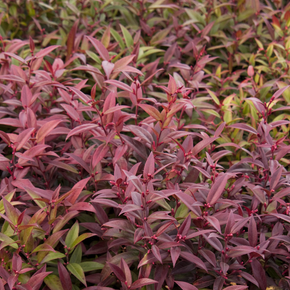
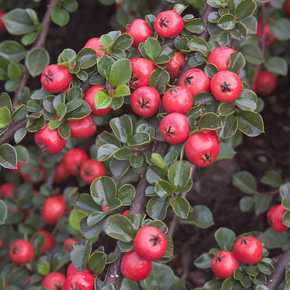
- Four-season beauty with masses of small white spring flowers, bright red cranberry-like berries from late summer through winter, and glossy blue-green foliage that flushes brick-red and purple in fall.
- Hardy, tough, and low-maintenance — tolerates full sun to partial shade, a wide range of soils, drought once established, urban pollution, and coastal salt spray.
- Outstanding wildlife plant that attracts bees and pollinators with its spring blooms, then feeds birds with abundant winter berries, while also providing excellent erosion control on slopes and banks.
Cotoneaster dammeri 'Streibs Findling' is widely regarded as one of the finest prostrate groundcover shrubs available for Pacific Coast and western landscapes, combining year-round ornamental interest with remarkable toughness and ease of care. This nearly flat-growing evergreen forms a dense, weed-suppressing carpet of small, rounded, glossy blue-green leaves that root along the stems as they spread, allowing the plant to hug the contours of the ground with exceptional uniformity. In late spring, the entire planting is blanketed with clusters of dainty white flowers accented by dark anthers, drawing in bees and other beneficial pollinators. By late summer and into fall, a prolific show of brilliant cranberry-red berries develops, persisting well into winter and providing an important food source for songbirds. As cooler weather arrives, the foliage transitions to rich tones of brick red and deep purple, adding another layer of seasonal drama before returning to its signature evergreen appearance. Mature plants typically reach only 6-8 inches in height while spreading 6-8 feet across, filling in ground-level spaces without ever requiring facer plants in front. Hardy in USDA Zones 4-7 and rated for Sunset Zones A3 and 2-24, 'Streibs Findling' thrives across a broad range of conditions — from full sun to partial shade, in well-drained soils ranging from sandy to clay, and with an adaptable pH tolerance from slightly acidic to mildly alkaline. Once established, it is notably drought tolerant, highly resistant to urban pollution, and capable of handling coastal salt exposure, making it a reliable performer in the challenging climates of Southern Oregon and Northern California. Use it as a spreading groundcover on hillside slopes to combat erosion, in mass plantings for a uniform, low-care carpet, at the front of shrub borders, or to cascade attractively over retaining walls and raised beds.
Plant Description
Streibs Findling Cotoneaster (Cotoneaster dammeri 'Streibs Findling') is a mat-forming, prostrate evergreen shrub in the Rosaceae family, native originally to central and southern China. It is recognized as one of the lowest-growing selections within the Cotoneaster genus, producing a dense, flat carpet of arching, spreading branches that root as they creep along the soil surface. The small, rounded to oval leaves are notably glossy, displaying a rich blue-green color during the growing season. New growth emerges with a purplish flush that matures to deep green. In late spring, tiny clusters of white flowers with attractive dark anthers appear along every branch, followed by an abundant crop of cherry-red to cranberry-colored berries that ripen in late summer and remain showy well into winter. As temperatures cool in fall, the evergreen foliage transitions through striking tones of brick red and deep purple before settling back to its characteristic green for winter. The branching pattern is graceful and arching, lending a fine, delicate texture to the landscape that complements bolder-foliaged plants beautifully.
Mature Size
| Characteristic | Measurement |
|---|---|
| Mature Height | 6-8 inches |
| Mature Spread | 6-8 feet |
| Growth Rate | 3-5 inches per year (moderate to fast for a groundcover) |
| Time to Maturity | Approximately 3 years to reach full size; 5-10 years to ultimate height per garden standards |
| Expected Lifespan | Approximately 30 years under ideal conditions |
| Growth Habit | Prostrate, mat-forming; stems root where they contact the soil |
Hardiness Zones
Streibs Findling Cotoneaster is cold hardy in USDA Zones 4-7, tolerating winter minimum temperatures as low as -20 to -10 degrees Fahrenheit. It is also rated for Sunset Zones A3 and 2-24, making it well-suited to the diverse climates of Southern Oregon and Northern California. In USDA Zone 5 and above it performs reliably without special winter protection. In exposed locations with harsh, drying winter winds or heavy sun on frozen soil, providing a light mulch layer or wind shelter will help protect the evergreen foliage from desiccation. In milder coastal climates within Zones 7 and above, the plant retains its foliage through the winter with minimal to no discoloration.
Sunlight Requirements
Streibs Findling Cotoneaster performs best in full sun to partial shade. It is highly adaptable to a range of light exposures, including south-, west-, east-, and north-facing aspects, making it one of the more versatile groundcovers for challenging spots. Full sun (6 or more hours of direct sun per day) promotes the densest foliage, the heaviest flowering, and the most prolific berry production. In partial shade (3-6 hours of sun), the plant remains healthy and attractive, though berry set may be slightly reduced. It can tolerate significant shade, but growth will be less vigorous and the fruiting display less pronounced. In hotter inland areas of Northern California and Southern Oregon, some afternoon shade can help prevent leaf scorch during peak summer heat.
Soil and pH Preferences
One of the most adaptable aspects of Streibs Findling Cotoneaster is its flexibility regarding soil type and pH. It grows well in chalk, clay, loam, and sandy soils, provided that drainage is adequate. The most critical requirement is that the planting site does not allow water to pool or remain saturated, as standing water will lead to root rot. Ideal soil pH ranges from slightly acidic to neutral to mildly alkaline — roughly 6.0 to 7.5 — though the plant tolerates a broad pH range on either side of this window. Richer, loamy soils that retain some moisture while draining freely will support the fastest, most lush growth. This plant also demonstrates tolerance for environmental salt, making it a solid choice for roadside plantings or coastal gardens where salt spray or road salt runoff may be a factor.
Watering Guide
Proper watering is straightforward once you understand the plant's needs at each stage of growth:
- At planting and during Year 1: Water deeply and consistently to help the root system establish. Aim for weekly deep watering during dry spells, keeping the soil evenly moist but never waterlogged.
- Years 2-3 (establishment phase): Gradually reduce watering frequency as the root system matures. Continue to supplement rainfall during prolonged dry periods.
- Established plants: Streibs Findling is notably drought tolerant once fully rooted in. In most Pacific Coast climates, established plants require little to no supplemental irrigation beyond natural rainfall, except during extended summer dry spells.
- Avoid overwatering: The most common water-related problem is overwatering. Ensure the soil drains freely between waterings. Standing water around the roots is the fastest way to damage or kill this plant.
- Mulching: A 2-3 inch layer of organic mulch around (not against) the plant base helps retain soil moisture, moderate temperature, and reduce the need for supplemental watering.
Fertilizing
Streibs Findling Cotoneaster is not a heavy feeder and generally performs well in average garden soils without regular fertilization. However, an annual feeding in early spring can support vigorous growth, lush foliage, and a strong flowering and fruiting display. Use a balanced, slow-release granular fertilizer formulated for shrubs and apply it according to package directions before new growth emerges. Avoid high-nitrogen formulas that push excessive leafy growth at the expense of flowers and berries. In nutrient-poor or sandy soils, incorporating compost at planting time and top-dressing annually with compost will improve fertility and soil structure naturally. Do not fertilize in late summer or fall, as this can stimulate tender new growth that is vulnerable to early frost damage.
Pruning and Maintenance
Streibs Findling Cotoneaster is a low-maintenance plant that requires very little pruning under normal circumstances. Its naturally flat, tidy growth habit means it rarely outgrows its space or becomes unruly. Follow these guidelines for best results:
- Routine pruning: Not generally necessary. The plant maintains its compact form without regular trimming.
- Shaping and size control: If stems begin to encroach on walkways, structures, or neighboring plants, trim them back in mid to late summer, cutting back to the nearest flower cluster or berry bunch to preserve the fruiting display. Avoid heavy pruning in late fall or winter.
- Dead or damaged wood: Remove any dead, diseased, or frost-damaged branches promptly, cutting back to healthy wood. This is best done in late winter to early spring before new growth begins.
- Do not shear: Avoid shearing this plant into a uniform shape, as this destroys its graceful, natural habit and reduces flowering and fruiting.
- General maintenance: Keep the area beneath the plant free of leaf litter and debris to improve air circulation and reduce disease pressure. Replenish mulch as needed.
Planting Instructions
- Choose the right site: Select a location with full sun to partial shade and well-drained soil. Avoid low-lying areas where water collects after rain.
- Prepare the soil: Loosen the soil to a depth of 12-18 inches. Amend heavy clay soils with organic compost or coarse sand to improve drainage. In sandy soils, work in compost to improve moisture retention and fertility.
- Dig the planting hole: Make the hole 2-3 times as wide as the root ball and equal to its depth. The top of the root ball should sit level with or just slightly above the surrounding soil surface — never plant too deep.
- Space multiple plants: For a solid groundcover effect, space plants approximately 3-4 feet apart. They will fill in and merge over time.
- Backfill and firm: Backfill with the original soil, firming gently to eliminate air pockets around the roots. Do not bury the crown of the plant.
- Water thoroughly: Give the newly planted shrub a deep, thorough watering immediately after planting to settle the soil and begin root establishment.
- Mulch: Apply a 2-3 inch layer of organic mulch around the plant, keeping it a few inches away from the base of the stems to prevent crown rot.
- First-season care: Water regularly throughout the first growing season to support establishment, then transition to a lower-maintenance routine as the plant becomes established.
Seasonal Interest
| Season | Ornamental Features |
|---|---|
| Spring | Dense clusters of small white flowers with dark anthers cover the branches; fresh new foliage growth with subtle purplish tints |
| Summer | Rich, glossy blue-green evergreen foliage forms a lush, weed-suppressing carpet; berries begin to develop |
| Fall | Brilliant show of bright red, cranberry-sized berries; foliage turns striking shades of brick red and deep purple |
| Winter | Red berries persist and provide color and wildlife food through winter; foliage remains evergreen with purplish-red tones in colder climates |
Landscape Uses
Streibs Findling Cotoneaster is an exceptionally versatile groundcover with a wide range of landscape applications:
- Groundcover and mass planting: Ideal for covering large areas with a uniform, low-maintenance carpet. Its dense, spreading habit crowds out weeds effectively.
- Erosion control: The rooting stems and fibrous root system make it excellent for stabilizing slopes, hillsides, banks, and areas prone to runoff.
- Retaining walls and raised beds: The gracefully arching, trailing stems cascade beautifully over the edges of walls and raised planters.
- Rock gardens: Its fine texture, small leaves, and prostrate habit complement boulders and rocky outcroppings naturally.
- Front-of-border edging: Fills the foreground of shrub borders without requiring facer plants, since it naturally grows to the ground level.
- Parking strips and medians: Its tolerance for drought, salt, and urban pollution makes it a tough performer in urban streetscape settings.
- Coastal gardens: Salt spray tolerance allows use in coastal landscapes where other plants struggle.
- Wildlife gardens: A natural choice for gardens designed to attract birds and pollinators throughout the year.
Companion Plants
Streibs Findling Cotoneaster pairs beautifully with plants that share its preference for well-drained soils and full sun to partial shade. Consider the following companions for a cohesive, low-maintenance planting:
- Creeping Thyme (Thymus serpyllum): A similarly low-growing, drought-tolerant groundcover that fills gaps between cotoneaster stems with fragrant, colorful blooms.
- Sedum / Stonecrop: Succulent sedums thrive in the same well-drained, sunny conditions and offer contrasting foliage texture and late-season color.
- Ornamental grasses: Upright clumping grasses such as Blue Oat Grass (Helictotrichon sempervirens) or Blue Fescue (Festuca glauca) provide strong vertical contrast against the flat cotoneaster mat.
- Dwarf conifers: Compact, structural evergreen conifers such as dwarf spruce or dwarf mugo pine create year-round textural contrast and anchor the planting.
- Lavender (Lavandula spp.): Shares similar drought tolerance and sun requirements; the purple flower spikes contrast beautifully with the cotoneaster's red berries in fall.
- Rockrose (Cistus spp.): Another drought-tolerant, sun-loving shrub native to Mediterranean-climate regions like much of California and southern Oregon that pairs naturally with this cotoneaster.
- Japanese Maples: The fine, glossy texture of cotoneaster foliage makes an elegant foil for the bold, lobed leaves of upright or weeping Japanese maples planted as focal specimens.
Wildlife Value
Streibs Findling Cotoneaster is a standout wildlife plant that supports local biodiversity across all four seasons:
- Pollinators: The masses of small white flowers produced in late spring are rich in nectar and pollen, attracting bees, butterflies, and other beneficial insects.
- Birds: The prolific crop of bright red berries ripening in late summer and persisting through winter provides a critical food source for a variety of songbirds, including robins, cedar waxwings, thrushes, and many others.
- Cover and nesting habitat: The dense, low mat of branches provides shelter and nesting cover for ground-foraging birds and small wildlife.
- Deer resistance: While no plant is completely deer-proof, Streibs Findling Cotoneaster is generally considered to be unappealing to deer, which tend to pass it over in favor of more palatable plants — a significant benefit in the deer-heavy landscapes of Southern Oregon and Northern California.
Pests and Diseases
Streibs Findling Cotoneaster is generally considered to have good resistance to pests and diseases, and well-grown plants in appropriate conditions are rarely seriously troubled. However, the following issues may occasionally arise:
- Aphids: Small, soft-bodied insects that cluster on new growth and leaf undersides. Usually manageable with a strong stream of water or applications of insecticidal soap or neem oil. Beneficial insects such as ladybugs provide natural control.
- Woolly Aphid: Produces a cottony white, waxy coating on stems. Treat with insecticidal soap or neem oil, focusing on affected stems.
- Scale Insects: Small, shell-like insects that attach to stems and leaves and suck plant sap. Treat with horticultural oil applied during the appropriate season. Monitor plants regularly for early detection.
- Cotoneaster Webber Caterpillar: Larvae that web branches together and feed on foliage. Remove webbed sections by hand and dispose of them. Bacillus thuringiensis (Bt) can be applied for more severe infestations.
- Spider Mites: May appear during hot, dry summers. Symptoms include fine webbing and stippled, dull foliage. Treat with neem oil or insecticidal soap and improve air circulation.
- Fire Blight (Erwinia amylovora): A bacterial disease common in the Rosaceae family that causes branch tips to blacken and die back with a characteristic "scorched" appearance. Prune affected branches back to healthy wood using sterilized tools and dispose of all infected material away from the garden. Avoid overhead irrigation and excess nitrogen fertilizing, which promote succulent growth susceptible to infection.
- Honey Fungus (Armillaria spp.): A soil-borne fungal pathogen that can attack the roots and crown. Improve drainage and avoid wounding the root system. There is no chemical cure; remove and dispose of heavily infected plants and roots.
- Root Rot (Phytophthora spp.): Caused by consistently waterlogged soils. The best prevention is ensuring excellent drainage at planting. Symptoms include yellowing foliage, wilting, and dark, mushy roots.
Container Growing
While Streibs Findling Cotoneaster is most commonly grown in the ground as a landscape plant, it can also perform well in large containers, particularly for use on patios, decks, or retaining wall tops where its trailing stems can cascade gracefully over the edges. Keep the following guidelines in mind for container culture:
- Container size: Choose a large, wide container with multiple drainage holes — at least 18-24 inches in diameter and depth — to accommodate the spreading root system and reduce the frequency of watering.
- Potting mix: Use a well-draining potting mix rather than heavy garden soil. Adding perlite or coarse sand to a standard potting medium improves drainage and prevents compaction.
- Watering: Container plants dry out significantly faster than in-ground plantings and will require more frequent watering, especially during hot summer months. Check soil moisture regularly and water when the top inch of soil feels dry.
- Fertilizing: Container plants benefit from a slow-release fertilizer incorporated at planting and a diluted liquid fertilizer applied monthly during the growing season to compensate for nutrients lost with regular watering.
- Winter protection: In colder parts of USDA Zone 5, container plants are more vulnerable to freeze damage than in-ground plantings. Move containers to a sheltered, frost-protected location during the coldest winter months, or insulate the pot with burlap or bubble wrap.
- Repotting: Repot every 2-3 years or when roots begin circling the bottom of the container, stepping up to the next size pot to sustain healthy growth.
Toxicity and Safety
The berries of Streibs Findling Cotoneaster are ornamental in nature and are not intended for human consumption. While the berries are not classified as highly toxic, they may cause mild gastrointestinal discomfort if eaten in quantity and should be kept out of reach of young children who may be attracted to their bright red color. The plant contains cyanogenic glycosides, which are compounds common in the Rosaceae family. When handling or pruning, wearing gloves is recommended as a precaution, as some individuals may experience mild skin irritation from prolonged contact with plant sap. The berries serve an important ecological role as wildlife food and are readily consumed by birds without harm. Pet owners should be aware that consumption of large quantities of berries may cause mild stomach upset in dogs or cats, though the plant is not listed among seriously toxic species by major veterinary poison control resources. Always consult a veterinarian if a pet consumes plant material and shows unusual symptoms.
- Exceptionally low-growing evergreen groundcover that hugs the ground at just 6-8 inches tall while spreading up to 6-8 feet wide, making it one of the flattest-growing cotoneasters available.
- Four-season beauty with masses of small white spring flowers, bright red cranberry-like berries from late summer through winter, and glossy blue-green foliage that flushes brick-red and purple in fall.
- Hardy, tough, and low-maintenance — tolerates full sun to partial shade, a wide range of soils, drought once established, urban pollution, and coastal salt spray.
- Outstanding wildlife plant that attracts bees and pollinators with its spring blooms, then feeds birds with abundant winter berries, while also providing excellent erosion control on slopes and banks.
Cotoneaster dammeri 'Streibs Findling' is widely regarded as one of the finest prostrate groundcover shrubs available for Pacific Coast and western landscapes, combining year-round ornamental interest with remarkable toughness and ease of care. This nearly flat-growing evergreen forms a dense, weed-suppressing carpet of small, rounded, glossy blue-green leaves that root along the stems as they spread, allowing the plant to hug the contours of the ground with exceptional uniformity. In late spring, the entire planting is blanketed with clusters of dainty white flowers accented by dark anthers, drawing in bees and other beneficial pollinators. By late summer and into fall, a prolific show of brilliant cranberry-red berries develops, persisting well into winter and providing an important food source for songbirds. As cooler weather arrives, the foliage transitions to rich tones of brick red and deep purple, adding another layer of seasonal drama before returning to its signature evergreen appearance. Mature plants typically reach only 6-8 inches in height while spreading 6-8 feet across, filling in ground-level spaces without ever requiring facer plants in front. Hardy in USDA Zones 4-7 and rated for Sunset Zones A3 and 2-24, 'Streibs Findling' thrives across a broad range of conditions — from full sun to partial shade, in well-drained soils ranging from sandy to clay, and with an adaptable pH tolerance from slightly acidic to mildly alkaline. Once established, it is notably drought tolerant, highly resistant to urban pollution, and capable of handling coastal salt exposure, making it a reliable performer in the challenging climates of Southern Oregon and Northern California. Use it as a spreading groundcover on hillside slopes to combat erosion, in mass plantings for a uniform, low-care carpet, at the front of shrub borders, or to cascade attractively over retaining walls and raised beds.
Plant Description
Streibs Findling Cotoneaster (Cotoneaster dammeri 'Streibs Findling') is a mat-forming, prostrate evergreen shrub in the Rosaceae family, native originally to central and southern China. It is recognized as one of the lowest-growing selections within the Cotoneaster genus, producing a dense, flat carpet of arching, spreading branches that root as they creep along the soil surface. The small, rounded to oval leaves are notably glossy, displaying a rich blue-green color during the growing season. New growth emerges with a purplish flush that matures to deep green. In late spring, tiny clusters of white flowers with attractive dark anthers appear along every branch, followed by an abundant crop of cherry-red to cranberry-colored berries that ripen in late summer and remain showy well into winter. As temperatures cool in fall, the evergreen foliage transitions through striking tones of brick red and deep purple before settling back to its characteristic green for winter. The branching pattern is graceful and arching, lending a fine, delicate texture to the landscape that complements bolder-foliaged plants beautifully.
Mature Size
| Characteristic | Measurement |
|---|---|
| Mature Height | 6-8 inches |
| Mature Spread | 6-8 feet |
| Growth Rate | 3-5 inches per year (moderate to fast for a groundcover) |
| Time to Maturity | Approximately 3 years to reach full size; 5-10 years to ultimate height per garden standards |
| Expected Lifespan | Approximately 30 years under ideal conditions |
| Growth Habit | Prostrate, mat-forming; stems root where they contact the soil |
Hardiness Zones
Streibs Findling Cotoneaster is cold hardy in USDA Zones 4-7, tolerating winter minimum temperatures as low as -20 to -10 degrees Fahrenheit. It is also rated for Sunset Zones A3 and 2-24, making it well-suited to the diverse climates of Southern Oregon and Northern California. In USDA Zone 5 and above it performs reliably without special winter protection. In exposed locations with harsh, drying winter winds or heavy sun on frozen soil, providing a light mulch layer or wind shelter will help protect the evergreen foliage from desiccation. In milder coastal climates within Zones 7 and above, the plant retains its foliage through the winter with minimal to no discoloration.
Sunlight Requirements
Streibs Findling Cotoneaster performs best in full sun to partial shade. It is highly adaptable to a range of light exposures, including south-, west-, east-, and north-facing aspects, making it one of the more versatile groundcovers for challenging spots. Full sun (6 or more hours of direct sun per day) promotes the densest foliage, the heaviest flowering, and the most prolific berry production. In partial shade (3-6 hours of sun), the plant remains healthy and attractive, though berry set may be slightly reduced. It can tolerate significant shade, but growth will be less vigorous and the fruiting display less pronounced. In hotter inland areas of Northern California and Southern Oregon, some afternoon shade can help prevent leaf scorch during peak summer heat.
Soil and pH Preferences
One of the most adaptable aspects of Streibs Findling Cotoneaster is its flexibility regarding soil type and pH. It grows well in chalk, clay, loam, and sandy soils, provided that drainage is adequate. The most critical requirement is that the planting site does not allow water to pool or remain saturated, as standing water will lead to root rot. Ideal soil pH ranges from slightly acidic to neutral to mildly alkaline — roughly 6.0 to 7.5 — though the plant tolerates a broad pH range on either side of this window. Richer, loamy soils that retain some moisture while draining freely will support the fastest, most lush growth. This plant also demonstrates tolerance for environmental salt, making it a solid choice for roadside plantings or coastal gardens where salt spray or road salt runoff may be a factor.
Watering Guide
Proper watering is straightforward once you understand the plant's needs at each stage of growth:
- At planting and during Year 1: Water deeply and consistently to help the root system establish. Aim for weekly deep watering during dry spells, keeping the soil evenly moist but never waterlogged.
- Years 2-3 (establishment phase): Gradually reduce watering frequency as the root system matures. Continue to supplement rainfall during prolonged dry periods.
- Established plants: Streibs Findling is notably drought tolerant once fully rooted in. In most Pacific Coast climates, established plants require little to no supplemental irrigation beyond natural rainfall, except during extended summer dry spells.
- Avoid overwatering: The most common water-related problem is overwatering. Ensure the soil drains freely between waterings. Standing water around the roots is the fastest way to damage or kill this plant.
- Mulching: A 2-3 inch layer of organic mulch around (not against) the plant base helps retain soil moisture, moderate temperature, and reduce the need for supplemental watering.
Fertilizing
Streibs Findling Cotoneaster is not a heavy feeder and generally performs well in average garden soils without regular fertilization. However, an annual feeding in early spring can support vigorous growth, lush foliage, and a strong flowering and fruiting display. Use a balanced, slow-release granular fertilizer formulated for shrubs and apply it according to package directions before new growth emerges. Avoid high-nitrogen formulas that push excessive leafy growth at the expense of flowers and berries. In nutrient-poor or sandy soils, incorporating compost at planting time and top-dressing annually with compost will improve fertility and soil structure naturally. Do not fertilize in late summer or fall, as this can stimulate tender new growth that is vulnerable to early frost damage.
Pruning and Maintenance
Streibs Findling Cotoneaster is a low-maintenance plant that requires very little pruning under normal circumstances. Its naturally flat, tidy growth habit means it rarely outgrows its space or becomes unruly. Follow these guidelines for best results:
- Routine pruning: Not generally necessary. The plant maintains its compact form without regular trimming.
- Shaping and size control: If stems begin to encroach on walkways, structures, or neighboring plants, trim them back in mid to late summer, cutting back to the nearest flower cluster or berry bunch to preserve the fruiting display. Avoid heavy pruning in late fall or winter.
- Dead or damaged wood: Remove any dead, diseased, or frost-damaged branches promptly, cutting back to healthy wood. This is best done in late winter to early spring before new growth begins.
- Do not shear: Avoid shearing this plant into a uniform shape, as this destroys its graceful, natural habit and reduces flowering and fruiting.
- General maintenance: Keep the area beneath the plant free of leaf litter and debris to improve air circulation and reduce disease pressure. Replenish mulch as needed.
Planting Instructions
- Choose the right site: Select a location with full sun to partial shade and well-drained soil. Avoid low-lying areas where water collects after rain.
- Prepare the soil: Loosen the soil to a depth of 12-18 inches. Amend heavy clay soils with organic compost or coarse sand to improve drainage. In sandy soils, work in compost to improve moisture retention and fertility.
- Dig the planting hole: Make the hole 2-3 times as wide as the root ball and equal to its depth. The top of the root ball should sit level with or just slightly above the surrounding soil surface — never plant too deep.
- Space multiple plants: For a solid groundcover effect, space plants approximately 3-4 feet apart. They will fill in and merge over time.
- Backfill and firm: Backfill with the original soil, firming gently to eliminate air pockets around the roots. Do not bury the crown of the plant.
- Water thoroughly: Give the newly planted shrub a deep, thorough watering immediately after planting to settle the soil and begin root establishment.
- Mulch: Apply a 2-3 inch layer of organic mulch around the plant, keeping it a few inches away from the base of the stems to prevent crown rot.
- First-season care: Water regularly throughout the first growing season to support establishment, then transition to a lower-maintenance routine as the plant becomes established.
Seasonal Interest
| Season | Ornamental Features |
|---|---|
| Spring | Dense clusters of small white flowers with dark anthers cover the branches; fresh new foliage growth with subtle purplish tints |
| Summer | Rich, glossy blue-green evergreen foliage forms a lush, weed-suppressing carpet; berries begin to develop |
| Fall | Brilliant show of bright red, cranberry-sized berries; foliage turns striking shades of brick red and deep purple |
| Winter | Red berries persist and provide color and wildlife food through winter; foliage remains evergreen with purplish-red tones in colder climates |
Landscape Uses
Streibs Findling Cotoneaster is an exceptionally versatile groundcover with a wide range of landscape applications:
- Groundcover and mass planting: Ideal for covering large areas with a uniform, low-maintenance carpet. Its dense, spreading habit crowds out weeds effectively.
- Erosion control: The rooting stems and fibrous root system make it excellent for stabilizing slopes, hillsides, banks, and areas prone to runoff.
- Retaining walls and raised beds: The gracefully arching, trailing stems cascade beautifully over the edges of walls and raised planters.
- Rock gardens: Its fine texture, small leaves, and prostrate habit complement boulders and rocky outcroppings naturally.
- Front-of-border edging: Fills the foreground of shrub borders without requiring facer plants, since it naturally grows to the ground level.
- Parking strips and medians: Its tolerance for drought, salt, and urban pollution makes it a tough performer in urban streetscape settings.
- Coastal gardens: Salt spray tolerance allows use in coastal landscapes where other plants struggle.
- Wildlife gardens: A natural choice for gardens designed to attract birds and pollinators throughout the year.
Companion Plants
Streibs Findling Cotoneaster pairs beautifully with plants that share its preference for well-drained soils and full sun to partial shade. Consider the following companions for a cohesive, low-maintenance planting:
- Creeping Thyme (Thymus serpyllum): A similarly low-growing, drought-tolerant groundcover that fills gaps between cotoneaster stems with fragrant, colorful blooms.
- Sedum / Stonecrop: Succulent sedums thrive in the same well-drained, sunny conditions and offer contrasting foliage texture and late-season color.
- Ornamental grasses: Upright clumping grasses such as Blue Oat Grass (Helictotrichon sempervirens) or Blue Fescue (Festuca glauca) provide strong vertical contrast against the flat cotoneaster mat.
- Dwarf conifers: Compact, structural evergreen conifers such as dwarf spruce or dwarf mugo pine create year-round textural contrast and anchor the planting.
- Lavender (Lavandula spp.): Shares similar drought tolerance and sun requirements; the purple flower spikes contrast beautifully with the cotoneaster's red berries in fall.
- Rockrose (Cistus spp.): Another drought-tolerant, sun-loving shrub native to Mediterranean-climate regions like much of California and southern Oregon that pairs naturally with this cotoneaster.
- Japanese Maples: The fine, glossy texture of cotoneaster foliage makes an elegant foil for the bold, lobed leaves of upright or weeping Japanese maples planted as focal specimens.
Wildlife Value
Streibs Findling Cotoneaster is a standout wildlife plant that supports local biodiversity across all four seasons:
- Pollinators: The masses of small white flowers produced in late spring are rich in nectar and pollen, attracting bees, butterflies, and other beneficial insects.
- Birds: The prolific crop of bright red berries ripening in late summer and persisting through winter provides a critical food source for a variety of songbirds, including robins, cedar waxwings, thrushes, and many others.
- Cover and nesting habitat: The dense, low mat of branches provides shelter and nesting cover for ground-foraging birds and small wildlife.
- Deer resistance: While no plant is completely deer-proof, Streibs Findling Cotoneaster is generally considered to be unappealing to deer, which tend to pass it over in favor of more palatable plants — a significant benefit in the deer-heavy landscapes of Southern Oregon and Northern California.
Pests and Diseases
Streibs Findling Cotoneaster is generally considered to have good resistance to pests and diseases, and well-grown plants in appropriate conditions are rarely seriously troubled. However, the following issues may occasionally arise:
- Aphids: Small, soft-bodied insects that cluster on new growth and leaf undersides. Usually manageable with a strong stream of water or applications of insecticidal soap or neem oil. Beneficial insects such as ladybugs provide natural control.
- Woolly Aphid: Produces a cottony white, waxy coating on stems. Treat with insecticidal soap or neem oil, focusing on affected stems.
- Scale Insects: Small, shell-like insects that attach to stems and leaves and suck plant sap. Treat with horticultural oil applied during the appropriate season. Monitor plants regularly for early detection.
- Cotoneaster Webber Caterpillar: Larvae that web branches together and feed on foliage. Remove webbed sections by hand and dispose of them. Bacillus thuringiensis (Bt) can be applied for more severe infestations.
- Spider Mites: May appear during hot, dry summers. Symptoms include fine webbing and stippled, dull foliage. Treat with neem oil or insecticidal soap and improve air circulation.
- Fire Blight (Erwinia amylovora): A bacterial disease common in the Rosaceae family that causes branch tips to blacken and die back with a characteristic "scorched" appearance. Prune affected branches back to healthy wood using sterilized tools and dispose of all infected material away from the garden. Avoid overhead irrigation and excess nitrogen fertilizing, which promote succulent growth susceptible to infection.
- Honey Fungus (Armillaria spp.): A soil-borne fungal pathogen that can attack the roots and crown. Improve drainage and avoid wounding the root system. There is no chemical cure; remove and dispose of heavily infected plants and roots.
- Root Rot (Phytophthora spp.): Caused by consistently waterlogged soils. The best prevention is ensuring excellent drainage at planting. Symptoms include yellowing foliage, wilting, and dark, mushy roots.
Container Growing
While Streibs Findling Cotoneaster is most commonly grown in the ground as a landscape plant, it can also perform well in large containers, particularly for use on patios, decks, or retaining wall tops where its trailing stems can cascade gracefully over the edges. Keep the following guidelines in mind for container culture:
- Container size: Choose a large, wide container with multiple drainage holes — at least 18-24 inches in diameter and depth — to accommodate the spreading root system and reduce the frequency of watering.
- Potting mix: Use a well-draining potting mix rather than heavy garden soil. Adding perlite or coarse sand to a standard potting medium improves drainage and prevents compaction.
- Watering: Container plants dry out significantly faster than in-ground plantings and will require more frequent watering, especially during hot summer months. Check soil moisture regularly and water when the top inch of soil feels dry.
- Fertilizing: Container plants benefit from a slow-release fertilizer incorporated at planting and a diluted liquid fertilizer applied monthly during the growing season to compensate for nutrients lost with regular watering.
- Winter protection: In colder parts of USDA Zone 5, container plants are more vulnerable to freeze damage than in-ground plantings. Move containers to a sheltered, frost-protected location during the coldest winter months, or insulate the pot with burlap or bubble wrap.
- Repotting: Repot every 2-3 years or when roots begin circling the bottom of the container, stepping up to the next size pot to sustain healthy growth.
Toxicity and Safety
The berries of Streibs Findling Cotoneaster are ornamental in nature and are not intended for human consumption. While the berries are not classified as highly toxic, they may cause mild gastrointestinal discomfort if eaten in quantity and should be kept out of reach of young children who may be attracted to their bright red color. The plant contains cyanogenic glycosides, which are compounds common in the Rosaceae family. When handling or pruning, wearing gloves is recommended as a precaution, as some individuals may experience mild skin irritation from prolonged contact with plant sap. The berries serve an important ecological role as wildlife food and are readily consumed by birds without harm. Pet owners should be aware that consumption of large quantities of berries may cause mild stomach upset in dogs or cats, though the plant is not listed among seriously toxic species by major veterinary poison control resources. Always consult a veterinarian if a pet consumes plant material and shows unusual symptoms.
Related Products