

Zoom the image with the mouse
Cranberry Cotoneaster - 1 Gallon
SKU:
1898430
UPC:
014949285015
$13.99
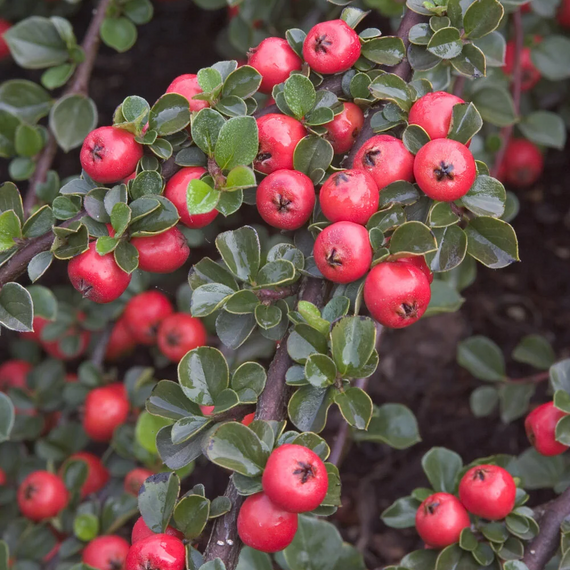
- Spectacular cranberry-red berries ripen in late summer and persist well into winter, delivering bold, season-long color to the landscape long after other shrubs have faded.
- Low-spreading, mounding habit tops out at just 2-3 ft. tall while spreading 3-6 ft. wide, making it a hardworking, weed-suppressing groundcover or tidy low hedge.
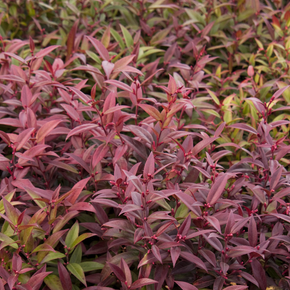
- Dazzling multi-season interest: glossy green foliage in spring and summer, delicate pink flowers in late spring, rich purple, red, and bronze fall color, and ornamental winter berries.
- Tough and adaptable once established — tolerates poor soils, urban pollution, salt spray, drought, erosion, and compaction with minimal care required.
Cranberry Cotoneaster (Cotoneaster apiculatus) is a dense, low-spreading deciduous shrub native to the rocky slopes of southwestern China that earns its place in any landscape with an outstanding four-season performance. Growing 2-3 feet tall and spreading 3-6 feet wide, its stiffly arching branches form an impenetrable, herringbone-patterned mound studded with small, rounded, wavy-edged, glossy green leaves. In late spring, the branches are peppered with charming, small pink-to-white star-shaped flowers that attract pollinators. By late summer, those blooms give way to a spectacular crop of vivid, cranberry-red berries — technically pomes — that ripen and cover the entire plant, persisting on the branches well into winter to provide one of the most cheerful sights in the cold-season garden and a valuable food source for songbirds. Come fall, the foliage ignites in rich shades of purple, red, and bronze before dropping for winter. A genuinely low-maintenance shrub, Cranberry Cotoneaster thrives in USDA Hardiness Zones 4-7 in full sun to partial shade and adapts to a wide range of soil types, including chalk, clay, loam, and sand. Its tolerance for salt spray, urban pollution, compaction, drought (once established), and rabbit browsing makes it a versatile problem-solver for difficult sites. Whether used as a flowing groundcover on slopes and banks for erosion control, a cascading accent over retaining walls, a foundation planting, an informal low hedge, or a dramatic mass planting, Cranberry Cotoneaster delivers reliable beauty with very little effort.
Plant Description
Cranberry Cotoneaster is a dense, broad-mounding, deciduous shrub with a distinctive stiffly arching, multi-stemmed branching pattern that some describe as herringbone or fishbone. Young stems emerge with a reddish-purple color before maturing to an olive-brown. The small, rounded-ovate leaves measure about 3/4 inch long, are deep glossy green with slightly wavy or undulate margins, and are arranged alternately along the branches. The overall texture of the shrub is fine, creating a lush, carpet-like appearance. The plant's spreading stems will root where they contact the soil, allowing it to naturally colonize and fill in an area over time. The species name "apiculatus" refers to the leaf tip, which terminates abruptly in a short, sharp point. In its native habitat of southwestern China, it grows on rocky slopes — a testament to its rugged, adaptable nature.
Mature Size
| Characteristic | Measurement |
|---|---|
| Mature Height | 2 - 3 feet |
| Mature Spread | 3 - 6 feet |
| Recommended Spacing | 36 - 72 inches on center |
| Growth Rate | Medium |
| Plant Form | Dense, broad-mounding, arching, spreading |
Hardiness Zones
Cranberry Cotoneaster is reliably hardy in USDA Plant Hardiness Zones 4 through 7, tolerating winter lows down to approximately -30°F at the cold end of Zone 4. It performs best in climates with cool to moderate summers and is not recommended for the hot, humid conditions of the deep South (Zone 8 and warmer in humid regions). It is an excellent choice for gardens throughout much of the Pacific Northwest, the Mountain West, the Upper Midwest, and the Northeast. In Southern Oregon and Northern California, it thrives beautifully in the region's moderate climate.
Sunlight Requirements
Cranberry Cotoneaster performs best in full sun, defined as 6 or more hours of direct sunlight per day. Full sun encourages the densest growth habit, the most prolific flowering, and the showiest berry set. It will tolerate partial shade (2-6 hours of direct sun), but growth may be somewhat more open and berry production slightly reduced in lower light conditions. Like junipers, cotoneasters truly thrive when given as much sun as possible, so prioritize open, sunny locations when choosing a planting site.
Soil and pH Preferences
One of Cranberry Cotoneaster's greatest assets is its wide soil adaptability. It grows well in chalk, clay, loam, and sandy soils, and tolerates both poor and rocky conditions that would challenge more finicky shrubs. The most important soil requirement is good drainage — this plant does not tolerate waterlogged or consistently wet soils, which can lead to root rot and increased disease pressure. If planting in heavy clay soil, amend with organic matter to improve drainage before planting. In terms of soil pH, it is highly flexible, performing well across acid, neutral, and alkaline conditions, roughly pH 6.0 to 8.0.
Watering Guide
Proper watering is most critical during the establishment period immediately following planting. Water deeply and consistently for the first growing season to help the plant develop a strong, extensive root system. Once established — typically after one to two full growing seasons — Cranberry Cotoneaster becomes notably drought-tolerant and requires only supplemental irrigation during extended dry spells. Avoid overhead irrigation, which can promote the spread of fungal diseases and bacterial fireblight. Drip irrigation or soaker hoses directed at the root zone are the preferred watering methods. Mature plants in well-drained soil rarely need watering in climates with moderate summer rainfall.
Fertilizing
Cranberry Cotoneaster is a low-fertilizer-demand shrub and generally performs well in average soils without regular feeding. If growth appears slow or foliage is pale, apply a balanced, slow-release granular fertilizer with equal parts nitrogen, phosphorus, and potassium (such as a 10-10-10 formula) once in early spring as new growth begins. Follow package directions for application rates based on the shrub's spread. Avoid over-fertilizing with high-nitrogen products, which can produce excessive, soft vegetative growth that is more susceptible to fireblight. In naturally rich soils, supplemental fertilization is typically unnecessary.
Pruning and Maintenance
Cranberry Cotoneaster is a naturally tidy, low-maintenance shrub that rarely requires heavy pruning. Light pruning to shape the plant or remove any wayward branches can be done at any time of year, though early spring before new growth emerges is the ideal time for more significant shaping work. Remove dead, damaged, or diseased wood promptly whenever it is noticed, cutting back to healthy tissue well below any signs of discoloration. Because the attractive arching form is a key ornamental feature, avoid shearing the plant into geometric shapes, which destroys its natural character. To control spread, simply trim back stems that have rooted into unwanted areas. Rake out any accumulated debris from within the plant's dense interior to discourage pest and disease issues, and apply a 2-3 inch layer of mulch around the base to suppress weeds.
Planting Instructions
- Select a site in full sun with well-drained soil. Avoid low spots where water pools after rain.
- Dig a planting hole twice as wide as the root ball and equal in depth. Do not dig deeper than the root ball to prevent sinking.
- If soil is heavy clay, mix the backfill with compost or coarse organic matter to improve drainage and aeration.
- Remove the plant from its container and gently loosen any circling or pot-bound roots before placing it in the hole.
- Position the plant so the top of the root ball is level with or very slightly above the surrounding soil surface.
- Backfill with the amended soil, firming gently to eliminate air pockets. Do not bury the crown.
- Water thoroughly immediately after planting to settle the soil around the roots.
- Apply a 2-3 inch layer of mulch over the root zone, keeping it a few inches away from the base of the stems to prevent crown rot.
- Water deeply once or twice per week during the first growing season. Gradually reduce frequency as the plant establishes.
Seasonal Interest
| Season | Ornamental Feature |
|---|---|
| Spring (Late) | Small, pink-to-white star-shaped flowers appear in May-June, covering the arching branches and attracting pollinators |
| Summer | Dense, lustrous deep green foliage creates a lush, weed-suppressing groundcover; berries begin forming and sizing up |
| Fall | Brilliant cranberry-red berries ripen and cover the plant; foliage transforms to vivid shades of purple, red, and bronze |
| Winter | Persistent bright red berries remain on bare branches, adding striking color and wildlife value to the dormant landscape |
Landscape Uses
Cranberry Cotoneaster is one of the most versatile low-growing shrubs available for the home landscape. Its dense, spreading habit and stem-rooting tendency make it an exceptional groundcover for large, open areas where it will quickly knit together to form a weed-suppressing mat. On banks and slopes, it is especially valuable for erosion control. Planted at the top of a retaining wall, its arching branches cascade beautifully downward for a dramatic, flowing effect. It works well as a low, informal hedge or edging shrub along walkways or driveways, and its tolerance for urban conditions makes it a practical choice for streetside or commercial plantings. Use it as a foundation planting against low walls or fences, mass it for sweeping seasonal impact, or grow it as a specimen plant in a cottage, prairie-style, or coastal garden. It can also be trained on a standard (single trunk) for a striking weeping tree form. Its salt tolerance makes it a smart pick for coastal gardens or properties near roads that receive winter de-icing treatments.
Wildlife Value
Cranberry Cotoneaster provides notable value to local wildlife throughout the year. The late-spring flowers produce nectar and pollen that attract bees and other beneficial pollinators. The dense, twiggy branching offers shelter and nesting habitat for small songbirds. The plant's most significant wildlife contribution, however, is its generous crop of bright red berries, which persist from late summer through winter and serve as an important food source for many bird species, including robins, cedar waxwings, mockingbirds, and thrushes. The dense thicket the plant forms also provides cover and refuge for small mammals and ground-nesting birds. The plant is rabbit-resistant, though deer may occasionally browse it during periods of scarce food.
Pests and Diseases
Cranberry Cotoneaster is generally a trouble-free shrub with good overall pest and disease resistance. The two issues most worth monitoring are:
- Spider Mites: The most common pest problem, particularly during hot, dry summers. Affected leaves may appear stippled, dusty, or bronzed. Improve air circulation, avoid drought stress, and treat with a strong water spray or insecticidal soap if populations are heavy.
- Fireblight (Erwinia amylovora): A bacterial disease common to members of the rose family. Infected shoot tips suddenly wilt, blacken, and curl in a characteristic "shepherd's crook" shape. To reduce risk, avoid overhead watering, do not over-fertilize with nitrogen, improve air circulation, and prune out infected wood immediately, cutting 8-12 inches below visible symptoms and sterilizing pruning tools between cuts with a 10% bleach solution.
- Webworms: Occasional infestations may cause localized defoliation. Remove nests by hand or prune out affected branches when infestations are minor.
The plant is resistant to rabbits, tolerates compaction and pollution, and is not known to have serious problems with most other common garden pests. Note: the berries may cause mild stomach upset if ingested by humans, particularly children.
Companion Plants
Cranberry Cotoneaster pairs beautifully with plants that share its preference for full sun and well-drained soil and that complement its bold fall and winter berry display. Consider combining it with:
- Ornamental Grasses (such as Karl Foerster Feather Reed Grass or Blue Oat Grass) — their vertical form and autumn plumes contrast dramatically with the cotoneaster's low, spreading habit.
- Dwarf Conifers (such as Dwarf Blue Spruce or Mugo Pine) — their year-round evergreen structure anchors the combination while the cotoneaster provides seasonal color changes.
- Autumn Sage (Salvia greggii) or Russian Sage (Perovskia atriplicifolia) — drought-tolerant perennials that thrive in the same sunny, well-drained conditions and add late-season purple and blue flower color.
- Sedum 'Autumn Joy' — a tough, sun-loving perennial whose rosy fall flower heads complement the cotoneaster's red berries beautifully.
- Creeping Juniper (Juniperus horizontalis) — a fellow low, spreading groundcover that provides evergreen contrast to the cotoneaster's seasonal interest.
- Knockout Roses — share the same sun and drainage needs and provide continuous flower color to complement the cotoneaster's ornamental berry display.
Container Growing
While Cranberry Cotoneaster is most commonly grown in the ground, it can be grown in large containers or raised planters where its arching branches can cascade attractively over the sides. Choose a container at least 18-24 inches in diameter with ample drainage holes. Use a high-quality, well-draining potting mix and avoid allowing the pot to sit in standing water. Container-grown plants will require more frequent watering than in-ground plants and benefit from a slow-release fertilizer applied at the start of the growing season. In colder climates, containers may need to be moved to a sheltered, unheated garage or outbuilding over winter, as the roots of potted plants are more vulnerable to freeze damage than those in the ground. The plant is particularly striking when displayed at height — on a patio pedestal, deck railing, or atop a retaining wall — where its weeping, berry-laden branches can be fully appreciated.
- Spectacular cranberry-red berries ripen in late summer and persist well into winter, delivering bold, season-long color to the landscape long after other shrubs have faded.
- Low-spreading, mounding habit tops out at just 2-3 ft. tall while spreading 3-6 ft. wide, making it a hardworking, weed-suppressing groundcover or tidy low hedge.
- Dazzling multi-season interest: glossy green foliage in spring and summer, delicate pink flowers in late spring, rich purple, red, and bronze fall color, and ornamental winter berries.
- Tough and adaptable once established — tolerates poor soils, urban pollution, salt spray, drought, erosion, and compaction with minimal care required.
Cranberry Cotoneaster (Cotoneaster apiculatus) is a dense, low-spreading deciduous shrub native to the rocky slopes of southwestern China that earns its place in any landscape with an outstanding four-season performance. Growing 2-3 feet tall and spreading 3-6 feet wide, its stiffly arching branches form an impenetrable, herringbone-patterned mound studded with small, rounded, wavy-edged, glossy green leaves. In late spring, the branches are peppered with charming, small pink-to-white star-shaped flowers that attract pollinators. By late summer, those blooms give way to a spectacular crop of vivid, cranberry-red berries — technically pomes — that ripen and cover the entire plant, persisting on the branches well into winter to provide one of the most cheerful sights in the cold-season garden and a valuable food source for songbirds. Come fall, the foliage ignites in rich shades of purple, red, and bronze before dropping for winter. A genuinely low-maintenance shrub, Cranberry Cotoneaster thrives in USDA Hardiness Zones 4-7 in full sun to partial shade and adapts to a wide range of soil types, including chalk, clay, loam, and sand. Its tolerance for salt spray, urban pollution, compaction, drought (once established), and rabbit browsing makes it a versatile problem-solver for difficult sites. Whether used as a flowing groundcover on slopes and banks for erosion control, a cascading accent over retaining walls, a foundation planting, an informal low hedge, or a dramatic mass planting, Cranberry Cotoneaster delivers reliable beauty with very little effort.
Plant Description
Cranberry Cotoneaster is a dense, broad-mounding, deciduous shrub with a distinctive stiffly arching, multi-stemmed branching pattern that some describe as herringbone or fishbone. Young stems emerge with a reddish-purple color before maturing to an olive-brown. The small, rounded-ovate leaves measure about 3/4 inch long, are deep glossy green with slightly wavy or undulate margins, and are arranged alternately along the branches. The overall texture of the shrub is fine, creating a lush, carpet-like appearance. The plant's spreading stems will root where they contact the soil, allowing it to naturally colonize and fill in an area over time. The species name "apiculatus" refers to the leaf tip, which terminates abruptly in a short, sharp point. In its native habitat of southwestern China, it grows on rocky slopes — a testament to its rugged, adaptable nature.
Mature Size
| Characteristic | Measurement |
|---|---|
| Mature Height | 2 - 3 feet |
| Mature Spread | 3 - 6 feet |
| Recommended Spacing | 36 - 72 inches on center |
| Growth Rate | Medium |
| Plant Form | Dense, broad-mounding, arching, spreading |
Hardiness Zones
Cranberry Cotoneaster is reliably hardy in USDA Plant Hardiness Zones 4 through 7, tolerating winter lows down to approximately -30°F at the cold end of Zone 4. It performs best in climates with cool to moderate summers and is not recommended for the hot, humid conditions of the deep South (Zone 8 and warmer in humid regions). It is an excellent choice for gardens throughout much of the Pacific Northwest, the Mountain West, the Upper Midwest, and the Northeast. In Southern Oregon and Northern California, it thrives beautifully in the region's moderate climate.
Sunlight Requirements
Cranberry Cotoneaster performs best in full sun, defined as 6 or more hours of direct sunlight per day. Full sun encourages the densest growth habit, the most prolific flowering, and the showiest berry set. It will tolerate partial shade (2-6 hours of direct sun), but growth may be somewhat more open and berry production slightly reduced in lower light conditions. Like junipers, cotoneasters truly thrive when given as much sun as possible, so prioritize open, sunny locations when choosing a planting site.
Soil and pH Preferences
One of Cranberry Cotoneaster's greatest assets is its wide soil adaptability. It grows well in chalk, clay, loam, and sandy soils, and tolerates both poor and rocky conditions that would challenge more finicky shrubs. The most important soil requirement is good drainage — this plant does not tolerate waterlogged or consistently wet soils, which can lead to root rot and increased disease pressure. If planting in heavy clay soil, amend with organic matter to improve drainage before planting. In terms of soil pH, it is highly flexible, performing well across acid, neutral, and alkaline conditions, roughly pH 6.0 to 8.0.
Watering Guide
Proper watering is most critical during the establishment period immediately following planting. Water deeply and consistently for the first growing season to help the plant develop a strong, extensive root system. Once established — typically after one to two full growing seasons — Cranberry Cotoneaster becomes notably drought-tolerant and requires only supplemental irrigation during extended dry spells. Avoid overhead irrigation, which can promote the spread of fungal diseases and bacterial fireblight. Drip irrigation or soaker hoses directed at the root zone are the preferred watering methods. Mature plants in well-drained soil rarely need watering in climates with moderate summer rainfall.
Fertilizing
Cranberry Cotoneaster is a low-fertilizer-demand shrub and generally performs well in average soils without regular feeding. If growth appears slow or foliage is pale, apply a balanced, slow-release granular fertilizer with equal parts nitrogen, phosphorus, and potassium (such as a 10-10-10 formula) once in early spring as new growth begins. Follow package directions for application rates based on the shrub's spread. Avoid over-fertilizing with high-nitrogen products, which can produce excessive, soft vegetative growth that is more susceptible to fireblight. In naturally rich soils, supplemental fertilization is typically unnecessary.
Pruning and Maintenance
Cranberry Cotoneaster is a naturally tidy, low-maintenance shrub that rarely requires heavy pruning. Light pruning to shape the plant or remove any wayward branches can be done at any time of year, though early spring before new growth emerges is the ideal time for more significant shaping work. Remove dead, damaged, or diseased wood promptly whenever it is noticed, cutting back to healthy tissue well below any signs of discoloration. Because the attractive arching form is a key ornamental feature, avoid shearing the plant into geometric shapes, which destroys its natural character. To control spread, simply trim back stems that have rooted into unwanted areas. Rake out any accumulated debris from within the plant's dense interior to discourage pest and disease issues, and apply a 2-3 inch layer of mulch around the base to suppress weeds.
Planting Instructions
- Select a site in full sun with well-drained soil. Avoid low spots where water pools after rain.
- Dig a planting hole twice as wide as the root ball and equal in depth. Do not dig deeper than the root ball to prevent sinking.
- If soil is heavy clay, mix the backfill with compost or coarse organic matter to improve drainage and aeration.
- Remove the plant from its container and gently loosen any circling or pot-bound roots before placing it in the hole.
- Position the plant so the top of the root ball is level with or very slightly above the surrounding soil surface.
- Backfill with the amended soil, firming gently to eliminate air pockets. Do not bury the crown.
- Water thoroughly immediately after planting to settle the soil around the roots.
- Apply a 2-3 inch layer of mulch over the root zone, keeping it a few inches away from the base of the stems to prevent crown rot.
- Water deeply once or twice per week during the first growing season. Gradually reduce frequency as the plant establishes.
Seasonal Interest
| Season | Ornamental Feature |
|---|---|
| Spring (Late) | Small, pink-to-white star-shaped flowers appear in May-June, covering the arching branches and attracting pollinators |
| Summer | Dense, lustrous deep green foliage creates a lush, weed-suppressing groundcover; berries begin forming and sizing up |
| Fall | Brilliant cranberry-red berries ripen and cover the plant; foliage transforms to vivid shades of purple, red, and bronze |
| Winter | Persistent bright red berries remain on bare branches, adding striking color and wildlife value to the dormant landscape |
Landscape Uses
Cranberry Cotoneaster is one of the most versatile low-growing shrubs available for the home landscape. Its dense, spreading habit and stem-rooting tendency make it an exceptional groundcover for large, open areas where it will quickly knit together to form a weed-suppressing mat. On banks and slopes, it is especially valuable for erosion control. Planted at the top of a retaining wall, its arching branches cascade beautifully downward for a dramatic, flowing effect. It works well as a low, informal hedge or edging shrub along walkways or driveways, and its tolerance for urban conditions makes it a practical choice for streetside or commercial plantings. Use it as a foundation planting against low walls or fences, mass it for sweeping seasonal impact, or grow it as a specimen plant in a cottage, prairie-style, or coastal garden. It can also be trained on a standard (single trunk) for a striking weeping tree form. Its salt tolerance makes it a smart pick for coastal gardens or properties near roads that receive winter de-icing treatments.
Wildlife Value
Cranberry Cotoneaster provides notable value to local wildlife throughout the year. The late-spring flowers produce nectar and pollen that attract bees and other beneficial pollinators. The dense, twiggy branching offers shelter and nesting habitat for small songbirds. The plant's most significant wildlife contribution, however, is its generous crop of bright red berries, which persist from late summer through winter and serve as an important food source for many bird species, including robins, cedar waxwings, mockingbirds, and thrushes. The dense thicket the plant forms also provides cover and refuge for small mammals and ground-nesting birds. The plant is rabbit-resistant, though deer may occasionally browse it during periods of scarce food.
Pests and Diseases
Cranberry Cotoneaster is generally a trouble-free shrub with good overall pest and disease resistance. The two issues most worth monitoring are:
- Spider Mites: The most common pest problem, particularly during hot, dry summers. Affected leaves may appear stippled, dusty, or bronzed. Improve air circulation, avoid drought stress, and treat with a strong water spray or insecticidal soap if populations are heavy.
- Fireblight (Erwinia amylovora): A bacterial disease common to members of the rose family. Infected shoot tips suddenly wilt, blacken, and curl in a characteristic "shepherd's crook" shape. To reduce risk, avoid overhead watering, do not over-fertilize with nitrogen, improve air circulation, and prune out infected wood immediately, cutting 8-12 inches below visible symptoms and sterilizing pruning tools between cuts with a 10% bleach solution.
- Webworms: Occasional infestations may cause localized defoliation. Remove nests by hand or prune out affected branches when infestations are minor.
The plant is resistant to rabbits, tolerates compaction and pollution, and is not known to have serious problems with most other common garden pests. Note: the berries may cause mild stomach upset if ingested by humans, particularly children.
Companion Plants
Cranberry Cotoneaster pairs beautifully with plants that share its preference for full sun and well-drained soil and that complement its bold fall and winter berry display. Consider combining it with:
- Ornamental Grasses (such as Karl Foerster Feather Reed Grass or Blue Oat Grass) — their vertical form and autumn plumes contrast dramatically with the cotoneaster's low, spreading habit.
- Dwarf Conifers (such as Dwarf Blue Spruce or Mugo Pine) — their year-round evergreen structure anchors the combination while the cotoneaster provides seasonal color changes.
- Autumn Sage (Salvia greggii) or Russian Sage (Perovskia atriplicifolia) — drought-tolerant perennials that thrive in the same sunny, well-drained conditions and add late-season purple and blue flower color.
- Sedum 'Autumn Joy' — a tough, sun-loving perennial whose rosy fall flower heads complement the cotoneaster's red berries beautifully.
- Creeping Juniper (Juniperus horizontalis) — a fellow low, spreading groundcover that provides evergreen contrast to the cotoneaster's seasonal interest.
- Knockout Roses — share the same sun and drainage needs and provide continuous flower color to complement the cotoneaster's ornamental berry display.
Container Growing
While Cranberry Cotoneaster is most commonly grown in the ground, it can be grown in large containers or raised planters where its arching branches can cascade attractively over the sides. Choose a container at least 18-24 inches in diameter with ample drainage holes. Use a high-quality, well-draining potting mix and avoid allowing the pot to sit in standing water. Container-grown plants will require more frequent watering than in-ground plants and benefit from a slow-release fertilizer applied at the start of the growing season. In colder climates, containers may need to be moved to a sheltered, unheated garage or outbuilding over winter, as the roots of potted plants are more vulnerable to freeze damage than those in the ground. The plant is particularly striking when displayed at height — on a patio pedestal, deck railing, or atop a retaining wall — where its weeping, berry-laden branches can be fully appreciated.
Related Products