

Zoom the image with the mouse
Coral Beauty Cotoneaster - 1 Gallon
SKU:
105915
UPC:
052199128300
$9.99
- Stunning evergreen groundcover with glossy deep green foliage that takes on rich reddish-purple tones as temperatures cool in fall and winter
- Profuse white spring blooms give way to a spectacular show of coral-red berries that persist through winter, attracting birds and adding year-round ornamental interest
- Fast-spreading, low-maintenance habit suppresses weeds effectively across slopes, banks, and large open areas while providing excellent erosion control
- Tough and adaptable — drought tolerant once established, wind resistant, and tolerant of a wide range of well-drained soils in full sun to part shade
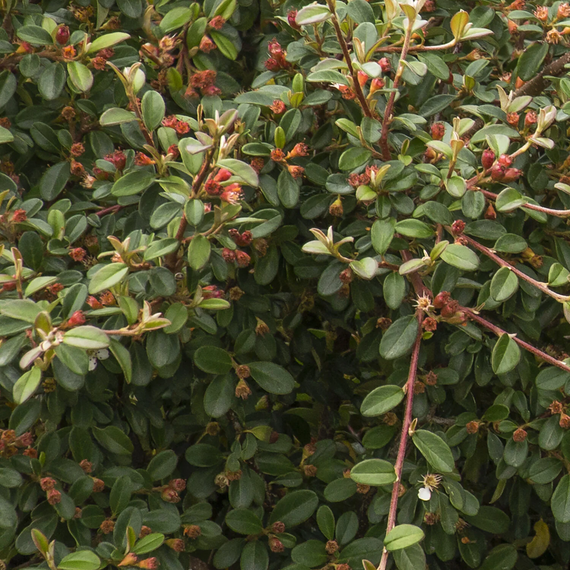
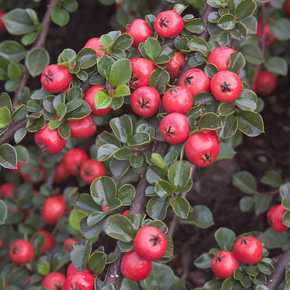
Coral Beauty Cotoneaster (Cotoneaster dammeri 'Coral Beauty') is an outstanding broadleaf evergreen groundcover that brings four full seasons of beauty to the landscape with minimal upkeep. Its dense, prostrate branches hug the ground and spread generously, forming a lush carpet of small, oval, glossy deep green leaves with a fine-textured appeal that keeps the garden looking polished throughout the year. In late spring, the plant is smothered in delicate white five-petaled flowers with contrasting purple anthers, creating a charming floral display that also draws in butterflies and beneficial pollinators. As summer transitions to fall, the branches become laden with masses of vivid coral-red berries that persist well into winter, offering exceptional ornamental value and a vital food source for birds. When cooler temperatures arrive, the foliage shifts to deep reddish-bronze and purple tones that beautifully complement the berry display, making 'Coral Beauty' one of the most striking winter interest shrubs available. More compact than the straight species, this cultivar is recognized for its particularly shiny foliage and notably more abundant fruit crop, even earning the RHS Award of Garden Merit. It spreads rapidly to fill in large areas without becoming invasive, excels at controlling erosion on hillsides and slopes, and thrives in full sun to partial shade with very little care once established. Hardy in USDA Zones 5 through 8, Coral Beauty Cotoneaster is an ideal choice for gardeners throughout Southern Oregon and Northern California seeking a dependable, multi-season groundcover that combines beauty, function, and ease of care.
Plant Description
Coral Beauty Cotoneaster is a dense, fast-growing, prostrate broadleaf evergreen shrub native to mountain regions, cliff sides, and rocky ground in central to southern China. Its stiff, slender, spreading branches root at the nodes where they touch the ground, forming an ever-expanding mat of finely textured foliage. The alternate, leathery, elliptic to oblong leaves grow up to 1.25 inches long and are a notably glossy deep green on the upper surface and gray-green beneath. In late winter and into spring, the foliage transitions to warm reddish-bronze and purple tones. Small, white, five-petaled flowers approximately 0.5 inches in diameter feature distinctive purple anthers and bloom singly or in pairs along the branches. These give way to ornamental coral-red berries (technically pomes) that ripen in late summer and persist through winter. 'Coral Beauty' is distinguished from the species by its more compact habit, shinier leaf surface, and notably more abundant berry crop. It is sometimes sold under the synonymous names 'Royal Beauty' or 'Pink Beauty' and was honored with the RHS Award of Garden Merit in 1993.
Mature Size
| Attribute | Measurement |
|---|---|
| Mature Height | 8 inches to 1 foot |
| Mature Spread | 4 to 6 feet |
| Growth Rate | Fast; 12 to 24 inches of spread per year once established |
| Time to Maturity | Approximately 3 to 5 years to reach full size |
| Plant Habit | Prostrate, spreading, low groundcover |
Hardiness Zones and Climate
Coral Beauty Cotoneaster is hardy in USDA Zones 5 through 8, making it well suited to the climates of Southern Oregon and Northern California. It tolerates cold winters with temperatures as low as -20 degrees F and performs exceptionally well in the mild, Mediterranean-influenced conditions of the Pacific Coast. The plant can struggle in areas with intense summer heat south of Zone 7 and appreciates some afternoon shade in hotter inland locations. It is well adapted to coastal winds and moderately dry summers once established, making it a reliable performer across a wide range of regional microclimates.
Sunlight Requirements
Coral Beauty Cotoneaster thrives in full sun to partial shade. For the best berry production and most compact, dense growth habit, plant it where it receives at least 6 hours of direct sunlight per day. In the hotter inland valleys of Southern Oregon and Northern California, a location with morning sun and light afternoon shade will help protect the foliage from heat stress and leaf scorch during the warmest months. In cooler coastal climates, full sun exposure is ideal and encourages the most prolific flowering and fruiting.
Soil and pH Preferences
This adaptable groundcover tolerates a wide variety of soil types, including clay, loam, and sandy soils, as long as drainage is adequate. It performs best in moist, loamy, sharply-drained soils but will not tolerate consistently wet or waterlogged conditions, which can lead to root rot. The ideal soil pH range is slightly acidic to neutral, between 6.0 and 7.0. When planting in heavy clay soils, amending the planting area with compost or coarse grit to improve drainage is recommended. In sandy soils, incorporating organic matter will help improve moisture and nutrient retention while maintaining the drainage this plant requires.
Watering Guide
Proper watering is most critical during the first one to two growing seasons while the plant establishes a strong root system. Follow these general guidelines:
- At planting: Water deeply and thoroughly immediately after planting to settle the soil around the roots and eliminate air pockets.
- First season: Water weekly during dry spells, providing a deep, slow soak rather than frequent shallow watering to encourage deep root development.
- Established plants: Once fully established, Coral Beauty Cotoneaster is notably drought tolerant and requires little to no supplemental irrigation in most Pacific Northwest and Northern California climates. During extended summer dry periods, occasional deep watering is beneficial.
- Overwatering caution: Avoid overwatering and ensure the planting site drains freely. Wilting, yellowing leaves, or root rot are signs of too much moisture.
- Mulching: Apply a 2 to 3 inch layer of organic mulch around the base of the plant (keeping it away from the crown) to conserve soil moisture and reduce watering needs during the establishment period.
Fertilizing
Coral Beauty Cotoneaster is not a heavy feeder, but annual fertilization encourages vigorous growth, lush foliage, and the most outstanding berry production. Apply a balanced, slow-release granular fertilizer (such as a 10-10-10 or similar NPK formulation) in early spring just as new growth begins to emerge. Spread the fertilizer evenly around the root zone, following the manufacturer's recommended rates, and water it in well. A second light application of a balanced fertilizer in mid-summer can further support healthy growth. Avoid over-fertilizing with high-nitrogen formulas, as excessive nitrogen promotes leafy growth at the expense of flowers and berries. In fertile, organically rich soils, fertilization may be needed less frequently.
Pruning and Maintenance
Coral Beauty Cotoneaster is a low-maintenance shrub that requires minimal pruning to look its best. Because it has a naturally attractive prostrate form, the goal of any pruning should be to enhance rather than reshape the plant. Follow these guidelines:
- Timing: Prune in late winter or early spring, just before new growth begins. Dead, diseased, or damaged branches can be removed at any time of year.
- Light shaping: Trim any long, awkward, or outward-reaching branches back to a side branch to maintain a tidy appearance. Always cut just above a healthy bud or side branch.
- Thinning: If the plant becomes overly dense over time, selectively remove a few of the oldest branches at or near ground level to improve air circulation through the center of the plant.
- Spread control: If the plant is spreading beyond its desired area, branch tips can be cut back in spring before flowering to keep it within bounds.
- Avoid drastic cutting: Heavy shearing or dramatically cutting back the plant will destroy its natural beauty and can stress the plant significantly. Always use a light hand.
- Interior cleanup: Periodically remove accumulated dead leaves and debris from the interior of the planting to maintain good airflow and reduce disease pressure.
Planting Instructions
- Choose the right time: Plant in early spring or fall when temperatures are mild and rainfall is more reliable, giving the plant the best start before summer heat or winter cold arrives.
- Select the site: Choose a location with full sun to part shade and well-drained soil. Avoid low-lying areas where water pools after rain.
- Prepare the soil: Dig the planting hole two to three times as wide as the root ball and equal in depth. Loosen the surrounding soil and amend with compost if needed to improve drainage or fertility.
- Space plants correctly: For ground cover use, space plants 3 to 4 feet apart. Individual plants will spread to fill in over time.
- Plant at the right depth: Set the plant in the hole so the top of the root ball is level with or very slightly above the surrounding grade. Avoid planting too deep.
- Backfill and firm in: Fill the hole with the native soil, gently firming it around the roots to eliminate air pockets.
- Water thoroughly: Give the plant a deep, thorough watering immediately after planting.
- Mulch: Apply a 2 to 3 inch layer of organic mulch around the plant, keeping it a few inches away from the crown, to retain moisture and suppress weeds during establishment.
Seasonal Interest
| Season | Ornamental Features |
|---|---|
| Spring | Bright, fresh new growth emerges; branches become smothered with small white flowers accented by purple anthers from May into June, attracting butterflies and pollinators |
| Summer | Dense, glossy, deep green foliage forms a lush, weed-suppressing carpet; berries begin to develop and ripen through late summer |
| Fall | Profuse coral-red berries become the star of the show; foliage begins to take on rich reddish-bronze to purple tones as temperatures cool |
| Winter | Berries persist on the branches providing vivid color and a food source for birds; deep purple-toned evergreen foliage creates a stunning contrast and exceptional winter interest |
Landscape Uses
Coral Beauty Cotoneaster is one of the most versatile and hardworking groundcovers available for Pacific Coast landscapes. Its many practical and aesthetic applications include:
- Groundcover: Mass plant across large open areas for a dense, weed-suppressing carpet that requires little ongoing care
- Slopes and banks: The fibrous, spreading root system stabilizes soil effectively, making this an excellent choice for erosion control on hillsides, embankments, and road cuts
- Rock gardens: Drapes beautifully over and between rocks, softening hard edges with cascading branches and colorful berries
- Stone walls: Allowed to spill over the top of a retaining or garden wall, the trailing branches create a dramatic, layered effect
- Foundation plantings: The low, compact habit makes it useful along building foundations where a tidy, year-round appearance is desired
- Parkways and medians: Highly tolerant of poor soils, drought, and compaction once established, it performs well in utilitarian landscape situations
- Wildlife gardens: Berry production and dense branching provide food and shelter for birds and other wildlife throughout fall and winter
Companion Plants
Coral Beauty Cotoneaster pairs beautifully with plants that share its preference for well-drained soils, full to partial sun, and low to moderate water needs. Consider combining it with:
- Lavender (Lavandula spp.): Drought-tolerant companion with contrasting upright form and fragrant purple blooms that complement the cotoneaster's white flowers and red berries
- Ornamental grasses (Festuca glauca, Nassella tenuissima): Fine-textured grasses add movement and complement the glossy cotoneaster foliage throughout the seasons
- Sedum / Stonecrop: Low-growing, drought-tolerant succulents that fill in gaps while sharing the same lean soil preferences
- Rockrose (Cistus spp.): Mediterranean shrub that thrives in similar dry, sunny conditions and provides bold spring color contrast
- Dwarf conifers (Picea, Juniperus): Provide vertical and textural contrast while sharing the same well-drained soil requirements
- Ornamental sage (Salvia spp.): Drought-tolerant perennials that complement the cotoneaster in mixed groundcover plantings and attract pollinators alongside the cotoneaster's spring blooms
Pests and Diseases
Coral Beauty Cotoneaster is generally a robust and resilient plant, but gardeners should be aware of the following potential issues:
- Fire blight (Erwinia amylovora): A bacterial disease that causes branches to look scorched and die back rapidly. Remove and destroy infected wood well below the visible damage zone using sterilized tools. Avoid excessive nitrogen fertilization, which promotes the succulent new growth most susceptible to this disease.
- Leaf spot: Fungal leaf spot diseases can cause brown or black spots on foliage, particularly in humid or poorly ventilated conditions. Good air circulation and avoiding overhead watering help prevent outbreaks.
- Canker: Fungal or bacterial cankers can cause sunken, discolored areas on stems. Prune out affected wood and maintain overall plant vigor.
- Aphids: Small, soft-bodied insects that cluster on new growth. Treat with a strong spray of water or insecticidal soap if populations are significant.
- Cotoneaster webworm: Larvae that spin webs and feed on foliage. Remove webs and caterpillars by hand or treat with an appropriate insecticide if damage is severe.
- Lace bugs: These piercing insects cause stippled, silvery discoloration on the upper leaf surface. Treat with insecticidal soap or neem oil, targeting the undersides of leaves where lace bugs feed.
- Spider mites: Fine webbing and stippled foliage, especially during hot, dry weather. Increase irrigation and apply neem oil or miticide if needed.
- Scale insects: Watch for sticky residue and yellowing foliage. Treat with horticultural oil during dormancy or insecticidal soap during the growing season.
Wildlife Value
Coral Beauty Cotoneaster is a genuinely wildlife-friendly plant that contributes meaningfully to the garden ecosystem throughout the year. The white spring flowers attract butterflies, native bees, and a variety of beneficial pollinating insects that feed on the nectar and pollen. As the season progresses, the developing berries become a critical food source for numerous bird species in fall and winter, including robins, cedar waxwings, thrushes, and finches, which are drawn in by the colorful, persistent fruit. In colder months, the dense, low branching structure of the plant also provides important shelter and nesting cover for small birds and other wildlife. The common name "bearberry cotoneaster" itself reflects the fact that bears will feed on the berries in parts of the country where their ranges overlap. While the plant offers excellent wildlife habitat value, it should be noted that the berries may cause mild gastrointestinal upset if ingested in quantity by humans, dogs, or cats, so it is best planted away from areas frequented by unsupervised pets or young children.
Container Growing
Coral Beauty Cotoneaster can be grown successfully in large containers, making it a versatile option for patios, entryways, and deck plantings where its cascading branches and ornamental berries can be displayed to great effect. For best results in containers, follow these tips:
- Container size: Choose a large, wide container — at least 18 to 24 inches in diameter — to accommodate the plant's spreading root system and provide adequate room for growth.
- Drainage: Use a container with multiple large drainage holes. Ensure water drains freely after each watering, as waterlogged roots will cause rapid decline.
- Potting mix: Use a high-quality, well-draining potting mix. Adding perlite or coarse grit at a ratio of about 20 to 30 percent improves drainage in containers.
- Watering: Container plants dry out more quickly than in-ground plants and will require more frequent monitoring and watering, especially during summer. Check soil moisture regularly and water when the top inch feels dry.
- Fertilizing: Feed container-grown plants with a balanced liquid fertilizer at half the recommended strength every four to six weeks during the active growing season.
- Overwintering: In areas at the colder edge of its hardiness range, move containers to a sheltered location or against a south-facing wall during severe winter cold to protect the root system.
- Repotting: If roots begin emerging from the drainage holes, move the plant up to a larger container to prevent it from becoming rootbound.
- Stunning evergreen groundcover with glossy deep green foliage that takes on rich reddish-purple tones as temperatures cool in fall and winter
- Profuse white spring blooms give way to a spectacular show of coral-red berries that persist through winter, attracting birds and adding year-round ornamental interest
- Fast-spreading, low-maintenance habit suppresses weeds effectively across slopes, banks, and large open areas while providing excellent erosion control
- Tough and adaptable — drought tolerant once established, wind resistant, and tolerant of a wide range of well-drained soils in full sun to part shade
Coral Beauty Cotoneaster (Cotoneaster dammeri 'Coral Beauty') is an outstanding broadleaf evergreen groundcover that brings four full seasons of beauty to the landscape with minimal upkeep. Its dense, prostrate branches hug the ground and spread generously, forming a lush carpet of small, oval, glossy deep green leaves with a fine-textured appeal that keeps the garden looking polished throughout the year. In late spring, the plant is smothered in delicate white five-petaled flowers with contrasting purple anthers, creating a charming floral display that also draws in butterflies and beneficial pollinators. As summer transitions to fall, the branches become laden with masses of vivid coral-red berries that persist well into winter, offering exceptional ornamental value and a vital food source for birds. When cooler temperatures arrive, the foliage shifts to deep reddish-bronze and purple tones that beautifully complement the berry display, making 'Coral Beauty' one of the most striking winter interest shrubs available. More compact than the straight species, this cultivar is recognized for its particularly shiny foliage and notably more abundant fruit crop, even earning the RHS Award of Garden Merit. It spreads rapidly to fill in large areas without becoming invasive, excels at controlling erosion on hillsides and slopes, and thrives in full sun to partial shade with very little care once established. Hardy in USDA Zones 5 through 8, Coral Beauty Cotoneaster is an ideal choice for gardeners throughout Southern Oregon and Northern California seeking a dependable, multi-season groundcover that combines beauty, function, and ease of care.
Plant Description
Coral Beauty Cotoneaster is a dense, fast-growing, prostrate broadleaf evergreen shrub native to mountain regions, cliff sides, and rocky ground in central to southern China. Its stiff, slender, spreading branches root at the nodes where they touch the ground, forming an ever-expanding mat of finely textured foliage. The alternate, leathery, elliptic to oblong leaves grow up to 1.25 inches long and are a notably glossy deep green on the upper surface and gray-green beneath. In late winter and into spring, the foliage transitions to warm reddish-bronze and purple tones. Small, white, five-petaled flowers approximately 0.5 inches in diameter feature distinctive purple anthers and bloom singly or in pairs along the branches. These give way to ornamental coral-red berries (technically pomes) that ripen in late summer and persist through winter. 'Coral Beauty' is distinguished from the species by its more compact habit, shinier leaf surface, and notably more abundant berry crop. It is sometimes sold under the synonymous names 'Royal Beauty' or 'Pink Beauty' and was honored with the RHS Award of Garden Merit in 1993.
Mature Size
| Attribute | Measurement |
|---|---|
| Mature Height | 8 inches to 1 foot |
| Mature Spread | 4 to 6 feet |
| Growth Rate | Fast; 12 to 24 inches of spread per year once established |
| Time to Maturity | Approximately 3 to 5 years to reach full size |
| Plant Habit | Prostrate, spreading, low groundcover |
Hardiness Zones and Climate
Coral Beauty Cotoneaster is hardy in USDA Zones 5 through 8, making it well suited to the climates of Southern Oregon and Northern California. It tolerates cold winters with temperatures as low as -20 degrees F and performs exceptionally well in the mild, Mediterranean-influenced conditions of the Pacific Coast. The plant can struggle in areas with intense summer heat south of Zone 7 and appreciates some afternoon shade in hotter inland locations. It is well adapted to coastal winds and moderately dry summers once established, making it a reliable performer across a wide range of regional microclimates.
Sunlight Requirements
Coral Beauty Cotoneaster thrives in full sun to partial shade. For the best berry production and most compact, dense growth habit, plant it where it receives at least 6 hours of direct sunlight per day. In the hotter inland valleys of Southern Oregon and Northern California, a location with morning sun and light afternoon shade will help protect the foliage from heat stress and leaf scorch during the warmest months. In cooler coastal climates, full sun exposure is ideal and encourages the most prolific flowering and fruiting.
Soil and pH Preferences
This adaptable groundcover tolerates a wide variety of soil types, including clay, loam, and sandy soils, as long as drainage is adequate. It performs best in moist, loamy, sharply-drained soils but will not tolerate consistently wet or waterlogged conditions, which can lead to root rot. The ideal soil pH range is slightly acidic to neutral, between 6.0 and 7.0. When planting in heavy clay soils, amending the planting area with compost or coarse grit to improve drainage is recommended. In sandy soils, incorporating organic matter will help improve moisture and nutrient retention while maintaining the drainage this plant requires.
Watering Guide
Proper watering is most critical during the first one to two growing seasons while the plant establishes a strong root system. Follow these general guidelines:
- At planting: Water deeply and thoroughly immediately after planting to settle the soil around the roots and eliminate air pockets.
- First season: Water weekly during dry spells, providing a deep, slow soak rather than frequent shallow watering to encourage deep root development.
- Established plants: Once fully established, Coral Beauty Cotoneaster is notably drought tolerant and requires little to no supplemental irrigation in most Pacific Northwest and Northern California climates. During extended summer dry periods, occasional deep watering is beneficial.
- Overwatering caution: Avoid overwatering and ensure the planting site drains freely. Wilting, yellowing leaves, or root rot are signs of too much moisture.
- Mulching: Apply a 2 to 3 inch layer of organic mulch around the base of the plant (keeping it away from the crown) to conserve soil moisture and reduce watering needs during the establishment period.
Fertilizing
Coral Beauty Cotoneaster is not a heavy feeder, but annual fertilization encourages vigorous growth, lush foliage, and the most outstanding berry production. Apply a balanced, slow-release granular fertilizer (such as a 10-10-10 or similar NPK formulation) in early spring just as new growth begins to emerge. Spread the fertilizer evenly around the root zone, following the manufacturer's recommended rates, and water it in well. A second light application of a balanced fertilizer in mid-summer can further support healthy growth. Avoid over-fertilizing with high-nitrogen formulas, as excessive nitrogen promotes leafy growth at the expense of flowers and berries. In fertile, organically rich soils, fertilization may be needed less frequently.
Pruning and Maintenance
Coral Beauty Cotoneaster is a low-maintenance shrub that requires minimal pruning to look its best. Because it has a naturally attractive prostrate form, the goal of any pruning should be to enhance rather than reshape the plant. Follow these guidelines:
- Timing: Prune in late winter or early spring, just before new growth begins. Dead, diseased, or damaged branches can be removed at any time of year.
- Light shaping: Trim any long, awkward, or outward-reaching branches back to a side branch to maintain a tidy appearance. Always cut just above a healthy bud or side branch.
- Thinning: If the plant becomes overly dense over time, selectively remove a few of the oldest branches at or near ground level to improve air circulation through the center of the plant.
- Spread control: If the plant is spreading beyond its desired area, branch tips can be cut back in spring before flowering to keep it within bounds.
- Avoid drastic cutting: Heavy shearing or dramatically cutting back the plant will destroy its natural beauty and can stress the plant significantly. Always use a light hand.
- Interior cleanup: Periodically remove accumulated dead leaves and debris from the interior of the planting to maintain good airflow and reduce disease pressure.
Planting Instructions
- Choose the right time: Plant in early spring or fall when temperatures are mild and rainfall is more reliable, giving the plant the best start before summer heat or winter cold arrives.
- Select the site: Choose a location with full sun to part shade and well-drained soil. Avoid low-lying areas where water pools after rain.
- Prepare the soil: Dig the planting hole two to three times as wide as the root ball and equal in depth. Loosen the surrounding soil and amend with compost if needed to improve drainage or fertility.
- Space plants correctly: For ground cover use, space plants 3 to 4 feet apart. Individual plants will spread to fill in over time.
- Plant at the right depth: Set the plant in the hole so the top of the root ball is level with or very slightly above the surrounding grade. Avoid planting too deep.
- Backfill and firm in: Fill the hole with the native soil, gently firming it around the roots to eliminate air pockets.
- Water thoroughly: Give the plant a deep, thorough watering immediately after planting.
- Mulch: Apply a 2 to 3 inch layer of organic mulch around the plant, keeping it a few inches away from the crown, to retain moisture and suppress weeds during establishment.
Seasonal Interest
| Season | Ornamental Features |
|---|---|
| Spring | Bright, fresh new growth emerges; branches become smothered with small white flowers accented by purple anthers from May into June, attracting butterflies and pollinators |
| Summer | Dense, glossy, deep green foliage forms a lush, weed-suppressing carpet; berries begin to develop and ripen through late summer |
| Fall | Profuse coral-red berries become the star of the show; foliage begins to take on rich reddish-bronze to purple tones as temperatures cool |
| Winter | Berries persist on the branches providing vivid color and a food source for birds; deep purple-toned evergreen foliage creates a stunning contrast and exceptional winter interest |
Landscape Uses
Coral Beauty Cotoneaster is one of the most versatile and hardworking groundcovers available for Pacific Coast landscapes. Its many practical and aesthetic applications include:
- Groundcover: Mass plant across large open areas for a dense, weed-suppressing carpet that requires little ongoing care
- Slopes and banks: The fibrous, spreading root system stabilizes soil effectively, making this an excellent choice for erosion control on hillsides, embankments, and road cuts
- Rock gardens: Drapes beautifully over and between rocks, softening hard edges with cascading branches and colorful berries
- Stone walls: Allowed to spill over the top of a retaining or garden wall, the trailing branches create a dramatic, layered effect
- Foundation plantings: The low, compact habit makes it useful along building foundations where a tidy, year-round appearance is desired
- Parkways and medians: Highly tolerant of poor soils, drought, and compaction once established, it performs well in utilitarian landscape situations
- Wildlife gardens: Berry production and dense branching provide food and shelter for birds and other wildlife throughout fall and winter
Companion Plants
Coral Beauty Cotoneaster pairs beautifully with plants that share its preference for well-drained soils, full to partial sun, and low to moderate water needs. Consider combining it with:
- Lavender (Lavandula spp.): Drought-tolerant companion with contrasting upright form and fragrant purple blooms that complement the cotoneaster's white flowers and red berries
- Ornamental grasses (Festuca glauca, Nassella tenuissima): Fine-textured grasses add movement and complement the glossy cotoneaster foliage throughout the seasons
- Sedum / Stonecrop: Low-growing, drought-tolerant succulents that fill in gaps while sharing the same lean soil preferences
- Rockrose (Cistus spp.): Mediterranean shrub that thrives in similar dry, sunny conditions and provides bold spring color contrast
- Dwarf conifers (Picea, Juniperus): Provide vertical and textural contrast while sharing the same well-drained soil requirements
- Ornamental sage (Salvia spp.): Drought-tolerant perennials that complement the cotoneaster in mixed groundcover plantings and attract pollinators alongside the cotoneaster's spring blooms
Pests and Diseases
Coral Beauty Cotoneaster is generally a robust and resilient plant, but gardeners should be aware of the following potential issues:
- Fire blight (Erwinia amylovora): A bacterial disease that causes branches to look scorched and die back rapidly. Remove and destroy infected wood well below the visible damage zone using sterilized tools. Avoid excessive nitrogen fertilization, which promotes the succulent new growth most susceptible to this disease.
- Leaf spot: Fungal leaf spot diseases can cause brown or black spots on foliage, particularly in humid or poorly ventilated conditions. Good air circulation and avoiding overhead watering help prevent outbreaks.
- Canker: Fungal or bacterial cankers can cause sunken, discolored areas on stems. Prune out affected wood and maintain overall plant vigor.
- Aphids: Small, soft-bodied insects that cluster on new growth. Treat with a strong spray of water or insecticidal soap if populations are significant.
- Cotoneaster webworm: Larvae that spin webs and feed on foliage. Remove webs and caterpillars by hand or treat with an appropriate insecticide if damage is severe.
- Lace bugs: These piercing insects cause stippled, silvery discoloration on the upper leaf surface. Treat with insecticidal soap or neem oil, targeting the undersides of leaves where lace bugs feed.
- Spider mites: Fine webbing and stippled foliage, especially during hot, dry weather. Increase irrigation and apply neem oil or miticide if needed.
- Scale insects: Watch for sticky residue and yellowing foliage. Treat with horticultural oil during dormancy or insecticidal soap during the growing season.
Wildlife Value
Coral Beauty Cotoneaster is a genuinely wildlife-friendly plant that contributes meaningfully to the garden ecosystem throughout the year. The white spring flowers attract butterflies, native bees, and a variety of beneficial pollinating insects that feed on the nectar and pollen. As the season progresses, the developing berries become a critical food source for numerous bird species in fall and winter, including robins, cedar waxwings, thrushes, and finches, which are drawn in by the colorful, persistent fruit. In colder months, the dense, low branching structure of the plant also provides important shelter and nesting cover for small birds and other wildlife. The common name "bearberry cotoneaster" itself reflects the fact that bears will feed on the berries in parts of the country where their ranges overlap. While the plant offers excellent wildlife habitat value, it should be noted that the berries may cause mild gastrointestinal upset if ingested in quantity by humans, dogs, or cats, so it is best planted away from areas frequented by unsupervised pets or young children.
Container Growing
Coral Beauty Cotoneaster can be grown successfully in large containers, making it a versatile option for patios, entryways, and deck plantings where its cascading branches and ornamental berries can be displayed to great effect. For best results in containers, follow these tips:
- Container size: Choose a large, wide container — at least 18 to 24 inches in diameter — to accommodate the plant's spreading root system and provide adequate room for growth.
- Drainage: Use a container with multiple large drainage holes. Ensure water drains freely after each watering, as waterlogged roots will cause rapid decline.
- Potting mix: Use a high-quality, well-draining potting mix. Adding perlite or coarse grit at a ratio of about 20 to 30 percent improves drainage in containers.
- Watering: Container plants dry out more quickly than in-ground plants and will require more frequent monitoring and watering, especially during summer. Check soil moisture regularly and water when the top inch feels dry.
- Fertilizing: Feed container-grown plants with a balanced liquid fertilizer at half the recommended strength every four to six weeks during the active growing season.
- Overwintering: In areas at the colder edge of its hardiness range, move containers to a sheltered location or against a south-facing wall during severe winter cold to protect the root system.
- Repotting: If roots begin emerging from the drainage holes, move the plant up to a larger container to prevent it from becoming rootbound.


