

Zoom the image with the mouse
Spring Bouquet Laurustinus - 1 Gallon
SKU:
2325205
UPC:
014949071175
$16.99
- Compact, dense evergreen shrub featuring lightly fragrant pinkish-white flower clusters that bloom from late winter through early spring, delivering color when little else is in bloom.
- Striking four-season interest with glossy dark green foliage, winter-through-spring blossoms, and metallic blue-black berries in summer and fall that attract songbirds.
- Naturally tidy, rounded habit reaches just 4-6 feet tall and wide — ideal for low hedges, foundation plantings, privacy screens, and smaller garden spaces without constant pruning.
- Tough and adaptable — deer-resistant, drought-tolerant once established, and tolerant of a wide range of soil types including clay, making it a low-maintenance landscape workhorse.
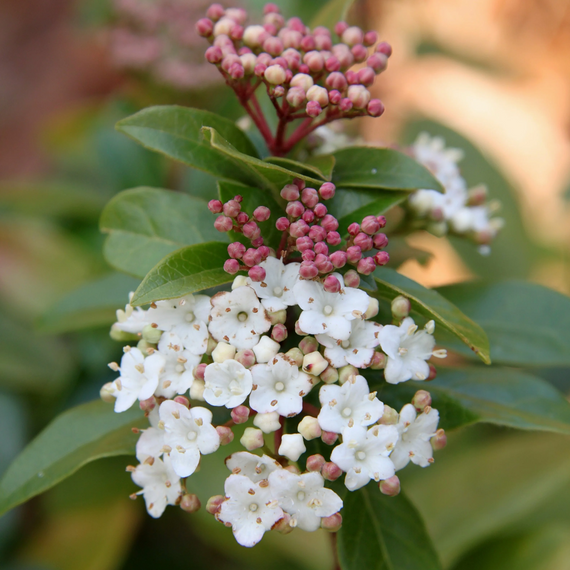
Viburnum tinus 'Spring Bouquet' (Laurustinus) is a compact, broadleaf evergreen shrub that brings exceptional year-round beauty to gardens in Southern Oregon, Northern California, and across USDA Zones 7-9. A dwarf selection of the Mediterranean-native Viburnum tinus, 'Spring Bouquet' forms a dense, symmetrical mound of deep green, glossy foliage that serves as a handsome backdrop throughout all seasons. Beginning in late winter — often as early as January — the shrub sets clusters of rosy-pink buds that open into lightly honey-fragrant, pinkish-white flat-topped flower cymes, providing a welcome splash of color and sweet scent during the garden's quietest months. As spring transitions to summer, spent blooms give way to small, showy fruits that ripen from red to a distinctive metallic blue-black, eagerly sought by birds and adding yet another layer of ornamental appeal. Unlike the larger species, 'Spring Bouquet' matures at a manageable 4 to 6 feet in height and spread, making it perfectly scaled for urban yards, mixed shrub borders, low informal hedges, and tidy foundation plantings. Its adaptability to full sun or partial shade, its tolerance of clay soils, and its moderate drought resistance once established make it one of the most versatile and rewarding evergreen shrubs available for mild-winter gardens.
Plant Description
Viburnum tinus 'Spring Bouquet' — also commonly called Laurustinus — is a compact cultivar of the classic Mediterranean evergreen shrub Viburnum tinus (synonymous with V. tinus 'Compactum'). It belongs to the family Adoxaceae and is prized for its dense, rounded growth habit, lustrous dark green foliage, and an exceptionally long season of ornamental interest. The ovate, leathery leaves are deep glossy green and can reach up to 4 inches long, providing a rich, textural backdrop year-round. In late winter through early spring, the shrub produces rounded, 4-inch-wide, flat-topped flower clusters (cymes) composed of dozens of small, star-shaped blossoms. Buds open pinkish before transitioning to white, and the flowers carry a light, sweet honey-like fragrance. Following bloom, small drupes (berry-like fruits) emerge red and ripen to a striking metallic blue-black by summer, persisting into fall. 'Spring Bouquet' is notably more compact than the straight species, which can reach 12 feet or more, making this cultivar ideal where space is limited but four-season appeal is desired.
Mature Size and Growth Rate
| Characteristic | Detail |
|---|---|
| Mature Height | 4 to 6 feet |
| Mature Spread | 4 to 6 feet |
| Growth Rate | Moderate; approximately 1 to 1.5 feet per year |
| Plant Habit | Dense, compact, rounded to upright-rounded |
| Recommended Spacing | 4 to 6 feet apart (center to center) |
'Spring Bouquet' is notably smaller than the species Viburnum tinus, which can exceed 12 feet. Despite its compact stature, the flower clusters are just as large and showy as those on the full-size species, making this cultivar a great value for small to medium-sized gardens.
Hardiness and Climate
Viburnum tinus 'Spring Bouquet' is reliably hardy in USDA Zones 7 through 9, with some sources noting adaptability into Zone 10 in suitable microclimates. It is well-suited to the mild winters and warm summers of Southern Oregon and Northern California. This shrub is native to the Mediterranean region of Europe and northern Africa, meaning it thrives in climates with mild, moist winters and warm, dry summers — conditions very similar to those found in the Rogue Valley, Umpqua Valley, and the Northern California coastal ranges. It performs best when sited with some protection from harsh, cold north winds, as prolonged hard freezes can damage tender flower buds and new twig growth. Heat zones 8 through 10 are also appropriate for this plant.
Sunlight Requirements
Viburnum tinus 'Spring Bouquet' thrives in a wide range of light conditions, which contributes greatly to its versatility in the landscape.
- Full Sun: At least 6 hours of direct sunlight per day promotes the most prolific flowering and the heaviest fruit set. Full sun exposure also encourages the most compact, dense growth habit.
- Partial Shade: 4 to 6 hours of sun per day is well-tolerated. The shrub will still flower and fruit nicely, though blooming may be slightly reduced compared to full-sun plants.
- Dappled or Light Shade: The plant can adapt to filtered or dappled sunlight, such as beneath high-canopied trees, though deep, dense shade should be avoided as it will noticeably reduce flowering and may result in a more open, less tidy growth habit.
For the best combination of flowers, berries, and a neat form, plant in a location that receives morning sun with some afternoon shade in very hot inland locations.
Soil and pH Preferences
'Spring Bouquet' is highly adaptable when it comes to soil, but good drainage is its most important requirement. Consistently waterlogged or poorly drained soils will lead to root rot and plant decline.
- Soil Types: Adapts well to loam, sandy loam, chalk, and clay soils, provided drainage is adequate. Heavy clay soils can be used successfully if amended with organic matter to improve drainage.
- Preferred Soil: Deep, rich, organically amended loam produces the most vigorous plants. Incorporating compost into the backfill at planting time gives young plants an excellent start.
- Soil pH: Adaptable from slightly acidic to slightly alkaline; a pH range of approximately 5.5 to 7.5 is tolerated, with a slightly acidic to neutral range (6.0 to 7.0) being optimal for nutrient availability.
- Drainage: Well-drained to moist-but-well-drained conditions are ideal. Avoid low spots, heavy compacted soils, or areas where water pools after rain.
Watering Guide
Proper watering is most critical during the establishment period and during extended hot, dry spells. Once mature, this shrub demonstrates good drought tolerance.
- At Planting: Water thoroughly at the time of planting to settle the soil around the roots and eliminate air pockets.
- First Season: Water regularly during the first growing season (and into the second) to help establish a deep, extensive root system. Allow the top 2 inches of soil to dry out slightly between watering sessions — avoid keeping the soil constantly saturated.
- Established Plants: Once established (typically after 1-2 years), 'Spring Bouquet' is moderately drought tolerant and can survive on natural rainfall in many parts of Southern Oregon and Northern California. However, during prolonged dry spells, supplemental irrigation improves flowering and fruit production and maintains the best foliage color.
- Overwatering Warning: Avoid overwatering at all times. Root rot is the most serious threat to this plant and is almost always caused by overly wet or poorly draining soil conditions.
Fertilizing
Viburnum tinus 'Spring Bouquet' is not a heavy feeder and thrives without aggressive fertilization. A simple, once-a-year feeding routine is all that is needed to keep this shrub looking its best.
- When to Fertilize: Apply fertilizer once in early spring, just as new growth begins to emerge. Alternatively, fertilizing in late spring after blooms have spent can encourage vigorous new growth for the coming season.
- What to Use: A balanced, slow-release granular fertilizer formulated for woody shrubs (such as a 10-10-10 or similar balanced NPK ratio) works well. Organic options such as composted manure or an all-purpose organic shrub fertilizer are also excellent choices.
- How to Apply: Broadcast the fertilizer evenly over the root zone (out to the drip line of the canopy) and water it in well. Avoid piling fertilizer directly against the trunk or stems.
- Avoid Over-Fertilizing: Excessive nitrogen will push lush, soft new growth at the expense of flowers and berries, and can make the plant more susceptible to pests. Follow label rate recommendations and do not exceed them.
Pruning and Maintenance
'Spring Bouquet' is a naturally tidy, compact grower that requires very little pruning to maintain an attractive shape. Its low-maintenance nature is one of its greatest assets.
- When to Prune: The best time to prune is immediately after flowering, in late spring to early summer (typically May through June). Pruning at this time allows the plant to set new flower buds for the following season without interruption.
- What to Remove: Remove any dead, damaged, or crossing branches first. Then lightly shape the outer canopy to maintain the desired size and form. Avoid heavy shearing, which can reduce next season's flower display.
- Avoid Fall and Winter Pruning: Pruning in fall or winter removes developing flower buds and significantly reduces the spring bloom display.
- Rejuvenation: If a mature plant becomes overgrown or leggy, a more substantial renewal pruning can be performed in early spring, though this will sacrifice one season's flowers. The plant recovers vigorously.
- General Maintenance: Remove spent berry clusters as desired to neaten appearance. Rake up fallen leaves and debris around the base of the plant to minimize disease risk. Replenish mulch annually in spring.
Planting Instructions
- Choose the Right Location: Select a site with full sun to partial shade and well-drained soil. Avoid low-lying areas where water collects. Allow adequate space for the plant to reach its full 4- to 6-foot mature size.
- Best Time to Plant: Spring or fall are ideal planting times. In Southern Oregon and Northern California, fall planting takes advantage of the cool, moist season to establish roots before summer heat arrives.
- Prepare the Planting Hole: Dig a hole 2 to 3 times as wide as the root ball but only as deep as the root ball is tall. The top of the root ball should sit at or slightly above the surrounding soil grade to ensure good drainage.
- Amend the Soil: Mix the excavated soil with a generous amount of compost or aged organic matter. In heavy clay soils, additional coarse sand or perlite can improve drainage.
- Plant and Backfill: Remove the plant from its container, loosen any circling roots, and set it in the hole. Backfill with the amended soil, gently firming it around the root ball to eliminate air pockets. Do not bury the root crown.
- Water Thoroughly: Water deeply immediately after planting to settle the soil and hydrate the roots.
- Mulch: Apply a 2- to 3-inch layer of organic mulch (such as wood chips or bark) over the root zone, keeping it a few inches away from the trunk. Mulch conserves moisture, moderates soil temperature, and suppresses weeds.
Seasonal Interest
One of the most compelling qualities of Viburnum tinus 'Spring Bouquet' is its exceptional multi-season ornamental value — it offers something beautiful to look at in every season of the year.
- Winter (December - February): Deep green, glossy foliage remains attractive and evergreen. Pink-red flower buds begin to form and swell, offering a cheerful preview of the blooms to come. The shrub provides structure and green color to the winter garden when deciduous plants are bare.
- Spring (February - May): The peak season of beauty. Rosy-pink buds open into flat-topped clusters of fragrant pinkish-white blossoms that smother the plant from late winter through mid-spring. Pollinators are drawn to the sweetly scented blooms.
- Summer (June - August): Spent flowers give way to small, eye-catching berries that transition from red to a striking metallic blue-black. The glossy, dark foliage remains dense and vibrant throughout the heat of summer.
- Fall (September - November): Blue-black berries persist into fall, providing food for migratory and resident birds. The evergreen foliage continues to provide structure and year-round screening as surrounding deciduous plants begin to drop their leaves.
Landscape Uses
The compact, adaptable nature of 'Spring Bouquet' makes it one of the most versatile evergreen shrubs available for mild-climate gardens. Suggested uses include:
- Low Hedges and Screens: Planted 4 to 5 feet apart, 'Spring Bouquet' quickly forms a dense, evergreen screen or informal hedge that provides year-round privacy without the need for frequent shearing.
- Foundation Plantings: Its compact, symmetrical form and refined appearance make it an excellent choice for planting along building foundations, where it softens architectural lines with lush, evergreen foliage.
- Mixed Shrub Borders: Works beautifully as a mid-border anchor or backdrop plant alongside flowering perennials, ornamental grasses, and other flowering shrubs.
- Accent or Specimen Plant: When given room to develop its natural rounded form, a single specimen makes a striking focal point in a garden bed or lawn planting.
- Container Growing: Performs well in large containers for patio, deck, or courtyard settings, bringing fragrant winter-spring flowers and attractive foliage to outdoor living areas.
- Urban and Courtyard Gardens: Its compact size, adaptability to partial shade, and tolerance of urban conditions make it an excellent choice for smaller city gardens and enclosed courtyards.
- Wildlife Gardens: The combination of nectar-rich flowers and fruit-bearing berries makes 'Spring Bouquet' a valuable addition to gardens designed to support pollinators and birds.
Companion Plants
Viburnum tinus 'Spring Bouquet' pairs beautifully with a wide variety of plants that share similar growing preferences and provide contrasting or complementary seasonal interest. Consider these companions for your planting design:
- Lavender (Lavandula spp.): Shares the same preference for full sun and well-drained soil. The silver-gray foliage and purple flower spikes of lavender contrast beautifully with the dark green glossy leaves of 'Spring Bouquet.'
- Ornamental Grasses (Pennisetum, Miscanthus): The fine-textured, airy plumes of ornamental grasses provide a strong textural contrast to the bold, leathery foliage of the viburnum.
- Rosemary (Salvia rosmarinus): A natural companion for this Mediterranean shrub — both share similar water and sun requirements and create a cohesive, drought-tolerant planting palette.
- Hosta (Hosta spp.): For partially shaded settings, large-leaved hostas make an excellent low-growing complement beneath the viburnum's canopy.
- Coneflower (Echinacea purpurea): Provides summer-into-fall color and pollinators in sunny border plantings alongside 'Spring Bouquet.'
- Weigela (Weigela florida): A fellow flowering deciduous shrub whose spring blooms overlap with 'Spring Bouquet,' creating a combined floral display of great impact.
- Black Mondo Grass (Ophiopogon planiscapus 'Nigrescens'): The near-black foliage of black mondo grass creates a dramatic contrast against the deep green, glossy leaves and white flowers of 'Spring Bouquet.'
- Hydrangea (Hydrangea spp.): In partial shade settings, hydrangeas complement the viburnum with large, showy summer blooms and similar moisture preferences.
Wildlife Value
Viburnum tinus 'Spring Bouquet' is a valuable plant for supporting local wildlife, offering food and habitat at multiple times of the year:
- Pollinators: The lightly fragrant, nectar-rich flower clusters are a magnet for bees, butterflies, and other beneficial insects during late winter and spring — a critical time when few other plants are in bloom and pollinator food sources are scarce.
- Birds: The metallic blue-black berries that ripen in summer and persist into fall are an important food source for a variety of songbirds and migratory species, including thrushes, robins, and waxwings.
- Shelter and Nesting: The dense, year-round evergreen canopy provides excellent cover and potential nesting sites for small birds seeking refuge from predators and harsh weather.
- Deer Resistance: The thick, leathery leaves are generally unpalatable to deer, making this a good choice in areas with deer browsing pressure. Young, newly planted shrubs may occasionally be sampled, but established plants are largely ignored.
Pests and Diseases
Viburnum tinus 'Spring Bouquet' is generally a robust, trouble-free shrub when grown in appropriate conditions. The most common issues to watch for include:
- Aphids: Small, soft-bodied insects that cluster on tender new shoots and the undersides of leaves, causing leaf curl and sticky honeydew deposits. Knock off with a strong stream of water or treat with insecticidal soap for heavier infestations.
- Scale Insects: Armored or soft scale can attach to stems and leaves, weakening the plant over time. Treat dormant-season infestations with horticultural oil; use systemic insecticides for severe cases.
- Thrips: Tiny insects that rasp leaf surfaces, causing silvery, stippled foliage. Infestations are rarely serious; treat with insecticidal soap if needed.
- Spider Mites: May appear during hot, dry weather, causing fine stippling on leaves. Increase humidity, avoid overhead drought stress, and treat with miticide or horticultural oil if necessary.
- Powdery Mildew: A fungal disease appearing as a white, powdery coating on leaf surfaces, most common in humid conditions with poor air circulation. Improve air circulation through selective pruning and avoid overhead watering.
- Leaf Spot (Fungal): Dark, water-soaked spots that enlarge over time. Practice good sanitation by removing and disposing of affected foliage; avoid wetting leaves when irrigating.
- Root Rot (Phytophthora): The most serious disease threat, almost always caused by poorly drained or consistently waterlogged soils. Prevent by planting in well-drained sites and never overwatering. There is no effective cure once root rot is established — prevention through proper siting is essential.
Container Growing
'Spring Bouquet' adapts remarkably well to container culture, making it a popular choice for patios, decks, courtyards, and entryways where garden space is limited.
- Container Size: Choose a large container — at least 15 to 20 gallons — to accommodate the root system and provide room for growth. Ensure the container has ample drainage holes.
- Potting Mix: Use a high-quality, well-draining potting mix blended for woody shrubs or ornamental plants. Avoid heavy, peat-based mixes that can compact over time and retain too much moisture.
- Watering: Container plants dry out more quickly than in-ground plants. Check soil moisture regularly and water when the top 2 inches of the potting mix feel dry. Do not allow the container to sit in standing water.
- Fertilizing: Feed container-grown plants with a balanced, slow-release granular fertilizer in early spring, and supplement with a liquid fertilizer mid-season if the plant shows signs of nutrient deficiency (pale leaves, reduced growth).
- Sunlight: Position containers where the plant receives at least 4 to 6 hours of sun per day. Containers can be moved seasonally to optimize sun exposure or to protect the plant from frost in colder microclimates.
- Repotting: Repot into a larger container every 2 to 3 years, or when roots begin to circle the bottom of the pot or emerge from drainage holes.
Toxicity Information
Gardeners with children or pets should be aware of the following regarding Viburnum tinus 'Spring Bouquet':
- Berries: The ornamental blue-black fruits of Viburnum tinus are considered mildly to moderately toxic if ingested in quantity by humans or pets. Symptoms of ingestion may include nausea, vomiting, and gastrointestinal upset. The berries are not intended for human consumption.
- Foliage and Stems: The thick, leathery leaves and woody stems are generally not considered highly toxic but should not be ingested.
- Precaution: As with all ornamental plants bearing berries, take care to supervise young children and pets around this plant, and consider placement in areas away from unsupervised children. Contact a medical professional or veterinarian immediately if significant ingestion is suspected.
- Wildlife: While the berries are mildly toxic to humans and domestic pets, they are safely consumed by many wild bird species, who are the primary intended dispersers of the seeds in their native Mediterranean range.
- Compact, dense evergreen shrub featuring lightly fragrant pinkish-white flower clusters that bloom from late winter through early spring, delivering color when little else is in bloom.
- Striking four-season interest with glossy dark green foliage, winter-through-spring blossoms, and metallic blue-black berries in summer and fall that attract songbirds.
- Naturally tidy, rounded habit reaches just 4-6 feet tall and wide — ideal for low hedges, foundation plantings, privacy screens, and smaller garden spaces without constant pruning.
- Tough and adaptable — deer-resistant, drought-tolerant once established, and tolerant of a wide range of soil types including clay, making it a low-maintenance landscape workhorse.
Viburnum tinus 'Spring Bouquet' (Laurustinus) is a compact, broadleaf evergreen shrub that brings exceptional year-round beauty to gardens in Southern Oregon, Northern California, and across USDA Zones 7-9. A dwarf selection of the Mediterranean-native Viburnum tinus, 'Spring Bouquet' forms a dense, symmetrical mound of deep green, glossy foliage that serves as a handsome backdrop throughout all seasons. Beginning in late winter — often as early as January — the shrub sets clusters of rosy-pink buds that open into lightly honey-fragrant, pinkish-white flat-topped flower cymes, providing a welcome splash of color and sweet scent during the garden's quietest months. As spring transitions to summer, spent blooms give way to small, showy fruits that ripen from red to a distinctive metallic blue-black, eagerly sought by birds and adding yet another layer of ornamental appeal. Unlike the larger species, 'Spring Bouquet' matures at a manageable 4 to 6 feet in height and spread, making it perfectly scaled for urban yards, mixed shrub borders, low informal hedges, and tidy foundation plantings. Its adaptability to full sun or partial shade, its tolerance of clay soils, and its moderate drought resistance once established make it one of the most versatile and rewarding evergreen shrubs available for mild-winter gardens.
Plant Description
Viburnum tinus 'Spring Bouquet' — also commonly called Laurustinus — is a compact cultivar of the classic Mediterranean evergreen shrub Viburnum tinus (synonymous with V. tinus 'Compactum'). It belongs to the family Adoxaceae and is prized for its dense, rounded growth habit, lustrous dark green foliage, and an exceptionally long season of ornamental interest. The ovate, leathery leaves are deep glossy green and can reach up to 4 inches long, providing a rich, textural backdrop year-round. In late winter through early spring, the shrub produces rounded, 4-inch-wide, flat-topped flower clusters (cymes) composed of dozens of small, star-shaped blossoms. Buds open pinkish before transitioning to white, and the flowers carry a light, sweet honey-like fragrance. Following bloom, small drupes (berry-like fruits) emerge red and ripen to a striking metallic blue-black by summer, persisting into fall. 'Spring Bouquet' is notably more compact than the straight species, which can reach 12 feet or more, making this cultivar ideal where space is limited but four-season appeal is desired.
Mature Size and Growth Rate
| Characteristic | Detail |
|---|---|
| Mature Height | 4 to 6 feet |
| Mature Spread | 4 to 6 feet |
| Growth Rate | Moderate; approximately 1 to 1.5 feet per year |
| Plant Habit | Dense, compact, rounded to upright-rounded |
| Recommended Spacing | 4 to 6 feet apart (center to center) |
'Spring Bouquet' is notably smaller than the species Viburnum tinus, which can exceed 12 feet. Despite its compact stature, the flower clusters are just as large and showy as those on the full-size species, making this cultivar a great value for small to medium-sized gardens.
Hardiness and Climate
Viburnum tinus 'Spring Bouquet' is reliably hardy in USDA Zones 7 through 9, with some sources noting adaptability into Zone 10 in suitable microclimates. It is well-suited to the mild winters and warm summers of Southern Oregon and Northern California. This shrub is native to the Mediterranean region of Europe and northern Africa, meaning it thrives in climates with mild, moist winters and warm, dry summers — conditions very similar to those found in the Rogue Valley, Umpqua Valley, and the Northern California coastal ranges. It performs best when sited with some protection from harsh, cold north winds, as prolonged hard freezes can damage tender flower buds and new twig growth. Heat zones 8 through 10 are also appropriate for this plant.
Sunlight Requirements
Viburnum tinus 'Spring Bouquet' thrives in a wide range of light conditions, which contributes greatly to its versatility in the landscape.
- Full Sun: At least 6 hours of direct sunlight per day promotes the most prolific flowering and the heaviest fruit set. Full sun exposure also encourages the most compact, dense growth habit.
- Partial Shade: 4 to 6 hours of sun per day is well-tolerated. The shrub will still flower and fruit nicely, though blooming may be slightly reduced compared to full-sun plants.
- Dappled or Light Shade: The plant can adapt to filtered or dappled sunlight, such as beneath high-canopied trees, though deep, dense shade should be avoided as it will noticeably reduce flowering and may result in a more open, less tidy growth habit.
For the best combination of flowers, berries, and a neat form, plant in a location that receives morning sun with some afternoon shade in very hot inland locations.
Soil and pH Preferences
'Spring Bouquet' is highly adaptable when it comes to soil, but good drainage is its most important requirement. Consistently waterlogged or poorly drained soils will lead to root rot and plant decline.
- Soil Types: Adapts well to loam, sandy loam, chalk, and clay soils, provided drainage is adequate. Heavy clay soils can be used successfully if amended with organic matter to improve drainage.
- Preferred Soil: Deep, rich, organically amended loam produces the most vigorous plants. Incorporating compost into the backfill at planting time gives young plants an excellent start.
- Soil pH: Adaptable from slightly acidic to slightly alkaline; a pH range of approximately 5.5 to 7.5 is tolerated, with a slightly acidic to neutral range (6.0 to 7.0) being optimal for nutrient availability.
- Drainage: Well-drained to moist-but-well-drained conditions are ideal. Avoid low spots, heavy compacted soils, or areas where water pools after rain.
Watering Guide
Proper watering is most critical during the establishment period and during extended hot, dry spells. Once mature, this shrub demonstrates good drought tolerance.
- At Planting: Water thoroughly at the time of planting to settle the soil around the roots and eliminate air pockets.
- First Season: Water regularly during the first growing season (and into the second) to help establish a deep, extensive root system. Allow the top 2 inches of soil to dry out slightly between watering sessions — avoid keeping the soil constantly saturated.
- Established Plants: Once established (typically after 1-2 years), 'Spring Bouquet' is moderately drought tolerant and can survive on natural rainfall in many parts of Southern Oregon and Northern California. However, during prolonged dry spells, supplemental irrigation improves flowering and fruit production and maintains the best foliage color.
- Overwatering Warning: Avoid overwatering at all times. Root rot is the most serious threat to this plant and is almost always caused by overly wet or poorly draining soil conditions.
Fertilizing
Viburnum tinus 'Spring Bouquet' is not a heavy feeder and thrives without aggressive fertilization. A simple, once-a-year feeding routine is all that is needed to keep this shrub looking its best.
- When to Fertilize: Apply fertilizer once in early spring, just as new growth begins to emerge. Alternatively, fertilizing in late spring after blooms have spent can encourage vigorous new growth for the coming season.
- What to Use: A balanced, slow-release granular fertilizer formulated for woody shrubs (such as a 10-10-10 or similar balanced NPK ratio) works well. Organic options such as composted manure or an all-purpose organic shrub fertilizer are also excellent choices.
- How to Apply: Broadcast the fertilizer evenly over the root zone (out to the drip line of the canopy) and water it in well. Avoid piling fertilizer directly against the trunk or stems.
- Avoid Over-Fertilizing: Excessive nitrogen will push lush, soft new growth at the expense of flowers and berries, and can make the plant more susceptible to pests. Follow label rate recommendations and do not exceed them.
Pruning and Maintenance
'Spring Bouquet' is a naturally tidy, compact grower that requires very little pruning to maintain an attractive shape. Its low-maintenance nature is one of its greatest assets.
- When to Prune: The best time to prune is immediately after flowering, in late spring to early summer (typically May through June). Pruning at this time allows the plant to set new flower buds for the following season without interruption.
- What to Remove: Remove any dead, damaged, or crossing branches first. Then lightly shape the outer canopy to maintain the desired size and form. Avoid heavy shearing, which can reduce next season's flower display.
- Avoid Fall and Winter Pruning: Pruning in fall or winter removes developing flower buds and significantly reduces the spring bloom display.
- Rejuvenation: If a mature plant becomes overgrown or leggy, a more substantial renewal pruning can be performed in early spring, though this will sacrifice one season's flowers. The plant recovers vigorously.
- General Maintenance: Remove spent berry clusters as desired to neaten appearance. Rake up fallen leaves and debris around the base of the plant to minimize disease risk. Replenish mulch annually in spring.
Planting Instructions
- Choose the Right Location: Select a site with full sun to partial shade and well-drained soil. Avoid low-lying areas where water collects. Allow adequate space for the plant to reach its full 4- to 6-foot mature size.
- Best Time to Plant: Spring or fall are ideal planting times. In Southern Oregon and Northern California, fall planting takes advantage of the cool, moist season to establish roots before summer heat arrives.
- Prepare the Planting Hole: Dig a hole 2 to 3 times as wide as the root ball but only as deep as the root ball is tall. The top of the root ball should sit at or slightly above the surrounding soil grade to ensure good drainage.
- Amend the Soil: Mix the excavated soil with a generous amount of compost or aged organic matter. In heavy clay soils, additional coarse sand or perlite can improve drainage.
- Plant and Backfill: Remove the plant from its container, loosen any circling roots, and set it in the hole. Backfill with the amended soil, gently firming it around the root ball to eliminate air pockets. Do not bury the root crown.
- Water Thoroughly: Water deeply immediately after planting to settle the soil and hydrate the roots.
- Mulch: Apply a 2- to 3-inch layer of organic mulch (such as wood chips or bark) over the root zone, keeping it a few inches away from the trunk. Mulch conserves moisture, moderates soil temperature, and suppresses weeds.
Seasonal Interest
One of the most compelling qualities of Viburnum tinus 'Spring Bouquet' is its exceptional multi-season ornamental value — it offers something beautiful to look at in every season of the year.
- Winter (December - February): Deep green, glossy foliage remains attractive and evergreen. Pink-red flower buds begin to form and swell, offering a cheerful preview of the blooms to come. The shrub provides structure and green color to the winter garden when deciduous plants are bare.
- Spring (February - May): The peak season of beauty. Rosy-pink buds open into flat-topped clusters of fragrant pinkish-white blossoms that smother the plant from late winter through mid-spring. Pollinators are drawn to the sweetly scented blooms.
- Summer (June - August): Spent flowers give way to small, eye-catching berries that transition from red to a striking metallic blue-black. The glossy, dark foliage remains dense and vibrant throughout the heat of summer.
- Fall (September - November): Blue-black berries persist into fall, providing food for migratory and resident birds. The evergreen foliage continues to provide structure and year-round screening as surrounding deciduous plants begin to drop their leaves.
Landscape Uses
The compact, adaptable nature of 'Spring Bouquet' makes it one of the most versatile evergreen shrubs available for mild-climate gardens. Suggested uses include:
- Low Hedges and Screens: Planted 4 to 5 feet apart, 'Spring Bouquet' quickly forms a dense, evergreen screen or informal hedge that provides year-round privacy without the need for frequent shearing.
- Foundation Plantings: Its compact, symmetrical form and refined appearance make it an excellent choice for planting along building foundations, where it softens architectural lines with lush, evergreen foliage.
- Mixed Shrub Borders: Works beautifully as a mid-border anchor or backdrop plant alongside flowering perennials, ornamental grasses, and other flowering shrubs.
- Accent or Specimen Plant: When given room to develop its natural rounded form, a single specimen makes a striking focal point in a garden bed or lawn planting.
- Container Growing: Performs well in large containers for patio, deck, or courtyard settings, bringing fragrant winter-spring flowers and attractive foliage to outdoor living areas.
- Urban and Courtyard Gardens: Its compact size, adaptability to partial shade, and tolerance of urban conditions make it an excellent choice for smaller city gardens and enclosed courtyards.
- Wildlife Gardens: The combination of nectar-rich flowers and fruit-bearing berries makes 'Spring Bouquet' a valuable addition to gardens designed to support pollinators and birds.
Companion Plants
Viburnum tinus 'Spring Bouquet' pairs beautifully with a wide variety of plants that share similar growing preferences and provide contrasting or complementary seasonal interest. Consider these companions for your planting design:
- Lavender (Lavandula spp.): Shares the same preference for full sun and well-drained soil. The silver-gray foliage and purple flower spikes of lavender contrast beautifully with the dark green glossy leaves of 'Spring Bouquet.'
- Ornamental Grasses (Pennisetum, Miscanthus): The fine-textured, airy plumes of ornamental grasses provide a strong textural contrast to the bold, leathery foliage of the viburnum.
- Rosemary (Salvia rosmarinus): A natural companion for this Mediterranean shrub — both share similar water and sun requirements and create a cohesive, drought-tolerant planting palette.
- Hosta (Hosta spp.): For partially shaded settings, large-leaved hostas make an excellent low-growing complement beneath the viburnum's canopy.
- Coneflower (Echinacea purpurea): Provides summer-into-fall color and pollinators in sunny border plantings alongside 'Spring Bouquet.'
- Weigela (Weigela florida): A fellow flowering deciduous shrub whose spring blooms overlap with 'Spring Bouquet,' creating a combined floral display of great impact.
- Black Mondo Grass (Ophiopogon planiscapus 'Nigrescens'): The near-black foliage of black mondo grass creates a dramatic contrast against the deep green, glossy leaves and white flowers of 'Spring Bouquet.'
- Hydrangea (Hydrangea spp.): In partial shade settings, hydrangeas complement the viburnum with large, showy summer blooms and similar moisture preferences.
Wildlife Value
Viburnum tinus 'Spring Bouquet' is a valuable plant for supporting local wildlife, offering food and habitat at multiple times of the year:
- Pollinators: The lightly fragrant, nectar-rich flower clusters are a magnet for bees, butterflies, and other beneficial insects during late winter and spring — a critical time when few other plants are in bloom and pollinator food sources are scarce.
- Birds: The metallic blue-black berries that ripen in summer and persist into fall are an important food source for a variety of songbirds and migratory species, including thrushes, robins, and waxwings.
- Shelter and Nesting: The dense, year-round evergreen canopy provides excellent cover and potential nesting sites for small birds seeking refuge from predators and harsh weather.
- Deer Resistance: The thick, leathery leaves are generally unpalatable to deer, making this a good choice in areas with deer browsing pressure. Young, newly planted shrubs may occasionally be sampled, but established plants are largely ignored.
Pests and Diseases
Viburnum tinus 'Spring Bouquet' is generally a robust, trouble-free shrub when grown in appropriate conditions. The most common issues to watch for include:
- Aphids: Small, soft-bodied insects that cluster on tender new shoots and the undersides of leaves, causing leaf curl and sticky honeydew deposits. Knock off with a strong stream of water or treat with insecticidal soap for heavier infestations.
- Scale Insects: Armored or soft scale can attach to stems and leaves, weakening the plant over time. Treat dormant-season infestations with horticultural oil; use systemic insecticides for severe cases.
- Thrips: Tiny insects that rasp leaf surfaces, causing silvery, stippled foliage. Infestations are rarely serious; treat with insecticidal soap if needed.
- Spider Mites: May appear during hot, dry weather, causing fine stippling on leaves. Increase humidity, avoid overhead drought stress, and treat with miticide or horticultural oil if necessary.
- Powdery Mildew: A fungal disease appearing as a white, powdery coating on leaf surfaces, most common in humid conditions with poor air circulation. Improve air circulation through selective pruning and avoid overhead watering.
- Leaf Spot (Fungal): Dark, water-soaked spots that enlarge over time. Practice good sanitation by removing and disposing of affected foliage; avoid wetting leaves when irrigating.
- Root Rot (Phytophthora): The most serious disease threat, almost always caused by poorly drained or consistently waterlogged soils. Prevent by planting in well-drained sites and never overwatering. There is no effective cure once root rot is established — prevention through proper siting is essential.
Container Growing
'Spring Bouquet' adapts remarkably well to container culture, making it a popular choice for patios, decks, courtyards, and entryways where garden space is limited.
- Container Size: Choose a large container — at least 15 to 20 gallons — to accommodate the root system and provide room for growth. Ensure the container has ample drainage holes.
- Potting Mix: Use a high-quality, well-draining potting mix blended for woody shrubs or ornamental plants. Avoid heavy, peat-based mixes that can compact over time and retain too much moisture.
- Watering: Container plants dry out more quickly than in-ground plants. Check soil moisture regularly and water when the top 2 inches of the potting mix feel dry. Do not allow the container to sit in standing water.
- Fertilizing: Feed container-grown plants with a balanced, slow-release granular fertilizer in early spring, and supplement with a liquid fertilizer mid-season if the plant shows signs of nutrient deficiency (pale leaves, reduced growth).
- Sunlight: Position containers where the plant receives at least 4 to 6 hours of sun per day. Containers can be moved seasonally to optimize sun exposure or to protect the plant from frost in colder microclimates.
- Repotting: Repot into a larger container every 2 to 3 years, or when roots begin to circle the bottom of the pot or emerge from drainage holes.
Toxicity Information
Gardeners with children or pets should be aware of the following regarding Viburnum tinus 'Spring Bouquet':
- Berries: The ornamental blue-black fruits of Viburnum tinus are considered mildly to moderately toxic if ingested in quantity by humans or pets. Symptoms of ingestion may include nausea, vomiting, and gastrointestinal upset. The berries are not intended for human consumption.
- Foliage and Stems: The thick, leathery leaves and woody stems are generally not considered highly toxic but should not be ingested.
- Precaution: As with all ornamental plants bearing berries, take care to supervise young children and pets around this plant, and consider placement in areas away from unsupervised children. Contact a medical professional or veterinarian immediately if significant ingestion is suspected.
- Wildlife: While the berries are mildly toxic to humans and domestic pets, they are safely consumed by many wild bird species, who are the primary intended dispersers of the seeds in their native Mediterranean range.
Related Products