
Zoom the image with the mouse
Seaside Serenade Kitty Hawk Hydrangea - 2 Gallon
SKU:
2142850
UPC:
014949028834
$41.99
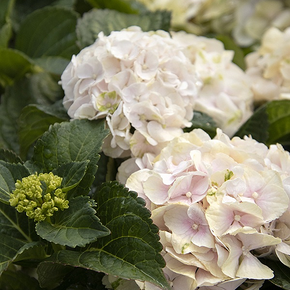
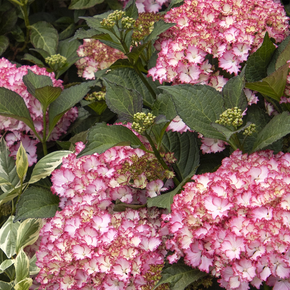
- Showstopping mophead blooms packed with star-shaped florets shift from chartreuse green to rich pink in alkaline soils or vivid purple-blue in acidic soils, delivering garden-changing color all season long.
- A reliable rebloomer with exceptionally sturdy stems and thick, heat-resistant dark green foliage that stays lush and upright even on the hottest summer afternoons.
- Compact, rounded form reaches just 3 to 4 feet tall and wide, making it ideal for foundation plantings, mixed borders, containers, and mass displays without crowding.
- Blooms are outstanding for fresh-cut arrangements and hold their shape and color beautifully in the vase, bringing the garden indoors all summer long.
Seaside Serenade Kitty Hawk Hydrangea (Hydrangea macrophylla 'Hokomapfloy' PP35814) is a spectacular repeat-blooming bigleaf hydrangea that raises the bar for mophead varieties with its profusion of large, full flower clusters composed of charming star-shaped florets. The blooms open in a soft chartreuse green before transitioning to rich, saturated pink in neutral to alkaline soils, or cool purple to brilliant blue in acidic soils, giving gardeners direct creative control over the palette simply by managing soil pH. Unlike many traditional bigleaf hydrangeas that struggle in warm conditions, Kitty Hawk's exceptionally thick, deep green foliage resists afternoon wilt and heat scorch, keeping the plant looking pristine throughout summer. The naturally compact, rounded habit — maturing at 3 to 4 feet tall and equally wide — makes this deciduous shrub a versatile performer across a wide range of landscape applications, from cottage garden borders and shaded foundation beds to mixed perennial plantings and patio containers. Hardy across USDA Zones 5 through 9, Seaside Serenade Kitty Hawk is a long-season performer that reliably reblooms from spring well into summer, producing an abundance of long-stemmed cut flowers that are equally at home in an elegant vase as they are brightening the garden landscape.
Plant Description
Seaside Serenade Kitty Hawk is a deciduous bigleaf hydrangea (Hydrangea macrophylla) that belongs to the highly regarded Seaside Serenade collection, which was bred to outperform traditional mophead varieties in compactness, stem strength, foliage durability, and rebloom reliability. The flower clusters are full, globe-shaped mopheads densely packed with individual star-shaped florets — a detail that sets Kitty Hawk apart from standard round-petal mophead types. Blooms emerge as a soft, luminous chartreuse-green before maturing to pink or blue-purple depending on soil pH. The foliage is notably thick and leathery with a deep, glossy green that remains attractive even through hot spells, resisting the drooping and scorching that can plague other bigleaf types. The overall plant habit is tidy and mounded, requiring very little corrective pruning to maintain its natural shape.
Mature Size and Growth Rate
| Characteristic | Details |
|---|---|
| Mature Height | 3 to 4 feet |
| Mature Spread | 3 to 4 feet |
| Growth Rate | Moderate |
| Plant Habit | Compact, rounded, mounded |
| Plant Type | Deciduous shrub |
Hardiness Zones and Climate
Seaside Serenade Kitty Hawk is hardy in USDA Hardiness Zones 5 through 9, making it well-suited to the wide range of climates found across Southern Oregon and Northern California. It thrives in the mild, maritime-influenced conditions of the Rogue Valley, the Siskiyou foothills, and the coastal ranges. In colder microclimates at the upper end of its hardiness range, flower buds may benefit from a light layer of mulch over the root zone during winter. In the warmer inland valleys of Northern California, afternoon shade is especially important to protect both foliage and blooms during peak summer heat. This variety was specifically bred with improved heat tolerance compared to older bigleaf hydrangea types, giving it broader regional adaptability.
Sunlight Requirements
Seaside Serenade Kitty Hawk performs best in dappled sunlight to partial shade. Morning sun with afternoon shade is the ideal exposure, particularly in the hotter inland climates of Southern Oregon and Northern California. In these regions, direct afternoon sun can stress the plant and diminish bloom quality even with regular watering. In cooler coastal areas or at higher elevations, this hydrangea can tolerate more sun exposure throughout the day. Avoid deep, dense shade, as too little light will reduce flowering significantly. A site beneath high-branching deciduous trees, along a north- or east-facing fence, or on the shaded side of a structure are all excellent placement options.
Soil and pH Preferences
This hydrangea prefers moist, well-drained soil rich in organic matter. It tolerates a range of soil textures including clay, loam, and sand, provided drainage is adequate, as standing water can lead to root rot. Soil pH plays a critical and unique role in determining bloom color for this variety:
- Acidic soil (pH 5.2 to 5.5): Blooms develop blue to purple-blue tones as aluminum becomes more available to the plant.
- Neutral to slightly alkaline soil (pH 6.0 to 6.5+): Blooms shift toward pink and rose tones as aluminum uptake is reduced.
- Near-neutral soil (pH 5.5 to 6.0): Blooms may display a blend of both tones, or a soft lavender-purple.
To encourage blue flowers, incorporate sulfur or aluminum sulfate into the soil. To maintain pink blooms, raise the pH with garden lime. Always conduct a soil test before amending, and re-test annually to maintain consistent color results.
Watering Guide
Consistent, reliable moisture is essential for Seaside Serenade Kitty Hawk, particularly during the long, dry summers common in Southern Oregon and Northern California. Although this variety was bred with improved heat and drought tolerance compared to older bigleaf types, it should never be allowed to dry out completely, as prolonged drought stress will lead to wilting, bud drop, and reduced rebloom. Follow these guidelines for best results:
- Water deeply 2 to 3 times per week during hot, dry summer months, allowing the soil to become slightly moist but not saturated between waterings.
- Check soil moisture at a depth of 2 inches — if it feels dry at that depth, water thoroughly.
- Apply a 2 to 3 inch layer of organic mulch (shredded bark, compost, or wood chips) around the base of the plant to conserve moisture, moderate soil temperature, and reduce the frequency of watering needed.
- Drip irrigation or soaker hoses are highly recommended in hot inland locations, delivering water directly to the root zone while keeping foliage dry, which helps prevent fungal disease.
- Reduce watering frequency in fall as temperatures cool, but do not allow plants to enter winter dormancy in bone-dry soil.
Fertilizing
Seaside Serenade Kitty Hawk benefits from regular, moderate fertilization to support its vigorous growth and generous rebloom habit. Follow these practices for healthy plants and abundant flowering:
- Apply a balanced slow-release granular fertilizer (such as a 10-10-10 or 12-4-8 formulation) in early spring as new growth begins to emerge.
- A second, lighter application of a bloom-boosting fertilizer (higher in phosphorus) can be made in early summer to support continued flower production.
- Avoid fertilizing after midsummer (mid-July at the latest in most local climates), as late-season feeding can stimulate tender new growth that is vulnerable to early fall frosts.
- Organic alternatives such as well-aged compost, fish meal, or composted manure worked into the soil around the drip line in spring are excellent options for gardeners preferring a natural approach.
- If blue flowers are desired, avoid fertilizers that contain high levels of phosphorus, which can reduce aluminum uptake and shift bloom color toward pink regardless of soil pH.
Pruning and Maintenance
Seaside Serenade Kitty Hawk blooms primarily on old wood — that is, stems that grew and matured during the previous growing season. This means timing and technique are critical to preserving next year's flower buds:
- When to prune: Prune immediately after the first flush of blooms fades, typically in mid- to late summer. Do not prune in fall, winter, or early spring, as this removes the dormant buds that will produce the next season's flowers.
- How to prune: Remove only the spent flower heads, cutting just below the bloom to the first pair of healthy, swelling buds. This encourages the plant to redirect energy into reblooming and new stem development.
- Rejuvenation: If the plant becomes congested or overgrown, remove up to one-third of the oldest, woodiest stems at the base in late summer to encourage vigorous new growth from the base.
- Dead wood removal: In early spring, remove any stems that were killed back by winter cold, cutting to just above the first live bud pair.
- General maintenance: Renew mulch each spring, check for and address any pest or disease issues promptly, and keep the root zone free of competing weeds.
Planting Instructions
Follow these steps for the best establishment success with your Seaside Serenade Kitty Hawk Hydrangea:
- Choose the right site: Select a location with morning sun and afternoon shade, protected from harsh afternoon sun and drying winds. Ensure adequate space for a 3 to 4 foot spread at maturity.
- Prepare the soil: Dig a hole twice as wide and equal in depth to the root ball. Amend the backfill soil with generous amounts of compost or aged organic matter to improve fertility and moisture retention. If desired, incorporate soil acidifier or lime at this stage to begin adjusting pH to your target color.
- Plant at the correct depth: Set the plant so that the top of the root ball sits level with or very slightly above the surrounding soil grade. Avoid planting too deeply, which can lead to stem rot.
- Backfill and firm in: Fill the hole with amended soil, gently tamping down to remove large air pockets. Form a slight watering basin around the plant to direct irrigation to the root zone.
- Water thoroughly: Water deeply immediately after planting until water drains from the basin. Keep soil consistently moist (but not waterlogged) throughout the first growing season as the root system establishes.
- Mulch: Apply a 2 to 3 inch layer of mulch over the root zone, keeping it a few inches away from the main stem to prevent crown rot.
- Spacing for mass plantings: Space plants approximately 3 to 4 feet apart on center for a full, dense planting, or 4 to 5 feet apart for a more open, airy effect.
Seasonal Interest
Seaside Serenade Kitty Hawk provides multi-season garden interest from spring through late fall:
- Spring: Fresh, glossy deep green foliage emerges with vigor. Flower buds begin to swell and develop on overwintered stems, signaling the coming bloom season. First blooms typically open in late spring.
- Early to Midsummer: Peak bloom season arrives, with large, full mophead clusters of star-shaped florets appearing in abundance. Blooms are a soft, fresh chartreuse-green when they first open, then transition to their characteristic pink or blue-purple tones over several weeks.
- Late Summer: Reblooming continues as new flushes of color appear on fresh stems. Older blooms may develop attractive antique tones of dusty rose or sage green as they age, adding a second layer of color interest.
- Fall: As temperatures cool, foliage may develop subtle hints of warm color. Dried flower heads remain ornamental on the plant through fall and into winter, providing structural interest in the garden and can be left in place to protect dormant stem buds from early frosts.
- Winter: The plant is fully deciduous. Attractive dried flower heads and branching structure provide winter garden architecture until spring pruning.
Landscape Uses
The compact, uniform habit and spectacular multi-season display of Seaside Serenade Kitty Hawk make it one of the most versatile landscape shrubs available for Pacific Northwest and Northern California gardens. Recommended uses include:
- Foundation plantings: Its predictable 3 to 4 foot size makes it ideal for planting beneath windows and along building foundations without the maintenance burden of frequent hard pruning.
- Mixed shrub borders: Pairs beautifully with other shade-tolerant flowering and foliage shrubs to create layered, year-round interest in partially shaded borders.
- Mass plantings: Planted in sweeps of three, five, or more, Kitty Hawk creates breathtaking seasonal color displays that are especially dramatic when soil pH is managed uniformly for consistent bloom color across the planting.
- Specimen or accent plant: A single plant makes a bold, colorful focal point in a small garden space or at the corner of a bed.
- Container gardens: Performs exceptionally well in large patio containers and decorative pots, allowing soil pH to be precisely managed for targeted bloom color. See the Container Growing tab for full details.
- Cottage and woodland gardens: The bold blooms and lush foliage integrate naturally into informal, layered cottage-style plantings under the shade of deciduous trees.
- Cut flower garden: The sturdy stems and long-lasting blooms make it a standout choice for a dedicated cutting garden.
Companion Plants
Seaside Serenade Kitty Hawk looks stunning when paired with plants that share its preference for partial shade and consistently moist, organically rich soil. Consider these excellent companions for Southern Oregon and Northern California gardens:
- Hostas (Hosta spp.): Bold, textured foliage in shades of green, gold, and blue-green creates a dramatic contrast to the rounded mophead blooms. Both thrive in the same moist, shaded conditions.
- Astilbe (Astilbe spp.): Feathery plumes of pink, white, or red add vertical interest and bloom alongside the hydrangea in early to midsummer.
- Heuchera / Coral Bells (Heuchera spp.): The jewel-toned foliage of coral bells — available in burgundy, copper, chartreuse, and near-black — makes a striking foreground planting at the base of Kitty Hawk's mounded form.
- Japanese Forest Grass (Hakonechloa macra): Graceful, arching golden-green or variegated foliage softens planting edges and contrasts beautifully with the bold hydrangea blooms.
- Ferns (Athyrium, Polystichum, or Dryopteris spp.): Airy, fine-textured fern fronds complement the large-leaved boldness of Kitty Hawk and thrive in the same shaded, moist environments.
- Azaleas and Rhododendrons (Rhododendron spp.): Spring-blooming companions that share the preference for acidic, well-drained soil and partial shade, extending the flowering season before Kitty Hawk takes center stage in summer.
- Bleeding Heart (Lamprocapnos spectabilis): Delicate, arching stems with pendant pink or white flowers provide early-season interest in the same partially shaded, moist conditions.
- Coneflower (Echinacea purpurea): At the sunnier edges of a planting, coneflowers attract pollinators and complement the hydrangea's bold mopheads with their daisy-like blooms in warm pink and purple tones.
Container Growing
Seaside Serenade Kitty Hawk is an excellent choice for large container plantings on patios, decks, and entryways. Its compact, self-contained habit makes it naturally suited to pot culture. Follow these guidelines for success:
- Container size: Choose a container at least 18 to 24 inches in diameter and depth with ample drainage holes. A larger pot insulates roots from temperature extremes and reduces the frequency of watering needed.
- Potting mix: Use a high-quality, moisture-retentive potting mix blended with perlite for drainage. Avoid using dense garden soil, which can compact and restrict drainage in a container environment.
- pH management: One of the great advantages of container growing is precise pH control. Add soil acidifier to encourage blue-purple blooms, or garden lime to promote pink tones. Test the pH of the potting mix before planting and adjust accordingly.
- Watering: Container-grown plants dry out significantly faster than in-ground plantings, especially during hot Southern Oregon and Northern California summers. Check moisture levels daily in warm weather and water deeply whenever the top inch of soil is dry. Consider self-watering containers for added convenience.
- Fertilizing: Apply a slow-release balanced fertilizer at planting time and supplement with a liquid bloom fertilizer monthly through midsummer.
- Winter care: In colder areas (Zones 5 to 6), move containers to a sheltered, unheated garage or shed during winter to protect roots from freezing, as container-grown roots are more exposed to cold than in-ground roots. In Zones 7 to 9, containers can typically remain outdoors in a sheltered spot with light mulch over the root zone.
Pests and Diseases
Seaside Serenade Kitty Hawk is generally a robust and resilient plant. However, like all bigleaf hydrangeas, it can be affected by a handful of common pests and diseases. Early identification and prompt action keep most issues manageable:
- Aphids: Soft-bodied insects that cluster on new growth and flower buds, causing distortion and sticky residue. Dislodge with a strong spray of water or apply insecticidal soap or neem oil.
- Hydrangea Scale: Small, shell-like insects that attach to stems and reduce plant vigor. Treat with horticultural oil applied in late spring when crawlers are active.
- Black Vine Weevil: Adult weevils notch leaf edges at night while larvae attack and feed on the roots. Apply beneficial nematodes to the soil or a registered insecticide for serious infestations.
- Powdery Mildew: A fungal coating on leaf surfaces appearing as white or gray powder, typically in conditions of poor air circulation. Improve spacing, avoid overhead watering, and apply a sulfur-based fungicide if needed.
- Botrytis Blight (Gray Mold): Fuzzy gray mold on flowers and foliage in cool, damp conditions. Remove and dispose of affected plant material and improve air circulation.
- Anthracnose: Large, irregular brown spots on leaves with purple margins, most common in warm, wet weather. Remove affected leaves and avoid overhead irrigation.
- Bacterial Leaf Spot: Water-soaked brown spots on foliage caused by bacterial infection. Avoid wetting foliage when watering and apply a copper-based bactericide if symptoms persist.
- Root Rot (Phytophthora): Caused by consistently waterlogged soil. Ensure excellent drainage and never allow the plant to sit in standing water.
Toxicity Information
All parts of Hydrangea macrophylla, including Seaside Serenade Kitty Hawk, contain cyanogenic glycosides and are considered mildly to moderately toxic if ingested by humans or animals. Ingestion of leaves, flowers, or bark can cause gastrointestinal upset including nausea, vomiting, and diarrhea. Keep this plant out of reach of children, dogs, cats, and horses. The plant is generally safe for wildlife such as birds and most insects when used in a landscape setting and is not typically grazed by deer. If accidental ingestion occurs, contact a medical professional or veterinarian promptly. Wearing gloves when handling cut stems or performing pruning is also advisable, as the sap can cause mild skin irritation in sensitive individuals.
Wildlife Value
While Seaside Serenade Kitty Hawk is primarily celebrated for its ornamental value, it does offer some benefits to garden wildlife. The large flower clusters, though not a primary nectar source for pollinators due to the predominantly sterile florets of the mophead form, can attract bees and butterflies that forage for pollen during peak bloom. The dense, layered foliage of an established plant provides valuable cover and nesting habitat for small songbirds and beneficial insects. In mixed plantings with companion plants that offer richer nectar and seed sources — such as coneflower, astilbe, and native grasses — the overall garden ecosystem becomes significantly more attractive to pollinators, birds, and other beneficial wildlife. Notably, Kitty Hawk has some resistance to deer browsing compared to many other ornamental shrubs, though it is not fully deer-proof in areas with high deer pressure.
- Showstopping mophead blooms packed with star-shaped florets shift from chartreuse green to rich pink in alkaline soils or vivid purple-blue in acidic soils, delivering garden-changing color all season long.
- A reliable rebloomer with exceptionally sturdy stems and thick, heat-resistant dark green foliage that stays lush and upright even on the hottest summer afternoons.
- Compact, rounded form reaches just 3 to 4 feet tall and wide, making it ideal for foundation plantings, mixed borders, containers, and mass displays without crowding.
- Blooms are outstanding for fresh-cut arrangements and hold their shape and color beautifully in the vase, bringing the garden indoors all summer long.
Seaside Serenade Kitty Hawk Hydrangea (Hydrangea macrophylla 'Hokomapfloy' PP35814) is a spectacular repeat-blooming bigleaf hydrangea that raises the bar for mophead varieties with its profusion of large, full flower clusters composed of charming star-shaped florets. The blooms open in a soft chartreuse green before transitioning to rich, saturated pink in neutral to alkaline soils, or cool purple to brilliant blue in acidic soils, giving gardeners direct creative control over the palette simply by managing soil pH. Unlike many traditional bigleaf hydrangeas that struggle in warm conditions, Kitty Hawk's exceptionally thick, deep green foliage resists afternoon wilt and heat scorch, keeping the plant looking pristine throughout summer. The naturally compact, rounded habit — maturing at 3 to 4 feet tall and equally wide — makes this deciduous shrub a versatile performer across a wide range of landscape applications, from cottage garden borders and shaded foundation beds to mixed perennial plantings and patio containers. Hardy across USDA Zones 5 through 9, Seaside Serenade Kitty Hawk is a long-season performer that reliably reblooms from spring well into summer, producing an abundance of long-stemmed cut flowers that are equally at home in an elegant vase as they are brightening the garden landscape.
Plant Description
Seaside Serenade Kitty Hawk is a deciduous bigleaf hydrangea (Hydrangea macrophylla) that belongs to the highly regarded Seaside Serenade collection, which was bred to outperform traditional mophead varieties in compactness, stem strength, foliage durability, and rebloom reliability. The flower clusters are full, globe-shaped mopheads densely packed with individual star-shaped florets — a detail that sets Kitty Hawk apart from standard round-petal mophead types. Blooms emerge as a soft, luminous chartreuse-green before maturing to pink or blue-purple depending on soil pH. The foliage is notably thick and leathery with a deep, glossy green that remains attractive even through hot spells, resisting the drooping and scorching that can plague other bigleaf types. The overall plant habit is tidy and mounded, requiring very little corrective pruning to maintain its natural shape.
Mature Size and Growth Rate
| Characteristic | Details |
|---|---|
| Mature Height | 3 to 4 feet |
| Mature Spread | 3 to 4 feet |
| Growth Rate | Moderate |
| Plant Habit | Compact, rounded, mounded |
| Plant Type | Deciduous shrub |
Hardiness Zones and Climate
Seaside Serenade Kitty Hawk is hardy in USDA Hardiness Zones 5 through 9, making it well-suited to the wide range of climates found across Southern Oregon and Northern California. It thrives in the mild, maritime-influenced conditions of the Rogue Valley, the Siskiyou foothills, and the coastal ranges. In colder microclimates at the upper end of its hardiness range, flower buds may benefit from a light layer of mulch over the root zone during winter. In the warmer inland valleys of Northern California, afternoon shade is especially important to protect both foliage and blooms during peak summer heat. This variety was specifically bred with improved heat tolerance compared to older bigleaf hydrangea types, giving it broader regional adaptability.
Sunlight Requirements
Seaside Serenade Kitty Hawk performs best in dappled sunlight to partial shade. Morning sun with afternoon shade is the ideal exposure, particularly in the hotter inland climates of Southern Oregon and Northern California. In these regions, direct afternoon sun can stress the plant and diminish bloom quality even with regular watering. In cooler coastal areas or at higher elevations, this hydrangea can tolerate more sun exposure throughout the day. Avoid deep, dense shade, as too little light will reduce flowering significantly. A site beneath high-branching deciduous trees, along a north- or east-facing fence, or on the shaded side of a structure are all excellent placement options.
Soil and pH Preferences
This hydrangea prefers moist, well-drained soil rich in organic matter. It tolerates a range of soil textures including clay, loam, and sand, provided drainage is adequate, as standing water can lead to root rot. Soil pH plays a critical and unique role in determining bloom color for this variety:
- Acidic soil (pH 5.2 to 5.5): Blooms develop blue to purple-blue tones as aluminum becomes more available to the plant.
- Neutral to slightly alkaline soil (pH 6.0 to 6.5+): Blooms shift toward pink and rose tones as aluminum uptake is reduced.
- Near-neutral soil (pH 5.5 to 6.0): Blooms may display a blend of both tones, or a soft lavender-purple.
To encourage blue flowers, incorporate sulfur or aluminum sulfate into the soil. To maintain pink blooms, raise the pH with garden lime. Always conduct a soil test before amending, and re-test annually to maintain consistent color results.
Watering Guide
Consistent, reliable moisture is essential for Seaside Serenade Kitty Hawk, particularly during the long, dry summers common in Southern Oregon and Northern California. Although this variety was bred with improved heat and drought tolerance compared to older bigleaf types, it should never be allowed to dry out completely, as prolonged drought stress will lead to wilting, bud drop, and reduced rebloom. Follow these guidelines for best results:
- Water deeply 2 to 3 times per week during hot, dry summer months, allowing the soil to become slightly moist but not saturated between waterings.
- Check soil moisture at a depth of 2 inches — if it feels dry at that depth, water thoroughly.
- Apply a 2 to 3 inch layer of organic mulch (shredded bark, compost, or wood chips) around the base of the plant to conserve moisture, moderate soil temperature, and reduce the frequency of watering needed.
- Drip irrigation or soaker hoses are highly recommended in hot inland locations, delivering water directly to the root zone while keeping foliage dry, which helps prevent fungal disease.
- Reduce watering frequency in fall as temperatures cool, but do not allow plants to enter winter dormancy in bone-dry soil.
Fertilizing
Seaside Serenade Kitty Hawk benefits from regular, moderate fertilization to support its vigorous growth and generous rebloom habit. Follow these practices for healthy plants and abundant flowering:
- Apply a balanced slow-release granular fertilizer (such as a 10-10-10 or 12-4-8 formulation) in early spring as new growth begins to emerge.
- A second, lighter application of a bloom-boosting fertilizer (higher in phosphorus) can be made in early summer to support continued flower production.
- Avoid fertilizing after midsummer (mid-July at the latest in most local climates), as late-season feeding can stimulate tender new growth that is vulnerable to early fall frosts.
- Organic alternatives such as well-aged compost, fish meal, or composted manure worked into the soil around the drip line in spring are excellent options for gardeners preferring a natural approach.
- If blue flowers are desired, avoid fertilizers that contain high levels of phosphorus, which can reduce aluminum uptake and shift bloom color toward pink regardless of soil pH.
Pruning and Maintenance
Seaside Serenade Kitty Hawk blooms primarily on old wood — that is, stems that grew and matured during the previous growing season. This means timing and technique are critical to preserving next year's flower buds:
- When to prune: Prune immediately after the first flush of blooms fades, typically in mid- to late summer. Do not prune in fall, winter, or early spring, as this removes the dormant buds that will produce the next season's flowers.
- How to prune: Remove only the spent flower heads, cutting just below the bloom to the first pair of healthy, swelling buds. This encourages the plant to redirect energy into reblooming and new stem development.
- Rejuvenation: If the plant becomes congested or overgrown, remove up to one-third of the oldest, woodiest stems at the base in late summer to encourage vigorous new growth from the base.
- Dead wood removal: In early spring, remove any stems that were killed back by winter cold, cutting to just above the first live bud pair.
- General maintenance: Renew mulch each spring, check for and address any pest or disease issues promptly, and keep the root zone free of competing weeds.
Planting Instructions
Follow these steps for the best establishment success with your Seaside Serenade Kitty Hawk Hydrangea:
- Choose the right site: Select a location with morning sun and afternoon shade, protected from harsh afternoon sun and drying winds. Ensure adequate space for a 3 to 4 foot spread at maturity.
- Prepare the soil: Dig a hole twice as wide and equal in depth to the root ball. Amend the backfill soil with generous amounts of compost or aged organic matter to improve fertility and moisture retention. If desired, incorporate soil acidifier or lime at this stage to begin adjusting pH to your target color.
- Plant at the correct depth: Set the plant so that the top of the root ball sits level with or very slightly above the surrounding soil grade. Avoid planting too deeply, which can lead to stem rot.
- Backfill and firm in: Fill the hole with amended soil, gently tamping down to remove large air pockets. Form a slight watering basin around the plant to direct irrigation to the root zone.
- Water thoroughly: Water deeply immediately after planting until water drains from the basin. Keep soil consistently moist (but not waterlogged) throughout the first growing season as the root system establishes.
- Mulch: Apply a 2 to 3 inch layer of mulch over the root zone, keeping it a few inches away from the main stem to prevent crown rot.
- Spacing for mass plantings: Space plants approximately 3 to 4 feet apart on center for a full, dense planting, or 4 to 5 feet apart for a more open, airy effect.
Seasonal Interest
Seaside Serenade Kitty Hawk provides multi-season garden interest from spring through late fall:
- Spring: Fresh, glossy deep green foliage emerges with vigor. Flower buds begin to swell and develop on overwintered stems, signaling the coming bloom season. First blooms typically open in late spring.
- Early to Midsummer: Peak bloom season arrives, with large, full mophead clusters of star-shaped florets appearing in abundance. Blooms are a soft, fresh chartreuse-green when they first open, then transition to their characteristic pink or blue-purple tones over several weeks.
- Late Summer: Reblooming continues as new flushes of color appear on fresh stems. Older blooms may develop attractive antique tones of dusty rose or sage green as they age, adding a second layer of color interest.
- Fall: As temperatures cool, foliage may develop subtle hints of warm color. Dried flower heads remain ornamental on the plant through fall and into winter, providing structural interest in the garden and can be left in place to protect dormant stem buds from early frosts.
- Winter: The plant is fully deciduous. Attractive dried flower heads and branching structure provide winter garden architecture until spring pruning.
Landscape Uses
The compact, uniform habit and spectacular multi-season display of Seaside Serenade Kitty Hawk make it one of the most versatile landscape shrubs available for Pacific Northwest and Northern California gardens. Recommended uses include:
- Foundation plantings: Its predictable 3 to 4 foot size makes it ideal for planting beneath windows and along building foundations without the maintenance burden of frequent hard pruning.
- Mixed shrub borders: Pairs beautifully with other shade-tolerant flowering and foliage shrubs to create layered, year-round interest in partially shaded borders.
- Mass plantings: Planted in sweeps of three, five, or more, Kitty Hawk creates breathtaking seasonal color displays that are especially dramatic when soil pH is managed uniformly for consistent bloom color across the planting.
- Specimen or accent plant: A single plant makes a bold, colorful focal point in a small garden space or at the corner of a bed.
- Container gardens: Performs exceptionally well in large patio containers and decorative pots, allowing soil pH to be precisely managed for targeted bloom color. See the Container Growing tab for full details.
- Cottage and woodland gardens: The bold blooms and lush foliage integrate naturally into informal, layered cottage-style plantings under the shade of deciduous trees.
- Cut flower garden: The sturdy stems and long-lasting blooms make it a standout choice for a dedicated cutting garden.
Companion Plants
Seaside Serenade Kitty Hawk looks stunning when paired with plants that share its preference for partial shade and consistently moist, organically rich soil. Consider these excellent companions for Southern Oregon and Northern California gardens:
- Hostas (Hosta spp.): Bold, textured foliage in shades of green, gold, and blue-green creates a dramatic contrast to the rounded mophead blooms. Both thrive in the same moist, shaded conditions.
- Astilbe (Astilbe spp.): Feathery plumes of pink, white, or red add vertical interest and bloom alongside the hydrangea in early to midsummer.
- Heuchera / Coral Bells (Heuchera spp.): The jewel-toned foliage of coral bells — available in burgundy, copper, chartreuse, and near-black — makes a striking foreground planting at the base of Kitty Hawk's mounded form.
- Japanese Forest Grass (Hakonechloa macra): Graceful, arching golden-green or variegated foliage softens planting edges and contrasts beautifully with the bold hydrangea blooms.
- Ferns (Athyrium, Polystichum, or Dryopteris spp.): Airy, fine-textured fern fronds complement the large-leaved boldness of Kitty Hawk and thrive in the same shaded, moist environments.
- Azaleas and Rhododendrons (Rhododendron spp.): Spring-blooming companions that share the preference for acidic, well-drained soil and partial shade, extending the flowering season before Kitty Hawk takes center stage in summer.
- Bleeding Heart (Lamprocapnos spectabilis): Delicate, arching stems with pendant pink or white flowers provide early-season interest in the same partially shaded, moist conditions.
- Coneflower (Echinacea purpurea): At the sunnier edges of a planting, coneflowers attract pollinators and complement the hydrangea's bold mopheads with their daisy-like blooms in warm pink and purple tones.
Container Growing
Seaside Serenade Kitty Hawk is an excellent choice for large container plantings on patios, decks, and entryways. Its compact, self-contained habit makes it naturally suited to pot culture. Follow these guidelines for success:
- Container size: Choose a container at least 18 to 24 inches in diameter and depth with ample drainage holes. A larger pot insulates roots from temperature extremes and reduces the frequency of watering needed.
- Potting mix: Use a high-quality, moisture-retentive potting mix blended with perlite for drainage. Avoid using dense garden soil, which can compact and restrict drainage in a container environment.
- pH management: One of the great advantages of container growing is precise pH control. Add soil acidifier to encourage blue-purple blooms, or garden lime to promote pink tones. Test the pH of the potting mix before planting and adjust accordingly.
- Watering: Container-grown plants dry out significantly faster than in-ground plantings, especially during hot Southern Oregon and Northern California summers. Check moisture levels daily in warm weather and water deeply whenever the top inch of soil is dry. Consider self-watering containers for added convenience.
- Fertilizing: Apply a slow-release balanced fertilizer at planting time and supplement with a liquid bloom fertilizer monthly through midsummer.
- Winter care: In colder areas (Zones 5 to 6), move containers to a sheltered, unheated garage or shed during winter to protect roots from freezing, as container-grown roots are more exposed to cold than in-ground roots. In Zones 7 to 9, containers can typically remain outdoors in a sheltered spot with light mulch over the root zone.
Pests and Diseases
Seaside Serenade Kitty Hawk is generally a robust and resilient plant. However, like all bigleaf hydrangeas, it can be affected by a handful of common pests and diseases. Early identification and prompt action keep most issues manageable:
- Aphids: Soft-bodied insects that cluster on new growth and flower buds, causing distortion and sticky residue. Dislodge with a strong spray of water or apply insecticidal soap or neem oil.
- Hydrangea Scale: Small, shell-like insects that attach to stems and reduce plant vigor. Treat with horticultural oil applied in late spring when crawlers are active.
- Black Vine Weevil: Adult weevils notch leaf edges at night while larvae attack and feed on the roots. Apply beneficial nematodes to the soil or a registered insecticide for serious infestations.
- Powdery Mildew: A fungal coating on leaf surfaces appearing as white or gray powder, typically in conditions of poor air circulation. Improve spacing, avoid overhead watering, and apply a sulfur-based fungicide if needed.
- Botrytis Blight (Gray Mold): Fuzzy gray mold on flowers and foliage in cool, damp conditions. Remove and dispose of affected plant material and improve air circulation.
- Anthracnose: Large, irregular brown spots on leaves with purple margins, most common in warm, wet weather. Remove affected leaves and avoid overhead irrigation.
- Bacterial Leaf Spot: Water-soaked brown spots on foliage caused by bacterial infection. Avoid wetting foliage when watering and apply a copper-based bactericide if symptoms persist.
- Root Rot (Phytophthora): Caused by consistently waterlogged soil. Ensure excellent drainage and never allow the plant to sit in standing water.
Toxicity Information
All parts of Hydrangea macrophylla, including Seaside Serenade Kitty Hawk, contain cyanogenic glycosides and are considered mildly to moderately toxic if ingested by humans or animals. Ingestion of leaves, flowers, or bark can cause gastrointestinal upset including nausea, vomiting, and diarrhea. Keep this plant out of reach of children, dogs, cats, and horses. The plant is generally safe for wildlife such as birds and most insects when used in a landscape setting and is not typically grazed by deer. If accidental ingestion occurs, contact a medical professional or veterinarian promptly. Wearing gloves when handling cut stems or performing pruning is also advisable, as the sap can cause mild skin irritation in sensitive individuals.
Wildlife Value
While Seaside Serenade Kitty Hawk is primarily celebrated for its ornamental value, it does offer some benefits to garden wildlife. The large flower clusters, though not a primary nectar source for pollinators due to the predominantly sterile florets of the mophead form, can attract bees and butterflies that forage for pollen during peak bloom. The dense, layered foliage of an established plant provides valuable cover and nesting habitat for small songbirds and beneficial insects. In mixed plantings with companion plants that offer richer nectar and seed sources — such as coneflower, astilbe, and native grasses — the overall garden ecosystem becomes significantly more attractive to pollinators, birds, and other beneficial wildlife. Notably, Kitty Hawk has some resistance to deer browsing compared to many other ornamental shrubs, though it is not fully deer-proof in areas with high deer pressure.