

Zoom the image with the mouse
Seaside Serenade Cape Lookout Hydrangea - 2 Gallon
SKU:
1955185-P
UPC:
014949445433
$39.99 - $64.99
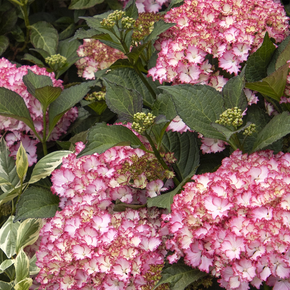
- Spectacular mophead blooms open pale green, transition to pure white, then develop a soft pink blush - offering months of evolving color from late spring through summer
- Compact, tidy deciduous shrub with scorch-resistant dark green foliage that turns rich coppery-bronze in fall for outstanding multi-season interest
- Sturdy, non-flopping stems hold blooms upright - ideal for fresh-cut arrangements with a vase life that can extend a month or more
- Repeat bloomer that flowers on both old and new wood, making it far more reliable and floriferous than standard bigleaf hydrangeas
Seaside Serenade Cape Lookout Hydrangea (Hydrangea macrophylla 'HORTMABLO' PP30268) is a refined, compact mophead hydrangea that delivers an extraordinary color show from late spring through late summer. Named in honor of Oregon's breathtaking Cape Lookout coastal preserve, this standout shrub produces exceptionally large, long-lasting flower heads that emerge in a soft pale green, evolve to pure white, and then gradually blush to a delicate light pink edged with hints of mint green as the season progresses - providing ever-changing beauty without ever looking tired or spent. Unlike many traditional bigleaf hydrangeas that bloom only on old wood and are prone to late-frost bud damage, Cape Lookout sets blooms on both old and new wood, ensuring a consistently full and showy summer display. The thick, dark green, glossy foliage is notably resistant to heat scorch and sun burn - a trait that sets it apart from many hydrangeas in warm climates - and transitions to a stunning coppery-bronze in autumn for dramatic fall color. Strong, upright stems keep the large flower heads held proudly aloft without staking or support, making this an equally superb choice for mixed landscape borders, foundation plantings, mass groupings, container gardens on the patio, or as a spectacular cut-flower specimen. Reaching a tidy, rounded form, Seaside Serenade Cape Lookout is a well-behaved, low-maintenance hydrangea perfectly suited to the Pacific Northwest and Northern California garden.
Plant Description
Seaside Serenade Cape Lookout is a deciduous bigleaf (mophead) hydrangea belonging to the Seaside Serenade series. Its large, rounded flower heads are composed of showy sterile florets that undergo a dramatic and prolonged color transformation - starting as soft pale green buds, opening to bright clean white, and then aging gracefully to a light pink blush with soft mint-green edges as the season winds down. The glossy, thick, dark green leaves are noticeably resistant to heat scorch and burning, a common frustration with standard mophead hydrangeas in hot summers. Stems are notably sturdy and upright, naturally holding the bold flower heads without flopping. In autumn, the foliage shifts to a rich coppery-bronze, adding a final burst of seasonal color before the plant goes dormant. The overall habit is neat, rounded, and compact - requiring little corrective maintenance to keep it looking its best.
Mature Size
| Attribute | Measurement |
|---|---|
| Mature Height | 3 to 4 feet |
| Mature Spread | 3 to 4 feet |
| Growth Rate | Fast |
| Plant Form | Rounded, multi-stemmed deciduous shrub |
| Clearance from Ground | Approximately 1 foot |
| Expected Lifespan | Approximately 20 years under ideal conditions |
Hardiness Zones
Seaside Serenade Cape Lookout Hydrangea is rated for USDA Hardiness Zones 5 through 9, making it an excellent choice for both the cooler mountain valleys of Southern Oregon and the mild coastal and inland regions of Northern California. It performs especially well in the Pacific Northwest's temperate climate, where summer afternoons remain relatively cool and winters are moist but not severely frigid. In the warmer end of its range (Zones 8-9), providing afternoon shade and consistent moisture is important for protecting blooms and foliage during summer heat. In colder microclimates, applying a generous layer of mulch around the root zone in late fall helps protect roots and buds through winter.
Sunlight Requirements
This hydrangea thrives in a site that receives morning sun with protection from hot afternoon rays. Dappled or filtered light throughout the day is also well tolerated. While it can handle more sun than many mophead hydrangeas - particularly when moisture is consistent - direct afternoon sun in hot, reflective spots (such as against a south-facing white wall) should be avoided, as it can stress the plant even with its superior scorch resistance. In coastal climates like those common to Southern Oregon and Northern California, a site with 4 to 6 hours of morning sun and light afternoon shade is ideal for maximum bloom production and the richest foliage color.
- Ideal: Morning sun with afternoon shade
- Acceptable: Dappled light or filtered sun all day
- Avoid: Intense, direct afternoon sun in hot, dry locations
- Shade: Too much deep shade reduces flowering
Soil and pH Preferences
Seaside Serenade Cape Lookout performs best in moist, well-drained, humus-rich soil. It is not particularly fussy about soil type but has a clear preference for acidic conditions. Like all bigleaf hydrangeas, soil pH influences flower color in varieties that are susceptible to color shifting - in strongly acidic soils (pH 5.5 and below) with available aluminum, flowers on susceptible cultivars tend toward blue; in more neutral to alkaline soils (pH 6.5 and above), flowers lean pink. Cape Lookout's blooms naturally express soft pink tones, and this color is most vivid in slightly acidic to near-neutral soil. Amending with organic matter such as compost improves both drainage and moisture retention. Avoid waterlogged or compacted soils, which can lead to root rot.
| Soil Quality | Recommendation |
|---|---|
| Texture | Loamy, well-drained; amended with compost |
| Drainage | Moist but never waterlogged |
| Preferred pH Range | 5.5 to 6.5 (slightly acidic to near-neutral) |
| Organic Matter | High; amend with compost at planting |
Watering Guide
Consistent moisture is key to the best performance from Cape Lookout Hydrangea. During the first growing season after planting, water deeply and regularly to help establish a strong root system. Once established, water as needed to maintain evenly moist soil - never allowing prolonged dryness, especially during bud development and active bloom. Hydrangeas are notably sensitive to drought stress, which can cause wilting and bud blast. Applying a 2 to 3 inch layer of organic mulch around the root zone helps retain soil moisture, moderate soil temperature, and reduce the frequency of watering. Avoid overhead watering directly on the flower heads if possible, as wet blooms can be more susceptible to fungal spotting. During the heat of summer in Northern California and inland Southern Oregon, more frequent watering may be needed than in cooler coastal areas.
Fertilizing
Feed Seaside Serenade Cape Lookout once in early spring as new growth emerges, using a balanced, slow-release fertilizer formulated for flowering shrubs or acid-loving plants. A fertilizer with an analysis such as 10-10-10 or one specifically labeled for hydrangeas and azaleas works well. Avoid over-fertilizing with high-nitrogen products, which can promote excessive leafy growth at the expense of flowers. A second, lighter application can be made in early summer if growth seems sluggish, but stop fertilizing by mid-summer to allow the plant to begin hardening off for winter. Topdressing with compost each spring also improves soil structure and provides a slow, steady supply of nutrients. Do not fertilize in late summer or fall, as this can stimulate tender new growth that is vulnerable to frost damage.
Pruning and Maintenance
Because Cape Lookout blooms on both old and new wood, it offers more pruning flexibility than traditional bigleaf hydrangeas that bloom only on the previous year's growth. However, thoughtful pruning still maximizes the flower display:
- Deadheading: Remove spent blooms after they fade to tidy the plant and encourage continued flowering through the season.
- Light shaping: After the main flush of bloom, lightly shape the plant to maintain its naturally tidy, rounded form.
- Winter cleanup: Leave old flower heads on through fall and early winter - they provide visual interest and some frost protection for the buds below. Remove them in late winter or very early spring.
- Dead wood removal: In late spring, once new leaves begin to unfurl, identify and remove any dead or winter-damaged stems by cutting them back to healthy, live wood.
- Hard rejuvenation pruning: Plants can be cut back to 12 to 15 inches in late fall or early spring if needed, provided a generous mulch layer is applied over the root zone in fall for protection.
- Avoid: Heavy pruning in mid to late spring, which removes developing buds and eliminates the season's flower display.
Planting Instructions
- Choose a location with morning sun and afternoon shade, with well-drained but moisture-retentive soil.
- Dig a planting hole two to three times as wide as the root ball and approximately the same depth, so the top of the root ball sits at or just slightly above the surrounding soil level.
- Amend the backfill soil generously with compost or other organic matter to improve drainage and nutrient content.
- Remove the plant from its container, gently loosen any circling roots, and place it in the center of the hole.
- Backfill with the amended soil, firming gently as you go to eliminate air pockets.
- Water thoroughly at planting and again every few days for the first several weeks to help the root system establish.
- Apply a 2 to 3 inch layer of organic mulch (such as bark chips or shredded leaves) around the root zone, keeping the mulch a few inches away from the base of the stems to prevent rot.
- For best results, plant in spring or early fall when temperatures are moderate and the risk of heat stress is lower.
Seasonal Interest
| Season | What to Expect |
|---|---|
| Spring | Fresh dark green foliage emerges; distinctive pale green flower buds begin to develop on sturdy stems |
| Late Spring - Early Summer | Large mophead blooms open in soft pale green, quickly transitioning to crisp, pure white |
| Midsummer | Blooms at their peak - bold white heads provide a luminous focal point; repeat blooming continues from new growth |
| Late Summer | Flowers age gracefully to soft pink blushed with hints of mint green; excellent for cutting at this stage |
| Fall | Glossy foliage transitions to rich coppery-bronze; dried flower heads add texture and structure to the garden |
| Winter | Attractive dried stems and lingering flower heads provide off-season structure in the dormant garden |
Landscape Uses
Seaside Serenade Cape Lookout is a versatile garden shrub that fits beautifully into a wide range of landscape settings. Its compact size and tidy habit make it especially useful in smaller modern gardens where space is limited but impact is paramount.
- Foundation planting: Its restrained mature size fits neatly under windows and along the base of structures without overgrowing its space.
- Mixed shrub border: Use as a mid-border anchor alongside other flowering shrubs for layered seasonal interest.
- Mass planting: Planted in drifts of three or more, it creates a sweeping statement of white and pink that is stunning from a distance.
- Specimen or accent plant: Its dramatic bloom display makes it a natural focal point when planted alone in a prominent garden spot.
- Container gardening: Strong stems and compact form make it excellent as a "thriller" centerpiece in large patio containers.
- Cutting garden: Blooms at every stage - green, white, and pink - are superb for fresh or dried floral arrangements.
- Woodland garden edge: Naturalistic settings with dappled light and humus-rich soil suit it perfectly.
- Coastal garden: Tolerates the moderate maritime conditions common in Southern Oregon and Northern California coastal landscapes.
- Urban garden: Highly tolerant of urban pollution; thrives in city garden beds and courtyards.
Companion Plants
Cape Lookout Hydrangea pairs beautifully with plants that share its preference for partial shade, consistent moisture, and acidic to slightly acidic soil. Consider combining it with the following for a cohesive, multi-season display:
- Hostas - Bold textured foliage in blue, gold, or variegated forms creates a lush contrast beneath the hydrangea's flower heads
- Japanese Forest Grass (Hakonechloa macra) - Arching golden or green-striped foliage adds graceful movement and soft color contrast
- Astilbe - Feathery plumes in pink, white, or red bloom alongside the hydrangea and share its love of moisture and shade
- Ferns (Athyrium, Dryopteris) - Fine-textured, airy fronds provide a beautiful foil to the hydrangea's bold flower heads and coarse leaves
- Heuchera (Coral Bells) - Colorful, low-growing foliage in burgundy, caramel, or lime fills in at the base and extends seasonal interest
- Rhododendrons and Azaleas - Share soil preferences and complement with spring blooms before the hydrangea takes center stage
- Japanese Pieris (Pieris japonica) - Evergreen structure and early spring flowers provide year-round framework around the deciduous hydrangea
- Bleeding Heart (Lamprocapnos spectabilis) - Elegant spring blooms and delicate foliage contrast beautifully before the hydrangea comes into full leaf
Container Growing
Seaside Serenade Cape Lookout makes an outstanding container plant thanks to its compact size, sturdy non-flopping stems, and spectacular long-lasting blooms. It serves as an ideal "thriller" centerpiece in large patio pots, surrounded by trailing and mounding companions. For best results in containers:
- Choose a large container (at least 15 to 18 inches in diameter) with adequate drainage holes
- Use a high-quality, well-draining potting mix enriched with compost
- Container-grown plants dry out faster than in-ground plants - check moisture daily in summer and water thoroughly when the top inch of soil feels dry
- Apply a slow-release fertilizer at planting and supplement with a liquid fertilizer every 4 to 6 weeks through the growing season
- In Southern Oregon and Northern California, containers can often remain outdoors year-round in Zones 8-9; in colder locations or harsh winters, move to a sheltered but unheated garage or porch to protect roots from freezing
- Repot every 2 to 3 years or when the plant becomes root-bound, refreshing the potting mix at the same time
- Note that flower color and timing may vary slightly from in-ground plants due to container soil conditions and temperature fluctuations
Pests and Diseases
Seaside Serenade Cape Lookout is considered a relatively trouble-free hydrangea with no significant pest or disease issues noted under normal growing conditions. However, as with all hydrangeas, a few issues can occasionally arise:
- Powdery mildew: Can occur in conditions of poor air circulation and high humidity. Promote airflow by not overcrowding plants and avoiding overhead irrigation. Select resistant varieties and treat with a fungicide if needed.
- Cercospora leaf spot: Small purple or brown spots on leaves, most common in hot, humid summers. Remove affected leaves and avoid wetting foliage when watering.
- Aphids: Occasionally cluster on new growth in spring. A strong jet of water or insecticidal soap spray provides effective control.
- Spider mites: Can appear in hot, dry conditions. Improve moisture levels and treat with miticide or insecticidal soap if infestations are heavy.
- Slugs and snails: May chew on young foliage in moist Pacific Northwest gardens. Use organic bait or physical barriers to protect young plants.
- Root rot (Phytophthora): Caused by waterlogged soil. Ensure excellent drainage and never allow the root zone to remain saturated for extended periods.
- Late frost damage: Swelling buds in early spring can be damaged by a late frost. Protect with floating row cover if a hard freeze is forecast after buds have broken.
Cut Flower Use and Drying
One of the most celebrated features of Seaside Serenade Cape Lookout is its exceptional performance as a cut flower. The large, sturdy flower heads hold up beautifully in fresh arrangements and can be harvested at multiple stages of their color progression for different effects:
- Fresh white stage: Cut when blooms have fully opened to pure white for crisp, classic floral arrangements. Recut stems at an angle and place immediately in water.
- Pink-blush stage: Blooms harvested as they develop their soft pink tones offer a romantic, aged quality in arrangements and have a vase life that can extend to a month or more.
- For drying: Harvest blooms at the pink or greenish-pink stage (late summer) when the petals feel slightly papery to the touch. Hang upside down in a warm, dry location with good air circulation, or simply place in a vase with a small amount of water and allow them to dry slowly in place - this method preserves shape and color beautifully.
- Sturdy stems reduce the need for additional support in arrangements, making them easier to work with than many other hydrangea varieties.
- Spectacular mophead blooms open pale green, transition to pure white, then develop a soft pink blush - offering months of evolving color from late spring through summer
- Compact, tidy deciduous shrub with scorch-resistant dark green foliage that turns rich coppery-bronze in fall for outstanding multi-season interest
- Sturdy, non-flopping stems hold blooms upright - ideal for fresh-cut arrangements with a vase life that can extend a month or more
- Repeat bloomer that flowers on both old and new wood, making it far more reliable and floriferous than standard bigleaf hydrangeas
Seaside Serenade Cape Lookout Hydrangea (Hydrangea macrophylla 'HORTMABLO' PP30268) is a refined, compact mophead hydrangea that delivers an extraordinary color show from late spring through late summer. Named in honor of Oregon's breathtaking Cape Lookout coastal preserve, this standout shrub produces exceptionally large, long-lasting flower heads that emerge in a soft pale green, evolve to pure white, and then gradually blush to a delicate light pink edged with hints of mint green as the season progresses - providing ever-changing beauty without ever looking tired or spent. Unlike many traditional bigleaf hydrangeas that bloom only on old wood and are prone to late-frost bud damage, Cape Lookout sets blooms on both old and new wood, ensuring a consistently full and showy summer display. The thick, dark green, glossy foliage is notably resistant to heat scorch and sun burn - a trait that sets it apart from many hydrangeas in warm climates - and transitions to a stunning coppery-bronze in autumn for dramatic fall color. Strong, upright stems keep the large flower heads held proudly aloft without staking or support, making this an equally superb choice for mixed landscape borders, foundation plantings, mass groupings, container gardens on the patio, or as a spectacular cut-flower specimen. Reaching a tidy, rounded form, Seaside Serenade Cape Lookout is a well-behaved, low-maintenance hydrangea perfectly suited to the Pacific Northwest and Northern California garden.
Plant Description
Seaside Serenade Cape Lookout is a deciduous bigleaf (mophead) hydrangea belonging to the Seaside Serenade series. Its large, rounded flower heads are composed of showy sterile florets that undergo a dramatic and prolonged color transformation - starting as soft pale green buds, opening to bright clean white, and then aging gracefully to a light pink blush with soft mint-green edges as the season winds down. The glossy, thick, dark green leaves are noticeably resistant to heat scorch and burning, a common frustration with standard mophead hydrangeas in hot summers. Stems are notably sturdy and upright, naturally holding the bold flower heads without flopping. In autumn, the foliage shifts to a rich coppery-bronze, adding a final burst of seasonal color before the plant goes dormant. The overall habit is neat, rounded, and compact - requiring little corrective maintenance to keep it looking its best.
Mature Size
| Attribute | Measurement |
|---|---|
| Mature Height | 3 to 4 feet |
| Mature Spread | 3 to 4 feet |
| Growth Rate | Fast |
| Plant Form | Rounded, multi-stemmed deciduous shrub |
| Clearance from Ground | Approximately 1 foot |
| Expected Lifespan | Approximately 20 years under ideal conditions |
Hardiness Zones
Seaside Serenade Cape Lookout Hydrangea is rated for USDA Hardiness Zones 5 through 9, making it an excellent choice for both the cooler mountain valleys of Southern Oregon and the mild coastal and inland regions of Northern California. It performs especially well in the Pacific Northwest's temperate climate, where summer afternoons remain relatively cool and winters are moist but not severely frigid. In the warmer end of its range (Zones 8-9), providing afternoon shade and consistent moisture is important for protecting blooms and foliage during summer heat. In colder microclimates, applying a generous layer of mulch around the root zone in late fall helps protect roots and buds through winter.
Sunlight Requirements
This hydrangea thrives in a site that receives morning sun with protection from hot afternoon rays. Dappled or filtered light throughout the day is also well tolerated. While it can handle more sun than many mophead hydrangeas - particularly when moisture is consistent - direct afternoon sun in hot, reflective spots (such as against a south-facing white wall) should be avoided, as it can stress the plant even with its superior scorch resistance. In coastal climates like those common to Southern Oregon and Northern California, a site with 4 to 6 hours of morning sun and light afternoon shade is ideal for maximum bloom production and the richest foliage color.
- Ideal: Morning sun with afternoon shade
- Acceptable: Dappled light or filtered sun all day
- Avoid: Intense, direct afternoon sun in hot, dry locations
- Shade: Too much deep shade reduces flowering
Soil and pH Preferences
Seaside Serenade Cape Lookout performs best in moist, well-drained, humus-rich soil. It is not particularly fussy about soil type but has a clear preference for acidic conditions. Like all bigleaf hydrangeas, soil pH influences flower color in varieties that are susceptible to color shifting - in strongly acidic soils (pH 5.5 and below) with available aluminum, flowers on susceptible cultivars tend toward blue; in more neutral to alkaline soils (pH 6.5 and above), flowers lean pink. Cape Lookout's blooms naturally express soft pink tones, and this color is most vivid in slightly acidic to near-neutral soil. Amending with organic matter such as compost improves both drainage and moisture retention. Avoid waterlogged or compacted soils, which can lead to root rot.
| Soil Quality | Recommendation |
|---|---|
| Texture | Loamy, well-drained; amended with compost |
| Drainage | Moist but never waterlogged |
| Preferred pH Range | 5.5 to 6.5 (slightly acidic to near-neutral) |
| Organic Matter | High; amend with compost at planting |
Watering Guide
Consistent moisture is key to the best performance from Cape Lookout Hydrangea. During the first growing season after planting, water deeply and regularly to help establish a strong root system. Once established, water as needed to maintain evenly moist soil - never allowing prolonged dryness, especially during bud development and active bloom. Hydrangeas are notably sensitive to drought stress, which can cause wilting and bud blast. Applying a 2 to 3 inch layer of organic mulch around the root zone helps retain soil moisture, moderate soil temperature, and reduce the frequency of watering. Avoid overhead watering directly on the flower heads if possible, as wet blooms can be more susceptible to fungal spotting. During the heat of summer in Northern California and inland Southern Oregon, more frequent watering may be needed than in cooler coastal areas.
Fertilizing
Feed Seaside Serenade Cape Lookout once in early spring as new growth emerges, using a balanced, slow-release fertilizer formulated for flowering shrubs or acid-loving plants. A fertilizer with an analysis such as 10-10-10 or one specifically labeled for hydrangeas and azaleas works well. Avoid over-fertilizing with high-nitrogen products, which can promote excessive leafy growth at the expense of flowers. A second, lighter application can be made in early summer if growth seems sluggish, but stop fertilizing by mid-summer to allow the plant to begin hardening off for winter. Topdressing with compost each spring also improves soil structure and provides a slow, steady supply of nutrients. Do not fertilize in late summer or fall, as this can stimulate tender new growth that is vulnerable to frost damage.
Pruning and Maintenance
Because Cape Lookout blooms on both old and new wood, it offers more pruning flexibility than traditional bigleaf hydrangeas that bloom only on the previous year's growth. However, thoughtful pruning still maximizes the flower display:
- Deadheading: Remove spent blooms after they fade to tidy the plant and encourage continued flowering through the season.
- Light shaping: After the main flush of bloom, lightly shape the plant to maintain its naturally tidy, rounded form.
- Winter cleanup: Leave old flower heads on through fall and early winter - they provide visual interest and some frost protection for the buds below. Remove them in late winter or very early spring.
- Dead wood removal: In late spring, once new leaves begin to unfurl, identify and remove any dead or winter-damaged stems by cutting them back to healthy, live wood.
- Hard rejuvenation pruning: Plants can be cut back to 12 to 15 inches in late fall or early spring if needed, provided a generous mulch layer is applied over the root zone in fall for protection.
- Avoid: Heavy pruning in mid to late spring, which removes developing buds and eliminates the season's flower display.
Planting Instructions
- Choose a location with morning sun and afternoon shade, with well-drained but moisture-retentive soil.
- Dig a planting hole two to three times as wide as the root ball and approximately the same depth, so the top of the root ball sits at or just slightly above the surrounding soil level.
- Amend the backfill soil generously with compost or other organic matter to improve drainage and nutrient content.
- Remove the plant from its container, gently loosen any circling roots, and place it in the center of the hole.
- Backfill with the amended soil, firming gently as you go to eliminate air pockets.
- Water thoroughly at planting and again every few days for the first several weeks to help the root system establish.
- Apply a 2 to 3 inch layer of organic mulch (such as bark chips or shredded leaves) around the root zone, keeping the mulch a few inches away from the base of the stems to prevent rot.
- For best results, plant in spring or early fall when temperatures are moderate and the risk of heat stress is lower.
Seasonal Interest
| Season | What to Expect |
|---|---|
| Spring | Fresh dark green foliage emerges; distinctive pale green flower buds begin to develop on sturdy stems |
| Late Spring - Early Summer | Large mophead blooms open in soft pale green, quickly transitioning to crisp, pure white |
| Midsummer | Blooms at their peak - bold white heads provide a luminous focal point; repeat blooming continues from new growth |
| Late Summer | Flowers age gracefully to soft pink blushed with hints of mint green; excellent for cutting at this stage |
| Fall | Glossy foliage transitions to rich coppery-bronze; dried flower heads add texture and structure to the garden |
| Winter | Attractive dried stems and lingering flower heads provide off-season structure in the dormant garden |
Landscape Uses
Seaside Serenade Cape Lookout is a versatile garden shrub that fits beautifully into a wide range of landscape settings. Its compact size and tidy habit make it especially useful in smaller modern gardens where space is limited but impact is paramount.
- Foundation planting: Its restrained mature size fits neatly under windows and along the base of structures without overgrowing its space.
- Mixed shrub border: Use as a mid-border anchor alongside other flowering shrubs for layered seasonal interest.
- Mass planting: Planted in drifts of three or more, it creates a sweeping statement of white and pink that is stunning from a distance.
- Specimen or accent plant: Its dramatic bloom display makes it a natural focal point when planted alone in a prominent garden spot.
- Container gardening: Strong stems and compact form make it excellent as a "thriller" centerpiece in large patio containers.
- Cutting garden: Blooms at every stage - green, white, and pink - are superb for fresh or dried floral arrangements.
- Woodland garden edge: Naturalistic settings with dappled light and humus-rich soil suit it perfectly.
- Coastal garden: Tolerates the moderate maritime conditions common in Southern Oregon and Northern California coastal landscapes.
- Urban garden: Highly tolerant of urban pollution; thrives in city garden beds and courtyards.
Companion Plants
Cape Lookout Hydrangea pairs beautifully with plants that share its preference for partial shade, consistent moisture, and acidic to slightly acidic soil. Consider combining it with the following for a cohesive, multi-season display:
- Hostas - Bold textured foliage in blue, gold, or variegated forms creates a lush contrast beneath the hydrangea's flower heads
- Japanese Forest Grass (Hakonechloa macra) - Arching golden or green-striped foliage adds graceful movement and soft color contrast
- Astilbe - Feathery plumes in pink, white, or red bloom alongside the hydrangea and share its love of moisture and shade
- Ferns (Athyrium, Dryopteris) - Fine-textured, airy fronds provide a beautiful foil to the hydrangea's bold flower heads and coarse leaves
- Heuchera (Coral Bells) - Colorful, low-growing foliage in burgundy, caramel, or lime fills in at the base and extends seasonal interest
- Rhododendrons and Azaleas - Share soil preferences and complement with spring blooms before the hydrangea takes center stage
- Japanese Pieris (Pieris japonica) - Evergreen structure and early spring flowers provide year-round framework around the deciduous hydrangea
- Bleeding Heart (Lamprocapnos spectabilis) - Elegant spring blooms and delicate foliage contrast beautifully before the hydrangea comes into full leaf
Container Growing
Seaside Serenade Cape Lookout makes an outstanding container plant thanks to its compact size, sturdy non-flopping stems, and spectacular long-lasting blooms. It serves as an ideal "thriller" centerpiece in large patio pots, surrounded by trailing and mounding companions. For best results in containers:
- Choose a large container (at least 15 to 18 inches in diameter) with adequate drainage holes
- Use a high-quality, well-draining potting mix enriched with compost
- Container-grown plants dry out faster than in-ground plants - check moisture daily in summer and water thoroughly when the top inch of soil feels dry
- Apply a slow-release fertilizer at planting and supplement with a liquid fertilizer every 4 to 6 weeks through the growing season
- In Southern Oregon and Northern California, containers can often remain outdoors year-round in Zones 8-9; in colder locations or harsh winters, move to a sheltered but unheated garage or porch to protect roots from freezing
- Repot every 2 to 3 years or when the plant becomes root-bound, refreshing the potting mix at the same time
- Note that flower color and timing may vary slightly from in-ground plants due to container soil conditions and temperature fluctuations
Pests and Diseases
Seaside Serenade Cape Lookout is considered a relatively trouble-free hydrangea with no significant pest or disease issues noted under normal growing conditions. However, as with all hydrangeas, a few issues can occasionally arise:
- Powdery mildew: Can occur in conditions of poor air circulation and high humidity. Promote airflow by not overcrowding plants and avoiding overhead irrigation. Select resistant varieties and treat with a fungicide if needed.
- Cercospora leaf spot: Small purple or brown spots on leaves, most common in hot, humid summers. Remove affected leaves and avoid wetting foliage when watering.
- Aphids: Occasionally cluster on new growth in spring. A strong jet of water or insecticidal soap spray provides effective control.
- Spider mites: Can appear in hot, dry conditions. Improve moisture levels and treat with miticide or insecticidal soap if infestations are heavy.
- Slugs and snails: May chew on young foliage in moist Pacific Northwest gardens. Use organic bait or physical barriers to protect young plants.
- Root rot (Phytophthora): Caused by waterlogged soil. Ensure excellent drainage and never allow the root zone to remain saturated for extended periods.
- Late frost damage: Swelling buds in early spring can be damaged by a late frost. Protect with floating row cover if a hard freeze is forecast after buds have broken.
Cut Flower Use and Drying
One of the most celebrated features of Seaside Serenade Cape Lookout is its exceptional performance as a cut flower. The large, sturdy flower heads hold up beautifully in fresh arrangements and can be harvested at multiple stages of their color progression for different effects:
- Fresh white stage: Cut when blooms have fully opened to pure white for crisp, classic floral arrangements. Recut stems at an angle and place immediately in water.
- Pink-blush stage: Blooms harvested as they develop their soft pink tones offer a romantic, aged quality in arrangements and have a vase life that can extend to a month or more.
- For drying: Harvest blooms at the pink or greenish-pink stage (late summer) when the petals feel slightly papery to the touch. Hang upside down in a warm, dry location with good air circulation, or simply place in a vase with a small amount of water and allow them to dry slowly in place - this method preserves shape and color beautifully.
- Sturdy stems reduce the need for additional support in arrangements, making them easier to work with than many other hydrangea varieties.