
Zoom the image with the mouse
Seaside Serenade Cape May Hydrangea - 2 Gallon
SKU:
2054320
UPC:
014949434123
$44.99
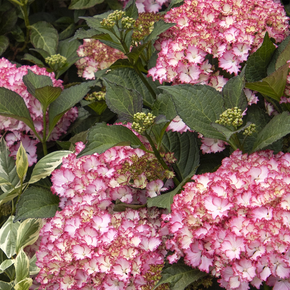
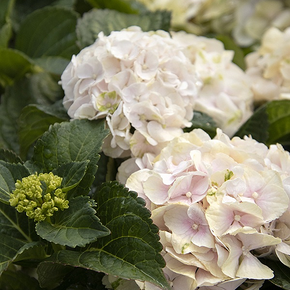
- Spectacular re-blooming lacecap flowers shift from bright pink to rich purple or blue depending on soil acidity, providing a long-lasting and ever-changing color show from late spring through summer.
- Extra-thick, sturdy stems hold the oversized lacecap blooms upright all season, making them an outstanding choice for fresh-cut or dried floral arrangements.
- Compact, mounded form stays naturally tidy at 2-3 feet tall and wide, fitting perfectly in borders, containers, and smaller garden spaces without heavy pruning.
- Handsome serrated deep green foliage takes on striking red and burgundy tones in sun and as the season progresses, extending ornamental interest well beyond the bloom period.
Seaside Serenade Cape May Hydrangea (Hydrangea macrophylla subsp. serrata 'SMHSMAKF2MT', PP #30,020) is a captivating compact deciduous shrub that delivers extraordinary color, refined texture, and dependable performance across a wide range of gardens. Introduced in 2017, this mountain hydrangea hybrid stands out for its impressively large lacecap flower clusters carried on exceptionally strong, thick stems that never droop under the weight of the blooms. The flower color is genuinely transformative: in neutral to alkaline soils the florets emerge a vivid bright pink, developing hints of lavender and purple as they mature, while more acidic soils coax the blooms toward rich purple or deep blue tones. The re-blooming habit, producing flowers on both old and new wood, ensures a continuous display of color from late spring well into summer. Deeply serrated, dark green leaves provide a lush, bold backdrop for the blooms and develop beautiful red and burgundy tints in sunlight and as they age into fall. Deer and rabbit resistant, low maintenance, and attractive to butterflies and pollinators, Seaside Serenade Cape May is an exceptional choice for mixed borders, woodland garden edges, hedges, cottage-style landscapes, and patio containers throughout USDA Zones 4-9.
Plant Description
Seaside Serenade Cape May is a compact, mounded deciduous shrub belonging to the mountain hydrangea group (Hydrangea macrophylla subsp. serrata). It is distinguished by its unusually large lacecap flower heads, which feature a ring of showy sterile florets surrounding a center cluster of fertile florets. This combination creates an elegant, delicate appearance quite different from the dense mophead hydrangeas. Blooms emerge bright pink to soft lavender-white in neutral soils and transition toward deep purple or vivid blue in acidic conditions, making every planting a unique display shaped by the soil it grows in. The foliage is also ornamentally significant: the serrated, pointed leaves are a rich deep green through spring and summer, then develop attractive red and burgundy tones in sunlight and as the season draws to a close. The plant re-blooms on both old and new wood, offering a more reliable and extended flowering period than many traditional bigleaf hydrangeas. It was bred for compact growth, strong stems, and dependable performance across a variety of climates and was introduced as part of the Seaside Serenade series in 2017.
Mature Size
| Characteristic | Details |
|---|---|
| Mature Height | 2 to 3 feet |
| Mature Spread | 2 to 3 feet |
| Growth Habit | Compact, upright spreading, mounded |
| Growth Rate | Medium to fast under ideal conditions |
| Longevity | Expected lifespan of approximately 30 years with proper care |
| Spacing | Space plants 2 to 3 feet apart |
Hardiness Zones
Seaside Serenade Cape May Hydrangea is rated for USDA Hardiness Zones 4 through 9, making it one of the hardier lacecap hydrangeas available. It is well suited to the variable climates of Southern Oregon and Northern California, tolerating cold winters with proper mulching and performing beautifully in the mild, moist conditions typical of the region. In colder microclimates or areas with hard freezes, applying a generous layer of mulch around the root zone in late fall will help protect the crown and root system and improve spring re-growth and flower bud survival.
Sunlight Requirements
This hydrangea performs best in partial shade, ideally receiving bright morning sun and protection from hot, intense afternoon sun. Morning sun encourages strong flowering while afternoon shade helps prevent leaf scorch and keeps blooms looking their best longer. It can tolerate more sun in cooler coastal climates, but should be kept away from hot, dry locations with direct afternoon sun or reflected heat, such as against a south-facing white wall. In deeper shade, the plant will still grow and produce foliage but flower production may be reduced. Dappled light beneath high-canopy trees is also a very suitable placement.
- Ideal: Morning sun, afternoon shade (4-6 hours of direct morning light)
- Tolerated: Full shade in cool climates with reduced flowering
- Avoid: Hot direct afternoon sun, reflected heat from walls or pavement
Soil and pH Preferences
Seaside Serenade Cape May grows in a wide range of soil types including clay, loam, and sandy soils, but it has a strong preference for moist, fertile, well-drained soils rich in organic matter. The single most dramatic influence on this plant's ornamental character is soil pH, which directly controls flower color:
- Alkaline to neutral soils (pH 6.5 and above): Blooms will be bright pink to soft pink-lavender.
- Slightly acidic soils (pH 6.0-6.5): Blooms will show hints of purple and blue mixed with pink.
- Acidic soils (pH 5.5 and below): Blooms will develop rich purple or deep blue tones; the most acidic soils can produce solidly purple flowers.
To shift blooms toward blue or purple, amend soil with sulfur or apply aluminum sulfate. To encourage pink tones, add garden lime to raise pH. Amending with compost at planting enriches the soil structure and supports healthy root development. A soil test prior to planting is recommended to understand your starting pH and plan amendments accordingly.
Watering Guide
Consistent moisture is key to keeping Seaside Serenade Cape May Hydrangea healthy and blooming abundantly. Hydrangeas are moderately thirsty shrubs and should not be allowed to dry out completely, especially during the heat of summer.
- First growing season: Water deeply and regularly to help the plant establish an extensive root system. Aim to keep the soil consistently moist but never waterlogged.
- Established plants: Water regularly during the growing season, particularly during dry or hot spells. Deeply water 2-3 times per week in summer heat rather than frequent shallow watering.
- Signs of drought stress: Wilting in the morning (not just afternoon) is a sign the plant needs water immediately.
- Mulching: Apply a 2-3 inch layer of organic mulch such as shredded bark or compost around the root zone to conserve soil moisture, moderate soil temperature, and reduce watering frequency.
- Avoid: Overhead watering directly onto blooms, which can cause spotting. Water at the base of the plant when possible.
Fertilizing
Feed Seaside Serenade Cape May regularly during the growing season to support vigorous growth and prolific flowering. Because this plant's flower color is pH-dependent, the type of fertilizer used can influence bloom color as well.
- Timing: Begin fertilizing in early spring as new growth emerges and continue through midsummer. Avoid fertilizing in late summer or fall, as this can stimulate tender new growth that is vulnerable to early frost damage.
- Product type: Use a balanced, slow-release fertilizer formulated for acid-loving plants, or a fertilizer with a formula such as 10-10-10 or 12-4-8. Fertilizers containing ammonium sulfate will gently lower soil pH and encourage bluer blooms over time.
- Application rate: Follow label directions carefully. Over-fertilizing, especially with high-nitrogen products, can result in lush foliage at the expense of flowers.
- Color manipulation: To encourage blue or purple blooms, apply aluminum sulfate or use a fertilizer that acidifies the soil. To maintain pink blooms in naturally acidic soils, apply garden lime and use a fertilizer that does not contain aluminum.
- Organic options: Compost, composted manure, and cottonseed meal are excellent organic choices that enrich the soil while gently supporting an acidic pH.
Pruning and Maintenance
One of the most important aspects of caring for Seaside Serenade Cape May is understanding when and how to prune, since improper pruning can sacrifice flowers. This cultivar blooms on both old wood (stems from the previous year) and new wood (current season's growth), giving it greater flexibility than traditional bigleaf hydrangeas.
- Primary pruning time: Prune to shape immediately after flowering in midsummer. This allows the plant to set new buds on both old and new wood for the following season without disrupting the current bloom cycle.
- Spring cleanup: In early spring, remove any stems that were damaged or killed back by winter cold. Cut these back to healthy wood just above a live bud or node.
- Deadheading: Spent flower heads can be removed to tidy the plant, or left on through winter as they provide some visual interest and help protect developing buds from light frost.
- Avoid: Heavy pruning in late summer, fall, or early spring before growth begins, as this risks removing the old-wood flower buds.
- General tidiness: This is a naturally low-maintenance shrub that rarely requires hard rejuvenation pruning. Light shaping annually is typically all that is needed to keep it looking its best.
Planting Instructions
- Choose the right location: Select a spot with morning sun and afternoon shade, protected from hot, drying winds. Avoid low-lying frost pockets and areas with reflected afternoon heat.
- Prepare the soil: Dig a hole 2-3 times as wide as the root ball and equal in depth. Amend the backfill with compost or well-aged organic matter to improve drainage and fertility. If adjusting soil pH, incorporate sulfur or lime as needed based on a soil test.
- Plant at the correct depth: Set the plant so the top of the root ball is level with or slightly above the surrounding soil. Planting too deep can cause crown rot.
- Backfill and firm: Fill the hole with amended soil, gently firming it around the roots to eliminate air pockets. Do not compact the soil heavily.
- Water thoroughly: Water deeply immediately after planting to settle the soil and eliminate air pockets around the roots.
- Mulch: Apply a 2-3 inch layer of organic mulch around the plant, keeping it several inches away from the main stems to discourage rot and pests.
- Ongoing establishment care: Water deeply and regularly for the first full growing season. Avoid heavy fertilization in the first few weeks after planting to allow the roots to settle without stress.
Flower Color and Soil pH Guide
One of the most fascinating features of Seaside Serenade Cape May is the ability to actively influence and customize flower color through soil management. The availability of aluminum ions in the soil — which is controlled by pH — determines whether the blooms express pink, lavender, purple, or blue pigmentation.
| Soil pH | Flower Color | How to Achieve |
|---|---|---|
| Above 7.0 (alkaline) | Bright pink | Add dolomitic lime or garden lime to raise pH |
| 6.5 to 7.0 (neutral) | Pink to soft pink-lavender | No amendment needed in most soils |
| 6.0 to 6.5 (slightly acidic) | Pink with purple-blue overtones | Add a small amount of sulfur or aluminum sulfate |
| 5.5 to 6.0 (moderately acidic) | Rich purple to blue-purple | Apply aluminum sulfate at recommended label rates |
| Below 5.5 (strongly acidic) | Deep blue to solid purple | Acidify with sulfur; maintain with acid-forming fertilizer |
Note: Flower color change is a gradual process and may take a full growing season or more to fully respond to pH amendments. Always follow product label rates and retest soil annually.
Landscape Uses
The compact size, exceptional bloom display, attractive foliage, and low-maintenance nature of Seaside Serenade Cape May make it one of the most versatile shrubs available for home landscapes. Ideal applications include:
- Mixed shrub and perennial borders: Its bold lacecap blooms and rich foliage provide excellent contrast and color alongside other shade-tolerant plants.
- Foundation plantings: The naturally tidy, mounded form is well-suited for planting near homes and structures where it won't outgrow its space.
- Mass plantings: Grouped in threes or fives, it creates a stunning sweep of color and is very effective as a seasonal focal point.
- Hedges and screens: Can be used as an informal low hedge or seasonal screening element along walkways and property edges.
- Woodland and shade gardens: Thrives under the high, filtered canopy of deciduous trees in naturalistic garden settings.
- Cottage and coastal gardens: Its relaxed, graceful blooms evoke a timeless cottage-garden aesthetic and are perfectly at home in coastal landscapes.
- Container planting: Well suited for large patio pots and planters where its upright habit serves as an elegant "thriller" element.
- Cutting garden: Excellent for fresh-cut flower arrangements and dried floral displays.
Container Growing
Seaside Serenade Cape May adapts very well to container culture, making it an excellent choice for patios, decks, and entryways where in-ground planting is not possible. When growing in a container, keep the following in mind:
- Container size: Choose a pot with a minimum diameter of 14-18 inches with excellent drainage holes. Larger containers retain moisture more evenly and reduce the frequency of watering needed.
- Potting mix: Use a high-quality, moisture-retentive potting mix amended with compost. A mix formulated for acid-loving plants is ideal if you want to encourage blue or purple blooms.
- Watering: Container plants dry out much faster than in-ground plants, especially in warm weather. Check soil moisture daily in summer and water thoroughly when the top inch of soil feels dry.
- Fertilizing: Feed container-grown plants with a slow-release, balanced fertilizer at planting time and supplement with a liquid fertilizer every 4-6 weeks through the growing season.
- Overwintering: In areas with cold winters, move containers to a protected but cool and unheated space such as a garage or shed during the coldest months to protect the roots from freezing. Allow the plant to go dormant naturally before moving it.
- Repotting: Every 2-3 years, repot into a slightly larger container with fresh potting mix to refresh nutrients and prevent the plant from becoming root-bound.
Companion Plants
Seaside Serenade Cape May pairs beautifully with other shade-tolerant and moisture-loving plants. Consider these companion options for a cohesive and visually balanced planting:
- Hostas: Their bold, architectural foliage provides a striking contrast to the fine-textured lacecap blooms and thrives under the same partial shade conditions.
- Astilbe: Feathery plumes in pink, red, and white complement the lacecap flowers and share a preference for moist, rich, acidic soils.
- Ferns: The soft, airy texture of ferns such as Japanese painted fern or autumn fern creates an elegant woodland backdrop.
- Heuchera (Coral Bells): Colorful foliage in burgundy, caramel, or lime green provides year-round color and visual contrast at the base of the shrub.
- Hellebores: Early-season blooms bridge the gap before the hydrangea comes into flower and thrive in the same dappled shade conditions.
- Rhododendrons and Azaleas: Share the same preference for acidic, well-drained soils and create a layered woodland planting when combined with Cape May.
- Japanese Forest Grass (Hakonechloa): Graceful, arching golden or variegated foliage weaves beautifully around the base of the shrub.
- Bleeding Heart (Dicentra): Delicate spring flowers and ferny foliage complement the early flush of hydrangea blooms in late spring.
Pests and Diseases
Seaside Serenade Cape May is generally a robust and low-maintenance shrub with few serious pest or disease problems when grown in appropriate conditions. Common issues to watch for include:
- Powdery mildew: A fungal issue that can appear as a white, powdery coating on leaves during periods of poor air circulation or humid weather. Improve spacing, avoid overhead watering, and apply a fungicide labeled for powdery mildew if necessary. This cultivar has reasonable disease resistance relative to older hydrangea varieties.
- Leaf spot: Fungal or bacterial leaf spots can develop in wet conditions. Remove and dispose of affected leaves and avoid wetting foliage when watering.
- Aphids: Soft-bodied insects that cluster on new growth. A strong spray of water from a hose or an application of insecticidal soap will effectively control light infestations.
- Spider mites: More common during hot, dry conditions. Keep plants well-watered and use insecticidal soap or horticultural oil if infestations develop.
- Root rot: Caused by poorly drained or overly wet soil. Ensure good drainage at planting and avoid overwatering.
- Deer and rabbits: This cultivar is noted for being deer and rabbit resistant, making it a good choice for gardens where browsing wildlife is a concern.
The best defense against pests and diseases is a healthy, well-sited plant. Proper soil preparation, appropriate watering, good air circulation, and avoiding overhead irrigation will prevent the majority of problems before they start.
Seasonal Interest
Seaside Serenade Cape May provides multi-season ornamental interest throughout the year:
- Spring: Fresh, serrated deep green leaves emerge, giving the garden renewed life. Early flower buds begin forming on new growth.
- Late Spring to Early Summer: The first flush of large lacecap flower clusters appears, with color ranging from bright pink to purple-blue depending on soil pH. The re-blooming habit can extend this display significantly.
- Midsummer: Peak bloom period. Oversized lacecap flower heads on strong, upright stems create a spectacular show of color.
- Late Summer: Blooms mature and begin to dry on the plant. Dried flower heads take on attractive papery textures and muted antique tones of parchment, green, and mauve.
- Fall: Deep green foliage develops rich red and burgundy tones, particularly on sun-exposed portions of the plant, providing striking fall color. Dried flower heads remain ornamental.
- Winter: After leaf drop, the attractive branching structure and persistent dried flower heads provide subtle winter garden interest. Leaving the spent blooms through winter also helps protect developing buds from light frosts.
Wildlife Value
Seaside Serenade Cape May Hydrangea offers meaningful value to garden wildlife, particularly pollinators. The lacecap flower structure, which features fertile florets at the center surrounded by showy sterile florets, is especially pollinator-friendly compared to fully double mophead hydrangeas because the fertile florets are openly accessible to insects.
- Butterflies: The open, accessible fertile florets attract a variety of butterfly species, making this a welcome addition to butterfly gardens.
- Bees and native pollinators: Bumblebees, honeybees, and native solitary bees readily visit the fertile florets for nectar and pollen throughout the bloom season.
- Birds: Dense branching provides shelter and nesting opportunities for small songbirds. Dried seed heads can also provide limited winter food for finches and sparrows.
- Deer and rabbit resistance: While providing value for beneficial wildlife, this cultivar is noted to be resistant to browsing by deer and rabbits, reducing the need for protective measures in gardens where these animals are present.
- Spectacular re-blooming lacecap flowers shift from bright pink to rich purple or blue depending on soil acidity, providing a long-lasting and ever-changing color show from late spring through summer.
- Extra-thick, sturdy stems hold the oversized lacecap blooms upright all season, making them an outstanding choice for fresh-cut or dried floral arrangements.
- Compact, mounded form stays naturally tidy at 2-3 feet tall and wide, fitting perfectly in borders, containers, and smaller garden spaces without heavy pruning.
- Handsome serrated deep green foliage takes on striking red and burgundy tones in sun and as the season progresses, extending ornamental interest well beyond the bloom period.
Seaside Serenade Cape May Hydrangea (Hydrangea macrophylla subsp. serrata 'SMHSMAKF2MT', PP #30,020) is a captivating compact deciduous shrub that delivers extraordinary color, refined texture, and dependable performance across a wide range of gardens. Introduced in 2017, this mountain hydrangea hybrid stands out for its impressively large lacecap flower clusters carried on exceptionally strong, thick stems that never droop under the weight of the blooms. The flower color is genuinely transformative: in neutral to alkaline soils the florets emerge a vivid bright pink, developing hints of lavender and purple as they mature, while more acidic soils coax the blooms toward rich purple or deep blue tones. The re-blooming habit, producing flowers on both old and new wood, ensures a continuous display of color from late spring well into summer. Deeply serrated, dark green leaves provide a lush, bold backdrop for the blooms and develop beautiful red and burgundy tints in sunlight and as they age into fall. Deer and rabbit resistant, low maintenance, and attractive to butterflies and pollinators, Seaside Serenade Cape May is an exceptional choice for mixed borders, woodland garden edges, hedges, cottage-style landscapes, and patio containers throughout USDA Zones 4-9.
Plant Description
Seaside Serenade Cape May is a compact, mounded deciduous shrub belonging to the mountain hydrangea group (Hydrangea macrophylla subsp. serrata). It is distinguished by its unusually large lacecap flower heads, which feature a ring of showy sterile florets surrounding a center cluster of fertile florets. This combination creates an elegant, delicate appearance quite different from the dense mophead hydrangeas. Blooms emerge bright pink to soft lavender-white in neutral soils and transition toward deep purple or vivid blue in acidic conditions, making every planting a unique display shaped by the soil it grows in. The foliage is also ornamentally significant: the serrated, pointed leaves are a rich deep green through spring and summer, then develop attractive red and burgundy tones in sunlight and as the season draws to a close. The plant re-blooms on both old and new wood, offering a more reliable and extended flowering period than many traditional bigleaf hydrangeas. It was bred for compact growth, strong stems, and dependable performance across a variety of climates and was introduced as part of the Seaside Serenade series in 2017.
Mature Size
| Characteristic | Details |
|---|---|
| Mature Height | 2 to 3 feet |
| Mature Spread | 2 to 3 feet |
| Growth Habit | Compact, upright spreading, mounded |
| Growth Rate | Medium to fast under ideal conditions |
| Longevity | Expected lifespan of approximately 30 years with proper care |
| Spacing | Space plants 2 to 3 feet apart |
Hardiness Zones
Seaside Serenade Cape May Hydrangea is rated for USDA Hardiness Zones 4 through 9, making it one of the hardier lacecap hydrangeas available. It is well suited to the variable climates of Southern Oregon and Northern California, tolerating cold winters with proper mulching and performing beautifully in the mild, moist conditions typical of the region. In colder microclimates or areas with hard freezes, applying a generous layer of mulch around the root zone in late fall will help protect the crown and root system and improve spring re-growth and flower bud survival.
Sunlight Requirements
This hydrangea performs best in partial shade, ideally receiving bright morning sun and protection from hot, intense afternoon sun. Morning sun encourages strong flowering while afternoon shade helps prevent leaf scorch and keeps blooms looking their best longer. It can tolerate more sun in cooler coastal climates, but should be kept away from hot, dry locations with direct afternoon sun or reflected heat, such as against a south-facing white wall. In deeper shade, the plant will still grow and produce foliage but flower production may be reduced. Dappled light beneath high-canopy trees is also a very suitable placement.
- Ideal: Morning sun, afternoon shade (4-6 hours of direct morning light)
- Tolerated: Full shade in cool climates with reduced flowering
- Avoid: Hot direct afternoon sun, reflected heat from walls or pavement
Soil and pH Preferences
Seaside Serenade Cape May grows in a wide range of soil types including clay, loam, and sandy soils, but it has a strong preference for moist, fertile, well-drained soils rich in organic matter. The single most dramatic influence on this plant's ornamental character is soil pH, which directly controls flower color:
- Alkaline to neutral soils (pH 6.5 and above): Blooms will be bright pink to soft pink-lavender.
- Slightly acidic soils (pH 6.0-6.5): Blooms will show hints of purple and blue mixed with pink.
- Acidic soils (pH 5.5 and below): Blooms will develop rich purple or deep blue tones; the most acidic soils can produce solidly purple flowers.
To shift blooms toward blue or purple, amend soil with sulfur or apply aluminum sulfate. To encourage pink tones, add garden lime to raise pH. Amending with compost at planting enriches the soil structure and supports healthy root development. A soil test prior to planting is recommended to understand your starting pH and plan amendments accordingly.
Watering Guide
Consistent moisture is key to keeping Seaside Serenade Cape May Hydrangea healthy and blooming abundantly. Hydrangeas are moderately thirsty shrubs and should not be allowed to dry out completely, especially during the heat of summer.
- First growing season: Water deeply and regularly to help the plant establish an extensive root system. Aim to keep the soil consistently moist but never waterlogged.
- Established plants: Water regularly during the growing season, particularly during dry or hot spells. Deeply water 2-3 times per week in summer heat rather than frequent shallow watering.
- Signs of drought stress: Wilting in the morning (not just afternoon) is a sign the plant needs water immediately.
- Mulching: Apply a 2-3 inch layer of organic mulch such as shredded bark or compost around the root zone to conserve soil moisture, moderate soil temperature, and reduce watering frequency.
- Avoid: Overhead watering directly onto blooms, which can cause spotting. Water at the base of the plant when possible.
Fertilizing
Feed Seaside Serenade Cape May regularly during the growing season to support vigorous growth and prolific flowering. Because this plant's flower color is pH-dependent, the type of fertilizer used can influence bloom color as well.
- Timing: Begin fertilizing in early spring as new growth emerges and continue through midsummer. Avoid fertilizing in late summer or fall, as this can stimulate tender new growth that is vulnerable to early frost damage.
- Product type: Use a balanced, slow-release fertilizer formulated for acid-loving plants, or a fertilizer with a formula such as 10-10-10 or 12-4-8. Fertilizers containing ammonium sulfate will gently lower soil pH and encourage bluer blooms over time.
- Application rate: Follow label directions carefully. Over-fertilizing, especially with high-nitrogen products, can result in lush foliage at the expense of flowers.
- Color manipulation: To encourage blue or purple blooms, apply aluminum sulfate or use a fertilizer that acidifies the soil. To maintain pink blooms in naturally acidic soils, apply garden lime and use a fertilizer that does not contain aluminum.
- Organic options: Compost, composted manure, and cottonseed meal are excellent organic choices that enrich the soil while gently supporting an acidic pH.
Pruning and Maintenance
One of the most important aspects of caring for Seaside Serenade Cape May is understanding when and how to prune, since improper pruning can sacrifice flowers. This cultivar blooms on both old wood (stems from the previous year) and new wood (current season's growth), giving it greater flexibility than traditional bigleaf hydrangeas.
- Primary pruning time: Prune to shape immediately after flowering in midsummer. This allows the plant to set new buds on both old and new wood for the following season without disrupting the current bloom cycle.
- Spring cleanup: In early spring, remove any stems that were damaged or killed back by winter cold. Cut these back to healthy wood just above a live bud or node.
- Deadheading: Spent flower heads can be removed to tidy the plant, or left on through winter as they provide some visual interest and help protect developing buds from light frost.
- Avoid: Heavy pruning in late summer, fall, or early spring before growth begins, as this risks removing the old-wood flower buds.
- General tidiness: This is a naturally low-maintenance shrub that rarely requires hard rejuvenation pruning. Light shaping annually is typically all that is needed to keep it looking its best.
Planting Instructions
- Choose the right location: Select a spot with morning sun and afternoon shade, protected from hot, drying winds. Avoid low-lying frost pockets and areas with reflected afternoon heat.
- Prepare the soil: Dig a hole 2-3 times as wide as the root ball and equal in depth. Amend the backfill with compost or well-aged organic matter to improve drainage and fertility. If adjusting soil pH, incorporate sulfur or lime as needed based on a soil test.
- Plant at the correct depth: Set the plant so the top of the root ball is level with or slightly above the surrounding soil. Planting too deep can cause crown rot.
- Backfill and firm: Fill the hole with amended soil, gently firming it around the roots to eliminate air pockets. Do not compact the soil heavily.
- Water thoroughly: Water deeply immediately after planting to settle the soil and eliminate air pockets around the roots.
- Mulch: Apply a 2-3 inch layer of organic mulch around the plant, keeping it several inches away from the main stems to discourage rot and pests.
- Ongoing establishment care: Water deeply and regularly for the first full growing season. Avoid heavy fertilization in the first few weeks after planting to allow the roots to settle without stress.
Flower Color and Soil pH Guide
One of the most fascinating features of Seaside Serenade Cape May is the ability to actively influence and customize flower color through soil management. The availability of aluminum ions in the soil — which is controlled by pH — determines whether the blooms express pink, lavender, purple, or blue pigmentation.
| Soil pH | Flower Color | How to Achieve |
|---|---|---|
| Above 7.0 (alkaline) | Bright pink | Add dolomitic lime or garden lime to raise pH |
| 6.5 to 7.0 (neutral) | Pink to soft pink-lavender | No amendment needed in most soils |
| 6.0 to 6.5 (slightly acidic) | Pink with purple-blue overtones | Add a small amount of sulfur or aluminum sulfate |
| 5.5 to 6.0 (moderately acidic) | Rich purple to blue-purple | Apply aluminum sulfate at recommended label rates |
| Below 5.5 (strongly acidic) | Deep blue to solid purple | Acidify with sulfur; maintain with acid-forming fertilizer |
Note: Flower color change is a gradual process and may take a full growing season or more to fully respond to pH amendments. Always follow product label rates and retest soil annually.
Landscape Uses
The compact size, exceptional bloom display, attractive foliage, and low-maintenance nature of Seaside Serenade Cape May make it one of the most versatile shrubs available for home landscapes. Ideal applications include:
- Mixed shrub and perennial borders: Its bold lacecap blooms and rich foliage provide excellent contrast and color alongside other shade-tolerant plants.
- Foundation plantings: The naturally tidy, mounded form is well-suited for planting near homes and structures where it won't outgrow its space.
- Mass plantings: Grouped in threes or fives, it creates a stunning sweep of color and is very effective as a seasonal focal point.
- Hedges and screens: Can be used as an informal low hedge or seasonal screening element along walkways and property edges.
- Woodland and shade gardens: Thrives under the high, filtered canopy of deciduous trees in naturalistic garden settings.
- Cottage and coastal gardens: Its relaxed, graceful blooms evoke a timeless cottage-garden aesthetic and are perfectly at home in coastal landscapes.
- Container planting: Well suited for large patio pots and planters where its upright habit serves as an elegant "thriller" element.
- Cutting garden: Excellent for fresh-cut flower arrangements and dried floral displays.
Container Growing
Seaside Serenade Cape May adapts very well to container culture, making it an excellent choice for patios, decks, and entryways where in-ground planting is not possible. When growing in a container, keep the following in mind:
- Container size: Choose a pot with a minimum diameter of 14-18 inches with excellent drainage holes. Larger containers retain moisture more evenly and reduce the frequency of watering needed.
- Potting mix: Use a high-quality, moisture-retentive potting mix amended with compost. A mix formulated for acid-loving plants is ideal if you want to encourage blue or purple blooms.
- Watering: Container plants dry out much faster than in-ground plants, especially in warm weather. Check soil moisture daily in summer and water thoroughly when the top inch of soil feels dry.
- Fertilizing: Feed container-grown plants with a slow-release, balanced fertilizer at planting time and supplement with a liquid fertilizer every 4-6 weeks through the growing season.
- Overwintering: In areas with cold winters, move containers to a protected but cool and unheated space such as a garage or shed during the coldest months to protect the roots from freezing. Allow the plant to go dormant naturally before moving it.
- Repotting: Every 2-3 years, repot into a slightly larger container with fresh potting mix to refresh nutrients and prevent the plant from becoming root-bound.
Companion Plants
Seaside Serenade Cape May pairs beautifully with other shade-tolerant and moisture-loving plants. Consider these companion options for a cohesive and visually balanced planting:
- Hostas: Their bold, architectural foliage provides a striking contrast to the fine-textured lacecap blooms and thrives under the same partial shade conditions.
- Astilbe: Feathery plumes in pink, red, and white complement the lacecap flowers and share a preference for moist, rich, acidic soils.
- Ferns: The soft, airy texture of ferns such as Japanese painted fern or autumn fern creates an elegant woodland backdrop.
- Heuchera (Coral Bells): Colorful foliage in burgundy, caramel, or lime green provides year-round color and visual contrast at the base of the shrub.
- Hellebores: Early-season blooms bridge the gap before the hydrangea comes into flower and thrive in the same dappled shade conditions.
- Rhododendrons and Azaleas: Share the same preference for acidic, well-drained soils and create a layered woodland planting when combined with Cape May.
- Japanese Forest Grass (Hakonechloa): Graceful, arching golden or variegated foliage weaves beautifully around the base of the shrub.
- Bleeding Heart (Dicentra): Delicate spring flowers and ferny foliage complement the early flush of hydrangea blooms in late spring.
Pests and Diseases
Seaside Serenade Cape May is generally a robust and low-maintenance shrub with few serious pest or disease problems when grown in appropriate conditions. Common issues to watch for include:
- Powdery mildew: A fungal issue that can appear as a white, powdery coating on leaves during periods of poor air circulation or humid weather. Improve spacing, avoid overhead watering, and apply a fungicide labeled for powdery mildew if necessary. This cultivar has reasonable disease resistance relative to older hydrangea varieties.
- Leaf spot: Fungal or bacterial leaf spots can develop in wet conditions. Remove and dispose of affected leaves and avoid wetting foliage when watering.
- Aphids: Soft-bodied insects that cluster on new growth. A strong spray of water from a hose or an application of insecticidal soap will effectively control light infestations.
- Spider mites: More common during hot, dry conditions. Keep plants well-watered and use insecticidal soap or horticultural oil if infestations develop.
- Root rot: Caused by poorly drained or overly wet soil. Ensure good drainage at planting and avoid overwatering.
- Deer and rabbits: This cultivar is noted for being deer and rabbit resistant, making it a good choice for gardens where browsing wildlife is a concern.
The best defense against pests and diseases is a healthy, well-sited plant. Proper soil preparation, appropriate watering, good air circulation, and avoiding overhead irrigation will prevent the majority of problems before they start.
Seasonal Interest
Seaside Serenade Cape May provides multi-season ornamental interest throughout the year:
- Spring: Fresh, serrated deep green leaves emerge, giving the garden renewed life. Early flower buds begin forming on new growth.
- Late Spring to Early Summer: The first flush of large lacecap flower clusters appears, with color ranging from bright pink to purple-blue depending on soil pH. The re-blooming habit can extend this display significantly.
- Midsummer: Peak bloom period. Oversized lacecap flower heads on strong, upright stems create a spectacular show of color.
- Late Summer: Blooms mature and begin to dry on the plant. Dried flower heads take on attractive papery textures and muted antique tones of parchment, green, and mauve.
- Fall: Deep green foliage develops rich red and burgundy tones, particularly on sun-exposed portions of the plant, providing striking fall color. Dried flower heads remain ornamental.
- Winter: After leaf drop, the attractive branching structure and persistent dried flower heads provide subtle winter garden interest. Leaving the spent blooms through winter also helps protect developing buds from light frosts.
Wildlife Value
Seaside Serenade Cape May Hydrangea offers meaningful value to garden wildlife, particularly pollinators. The lacecap flower structure, which features fertile florets at the center surrounded by showy sterile florets, is especially pollinator-friendly compared to fully double mophead hydrangeas because the fertile florets are openly accessible to insects.
- Butterflies: The open, accessible fertile florets attract a variety of butterfly species, making this a welcome addition to butterfly gardens.
- Bees and native pollinators: Bumblebees, honeybees, and native solitary bees readily visit the fertile florets for nectar and pollen throughout the bloom season.
- Birds: Dense branching provides shelter and nesting opportunities for small songbirds. Dried seed heads can also provide limited winter food for finches and sparrows.
- Deer and rabbit resistance: While providing value for beneficial wildlife, this cultivar is noted to be resistant to browsing by deer and rabbits, reducing the need for protective measures in gardens where these animals are present.