Zoom the image with the mouse
Rouge Cardinal Clematis
SKU:
2056720-P
UPC:
014949274910
$21.99 - $59.99
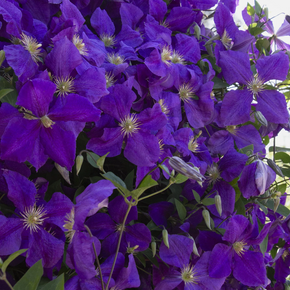
- Spectacular 4-6" velvety crimson-red blooms with creamy stamens smother a vigorous climbing vine from early summer through fall, delivering months of bold, jewel-toned color.
- Compact yet vigorous grower reaching 6-12 feet tall — ideal for trellises, arbors, fences, obelisks, and containers in small or large garden spaces.
- Cold-hardy in USDA Zones 4-8, easy to grow, and a proven pollinator magnet — reliably attracting hummingbirds, butterflies, and bees throughout the blooming season.
- Pruning Group 3 clematis — simply cut back hard in late winter or early spring for a fresh flush of spectacular blooms on vigorous new growth each year.
Clematis 'Rouge Cardinal' is a showstopping deciduous climbing vine prized for its profusion of large, velvety deep crimson-red flowers that command attention from early summer through fall. Each bloom measures an impressive 4 to 6 inches across, featuring broad, blunt sepals in a rich burgundy-red hue accented by eye-catching creamy to brownish-yellow stamens at the center — a combination that creates a dramatic, jewel-like effect against the vine's leathery, medium green foliage. Belonging to the Jackman hybrid group and classified as a Group 3 pruning clematis, 'Rouge Cardinal' flowers on the current season's new growth, making it a reliably rewarding plant that responds beautifully to an annual late-winter cutback. The vine climbs by twining its leaf stalks around any suitable support, reaching a mature height of 6 to 12 feet with a spread of 2 to 4 feet — a versatile scale suited to everything from intimate garden obelisks and patio trellises to sprawling fences and pergola posts. Hardy in USDA Zones 4-8, this vigorous perennial vine thrives in fertile, consistently moist, and well-drained soil enriched with organic matter, and performs best when given full sun to part shade with its root zone kept cool and shaded. Its generous nectar-rich blooms attract hummingbirds, butterflies, and bees throughout the long blooming season, making 'Rouge Cardinal' as ecologically valuable as it is visually spectacular. Whether grown as a vertical focal point, trained through companion shrubs, or planted in a generously sized container on a sunny patio, Clematis 'Rouge Cardinal' delivers an unmatched season-long display of rich red color and effortless elegance in the garden.
Plant Description
Clematis 'Rouge Cardinal' is a deciduous, semi-woody climbing vine in the Jackman hybrid group, celebrated for some of the most intensely colored flowers in the entire clematis genus. The blooms are velvety in texture and a deep, rich crimson-red — almost burgundy — with broad, blunt sepals that gently recurve at the tips and a central crown of creamy to brownish-yellow stamens. Flowers measure 4 to 6 inches across and are produced prolifically along the length of new growth stems. The foliage is medium to dark green with a slightly leathery texture, composed of simple to trifoliate leaves that deepen in color as summer progresses. The vine climbs by twining its leaf stalks around any slender support and produces ornamental fluffy seed heads after flowering that add additional late-season interest. This cultivar is also sometimes found sold under the synonym 'Red Cardinal'.
Mature Size
| Characteristic | Measurement |
|---|---|
| Mature Height | 6 to 12 feet |
| Mature Spread | 2 to 4 feet |
| Growth Rate | Medium to vigorous |
| Growth Habit | Climbing vine (twining leaf stalks) |
| Plant Type | Deciduous semi-woody perennial vine |
Hardiness Zones and Climate
Clematis 'Rouge Cardinal' is rated hardy in USDA Hardiness Zones 4 through 8, tolerating winter lows as cold as -30 degrees F with proper mulching and root protection. It performs reliably across a wide range of climates, from the cold winters of the upper Midwest and New England to the mild-winter regions of the Pacific Northwest, California, and the upper South. In hotter summer climates, some protection from intense afternoon sun is beneficial to preserve flower color and prevent stress. In Southern Oregon and Northern California growing conditions, it thrives with consistent moisture and benefits from afternoon shade during the hottest summer months. Unlike tender vines, 'Rouge Cardinal' returns dependably each spring even after dying back in winter, re-emerging vigorously from its established root system.
Sunlight Requirements
For the best flowering performance, plant Clematis 'Rouge Cardinal' in a location that receives at least 6 hours of direct sunlight per day. Full sun to part shade is the ideal exposure range. A particularly effective approach — especially in warmer inland climates — is to position the vine so that the upper flowering stems receive full morning sun while the root zone remains shaded. This can be accomplished by planting low-growing perennials, ground covers, or small shrubs directly in front of the root ball. Afternoon shade in hot climates helps prevent flower bleaching and reduces heat stress on the foliage. In cooler coastal or northern climates, a full-sun position will maximize bloom production.
Soil and pH Preferences
Clematis 'Rouge Cardinal' grows best in fertile, loamy, consistently moist, and well-drained soil. Waterlogged conditions are one of the leading causes of root rot and should be avoided. The preferred soil pH range is 6.0 to 7.0 (slightly acidic to neutral), though it shows moderate tolerance of slightly alkaline conditions. Heavy clay soils should be amended with generous amounts of compost or aged organic matter before planting to improve both drainage and fertility. Sandy soils benefit from the addition of compost or well-rotted manure to increase moisture retention. Adding a small amount of ground agricultural lime to very acidic soils can bring the pH to within the preferred range and improve overall plant health. Good soil structure and fertility at planting time will establish a strong foundation for many years of vigorous growth and flowering.
Watering Guide
Consistent moisture is important to the health and flowering performance of Clematis 'Rouge Cardinal', particularly during the first growing season when the root system is becoming established. Water deeply at planting and continue to irrigate thoroughly once or twice per week throughout the growing season, depending on rainfall and temperature. The goal is to maintain evenly moist — but never waterlogged — soil around the root zone. Direct water to the base of the plant rather than overhead to minimize the risk of fungal diseases on the foliage. Applying a 2 to 3 inch layer of mulch over the root zone is highly recommended, as it conserves soil moisture, moderates root temperature, and reduces the need for frequent watering. Once fully established, the plant has average water needs but should still be irrigated during extended dry spells, as drought stress can curtail blooming and reduce overall vigor.
Fertilizing
Feed Clematis 'Rouge Cardinal' in early spring as new growth begins to emerge, using a balanced slow-release fertilizer such as a 10-10-10 formula or one that is slightly higher in phosphorus to promote flower production. Avoid fertilizers with very high nitrogen content, as excess nitrogen tends to encourage lush, leafy vegetative growth at the expense of blooms. A second light application can be made after the first flush of summer flowering to sustain energy through the rest of the blooming season. Organic options such as compost topdressing, fish emulsion, or well-rotted manure are excellent choices that provide a steady, gentle nutrient supply without the risk of root burn. Do not fertilize late in the season, as stimulating tender new growth close to the onset of cold weather can leave the plant vulnerable to frost damage.
Pruning and Maintenance
Clematis 'Rouge Cardinal' belongs to Pruning Group 3, meaning it produces all of its flowers on the current season's new growth. This makes pruning straightforward and forgiving. Each year in late winter or early spring — typically February through March, before new growth begins — cut all stems back hard to approximately 12 to 18 inches from the ground, pruning just above a healthy, visible pair of buds. Remove any dead, weak, or damaged stems entirely. This annual hard pruning encourages the vine to push strong new stems that will carry the summer's flower display. Skipping the annual cutback results in a progressively tangled vine with reduced flowering. As the new growth emerges and extends, attach stems loosely to the support structure to guide the vine. Deadheading spent blooms is not required but may encourage a continued display through the season.
Planting Instructions
- Choose a site with full sun to part shade and well-drained, fertile soil. Have your support structure (trellis, arbor, fence, or obelisk) in place before planting.
- Dig a planting hole twice as wide and deep as the root ball. Amend the excavated soil generously with compost or aged organic matter.
- Plant the crown of the vine 2 to 3 inches deeper than it sat in its nursery container, burying the lowest set of leaves. This deep planting protects against clematis wilt and encourages strong basal shoot production.
- Backfill with the amended soil, firming gently around the roots to eliminate air pockets. Water thoroughly to settle the soil.
- Apply a 2 to 3 inch layer of mulch over the root zone, keeping the mulch a few inches away from the main stem to prevent rot.
- Shade the root zone by planting low perennials or ground covers in front of the crown, or use the mulch layer to keep roots cool.
- Guide the young stems toward the support and attach loosely with soft ties. Water regularly until the plant is well established.
- The best planting seasons are early spring and fall when mild temperatures allow roots to establish before extreme heat or cold arrives.
Seasonal Interest
Clematis 'Rouge Cardinal' delivers its primary ornamental display from early summer through early fall, with the peak of flowering typically occurring in midsummer. The large, richly colored crimson-red blooms open in succession along vigorous new growth stems, providing weeks of spectacular vertical color. After the flowers fade, attractive fluffy, silky seed heads develop and persist into autumn, adding a secondary layer of textural interest to the vine as the season winds down. The foliage deepens to a richer medium green as summer progresses, providing a lush backdrop to neighboring plants. In autumn, the vine begins its natural senescence as a deciduous plant. The established woody base and root system persist through winter, and the cycle of vigorous new growth and rich red flowering begins again each spring following the annual pruning.
Landscape Uses
The versatility of Clematis 'Rouge Cardinal' makes it one of the most useful flowering vines available for residential and landscape gardens. Its compact spread and vigorous upward climbing habit make it ideal for the following uses:
- Training up a trellis, obelisk, or garden pillar as a vertical focal point in a mixed border or cottage garden
- Covering a fence, pergola, or arbor with a curtain of rich red summer color
- Scrambling through and over large shrubs or small ornamental trees for a naturalistic layered effect
- Growing in a large patio container with a decorative support structure
- Weaving through climbing roses for a stunning red and pink or red and white color combination
- Planting along a lamppost, mailbox post, or deck railing for vertical interest in small spaces
- Mass planting along a long fence line with multiple vines spaced 3 to 4 feet apart for a bold seasonal display
Companion Plants
Clematis 'Rouge Cardinal' pairs beautifully with a wide range of garden plants. Because it requires cool, shaded roots, low-growing companion plants serve the dual purpose of providing aesthetic contrast and functional root shade. Consider the following pairings:
- Climbing roses (especially soft pinks, creams, or whites) — the classic clematis-rose combination is timeless and mutually beneficial
- Catmint (Nepeta) — planted at the base to shade roots while providing soft lavender-blue contrast to the crimson blooms
- Salvia — blue or purple salvias create striking color contrast and attract the same pollinators
- Hostas — ideal for shading the root zone in partly shaded spots with bold foliage contrast
- Ornamental grasses — feathery textures contrast beautifully with the large, bold flowers
- Coneflowers (Echinacea) — bloom at a similar time and reinforce a pollinator-friendly planting scheme
- Hardy geraniums (Cranesbill) — low-growing, long-blooming, and excellent at keeping roots cool and shaded
Pests and Diseases
Clematis 'Rouge Cardinal' is relatively easy to grow but can be affected by several pests and diseases. Being aware of the most common issues helps ensure a healthy, long-lived vine:
- Clematis Wilt (Stem Rot): The most serious disease affecting clematis, caused by the fungal pathogen Phoma clematidina. Infected stems collapse and die suddenly. Planting the crown 2-3 inches deep helps the vine resprout from below soil level if wilt strikes above ground. Remove and dispose of affected stems promptly. Avoid overhead watering and ensure good air circulation.
- Powdery Mildew: 'Rouge Cardinal' shows relatively high resistance to powdery mildew, but it can still appear in humid, poorly ventilated conditions. Improve air circulation and avoid wetting foliage.
- Leaf Spot: Fungal leaf spots may occur in wet seasons. Moderate resistance is typical for this cultivar.
- Aphids: Small colonies can appear on new growth. Dislodge with a strong stream of water or treat with insecticidal soap.
- Slugs and Snails: Young stems and emerging growth are vulnerable. Use slug bait or physical barriers around the base of the plant.
- Vine Weevils and Scale: Occasional pests that can be managed with appropriate insecticides or horticultural oil.
- Spider Mites: May appear during hot, dry conditions. Increase irrigation and use miticide if infestations are severe.
Container Growing
Clematis 'Rouge Cardinal' is well suited to container culture, making it an excellent choice for patios, decks, entryways, and other paved spaces where in-ground planting is not possible. Choose a large, sturdy container — at least 15 to 18 inches in diameter and equally deep — to accommodate the extensive root system and provide the cool root environment this plant prefers. Use a high-quality, well-draining potting mix enriched with compost. Install a decorative obelisk, trellis insert, or tepee of stakes directly in the container to support the climbing stems. Container-grown plants dry out more quickly than in-ground specimens, so check moisture levels regularly and water thoroughly whenever the top inch of soil feels dry. Apply a balanced slow-release fertilizer at the beginning of the season and supplement with a liquid fertilizer every 3 to 4 weeks during the blooming period. In colder zones, move the container to a sheltered, unheated space such as a garage or shed during winter to protect the roots from freeze-thaw cycling.
Wildlife Value
Clematis 'Rouge Cardinal' is a valuable pollinator plant and wildlife asset in the garden. Its large, open flowers provide an accessible nectar and pollen source for a variety of beneficial insects and birds throughout the long summer and fall blooming season. Key wildlife interactions include:
- Hummingbirds: The bright red blooms are a reliable hummingbird attractant, making this vine an excellent addition to a hummingbird garden in Southern Oregon and Northern California where Anna's and Rufous hummingbirds are common visitors.
- Butterflies: Several butterfly species visit the flowers for nectar, including swallowtails and painted ladies.
- Bees: Both native bees and honeybees forage actively on the open flowers throughout the bloom period.
- Deer Resistance: Clematis 'Rouge Cardinal' is noted to be generally resistant to deer browsing, making it a practical choice in areas with significant deer pressure.
- Black Walnut Tolerance: This cultivar is tolerant of the juglone compounds produced by black walnut trees, a useful trait when siting the vine near existing landscape trees.
- Spectacular 4-6" velvety crimson-red blooms with creamy stamens smother a vigorous climbing vine from early summer through fall, delivering months of bold, jewel-toned color.
- Compact yet vigorous grower reaching 6-12 feet tall — ideal for trellises, arbors, fences, obelisks, and containers in small or large garden spaces.
- Cold-hardy in USDA Zones 4-8, easy to grow, and a proven pollinator magnet — reliably attracting hummingbirds, butterflies, and bees throughout the blooming season.
- Pruning Group 3 clematis — simply cut back hard in late winter or early spring for a fresh flush of spectacular blooms on vigorous new growth each year.
Clematis 'Rouge Cardinal' is a showstopping deciduous climbing vine prized for its profusion of large, velvety deep crimson-red flowers that command attention from early summer through fall. Each bloom measures an impressive 4 to 6 inches across, featuring broad, blunt sepals in a rich burgundy-red hue accented by eye-catching creamy to brownish-yellow stamens at the center — a combination that creates a dramatic, jewel-like effect against the vine's leathery, medium green foliage. Belonging to the Jackman hybrid group and classified as a Group 3 pruning clematis, 'Rouge Cardinal' flowers on the current season's new growth, making it a reliably rewarding plant that responds beautifully to an annual late-winter cutback. The vine climbs by twining its leaf stalks around any suitable support, reaching a mature height of 6 to 12 feet with a spread of 2 to 4 feet — a versatile scale suited to everything from intimate garden obelisks and patio trellises to sprawling fences and pergola posts. Hardy in USDA Zones 4-8, this vigorous perennial vine thrives in fertile, consistently moist, and well-drained soil enriched with organic matter, and performs best when given full sun to part shade with its root zone kept cool and shaded. Its generous nectar-rich blooms attract hummingbirds, butterflies, and bees throughout the long blooming season, making 'Rouge Cardinal' as ecologically valuable as it is visually spectacular. Whether grown as a vertical focal point, trained through companion shrubs, or planted in a generously sized container on a sunny patio, Clematis 'Rouge Cardinal' delivers an unmatched season-long display of rich red color and effortless elegance in the garden.
Plant Description
Clematis 'Rouge Cardinal' is a deciduous, semi-woody climbing vine in the Jackman hybrid group, celebrated for some of the most intensely colored flowers in the entire clematis genus. The blooms are velvety in texture and a deep, rich crimson-red — almost burgundy — with broad, blunt sepals that gently recurve at the tips and a central crown of creamy to brownish-yellow stamens. Flowers measure 4 to 6 inches across and are produced prolifically along the length of new growth stems. The foliage is medium to dark green with a slightly leathery texture, composed of simple to trifoliate leaves that deepen in color as summer progresses. The vine climbs by twining its leaf stalks around any slender support and produces ornamental fluffy seed heads after flowering that add additional late-season interest. This cultivar is also sometimes found sold under the synonym 'Red Cardinal'.
Mature Size
| Characteristic | Measurement |
|---|---|
| Mature Height | 6 to 12 feet |
| Mature Spread | 2 to 4 feet |
| Growth Rate | Medium to vigorous |
| Growth Habit | Climbing vine (twining leaf stalks) |
| Plant Type | Deciduous semi-woody perennial vine |
Hardiness Zones and Climate
Clematis 'Rouge Cardinal' is rated hardy in USDA Hardiness Zones 4 through 8, tolerating winter lows as cold as -30 degrees F with proper mulching and root protection. It performs reliably across a wide range of climates, from the cold winters of the upper Midwest and New England to the mild-winter regions of the Pacific Northwest, California, and the upper South. In hotter summer climates, some protection from intense afternoon sun is beneficial to preserve flower color and prevent stress. In Southern Oregon and Northern California growing conditions, it thrives with consistent moisture and benefits from afternoon shade during the hottest summer months. Unlike tender vines, 'Rouge Cardinal' returns dependably each spring even after dying back in winter, re-emerging vigorously from its established root system.
Sunlight Requirements
For the best flowering performance, plant Clematis 'Rouge Cardinal' in a location that receives at least 6 hours of direct sunlight per day. Full sun to part shade is the ideal exposure range. A particularly effective approach — especially in warmer inland climates — is to position the vine so that the upper flowering stems receive full morning sun while the root zone remains shaded. This can be accomplished by planting low-growing perennials, ground covers, or small shrubs directly in front of the root ball. Afternoon shade in hot climates helps prevent flower bleaching and reduces heat stress on the foliage. In cooler coastal or northern climates, a full-sun position will maximize bloom production.
Soil and pH Preferences
Clematis 'Rouge Cardinal' grows best in fertile, loamy, consistently moist, and well-drained soil. Waterlogged conditions are one of the leading causes of root rot and should be avoided. The preferred soil pH range is 6.0 to 7.0 (slightly acidic to neutral), though it shows moderate tolerance of slightly alkaline conditions. Heavy clay soils should be amended with generous amounts of compost or aged organic matter before planting to improve both drainage and fertility. Sandy soils benefit from the addition of compost or well-rotted manure to increase moisture retention. Adding a small amount of ground agricultural lime to very acidic soils can bring the pH to within the preferred range and improve overall plant health. Good soil structure and fertility at planting time will establish a strong foundation for many years of vigorous growth and flowering.
Watering Guide
Consistent moisture is important to the health and flowering performance of Clematis 'Rouge Cardinal', particularly during the first growing season when the root system is becoming established. Water deeply at planting and continue to irrigate thoroughly once or twice per week throughout the growing season, depending on rainfall and temperature. The goal is to maintain evenly moist — but never waterlogged — soil around the root zone. Direct water to the base of the plant rather than overhead to minimize the risk of fungal diseases on the foliage. Applying a 2 to 3 inch layer of mulch over the root zone is highly recommended, as it conserves soil moisture, moderates root temperature, and reduces the need for frequent watering. Once fully established, the plant has average water needs but should still be irrigated during extended dry spells, as drought stress can curtail blooming and reduce overall vigor.
Fertilizing
Feed Clematis 'Rouge Cardinal' in early spring as new growth begins to emerge, using a balanced slow-release fertilizer such as a 10-10-10 formula or one that is slightly higher in phosphorus to promote flower production. Avoid fertilizers with very high nitrogen content, as excess nitrogen tends to encourage lush, leafy vegetative growth at the expense of blooms. A second light application can be made after the first flush of summer flowering to sustain energy through the rest of the blooming season. Organic options such as compost topdressing, fish emulsion, or well-rotted manure are excellent choices that provide a steady, gentle nutrient supply without the risk of root burn. Do not fertilize late in the season, as stimulating tender new growth close to the onset of cold weather can leave the plant vulnerable to frost damage.
Pruning and Maintenance
Clematis 'Rouge Cardinal' belongs to Pruning Group 3, meaning it produces all of its flowers on the current season's new growth. This makes pruning straightforward and forgiving. Each year in late winter or early spring — typically February through March, before new growth begins — cut all stems back hard to approximately 12 to 18 inches from the ground, pruning just above a healthy, visible pair of buds. Remove any dead, weak, or damaged stems entirely. This annual hard pruning encourages the vine to push strong new stems that will carry the summer's flower display. Skipping the annual cutback results in a progressively tangled vine with reduced flowering. As the new growth emerges and extends, attach stems loosely to the support structure to guide the vine. Deadheading spent blooms is not required but may encourage a continued display through the season.
Planting Instructions
- Choose a site with full sun to part shade and well-drained, fertile soil. Have your support structure (trellis, arbor, fence, or obelisk) in place before planting.
- Dig a planting hole twice as wide and deep as the root ball. Amend the excavated soil generously with compost or aged organic matter.
- Plant the crown of the vine 2 to 3 inches deeper than it sat in its nursery container, burying the lowest set of leaves. This deep planting protects against clematis wilt and encourages strong basal shoot production.
- Backfill with the amended soil, firming gently around the roots to eliminate air pockets. Water thoroughly to settle the soil.
- Apply a 2 to 3 inch layer of mulch over the root zone, keeping the mulch a few inches away from the main stem to prevent rot.
- Shade the root zone by planting low perennials or ground covers in front of the crown, or use the mulch layer to keep roots cool.
- Guide the young stems toward the support and attach loosely with soft ties. Water regularly until the plant is well established.
- The best planting seasons are early spring and fall when mild temperatures allow roots to establish before extreme heat or cold arrives.
Seasonal Interest
Clematis 'Rouge Cardinal' delivers its primary ornamental display from early summer through early fall, with the peak of flowering typically occurring in midsummer. The large, richly colored crimson-red blooms open in succession along vigorous new growth stems, providing weeks of spectacular vertical color. After the flowers fade, attractive fluffy, silky seed heads develop and persist into autumn, adding a secondary layer of textural interest to the vine as the season winds down. The foliage deepens to a richer medium green as summer progresses, providing a lush backdrop to neighboring plants. In autumn, the vine begins its natural senescence as a deciduous plant. The established woody base and root system persist through winter, and the cycle of vigorous new growth and rich red flowering begins again each spring following the annual pruning.
Landscape Uses
The versatility of Clematis 'Rouge Cardinal' makes it one of the most useful flowering vines available for residential and landscape gardens. Its compact spread and vigorous upward climbing habit make it ideal for the following uses:
- Training up a trellis, obelisk, or garden pillar as a vertical focal point in a mixed border or cottage garden
- Covering a fence, pergola, or arbor with a curtain of rich red summer color
- Scrambling through and over large shrubs or small ornamental trees for a naturalistic layered effect
- Growing in a large patio container with a decorative support structure
- Weaving through climbing roses for a stunning red and pink or red and white color combination
- Planting along a lamppost, mailbox post, or deck railing for vertical interest in small spaces
- Mass planting along a long fence line with multiple vines spaced 3 to 4 feet apart for a bold seasonal display
Companion Plants
Clematis 'Rouge Cardinal' pairs beautifully with a wide range of garden plants. Because it requires cool, shaded roots, low-growing companion plants serve the dual purpose of providing aesthetic contrast and functional root shade. Consider the following pairings:
- Climbing roses (especially soft pinks, creams, or whites) — the classic clematis-rose combination is timeless and mutually beneficial
- Catmint (Nepeta) — planted at the base to shade roots while providing soft lavender-blue contrast to the crimson blooms
- Salvia — blue or purple salvias create striking color contrast and attract the same pollinators
- Hostas — ideal for shading the root zone in partly shaded spots with bold foliage contrast
- Ornamental grasses — feathery textures contrast beautifully with the large, bold flowers
- Coneflowers (Echinacea) — bloom at a similar time and reinforce a pollinator-friendly planting scheme
- Hardy geraniums (Cranesbill) — low-growing, long-blooming, and excellent at keeping roots cool and shaded
Pests and Diseases
Clematis 'Rouge Cardinal' is relatively easy to grow but can be affected by several pests and diseases. Being aware of the most common issues helps ensure a healthy, long-lived vine:
- Clematis Wilt (Stem Rot): The most serious disease affecting clematis, caused by the fungal pathogen Phoma clematidina. Infected stems collapse and die suddenly. Planting the crown 2-3 inches deep helps the vine resprout from below soil level if wilt strikes above ground. Remove and dispose of affected stems promptly. Avoid overhead watering and ensure good air circulation.
- Powdery Mildew: 'Rouge Cardinal' shows relatively high resistance to powdery mildew, but it can still appear in humid, poorly ventilated conditions. Improve air circulation and avoid wetting foliage.
- Leaf Spot: Fungal leaf spots may occur in wet seasons. Moderate resistance is typical for this cultivar.
- Aphids: Small colonies can appear on new growth. Dislodge with a strong stream of water or treat with insecticidal soap.
- Slugs and Snails: Young stems and emerging growth are vulnerable. Use slug bait or physical barriers around the base of the plant.
- Vine Weevils and Scale: Occasional pests that can be managed with appropriate insecticides or horticultural oil.
- Spider Mites: May appear during hot, dry conditions. Increase irrigation and use miticide if infestations are severe.
Container Growing
Clematis 'Rouge Cardinal' is well suited to container culture, making it an excellent choice for patios, decks, entryways, and other paved spaces where in-ground planting is not possible. Choose a large, sturdy container — at least 15 to 18 inches in diameter and equally deep — to accommodate the extensive root system and provide the cool root environment this plant prefers. Use a high-quality, well-draining potting mix enriched with compost. Install a decorative obelisk, trellis insert, or tepee of stakes directly in the container to support the climbing stems. Container-grown plants dry out more quickly than in-ground specimens, so check moisture levels regularly and water thoroughly whenever the top inch of soil feels dry. Apply a balanced slow-release fertilizer at the beginning of the season and supplement with a liquid fertilizer every 3 to 4 weeks during the blooming period. In colder zones, move the container to a sheltered, unheated space such as a garage or shed during winter to protect the roots from freeze-thaw cycling.
Wildlife Value
Clematis 'Rouge Cardinal' is a valuable pollinator plant and wildlife asset in the garden. Its large, open flowers provide an accessible nectar and pollen source for a variety of beneficial insects and birds throughout the long summer and fall blooming season. Key wildlife interactions include:
- Hummingbirds: The bright red blooms are a reliable hummingbird attractant, making this vine an excellent addition to a hummingbird garden in Southern Oregon and Northern California where Anna's and Rufous hummingbirds are common visitors.
- Butterflies: Several butterfly species visit the flowers for nectar, including swallowtails and painted ladies.
- Bees: Both native bees and honeybees forage actively on the open flowers throughout the bloom period.
- Deer Resistance: Clematis 'Rouge Cardinal' is noted to be generally resistant to deer browsing, making it a practical choice in areas with significant deer pressure.
- Black Walnut Tolerance: This cultivar is tolerant of the juglone compounds produced by black walnut trees, a useful trait when siting the vine near existing landscape trees.
Related Products