

Zoom the image with the mouse
Nelly Moser Clematis
SKU:
1880000-P
UPC:
651469652165
$21.99 - $44.99
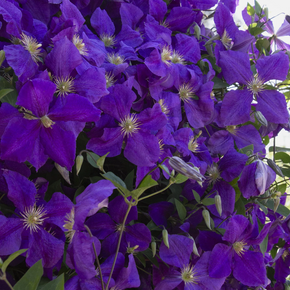
- Jaw-dropping bicolor blooms up to 8 inches across feature soft pinkish-lavender petals each striped with a bold carmine-pink bar, creating a star-shaped floral display that turns heads from late spring through early fall.
- A classic, RHS Award of Garden Merit winner introduced in 1897 - vigorous yet easy to grow, this deciduous vine climbs 8 to 10 feet tall and thrives in USDA Hardiness Zones 4 through 9.
- More shade-tolerant than most clematis cultivars, 'Nelly Moser' excels on north- or east-facing walls, fences, arbors, and trellises where its colors stay richest and most vibrant without fading.
- A proven pollinator magnet that draws bees, butterflies, and hummingbirds while maintaining deer and rabbit resistance, making it a reliable and beautiful addition to any garden setting.
Clematis 'Nelly Moser' is one of the most beloved and recognizable flowering vines in the gardening world, and for good reason - this vigorous deciduous climber has been captivating gardeners since its introduction in 1897 and continues to earn its place as a showstopper in landscapes across Southern Oregon, Northern California, and beyond. Classified as an Early Large-Flowered Clematis in Pruning Group 2, 'Nelly Moser' produces an extraordinary abundance of star-shaped blossoms measuring up to 8 inches in diameter, each featuring eight pale pinkish-lavender sepals adorned with a striking carmine-pink bar down the center and accented by rich reddish-purple anthers. Blooming generously in late spring to early summer and again in late summer to early fall, this dual-season performer ensures months of spectacular color on trellises, arbors, fences, pergolas, and garden walls. Unlike many clematis varieties that demand full sun, 'Nelly Moser' thrives in partial shade where its luminous bicolor blooms remain truest in color and resist fading - making it an ideal solution for shaded garden walls and north-facing structures that other flowering vines struggle to populate. Hardy from USDA Zones 4 through 9 and tolerant of a wide range of soil types including loam, clay, chalk, and sand, this low-maintenance perennial vine is equally at home climbing a garden structure or spilling elegantly from a large patio container. Its feathery, ornamental seedheads extend the plant's visual appeal well into autumn, and its proven resistance to deer and rabbits makes it a smart, long-term investment for any Pacific Northwest or Northern California garden.
Plant Description
Clematis 'Nelly Moser' is a deciduous perennial climbing vine belonging to the Ranunculaceae family and the Early Large-Flowered Clematis group. First introduced in 1897, it remains one of the most popular and widely recognized clematis cultivars in the world, earning the prestigious Royal Horticultural Society Award of Garden Merit for its exceptional garden performance. The plant produces an impressive profusion of star-shaped flowers, each up to 8 inches (20 cm) in diameter, with eight broad, soft pinkish-lavender sepals. The defining feature of each bloom is a bold, carmine-pink bar running through the center of every sepal, creating a striking two-toned effect. Rich reddish-purple anthers at the center add further depth and contrast. After blooming, the flowers give way to attractive, fluffy globular seedheads that provide additional ornamental interest into autumn. The dark green foliage is pinnate with ovate, pointed leaflets arranged in opposite pairs along slender, twining stems. The plant climbs by wrapping its leaf stalks around any available support structure.
Mature Size
| Characteristic | Measurement |
|---|---|
| Mature Height | 8 to 10 feet (240 to 300 cm) |
| Spread | 1 to 2 feet (30 to 60 cm) |
| Recommended Spacing | 15 to 18 inches (40 to 50 cm) apart |
| Flower Diameter | Up to 8 inches (20 cm) |
| Growth Rate | Vigorous; can reach full height within 2 to 3 seasons |
Hardiness Zones and Climate
'Nelly Moser' is reliably cold-hardy in USDA Hardiness Zones 4 through 9, tolerating winter temperatures as low as -30 degrees Fahrenheit in protected settings. It performs beautifully across a wide range of climates, from cool maritime conditions to warmer inland valleys, making it exceptionally well-suited to the diverse microclimates of Southern Oregon and Northern California. In hotter inland areas, afternoon shade is beneficial to help preserve flower color and reduce heat stress on the roots. AHS Heat Zones 1 through 9 are also well within its adaptable range. This clematis thrives in Sunset Climate Zones 2 through 11 and 14 through 24, giving it exceptional versatility across the Pacific Coast and beyond.
Sunlight Requirements
'Nelly Moser' is notably more shade-tolerant than most large-flowered clematis hybrids, making it a standout choice for locations that receive less-than-full sun. It grows well in full sun to partial shade, ideally receiving at least 4 to 6 hours of light per day. However, its blooms are most vivid and long-lasting when the plant is sited in partial shade, particularly afternoon shade in warmer climates. Prolonged exposure to intense direct sun can cause the pale carmine-pink bars on the petals to fade, diminishing the characteristic bicolor effect. North- and east-facing walls and fences, which are often challenging for other flowering vines, are actually ideal placements for 'Nelly Moser.' The classic clematis wisdom - "head in the sun, feet in the shade" - applies here: keep the vine's canopy where light can reach it while protecting the root zone from direct sun and heat with mulch, ground cover plants, or flat stones at the base.
Soil and pH Preferences
'Nelly Moser' is adaptable to a variety of soil types, including loam, clay, chalk, and sandy soils, as long as drainage is adequate. It performs best in fertile, moist, well-drained soil that is rich in organic matter. The preferred soil pH range is neutral to slightly alkaline, generally between 6.5 and 7.0, though it tolerates mildly acidic soils as well. Heavy clay soils should be amended with generous quantities of compost or other organic matter to improve drainage and prevent root rot. Sandy or fast-draining soils benefit from the addition of organic matter to improve moisture retention. Before planting, work compost or aged manure into the planting area to give the root system the best possible start. Avoid low-lying areas where water pools, as waterlogged conditions are harmful to the roots.
Watering Guide
Consistent moisture is key to vigorous growth and abundant blooming in 'Nelly Moser.' Newly planted vines should be watered thoroughly and regularly - approximately once per week - to help establish a strong root system during the first growing season. Once established, the plant requires approximately 1 inch of water per week, which may be supplied by rainfall in many parts of Southern Oregon and Northern California during spring. During dry summer months, deep watering once or twice per week is recommended, depending on soil type and temperature. The soil should remain evenly moist but never waterlogged. Allow the top inch of soil to guide watering decisions: if it is completely dry, it is time to water. Avoid overhead irrigation where possible, as keeping foliage wet can encourage fungal issues. Applying a 2 to 3-inch layer of organic mulch around the base helps retain soil moisture and regulate root temperature throughout the growing season.
Fertilizing
Feeding 'Nelly Moser' appropriately supports strong growth and prolific blooming across both bloom cycles. Apply a balanced, slow-release granular fertilizer such as a 10-10-10 formula in early spring when new growth first emerges. After the first bloom cycle concludes, switch to a low-nitrogen fertilizer or apply compost tea to encourage the development of flower buds for the late-summer rebloom. Avoid high-nitrogen fertilizers throughout the season, as excess nitrogen stimulates lush leafy growth at the direct expense of flower production. A monthly application of a balanced liquid fertilizer during the active growing season (spring through summer) is an effective alternative to granular feeding. Do not fertilize while the plant is in peak bloom, as this can cause flowers to fade or drop more quickly. Cease fertilizing in late summer to allow the plant to begin hardening off naturally for winter.
Pruning and Maintenance - Pruning Group 2
'Nelly Moser' belongs to Pruning Group 2 (also called Pruning Category B), which means it flowers on both the previous year's old wood in spring and on new growth later in summer. This two-season bloom habit requires a specific, two-stage pruning approach to maximize flowering potential:
- Late winter to early spring: Before new growth begins, inspect all stems from the top down. Remove any dead, weak, or damaged stems entirely. For healthy stems, cut back only to the topmost pair of large, plump, healthy buds. Avoid heavy pruning at this stage, as doing so will sacrifice the spring bloom that develops on old wood.
- After the first bloom cycle (early to midsummer): Lightly prune back some stems, cutting just below spent flower clusters to a strong bud or healthy side shoot. This encourages fresh growth and sets the plant up for its late-summer rebloom.
- Renovation pruning (every 3 to 4 years): If the plant becomes overgrown or tangled, a hard renovation cut to 12 to 36 inches from the base can be performed in late winter. The plant will not produce a double bloom the following year but will reestablish vigorously for future seasons.
Always use clean, sharp pruning tools to reduce the risk of disease transmission. Deadheading spent blooms between the two flowering cycles helps conserve the plant's energy for new bud development.
Planting Instructions
- Select a planting location with partial to full sun and a nearby support structure such as a trellis, fence, wall, or arbor.
- Soak the root ball in a bucket of water for 10 to 15 minutes prior to planting to hydrate the roots.
- Dig a planting hole approximately twice as wide as the root ball and deep enough so that the top of the root ball sits 2 to 3 inches below the soil surface. Planting slightly deep encourages basal bud development and helps the plant recover more readily from clematis wilt if it occurs.
- Loosen the sides and bottom of the hole and incorporate a generous amount of compost or aged organic matter into the excavated soil.
- Place the plant in the hole, backfill with the amended soil, and firm gently around the root zone.
- Water thoroughly immediately after planting.
- Apply 2 to 3 inches of organic mulch around the base, keeping it a few inches away from the crown to prevent rot. This shades the root zone and helps retain moisture.
- If planting near an existing support, gently guide the young stems toward the structure and loosely tie them with soft garden ties to encourage upward growth.
- Space multiple plants 15 to 18 inches apart to allow adequate air circulation.
Seasonal Interest
| Season | What to Expect |
|---|---|
| Spring (Late) | First and most abundant flush of large bicolor blooms from May through June on previous season's wood. Fresh green foliage emerges and climbs rapidly. |
| Summer (Early) | Continued late blooms from the spring flush; ornamental feathery seedheads begin to develop as flowers fade. |
| Summer (Late) | Second, typically lighter flush of blooms in August to September on new growth. Seedheads persist and add texture. |
| Fall | Attractive globular, silky seedheads provide ornamental interest through autumn. Foliage begins to yellow and drop as temperatures cool. |
| Winter | Deciduous; dormant stems remain on the support structure. Plant is fully cold-hardy and will re-emerge vigorously in spring. |
Landscape Uses
'Nelly Moser' is an extraordinarily versatile vine that suits a wide range of landscape applications. Its tolerance for shade makes it especially valuable for garden situations where other flowering climbers would struggle. Consider these uses:
- Trellises and obelisks: A classic and most popular use - the vine's twining habit makes it a natural fit for slatted or wire trellises in garden beds and borders.
- Fences and walls: Exceptional for covering wooden, vinyl, or masonry fences and walls, including north- and east-facing surfaces where other flowering vines fail.
- Arbors and pergolas: Trains beautifully overhead, creating a stunning canopy of blooms during the flowering season.
- Climbing through shrubs: An old-fashioned and charming technique - allow 'Nelly Moser' to weave through established rhododendrons, viburnums, or large shrub roses to add a second layer of bloom interest.
- Cottage and informal gardens: The romantic bicolor blooms fit naturally into cottage-style plantings alongside perennials and old-fashioned roses.
- Patio containers: Grows well in large containers (at least 18 inches wide and deep) placed near a trellis or post on a patio or deck.
- Cut flowers: The large, striking blooms can be cut and used in floral arrangements.
Companion Plants
Thoughtful companion planting enhances the beauty of 'Nelly Moser' and supports its cultural preference for having cool, shaded roots while its flowers reach for the light. Excellent companions include:
- Climbing roses: A timeless pairing - soft pink or deep red roses growing on the same trellis or fence create a lush, romantic effect and the rose canes provide natural support for the clematis to twine through.
- Hostas: Large-leaved hostas planted at the base of the vine provide excellent ground-level shade for the clematis root zone while creating a beautiful textural contrast.
- Siberian iris (Iris sibirica): Blooms in synch with the first clematis flush, offering complementary purple-blue tones at ground level.
- Ostrich fern (Matteuccia struthiopteris): Lush, arching fronds shade the root zone beautifully and create a verdant backdrop for the climbing blooms above.
- Garden phlox (Phlox paniculata): Provides summer color and fragrance at mid-border height while the clematis blooms above.
- Ornamental grasses: Low to mid-sized ornamental grasses planted at the vine's base shade roots, add texture, and extend fall interest.
- Daylilies (Hemerocallis): A practical and colorful root-shading companion with staggered bloom times that keep the garden bed interesting throughout summer.
- Hydrangeas: Shrubby hydrangeas can serve as a living trellis while sharing the partial-shade conditions that both plants appreciate.
Pests and Diseases
Clematis 'Nelly Moser' is generally a robust and trouble-free plant, but gardeners in Southern Oregon and Northern California should watch for the following potential issues:
- Clematis wilt (Phoma clematidina): The most serious disease specific to clematis. Infected stems collapse and wilt rapidly, sometimes overnight. Cut all affected stems back to healthy tissue at or even below soil level and dispose of them - do not compost. Because 'Nelly Moser' is planted with the crown 2 to 3 inches below the soil surface, new growth will typically emerge from below ground even after a severe wilt episode.
- Powdery mildew: A fungal issue that appears as a white powdery coating on leaves, particularly in dry summers with warm days and cool nights. Improve air circulation around the plant, avoid overhead watering, and treat with a horticultural oil or sulfur-based fungicide if needed.
- Aphids: Small colonies of aphids may gather on new growth and flower buds. Dislodge with a strong jet of water, apply insecticidal soap, or introduce beneficial insects such as ladybugs for organic control.
- Spider mites: More common in hot, dry conditions. Treat with neem oil or insecticidal soap applied to the undersides of leaves. Keeping plants well-watered reduces susceptibility.
- Slugs and snails: May feed on tender new shoots emerging in spring. Apply diatomaceous earth or slug bait around the base, or handpick in the evening.
- Root rot: Results from chronically waterlogged soil. Ensure excellent drainage at planting time and avoid overwatering to prevent this condition entirely.
Note: All parts of Clematis 'Nelly Moser' are toxic if ingested by humans, dogs, cats, and horses. Plant with care in areas accessible to pets and children.
Container Growing
'Nelly Moser' adapts well to container culture and makes a dramatic statement on a patio, deck, or courtyard when grown in a large pot paired with a trellis or obelisk. Follow these guidelines for success in containers:
- Choose a container at least 18 inches wide and 18 inches deep with drainage holes. Larger is always better for clematis root systems.
- Use a rich, loamy, free-draining potting mix. Add perlite or coarse grit to improve drainage if needed.
- Place broken crockery, gravel, or stones at the bottom of the pot to improve drainage and prevent waterlogging.
- Plant the crown 2 to 3 inches below the soil surface, as with in-ground planting.
- Provide a sturdy trellis, obelisk, or bamboo-cane support inserted into the pot for the vine to climb.
- Plant low-growing companions or apply a thick layer of gravel at the soil surface to shade the root zone and slow moisture evaporation.
- Container-grown plants dry out more quickly than those in the ground; check soil moisture frequently and water deeply when the top inch is dry.
- Feed every 2 to 3 weeks during the growing season with a balanced liquid fertilizer, as nutrients leach out of containers more rapidly.
- Repot every 2 to 3 years in fresh potting mix, or top-dress annually with compost to replenish nutrients.
- In colder climates, move containers to a sheltered location or wrap them with burlap to protect roots from hard freezes.
Wildlife Value
Clematis 'Nelly Moser' offers meaningful ecological value in the home garden by serving as a valuable resource for pollinators and other beneficial wildlife throughout its long blooming season. The large, open flowers with prominent anthers are particularly attractive to:
- Bees: Both honeybees and native bumblebees visit the blooms frequently for pollen and nectar, supporting local pollinator populations during the important late spring and summer periods.
- Butterflies: The broad, open flower structure provides easy landing platforms for a variety of butterfly species, contributing to garden biodiversity.
- Hummingbirds: The vine's nectar-rich blooms are attractive to hummingbirds, a beloved garden visitor in Southern Oregon and Northern California.
- Ornamental seedheads for birds: The fluffy, globe-shaped seedheads that persist through autumn can attract seed-foraging birds and add winter texture to the landscape.
Importantly, 'Nelly Moser' is resistant to deer and rabbits, which is a significant advantage in the rural and semi-rural settings common to Southern Oregon and Northern California where browsing wildlife can be a persistent problem. This resistance makes it a reliable, low-maintenance choice for unprotected garden beds and borders.
Propagation
Clematis 'Nelly Moser' is best propagated vegetatively to preserve its distinct bicolor flower characteristics. Growing from seed is not recommended, as seed-grown plants will not reliably reproduce the parent plant's traits. Two reliable vegetative propagation methods are:
- Semi-ripe stem cuttings (late spring to early summer): Select a healthy stem from the current season's growth that is firm at the base and still slightly soft at the tip, approximately 4 to 6 inches in length. Cut just below a leaf node, remove lower leaves, and dip the cut end in rooting hormone powder. Insert into a small container filled with moist, free-draining potting medium (a mix of perlite and peat-free compost works well). Cover loosely with a clear plastic bag or place in a propagation frame to maintain humidity. Keep in a warm, bright location out of direct sun. Roots typically develop within 4 to 8 weeks. Pot on once rooted and grow on before transplanting to the garden.
- Layering (late spring through summer): Select a long, flexible, healthy stem and bend it down to the ground near the base of the plant. Where the stem contacts the soil (ideally at a node or just below one), wound the stem slightly, apply rooting hormone, and bury that section 3 to 4 inches deep in moist, amended soil while leaving the stem tip exposed. Secure with a U-shaped pin or a stone. Roots will develop within a few months. Once well-rooted, sever the connecting stem from the parent plant and transplant.
Toxicity and Safety
All parts of Clematis 'Nelly Moser' contain irritating compounds (including protoanemonin) and are considered toxic to humans, dogs, cats, and horses if ingested. Contact with the plant's sap may also cause mild skin irritation or dermatitis in sensitive individuals. Wearing gloves when pruning or handling the plant is advisable. Keep the plant out of reach of young children and pets, and ensure animals do not have access to clippings or fallen plant material. The plant does not pose a risk through casual contact or normal garden activities, but direct ingestion of any plant part should be avoided. Dispose of prunings responsibly rather than leaving them accessible to pets or livestock.
- Jaw-dropping bicolor blooms up to 8 inches across feature soft pinkish-lavender petals each striped with a bold carmine-pink bar, creating a star-shaped floral display that turns heads from late spring through early fall.
- A classic, RHS Award of Garden Merit winner introduced in 1897 - vigorous yet easy to grow, this deciduous vine climbs 8 to 10 feet tall and thrives in USDA Hardiness Zones 4 through 9.
- More shade-tolerant than most clematis cultivars, 'Nelly Moser' excels on north- or east-facing walls, fences, arbors, and trellises where its colors stay richest and most vibrant without fading.
- A proven pollinator magnet that draws bees, butterflies, and hummingbirds while maintaining deer and rabbit resistance, making it a reliable and beautiful addition to any garden setting.
Clematis 'Nelly Moser' is one of the most beloved and recognizable flowering vines in the gardening world, and for good reason - this vigorous deciduous climber has been captivating gardeners since its introduction in 1897 and continues to earn its place as a showstopper in landscapes across Southern Oregon, Northern California, and beyond. Classified as an Early Large-Flowered Clematis in Pruning Group 2, 'Nelly Moser' produces an extraordinary abundance of star-shaped blossoms measuring up to 8 inches in diameter, each featuring eight pale pinkish-lavender sepals adorned with a striking carmine-pink bar down the center and accented by rich reddish-purple anthers. Blooming generously in late spring to early summer and again in late summer to early fall, this dual-season performer ensures months of spectacular color on trellises, arbors, fences, pergolas, and garden walls. Unlike many clematis varieties that demand full sun, 'Nelly Moser' thrives in partial shade where its luminous bicolor blooms remain truest in color and resist fading - making it an ideal solution for shaded garden walls and north-facing structures that other flowering vines struggle to populate. Hardy from USDA Zones 4 through 9 and tolerant of a wide range of soil types including loam, clay, chalk, and sand, this low-maintenance perennial vine is equally at home climbing a garden structure or spilling elegantly from a large patio container. Its feathery, ornamental seedheads extend the plant's visual appeal well into autumn, and its proven resistance to deer and rabbits makes it a smart, long-term investment for any Pacific Northwest or Northern California garden.
Plant Description
Clematis 'Nelly Moser' is a deciduous perennial climbing vine belonging to the Ranunculaceae family and the Early Large-Flowered Clematis group. First introduced in 1897, it remains one of the most popular and widely recognized clematis cultivars in the world, earning the prestigious Royal Horticultural Society Award of Garden Merit for its exceptional garden performance. The plant produces an impressive profusion of star-shaped flowers, each up to 8 inches (20 cm) in diameter, with eight broad, soft pinkish-lavender sepals. The defining feature of each bloom is a bold, carmine-pink bar running through the center of every sepal, creating a striking two-toned effect. Rich reddish-purple anthers at the center add further depth and contrast. After blooming, the flowers give way to attractive, fluffy globular seedheads that provide additional ornamental interest into autumn. The dark green foliage is pinnate with ovate, pointed leaflets arranged in opposite pairs along slender, twining stems. The plant climbs by wrapping its leaf stalks around any available support structure.
Mature Size
| Characteristic | Measurement |
|---|---|
| Mature Height | 8 to 10 feet (240 to 300 cm) |
| Spread | 1 to 2 feet (30 to 60 cm) |
| Recommended Spacing | 15 to 18 inches (40 to 50 cm) apart |
| Flower Diameter | Up to 8 inches (20 cm) |
| Growth Rate | Vigorous; can reach full height within 2 to 3 seasons |
Hardiness Zones and Climate
'Nelly Moser' is reliably cold-hardy in USDA Hardiness Zones 4 through 9, tolerating winter temperatures as low as -30 degrees Fahrenheit in protected settings. It performs beautifully across a wide range of climates, from cool maritime conditions to warmer inland valleys, making it exceptionally well-suited to the diverse microclimates of Southern Oregon and Northern California. In hotter inland areas, afternoon shade is beneficial to help preserve flower color and reduce heat stress on the roots. AHS Heat Zones 1 through 9 are also well within its adaptable range. This clematis thrives in Sunset Climate Zones 2 through 11 and 14 through 24, giving it exceptional versatility across the Pacific Coast and beyond.
Sunlight Requirements
'Nelly Moser' is notably more shade-tolerant than most large-flowered clematis hybrids, making it a standout choice for locations that receive less-than-full sun. It grows well in full sun to partial shade, ideally receiving at least 4 to 6 hours of light per day. However, its blooms are most vivid and long-lasting when the plant is sited in partial shade, particularly afternoon shade in warmer climates. Prolonged exposure to intense direct sun can cause the pale carmine-pink bars on the petals to fade, diminishing the characteristic bicolor effect. North- and east-facing walls and fences, which are often challenging for other flowering vines, are actually ideal placements for 'Nelly Moser.' The classic clematis wisdom - "head in the sun, feet in the shade" - applies here: keep the vine's canopy where light can reach it while protecting the root zone from direct sun and heat with mulch, ground cover plants, or flat stones at the base.
Soil and pH Preferences
'Nelly Moser' is adaptable to a variety of soil types, including loam, clay, chalk, and sandy soils, as long as drainage is adequate. It performs best in fertile, moist, well-drained soil that is rich in organic matter. The preferred soil pH range is neutral to slightly alkaline, generally between 6.5 and 7.0, though it tolerates mildly acidic soils as well. Heavy clay soils should be amended with generous quantities of compost or other organic matter to improve drainage and prevent root rot. Sandy or fast-draining soils benefit from the addition of organic matter to improve moisture retention. Before planting, work compost or aged manure into the planting area to give the root system the best possible start. Avoid low-lying areas where water pools, as waterlogged conditions are harmful to the roots.
Watering Guide
Consistent moisture is key to vigorous growth and abundant blooming in 'Nelly Moser.' Newly planted vines should be watered thoroughly and regularly - approximately once per week - to help establish a strong root system during the first growing season. Once established, the plant requires approximately 1 inch of water per week, which may be supplied by rainfall in many parts of Southern Oregon and Northern California during spring. During dry summer months, deep watering once or twice per week is recommended, depending on soil type and temperature. The soil should remain evenly moist but never waterlogged. Allow the top inch of soil to guide watering decisions: if it is completely dry, it is time to water. Avoid overhead irrigation where possible, as keeping foliage wet can encourage fungal issues. Applying a 2 to 3-inch layer of organic mulch around the base helps retain soil moisture and regulate root temperature throughout the growing season.
Fertilizing
Feeding 'Nelly Moser' appropriately supports strong growth and prolific blooming across both bloom cycles. Apply a balanced, slow-release granular fertilizer such as a 10-10-10 formula in early spring when new growth first emerges. After the first bloom cycle concludes, switch to a low-nitrogen fertilizer or apply compost tea to encourage the development of flower buds for the late-summer rebloom. Avoid high-nitrogen fertilizers throughout the season, as excess nitrogen stimulates lush leafy growth at the direct expense of flower production. A monthly application of a balanced liquid fertilizer during the active growing season (spring through summer) is an effective alternative to granular feeding. Do not fertilize while the plant is in peak bloom, as this can cause flowers to fade or drop more quickly. Cease fertilizing in late summer to allow the plant to begin hardening off naturally for winter.
Pruning and Maintenance - Pruning Group 2
'Nelly Moser' belongs to Pruning Group 2 (also called Pruning Category B), which means it flowers on both the previous year's old wood in spring and on new growth later in summer. This two-season bloom habit requires a specific, two-stage pruning approach to maximize flowering potential:
- Late winter to early spring: Before new growth begins, inspect all stems from the top down. Remove any dead, weak, or damaged stems entirely. For healthy stems, cut back only to the topmost pair of large, plump, healthy buds. Avoid heavy pruning at this stage, as doing so will sacrifice the spring bloom that develops on old wood.
- After the first bloom cycle (early to midsummer): Lightly prune back some stems, cutting just below spent flower clusters to a strong bud or healthy side shoot. This encourages fresh growth and sets the plant up for its late-summer rebloom.
- Renovation pruning (every 3 to 4 years): If the plant becomes overgrown or tangled, a hard renovation cut to 12 to 36 inches from the base can be performed in late winter. The plant will not produce a double bloom the following year but will reestablish vigorously for future seasons.
Always use clean, sharp pruning tools to reduce the risk of disease transmission. Deadheading spent blooms between the two flowering cycles helps conserve the plant's energy for new bud development.
Planting Instructions
- Select a planting location with partial to full sun and a nearby support structure such as a trellis, fence, wall, or arbor.
- Soak the root ball in a bucket of water for 10 to 15 minutes prior to planting to hydrate the roots.
- Dig a planting hole approximately twice as wide as the root ball and deep enough so that the top of the root ball sits 2 to 3 inches below the soil surface. Planting slightly deep encourages basal bud development and helps the plant recover more readily from clematis wilt if it occurs.
- Loosen the sides and bottom of the hole and incorporate a generous amount of compost or aged organic matter into the excavated soil.
- Place the plant in the hole, backfill with the amended soil, and firm gently around the root zone.
- Water thoroughly immediately after planting.
- Apply 2 to 3 inches of organic mulch around the base, keeping it a few inches away from the crown to prevent rot. This shades the root zone and helps retain moisture.
- If planting near an existing support, gently guide the young stems toward the structure and loosely tie them with soft garden ties to encourage upward growth.
- Space multiple plants 15 to 18 inches apart to allow adequate air circulation.
Seasonal Interest
| Season | What to Expect |
|---|---|
| Spring (Late) | First and most abundant flush of large bicolor blooms from May through June on previous season's wood. Fresh green foliage emerges and climbs rapidly. |
| Summer (Early) | Continued late blooms from the spring flush; ornamental feathery seedheads begin to develop as flowers fade. |
| Summer (Late) | Second, typically lighter flush of blooms in August to September on new growth. Seedheads persist and add texture. |
| Fall | Attractive globular, silky seedheads provide ornamental interest through autumn. Foliage begins to yellow and drop as temperatures cool. |
| Winter | Deciduous; dormant stems remain on the support structure. Plant is fully cold-hardy and will re-emerge vigorously in spring. |
Landscape Uses
'Nelly Moser' is an extraordinarily versatile vine that suits a wide range of landscape applications. Its tolerance for shade makes it especially valuable for garden situations where other flowering climbers would struggle. Consider these uses:
- Trellises and obelisks: A classic and most popular use - the vine's twining habit makes it a natural fit for slatted or wire trellises in garden beds and borders.
- Fences and walls: Exceptional for covering wooden, vinyl, or masonry fences and walls, including north- and east-facing surfaces where other flowering vines fail.
- Arbors and pergolas: Trains beautifully overhead, creating a stunning canopy of blooms during the flowering season.
- Climbing through shrubs: An old-fashioned and charming technique - allow 'Nelly Moser' to weave through established rhododendrons, viburnums, or large shrub roses to add a second layer of bloom interest.
- Cottage and informal gardens: The romantic bicolor blooms fit naturally into cottage-style plantings alongside perennials and old-fashioned roses.
- Patio containers: Grows well in large containers (at least 18 inches wide and deep) placed near a trellis or post on a patio or deck.
- Cut flowers: The large, striking blooms can be cut and used in floral arrangements.
Companion Plants
Thoughtful companion planting enhances the beauty of 'Nelly Moser' and supports its cultural preference for having cool, shaded roots while its flowers reach for the light. Excellent companions include:
- Climbing roses: A timeless pairing - soft pink or deep red roses growing on the same trellis or fence create a lush, romantic effect and the rose canes provide natural support for the clematis to twine through.
- Hostas: Large-leaved hostas planted at the base of the vine provide excellent ground-level shade for the clematis root zone while creating a beautiful textural contrast.
- Siberian iris (Iris sibirica): Blooms in synch with the first clematis flush, offering complementary purple-blue tones at ground level.
- Ostrich fern (Matteuccia struthiopteris): Lush, arching fronds shade the root zone beautifully and create a verdant backdrop for the climbing blooms above.
- Garden phlox (Phlox paniculata): Provides summer color and fragrance at mid-border height while the clematis blooms above.
- Ornamental grasses: Low to mid-sized ornamental grasses planted at the vine's base shade roots, add texture, and extend fall interest.
- Daylilies (Hemerocallis): A practical and colorful root-shading companion with staggered bloom times that keep the garden bed interesting throughout summer.
- Hydrangeas: Shrubby hydrangeas can serve as a living trellis while sharing the partial-shade conditions that both plants appreciate.
Pests and Diseases
Clematis 'Nelly Moser' is generally a robust and trouble-free plant, but gardeners in Southern Oregon and Northern California should watch for the following potential issues:
- Clematis wilt (Phoma clematidina): The most serious disease specific to clematis. Infected stems collapse and wilt rapidly, sometimes overnight. Cut all affected stems back to healthy tissue at or even below soil level and dispose of them - do not compost. Because 'Nelly Moser' is planted with the crown 2 to 3 inches below the soil surface, new growth will typically emerge from below ground even after a severe wilt episode.
- Powdery mildew: A fungal issue that appears as a white powdery coating on leaves, particularly in dry summers with warm days and cool nights. Improve air circulation around the plant, avoid overhead watering, and treat with a horticultural oil or sulfur-based fungicide if needed.
- Aphids: Small colonies of aphids may gather on new growth and flower buds. Dislodge with a strong jet of water, apply insecticidal soap, or introduce beneficial insects such as ladybugs for organic control.
- Spider mites: More common in hot, dry conditions. Treat with neem oil or insecticidal soap applied to the undersides of leaves. Keeping plants well-watered reduces susceptibility.
- Slugs and snails: May feed on tender new shoots emerging in spring. Apply diatomaceous earth or slug bait around the base, or handpick in the evening.
- Root rot: Results from chronically waterlogged soil. Ensure excellent drainage at planting time and avoid overwatering to prevent this condition entirely.
Note: All parts of Clematis 'Nelly Moser' are toxic if ingested by humans, dogs, cats, and horses. Plant with care in areas accessible to pets and children.
Container Growing
'Nelly Moser' adapts well to container culture and makes a dramatic statement on a patio, deck, or courtyard when grown in a large pot paired with a trellis or obelisk. Follow these guidelines for success in containers:
- Choose a container at least 18 inches wide and 18 inches deep with drainage holes. Larger is always better for clematis root systems.
- Use a rich, loamy, free-draining potting mix. Add perlite or coarse grit to improve drainage if needed.
- Place broken crockery, gravel, or stones at the bottom of the pot to improve drainage and prevent waterlogging.
- Plant the crown 2 to 3 inches below the soil surface, as with in-ground planting.
- Provide a sturdy trellis, obelisk, or bamboo-cane support inserted into the pot for the vine to climb.
- Plant low-growing companions or apply a thick layer of gravel at the soil surface to shade the root zone and slow moisture evaporation.
- Container-grown plants dry out more quickly than those in the ground; check soil moisture frequently and water deeply when the top inch is dry.
- Feed every 2 to 3 weeks during the growing season with a balanced liquid fertilizer, as nutrients leach out of containers more rapidly.
- Repot every 2 to 3 years in fresh potting mix, or top-dress annually with compost to replenish nutrients.
- In colder climates, move containers to a sheltered location or wrap them with burlap to protect roots from hard freezes.
Wildlife Value
Clematis 'Nelly Moser' offers meaningful ecological value in the home garden by serving as a valuable resource for pollinators and other beneficial wildlife throughout its long blooming season. The large, open flowers with prominent anthers are particularly attractive to:
- Bees: Both honeybees and native bumblebees visit the blooms frequently for pollen and nectar, supporting local pollinator populations during the important late spring and summer periods.
- Butterflies: The broad, open flower structure provides easy landing platforms for a variety of butterfly species, contributing to garden biodiversity.
- Hummingbirds: The vine's nectar-rich blooms are attractive to hummingbirds, a beloved garden visitor in Southern Oregon and Northern California.
- Ornamental seedheads for birds: The fluffy, globe-shaped seedheads that persist through autumn can attract seed-foraging birds and add winter texture to the landscape.
Importantly, 'Nelly Moser' is resistant to deer and rabbits, which is a significant advantage in the rural and semi-rural settings common to Southern Oregon and Northern California where browsing wildlife can be a persistent problem. This resistance makes it a reliable, low-maintenance choice for unprotected garden beds and borders.
Propagation
Clematis 'Nelly Moser' is best propagated vegetatively to preserve its distinct bicolor flower characteristics. Growing from seed is not recommended, as seed-grown plants will not reliably reproduce the parent plant's traits. Two reliable vegetative propagation methods are:
- Semi-ripe stem cuttings (late spring to early summer): Select a healthy stem from the current season's growth that is firm at the base and still slightly soft at the tip, approximately 4 to 6 inches in length. Cut just below a leaf node, remove lower leaves, and dip the cut end in rooting hormone powder. Insert into a small container filled with moist, free-draining potting medium (a mix of perlite and peat-free compost works well). Cover loosely with a clear plastic bag or place in a propagation frame to maintain humidity. Keep in a warm, bright location out of direct sun. Roots typically develop within 4 to 8 weeks. Pot on once rooted and grow on before transplanting to the garden.
- Layering (late spring through summer): Select a long, flexible, healthy stem and bend it down to the ground near the base of the plant. Where the stem contacts the soil (ideally at a node or just below one), wound the stem slightly, apply rooting hormone, and bury that section 3 to 4 inches deep in moist, amended soil while leaving the stem tip exposed. Secure with a U-shaped pin or a stone. Roots will develop within a few months. Once well-rooted, sever the connecting stem from the parent plant and transplant.
Toxicity and Safety
All parts of Clematis 'Nelly Moser' contain irritating compounds (including protoanemonin) and are considered toxic to humans, dogs, cats, and horses if ingested. Contact with the plant's sap may also cause mild skin irritation or dermatitis in sensitive individuals. Wearing gloves when pruning or handling the plant is advisable. Keep the plant out of reach of young children and pets, and ensure animals do not have access to clippings or fallen plant material. The plant does not pose a risk through casual contact or normal garden activities, but direct ingestion of any plant part should be avoided. Dispose of prunings responsibly rather than leaving them accessible to pets or livestock.
Related Products