Zoom the image with the mouse
Niobe Clematis
SKU:
1831420-P
UPC:
014949274613
$21.99 - $59.99
- Stunning 6-inch, velvety deep ruby-red flowers mature to a rich wine hue — widely regarded as one of the finest red clematis ever introduced, earning the prestigious Royal Horticultural Society Award of Garden Merit
- Exceptionally long blooming season from late spring through early fall, with a showy second flush of flowers later in summer when properly maintained — a true workhorse of the vertical garden
- Versatile climbing vine reaching 8-10 feet tall, perfectly suited for trellises, arbors, fences, pergolas, wall-side borders, and even large containers on patios and courtyards
- Deer and rabbit resistant, and a magnet for pollinators — butterflies, hummingbirds, and bees are all drawn to its dramatic blooms throughout the season
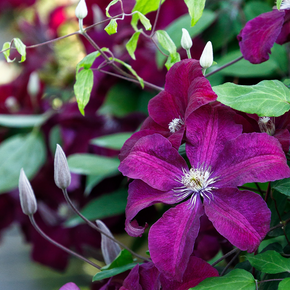
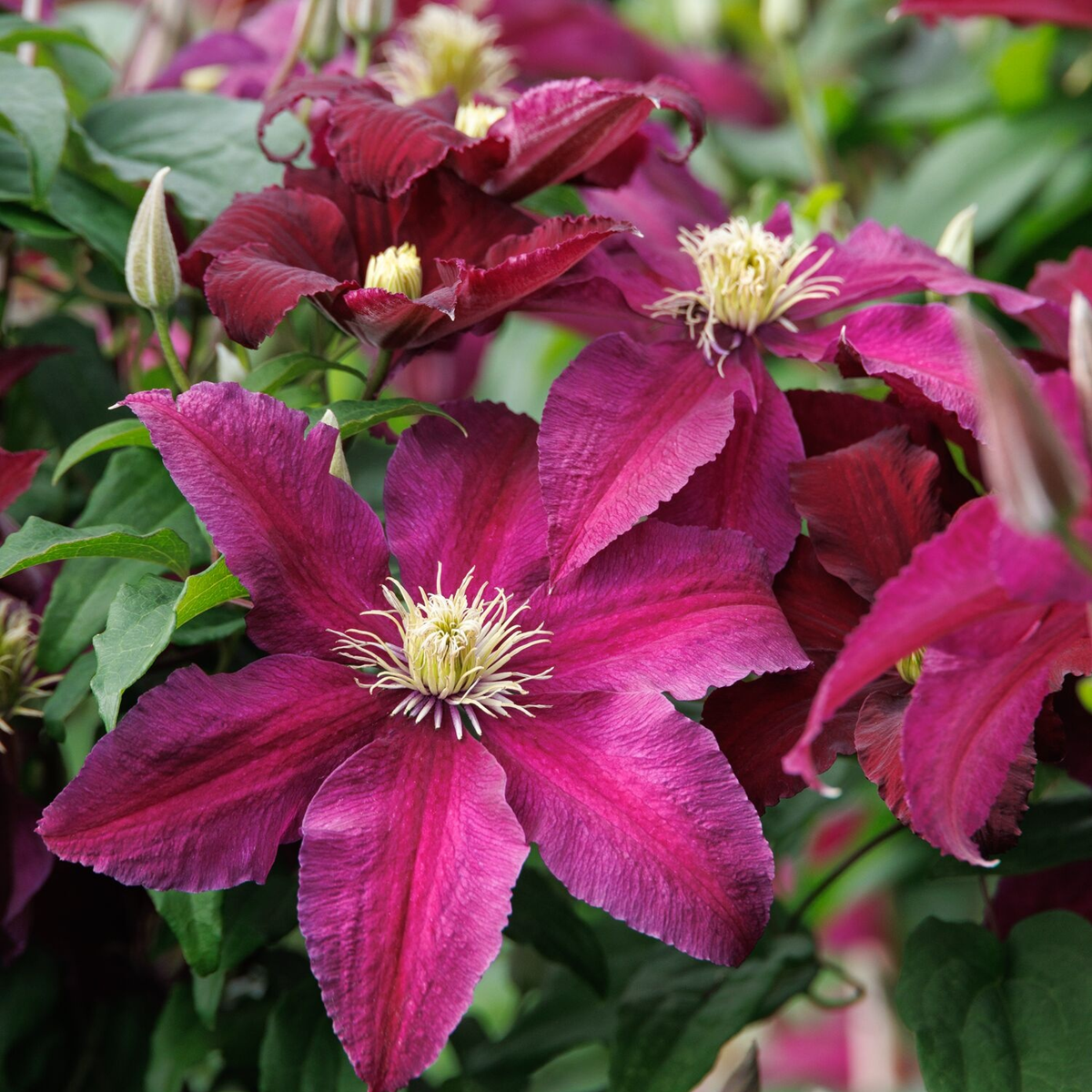
Clematis 'Niobe' (Clematis x 'Niobe') is a large-flowered deciduous climbing vine that has captivated gardeners worldwide since its introduction to the nursery trade in 1975. Originating from Poland and raised by Wladyslaw Noll, this RHS Award of Garden Merit winner is widely celebrated as one of the best red clematis ever developed, and it is easy to see why. Each breathtaking blossom measures up to 6 inches across and features 6 to 8 broad, velvety sepals that open a dramatic near-black ruby-red before maturing to a deep, luxuriant wine color — all accented by eye-catching butter-yellow anthers at the center. The leathery, textured deciduous foliage provides an attractive green backdrop from spring through fall, allowing the jewel-toned blooms to truly stand out. A vigorous yet manageable climber, Niobe Clematis grows 8 to 10 feet tall and thrives in full sun to part shade in moist, well-drained, fertile soil. As a Pruning Group 2 clematis, it blooms on both old and new wood, delivering a first spectacular flush in late spring and a rewarding second bloom in late summer to early fall. Whether trained up a trellis, woven through climbing roses, draped across an arbor, or grown as a stunning patio container specimen, Clematis 'Niobe' brings bold, season-long color and timeless cottage-garden elegance to any landscape in USDA Hardiness Zones 4 through 9.
Plant Description
Clematis 'Niobe' is a deciduous, large-flowered climbing vine belonging to the Ranunculaceae family. It is a hybrid of garden origin, raised in Poland by Wladyslaw Noll and introduced to the broader horticultural world in 1975. The plant is best known for its extraordinarily showy blooms: each flower spans up to 6 inches (15 cm) in diameter and features 6 to 8 broad sepals that are widest at the base and taper elegantly toward the tips. The flowers open from nearly black buds into a deep, velvety ruby-red and gradually mature to a rich wine-red color as the season progresses. Bright butter-yellow anthers provide a striking contrast at the center of each bloom. The foliage is deciduous, with opposite, leathery, and slightly textured medium-green leaves that die back in winter. The plant climbs by means of twining leaf stalks that cling naturally to any support structure. 'Niobe' has earned the prestigious Royal Horticultural Society Award of Garden Merit, a recognition reserved for plants that perform reliably and outstandingly well in garden conditions.
Mature Size
| Attribute | Measurement |
|---|---|
| Mature Height | 8 - 10 feet (240 - 300 cm) |
| Mature Spread / Width | 2 - 3 feet (60 - 90 cm) |
| Time to Reach Ultimate Height | 2 - 5 years |
| Growth Rate | Moderate to vigorous |
| Plant Spacing (in beds) | At least 24 - 36 inches on center |
Hardiness Zones and Climate
Clematis 'Niobe' is a hardy, cold-tolerant vine suited to a wide range of climates across the United States and beyond. In Southern Oregon and Northern California, it performs beautifully in the local climate, thriving in both the milder coastal valleys and the warmer inland regions.
- USDA Hardiness Zones: 4 - 9
- AHS Heat Zones: 1 - 9
- Sunset Climate Zones: 2A, 2B, 3A, 3B, 4, 5, 6, 7, 8, 9, 10, 11, 14, 15, 16, 17, 18, 19, 20, 21, 22, 23, 24, A2, A3
In hot summer climates, afternoon shade is beneficial for protecting the flowers and keeping root temperatures cooler. In colder climates within its hardy range, this vine dies back in winter and re-emerges vigorously from the roots in spring. Planting the crown 2 to 3 inches below soil level helps ensure regrowth even if the vine is damaged by a late frost.
Sunlight Requirements
Clematis 'Niobe' performs best in full sun to partial shade. For the richest bloom production, provide at least 4 to 6 hours of direct sunlight per day. In the warmer inland valleys of Southern Oregon and Northern California, a location with morning sun and light afternoon shade will protect the blooms from heat bleaching and help keep the root zone cooler. A classic and highly effective technique for clematis is to plant the vine where its "head is in the sun and its feet are in the shade" — meaning the upper climbing portion receives good light while the root zone remains shielded from direct sun by low-growing companion plants, mulch, flat stones, or pebbles. This approach promotes the most vigorous growth and the longest, most prolific flowering season.
Soil and pH Preferences
Clematis 'Niobe' thrives in fertile, humus-rich, moist but well-drained soil. Avoid poorly drained or waterlogged sites, which can lead to root rot and clematis wilt. The following soil conditions are ideal:
- Soil texture: Loam is ideal; chalk, clay, and sandy soils are acceptable if amended with organic matter
- Soil drainage: Moist but well-drained — consistent moisture is essential but standing water must be avoided
- Soil pH: Neutral to slightly alkaline (pH 6.5 - 8.0); avoid strongly acidic soils
- Organic matter: Enrich planting holes generously with high-quality compost or well-aged manure before planting
Applying a 2 to 3 inch layer of organic mulch over the root zone — keeping it slightly away from the base of the stem — helps maintain soil moisture, regulate root temperature, and gradually improve soil quality over time.
Watering Guide
Consistent moisture is key to keeping Clematis 'Niobe' healthy and blooming at its best. Follow these watering guidelines for optimal performance:
- Establishment period (first 1-2 seasons): Water deeply and regularly, keeping the soil evenly moist but not saturated. Newly planted vines have limited root systems and are most vulnerable to drought stress.
- Established plants: Water when the top inch of soil begins to dry out. Allow the soil to dry slightly between waterings, but do not allow the root zone to become fully dry during the growing season.
- Hot, dry weather: Increase watering frequency during summer heat spells, particularly for plants grown in containers or against south-facing walls that tend to dry out quickly.
- Mulching: A thick layer of mulch (2-3 inches) around the base dramatically reduces watering needs and moderates soil temperature.
- Avoid overwatering: Waterlogged soil promotes root rot and increases susceptibility to clematis wilt. Good drainage is essential at all times.
Fertilizing
Clematis 'Niobe' is a moderately heavy feeder that benefits from regular fertilization during the growing season to support its vigorous growth and prolific blooming. Follow this fertilizing program for best results:
- At planting: Work a generous amount of compost or well-rotted manure into the planting hole to enrich the soil and provide a slow, steady supply of nutrients.
- Early spring: Apply a balanced slow-release granular fertilizer as new growth begins to emerge to support strong stem and leaf development.
- During the growing season: Feed every 4 to 6 weeks with a high-potassium (tomato-type) fertilizer to promote flower bud development and vibrant bloom color. Potassium is especially important for flowering vines.
- Organic option: Mulching with composted manure each spring and supplementing with a complete organic fertilizer monthly through the season is an excellent organic approach.
- Late summer/fall: Reduce or cease fertilizing by late summer to allow stems to harden before winter dormancy.
Pruning and Maintenance
Clematis 'Niobe' belongs to Pruning Group 2 (sometimes called Group B), meaning it produces flowers on both the previous year's old wood (early summer flush) and on new growth produced in the current season (late summer/fall flush). Understanding this is critical to preserving the maximum number of blooms.
Late Winter / Early Spring Pruning (February - March):
- Working from the top of each stem downward, remove any dead, weak, or spindly growth until you reach a pair of healthy, plump buds.
- Cut just above a strong pair of buds. Avoid hard cutting all stems back to the ground, as this removes the old wood needed for the early summer bloom.
- Remove any tangled or crossing stems to improve airflow and structure.
After the First Flush of Flowers (Early-Mid Summer):
- Lightly prune back some stems by cutting just below the spent blooms to a large pair of buds or a strong side shoot.
- This encourages the production of new growth that will carry the second wave of flowers in late summer and early fall.
- Deadheading spent flowers promptly also speeds up the arrival of the second bloom cycle.
Renovation Pruning: Overgrown or congested plants can be gradually renewed by cutting a portion of older stems harder after the first bloom, though the plant may produce fewer flowers the following year. Full hard renovation every 3 to 4 years, cutting all stems to 12 to 18 inches from the ground in late winter, will rejuvenate an aging plant.
Planting Instructions
- Choose the right site: Select a location with full sun to part shade and well-drained, fertile soil. Ensure a support structure such as a trellis, fence, arbor, or wire system is in place before planting.
- Prepare the soil: Dig a planting hole at least twice the width and depth of the root ball. Amend generously with compost or aged manure to improve drainage and fertility.
- Plant depth: Plant the crown 2 to 3 inches (5-8 cm) deeper than the plant was growing in its nursery container. This deep planting protects the crown from damage and encourages new basal shoots to develop from below the soil surface.
- Shade the roots: After planting, shield the root zone from direct sunlight using a 2 to 3 inch layer of organic mulch, flat stones, low-growing perennials, or groundcover plants. Keep mulch slightly away from the main stem to prevent rot.
- Water in thoroughly: Water deeply immediately after planting to settle the soil and eliminate air pockets around the roots.
- Tie in stems: Gently guide young stems toward the support and loosely secure them with soft ties or plant clips. Once established, the leaf stalks will grip the support on their own.
- First-year care: Water consistently and avoid heavy fertilizing in the first few months. A light prune at planting time — cutting stems back to a pair of buds at 12-18 inches — encourages a bushier, well-branched plant in subsequent years.
Seasonal Interest
| Season | What to Expect |
|---|---|
| Early - Mid Spring | Fresh deciduous foliage emerges; leathery green leaves unfurl along climbing stems; flower buds begin to develop on old wood |
| Late Spring - Early Summer | First and most dramatic flush of large, velvety ruby-red to wine-red flowers up to 6 inches across; peak ornamental impact |
| Mid Summer | Deadheading and light pruning after first bloom; vigorous new growth develops, carrying buds for the second flowering cycle |
| Late Summer - Early Fall | Second flush of deep red blooms on new growth; continued attraction for butterflies, bees, and hummingbirds |
| Fall | Foliage begins to yellow and drop; attractive fluffy seedheads may develop after flowering |
| Winter | Plant goes fully dormant; woody stems remain on the support structure; root crown remains alive below ground |
Landscape Uses
Clematis 'Niobe' is one of the most versatile flowering vines available for residential landscapes and is at home in a wide variety of settings:
- Trellises and obelisks: A natural choice for a freestanding trellis or decorative obelisk as a bold focal point in a bed or border
- Fences and walls: Trains beautifully along wire systems, wooden fences, or wall-mounted trellis panels to create a rich tapestry of color
- Arbors and pergolas: Drapes elegantly over garden structures, framing entryways and outdoor seating areas with cascading blooms
- Through shrubs: Can be woven through medium-sized shrubs and climbing roses to create layered, multi-season floral displays
- Container gardening: Excels in large patio containers (minimum 18 inches wide and deep) when provided with a support structure and attentive watering
- Ground cover: Stems can be pinned along the ground to create a stunning, low-growing flowering ground cover — protect from slugs if using this method
- Cut flower garden: Both the foliage and individual blooms make elegant, long-lasting cut flowers for floral arrangements
- Cottage and informal gardens: A quintessential cottage garden plant, perfectly at home in relaxed, naturalistic planting schemes
Companion Plants
Clematis 'Niobe' pairs magnificently with a wide range of garden plants. The ideal companions serve double duty — shading the root zone of the clematis while contributing complementary color, texture, or blooming interest of their own:
- Climbing roses: Perhaps the most classic pairing in all of gardening — the deep ruby-red of 'Niobe' contrasts or harmonizes beautifully with pink, white, apricot, or crimson climbing roses sharing the same support
- Peonies (Paeonia): Large-flowered peonies bloom in synchrony with Niobe's first flush and provide lush, broad foliage that shades the clematis root zone
- Meadow rue (Thalictrum aquilegiifolium): Airy, lavender-purple flowers and blue-green foliage create a soft, romantic contrast to Niobe's bold red blooms
- Coneflowers (Echinacea): Warm-toned echinacea varieties planted at the vine's base provide root shading, pollinator appeal, and a lively summer color echo
- Ornamental grasses: Low-growing grasses planted at the base keep roots cool and add textural contrast without competing aggressively for resources
- Hostas: Excellent root-shading companions in partial-shade settings; their bold foliage provides a handsome backdrop to the climbing vine above
- Lavender or Salvia: Planted at the base of the support, these drought-adapted perennials provide root shade while contributing fragrance and additional pollinator value
Pests and Diseases
Clematis 'Niobe' is generally robust and easy to grow, but like all clematis it can occasionally be affected by certain pests and diseases. Early identification and prompt action keep problems manageable:
Common Pests:
- Aphids: Small sap-sucking insects that cluster on new growth and flower buds. Treat with a strong blast of water, insecticidal soap, or neem oil.
- Earwigs: May chew ragged holes in petals, especially at night. Reduce hiding places near the plant and use earwig traps if populations are high.
- Snails and slugs: Can damage young stems and foliage, particularly at ground level. Use iron phosphate-based slug bait or set beer traps near the base of the plant.
- Caterpillars: Occasional feeding damage on foliage; hand-pick caterpillars or apply Bt (Bacillus thuringiensis) for organic control.
- Spider mites: May appear in hot, dry conditions. Improve air circulation and water stressed plants; treat with neem oil or insecticidal soap if needed.
Common Diseases:
- Clematis wilt: The most notorious clematis disease, caused by the fungal pathogen Calophoma clematidina. Entire stems may collapse and blacken suddenly. Cut affected stems back to healthy tissue at or below ground level; the plant usually recovers from the roots. Deep planting (crown 2-3 inches below soil) provides insurance against this issue.
- Clematis slime flux: A bacterial condition causing oozing, foul-smelling lesions on stems. Prune out affected material and improve site drainage and airflow.
- Honey fungus (Armillaria): Rare but possible in soils with decaying woody debris. Remove infected material and avoid planting in contaminated soil.
Good cultural practices — proper planting depth, excellent drainage, adequate airflow, and consistent watering — are the best preventive measures against all major pests and diseases.
Container Growing
Clematis 'Niobe' adapts well to container culture, making it an excellent choice for patios, courtyards, and deck gardens in Southern Oregon and Northern California where in-ground planting space may be limited. Follow these guidelines for successful container growing:
- Container size: Use a container at least 18 inches wide and 18 inches deep (minimum 45 cm in each dimension) to accommodate the root system and maintain adequate soil moisture reserves.
- Potting mix: Use a high-quality, peat-free, loam-based potting compost with excellent drainage. Avoid lightweight, peat-only mixes that dry out too quickly and lack the structural support clematis roots need.
- Support: Install an obelisk, trellis insert, or decorative support structure in the container at planting time. 'Niobe' will quickly begin twining its leaf stalks around any available support.
- Watering: Containers dry out significantly faster than in-ground plantings, especially in warm weather. Check soil moisture daily during summer and water thoroughly whenever the top inch feels dry. Never allow the container to dry out completely.
- Fertilizing: Container-grown plants exhaust available nutrients more quickly. Feed every 2 to 3 weeks during the growing season with a high-potassium liquid fertilizer to sustain strong growth and bloom production.
- Winter care: In colder zones (4-6), move containers to a sheltered, unheated location such as a garage or shed to protect the roots from hard freezes. In the mild winters of Southern Oregon and Northern California (Zones 7-9), containers can often remain outdoors in a protected spot.
- Repotting: Refresh the potting mix every 2 to 3 years, or repot into a slightly larger container to reinvigorate the plant.
Wildlife Value
Clematis 'Niobe' is a valuable plant for supporting local wildlife and pollinators, making it an excellent addition to any garden with ecological goals:
- Bees: The open-faced, accessible flower structure makes 'Niobe' a highly attractive nectar and pollen source for native bees, honeybees, and bumblebees during its long blooming season from late spring through fall.
- Butterflies: The broad, flat flower landing pads are ideal for a wide range of butterfly species. The extended bloom period provides a reliable nectar source through multiple generations of summer butterflies.
- Hummingbirds: The vivid red-to-wine flower color is highly attractive to hummingbirds, which are active visitors in Southern Oregon and Northern California gardens from spring through early fall.
- Deer and rabbit resistance: Clematis 'Niobe' is generally unpalatable to deer and rabbits, making it a reliable choice for gardens where these browsing animals are a concern.
Note: All parts of Clematis 'Niobe' are toxic if ingested by dogs, cats, and horses. The plant also contains compounds that may cause mild skin irritation in sensitive individuals — wearing gloves when pruning or handling is recommended.
Toxicity and Safety
Clematis 'Niobe', like all clematis species, contains irritant compounds (including protoanemonin) that make it toxic if ingested and potentially irritating to sensitive skin. Gardeners and pet owners should be aware of the following:
- Dogs: Toxic if eaten; ingestion can cause drooling, vomiting, and diarrhea
- Cats: Toxic if eaten; symptoms are similar to those in dogs
- Horses: Toxic if eaten; can cause gastrointestinal upset
- Rabbits: Harmful if eaten in quantity
- Humans: Not considered seriously toxic if ingested in small amounts, but all plant parts are considered mildly poisonous. Sap may cause mild skin irritation or contact dermatitis in sensitive individuals.
It is recommended to wear gloves when pruning or handling this plant, especially for individuals with sensitive skin. Keep pets and children from nibbling on stems, leaves, or flowers. The plant is perfectly safe to grow in gardens where it is admired rather than consumed.
- Stunning 6-inch, velvety deep ruby-red flowers mature to a rich wine hue — widely regarded as one of the finest red clematis ever introduced, earning the prestigious Royal Horticultural Society Award of Garden Merit
- Exceptionally long blooming season from late spring through early fall, with a showy second flush of flowers later in summer when properly maintained — a true workhorse of the vertical garden
- Versatile climbing vine reaching 8-10 feet tall, perfectly suited for trellises, arbors, fences, pergolas, wall-side borders, and even large containers on patios and courtyards
- Deer and rabbit resistant, and a magnet for pollinators — butterflies, hummingbirds, and bees are all drawn to its dramatic blooms throughout the season
Clematis 'Niobe' (Clematis x 'Niobe') is a large-flowered deciduous climbing vine that has captivated gardeners worldwide since its introduction to the nursery trade in 1975. Originating from Poland and raised by Wladyslaw Noll, this RHS Award of Garden Merit winner is widely celebrated as one of the best red clematis ever developed, and it is easy to see why. Each breathtaking blossom measures up to 6 inches across and features 6 to 8 broad, velvety sepals that open a dramatic near-black ruby-red before maturing to a deep, luxuriant wine color — all accented by eye-catching butter-yellow anthers at the center. The leathery, textured deciduous foliage provides an attractive green backdrop from spring through fall, allowing the jewel-toned blooms to truly stand out. A vigorous yet manageable climber, Niobe Clematis grows 8 to 10 feet tall and thrives in full sun to part shade in moist, well-drained, fertile soil. As a Pruning Group 2 clematis, it blooms on both old and new wood, delivering a first spectacular flush in late spring and a rewarding second bloom in late summer to early fall. Whether trained up a trellis, woven through climbing roses, draped across an arbor, or grown as a stunning patio container specimen, Clematis 'Niobe' brings bold, season-long color and timeless cottage-garden elegance to any landscape in USDA Hardiness Zones 4 through 9.
Plant Description
Clematis 'Niobe' is a deciduous, large-flowered climbing vine belonging to the Ranunculaceae family. It is a hybrid of garden origin, raised in Poland by Wladyslaw Noll and introduced to the broader horticultural world in 1975. The plant is best known for its extraordinarily showy blooms: each flower spans up to 6 inches (15 cm) in diameter and features 6 to 8 broad sepals that are widest at the base and taper elegantly toward the tips. The flowers open from nearly black buds into a deep, velvety ruby-red and gradually mature to a rich wine-red color as the season progresses. Bright butter-yellow anthers provide a striking contrast at the center of each bloom. The foliage is deciduous, with opposite, leathery, and slightly textured medium-green leaves that die back in winter. The plant climbs by means of twining leaf stalks that cling naturally to any support structure. 'Niobe' has earned the prestigious Royal Horticultural Society Award of Garden Merit, a recognition reserved for plants that perform reliably and outstandingly well in garden conditions.
Mature Size
| Attribute | Measurement |
|---|---|
| Mature Height | 8 - 10 feet (240 - 300 cm) |
| Mature Spread / Width | 2 - 3 feet (60 - 90 cm) |
| Time to Reach Ultimate Height | 2 - 5 years |
| Growth Rate | Moderate to vigorous |
| Plant Spacing (in beds) | At least 24 - 36 inches on center |
Hardiness Zones and Climate
Clematis 'Niobe' is a hardy, cold-tolerant vine suited to a wide range of climates across the United States and beyond. In Southern Oregon and Northern California, it performs beautifully in the local climate, thriving in both the milder coastal valleys and the warmer inland regions.
- USDA Hardiness Zones: 4 - 9
- AHS Heat Zones: 1 - 9
- Sunset Climate Zones: 2A, 2B, 3A, 3B, 4, 5, 6, 7, 8, 9, 10, 11, 14, 15, 16, 17, 18, 19, 20, 21, 22, 23, 24, A2, A3
In hot summer climates, afternoon shade is beneficial for protecting the flowers and keeping root temperatures cooler. In colder climates within its hardy range, this vine dies back in winter and re-emerges vigorously from the roots in spring. Planting the crown 2 to 3 inches below soil level helps ensure regrowth even if the vine is damaged by a late frost.
Sunlight Requirements
Clematis 'Niobe' performs best in full sun to partial shade. For the richest bloom production, provide at least 4 to 6 hours of direct sunlight per day. In the warmer inland valleys of Southern Oregon and Northern California, a location with morning sun and light afternoon shade will protect the blooms from heat bleaching and help keep the root zone cooler. A classic and highly effective technique for clematis is to plant the vine where its "head is in the sun and its feet are in the shade" — meaning the upper climbing portion receives good light while the root zone remains shielded from direct sun by low-growing companion plants, mulch, flat stones, or pebbles. This approach promotes the most vigorous growth and the longest, most prolific flowering season.
Soil and pH Preferences
Clematis 'Niobe' thrives in fertile, humus-rich, moist but well-drained soil. Avoid poorly drained or waterlogged sites, which can lead to root rot and clematis wilt. The following soil conditions are ideal:
- Soil texture: Loam is ideal; chalk, clay, and sandy soils are acceptable if amended with organic matter
- Soil drainage: Moist but well-drained — consistent moisture is essential but standing water must be avoided
- Soil pH: Neutral to slightly alkaline (pH 6.5 - 8.0); avoid strongly acidic soils
- Organic matter: Enrich planting holes generously with high-quality compost or well-aged manure before planting
Applying a 2 to 3 inch layer of organic mulch over the root zone — keeping it slightly away from the base of the stem — helps maintain soil moisture, regulate root temperature, and gradually improve soil quality over time.
Watering Guide
Consistent moisture is key to keeping Clematis 'Niobe' healthy and blooming at its best. Follow these watering guidelines for optimal performance:
- Establishment period (first 1-2 seasons): Water deeply and regularly, keeping the soil evenly moist but not saturated. Newly planted vines have limited root systems and are most vulnerable to drought stress.
- Established plants: Water when the top inch of soil begins to dry out. Allow the soil to dry slightly between waterings, but do not allow the root zone to become fully dry during the growing season.
- Hot, dry weather: Increase watering frequency during summer heat spells, particularly for plants grown in containers or against south-facing walls that tend to dry out quickly.
- Mulching: A thick layer of mulch (2-3 inches) around the base dramatically reduces watering needs and moderates soil temperature.
- Avoid overwatering: Waterlogged soil promotes root rot and increases susceptibility to clematis wilt. Good drainage is essential at all times.
Fertilizing
Clematis 'Niobe' is a moderately heavy feeder that benefits from regular fertilization during the growing season to support its vigorous growth and prolific blooming. Follow this fertilizing program for best results:
- At planting: Work a generous amount of compost or well-rotted manure into the planting hole to enrich the soil and provide a slow, steady supply of nutrients.
- Early spring: Apply a balanced slow-release granular fertilizer as new growth begins to emerge to support strong stem and leaf development.
- During the growing season: Feed every 4 to 6 weeks with a high-potassium (tomato-type) fertilizer to promote flower bud development and vibrant bloom color. Potassium is especially important for flowering vines.
- Organic option: Mulching with composted manure each spring and supplementing with a complete organic fertilizer monthly through the season is an excellent organic approach.
- Late summer/fall: Reduce or cease fertilizing by late summer to allow stems to harden before winter dormancy.
Pruning and Maintenance
Clematis 'Niobe' belongs to Pruning Group 2 (sometimes called Group B), meaning it produces flowers on both the previous year's old wood (early summer flush) and on new growth produced in the current season (late summer/fall flush). Understanding this is critical to preserving the maximum number of blooms.
Late Winter / Early Spring Pruning (February - March):
- Working from the top of each stem downward, remove any dead, weak, or spindly growth until you reach a pair of healthy, plump buds.
- Cut just above a strong pair of buds. Avoid hard cutting all stems back to the ground, as this removes the old wood needed for the early summer bloom.
- Remove any tangled or crossing stems to improve airflow and structure.
After the First Flush of Flowers (Early-Mid Summer):
- Lightly prune back some stems by cutting just below the spent blooms to a large pair of buds or a strong side shoot.
- This encourages the production of new growth that will carry the second wave of flowers in late summer and early fall.
- Deadheading spent flowers promptly also speeds up the arrival of the second bloom cycle.
Renovation Pruning: Overgrown or congested plants can be gradually renewed by cutting a portion of older stems harder after the first bloom, though the plant may produce fewer flowers the following year. Full hard renovation every 3 to 4 years, cutting all stems to 12 to 18 inches from the ground in late winter, will rejuvenate an aging plant.
Planting Instructions
- Choose the right site: Select a location with full sun to part shade and well-drained, fertile soil. Ensure a support structure such as a trellis, fence, arbor, or wire system is in place before planting.
- Prepare the soil: Dig a planting hole at least twice the width and depth of the root ball. Amend generously with compost or aged manure to improve drainage and fertility.
- Plant depth: Plant the crown 2 to 3 inches (5-8 cm) deeper than the plant was growing in its nursery container. This deep planting protects the crown from damage and encourages new basal shoots to develop from below the soil surface.
- Shade the roots: After planting, shield the root zone from direct sunlight using a 2 to 3 inch layer of organic mulch, flat stones, low-growing perennials, or groundcover plants. Keep mulch slightly away from the main stem to prevent rot.
- Water in thoroughly: Water deeply immediately after planting to settle the soil and eliminate air pockets around the roots.
- Tie in stems: Gently guide young stems toward the support and loosely secure them with soft ties or plant clips. Once established, the leaf stalks will grip the support on their own.
- First-year care: Water consistently and avoid heavy fertilizing in the first few months. A light prune at planting time — cutting stems back to a pair of buds at 12-18 inches — encourages a bushier, well-branched plant in subsequent years.
Seasonal Interest
| Season | What to Expect |
|---|---|
| Early - Mid Spring | Fresh deciduous foliage emerges; leathery green leaves unfurl along climbing stems; flower buds begin to develop on old wood |
| Late Spring - Early Summer | First and most dramatic flush of large, velvety ruby-red to wine-red flowers up to 6 inches across; peak ornamental impact |
| Mid Summer | Deadheading and light pruning after first bloom; vigorous new growth develops, carrying buds for the second flowering cycle |
| Late Summer - Early Fall | Second flush of deep red blooms on new growth; continued attraction for butterflies, bees, and hummingbirds |
| Fall | Foliage begins to yellow and drop; attractive fluffy seedheads may develop after flowering |
| Winter | Plant goes fully dormant; woody stems remain on the support structure; root crown remains alive below ground |
Landscape Uses
Clematis 'Niobe' is one of the most versatile flowering vines available for residential landscapes and is at home in a wide variety of settings:
- Trellises and obelisks: A natural choice for a freestanding trellis or decorative obelisk as a bold focal point in a bed or border
- Fences and walls: Trains beautifully along wire systems, wooden fences, or wall-mounted trellis panels to create a rich tapestry of color
- Arbors and pergolas: Drapes elegantly over garden structures, framing entryways and outdoor seating areas with cascading blooms
- Through shrubs: Can be woven through medium-sized shrubs and climbing roses to create layered, multi-season floral displays
- Container gardening: Excels in large patio containers (minimum 18 inches wide and deep) when provided with a support structure and attentive watering
- Ground cover: Stems can be pinned along the ground to create a stunning, low-growing flowering ground cover — protect from slugs if using this method
- Cut flower garden: Both the foliage and individual blooms make elegant, long-lasting cut flowers for floral arrangements
- Cottage and informal gardens: A quintessential cottage garden plant, perfectly at home in relaxed, naturalistic planting schemes
Companion Plants
Clematis 'Niobe' pairs magnificently with a wide range of garden plants. The ideal companions serve double duty — shading the root zone of the clematis while contributing complementary color, texture, or blooming interest of their own:
- Climbing roses: Perhaps the most classic pairing in all of gardening — the deep ruby-red of 'Niobe' contrasts or harmonizes beautifully with pink, white, apricot, or crimson climbing roses sharing the same support
- Peonies (Paeonia): Large-flowered peonies bloom in synchrony with Niobe's first flush and provide lush, broad foliage that shades the clematis root zone
- Meadow rue (Thalictrum aquilegiifolium): Airy, lavender-purple flowers and blue-green foliage create a soft, romantic contrast to Niobe's bold red blooms
- Coneflowers (Echinacea): Warm-toned echinacea varieties planted at the vine's base provide root shading, pollinator appeal, and a lively summer color echo
- Ornamental grasses: Low-growing grasses planted at the base keep roots cool and add textural contrast without competing aggressively for resources
- Hostas: Excellent root-shading companions in partial-shade settings; their bold foliage provides a handsome backdrop to the climbing vine above
- Lavender or Salvia: Planted at the base of the support, these drought-adapted perennials provide root shade while contributing fragrance and additional pollinator value
Pests and Diseases
Clematis 'Niobe' is generally robust and easy to grow, but like all clematis it can occasionally be affected by certain pests and diseases. Early identification and prompt action keep problems manageable:
Common Pests:
- Aphids: Small sap-sucking insects that cluster on new growth and flower buds. Treat with a strong blast of water, insecticidal soap, or neem oil.
- Earwigs: May chew ragged holes in petals, especially at night. Reduce hiding places near the plant and use earwig traps if populations are high.
- Snails and slugs: Can damage young stems and foliage, particularly at ground level. Use iron phosphate-based slug bait or set beer traps near the base of the plant.
- Caterpillars: Occasional feeding damage on foliage; hand-pick caterpillars or apply Bt (Bacillus thuringiensis) for organic control.
- Spider mites: May appear in hot, dry conditions. Improve air circulation and water stressed plants; treat with neem oil or insecticidal soap if needed.
Common Diseases:
- Clematis wilt: The most notorious clematis disease, caused by the fungal pathogen Calophoma clematidina. Entire stems may collapse and blacken suddenly. Cut affected stems back to healthy tissue at or below ground level; the plant usually recovers from the roots. Deep planting (crown 2-3 inches below soil) provides insurance against this issue.
- Clematis slime flux: A bacterial condition causing oozing, foul-smelling lesions on stems. Prune out affected material and improve site drainage and airflow.
- Honey fungus (Armillaria): Rare but possible in soils with decaying woody debris. Remove infected material and avoid planting in contaminated soil.
Good cultural practices — proper planting depth, excellent drainage, adequate airflow, and consistent watering — are the best preventive measures against all major pests and diseases.
Container Growing
Clematis 'Niobe' adapts well to container culture, making it an excellent choice for patios, courtyards, and deck gardens in Southern Oregon and Northern California where in-ground planting space may be limited. Follow these guidelines for successful container growing:
- Container size: Use a container at least 18 inches wide and 18 inches deep (minimum 45 cm in each dimension) to accommodate the root system and maintain adequate soil moisture reserves.
- Potting mix: Use a high-quality, peat-free, loam-based potting compost with excellent drainage. Avoid lightweight, peat-only mixes that dry out too quickly and lack the structural support clematis roots need.
- Support: Install an obelisk, trellis insert, or decorative support structure in the container at planting time. 'Niobe' will quickly begin twining its leaf stalks around any available support.
- Watering: Containers dry out significantly faster than in-ground plantings, especially in warm weather. Check soil moisture daily during summer and water thoroughly whenever the top inch feels dry. Never allow the container to dry out completely.
- Fertilizing: Container-grown plants exhaust available nutrients more quickly. Feed every 2 to 3 weeks during the growing season with a high-potassium liquid fertilizer to sustain strong growth and bloom production.
- Winter care: In colder zones (4-6), move containers to a sheltered, unheated location such as a garage or shed to protect the roots from hard freezes. In the mild winters of Southern Oregon and Northern California (Zones 7-9), containers can often remain outdoors in a protected spot.
- Repotting: Refresh the potting mix every 2 to 3 years, or repot into a slightly larger container to reinvigorate the plant.
Wildlife Value
Clematis 'Niobe' is a valuable plant for supporting local wildlife and pollinators, making it an excellent addition to any garden with ecological goals:
- Bees: The open-faced, accessible flower structure makes 'Niobe' a highly attractive nectar and pollen source for native bees, honeybees, and bumblebees during its long blooming season from late spring through fall.
- Butterflies: The broad, flat flower landing pads are ideal for a wide range of butterfly species. The extended bloom period provides a reliable nectar source through multiple generations of summer butterflies.
- Hummingbirds: The vivid red-to-wine flower color is highly attractive to hummingbirds, which are active visitors in Southern Oregon and Northern California gardens from spring through early fall.
- Deer and rabbit resistance: Clematis 'Niobe' is generally unpalatable to deer and rabbits, making it a reliable choice for gardens where these browsing animals are a concern.
Note: All parts of Clematis 'Niobe' are toxic if ingested by dogs, cats, and horses. The plant also contains compounds that may cause mild skin irritation in sensitive individuals — wearing gloves when pruning or handling is recommended.
Toxicity and Safety
Clematis 'Niobe', like all clematis species, contains irritant compounds (including protoanemonin) that make it toxic if ingested and potentially irritating to sensitive skin. Gardeners and pet owners should be aware of the following:
- Dogs: Toxic if eaten; ingestion can cause drooling, vomiting, and diarrhea
- Cats: Toxic if eaten; symptoms are similar to those in dogs
- Horses: Toxic if eaten; can cause gastrointestinal upset
- Rabbits: Harmful if eaten in quantity
- Humans: Not considered seriously toxic if ingested in small amounts, but all plant parts are considered mildly poisonous. Sap may cause mild skin irritation or contact dermatitis in sensitive individuals.
It is recommended to wear gloves when pruning or handling this plant, especially for individuals with sensitive skin. Keep pets and children from nibbling on stems, leaves, or flowers. The plant is perfectly safe to grow in gardens where it is admired rather than consumed.
Related Products