
Zoom the image with the mouse
Redbird Indian Hawthorne - 2 Gallon
SKU:
1929740
UPC:
014949465233
$41.99
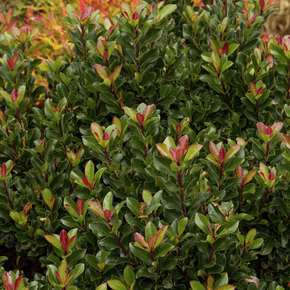
- Brilliant burgundy-red new growth emerges each season, maturing to a glossy, deep evergreen green for stunning year-round color contrast
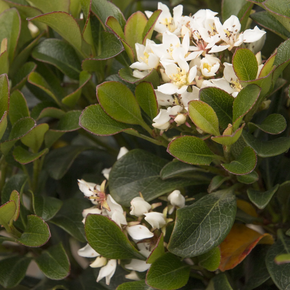
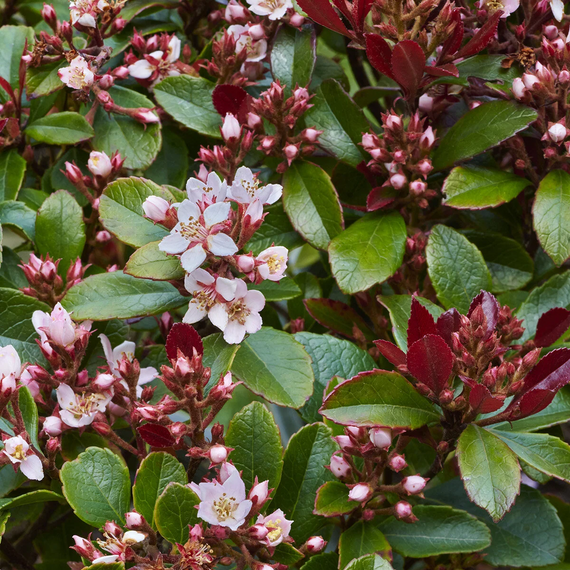
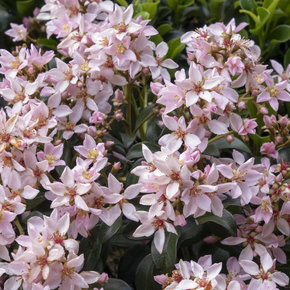
- Profuse clusters of fragrant white flowers blushed with pink blanket the shrub each spring, attracting bees and butterflies
- Upright, compact habit with exceptional resistance to leaf spot, leaf scorch, and powdery mildew — ideal for low-maintenance landscapes
- Versatile evergreen shrub suited for hedges, foundation plantings, mass plantings, borders, and container gardens in USDA Zones 7-10
Redbird Indian Hawthorn (Rhaphiolepis indica 'sPg-3-003' PP25,770) is a standout broadleaf evergreen shrub that delivers multi-season drama in the garden without demanding much in return. Each flush of new growth emerges in a vivid, eye-catching burgundy-red before gradually transitioning to rich, glossy deep green, giving the plant a layered, two-tone appeal throughout the growing season. In spring, the entire shrub becomes smothered in tight, upright clusters of fragrant star-shaped white flowers that blush pink as they open — a showy display that draws in pollinators from bees to butterflies. This Garden Debut cultivar features an upright yet neatly rounded, compact growth habit reaching 4 to 6 feet tall and equally as wide, making it a perfectly proportioned choice for residential and commercial landscapes alike. Notably disease-resistant, Redbird exhibits high resistance to the Entomosporium leaf spot that plagues many Indian Hawthorn varieties, as well as strong tolerance to leaf scorch, powdery mildew, and root rot. After flowering, small purplish-black berries develop and persist into winter, providing additional ornamental interest and a food source for songbirds. Adaptable to a wide range of soil types and pH levels, tolerant of coastal salt spray, urban pollution, and drought once established, this tough yet beautiful shrub thrives in full sun to partial shade across Southern Oregon and Northern California landscapes and is equally at home planted in containers, massed along slopes, trained into informal hedges, or used as a refined foundation shrub.
Plant Description
Redbird Indian Hawthorn is a dense, mounding, broadleaf evergreen shrub in the rose family (Rosaceae), native to southern China and Southeast Asia. It is prized for its extraordinary foliage display — new growth emerges a vivid burgundy-red before maturing to lustrous, leathery dark green. The leaves are alternate, simple, elliptical to lanceolate with finely serrated margins, and measure up to 3 inches long. Stems are purplish-brown when young, aging to grayish-brown, and the overall plant forms a tidy, upright-rounded mound. In late winter to early spring, terminal panicles up to 3 inches across bear clusters of fragrant, 5-petaled white flowers with shell-pink centers and reddish-pink stamens. Small purplish-blue-black berries follow and persist well into winter. The cultivar name 'Redbird' references the vivid red of its striking new foliage. Plant Patent No. PP25,770.
Mature Size
| Characteristic | Detail |
|---|---|
| Mature Height | 4 - 6 feet |
| Mature Spread | 4 - 6 feet |
| Growth Rate | Medium; approximately 1 foot per year under good conditions |
| Growth Habit | Upright, compact, and rounded mound |
| Canopy Clearance | Approximately 1 foot from the ground; suitable for planting under power lines |
| Recommended Spacing | Approximately 5 feet on center for mass plantings or hedges |
| Lifespan | Approximately 20 years under ideal conditions |
Hardiness Zones
Redbird Indian Hawthorn is winter hardy in USDA Plant Hardiness Zones 7 through 10, making it an excellent choice for the mild-winter climates of Southern Oregon and Northern California. It is not cold-tolerant in zones colder than Zone 7. In the upper end of its range (Zone 7), plants may experience some foliage bronzing or minor tip dieback during unusually harsh winters, but they typically recover well in spring. In Zones 8-10, plants remain reliably evergreen year-round with little to no cold damage. This shrub performs especially well in coastal and inland valley landscapes throughout its recommended range.
Sunlight Requirements
Redbird Indian Hawthorn performs best in full sun, defined as 6 or more hours of direct sunlight per day. Full sun exposure promotes the most prolific spring flowering, the richest foliage color contrast between new red growth and mature green leaves, and the greatest resistance to fungal diseases such as Entomosporium leaf spot. It will tolerate partial shade (3-6 hours of sun), but flowering may be reduced and the plant can become more susceptible to disease in shadier, more humid conditions. In the hotter inland regions of Northern California, light afternoon shade can help protect the plant during the peak of summer heat. Avoid deep or full shade, as this leads to sparse growth and significantly increased disease pressure.
Soil and pH Preferences
One of the most adaptable qualities of Redbird Indian Hawthorn is its flexibility with soil type and pH. It performs well in a wide range of conditions, including:
- Soil Types: Clay, loam, silt, and sandy soils — adapts to most soil textures found in home gardens
- Soil pH: Tolerates both acidic soils (below 6.0) and alkaline soils (above 8.0), as well as neutral pH ranges (6.0-8.0)
- Drainage: Prefers good drainage; tolerates moist or occasionally dry conditions once established, but does not thrive in consistently waterlogged soils
- Amending: Incorporating organic matter such as compost into the backfill at planting time improves establishment in heavier clay soils and aids moisture retention in sandy soils
- Salt Tolerance: Demonstrates good tolerance to coastal salt spray and urban pollution, making it suitable for seaside plantings
Watering Guide
Proper watering is most critical during the establishment period following planting. Follow these general guidelines:
- Newly Planted: Water deeply and regularly at the root zone for the first growing season to encourage deep root establishment. Water every few days during hot, dry spells.
- Established Plants: Once established (typically after 1-2 growing seasons), Redbird becomes moderately drought tolerant. Water occasionally, allowing the top 3 inches of soil to dry out between watering sessions.
- During Drought or Extended Heat: Supplemental watering is recommended during prolonged dry periods or heat waves, which are common in Northern California and inland Southern Oregon summers.
- Irrigation Method: Use drip irrigation or soaker hoses rather than overhead sprinklers. Wetting the foliage promotes Entomosporium leaf spot and other fungal diseases, especially in humid conditions.
- Avoid Overwatering: Standing water and saturated soil can lead to root rot. Always ensure adequate drainage.
Fertilizing
Redbird Indian Hawthorn is a low-maintenance shrub with modest fertilizer needs. Over-fertilizing can lead to excessive soft growth that is more susceptible to pests and disease.
- Frequency: Feed once per year in early spring, just as new growth begins to emerge.
- Fertilizer Type: Apply a balanced, slow-release tree and shrub granular fertilizer. A formulation such as 10-10-10 or a product specifically blended for acid-loving broadleaf evergreens works well.
- Application: Broadcast the granules evenly under the plant's canopy, out to and slightly beyond the drip line, following the label rate. Water in thoroughly after application.
- Avoid Late-Season Feeding: Do not fertilize after midsummer, as this encourages tender new growth that may be damaged by early fall frosts in Zone 7 gardens.
- Container Plants: Container-grown specimens benefit from a slow-release fertilizer incorporated into the potting mix at planting, or a liquid balanced fertilizer applied monthly during the growing season (spring through summer).
Pruning and Maintenance
Redbird Indian Hawthorn is a genuinely low-maintenance shrub that requires minimal pruning to maintain its naturally attractive form. Here are the key guidelines:
- When to Prune: The best time to prune is immediately after the spring bloom period ends, typically late spring to early summer. Pruning at this time preserves the following season's flower buds, which are set on current-season wood in late summer and fall.
- How Much to Prune: Light shaping to maintain a tidy outline is all that is typically needed. Avoid shearing into a rigid, formal shape, as this reduces the natural beauty and limits flowering.
- Removing Dieback: Trim out any dead, damaged, or crossing branches as needed at any time of year.
- Rejuvenation: If a plant becomes overgrown or leggy, a more significant reduction can be done in late winter before new growth begins, though this will sacrifice that season's bloom.
- Tools: Always use clean, sharp pruning shears. Disinfect tools between plants to reduce disease transmission.
- Overall: Avoid excessive pruning — this shrub looks its best when allowed to express its natural rounded form.
Planting Instructions
- Timing: Plant in spring or fall when temperatures are moderate. Spring planting is preferred to give the plant a full growing season to establish before winter.
- Site Selection: Choose a location that receives at least 6 hours of direct sunlight daily with good air circulation to discourage fungal disease.
- Dig the Hole: Dig a hole 2 to 3 times wider than the root ball and the same depth as the container. Do not plant too deeply — the top of the root ball should sit level with or very slightly above the surrounding soil grade.
- Amend the Soil: Mix the excavated soil with compost or aged organic matter if your native soil is heavy clay or very sandy.
- Remove and Inspect: Gently remove the plant from its container and loosen any circling roots. Place it in the center of the hole.
- Backfill: Fill in with the amended soil, tamping lightly to eliminate large air pockets. Avoid compacting the soil excessively.
- Mulch: Apply a 2 to 3-inch layer of organic mulch (wood chips, bark, or shredded leaves) around the base, keeping mulch several inches away from the crown and stems to prevent rot and disease.
- Water In: Water deeply immediately after planting to settle the soil and begin the establishment process.
- Hedge Spacing: For informal hedges or screening, space plants approximately 4 to 5 feet on center.
Seasonal Interest
| Season | What to Expect |
|---|---|
| Spring | Explosive flush of brilliant burgundy-red new foliage; profuse clusters of fragrant white-to-pink star-shaped flowers cover the plant from late winter through spring; high pollinator activity |
| Summer | New red growth matures to a rich, glossy deep green; dense evergreen canopy provides lush structure; small dark berries begin to develop following bloom |
| Fall | Deep green foliage may take on subtle purplish bronzing as temperatures cool; dark purplish-blue-black berries ripen and attract songbirds |
| Winter | Retains dense evergreen foliage for year-round structure and screening; berries persist for continued bird interest; foliage may deepen in color to dark green or show purple tints in cold conditions |
Landscape Uses
Redbird Indian Hawthorn is an incredibly versatile landscape shrub well-suited to a wide variety of design applications:
- Foundation Planting: Its compact, upright form and year-round evergreen foliage make it an ideal choice for softening building foundations.
- Informal Hedge or Screen: Plant in a staggered row for an attractive, low-maintenance privacy screen or property boundary hedge.
- Mass Planting: Plant in groupings of three or more for bold seasonal color impact on slopes, berms, or open areas; also effective for erosion control on banks.
- Accent or Specimen: The dramatic red-and-green foliage contrast makes a single plant an effective focal point in mixed borders or garden beds.
- Container Planting: Suitable as a patio or courtyard specimen in a large decorative container; can serve as the 'thriller' element in mixed container designs.
- Coastal Gardens: Salt tolerance makes it well-suited for gardens near the Pacific Coast.
- Slopes and Banks: Dense rooting habit and drought tolerance once established make it practical for erosion-prone areas.
- Under Power Lines: Mature height typically stays within safe clearance for planting in utility easements.
- Pollinator Garden: Spring blossoms are a reliable nectar source for bees and butterflies.
Companion Plants
Redbird Indian Hawthorn pairs beautifully with plants that complement its bold foliage colors, evergreen structure, and sun and drainage requirements. Consider the following companions for cohesive planting combinations:
- Rosemary (Salvia rosmarinus): Shares the same love of full sun and well-drained soil; silvery-gray foliage and blue flowers contrast beautifully with Redbird's red-and-green tones
- Loropetalum (Loropetalum chinense): Complements Redbird's red foliage with deep burgundy leaves and hot-pink fringe flowers; similar cultural needs
- Cotoneaster (Cotoneaster spp.): Provides contrasting texture with fine-textured foliage and red berries; thrives in similar sunny, well-drained conditions
- Crape Myrtle (Lagerstroemia spp.): Provides vertical structure and summer blooms above the rounded form of Redbird; compatible sun and soil requirements
- Junipers (Juniperus spp.): Evergreen conifers with contrasting texture that pair well with the bold foliage of Indian Hawthorn in foundation or mass plantings
- Hollies (Ilex spp.): Fellow broadleaf evergreens with complementary berry interest and bird-attracting qualities
- Ornamental Grasses: Fine-textured grasses like Mexican feather grass (Nassella tenuissima) soften the edges of a Redbird mass planting with graceful movement
Pests and Diseases
Redbird Indian Hawthorn has been bred for improved disease resistance compared to many older Indian Hawthorn varieties, but it is still worth being aware of potential issues:
- Entomosporium Leaf Spot: The most common disease of Indian Hawthorn species, caused by the fungus Entomosporium mespili. Tiny, round red spots appear on both leaf surfaces and can lead to defoliation if severe. Redbird exhibits high resistance to this disease. Prevent it by planting in full sun, avoiding overhead irrigation, and ensuring good air circulation.
- Fire Blight (Erwinia amylovora): A bacterial disease that causes branch tips to turn brown and die back in a characteristic "shepherd's crook" shape. Remove and destroy affected branches, cutting well below the infected tissue with sterilized tools.
- Powdery Mildew: Redbird shows high resistance to powdery mildew. Adequate sun and air circulation are the best preventive measures.
- Root Rot (Phytophthora spp.): Can occur in poorly drained or chronically wet soils. Ensure excellent drainage at the planting site. Redbird displays high resistance to root rot relative to other cultivars.
- Aphids: Soft-bodied insects that may cluster on new growth in spring. Typically manageable with a strong spray of water or insecticidal soap.
- Scale Insects: Occasional scale infestations can be treated with horticultural oil applied in late winter or spring before new growth hardens off.
- Best Prevention: Full sun siting, drip irrigation (no overhead watering), adequate spacing for air circulation, and annual cleanup of fallen leaf debris are the most effective disease prevention practices.
Container Growing
Redbird Indian Hawthorn adapts well to container culture and makes a striking patio, entryway, or courtyard specimen. Its evergreen foliage and spring floral display provide long-lasting ornamental value in a pot. Follow these tips for success:
- Container Size: Choose a container at least 18-24 inches in diameter with ample depth to accommodate the root system. Larger containers retain moisture better and allow more root expansion.
- Drainage: The container must have drainage holes to prevent root rot. Elevate pots slightly off paved surfaces to ensure free drainage.
- Potting Mix: Use a high-quality, well-draining potting mix. Avoid dense, water-retaining mixes. Incorporating perlite improves drainage.
- Sunlight: Position in a location that receives at least 6 hours of direct sun daily for best foliage color and flowering.
- Watering: Container plants dry out faster than in-ground plants and will require more frequent watering, especially during hot summer months. Check moisture levels regularly.
- Fertilizing: Feed monthly during the active growing season (spring through summer) with a balanced liquid fertilizer, or incorporate a slow-release granular fertilizer into the potting mix each spring.
- Repotting: Repot every 2-3 years or when the plant becomes root-bound, moving up one container size at a time.
- Design Tip: Use Redbird as the dramatic 'thriller' centerpiece in a large mixed container, surrounded by trailing plants like sweet potato vine or calibrachoa for a bold seasonal display.
Wildlife Value
Redbird Indian Hawthorn supports local wildlife in several meaningful ways, making it a valuable addition to pollinator and wildlife-friendly gardens:
- Pollinators: The abundant clusters of fragrant spring flowers are an important early-season nectar source for bees, butterflies, and other beneficial pollinators. The bright red new foliage is also noted to attract butterflies.
- Songbirds: The small, dark purplish-blue berries that develop after flowering and persist into winter provide a food source for a variety of songbirds. The dense evergreen foliage also offers shelter and potential nesting habitat.
- Deer: Indian Hawthorn is browsed by deer and is not considered deer-resistant. In areas with high deer pressure, physical protection of young plants may be advisable.
- Toxicity: The berries and foliage are considered non-toxic to pets but may cause mild gastrointestinal upset in humans if ingested in quantity. The plant is not invasive — cultivated varieties such as Redbird produce low-fertility fruit with few viable seeds.
- Brilliant burgundy-red new growth emerges each season, maturing to a glossy, deep evergreen green for stunning year-round color contrast
- Profuse clusters of fragrant white flowers blushed with pink blanket the shrub each spring, attracting bees and butterflies
- Upright, compact habit with exceptional resistance to leaf spot, leaf scorch, and powdery mildew — ideal for low-maintenance landscapes
- Versatile evergreen shrub suited for hedges, foundation plantings, mass plantings, borders, and container gardens in USDA Zones 7-10
Redbird Indian Hawthorn (Rhaphiolepis indica 'sPg-3-003' PP25,770) is a standout broadleaf evergreen shrub that delivers multi-season drama in the garden without demanding much in return. Each flush of new growth emerges in a vivid, eye-catching burgundy-red before gradually transitioning to rich, glossy deep green, giving the plant a layered, two-tone appeal throughout the growing season. In spring, the entire shrub becomes smothered in tight, upright clusters of fragrant star-shaped white flowers that blush pink as they open — a showy display that draws in pollinators from bees to butterflies. This Garden Debut cultivar features an upright yet neatly rounded, compact growth habit reaching 4 to 6 feet tall and equally as wide, making it a perfectly proportioned choice for residential and commercial landscapes alike. Notably disease-resistant, Redbird exhibits high resistance to the Entomosporium leaf spot that plagues many Indian Hawthorn varieties, as well as strong tolerance to leaf scorch, powdery mildew, and root rot. After flowering, small purplish-black berries develop and persist into winter, providing additional ornamental interest and a food source for songbirds. Adaptable to a wide range of soil types and pH levels, tolerant of coastal salt spray, urban pollution, and drought once established, this tough yet beautiful shrub thrives in full sun to partial shade across Southern Oregon and Northern California landscapes and is equally at home planted in containers, massed along slopes, trained into informal hedges, or used as a refined foundation shrub.
Plant Description
Redbird Indian Hawthorn is a dense, mounding, broadleaf evergreen shrub in the rose family (Rosaceae), native to southern China and Southeast Asia. It is prized for its extraordinary foliage display — new growth emerges a vivid burgundy-red before maturing to lustrous, leathery dark green. The leaves are alternate, simple, elliptical to lanceolate with finely serrated margins, and measure up to 3 inches long. Stems are purplish-brown when young, aging to grayish-brown, and the overall plant forms a tidy, upright-rounded mound. In late winter to early spring, terminal panicles up to 3 inches across bear clusters of fragrant, 5-petaled white flowers with shell-pink centers and reddish-pink stamens. Small purplish-blue-black berries follow and persist well into winter. The cultivar name 'Redbird' references the vivid red of its striking new foliage. Plant Patent No. PP25,770.
Mature Size
| Characteristic | Detail |
|---|---|
| Mature Height | 4 - 6 feet |
| Mature Spread | 4 - 6 feet |
| Growth Rate | Medium; approximately 1 foot per year under good conditions |
| Growth Habit | Upright, compact, and rounded mound |
| Canopy Clearance | Approximately 1 foot from the ground; suitable for planting under power lines |
| Recommended Spacing | Approximately 5 feet on center for mass plantings or hedges |
| Lifespan | Approximately 20 years under ideal conditions |
Hardiness Zones
Redbird Indian Hawthorn is winter hardy in USDA Plant Hardiness Zones 7 through 10, making it an excellent choice for the mild-winter climates of Southern Oregon and Northern California. It is not cold-tolerant in zones colder than Zone 7. In the upper end of its range (Zone 7), plants may experience some foliage bronzing or minor tip dieback during unusually harsh winters, but they typically recover well in spring. In Zones 8-10, plants remain reliably evergreen year-round with little to no cold damage. This shrub performs especially well in coastal and inland valley landscapes throughout its recommended range.
Sunlight Requirements
Redbird Indian Hawthorn performs best in full sun, defined as 6 or more hours of direct sunlight per day. Full sun exposure promotes the most prolific spring flowering, the richest foliage color contrast between new red growth and mature green leaves, and the greatest resistance to fungal diseases such as Entomosporium leaf spot. It will tolerate partial shade (3-6 hours of sun), but flowering may be reduced and the plant can become more susceptible to disease in shadier, more humid conditions. In the hotter inland regions of Northern California, light afternoon shade can help protect the plant during the peak of summer heat. Avoid deep or full shade, as this leads to sparse growth and significantly increased disease pressure.
Soil and pH Preferences
One of the most adaptable qualities of Redbird Indian Hawthorn is its flexibility with soil type and pH. It performs well in a wide range of conditions, including:
- Soil Types: Clay, loam, silt, and sandy soils — adapts to most soil textures found in home gardens
- Soil pH: Tolerates both acidic soils (below 6.0) and alkaline soils (above 8.0), as well as neutral pH ranges (6.0-8.0)
- Drainage: Prefers good drainage; tolerates moist or occasionally dry conditions once established, but does not thrive in consistently waterlogged soils
- Amending: Incorporating organic matter such as compost into the backfill at planting time improves establishment in heavier clay soils and aids moisture retention in sandy soils
- Salt Tolerance: Demonstrates good tolerance to coastal salt spray and urban pollution, making it suitable for seaside plantings
Watering Guide
Proper watering is most critical during the establishment period following planting. Follow these general guidelines:
- Newly Planted: Water deeply and regularly at the root zone for the first growing season to encourage deep root establishment. Water every few days during hot, dry spells.
- Established Plants: Once established (typically after 1-2 growing seasons), Redbird becomes moderately drought tolerant. Water occasionally, allowing the top 3 inches of soil to dry out between watering sessions.
- During Drought or Extended Heat: Supplemental watering is recommended during prolonged dry periods or heat waves, which are common in Northern California and inland Southern Oregon summers.
- Irrigation Method: Use drip irrigation or soaker hoses rather than overhead sprinklers. Wetting the foliage promotes Entomosporium leaf spot and other fungal diseases, especially in humid conditions.
- Avoid Overwatering: Standing water and saturated soil can lead to root rot. Always ensure adequate drainage.
Fertilizing
Redbird Indian Hawthorn is a low-maintenance shrub with modest fertilizer needs. Over-fertilizing can lead to excessive soft growth that is more susceptible to pests and disease.
- Frequency: Feed once per year in early spring, just as new growth begins to emerge.
- Fertilizer Type: Apply a balanced, slow-release tree and shrub granular fertilizer. A formulation such as 10-10-10 or a product specifically blended for acid-loving broadleaf evergreens works well.
- Application: Broadcast the granules evenly under the plant's canopy, out to and slightly beyond the drip line, following the label rate. Water in thoroughly after application.
- Avoid Late-Season Feeding: Do not fertilize after midsummer, as this encourages tender new growth that may be damaged by early fall frosts in Zone 7 gardens.
- Container Plants: Container-grown specimens benefit from a slow-release fertilizer incorporated into the potting mix at planting, or a liquid balanced fertilizer applied monthly during the growing season (spring through summer).
Pruning and Maintenance
Redbird Indian Hawthorn is a genuinely low-maintenance shrub that requires minimal pruning to maintain its naturally attractive form. Here are the key guidelines:
- When to Prune: The best time to prune is immediately after the spring bloom period ends, typically late spring to early summer. Pruning at this time preserves the following season's flower buds, which are set on current-season wood in late summer and fall.
- How Much to Prune: Light shaping to maintain a tidy outline is all that is typically needed. Avoid shearing into a rigid, formal shape, as this reduces the natural beauty and limits flowering.
- Removing Dieback: Trim out any dead, damaged, or crossing branches as needed at any time of year.
- Rejuvenation: If a plant becomes overgrown or leggy, a more significant reduction can be done in late winter before new growth begins, though this will sacrifice that season's bloom.
- Tools: Always use clean, sharp pruning shears. Disinfect tools between plants to reduce disease transmission.
- Overall: Avoid excessive pruning — this shrub looks its best when allowed to express its natural rounded form.
Planting Instructions
- Timing: Plant in spring or fall when temperatures are moderate. Spring planting is preferred to give the plant a full growing season to establish before winter.
- Site Selection: Choose a location that receives at least 6 hours of direct sunlight daily with good air circulation to discourage fungal disease.
- Dig the Hole: Dig a hole 2 to 3 times wider than the root ball and the same depth as the container. Do not plant too deeply — the top of the root ball should sit level with or very slightly above the surrounding soil grade.
- Amend the Soil: Mix the excavated soil with compost or aged organic matter if your native soil is heavy clay or very sandy.
- Remove and Inspect: Gently remove the plant from its container and loosen any circling roots. Place it in the center of the hole.
- Backfill: Fill in with the amended soil, tamping lightly to eliminate large air pockets. Avoid compacting the soil excessively.
- Mulch: Apply a 2 to 3-inch layer of organic mulch (wood chips, bark, or shredded leaves) around the base, keeping mulch several inches away from the crown and stems to prevent rot and disease.
- Water In: Water deeply immediately after planting to settle the soil and begin the establishment process.
- Hedge Spacing: For informal hedges or screening, space plants approximately 4 to 5 feet on center.
Seasonal Interest
| Season | What to Expect |
|---|---|
| Spring | Explosive flush of brilliant burgundy-red new foliage; profuse clusters of fragrant white-to-pink star-shaped flowers cover the plant from late winter through spring; high pollinator activity |
| Summer | New red growth matures to a rich, glossy deep green; dense evergreen canopy provides lush structure; small dark berries begin to develop following bloom |
| Fall | Deep green foliage may take on subtle purplish bronzing as temperatures cool; dark purplish-blue-black berries ripen and attract songbirds |
| Winter | Retains dense evergreen foliage for year-round structure and screening; berries persist for continued bird interest; foliage may deepen in color to dark green or show purple tints in cold conditions |
Landscape Uses
Redbird Indian Hawthorn is an incredibly versatile landscape shrub well-suited to a wide variety of design applications:
- Foundation Planting: Its compact, upright form and year-round evergreen foliage make it an ideal choice for softening building foundations.
- Informal Hedge or Screen: Plant in a staggered row for an attractive, low-maintenance privacy screen or property boundary hedge.
- Mass Planting: Plant in groupings of three or more for bold seasonal color impact on slopes, berms, or open areas; also effective for erosion control on banks.
- Accent or Specimen: The dramatic red-and-green foliage contrast makes a single plant an effective focal point in mixed borders or garden beds.
- Container Planting: Suitable as a patio or courtyard specimen in a large decorative container; can serve as the 'thriller' element in mixed container designs.
- Coastal Gardens: Salt tolerance makes it well-suited for gardens near the Pacific Coast.
- Slopes and Banks: Dense rooting habit and drought tolerance once established make it practical for erosion-prone areas.
- Under Power Lines: Mature height typically stays within safe clearance for planting in utility easements.
- Pollinator Garden: Spring blossoms are a reliable nectar source for bees and butterflies.
Companion Plants
Redbird Indian Hawthorn pairs beautifully with plants that complement its bold foliage colors, evergreen structure, and sun and drainage requirements. Consider the following companions for cohesive planting combinations:
- Rosemary (Salvia rosmarinus): Shares the same love of full sun and well-drained soil; silvery-gray foliage and blue flowers contrast beautifully with Redbird's red-and-green tones
- Loropetalum (Loropetalum chinense): Complements Redbird's red foliage with deep burgundy leaves and hot-pink fringe flowers; similar cultural needs
- Cotoneaster (Cotoneaster spp.): Provides contrasting texture with fine-textured foliage and red berries; thrives in similar sunny, well-drained conditions
- Crape Myrtle (Lagerstroemia spp.): Provides vertical structure and summer blooms above the rounded form of Redbird; compatible sun and soil requirements
- Junipers (Juniperus spp.): Evergreen conifers with contrasting texture that pair well with the bold foliage of Indian Hawthorn in foundation or mass plantings
- Hollies (Ilex spp.): Fellow broadleaf evergreens with complementary berry interest and bird-attracting qualities
- Ornamental Grasses: Fine-textured grasses like Mexican feather grass (Nassella tenuissima) soften the edges of a Redbird mass planting with graceful movement
Pests and Diseases
Redbird Indian Hawthorn has been bred for improved disease resistance compared to many older Indian Hawthorn varieties, but it is still worth being aware of potential issues:
- Entomosporium Leaf Spot: The most common disease of Indian Hawthorn species, caused by the fungus Entomosporium mespili. Tiny, round red spots appear on both leaf surfaces and can lead to defoliation if severe. Redbird exhibits high resistance to this disease. Prevent it by planting in full sun, avoiding overhead irrigation, and ensuring good air circulation.
- Fire Blight (Erwinia amylovora): A bacterial disease that causes branch tips to turn brown and die back in a characteristic "shepherd's crook" shape. Remove and destroy affected branches, cutting well below the infected tissue with sterilized tools.
- Powdery Mildew: Redbird shows high resistance to powdery mildew. Adequate sun and air circulation are the best preventive measures.
- Root Rot (Phytophthora spp.): Can occur in poorly drained or chronically wet soils. Ensure excellent drainage at the planting site. Redbird displays high resistance to root rot relative to other cultivars.
- Aphids: Soft-bodied insects that may cluster on new growth in spring. Typically manageable with a strong spray of water or insecticidal soap.
- Scale Insects: Occasional scale infestations can be treated with horticultural oil applied in late winter or spring before new growth hardens off.
- Best Prevention: Full sun siting, drip irrigation (no overhead watering), adequate spacing for air circulation, and annual cleanup of fallen leaf debris are the most effective disease prevention practices.
Container Growing
Redbird Indian Hawthorn adapts well to container culture and makes a striking patio, entryway, or courtyard specimen. Its evergreen foliage and spring floral display provide long-lasting ornamental value in a pot. Follow these tips for success:
- Container Size: Choose a container at least 18-24 inches in diameter with ample depth to accommodate the root system. Larger containers retain moisture better and allow more root expansion.
- Drainage: The container must have drainage holes to prevent root rot. Elevate pots slightly off paved surfaces to ensure free drainage.
- Potting Mix: Use a high-quality, well-draining potting mix. Avoid dense, water-retaining mixes. Incorporating perlite improves drainage.
- Sunlight: Position in a location that receives at least 6 hours of direct sun daily for best foliage color and flowering.
- Watering: Container plants dry out faster than in-ground plants and will require more frequent watering, especially during hot summer months. Check moisture levels regularly.
- Fertilizing: Feed monthly during the active growing season (spring through summer) with a balanced liquid fertilizer, or incorporate a slow-release granular fertilizer into the potting mix each spring.
- Repotting: Repot every 2-3 years or when the plant becomes root-bound, moving up one container size at a time.
- Design Tip: Use Redbird as the dramatic 'thriller' centerpiece in a large mixed container, surrounded by trailing plants like sweet potato vine or calibrachoa for a bold seasonal display.
Wildlife Value
Redbird Indian Hawthorn supports local wildlife in several meaningful ways, making it a valuable addition to pollinator and wildlife-friendly gardens:
- Pollinators: The abundant clusters of fragrant spring flowers are an important early-season nectar source for bees, butterflies, and other beneficial pollinators. The bright red new foliage is also noted to attract butterflies.
- Songbirds: The small, dark purplish-blue berries that develop after flowering and persist into winter provide a food source for a variety of songbirds. The dense evergreen foliage also offers shelter and potential nesting habitat.
- Deer: Indian Hawthorn is browsed by deer and is not considered deer-resistant. In areas with high deer pressure, physical protection of young plants may be advisable.
- Toxicity: The berries and foliage are considered non-toxic to pets but may cause mild gastrointestinal upset in humans if ingested in quantity. The plant is not invasive — cultivated varieties such as Redbird produce low-fertility fruit with few viable seeds.
Related Products