
Zoom the image with the mouse
Majestic Beauty Indian Hawthorn
SKU:
1121875-P
UPC:
014949696255
$119.99 - $269.99
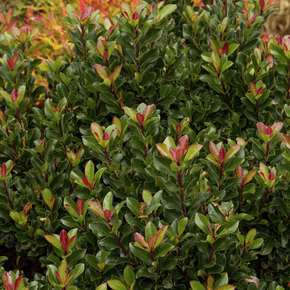
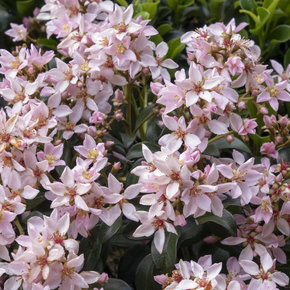
- A standout large evergreen shrub or small tree bearing massive clusters of fragrant, pearl-pink blooms each spring against a backdrop of bold, leathery, deep-green foliage
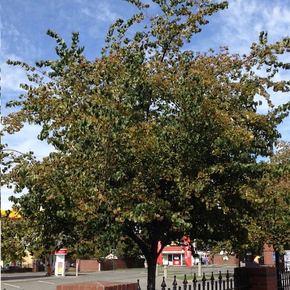
- One of the largest-growing Indian hawthorn cultivars available, easily trained as a single-trunk or multi-trunk patio tree reaching up to 15-25 feet tall
- Exceptionally tough and adaptable - thrives in reflected heat, coastal wind, poor soils, and becomes highly drought tolerant once established
- Year-round ornamental appeal with bronze new growth, rich evergreen foliage, showy spring flowers, and clusters of dark blue-purple berries that attract songbirds
Rhaphiolepis x 'Montic' Majestic Beauty Indian Hawthorn is the premier large-scale selection in the Indian hawthorn family, prized across Southern Oregon and Northern California landscapes for its remarkable versatility, low-maintenance nature, and exceptional four-season beauty. Noticeably more vigorous than standard Indian hawthorn varieties, Majestic Beauty produces oversized, leathery, deep-green leaves up to 3-4 inches long that emerge with attractive bronze tones in spring. In late winter through spring, the entire plant is blanketed in enormous, densely packed panicles of lightly fragrant, bright pink five-petaled flowers that make an unforgettable statement in any garden. After bloom, clusters of small dark blue-purple berries develop and persist into winter, adding continued interest and providing food for songbirds. Hardy in USDA Zones 7-11, this broadleaf evergreen tolerates a wide range of conditions including coastal salt spray, urban heat, reflected heat from pavement and walls, and variable soil types. Once established, it demands very little supplemental irrigation, making it an ideal waterwise choice. Whether grown as a dense privacy screen, a dramatic background shrub, or limbed up into an elegant single- or multi-trunk patio tree, Majestic Beauty Indian Hawthorn delivers unmatched presence and enduring low-maintenance beauty for residential and commercial landscapes alike.
Plant Description
Majestic Beauty Indian Hawthorn (Rhaphiolepis x 'Montic') is a broadleaf evergreen shrub or small tree distinguished from other Indian hawthorn varieties by its notably larger size, oversized foliage, and more vigorous growth habit. The plant has a dense, rounded to upright form with gray-brown, fissured bark that develops character with age. Its thick, oval to elliptical leaves are leathery in texture with coarsely serrated margins and a rich, lustrous deep-green color. New foliage emerges in attractive shades of bronze, adding a warm seasonal contrast. In spring, large terminal panicles of bright, pearl-pink, five-petaled flowers cover the branch tips and carry a light, pleasant fragrance. Blooms are followed by clusters of small, subglobose berries that ripen to a deep blue-purple-black and persist well into winter. Foliage may take on subtle purplish tones during the cooler months, adding quiet winter interest. This cultivar is a hybrid within the Rhaphiolepis genus and belongs to the rose family (Rosaceae).
Mature Size
| Characteristic | Details |
|---|---|
| Mature Height (Shrub Form) | 8-10 feet |
| Mature Height (Tree Form) | 15-25 feet |
| Mature Width | 8-10 feet |
| Growth Rate | Moderate |
| Plant Form | Rounded, dense; upright when trained as a tree |
Majestic Beauty is by far the largest commonly available Indian hawthorn cultivar. When left to grow in its natural shrub form it typically reaches 8-10 feet tall and equally as wide, but when selected and trained as a patio or landscape tree, specimens can ultimately achieve 15-25 feet in height with a canopy spread of 8-10 feet. Growth rate is moderate, allowing the plant to establish steadily without becoming unmanageable. Early structural staking and training is recommended when growing in tree form to develop a strong, upright trunk.
Hardiness Zones and Climate
Majestic Beauty Indian Hawthorn is rated hardy in USDA Zones 7-11 and Sunset Western Garden Zones 8-10 and 12-24, including H1 and H2. This makes it an excellent year-round evergreen choice for most of Southern Oregon and all of Northern California. It performs reliably in Mediterranean-type climates with hot, dry summers and mild, wet winters. It handles reflected heat from pavement, walls, and south-facing exposures particularly well, making it a top performer in urban and suburban settings. Plants can sustain cold damage when temperatures drop below 20 degrees F; foliage may wilt and turn brown or black, and bark may crack in severe freezes. In borderline cold areas, siting plants in a warm microclimate - against a south-facing wall, near heat-radiating pavement, or sheltered from desiccating winds - provides additional protection. The plant is also noted for good tolerance of coastal conditions, including salt spray and ocean winds.
Sunlight Requirements
Majestic Beauty Indian Hawthorn performs best in full sun, defined as 6 or more hours of direct sunlight per day. Full sun encourages the densest growth habit, the most prolific flowering, and the strongest natural resistance to fungal diseases. The plant will tolerate partial shade and filtered sun, but reduced light tends to result in less abundant blooms, a more open or leggy growth habit, and increased susceptibility to leaf spot and other fungal problems. When growing in areas with extremely hot summers, a site with morning sun and light afternoon shade can reduce heat stress while still producing excellent results. Morning sun is particularly important as it helps dry dew from the foliage, reducing the risk of fungal disease. Avoid deeply shaded locations where air circulation is poor.
Soil and pH Preferences
One of the great strengths of Majestic Beauty Indian Hawthorn is its wide adaptability to soil types. It grows well in loam, clay, silt, and sandy soils, provided drainage is adequate. Consistently soggy or waterlogged soils must be avoided, as poor drainage is the primary cause of root rot and other soil-borne diseases in this plant. In very heavy clay, amending the backfill with compost or organic matter and planting slightly above grade will greatly improve performance. In very sandy or fast-draining soils, incorporating compost or topsoil helps retain beneficial moisture between waterings.
- Preferred soil pH: 6.0 to 7.5 (moderately acidic to slightly alkaline)
- Tolerates a broader pH range including mildly acidic and mildly alkaline soils
- Well-drained soil is essential - avoid planting in low spots or areas with standing water
- Adaptable to average garden soil without heavy amendment in most circumstances
- Salt-tolerant - suitable for coastal gardens and areas near roadways where de-icing salt may be present
Watering Guide
Proper watering is most critical during the establishment period following planting. Once well-established in the landscape, Majestic Beauty Indian Hawthorn becomes highly drought tolerant and requires only occasional supplemental irrigation even during extended dry periods.
- At planting: Water deeply and thoroughly immediately after planting to settle the soil and initiate root establishment.
- First growing season: Water deeply but infrequently, allowing the top few inches of soil to dry somewhat between waterings. Deep, infrequent watering is far preferable to light daily watering, which encourages shallow roots and can lead to root rot.
- Established plants: Typically require watering only once per week or less during summer heat, and even less frequently in cooler months. Increase frequency during extreme heat or prolonged dry spells. In winter, water sparingly.
- Irrigation method: Drip or soaker irrigation at the root zone is strongly preferred over overhead or sprinkler watering. Wet foliage, especially overnight, promotes fungal leaf spot diseases. Water in the early morning when overhead irrigation is unavoidable.
- Warning signs: Wilting of new leaves or stem tips indicates the plant needs a deep soaking. Yellowing lower leaves combined with wet soil often indicates overwatering or poor drainage.
Fertilizing
Majestic Beauty Indian Hawthorn is a light feeder that does not require rich soil or heavy fertilization to thrive. In optimal garden conditions with reasonably fertile, well-drained soil, minimal supplemental feeding is needed. However, an annual application of fertilizer in spring supports healthy foliage color, vigorous growth, and reliable flowering.
- Apply a slow-release shrub and tree fertilizer in early spring as new growth begins, following label directions.
- A fertilizer containing iron and/or sulfur is beneficial for maintaining the deepest, richest green foliage color, particularly in soils with a higher pH.
- Organic fertilizers or compost top-dressings are a gentle, effective alternative to synthetic fertilizers and also improve soil structure over time.
- Do not fertilize after late summer. Fertilizing too late in the season encourages a flush of tender new growth that is vulnerable to damage from early autumn frosts.
- Container-grown plants may benefit from more frequent light feedings through the growing season, as nutrients leach out of pots more quickly.
Pruning and Maintenance
Majestic Beauty Indian Hawthorn requires very little pruning to maintain its naturally attractive, dense form in shrub mode. Over-pruning weakens the plant and should be avoided. When training as a patio tree, more deliberate early structural pruning is needed to establish a strong framework.
- Best pruning time: Immediately after the spring bloom cycle ends. Light shaping can also be done in early summer without sacrificing the following year's flower buds.
- Shrub form: Remove any dead, damaged, or crossing branches. Trim errant branches that break the desired silhouette. Avoid heavy shearing, as cutting leaves in half leaves ragged, unsightly edges.
- Tree form: Select a strong central leader or dominant trunks early on and remove competing stems. Stake the trunk while young to encourage upright growth, but remove stakes once the trunk is self-supporting to allow it to develop natural strength. Gradually limb up the lower canopy to the desired height over several seasons.
- Formal hedging: Plants can be maintained as a formal hedge with periodic shearing, though hand-pruning individual branches produces a more attractive result than mechanical hedging.
- Cease pruning at least 2 months before the expected first frost date in your area to avoid stimulating frost-sensitive new growth late in the season.
Planting Instructions
- Choose the right site: Select a location in full sun with well-drained soil and good air circulation. Allow adequate space for the plant to reach its mature size without crowding.
- Dig the planting hole: Dig a hole 2-3 times as wide as the root ball and no deeper than the root ball height. A wide, shallow hole encourages lateral root development.
- Amend if necessary: In dense clay soils, blend the native soil 50/50 with quality compost or planting mix. In very sandy soils, incorporate compost to improve moisture retention. In average well-draining garden soil, amendment may not be necessary.
- Remove from container: Gently slide the plant from its container. Loosen or score any circling or densely matted roots along the outside of the root ball to encourage outward root growth.
- Set at proper depth: Position the plant so the top of the root ball sits at or slightly above (1 inch) the surrounding soil level to allow for settling and to prevent crown rot.
- Backfill and tamp: Fill in around the root ball with your soil mixture, tamping gently as you go to eliminate air pockets. Do not mound soil on top of the root ball.
- Water thoroughly: Soak the entire planting area deeply after planting. A root stimulator solution at this stage helps reduce transplant shock and encourage rapid root establishment.
- Mulch: Apply a 1-2 inch layer of shredded wood mulch or bark over the planting area, keeping mulch a few inches away from the base of the trunk to prevent bark rot and crown disease.
- Stake if in tree form: If planting in tree form, stake the trunk firmly but gently to encourage upright growth. Plan to remove stakes once the tree can stand independently - typically within one to two growing seasons.
Seasonal Interest
| Season | Ornamental Highlights |
|---|---|
| Spring | Spectacular display of large, fragrant pearl-pink flower clusters covering branch tips; attractive bronze-toned new foliage emerges simultaneously |
| Summer | Lush, deep-green leathery foliage creates a bold, dense canopy; small developing berries visible among the leaves |
| Fall | Clusters of dark blue-purple-black berries ripen and persist; foliage may take on subtle purple or bronze tints as temperatures cool |
| Winter | Persistent berries provide color and wildlife food source; evergreen foliage maintains structure and interest throughout the dormant season; gray-brown fissured bark adds texture |
Landscape Uses
Majestic Beauty Indian Hawthorn's large size, striking flowers, and evergreen foliage make it one of the most versatile plants available for warm-climate landscapes. Its tolerance for tough conditions - including heat, drought, coastal salt spray, and poor soils - expands the range of sites where it can succeed.
- Patio or courtyard tree: Limbed up to expose the attractive trunk, it creates a stunning focal point in small urban spaces, courtyards, and patios
- Privacy screen or hedge: Dense, evergreen growth habit provides effective year-round screening when planted in a row
- Background shrub: Provides a lush, deep-green backdrop for smaller flowering perennials and ornamental shrubs in mixed borders
- Driveway and parking area planting: Thrives in the reflected heat of pavement and works well planted along driveways or in parking medians
- Espalier: Can be trained flat against a sunny wall or fence for a dramatic architectural effect
- Slope and erosion control: Dense root system and drought tolerance make it useful for stabilizing slopes and hillsides
- Coastal gardens: Salt spray tolerance makes it an excellent choice near the ocean
- Specimen or accent plant: Commanding size and multi-season beauty make it worthy of a prominent standalone placement in the landscape
Companion Plants
Majestic Beauty Indian Hawthorn pairs beautifully with plants that share similar sun and water requirements. Consider the following companions to create layered, harmonious planting combinations:
- Crape Myrtle (Lagerstroemia spp.): Provides complementary summer and fall color with similarly low water needs
- Juniper (Juniperus spp.): Evergreen texture contrast with excellent drought tolerance; works well as a low foreground plant
- Yaupon Holly (Ilex vomitoria): Similar tough, evergreen character with attractive red berries for added winter interest
- Cotoneaster (Cotoneaster spp.): Low-water companion with complementary berry display and attractive spreading form
- Lavender (Lavandula spp.): Fragrant, low-growing perennial that thrives in the same sunny, well-drained conditions; provides contrast in texture and color
- Rosemary (Salvia rosmarinus): Shares the same full-sun, drought-tolerant requirements; fine-textured foliage contrasts beautifully with Majestic Beauty's bold leaves
- Ornamental Grasses (Muhlenbergia, Festuca spp.): Provide soft, feathery textural contrast and movement alongside the plant's dense, leathery foliage
- Agapanthus: Bold, strap-leaved perennial that thrives in similar conditions and offers complementary blue to purple summer blooms
Pests and Diseases
When planted in an appropriate site - full sun, good air circulation, and well-drained soil - Majestic Beauty Indian Hawthorn is generally quite tough and resistant to most serious pest and disease problems. However, the following issues can occasionally arise and should be monitored:
- Entomosporium Leaf Spot: The most common fungal disease of Indian hawthorn, caused by Entomosporium mespili. Symptoms begin as small, circular red spots on both leaf surfaces that may enlarge and merge, causing premature leaf drop. Favored by shade, poor air circulation, and overhead irrigation. Prevent by planting in full sun, using drip irrigation, and ensuring good airflow around plants. Remove and dispose of infected fallen leaves. Fungicide applications can help manage severe infections.
- Aphids: Small, soft-bodied insects that cluster on new growth and flower buds. Usually manageable with a strong spray of water or an application of insecticidal soap.
- Scale Insects: Wax scale and other scale species can occasionally infest stems and foliage. Treat with horticultural oil during the appropriate season when crawlers are active.
- Fire Blight: A bacterial disease that causes shoot tips to blacken and wilt as if scorched. Prune out affected wood well below the visible infection, sterilizing pruning tools between cuts.
- Root Rot (Phytophthora): Caused by overly wet or poorly drained soil. The most effective prevention is ensuring excellent drainage at the planting site. Affected plants decline rapidly; improving drainage and reducing irrigation are the first steps.
- Powdery Mildew: White powdery coating on leaf surfaces, most common in humid conditions with poor airflow. Improve air circulation and avoid overhead watering.
- Spider Mites: More common under hot, dry, dusty conditions. Manage with regular water sprays on foliage or apply miticide if infestations are severe.
Container Growing
While Majestic Beauty Indian Hawthorn is most commonly grown in the ground where it can reach its impressive mature size, it can be successfully cultivated in large containers, particularly in patio tree form, as a long-term ornamental accent.
- Select a large container with ample drainage holes - at minimum, choose a pot 6 inches larger in diameter than the current root ball to allow for 2-3 years of growth before up-sizing.
- Use a high-quality, well-draining potting soil or a blend of quality potting mix and coarse perlite or pumice (up to 20%) to ensure excellent drainage and aeration.
- Do not use native garden soil in containers as it compacts too easily and impedes drainage.
- Containers dry out more quickly than garden soil, so monitor soil moisture regularly and water more frequently during hot summer months - typically when the top 1-2 inches of soil feel dry.
- Fertilize container plants more frequently than in-ground plants, as nutrients leach out with each watering. A monthly application of a balanced slow-release fertilizer through the growing season maintains vigorous growth.
- Re-pot every 2-3 years or when roots begin to circle the base of the pot or emerge from drainage holes.
- Container-grown trees in tree form benefit from sturdy staking to support the trunk and canopy against wind.
Wildlife Value
Majestic Beauty Indian Hawthorn provides meaningful ecological value in the garden, supporting a variety of wildlife through multiple seasons:
- Pollinators: The large, fragrant pink flower clusters are rich in nectar and attract a wide range of pollinators including bees, butterflies, and other beneficial insects during the spring bloom period.
- Songbirds: The dark blue-purple-black berries that ripen in late summer and persist through winter are a valuable food source for many songbird species, including thrushes, mockingbirds, and waxwings.
- Small mammals: Berries may also be consumed by small mammals foraging through the garden in fall and winter.
- Cover and shelter: The dense, evergreen canopy provides year-round shelter and nesting habitat for small birds.
- Note on deer: Indian hawthorn is attractive to deer, which will browse the foliage when it is accessible. In areas with significant deer pressure, protection of young plants or siting near structures may be advisable.
- A standout large evergreen shrub or small tree bearing massive clusters of fragrant, pearl-pink blooms each spring against a backdrop of bold, leathery, deep-green foliage
- One of the largest-growing Indian hawthorn cultivars available, easily trained as a single-trunk or multi-trunk patio tree reaching up to 15-25 feet tall
- Exceptionally tough and adaptable - thrives in reflected heat, coastal wind, poor soils, and becomes highly drought tolerant once established
- Year-round ornamental appeal with bronze new growth, rich evergreen foliage, showy spring flowers, and clusters of dark blue-purple berries that attract songbirds
Rhaphiolepis x 'Montic' Majestic Beauty Indian Hawthorn is the premier large-scale selection in the Indian hawthorn family, prized across Southern Oregon and Northern California landscapes for its remarkable versatility, low-maintenance nature, and exceptional four-season beauty. Noticeably more vigorous than standard Indian hawthorn varieties, Majestic Beauty produces oversized, leathery, deep-green leaves up to 3-4 inches long that emerge with attractive bronze tones in spring. In late winter through spring, the entire plant is blanketed in enormous, densely packed panicles of lightly fragrant, bright pink five-petaled flowers that make an unforgettable statement in any garden. After bloom, clusters of small dark blue-purple berries develop and persist into winter, adding continued interest and providing food for songbirds. Hardy in USDA Zones 7-11, this broadleaf evergreen tolerates a wide range of conditions including coastal salt spray, urban heat, reflected heat from pavement and walls, and variable soil types. Once established, it demands very little supplemental irrigation, making it an ideal waterwise choice. Whether grown as a dense privacy screen, a dramatic background shrub, or limbed up into an elegant single- or multi-trunk patio tree, Majestic Beauty Indian Hawthorn delivers unmatched presence and enduring low-maintenance beauty for residential and commercial landscapes alike.
Plant Description
Majestic Beauty Indian Hawthorn (Rhaphiolepis x 'Montic') is a broadleaf evergreen shrub or small tree distinguished from other Indian hawthorn varieties by its notably larger size, oversized foliage, and more vigorous growth habit. The plant has a dense, rounded to upright form with gray-brown, fissured bark that develops character with age. Its thick, oval to elliptical leaves are leathery in texture with coarsely serrated margins and a rich, lustrous deep-green color. New foliage emerges in attractive shades of bronze, adding a warm seasonal contrast. In spring, large terminal panicles of bright, pearl-pink, five-petaled flowers cover the branch tips and carry a light, pleasant fragrance. Blooms are followed by clusters of small, subglobose berries that ripen to a deep blue-purple-black and persist well into winter. Foliage may take on subtle purplish tones during the cooler months, adding quiet winter interest. This cultivar is a hybrid within the Rhaphiolepis genus and belongs to the rose family (Rosaceae).
Mature Size
| Characteristic | Details |
|---|---|
| Mature Height (Shrub Form) | 8-10 feet |
| Mature Height (Tree Form) | 15-25 feet |
| Mature Width | 8-10 feet |
| Growth Rate | Moderate |
| Plant Form | Rounded, dense; upright when trained as a tree |
Majestic Beauty is by far the largest commonly available Indian hawthorn cultivar. When left to grow in its natural shrub form it typically reaches 8-10 feet tall and equally as wide, but when selected and trained as a patio or landscape tree, specimens can ultimately achieve 15-25 feet in height with a canopy spread of 8-10 feet. Growth rate is moderate, allowing the plant to establish steadily without becoming unmanageable. Early structural staking and training is recommended when growing in tree form to develop a strong, upright trunk.
Hardiness Zones and Climate
Majestic Beauty Indian Hawthorn is rated hardy in USDA Zones 7-11 and Sunset Western Garden Zones 8-10 and 12-24, including H1 and H2. This makes it an excellent year-round evergreen choice for most of Southern Oregon and all of Northern California. It performs reliably in Mediterranean-type climates with hot, dry summers and mild, wet winters. It handles reflected heat from pavement, walls, and south-facing exposures particularly well, making it a top performer in urban and suburban settings. Plants can sustain cold damage when temperatures drop below 20 degrees F; foliage may wilt and turn brown or black, and bark may crack in severe freezes. In borderline cold areas, siting plants in a warm microclimate - against a south-facing wall, near heat-radiating pavement, or sheltered from desiccating winds - provides additional protection. The plant is also noted for good tolerance of coastal conditions, including salt spray and ocean winds.
Sunlight Requirements
Majestic Beauty Indian Hawthorn performs best in full sun, defined as 6 or more hours of direct sunlight per day. Full sun encourages the densest growth habit, the most prolific flowering, and the strongest natural resistance to fungal diseases. The plant will tolerate partial shade and filtered sun, but reduced light tends to result in less abundant blooms, a more open or leggy growth habit, and increased susceptibility to leaf spot and other fungal problems. When growing in areas with extremely hot summers, a site with morning sun and light afternoon shade can reduce heat stress while still producing excellent results. Morning sun is particularly important as it helps dry dew from the foliage, reducing the risk of fungal disease. Avoid deeply shaded locations where air circulation is poor.
Soil and pH Preferences
One of the great strengths of Majestic Beauty Indian Hawthorn is its wide adaptability to soil types. It grows well in loam, clay, silt, and sandy soils, provided drainage is adequate. Consistently soggy or waterlogged soils must be avoided, as poor drainage is the primary cause of root rot and other soil-borne diseases in this plant. In very heavy clay, amending the backfill with compost or organic matter and planting slightly above grade will greatly improve performance. In very sandy or fast-draining soils, incorporating compost or topsoil helps retain beneficial moisture between waterings.
- Preferred soil pH: 6.0 to 7.5 (moderately acidic to slightly alkaline)
- Tolerates a broader pH range including mildly acidic and mildly alkaline soils
- Well-drained soil is essential - avoid planting in low spots or areas with standing water
- Adaptable to average garden soil without heavy amendment in most circumstances
- Salt-tolerant - suitable for coastal gardens and areas near roadways where de-icing salt may be present
Watering Guide
Proper watering is most critical during the establishment period following planting. Once well-established in the landscape, Majestic Beauty Indian Hawthorn becomes highly drought tolerant and requires only occasional supplemental irrigation even during extended dry periods.
- At planting: Water deeply and thoroughly immediately after planting to settle the soil and initiate root establishment.
- First growing season: Water deeply but infrequently, allowing the top few inches of soil to dry somewhat between waterings. Deep, infrequent watering is far preferable to light daily watering, which encourages shallow roots and can lead to root rot.
- Established plants: Typically require watering only once per week or less during summer heat, and even less frequently in cooler months. Increase frequency during extreme heat or prolonged dry spells. In winter, water sparingly.
- Irrigation method: Drip or soaker irrigation at the root zone is strongly preferred over overhead or sprinkler watering. Wet foliage, especially overnight, promotes fungal leaf spot diseases. Water in the early morning when overhead irrigation is unavoidable.
- Warning signs: Wilting of new leaves or stem tips indicates the plant needs a deep soaking. Yellowing lower leaves combined with wet soil often indicates overwatering or poor drainage.
Fertilizing
Majestic Beauty Indian Hawthorn is a light feeder that does not require rich soil or heavy fertilization to thrive. In optimal garden conditions with reasonably fertile, well-drained soil, minimal supplemental feeding is needed. However, an annual application of fertilizer in spring supports healthy foliage color, vigorous growth, and reliable flowering.
- Apply a slow-release shrub and tree fertilizer in early spring as new growth begins, following label directions.
- A fertilizer containing iron and/or sulfur is beneficial for maintaining the deepest, richest green foliage color, particularly in soils with a higher pH.
- Organic fertilizers or compost top-dressings are a gentle, effective alternative to synthetic fertilizers and also improve soil structure over time.
- Do not fertilize after late summer. Fertilizing too late in the season encourages a flush of tender new growth that is vulnerable to damage from early autumn frosts.
- Container-grown plants may benefit from more frequent light feedings through the growing season, as nutrients leach out of pots more quickly.
Pruning and Maintenance
Majestic Beauty Indian Hawthorn requires very little pruning to maintain its naturally attractive, dense form in shrub mode. Over-pruning weakens the plant and should be avoided. When training as a patio tree, more deliberate early structural pruning is needed to establish a strong framework.
- Best pruning time: Immediately after the spring bloom cycle ends. Light shaping can also be done in early summer without sacrificing the following year's flower buds.
- Shrub form: Remove any dead, damaged, or crossing branches. Trim errant branches that break the desired silhouette. Avoid heavy shearing, as cutting leaves in half leaves ragged, unsightly edges.
- Tree form: Select a strong central leader or dominant trunks early on and remove competing stems. Stake the trunk while young to encourage upright growth, but remove stakes once the trunk is self-supporting to allow it to develop natural strength. Gradually limb up the lower canopy to the desired height over several seasons.
- Formal hedging: Plants can be maintained as a formal hedge with periodic shearing, though hand-pruning individual branches produces a more attractive result than mechanical hedging.
- Cease pruning at least 2 months before the expected first frost date in your area to avoid stimulating frost-sensitive new growth late in the season.
Planting Instructions
- Choose the right site: Select a location in full sun with well-drained soil and good air circulation. Allow adequate space for the plant to reach its mature size without crowding.
- Dig the planting hole: Dig a hole 2-3 times as wide as the root ball and no deeper than the root ball height. A wide, shallow hole encourages lateral root development.
- Amend if necessary: In dense clay soils, blend the native soil 50/50 with quality compost or planting mix. In very sandy soils, incorporate compost to improve moisture retention. In average well-draining garden soil, amendment may not be necessary.
- Remove from container: Gently slide the plant from its container. Loosen or score any circling or densely matted roots along the outside of the root ball to encourage outward root growth.
- Set at proper depth: Position the plant so the top of the root ball sits at or slightly above (1 inch) the surrounding soil level to allow for settling and to prevent crown rot.
- Backfill and tamp: Fill in around the root ball with your soil mixture, tamping gently as you go to eliminate air pockets. Do not mound soil on top of the root ball.
- Water thoroughly: Soak the entire planting area deeply after planting. A root stimulator solution at this stage helps reduce transplant shock and encourage rapid root establishment.
- Mulch: Apply a 1-2 inch layer of shredded wood mulch or bark over the planting area, keeping mulch a few inches away from the base of the trunk to prevent bark rot and crown disease.
- Stake if in tree form: If planting in tree form, stake the trunk firmly but gently to encourage upright growth. Plan to remove stakes once the tree can stand independently - typically within one to two growing seasons.
Seasonal Interest
| Season | Ornamental Highlights |
|---|---|
| Spring | Spectacular display of large, fragrant pearl-pink flower clusters covering branch tips; attractive bronze-toned new foliage emerges simultaneously |
| Summer | Lush, deep-green leathery foliage creates a bold, dense canopy; small developing berries visible among the leaves |
| Fall | Clusters of dark blue-purple-black berries ripen and persist; foliage may take on subtle purple or bronze tints as temperatures cool |
| Winter | Persistent berries provide color and wildlife food source; evergreen foliage maintains structure and interest throughout the dormant season; gray-brown fissured bark adds texture |
Landscape Uses
Majestic Beauty Indian Hawthorn's large size, striking flowers, and evergreen foliage make it one of the most versatile plants available for warm-climate landscapes. Its tolerance for tough conditions - including heat, drought, coastal salt spray, and poor soils - expands the range of sites where it can succeed.
- Patio or courtyard tree: Limbed up to expose the attractive trunk, it creates a stunning focal point in small urban spaces, courtyards, and patios
- Privacy screen or hedge: Dense, evergreen growth habit provides effective year-round screening when planted in a row
- Background shrub: Provides a lush, deep-green backdrop for smaller flowering perennials and ornamental shrubs in mixed borders
- Driveway and parking area planting: Thrives in the reflected heat of pavement and works well planted along driveways or in parking medians
- Espalier: Can be trained flat against a sunny wall or fence for a dramatic architectural effect
- Slope and erosion control: Dense root system and drought tolerance make it useful for stabilizing slopes and hillsides
- Coastal gardens: Salt spray tolerance makes it an excellent choice near the ocean
- Specimen or accent plant: Commanding size and multi-season beauty make it worthy of a prominent standalone placement in the landscape
Companion Plants
Majestic Beauty Indian Hawthorn pairs beautifully with plants that share similar sun and water requirements. Consider the following companions to create layered, harmonious planting combinations:
- Crape Myrtle (Lagerstroemia spp.): Provides complementary summer and fall color with similarly low water needs
- Juniper (Juniperus spp.): Evergreen texture contrast with excellent drought tolerance; works well as a low foreground plant
- Yaupon Holly (Ilex vomitoria): Similar tough, evergreen character with attractive red berries for added winter interest
- Cotoneaster (Cotoneaster spp.): Low-water companion with complementary berry display and attractive spreading form
- Lavender (Lavandula spp.): Fragrant, low-growing perennial that thrives in the same sunny, well-drained conditions; provides contrast in texture and color
- Rosemary (Salvia rosmarinus): Shares the same full-sun, drought-tolerant requirements; fine-textured foliage contrasts beautifully with Majestic Beauty's bold leaves
- Ornamental Grasses (Muhlenbergia, Festuca spp.): Provide soft, feathery textural contrast and movement alongside the plant's dense, leathery foliage
- Agapanthus: Bold, strap-leaved perennial that thrives in similar conditions and offers complementary blue to purple summer blooms
Pests and Diseases
When planted in an appropriate site - full sun, good air circulation, and well-drained soil - Majestic Beauty Indian Hawthorn is generally quite tough and resistant to most serious pest and disease problems. However, the following issues can occasionally arise and should be monitored:
- Entomosporium Leaf Spot: The most common fungal disease of Indian hawthorn, caused by Entomosporium mespili. Symptoms begin as small, circular red spots on both leaf surfaces that may enlarge and merge, causing premature leaf drop. Favored by shade, poor air circulation, and overhead irrigation. Prevent by planting in full sun, using drip irrigation, and ensuring good airflow around plants. Remove and dispose of infected fallen leaves. Fungicide applications can help manage severe infections.
- Aphids: Small, soft-bodied insects that cluster on new growth and flower buds. Usually manageable with a strong spray of water or an application of insecticidal soap.
- Scale Insects: Wax scale and other scale species can occasionally infest stems and foliage. Treat with horticultural oil during the appropriate season when crawlers are active.
- Fire Blight: A bacterial disease that causes shoot tips to blacken and wilt as if scorched. Prune out affected wood well below the visible infection, sterilizing pruning tools between cuts.
- Root Rot (Phytophthora): Caused by overly wet or poorly drained soil. The most effective prevention is ensuring excellent drainage at the planting site. Affected plants decline rapidly; improving drainage and reducing irrigation are the first steps.
- Powdery Mildew: White powdery coating on leaf surfaces, most common in humid conditions with poor airflow. Improve air circulation and avoid overhead watering.
- Spider Mites: More common under hot, dry, dusty conditions. Manage with regular water sprays on foliage or apply miticide if infestations are severe.
Container Growing
While Majestic Beauty Indian Hawthorn is most commonly grown in the ground where it can reach its impressive mature size, it can be successfully cultivated in large containers, particularly in patio tree form, as a long-term ornamental accent.
- Select a large container with ample drainage holes - at minimum, choose a pot 6 inches larger in diameter than the current root ball to allow for 2-3 years of growth before up-sizing.
- Use a high-quality, well-draining potting soil or a blend of quality potting mix and coarse perlite or pumice (up to 20%) to ensure excellent drainage and aeration.
- Do not use native garden soil in containers as it compacts too easily and impedes drainage.
- Containers dry out more quickly than garden soil, so monitor soil moisture regularly and water more frequently during hot summer months - typically when the top 1-2 inches of soil feel dry.
- Fertilize container plants more frequently than in-ground plants, as nutrients leach out with each watering. A monthly application of a balanced slow-release fertilizer through the growing season maintains vigorous growth.
- Re-pot every 2-3 years or when roots begin to circle the base of the pot or emerge from drainage holes.
- Container-grown trees in tree form benefit from sturdy staking to support the trunk and canopy against wind.
Wildlife Value
Majestic Beauty Indian Hawthorn provides meaningful ecological value in the garden, supporting a variety of wildlife through multiple seasons:
- Pollinators: The large, fragrant pink flower clusters are rich in nectar and attract a wide range of pollinators including bees, butterflies, and other beneficial insects during the spring bloom period.
- Songbirds: The dark blue-purple-black berries that ripen in late summer and persist through winter are a valuable food source for many songbird species, including thrushes, mockingbirds, and waxwings.
- Small mammals: Berries may also be consumed by small mammals foraging through the garden in fall and winter.
- Cover and shelter: The dense, evergreen canopy provides year-round shelter and nesting habitat for small birds.
- Note on deer: Indian hawthorn is attractive to deer, which will browse the foliage when it is accessible. In areas with significant deer pressure, protection of young plants or siting near structures may be advisable.