
Zoom the image with the mouse
Georgia Petite Indian Hawthorn - 1 Gallon
SKU:
2054330
$14.99
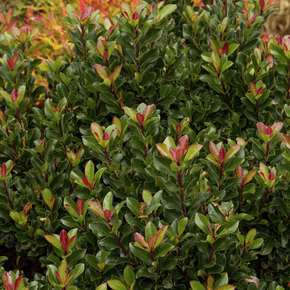
- Exceptionally compact, mounding evergreen shrub reaching just 2.5 feet tall by 3 feet wide — the perfect no-fuss choice for small-space gardens, low borders, and tidy foundation plantings
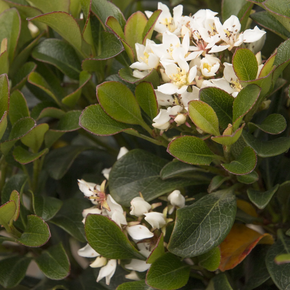
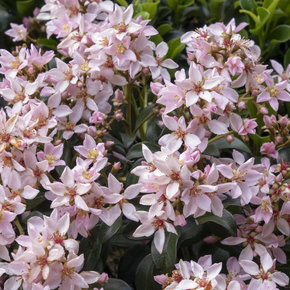
- Smothered in delicate light pink and white blossoms each spring, with glossy, leathery dark green foliage that takes on rich purplish-burgundy tones in winter for year-round color interest
- Notably cold hardy to 5°F with good resistance to Entomosporium leaf spot — one of the most reliable and low-maintenance Indian Hawthorns available for Western and Southern landscapes
- Tolerates drought, coastal salt spray, and a wide range of soil types once established, while attracting bees, butterflies, and songbirds throughout the seasons
Georgia Petite Indian Hawthorn (Rhaphiolepis x delacourii 'Georgia Petite' PP9983) is a outstanding dwarf, mounding evergreen shrub that brings effortless elegance to any landscape in USDA Hardiness Zones 7b through 11. One of the most petite and well-behaved Indian Hawthorns available, it forms a naturally rounded, dense mound of glossy, leathery dark green foliage that requires virtually no shaping or pruning to look its best. Each spring, the entire plant becomes a showpiece when it is blanketed in clusters of fragrant, soft pink and white blossoms that attract pollinators and gardeners alike. As the seasons shift, the rich green leaves take on beautiful purplish-burgundy hues in winter, ensuring the plant earns its keep in the landscape all year long. Small, bluish-black berries follow the spring blooms, providing late-season food for songbirds. With its exceptional cold hardiness down to 5°F, good resistance to leaf spot disease, and proven tolerance of drought, salt spray, heat, and a variety of soil types, Georgia Petite Indian Hawthorn is a standout performer for foundations, low hedges, mixed borders, mass plantings, coastal gardens, and containers across Southern Oregon and Northern California.
Plant Description
Georgia Petite Indian Hawthorn is a hybrid broadleaf evergreen shrub (Rhaphiolepis x delacourii) belonging to the rose family (Rosaceae). It is one of the most compact cultivars in the Indian Hawthorn group, prized for its naturally dense, mounding form and multi-season ornamental appeal. The glossy, leathery leaves are elliptical to lanceolate with lightly serrated margins and measure approximately 2 to 3 inches in length. New foliage emerges with bronze-green tones before deepening to a rich, lustrous dark green in summer, then shifting to attractive purplish-burgundy shades in winter. In spring, the plant produces terminal clusters of small, fragrant, light pink and white flowers with five rounded petals and reddish-pink stamens. These blooms are followed by small, subglobose, purplish-blue-black berries that ripen in late summer and persist into winter. The stems are stout, with young growth displaying purplish-brown coloration that ages to grayish-brown. Georgia Petite grows on its own merits as a compact, self-maintaining specimen that rarely needs intervention to stay tidy and attractive.
Mature Size
| Attribute | Measurement |
|---|---|
| Mature Height | Approximately 2 to 2.5 feet |
| Mature Spread | Approximately 3 feet wide |
| Growth Rate | Moderate to moderately fast |
| Growth Habit | Dense, compact, rounded mound |
| Plant Type | Broadleaf evergreen shrub |
Georgia Petite is one of the most compact Indian Hawthorn cultivars available, making it ideal for planting in spots where larger shrubs would quickly overwhelm the space. Its naturally mounding, symmetrical form means very little or no pruning is needed to maintain a tidy appearance over the years.
Hardiness Zones and Cold Tolerance
Georgia Petite Indian Hawthorn is rated for USDA Plant Hardiness Zones 7b through 11, and it is notably cold hardy down to approximately 5°F — making it one of the tougher Indian Hawthorn selections for gardens that occasionally see light freezes. It performs exceptionally well in the mild, Mediterranean-influenced climates of Southern Oregon and Northern California, thriving in the warm, dry summers and cool winters typical of these regions. In colder microclimates, siting the plant in a sheltered location with good air circulation — such as near a south- or west-facing wall — will help protect it from any occasional hard frost events. Plants weakened by other stresses such as disease, improper watering, or herbicide drift may be more susceptible to cold injury, so keeping the plant vigorous and healthy is the best cold-weather insurance.
Sunlight Requirements
Georgia Petite Indian Hawthorn performs best in full sun, defined as 6 or more hours of direct sunlight per day. Full sun exposure promotes the strongest flowering, the most compact and dense growth habit, the richest foliage color, and the greatest resistance to fungal leaf diseases. The plant will tolerate partial shade, but in shadier conditions it may become somewhat open and leggy, bloom less prolifically, and show increased susceptibility to Entomosporium leaf spot. For the best all-around performance in Southern Oregon and Northern California gardens, choose a site that receives direct sun for most of the day, particularly in the morning hours, which also allows foliage to dry quickly and reduces disease pressure.
Soil and pH Preferences
- Soil Type: Adaptable to a wide range of soil textures including sandy, loamy, and clay-based soils, provided drainage is adequate
- Drainage: Requires well-drained to moderately moist soil; standing water or consistently saturated roots will stress or kill the plant
- Soil pH: Tolerates a broad pH range from acidic (below 6.0) to neutral (6.0-7.0) to mildly alkaline (above 7.0), making it very adaptable to native soils throughout the region
- Amendments: In heavy clay soils, incorporating organic compost at planting time will improve drainage and root establishment; in sandy soils, compost additions improve moisture retention
- Salt Tolerance: Excellent tolerance of salt spray and salty soils, making it well suited for coastal and near-coastal garden settings
Watering Guide
Newly planted Georgia Petite Indian Hawthorn should be watered regularly to keep the root zone consistently moist during the establishment period, which typically spans the first one to two growing seasons. Deep, infrequent watering is preferred over frequent shallow irrigation to encourage deep root development. Once fully established, this shrub demonstrates good drought tolerance and can typically thrive on natural rainfall supplemented by occasional deep watering during prolonged dry periods — which is especially relevant during the long, dry summers common to Southern Oregon and Northern California. To minimize the risk of Entomosporium leaf spot and other fungal issues, always use drip irrigation or a soaker hose at ground level rather than overhead sprinklers. Avoid keeping the foliage wet, particularly in the cooler, moister periods of spring and fall. Do not overwater established plants, as root rot can develop in poorly drained conditions.
Fertilizing
Georgia Petite Indian Hawthorn is a low-fertilizer-demand plant. For the best results, feed with a balanced, slow-release granular fertilizer formulated for acid-loving ornamental shrubs in early spring just as new growth begins. A second light application may be made in early fall to support root development going into winter. Avoid high-nitrogen fertilizers, which promote lush, succulent foliage growth that is more attractive to pests and more susceptible to disease. Always follow product label rates and avoid over-fertilizing, which can create plant stress and increase disease vulnerability. Conducting a soil test every few years is a good practice to ensure proper nutrient levels and to adjust soil pH if needed. A 2 to 3 inch layer of organic mulch around the base of the plant will also help conserve moisture, moderate soil temperature, and gradually contribute organic matter to the soil as it breaks down.
Pruning and Maintenance
One of the best qualities of Georgia Petite Indian Hawthorn is its naturally compact, self-maintaining form that rarely requires pruning to stay neat and attractive. In most garden settings, little to no pruning is necessary. If light shaping or size control is desired, prune immediately after the spring bloom period ends, before next season's flower buds begin to set. Pruning at any other time of year risks removing flower buds and reducing the following spring's bloom. Dead, damaged, or crossing branches can be removed at any time of year without concern. Avoid heavy shearing, which can damage the natural mounding form and create entry points for disease. Keeping the area around the base of the plant free of debris, especially fallen leaves during the dormant season, helps reduce the overwintering of fungal spores that cause leaf spot.
Planting Instructions
- Select a site with full sun and well-drained soil. Avoid low-lying spots where water pools after rain.
- Dig a planting hole 2 to 3 times as wide as the root ball but no deeper than the height of the root ball. The top of the root ball should sit at or very slightly above the surrounding soil grade.
- If planting in heavy clay, amend the backfill soil with compost at a ratio of roughly 1 part compost to 2 parts native soil to improve drainage and fertility.
- Remove the plant from its container and gently loosen any circling or densely matted roots before placement in the hole.
- Backfill the hole, firming the soil gently as you go to eliminate air pockets. Do not bury the root flare.
- Water thoroughly at planting to settle the soil and eliminate remaining air pockets around the roots.
- Apply a 2 to 3 inch layer of organic mulch (shredded bark, wood chips, or similar) over the root zone, keeping it a few inches away from the main stem to prevent rot and pest harborage.
- For mass plantings, space plants approximately 2.5 to 3 feet apart center-to-center to allow the mature spread to fill in without crowding. For low hedges or border edging, spacing can be slightly tighter.
- Water consistently throughout the first growing season to support strong root establishment.
Seasonal Interest
| Season | Ornamental Features |
|---|---|
| Spring | Masses of fragrant light pink and white flowers in terminal clusters cover the plant; new growth emerges in warm bronze-green tones |
| Summer | Rich, glossy dark green foliage provides a clean, dense mounding form; small bluish-black berries begin to develop and ripen |
| Fall | Berries persist and attract songbirds; foliage begins transitioning to purplish-burgundy tones as temperatures cool |
| Winter | Foliage displays attractive purplish-burgundy winter color; berries persist for wildlife interest; evergreen structure anchors the landscape |
Landscape Uses
- Foundation Planting: Ideal planted in front of homes and buildings where a low, tidy, evergreen shrub is desired without overpowering windows or architectural features
- Low Border or Edging: Perfect for defining the front edge of mixed shrub borders or garden beds along walkways and driveways
- Mass Planting: Planted in groups, creates a uniform, carpet-like cover that is especially attractive when in full spring bloom
- Low Informal Hedge: Maintains a dense, uniform hedge form with minimal pruning required
- Slope and Bank Stabilization: The dense root system helps control erosion on gentle slopes while providing ornamental value
- Coastal Landscapes: Salt-spray tolerance makes it well suited to gardens near the Pacific Coast
- Container Gardening: Compact size works beautifully in large decorative pots for patios, entries, and decks
- Rock Gardens and Xeriscape: Once established, drought tolerance makes it a smart choice in water-wise planting designs
Container Growing
Georgia Petite Indian Hawthorn is an excellent candidate for container growing thanks to its naturally compact size and tidy growth habit. Choose a container with adequate drainage holes that is at least 14 to 18 inches in diameter to allow room for root development. Use a high-quality, well-draining potting mix formulated for shrubs or acid-loving plants. Containers dry out more quickly than in-ground plantings, so monitor soil moisture closely, especially during warm, dry summers. Water when the top inch or two of soil feels dry, watering deeply until water drains freely from the bottom. Fertilize container-grown plants with a slow-release granular fertilizer at the start of the growing season and supplement with a diluted liquid fertilizer monthly through summer. In colder microclimates, containers can be moved to a sheltered location during hard freeze events to protect the roots. Repot every two to three years or when the plant becomes root-bound.
Pests and Diseases
Entomosporium Leaf Spot: The most common disease concern for Indian Hawthorn, caused by the fungus Entomosporium mespili. It manifests as tiny, round, red to maroon spots on both sides of the leaves that enlarge and merge under severe infection, potentially causing defoliation. Georgia Petite has been selected for good resistance to this disease, but good cultural practices remain important prevention tools. Plant in full sun, use drip irrigation rather than overhead watering, ensure good air circulation between plants, and clean up fallen foliage in autumn. If disease pressure is high, a fungicide containing chlorothalonil, myclobutanil, or propiconazole can be applied starting when new spring growth emerges.
Aphids: Occasionally infest new growth, especially in spring. A strong stream of water or an insecticidal soap spray is usually sufficient to manage minor infestations.
Scale Insects: Scale can sometimes appear on stems and foliage. Treat with horticultural oil applied during the dormant season or in early spring before new growth begins.
Fire Blight: Though less common than leaf spot, fire blight can affect plants in the rose family. Prune out affected stems at least 6 to 8 inches below visible symptoms and disinfect pruning tools between cuts.
Root Rot: Caused by overwatering or poorly drained soils. Ensure excellent drainage at the planting site and avoid overwatering once established.
Deer: Indian Hawthorn is browsed by deer and should be considered only moderately deer-resistant. In high deer-pressure areas, protective measures may be needed for young plants.
Wildlife Value
Georgia Petite Indian Hawthorn is a multi-season resource for garden wildlife. In spring, the fragrant flowers are an important early nectar source for honeybees, native bees, and butterflies, making it a valuable addition to pollinator gardens. The small, bluish-black berries that ripen in late summer and persist through winter are relished by a variety of songbirds, including robins, mockingbirds, cedar waxwings, and thrushes, providing critical late-season and winter food. The dense, low mounding form can also offer cover and nesting habitat for small birds. While deer do browse on Indian Hawthorn, the compact size and dense branching of Georgia Petite help it recover from light deer feeding better than many larger shrubs.
Companion Plants
- Lavender (Lavandula spp.): Shares the same love of full sun and well-drained soil; the silvery foliage and purple flower spikes contrast beautifully with Georgia Petite's deep green mounds
- Dwarf Ornamental Grasses (Festuca glauca, Carex spp.): Fine-textured, low-maintenance companions that complement the bold, leathery leaf texture of Indian Hawthorn
- Dwarf Rockrose (Cistus spp.): Similarly drought-tolerant and sun-loving; provides a Mediterranean companion planting palette ideal for Northern California gardens
- Dwarf Nandina (Nandina domestica compact forms): Shares the same evergreen, four-season interest and complements Georgia Petite's winter purple color tones
- Rosemary (Salvia rosmarinus): Equally tolerant of heat, drought, and full sun; the gray-green foliage and blue flowers create a harmonious, low-water planting combination
- Dwarf Agapanthus: Provides bold summer blooms in blue or white that pair well with the spring-blooming Indian Hawthorn for a relay of color through the seasons
- Japanese Boxwood (Buxus microphylla var. japonica): Classic evergreen pairing for formal or semi-formal foundation planting designs where low, uniform shrubs are desired
- Exceptionally compact, mounding evergreen shrub reaching just 2.5 feet tall by 3 feet wide — the perfect no-fuss choice for small-space gardens, low borders, and tidy foundation plantings
- Smothered in delicate light pink and white blossoms each spring, with glossy, leathery dark green foliage that takes on rich purplish-burgundy tones in winter for year-round color interest
- Notably cold hardy to 5°F with good resistance to Entomosporium leaf spot — one of the most reliable and low-maintenance Indian Hawthorns available for Western and Southern landscapes
- Tolerates drought, coastal salt spray, and a wide range of soil types once established, while attracting bees, butterflies, and songbirds throughout the seasons
Georgia Petite Indian Hawthorn (Rhaphiolepis x delacourii 'Georgia Petite' PP9983) is a outstanding dwarf, mounding evergreen shrub that brings effortless elegance to any landscape in USDA Hardiness Zones 7b through 11. One of the most petite and well-behaved Indian Hawthorns available, it forms a naturally rounded, dense mound of glossy, leathery dark green foliage that requires virtually no shaping or pruning to look its best. Each spring, the entire plant becomes a showpiece when it is blanketed in clusters of fragrant, soft pink and white blossoms that attract pollinators and gardeners alike. As the seasons shift, the rich green leaves take on beautiful purplish-burgundy hues in winter, ensuring the plant earns its keep in the landscape all year long. Small, bluish-black berries follow the spring blooms, providing late-season food for songbirds. With its exceptional cold hardiness down to 5°F, good resistance to leaf spot disease, and proven tolerance of drought, salt spray, heat, and a variety of soil types, Georgia Petite Indian Hawthorn is a standout performer for foundations, low hedges, mixed borders, mass plantings, coastal gardens, and containers across Southern Oregon and Northern California.
Plant Description
Georgia Petite Indian Hawthorn is a hybrid broadleaf evergreen shrub (Rhaphiolepis x delacourii) belonging to the rose family (Rosaceae). It is one of the most compact cultivars in the Indian Hawthorn group, prized for its naturally dense, mounding form and multi-season ornamental appeal. The glossy, leathery leaves are elliptical to lanceolate with lightly serrated margins and measure approximately 2 to 3 inches in length. New foliage emerges with bronze-green tones before deepening to a rich, lustrous dark green in summer, then shifting to attractive purplish-burgundy shades in winter. In spring, the plant produces terminal clusters of small, fragrant, light pink and white flowers with five rounded petals and reddish-pink stamens. These blooms are followed by small, subglobose, purplish-blue-black berries that ripen in late summer and persist into winter. The stems are stout, with young growth displaying purplish-brown coloration that ages to grayish-brown. Georgia Petite grows on its own merits as a compact, self-maintaining specimen that rarely needs intervention to stay tidy and attractive.
Mature Size
| Attribute | Measurement |
|---|---|
| Mature Height | Approximately 2 to 2.5 feet |
| Mature Spread | Approximately 3 feet wide |
| Growth Rate | Moderate to moderately fast |
| Growth Habit | Dense, compact, rounded mound |
| Plant Type | Broadleaf evergreen shrub |
Georgia Petite is one of the most compact Indian Hawthorn cultivars available, making it ideal for planting in spots where larger shrubs would quickly overwhelm the space. Its naturally mounding, symmetrical form means very little or no pruning is needed to maintain a tidy appearance over the years.
Hardiness Zones and Cold Tolerance
Georgia Petite Indian Hawthorn is rated for USDA Plant Hardiness Zones 7b through 11, and it is notably cold hardy down to approximately 5°F — making it one of the tougher Indian Hawthorn selections for gardens that occasionally see light freezes. It performs exceptionally well in the mild, Mediterranean-influenced climates of Southern Oregon and Northern California, thriving in the warm, dry summers and cool winters typical of these regions. In colder microclimates, siting the plant in a sheltered location with good air circulation — such as near a south- or west-facing wall — will help protect it from any occasional hard frost events. Plants weakened by other stresses such as disease, improper watering, or herbicide drift may be more susceptible to cold injury, so keeping the plant vigorous and healthy is the best cold-weather insurance.
Sunlight Requirements
Georgia Petite Indian Hawthorn performs best in full sun, defined as 6 or more hours of direct sunlight per day. Full sun exposure promotes the strongest flowering, the most compact and dense growth habit, the richest foliage color, and the greatest resistance to fungal leaf diseases. The plant will tolerate partial shade, but in shadier conditions it may become somewhat open and leggy, bloom less prolifically, and show increased susceptibility to Entomosporium leaf spot. For the best all-around performance in Southern Oregon and Northern California gardens, choose a site that receives direct sun for most of the day, particularly in the morning hours, which also allows foliage to dry quickly and reduces disease pressure.
Soil and pH Preferences
- Soil Type: Adaptable to a wide range of soil textures including sandy, loamy, and clay-based soils, provided drainage is adequate
- Drainage: Requires well-drained to moderately moist soil; standing water or consistently saturated roots will stress or kill the plant
- Soil pH: Tolerates a broad pH range from acidic (below 6.0) to neutral (6.0-7.0) to mildly alkaline (above 7.0), making it very adaptable to native soils throughout the region
- Amendments: In heavy clay soils, incorporating organic compost at planting time will improve drainage and root establishment; in sandy soils, compost additions improve moisture retention
- Salt Tolerance: Excellent tolerance of salt spray and salty soils, making it well suited for coastal and near-coastal garden settings
Watering Guide
Newly planted Georgia Petite Indian Hawthorn should be watered regularly to keep the root zone consistently moist during the establishment period, which typically spans the first one to two growing seasons. Deep, infrequent watering is preferred over frequent shallow irrigation to encourage deep root development. Once fully established, this shrub demonstrates good drought tolerance and can typically thrive on natural rainfall supplemented by occasional deep watering during prolonged dry periods — which is especially relevant during the long, dry summers common to Southern Oregon and Northern California. To minimize the risk of Entomosporium leaf spot and other fungal issues, always use drip irrigation or a soaker hose at ground level rather than overhead sprinklers. Avoid keeping the foliage wet, particularly in the cooler, moister periods of spring and fall. Do not overwater established plants, as root rot can develop in poorly drained conditions.
Fertilizing
Georgia Petite Indian Hawthorn is a low-fertilizer-demand plant. For the best results, feed with a balanced, slow-release granular fertilizer formulated for acid-loving ornamental shrubs in early spring just as new growth begins. A second light application may be made in early fall to support root development going into winter. Avoid high-nitrogen fertilizers, which promote lush, succulent foliage growth that is more attractive to pests and more susceptible to disease. Always follow product label rates and avoid over-fertilizing, which can create plant stress and increase disease vulnerability. Conducting a soil test every few years is a good practice to ensure proper nutrient levels and to adjust soil pH if needed. A 2 to 3 inch layer of organic mulch around the base of the plant will also help conserve moisture, moderate soil temperature, and gradually contribute organic matter to the soil as it breaks down.
Pruning and Maintenance
One of the best qualities of Georgia Petite Indian Hawthorn is its naturally compact, self-maintaining form that rarely requires pruning to stay neat and attractive. In most garden settings, little to no pruning is necessary. If light shaping or size control is desired, prune immediately after the spring bloom period ends, before next season's flower buds begin to set. Pruning at any other time of year risks removing flower buds and reducing the following spring's bloom. Dead, damaged, or crossing branches can be removed at any time of year without concern. Avoid heavy shearing, which can damage the natural mounding form and create entry points for disease. Keeping the area around the base of the plant free of debris, especially fallen leaves during the dormant season, helps reduce the overwintering of fungal spores that cause leaf spot.
Planting Instructions
- Select a site with full sun and well-drained soil. Avoid low-lying spots where water pools after rain.
- Dig a planting hole 2 to 3 times as wide as the root ball but no deeper than the height of the root ball. The top of the root ball should sit at or very slightly above the surrounding soil grade.
- If planting in heavy clay, amend the backfill soil with compost at a ratio of roughly 1 part compost to 2 parts native soil to improve drainage and fertility.
- Remove the plant from its container and gently loosen any circling or densely matted roots before placement in the hole.
- Backfill the hole, firming the soil gently as you go to eliminate air pockets. Do not bury the root flare.
- Water thoroughly at planting to settle the soil and eliminate remaining air pockets around the roots.
- Apply a 2 to 3 inch layer of organic mulch (shredded bark, wood chips, or similar) over the root zone, keeping it a few inches away from the main stem to prevent rot and pest harborage.
- For mass plantings, space plants approximately 2.5 to 3 feet apart center-to-center to allow the mature spread to fill in without crowding. For low hedges or border edging, spacing can be slightly tighter.
- Water consistently throughout the first growing season to support strong root establishment.
Seasonal Interest
| Season | Ornamental Features |
|---|---|
| Spring | Masses of fragrant light pink and white flowers in terminal clusters cover the plant; new growth emerges in warm bronze-green tones |
| Summer | Rich, glossy dark green foliage provides a clean, dense mounding form; small bluish-black berries begin to develop and ripen |
| Fall | Berries persist and attract songbirds; foliage begins transitioning to purplish-burgundy tones as temperatures cool |
| Winter | Foliage displays attractive purplish-burgundy winter color; berries persist for wildlife interest; evergreen structure anchors the landscape |
Landscape Uses
- Foundation Planting: Ideal planted in front of homes and buildings where a low, tidy, evergreen shrub is desired without overpowering windows or architectural features
- Low Border or Edging: Perfect for defining the front edge of mixed shrub borders or garden beds along walkways and driveways
- Mass Planting: Planted in groups, creates a uniform, carpet-like cover that is especially attractive when in full spring bloom
- Low Informal Hedge: Maintains a dense, uniform hedge form with minimal pruning required
- Slope and Bank Stabilization: The dense root system helps control erosion on gentle slopes while providing ornamental value
- Coastal Landscapes: Salt-spray tolerance makes it well suited to gardens near the Pacific Coast
- Container Gardening: Compact size works beautifully in large decorative pots for patios, entries, and decks
- Rock Gardens and Xeriscape: Once established, drought tolerance makes it a smart choice in water-wise planting designs
Container Growing
Georgia Petite Indian Hawthorn is an excellent candidate for container growing thanks to its naturally compact size and tidy growth habit. Choose a container with adequate drainage holes that is at least 14 to 18 inches in diameter to allow room for root development. Use a high-quality, well-draining potting mix formulated for shrubs or acid-loving plants. Containers dry out more quickly than in-ground plantings, so monitor soil moisture closely, especially during warm, dry summers. Water when the top inch or two of soil feels dry, watering deeply until water drains freely from the bottom. Fertilize container-grown plants with a slow-release granular fertilizer at the start of the growing season and supplement with a diluted liquid fertilizer monthly through summer. In colder microclimates, containers can be moved to a sheltered location during hard freeze events to protect the roots. Repot every two to three years or when the plant becomes root-bound.
Pests and Diseases
Entomosporium Leaf Spot: The most common disease concern for Indian Hawthorn, caused by the fungus Entomosporium mespili. It manifests as tiny, round, red to maroon spots on both sides of the leaves that enlarge and merge under severe infection, potentially causing defoliation. Georgia Petite has been selected for good resistance to this disease, but good cultural practices remain important prevention tools. Plant in full sun, use drip irrigation rather than overhead watering, ensure good air circulation between plants, and clean up fallen foliage in autumn. If disease pressure is high, a fungicide containing chlorothalonil, myclobutanil, or propiconazole can be applied starting when new spring growth emerges.
Aphids: Occasionally infest new growth, especially in spring. A strong stream of water or an insecticidal soap spray is usually sufficient to manage minor infestations.
Scale Insects: Scale can sometimes appear on stems and foliage. Treat with horticultural oil applied during the dormant season or in early spring before new growth begins.
Fire Blight: Though less common than leaf spot, fire blight can affect plants in the rose family. Prune out affected stems at least 6 to 8 inches below visible symptoms and disinfect pruning tools between cuts.
Root Rot: Caused by overwatering or poorly drained soils. Ensure excellent drainage at the planting site and avoid overwatering once established.
Deer: Indian Hawthorn is browsed by deer and should be considered only moderately deer-resistant. In high deer-pressure areas, protective measures may be needed for young plants.
Wildlife Value
Georgia Petite Indian Hawthorn is a multi-season resource for garden wildlife. In spring, the fragrant flowers are an important early nectar source for honeybees, native bees, and butterflies, making it a valuable addition to pollinator gardens. The small, bluish-black berries that ripen in late summer and persist through winter are relished by a variety of songbirds, including robins, mockingbirds, cedar waxwings, and thrushes, providing critical late-season and winter food. The dense, low mounding form can also offer cover and nesting habitat for small birds. While deer do browse on Indian Hawthorn, the compact size and dense branching of Georgia Petite help it recover from light deer feeding better than many larger shrubs.
Companion Plants
- Lavender (Lavandula spp.): Shares the same love of full sun and well-drained soil; the silvery foliage and purple flower spikes contrast beautifully with Georgia Petite's deep green mounds
- Dwarf Ornamental Grasses (Festuca glauca, Carex spp.): Fine-textured, low-maintenance companions that complement the bold, leathery leaf texture of Indian Hawthorn
- Dwarf Rockrose (Cistus spp.): Similarly drought-tolerant and sun-loving; provides a Mediterranean companion planting palette ideal for Northern California gardens
- Dwarf Nandina (Nandina domestica compact forms): Shares the same evergreen, four-season interest and complements Georgia Petite's winter purple color tones
- Rosemary (Salvia rosmarinus): Equally tolerant of heat, drought, and full sun; the gray-green foliage and blue flowers create a harmonious, low-water planting combination
- Dwarf Agapanthus: Provides bold summer blooms in blue or white that pair well with the spring-blooming Indian Hawthorn for a relay of color through the seasons
- Japanese Boxwood (Buxus microphylla var. japonica): Classic evergreen pairing for formal or semi-formal foundation planting designs where low, uniform shrubs are desired
Related Products