
Zoom the image with the mouse
Dwarf Yedda Hawthorn - 1 Gallon
SKU:
2102435
UPC:
014949699218
$15.99
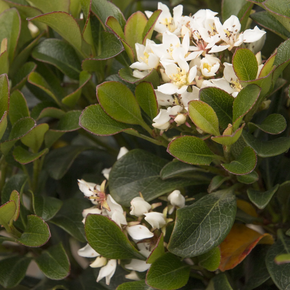
- Compact, rounded evergreen shrub with lustrous, deep green foliage and eye-catching coppery-red new growth emerging at branch tips throughout the season
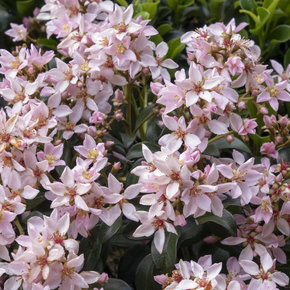
- Lightly fragrant clusters of white flowers bloom in late spring, blanketing the plant in a showy floral display that attracts bees, butterflies, and other beneficial pollinators
- Exceptionally low-maintenance and drought tolerant once established, with strong adaptability to coastal conditions, salt spray, heat, and a wide range of soil types
- Versatile landscape performer ideal for foundation plantings, low hedges, mass plantings, mixed borders, and container gardens in USDA Zones 7-11
Dwarf Yedda Hawthorn (Rhaphiolepis umbellata 'Minor') is a slow-growing, compact evergreen shrub that brings year-round structure, seasonal color, and effortless elegance to the landscape. Native to Japan and Korea, this refined selection forms a dense, upright to rounded form typically reaching 4-6 feet tall and 4-5 feet wide, making it a perfectly scaled choice for modern residential gardens. The branches are densely clothed in small, leathery, glossy dark green leaves approximately 1 inch long, with striking coppery-red new growth unfurling at the branch tips for a dynamic two-toned effect. In late spring, tight terminal clusters of lightly fragrant, crabapple-like white flowers emerge in profusion, literally blanketing the plant and drawing in pollinators. The floral display gives way to clusters of small, dark blue-black berries that persist well into winter, providing ornamental interest and a valuable food source for birds. Hardy to roughly 10-15 degrees F and well-suited to USDA Zones 7-11, Dwarf Yedda Hawthorn excels in the warm, dry-summer climates of Southern Oregon and Northern California, thriving in full sun to partial shade with low to moderate water needs once established. Its outstanding tolerance of salt spray, drought, heat, and a wide range of soil conditions makes it a go-to choice for foundation plantings, low formal hedges, mass plantings, coastal gardens, and elegant container arrangements, all with minimal upkeep required.
Plant Description
Dwarf Yedda Hawthorn is a slow-growing, compact broadleaf evergreen shrub with a naturally upright to rounded growth habit. Its branches are densely set with small, leathery, ovate leaves that are glossy dark green on top, approximately 1 inch in length, and cluster toward the ends of branches. One of the plant's most attractive features is its coppery-red new growth, which emerges at branch tips and provides a striking contrast against the mature dark green foliage. In late spring, the entire plant is adorned with tight, terminal clusters of small, lightly fragrant white flowers reminiscent of crabapple blossoms. These are followed by small, dark blue to nearly black berries that ripen in late summer and persist through winter. The plant maintains its attractive form and foliage color throughout all four seasons, making it a consistently ornamental presence in the landscape.
Mature Size
| Characteristic | Measurement |
|---|---|
| Mature Height | 4-6 feet (occasionally approaching 7 feet in older, established specimens in optimal conditions) |
| Mature Width | 4-5 feet |
| Growth Rate | Slow to moderate |
| Growth Habit | Upright, compact, rounded with age |
| Recommended Spacing | 48 inches on center for mass plantings; 3-4 feet apart for hedges |
Note: While commonly marketed as a shrub that stays at 2-3 feet, well-established specimens grown in part sun over many years can slowly approach 6-7 feet in height. Plan spacing accordingly to ensure good air circulation and an attractive mature form.
Hardiness and Climate
| Category | Details |
|---|---|
| USDA Hardiness Zones | 7-11 (hardy to approximately 10-15 degrees F) |
| Sunset Garden Zones | 8-10, 12-24 |
| Heat Tolerance | High; thrives in warm, dry-summer climates |
| Salt Spray Tolerance | Yes; excellent for coastal gardens |
| Drought Tolerance | Good once established |
This plant is well-suited to the climates of Southern Oregon and Northern California, where warm, dry summers and mild winters allow it to perform at its best. In Zone 7 margins, planting in a sheltered location with good drainage will improve cold hardiness. Avoid frost pockets and low-lying areas where cold air settles.
Sunlight Requirements
Dwarf Yedda Hawthorn performs best in full sun, receiving at least 6 hours of direct sunlight per day. This exposure produces the densest, most attractive growth habit and the most prolific flower display. It will also grow well in partial shade (4-6 hours of direct sun), though flowering may be somewhat reduced and the growth habit slightly more open. In the intense summer heat of inland valleys in Northern California and Southern Oregon, a site with morning sun and light afternoon shade can help prevent leaf scorch and reduce water stress. Avoid deeply shaded locations, as insufficient light results in sparse growth, poor flowering, and increased susceptibility to disease.
Soil and pH Preferences
Dwarf Yedda Hawthorn is adaptable to a wide range of soil types, including loam, sand, and moderately fertile clay, provided that drainage is adequate. It absolutely will not tolerate waterlogged or poorly draining soils, which can quickly lead to root rot. For best results, the ideal soil pH ranges from 5.5 to 7.0, from slightly acidic to neutral. It demonstrates tolerance of both somewhat acidic and alkaline soils, making it a flexible choice for varied garden settings. When planting in heavy clay soils, incorporate generous amounts of compost or coarse organic matter into the planting area to improve drainage and soil structure. In sandy soils, organic amendments help improve moisture and nutrient retention. A 2-3 inch layer of organic mulch around the root zone helps maintain consistent soil moisture, regulate temperature, and gradually improve soil quality over time.
Watering Guide
- At planting: Water deeply and thoroughly immediately after planting to settle the soil around the root ball and eliminate air pockets.
- First growing season: Water regularly, approximately once or twice per week, to keep the root zone consistently moist but not soggy. Deep, infrequent watering encourages the roots to grow outward and downward, building long-term drought resilience.
- Established plants: Once fully established after the first full growing season, water occasionally to infrequently. Allow the top 2-3 inches of soil to dry before watering again. During hot, dry periods, deep watering every 7-10 days is generally sufficient.
- Coastal locations: Established plants near the coast may require little to no supplemental irrigation, relying primarily on natural rainfall and coastal moisture.
- Irrigation method: Use drip irrigation or soaker hoses at the root zone rather than overhead sprinklers. Keeping foliage dry reduces the risk of fungal leaf spot diseases, which are the most common health concern for this plant.
- Containers: Container-grown plants dry out more quickly and will need more frequent monitoring and watering, especially during warm weather.
Fertilizing
Dwarf Yedda Hawthorn is not a heavy feeder and performs well in moderately fertile soils without aggressive fertilization. Over-fertilizing, particularly with high-nitrogen products, can promote excessive soft growth that is more vulnerable to disease and pests. Follow these general guidelines for best results:
- Apply a balanced, slow-release granular fertilizer formulated for shrubs (such as a 16-8-4 or similar balanced NPK ratio) once in early spring as new growth begins.
- An acid-forming fertilizer blended for trees, shrubs, and vines is a suitable option, especially in alkaline soils where it also helps maintain the preferred pH range.
- A light second application can be made in early summer if the plant appears to need a boost, but skip fall fertilization entirely, as it can stimulate tender new growth that is vulnerable to cold damage.
- Topdressing with a layer of compost in spring doubles as a mild fertilizer and soil conditioner.
- Always water the plant well before and after applying fertilizer to prevent root burn.
Pruning and Maintenance
One of the many advantages of Dwarf Yedda Hawthorn is its naturally compact, tidy habit that rarely requires heavy pruning. When pruning is desired, follow these guidelines to keep the plant healthy and attractive:
- Best timing: Prune immediately after the spring bloom period has ended. This preserves the current season's flower buds and allows the plant to set buds for next year without interference. Avoid pruning in late summer or fall.
- Light shaping: Light tip-pinching or heading cuts after flowering can encourage a fuller, denser growth habit and maintain a desired size or shape.
- Deadheading: Removing spent flower clusters after bloom helps redirect the plant's energy and maintains a tidy appearance, though the decorative berries that follow are also ornamentally valuable and can be left for wildlife.
- Sanitation pruning: Remove any dead, damaged, or diseased branches promptly at any time of year using clean, sharp pruners to improve air circulation and prevent disease spread.
- Rejuvenation: If an older plant becomes overly woody or open, a more significant cutback can be performed in late winter before new growth emerges, though this will sacrifice that season's bloom.
- Tool hygiene: Disinfect pruning tools between cuts, especially when removing diseased wood, to prevent spreading pathogens.
Planting Instructions
- Choose the right site: Select a location with full sun to partial shade and well-draining soil. Avoid low-lying areas where water collects or where cold air settles in winter.
- Dig the planting hole: Dig a hole at least twice as wide as the root ball and equal in depth. The top of the root ball should sit level with or very slightly above the surrounding soil surface to prevent crown rot.
- Amend the soil: Blend the removed soil with compost or aged organic matter, especially in heavy clay or poor sandy soils. This improves drainage, aeration, and fertility.
- Prepare the root ball: Gently remove the plant from its container. If roots are circling or tightly bound, tease them apart gently or score the sides of the root ball with a clean knife to encourage outward root growth.
- Backfill and settle: Place the plant in the hole, backfill with the amended soil in stages, gently firming the soil to eliminate large air pockets. Do not compact the soil tightly.
- Water deeply: Water thoroughly immediately after planting to settle the soil and hydrate the entire root zone.
- Mulch: Apply a 2-3 inch layer of organic mulch such as shredded bark or wood chips over the planting area, keeping mulch several inches away from the plant's base to discourage crown rot and pest harborage.
- Ongoing establishment care: Water consistently during the first growing season. Reduce frequency as the plant becomes established over subsequent months.
Seasonal Interest
| Season | Ornamental Feature |
|---|---|
| Spring | Profuse, lightly fragrant white flower clusters blanket the plant in mid to late spring; fresh coppery-red new foliage emerges at branch tips |
| Summer | Dense, glossy, deep green evergreen foliage provides a lush, full appearance; small developing berries begin to form |
| Fall | Dark blue to near-black ornamental berries ripen and persist; foliage may take on subtle reddish tints in cooler temperatures |
| Winter | Persistent berries provide continued color and food for birds; evergreen foliage maintains structure and greenery in the landscape |
Landscape Uses
- Foundation plantings: Its compact, refined habit and year-round evergreen foliage make it an excellent choice for planting along building foundations, where it softens architectural lines without overwhelming the space.
- Low hedges and screens: Dwarf Yedda Hawthorn responds well to light shearing and can be shaped into a tidy formal hedge or informal screen of moderate height.
- Mass plantings: Planted in groups, it creates a bold, cohesive groundcover-like effect with a spectacular flowering display in spring.
- Mixed shrub borders: Provides texture, structure, and seasonal bloom color when combined with other shrubs and perennials in a mixed border setting.
- Coastal gardens: Its notable tolerance of salt spray and coastal winds makes it an outstanding performer in seaside landscapes where other plants may struggle.
- Containers and patios: Its manageable size and attractive form make it well suited to large decorative containers on patios, courtyards, or entryways.
- Slope and erosion control: When mass-planted on slopes, its root system and dense growth can help stabilize soil and reduce erosion.
- Pollinator and wildlife gardens: The spring flowers attract bees, butterflies, and beneficial insects, while the winter berries feed birds and small wildlife.
Pests and Diseases
Dwarf Yedda Hawthorn is generally a tough, pest-resistant shrub, but the following issues are worth monitoring:
- Entomosporium leaf spot: The most common fungal problem, causing small red to brown spots with yellow halos on leaves that can lead to defoliation in severe cases. It is promoted by wet foliage and poor air circulation. Prevent it by using drip irrigation rather than overhead watering, providing adequate plant spacing, and removing infected debris promptly. Fungicidal sprays can be applied preventively during periods of high humidity or rainy weather.
- Powdery mildew: A white powdery coating may appear on foliage in conditions of high humidity combined with poor air circulation. Improve airflow through appropriate spacing and selective pruning to manage outbreaks.
- Aphids: Soft-bodied insects that cluster on new growth and can cause distorted leaves. A strong blast of water or applications of insecticidal soap are usually sufficient for control.
- Scale insects: Armored or soft scales can occasionally colonize stems. Horticultural oil applications in late winter or early spring are effective when applied before populations build.
- Fireblight: A bacterial disease that can cause branch tips to turn brown and die back, resembling scorching. Prune out affected wood well below visible damage using sterilized tools, and avoid over-fertilizing with nitrogen, which promotes the succulent growth most susceptible to infection.
- Nematodes: Root-knot nematodes can be a problem in sandy soils. Improve soil health with organic matter and maintain plant vigor to reduce susceptibility.
The best overall disease prevention strategy is to maintain good air circulation through proper spacing and pruning, avoid wetting foliage when irrigating, and keep the area around the plant free of debris.
Container Growing
Dwarf Yedda Hawthorn is an excellent candidate for container culture, bringing its glossy evergreen foliage and beautiful spring blooms to patios, courtyards, entryways, and outdoor living spaces. Follow these tips for success in containers:
- Choose a large, sturdy container with ample drainage holes. A pot at least 18-24 inches in diameter provides adequate room for root development and helps buffer temperature extremes.
- Use a high-quality, well-draining potting mix blended with coarse perlite or bark to prevent soil compaction and ensure excellent drainage.
- Container plants dry out significantly faster than in-ground plants and require more frequent monitoring and watering, especially during warm weather. Water when the top inch of potting mix feels dry.
- Fertilize container-grown plants with a slow-release balanced fertilizer in spring and supplement with a diluted liquid fertilizer through the growing season, as nutrients leach from containers more rapidly than from garden soil.
- Place containers in a full sun to part shade location, ideally with morning sun and some protection from the most intense afternoon heat in hot inland climates.
- Repot every 2-3 years or when roots begin circling the container bottom, refreshing the potting mix and moving up one container size as needed.
Wildlife Value
Dwarf Yedda Hawthorn offers meaningful ecological value throughout the seasons. In spring, its fragrant flower clusters are a reliable early-season nectar source that attracts bees, butterflies, and other beneficial pollinators, supporting garden biodiversity. As summer transitions to fall, the plant's small, dark blue-black berries ripen and become an important food source for a variety of bird species, including thrushes and waxwings, as well as small mammals. Because the berries persist well into winter, the plant continues to support wildlife during months when food sources are scarce. The dense, evergreen branching also provides cover and potential nesting habitat for small songbirds. Its noted resistance to deer browsing adds to its appeal in gardens where deer pressure is a concern, as is common in many areas of Southern Oregon and Northern California.
Companion Plants
Dwarf Yedda Hawthorn pairs beautifully with a wide range of plants that share its preference for well-drained soils, moderate water, and a sunny to part-shade exposure. Consider these companions for harmonious and visually dynamic combinations:
- Rosemary (Salvia rosmarinus): A fellow drought-tolerant Mediterranean-climate shrub that echoes the upright form and fine texture of Dwarf Yedda Hawthorn while adding aromatic foliage and lavender-blue flowers.
- California Lilac (Ceanothus spp.): Provides a stunning contrast of bold blue flower clusters against the white spring blooms of Yedda Hawthorn, and shares the same love of dry-summer West Coast conditions.
- Lavender (Lavandula spp.): A natural companion for sun-drenched, well-drained beds, offering aromatic foliage and summer blooms that complement the Yedda Hawthorn's spring display.
- Ornamental Grasses (Muhlenbergia, Festuca, Nasella): Feathery grasses add movement, fine texture, and seasonal interest that contrasts beautifully with Dwarf Yedda Hawthorn's glossy, structured foliage.
- Spotted Laurel (Aucuba japonica): A shade-tolerant companion for mixed borders, providing bold, variegated tropical-looking foliage that contrasts with the Yedda Hawthorn's fine-textured glossy leaves.
- Dwarf Nandina (Nandina domestica compact forms): Shares similar cultural needs and provides complementary fine-textured foliage with striking red seasonal coloration.
- Rockrose (Cistus spp.): Another drought-tolerant, flowering evergreen shrub ideal for dry landscapes in similar climate zones, with showy summer blooms extending the seasonal display after Yedda Hawthorn's spring peak.
- Compact, rounded evergreen shrub with lustrous, deep green foliage and eye-catching coppery-red new growth emerging at branch tips throughout the season
- Lightly fragrant clusters of white flowers bloom in late spring, blanketing the plant in a showy floral display that attracts bees, butterflies, and other beneficial pollinators
- Exceptionally low-maintenance and drought tolerant once established, with strong adaptability to coastal conditions, salt spray, heat, and a wide range of soil types
- Versatile landscape performer ideal for foundation plantings, low hedges, mass plantings, mixed borders, and container gardens in USDA Zones 7-11
Dwarf Yedda Hawthorn (Rhaphiolepis umbellata 'Minor') is a slow-growing, compact evergreen shrub that brings year-round structure, seasonal color, and effortless elegance to the landscape. Native to Japan and Korea, this refined selection forms a dense, upright to rounded form typically reaching 4-6 feet tall and 4-5 feet wide, making it a perfectly scaled choice for modern residential gardens. The branches are densely clothed in small, leathery, glossy dark green leaves approximately 1 inch long, with striking coppery-red new growth unfurling at the branch tips for a dynamic two-toned effect. In late spring, tight terminal clusters of lightly fragrant, crabapple-like white flowers emerge in profusion, literally blanketing the plant and drawing in pollinators. The floral display gives way to clusters of small, dark blue-black berries that persist well into winter, providing ornamental interest and a valuable food source for birds. Hardy to roughly 10-15 degrees F and well-suited to USDA Zones 7-11, Dwarf Yedda Hawthorn excels in the warm, dry-summer climates of Southern Oregon and Northern California, thriving in full sun to partial shade with low to moderate water needs once established. Its outstanding tolerance of salt spray, drought, heat, and a wide range of soil conditions makes it a go-to choice for foundation plantings, low formal hedges, mass plantings, coastal gardens, and elegant container arrangements, all with minimal upkeep required.
Plant Description
Dwarf Yedda Hawthorn is a slow-growing, compact broadleaf evergreen shrub with a naturally upright to rounded growth habit. Its branches are densely set with small, leathery, ovate leaves that are glossy dark green on top, approximately 1 inch in length, and cluster toward the ends of branches. One of the plant's most attractive features is its coppery-red new growth, which emerges at branch tips and provides a striking contrast against the mature dark green foliage. In late spring, the entire plant is adorned with tight, terminal clusters of small, lightly fragrant white flowers reminiscent of crabapple blossoms. These are followed by small, dark blue to nearly black berries that ripen in late summer and persist through winter. The plant maintains its attractive form and foliage color throughout all four seasons, making it a consistently ornamental presence in the landscape.
Mature Size
| Characteristic | Measurement |
|---|---|
| Mature Height | 4-6 feet (occasionally approaching 7 feet in older, established specimens in optimal conditions) |
| Mature Width | 4-5 feet |
| Growth Rate | Slow to moderate |
| Growth Habit | Upright, compact, rounded with age |
| Recommended Spacing | 48 inches on center for mass plantings; 3-4 feet apart for hedges |
Note: While commonly marketed as a shrub that stays at 2-3 feet, well-established specimens grown in part sun over many years can slowly approach 6-7 feet in height. Plan spacing accordingly to ensure good air circulation and an attractive mature form.
Hardiness and Climate
| Category | Details |
|---|---|
| USDA Hardiness Zones | 7-11 (hardy to approximately 10-15 degrees F) |
| Sunset Garden Zones | 8-10, 12-24 |
| Heat Tolerance | High; thrives in warm, dry-summer climates |
| Salt Spray Tolerance | Yes; excellent for coastal gardens |
| Drought Tolerance | Good once established |
This plant is well-suited to the climates of Southern Oregon and Northern California, where warm, dry summers and mild winters allow it to perform at its best. In Zone 7 margins, planting in a sheltered location with good drainage will improve cold hardiness. Avoid frost pockets and low-lying areas where cold air settles.
Sunlight Requirements
Dwarf Yedda Hawthorn performs best in full sun, receiving at least 6 hours of direct sunlight per day. This exposure produces the densest, most attractive growth habit and the most prolific flower display. It will also grow well in partial shade (4-6 hours of direct sun), though flowering may be somewhat reduced and the growth habit slightly more open. In the intense summer heat of inland valleys in Northern California and Southern Oregon, a site with morning sun and light afternoon shade can help prevent leaf scorch and reduce water stress. Avoid deeply shaded locations, as insufficient light results in sparse growth, poor flowering, and increased susceptibility to disease.
Soil and pH Preferences
Dwarf Yedda Hawthorn is adaptable to a wide range of soil types, including loam, sand, and moderately fertile clay, provided that drainage is adequate. It absolutely will not tolerate waterlogged or poorly draining soils, which can quickly lead to root rot. For best results, the ideal soil pH ranges from 5.5 to 7.0, from slightly acidic to neutral. It demonstrates tolerance of both somewhat acidic and alkaline soils, making it a flexible choice for varied garden settings. When planting in heavy clay soils, incorporate generous amounts of compost or coarse organic matter into the planting area to improve drainage and soil structure. In sandy soils, organic amendments help improve moisture and nutrient retention. A 2-3 inch layer of organic mulch around the root zone helps maintain consistent soil moisture, regulate temperature, and gradually improve soil quality over time.
Watering Guide
- At planting: Water deeply and thoroughly immediately after planting to settle the soil around the root ball and eliminate air pockets.
- First growing season: Water regularly, approximately once or twice per week, to keep the root zone consistently moist but not soggy. Deep, infrequent watering encourages the roots to grow outward and downward, building long-term drought resilience.
- Established plants: Once fully established after the first full growing season, water occasionally to infrequently. Allow the top 2-3 inches of soil to dry before watering again. During hot, dry periods, deep watering every 7-10 days is generally sufficient.
- Coastal locations: Established plants near the coast may require little to no supplemental irrigation, relying primarily on natural rainfall and coastal moisture.
- Irrigation method: Use drip irrigation or soaker hoses at the root zone rather than overhead sprinklers. Keeping foliage dry reduces the risk of fungal leaf spot diseases, which are the most common health concern for this plant.
- Containers: Container-grown plants dry out more quickly and will need more frequent monitoring and watering, especially during warm weather.
Fertilizing
Dwarf Yedda Hawthorn is not a heavy feeder and performs well in moderately fertile soils without aggressive fertilization. Over-fertilizing, particularly with high-nitrogen products, can promote excessive soft growth that is more vulnerable to disease and pests. Follow these general guidelines for best results:
- Apply a balanced, slow-release granular fertilizer formulated for shrubs (such as a 16-8-4 or similar balanced NPK ratio) once in early spring as new growth begins.
- An acid-forming fertilizer blended for trees, shrubs, and vines is a suitable option, especially in alkaline soils where it also helps maintain the preferred pH range.
- A light second application can be made in early summer if the plant appears to need a boost, but skip fall fertilization entirely, as it can stimulate tender new growth that is vulnerable to cold damage.
- Topdressing with a layer of compost in spring doubles as a mild fertilizer and soil conditioner.
- Always water the plant well before and after applying fertilizer to prevent root burn.
Pruning and Maintenance
One of the many advantages of Dwarf Yedda Hawthorn is its naturally compact, tidy habit that rarely requires heavy pruning. When pruning is desired, follow these guidelines to keep the plant healthy and attractive:
- Best timing: Prune immediately after the spring bloom period has ended. This preserves the current season's flower buds and allows the plant to set buds for next year without interference. Avoid pruning in late summer or fall.
- Light shaping: Light tip-pinching or heading cuts after flowering can encourage a fuller, denser growth habit and maintain a desired size or shape.
- Deadheading: Removing spent flower clusters after bloom helps redirect the plant's energy and maintains a tidy appearance, though the decorative berries that follow are also ornamentally valuable and can be left for wildlife.
- Sanitation pruning: Remove any dead, damaged, or diseased branches promptly at any time of year using clean, sharp pruners to improve air circulation and prevent disease spread.
- Rejuvenation: If an older plant becomes overly woody or open, a more significant cutback can be performed in late winter before new growth emerges, though this will sacrifice that season's bloom.
- Tool hygiene: Disinfect pruning tools between cuts, especially when removing diseased wood, to prevent spreading pathogens.
Planting Instructions
- Choose the right site: Select a location with full sun to partial shade and well-draining soil. Avoid low-lying areas where water collects or where cold air settles in winter.
- Dig the planting hole: Dig a hole at least twice as wide as the root ball and equal in depth. The top of the root ball should sit level with or very slightly above the surrounding soil surface to prevent crown rot.
- Amend the soil: Blend the removed soil with compost or aged organic matter, especially in heavy clay or poor sandy soils. This improves drainage, aeration, and fertility.
- Prepare the root ball: Gently remove the plant from its container. If roots are circling or tightly bound, tease them apart gently or score the sides of the root ball with a clean knife to encourage outward root growth.
- Backfill and settle: Place the plant in the hole, backfill with the amended soil in stages, gently firming the soil to eliminate large air pockets. Do not compact the soil tightly.
- Water deeply: Water thoroughly immediately after planting to settle the soil and hydrate the entire root zone.
- Mulch: Apply a 2-3 inch layer of organic mulch such as shredded bark or wood chips over the planting area, keeping mulch several inches away from the plant's base to discourage crown rot and pest harborage.
- Ongoing establishment care: Water consistently during the first growing season. Reduce frequency as the plant becomes established over subsequent months.
Seasonal Interest
| Season | Ornamental Feature |
|---|---|
| Spring | Profuse, lightly fragrant white flower clusters blanket the plant in mid to late spring; fresh coppery-red new foliage emerges at branch tips |
| Summer | Dense, glossy, deep green evergreen foliage provides a lush, full appearance; small developing berries begin to form |
| Fall | Dark blue to near-black ornamental berries ripen and persist; foliage may take on subtle reddish tints in cooler temperatures |
| Winter | Persistent berries provide continued color and food for birds; evergreen foliage maintains structure and greenery in the landscape |
Landscape Uses
- Foundation plantings: Its compact, refined habit and year-round evergreen foliage make it an excellent choice for planting along building foundations, where it softens architectural lines without overwhelming the space.
- Low hedges and screens: Dwarf Yedda Hawthorn responds well to light shearing and can be shaped into a tidy formal hedge or informal screen of moderate height.
- Mass plantings: Planted in groups, it creates a bold, cohesive groundcover-like effect with a spectacular flowering display in spring.
- Mixed shrub borders: Provides texture, structure, and seasonal bloom color when combined with other shrubs and perennials in a mixed border setting.
- Coastal gardens: Its notable tolerance of salt spray and coastal winds makes it an outstanding performer in seaside landscapes where other plants may struggle.
- Containers and patios: Its manageable size and attractive form make it well suited to large decorative containers on patios, courtyards, or entryways.
- Slope and erosion control: When mass-planted on slopes, its root system and dense growth can help stabilize soil and reduce erosion.
- Pollinator and wildlife gardens: The spring flowers attract bees, butterflies, and beneficial insects, while the winter berries feed birds and small wildlife.
Pests and Diseases
Dwarf Yedda Hawthorn is generally a tough, pest-resistant shrub, but the following issues are worth monitoring:
- Entomosporium leaf spot: The most common fungal problem, causing small red to brown spots with yellow halos on leaves that can lead to defoliation in severe cases. It is promoted by wet foliage and poor air circulation. Prevent it by using drip irrigation rather than overhead watering, providing adequate plant spacing, and removing infected debris promptly. Fungicidal sprays can be applied preventively during periods of high humidity or rainy weather.
- Powdery mildew: A white powdery coating may appear on foliage in conditions of high humidity combined with poor air circulation. Improve airflow through appropriate spacing and selective pruning to manage outbreaks.
- Aphids: Soft-bodied insects that cluster on new growth and can cause distorted leaves. A strong blast of water or applications of insecticidal soap are usually sufficient for control.
- Scale insects: Armored or soft scales can occasionally colonize stems. Horticultural oil applications in late winter or early spring are effective when applied before populations build.
- Fireblight: A bacterial disease that can cause branch tips to turn brown and die back, resembling scorching. Prune out affected wood well below visible damage using sterilized tools, and avoid over-fertilizing with nitrogen, which promotes the succulent growth most susceptible to infection.
- Nematodes: Root-knot nematodes can be a problem in sandy soils. Improve soil health with organic matter and maintain plant vigor to reduce susceptibility.
The best overall disease prevention strategy is to maintain good air circulation through proper spacing and pruning, avoid wetting foliage when irrigating, and keep the area around the plant free of debris.
Container Growing
Dwarf Yedda Hawthorn is an excellent candidate for container culture, bringing its glossy evergreen foliage and beautiful spring blooms to patios, courtyards, entryways, and outdoor living spaces. Follow these tips for success in containers:
- Choose a large, sturdy container with ample drainage holes. A pot at least 18-24 inches in diameter provides adequate room for root development and helps buffer temperature extremes.
- Use a high-quality, well-draining potting mix blended with coarse perlite or bark to prevent soil compaction and ensure excellent drainage.
- Container plants dry out significantly faster than in-ground plants and require more frequent monitoring and watering, especially during warm weather. Water when the top inch of potting mix feels dry.
- Fertilize container-grown plants with a slow-release balanced fertilizer in spring and supplement with a diluted liquid fertilizer through the growing season, as nutrients leach from containers more rapidly than from garden soil.
- Place containers in a full sun to part shade location, ideally with morning sun and some protection from the most intense afternoon heat in hot inland climates.
- Repot every 2-3 years or when roots begin circling the container bottom, refreshing the potting mix and moving up one container size as needed.
Wildlife Value
Dwarf Yedda Hawthorn offers meaningful ecological value throughout the seasons. In spring, its fragrant flower clusters are a reliable early-season nectar source that attracts bees, butterflies, and other beneficial pollinators, supporting garden biodiversity. As summer transitions to fall, the plant's small, dark blue-black berries ripen and become an important food source for a variety of bird species, including thrushes and waxwings, as well as small mammals. Because the berries persist well into winter, the plant continues to support wildlife during months when food sources are scarce. The dense, evergreen branching also provides cover and potential nesting habitat for small songbirds. Its noted resistance to deer browsing adds to its appeal in gardens where deer pressure is a concern, as is common in many areas of Southern Oregon and Northern California.
Companion Plants
Dwarf Yedda Hawthorn pairs beautifully with a wide range of plants that share its preference for well-drained soils, moderate water, and a sunny to part-shade exposure. Consider these companions for harmonious and visually dynamic combinations:
- Rosemary (Salvia rosmarinus): A fellow drought-tolerant Mediterranean-climate shrub that echoes the upright form and fine texture of Dwarf Yedda Hawthorn while adding aromatic foliage and lavender-blue flowers.
- California Lilac (Ceanothus spp.): Provides a stunning contrast of bold blue flower clusters against the white spring blooms of Yedda Hawthorn, and shares the same love of dry-summer West Coast conditions.
- Lavender (Lavandula spp.): A natural companion for sun-drenched, well-drained beds, offering aromatic foliage and summer blooms that complement the Yedda Hawthorn's spring display.
- Ornamental Grasses (Muhlenbergia, Festuca, Nasella): Feathery grasses add movement, fine texture, and seasonal interest that contrasts beautifully with Dwarf Yedda Hawthorn's glossy, structured foliage.
- Spotted Laurel (Aucuba japonica): A shade-tolerant companion for mixed borders, providing bold, variegated tropical-looking foliage that contrasts with the Yedda Hawthorn's fine-textured glossy leaves.
- Dwarf Nandina (Nandina domestica compact forms): Shares similar cultural needs and provides complementary fine-textured foliage with striking red seasonal coloration.
- Rockrose (Cistus spp.): Another drought-tolerant, flowering evergreen shrub ideal for dry landscapes in similar climate zones, with showy summer blooms extending the seasonal display after Yedda Hawthorn's spring peak.