

Zoom the image with the mouse
Ballerina Indian Hawthorn - 1 Gallon
SKU:
1036611
UPC:
014949322352
$16.99
- Dwarf, mounding evergreen shrub that stays a tidy 2 to 2.5 feet tall and 3 to 4 feet wide, making it an ideal fit for small spaces, low borders, and foundation plantings without constant pruning.
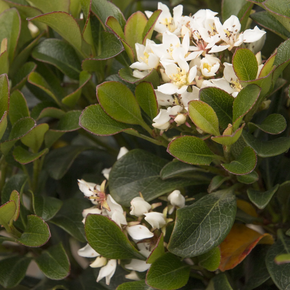
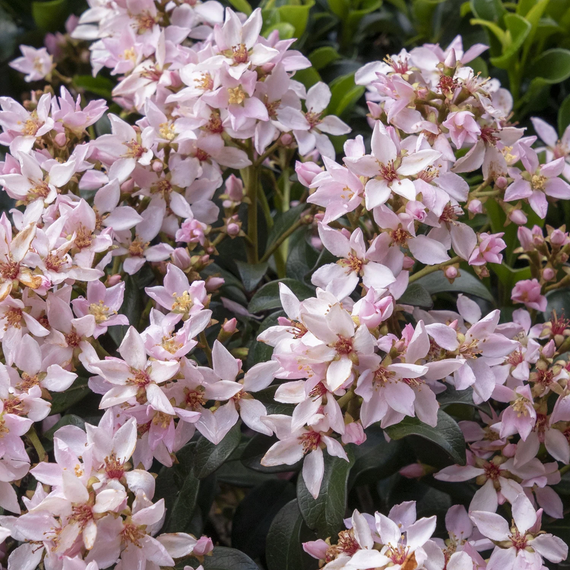
- Prolific clusters of fragrant, deep rose-pink, five-petaled flowers bloom from late winter through spring — and often rebloom in fall — blanketing the plant in color above a backdrop of glossy, leathery dark green foliage.
- Exceptionally tough and adaptable: heat tolerant, drought tolerant once established, salt spray tolerant, and highly resistant to wind damage and the fungal leaf spot diseases that trouble other Indian Hawthorn varieties.
- A year-round landscape performer with bronze-tinted new growth, rich green summer foliage that turns purplish-red in winter, and ornamental blue-black berries that attract songbirds through the colder months.
Rhaphiolepis indica 'Ballerina' is a standout dwarf Indian Hawthorn that delivers four seasons of visual interest in a compact, low-maintenance evergreen package perfectly suited to the mild-winter landscapes of Southern Oregon and Northern California. This dense, mounding shrub tops out at just 2 to 2.5 feet tall with a slightly wider spread of 3 to 4 feet, making it one of the most space-efficient and versatile flowering shrubs available for USDA Zones 8 through 10. From late winter into spring, 'Ballerina' erupts in abundant terminal clusters of fragrant, deep rose-pink flowers with red and yellow centers — a profusion of bloom that literally covers the plant — and often stages a second encore performance in autumn. Leathery, serrated, dark green leaves emerge with attractive bronze tints, mature to deep lustrous green through summer, and develop rich purplish-red tones in winter, ensuring that interest never fades between bloom cycles. Following the spring flowers, decorative blue-black berries develop and persist well into winter, providing a valuable food source for songbirds and wildlife. 'Ballerina' offers superior resistance to Entomosporium leaf spot compared to older Indian Hawthorn cultivars, thrives in coastal and urban environments with excellent tolerance for salt spray, wind, air pollution, and periodic drought once established, and requires little to no pruning to maintain its naturally tidy, rounded habit. Whether used as a low flowering hedge, a front-of-border accent, a mass planting on slopes and banks, or as a container specimen on a patio or entryway, Rhaphiolepis indica 'Ballerina' is a reliable, elegant, and long-lived choice for any low-water, low-maintenance garden design.
Plant Description
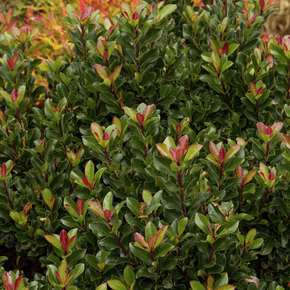
Ballerina Indian Hawthorn is a dwarf, broadleaf evergreen shrub in the rose family (Rosaceae), native to southern China and Southeast Asia. The 'Ballerina' cultivar is prized for its compact, prostrate, mounding habit and its exceptionally prolific flowering compared to standard Indian Hawthorn varieties. The foliage is thick, leathery, and oval to elliptical with finely serrated margins, measuring 1 to 3 inches in length. New leaves emerge with attractive bronze to copper tints before maturing to a lustrous, deep green. In winter, the foliage takes on appealing purplish-red tones, adding seasonal color even when the plant is not in bloom. Young stems are purplish-brown, aging to grayish-brown. The overall texture is medium and the dense, rounded growth habit is exceptionally neat, requiring minimal corrective pruning to maintain its shape.
Mature Size
| Attribute | Measurement |
|---|---|
| Mature Height | 2 to 2.5 feet |
| Mature Spread | 3 to 4 feet |
| Growth Rate | Slow to moderate; approximately 6 inches per year once established |
| Growth Habit | Dense, compact, mounding, and prostrate |
| Recommended Spacing | 3 to 4 feet on center for mass plantings or low hedges |
'Ballerina' is notably more compact than the standard species, which can reach 4 to 6 feet tall and wide. Its dwarf stature makes it an outstanding choice for low borders, foundation beds, parking strips, and any location where a full-sized shrub would overwhelm the space.
Hardiness Zones
Rhaphiolepis indica 'Ballerina' is rated for USDA Plant Hardiness Zones 8 through 10, and AHS Heat Zones 3 through 9. It thrives in the mild winters of Southern Oregon and Northern California and is an excellent year-round evergreen performer throughout the Pacific Coast, the Pacific Southwest, and other warm-winter regions. It is not cold-tolerant in zones below Zone 8. In borderline Zone 7 locations, it may survive with the benefit of a sheltered, south-facing microclimate. This cultivar tolerates the intense summer heat common across Northern California with ease, particularly once it is well established in the landscape.
Sunlight Requirements
'Ballerina' Indian Hawthorn performs best in full sun, defined as 6 or more hours of direct, unfiltered sunlight per day. Full sun exposure promotes the densest foliage, the most abundant flower production, and the strongest natural resistance to fungal diseases. The plant will tolerate partial shade (3 to 6 hours of sun per day), particularly in the hottest inland climates where afternoon shade can prevent leaf scorch, but expect a looser growth habit and noticeably fewer blooms in shadier conditions. Avoid planting in heavy shade, as this significantly increases susceptibility to disease and substantially reduces flowering performance.
Soil and pH Preferences
'Ballerina' Indian Hawthorn is adaptable to a wide range of soil types, including clay, loam, sandy, and chalky soils, provided drainage is adequate. Standing water and consistently waterlogged conditions are the primary threat to this shrub and must be avoided. For best results, aim for a slightly acidic to neutral soil pH in the range of 5.5 to 6.5, though this cultivar can tolerate mildly alkaline conditions as well. When planting in heavy clay soils, amend generously with compost or coarse organic matter to improve drainage and aeration. Raised planting beds or mounded planting sites work exceptionally well in areas with poorly draining native soils.
Watering Guide
Consistent, regular watering is essential during the first growing season after planting to help 'Ballerina' establish a deep, resilient root system. Once fully established, this shrub is notably drought tolerant and requires only occasional deep watering during extended periods of summer heat and drought. The key watering practices for long-term health are:
- Water deeply and infrequently rather than shallowly and often, encouraging deep root development.
- Allow the top several inches of soil to dry out between waterings once the plant is established.
- During extreme summer heat and drought, a thorough soaking every 10 to 14 days is typically sufficient for mature plants.
- Always water at the base of the plant, directing moisture to the root zone. Avoid overhead irrigation and sprinklers, as wet foliage promotes fungal leaf spot disease.
- Drip irrigation or soaker hoses are the ideal delivery method for this shrub.
Fertilizing
'Ballerina' Indian Hawthorn is not a heavy feeder and requires only minimal fertilization to perform at its best. A single application of a balanced, slow-release granular fertilizer in early spring — just as new growth begins — is generally all that is needed to support robust flowering and healthy foliage development through the growing season. Avoid fertilizing in late summer or fall, as this can stimulate tender new growth that may be damaged by early frosts. In soils with low fertility or where the plant shows signs of yellowing or slow growth, a fertilizer formulated for acid-loving plants (such as an azalea and camellia blend) can help maintain optimal soil pH and nutrient availability. Always water the plant thoroughly after applying fertilizer to prevent root burn.
Pruning and Maintenance
One of the most appealing qualities of 'Ballerina' is its naturally tidy, compact mounding habit that rarely requires pruning to look its best. This is a low-maintenance shrub in every respect. When pruning is desired, follow these guidelines:
- Prune immediately after the spring bloom cycle finishes to avoid sacrificing the following year's flower buds.
- Use light tip pruning — removing just the outermost inch or two of branch tips — to encourage fuller branching and a denser form.
- Avoid heavy shearing or severe heading cuts, which damage the plant's natural grace and can promote weak, disease-prone regrowth.
- Periodically thin the interior of the shrub to improve air circulation, which is the single most effective preventive measure against fungal leaf spot.
- Remove any dead, damaged, or crossing branches at any time of year.
- Promptly collect and discard any fallen leaves showing signs of fungal spotting to prevent the spread of disease.
Bloom Details and Seasonal Interest
Rhaphiolepis indica 'Ballerina' is a genuinely four-season ornamental plant. Here is what to expect throughout the year:
- Late Winter to Early Spring: The primary and most spectacular bloom period. Dense terminal clusters of fragrant, deep rose-pink, five-petaled flowers with red and yellow centers blanket the plant, often beginning as early as February and continuing through April. The blooms have a delicate, pleasant fragrance.
- Spring (New Growth): Fresh foliage emerges with attractive bronze and copper tints, providing a warm, contrasting color accent alongside and after the blooms.
- Summer: The foliage matures to a rich, lustrous dark green, offering a tidy and handsome evergreen backdrop to surrounding plants. Blue-black berries begin to ripen and develop.
- Fall: A secondary, often substantial rebloom of rose-pink flowers frequently occurs in autumn, and the ornamental blue-black berries persist, attracting birds.
- Winter: Foliage takes on rich purplish-red tones, and persistent berries continue to provide wildlife value and visual interest throughout the coldest months.
Planting Instructions
- Select a planting site that receives a minimum of 6 hours of direct sunlight and has well-draining soil. Avoid low spots where water collects.
- Dig a planting hole that is two to three times as wide as the root ball and equal in depth. Wider is better; avoid planting too deep.
- In heavy clay soils, amend the backfill with compost or organic matter to improve drainage. In sandy or low-fertility soils, incorporate compost to improve moisture retention and nutrients.
- Remove the plant from its container and gently loosen any circling or tightly bound roots before placing it in the hole.
- Set the plant so the top of the root ball sits at or very slightly above the surrounding soil grade to ensure the crown never sits in standing water.
- Backfill the hole, firming the soil gently around the roots to eliminate air pockets.
- Water thoroughly immediately after planting to settle the soil and hydrate the root ball.
- Apply a 2 to 3 inch layer of organic mulch (such as bark or wood chips) in a circle extending to the drip line, keeping the mulch a few inches away from the base of the stem to prevent crown rot and discourage pests.
- Water regularly throughout the first growing season to encourage establishment. Taper watering frequency as the plant becomes established.
Landscape Uses
'Ballerina' Indian Hawthorn is one of the most versatile low-growing shrubs available for warm-winter Western landscapes. Its compact size, year-round evergreen foliage, and spectacular spring bloom make it suitable for a wide range of design applications:
- Low flowering hedges and borders: Its uniform mounding habit creates a clean, elegant low hedge or border edging when planted 3 to 4 feet apart.
- Foundation plantings: Stays in scale with structures and windows without growing up and blocking sightlines.
- Mass plantings: Planted in drifts, 'Ballerina' creates a sweeping, low-maintenance groundcover effect with spectacular spring color.
- Slopes and banks: Its root system helps stabilize slopes, and its drought tolerance suits the dry conditions often found on berms and embankments.
- Street medians and parkways: Tolerates urban pollution, compacted soil, and heat reflected from pavement.
- Coastal gardens: Excellent tolerance of salt spray and coastal winds makes it a reliable choice near the ocean.
- Container and patio plantings: The dwarf habit and ornamental qualities translate beautifully to large pots, planters, and patio containers.
- Pollinator and wildlife gardens: Fragrant blooms attract bees, butterflies, and other pollinators, while berries feed songbirds.
Container Growing
'Ballerina' is an exceptional container plant, thanks to its naturally compact, dwarf habit and its tolerance of the warmer, drier conditions that potted plants experience. When growing in containers:
- Choose a container with ample drainage holes and a diameter at least 12 to 16 inches wide to accommodate the root system comfortably.
- Use a high-quality, well-draining potting mix. Avoid heavy garden soils in pots, as they compact and restrict drainage over time.
- Container-grown plants dry out more quickly than in-ground plants and will require more frequent watering, especially during summer heat. Check soil moisture regularly.
- Apply a slow-release fertilizer in early spring, and supplement with a liquid fertilizer mid-season if the plant shows signs of slowed growth or yellowing foliage.
- Every two to three years, inspect the roots and refresh the potting mix or repot into a slightly larger container to maintain vigor.
- In borderline climates, the added portability of container growing allows you to move the plant to a sheltered location during unusual cold snaps.
Pests and Diseases
'Ballerina' offers improved disease resistance compared to older Indian Hawthorn varieties, but awareness of potential issues ensures your plant stays healthy and vibrant.
- Entomosporium Leaf Spot (Entomosporium mespili): The most common disease of Indian Hawthorns. It causes small, round red spots on both leaf surfaces, eventually leading to yellowing and early leaf drop. 'Ballerina' has superior resistance to this fungal disease compared to many other cultivars. Prevention includes full sun exposure, good air circulation, and drip rather than overhead irrigation. Remove and discard infected fallen leaves promptly.
- Fire Blight: A bacterial disease that can cause branch dieback with a characteristic scorched appearance. Prune out affected branches well below the visible damage and sterilize pruning tools between cuts.
- Aphids: Small, soft-bodied insects that cluster on new growth tips. Typically manageable with a strong jet of water or applications of insecticidal soap.
- Scale Insects: Armored or soft scales can appear on stems and foliage. Treat with horticultural oil sprays applied when insects are in their crawler stage.
- Root Rot: Caused by consistently waterlogged soil. The best prevention is ensuring excellent drainage at the planting site. 'Ballerina' does not tolerate standing water.
- Nematodes: Soil-dwelling pests that can impact roots in sandy soils. Improve soil organic matter content to reduce susceptibility.
Wildlife Value
Rhaphiolepis indica 'Ballerina' offers meaningful ecological value in the garden throughout the year. The fragrant spring flowers are a rich source of nectar and pollen, attracting honeybees, native bees, butterflies, and a variety of other beneficial pollinators during the critical late winter and early spring foraging period when few other plants are in bloom. The ornamental blue-black berries that develop and ripen through summer and fall are a valued food source for songbirds and small mammals, with birds often consuming the berries well into the winter months. The dense evergreen canopy also provides sheltered nesting and roosting habitat for small garden birds. Note that deer may browse 'Ballerina', though its leathery foliage is generally not among their preferred food sources; in areas with high deer pressure, protective measures may be warranted during establishment.
Companion Plants
'Ballerina' Indian Hawthorn pairs beautifully with a wide range of plants that share its preference for well-drained, sunny locations and its need for low to moderate water once established. Consider these complementary plant combinations:
- Rosemary (Salvia rosmarinus): Shares the same sun and drought-tolerance profile, with contrasting silvery-blue foliage and complementary blue flowers.
- Lavender (Lavandula spp.): Provides a stunning color echo with purple blooms against 'Ballerina's' rose-pink flowers, and both thrive in the same sunny, well-drained conditions.
- Ceanothus (California Lilac): A native-friendly companion with striking blue flowers and similar low-water requirements for Pacific Coast gardens.
- Dwarf Nandina (Nandina domestica, compact varieties): Offers contrasting fine-textured foliage with complementary red-orange winter color alongside 'Ballerina's' purplish-red winter tones.
- Ornamental Grasses (Festuca, Muhlenbergia): Provide fine-textured, airy contrast to 'Ballerina's' bold, leathery foliage and dense mounding form.
- Agapanthus: Bold strap-like foliage and blue or white summer blooms complement 'Ballerina's' spring display and bridge the gap between bloom periods.
- Rockrose (Cistus spp.): A similarly tough, drought-tolerant Mediterranean shrub that pairs naturally with 'Ballerina' in low-water, coastal, or hillside plantings.
- Dwarf, mounding evergreen shrub that stays a tidy 2 to 2.5 feet tall and 3 to 4 feet wide, making it an ideal fit for small spaces, low borders, and foundation plantings without constant pruning.
- Prolific clusters of fragrant, deep rose-pink, five-petaled flowers bloom from late winter through spring — and often rebloom in fall — blanketing the plant in color above a backdrop of glossy, leathery dark green foliage.
- Exceptionally tough and adaptable: heat tolerant, drought tolerant once established, salt spray tolerant, and highly resistant to wind damage and the fungal leaf spot diseases that trouble other Indian Hawthorn varieties.
- A year-round landscape performer with bronze-tinted new growth, rich green summer foliage that turns purplish-red in winter, and ornamental blue-black berries that attract songbirds through the colder months.
Rhaphiolepis indica 'Ballerina' is a standout dwarf Indian Hawthorn that delivers four seasons of visual interest in a compact, low-maintenance evergreen package perfectly suited to the mild-winter landscapes of Southern Oregon and Northern California. This dense, mounding shrub tops out at just 2 to 2.5 feet tall with a slightly wider spread of 3 to 4 feet, making it one of the most space-efficient and versatile flowering shrubs available for USDA Zones 8 through 10. From late winter into spring, 'Ballerina' erupts in abundant terminal clusters of fragrant, deep rose-pink flowers with red and yellow centers — a profusion of bloom that literally covers the plant — and often stages a second encore performance in autumn. Leathery, serrated, dark green leaves emerge with attractive bronze tints, mature to deep lustrous green through summer, and develop rich purplish-red tones in winter, ensuring that interest never fades between bloom cycles. Following the spring flowers, decorative blue-black berries develop and persist well into winter, providing a valuable food source for songbirds and wildlife. 'Ballerina' offers superior resistance to Entomosporium leaf spot compared to older Indian Hawthorn cultivars, thrives in coastal and urban environments with excellent tolerance for salt spray, wind, air pollution, and periodic drought once established, and requires little to no pruning to maintain its naturally tidy, rounded habit. Whether used as a low flowering hedge, a front-of-border accent, a mass planting on slopes and banks, or as a container specimen on a patio or entryway, Rhaphiolepis indica 'Ballerina' is a reliable, elegant, and long-lived choice for any low-water, low-maintenance garden design.
Plant Description
Ballerina Indian Hawthorn is a dwarf, broadleaf evergreen shrub in the rose family (Rosaceae), native to southern China and Southeast Asia. The 'Ballerina' cultivar is prized for its compact, prostrate, mounding habit and its exceptionally prolific flowering compared to standard Indian Hawthorn varieties. The foliage is thick, leathery, and oval to elliptical with finely serrated margins, measuring 1 to 3 inches in length. New leaves emerge with attractive bronze to copper tints before maturing to a lustrous, deep green. In winter, the foliage takes on appealing purplish-red tones, adding seasonal color even when the plant is not in bloom. Young stems are purplish-brown, aging to grayish-brown. The overall texture is medium and the dense, rounded growth habit is exceptionally neat, requiring minimal corrective pruning to maintain its shape.
Mature Size
| Attribute | Measurement |
|---|---|
| Mature Height | 2 to 2.5 feet |
| Mature Spread | 3 to 4 feet |
| Growth Rate | Slow to moderate; approximately 6 inches per year once established |
| Growth Habit | Dense, compact, mounding, and prostrate |
| Recommended Spacing | 3 to 4 feet on center for mass plantings or low hedges |
'Ballerina' is notably more compact than the standard species, which can reach 4 to 6 feet tall and wide. Its dwarf stature makes it an outstanding choice for low borders, foundation beds, parking strips, and any location where a full-sized shrub would overwhelm the space.
Hardiness Zones
Rhaphiolepis indica 'Ballerina' is rated for USDA Plant Hardiness Zones 8 through 10, and AHS Heat Zones 3 through 9. It thrives in the mild winters of Southern Oregon and Northern California and is an excellent year-round evergreen performer throughout the Pacific Coast, the Pacific Southwest, and other warm-winter regions. It is not cold-tolerant in zones below Zone 8. In borderline Zone 7 locations, it may survive with the benefit of a sheltered, south-facing microclimate. This cultivar tolerates the intense summer heat common across Northern California with ease, particularly once it is well established in the landscape.
Sunlight Requirements
'Ballerina' Indian Hawthorn performs best in full sun, defined as 6 or more hours of direct, unfiltered sunlight per day. Full sun exposure promotes the densest foliage, the most abundant flower production, and the strongest natural resistance to fungal diseases. The plant will tolerate partial shade (3 to 6 hours of sun per day), particularly in the hottest inland climates where afternoon shade can prevent leaf scorch, but expect a looser growth habit and noticeably fewer blooms in shadier conditions. Avoid planting in heavy shade, as this significantly increases susceptibility to disease and substantially reduces flowering performance.
Soil and pH Preferences
'Ballerina' Indian Hawthorn is adaptable to a wide range of soil types, including clay, loam, sandy, and chalky soils, provided drainage is adequate. Standing water and consistently waterlogged conditions are the primary threat to this shrub and must be avoided. For best results, aim for a slightly acidic to neutral soil pH in the range of 5.5 to 6.5, though this cultivar can tolerate mildly alkaline conditions as well. When planting in heavy clay soils, amend generously with compost or coarse organic matter to improve drainage and aeration. Raised planting beds or mounded planting sites work exceptionally well in areas with poorly draining native soils.
Watering Guide
Consistent, regular watering is essential during the first growing season after planting to help 'Ballerina' establish a deep, resilient root system. Once fully established, this shrub is notably drought tolerant and requires only occasional deep watering during extended periods of summer heat and drought. The key watering practices for long-term health are:
- Water deeply and infrequently rather than shallowly and often, encouraging deep root development.
- Allow the top several inches of soil to dry out between waterings once the plant is established.
- During extreme summer heat and drought, a thorough soaking every 10 to 14 days is typically sufficient for mature plants.
- Always water at the base of the plant, directing moisture to the root zone. Avoid overhead irrigation and sprinklers, as wet foliage promotes fungal leaf spot disease.
- Drip irrigation or soaker hoses are the ideal delivery method for this shrub.
Fertilizing
'Ballerina' Indian Hawthorn is not a heavy feeder and requires only minimal fertilization to perform at its best. A single application of a balanced, slow-release granular fertilizer in early spring — just as new growth begins — is generally all that is needed to support robust flowering and healthy foliage development through the growing season. Avoid fertilizing in late summer or fall, as this can stimulate tender new growth that may be damaged by early frosts. In soils with low fertility or where the plant shows signs of yellowing or slow growth, a fertilizer formulated for acid-loving plants (such as an azalea and camellia blend) can help maintain optimal soil pH and nutrient availability. Always water the plant thoroughly after applying fertilizer to prevent root burn.
Pruning and Maintenance
One of the most appealing qualities of 'Ballerina' is its naturally tidy, compact mounding habit that rarely requires pruning to look its best. This is a low-maintenance shrub in every respect. When pruning is desired, follow these guidelines:
- Prune immediately after the spring bloom cycle finishes to avoid sacrificing the following year's flower buds.
- Use light tip pruning — removing just the outermost inch or two of branch tips — to encourage fuller branching and a denser form.
- Avoid heavy shearing or severe heading cuts, which damage the plant's natural grace and can promote weak, disease-prone regrowth.
- Periodically thin the interior of the shrub to improve air circulation, which is the single most effective preventive measure against fungal leaf spot.
- Remove any dead, damaged, or crossing branches at any time of year.
- Promptly collect and discard any fallen leaves showing signs of fungal spotting to prevent the spread of disease.
Bloom Details and Seasonal Interest
Rhaphiolepis indica 'Ballerina' is a genuinely four-season ornamental plant. Here is what to expect throughout the year:
- Late Winter to Early Spring: The primary and most spectacular bloom period. Dense terminal clusters of fragrant, deep rose-pink, five-petaled flowers with red and yellow centers blanket the plant, often beginning as early as February and continuing through April. The blooms have a delicate, pleasant fragrance.
- Spring (New Growth): Fresh foliage emerges with attractive bronze and copper tints, providing a warm, contrasting color accent alongside and after the blooms.
- Summer: The foliage matures to a rich, lustrous dark green, offering a tidy and handsome evergreen backdrop to surrounding plants. Blue-black berries begin to ripen and develop.
- Fall: A secondary, often substantial rebloom of rose-pink flowers frequently occurs in autumn, and the ornamental blue-black berries persist, attracting birds.
- Winter: Foliage takes on rich purplish-red tones, and persistent berries continue to provide wildlife value and visual interest throughout the coldest months.
Planting Instructions
- Select a planting site that receives a minimum of 6 hours of direct sunlight and has well-draining soil. Avoid low spots where water collects.
- Dig a planting hole that is two to three times as wide as the root ball and equal in depth. Wider is better; avoid planting too deep.
- In heavy clay soils, amend the backfill with compost or organic matter to improve drainage. In sandy or low-fertility soils, incorporate compost to improve moisture retention and nutrients.
- Remove the plant from its container and gently loosen any circling or tightly bound roots before placing it in the hole.
- Set the plant so the top of the root ball sits at or very slightly above the surrounding soil grade to ensure the crown never sits in standing water.
- Backfill the hole, firming the soil gently around the roots to eliminate air pockets.
- Water thoroughly immediately after planting to settle the soil and hydrate the root ball.
- Apply a 2 to 3 inch layer of organic mulch (such as bark or wood chips) in a circle extending to the drip line, keeping the mulch a few inches away from the base of the stem to prevent crown rot and discourage pests.
- Water regularly throughout the first growing season to encourage establishment. Taper watering frequency as the plant becomes established.
Landscape Uses
'Ballerina' Indian Hawthorn is one of the most versatile low-growing shrubs available for warm-winter Western landscapes. Its compact size, year-round evergreen foliage, and spectacular spring bloom make it suitable for a wide range of design applications:
- Low flowering hedges and borders: Its uniform mounding habit creates a clean, elegant low hedge or border edging when planted 3 to 4 feet apart.
- Foundation plantings: Stays in scale with structures and windows without growing up and blocking sightlines.
- Mass plantings: Planted in drifts, 'Ballerina' creates a sweeping, low-maintenance groundcover effect with spectacular spring color.
- Slopes and banks: Its root system helps stabilize slopes, and its drought tolerance suits the dry conditions often found on berms and embankments.
- Street medians and parkways: Tolerates urban pollution, compacted soil, and heat reflected from pavement.
- Coastal gardens: Excellent tolerance of salt spray and coastal winds makes it a reliable choice near the ocean.
- Container and patio plantings: The dwarf habit and ornamental qualities translate beautifully to large pots, planters, and patio containers.
- Pollinator and wildlife gardens: Fragrant blooms attract bees, butterflies, and other pollinators, while berries feed songbirds.
Container Growing
'Ballerina' is an exceptional container plant, thanks to its naturally compact, dwarf habit and its tolerance of the warmer, drier conditions that potted plants experience. When growing in containers:
- Choose a container with ample drainage holes and a diameter at least 12 to 16 inches wide to accommodate the root system comfortably.
- Use a high-quality, well-draining potting mix. Avoid heavy garden soils in pots, as they compact and restrict drainage over time.
- Container-grown plants dry out more quickly than in-ground plants and will require more frequent watering, especially during summer heat. Check soil moisture regularly.
- Apply a slow-release fertilizer in early spring, and supplement with a liquid fertilizer mid-season if the plant shows signs of slowed growth or yellowing foliage.
- Every two to three years, inspect the roots and refresh the potting mix or repot into a slightly larger container to maintain vigor.
- In borderline climates, the added portability of container growing allows you to move the plant to a sheltered location during unusual cold snaps.
Pests and Diseases
'Ballerina' offers improved disease resistance compared to older Indian Hawthorn varieties, but awareness of potential issues ensures your plant stays healthy and vibrant.
- Entomosporium Leaf Spot (Entomosporium mespili): The most common disease of Indian Hawthorns. It causes small, round red spots on both leaf surfaces, eventually leading to yellowing and early leaf drop. 'Ballerina' has superior resistance to this fungal disease compared to many other cultivars. Prevention includes full sun exposure, good air circulation, and drip rather than overhead irrigation. Remove and discard infected fallen leaves promptly.
- Fire Blight: A bacterial disease that can cause branch dieback with a characteristic scorched appearance. Prune out affected branches well below the visible damage and sterilize pruning tools between cuts.
- Aphids: Small, soft-bodied insects that cluster on new growth tips. Typically manageable with a strong jet of water or applications of insecticidal soap.
- Scale Insects: Armored or soft scales can appear on stems and foliage. Treat with horticultural oil sprays applied when insects are in their crawler stage.
- Root Rot: Caused by consistently waterlogged soil. The best prevention is ensuring excellent drainage at the planting site. 'Ballerina' does not tolerate standing water.
- Nematodes: Soil-dwelling pests that can impact roots in sandy soils. Improve soil organic matter content to reduce susceptibility.
Wildlife Value
Rhaphiolepis indica 'Ballerina' offers meaningful ecological value in the garden throughout the year. The fragrant spring flowers are a rich source of nectar and pollen, attracting honeybees, native bees, butterflies, and a variety of other beneficial pollinators during the critical late winter and early spring foraging period when few other plants are in bloom. The ornamental blue-black berries that develop and ripen through summer and fall are a valued food source for songbirds and small mammals, with birds often consuming the berries well into the winter months. The dense evergreen canopy also provides sheltered nesting and roosting habitat for small garden birds. Note that deer may browse 'Ballerina', though its leathery foliage is generally not among their preferred food sources; in areas with high deer pressure, protective measures may be warranted during establishment.
Companion Plants
'Ballerina' Indian Hawthorn pairs beautifully with a wide range of plants that share its preference for well-drained, sunny locations and its need for low to moderate water once established. Consider these complementary plant combinations:
- Rosemary (Salvia rosmarinus): Shares the same sun and drought-tolerance profile, with contrasting silvery-blue foliage and complementary blue flowers.
- Lavender (Lavandula spp.): Provides a stunning color echo with purple blooms against 'Ballerina's' rose-pink flowers, and both thrive in the same sunny, well-drained conditions.
- Ceanothus (California Lilac): A native-friendly companion with striking blue flowers and similar low-water requirements for Pacific Coast gardens.
- Dwarf Nandina (Nandina domestica, compact varieties): Offers contrasting fine-textured foliage with complementary red-orange winter color alongside 'Ballerina's' purplish-red winter tones.
- Ornamental Grasses (Festuca, Muhlenbergia): Provide fine-textured, airy contrast to 'Ballerina's' bold, leathery foliage and dense mounding form.
- Agapanthus: Bold strap-like foliage and blue or white summer blooms complement 'Ballerina's' spring display and bridge the gap between bloom periods.
- Rockrose (Cistus spp.): A similarly tough, drought-tolerant Mediterranean shrub that pairs naturally with 'Ballerina' in low-water, coastal, or hillside plantings.
Related Products