
Zoom the image with the mouse
Southern Moon Yedda Hawthorn - 1 Gallon
SKU:
2232920
UPC:
014949250662
$16.99
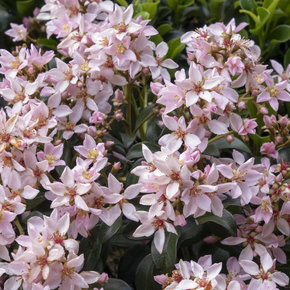
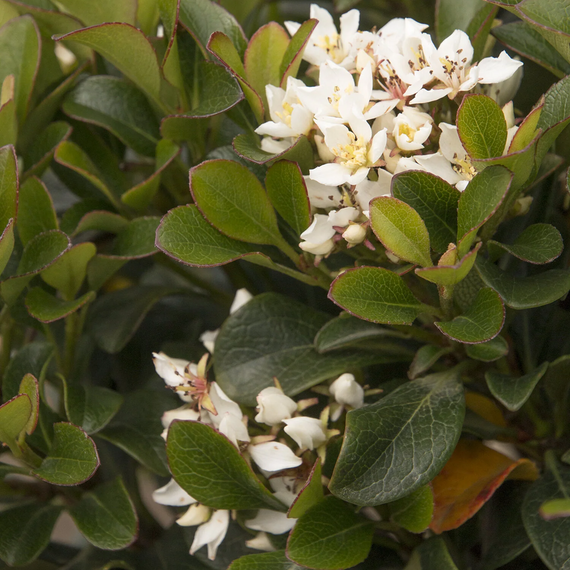
- Profuse clusters of fragrant white flowers blanket the entire shrub each spring just before the flush of rich new foliage — delivering one of the most dramatic seasonal displays of any evergreen shrub
- Award-winning disease resistance backed by nearly a decade of field trials, making Southern Moon Yedda Hawthorn a reliable, worry-free choice for landscapes in Southern Oregon and Northern California
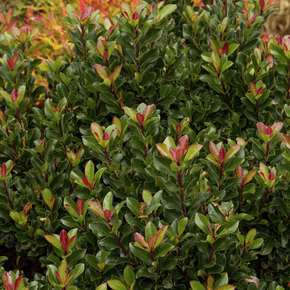
- Glossy, deep green leaves with distinctive wavy margins emerge bronze-red in spring and hold their rich color year-round, providing four-season ornamental interest even when not in bloom
- Naturally dense, self-mounding habit requires minimal pruning and thrives in full sun to partial shade — an exceptionally low-maintenance evergreen for foundations, hedges, borders, and coastal gardens
Southern Moon Yedda Hawthorn (Rhaphiolepis umbellata 'RutRhaph1' PP #20,730) is a standout, patent-protected evergreen shrub that represents one of the finest improved selections of the species after nearly a decade of rigorous horticultural evaluation. In spring, the entire plant becomes smothered in large, showy panicles of fragrant white flowers that appear just ahead of the season's new growth flush, creating a breathtaking display that makes it a true focal point in any landscape. The blooms are followed by ornamental blue-black berries that persist into winter and attract birds, extending the plant's seasonal interest well beyond its spectacular spring showing. Its handsome foliage — thick, leathery, oval leaves with attractively wavy margins that emerge in warm bronze-red tones before maturing to a deep, lustrous dark green — provides rich texture and color throughout all four seasons. Southern Moon forms a vigorous, compact, naturally rounded mound with a dense, layered branching structure that holds its tidy shape with little to no maintenance pruning. Proven for exceptional resistance to the common diseases that can plague other Rhaphiolepis cultivars, it is a tough and adaptable shrub that tolerates drought once established, withstands coastal salt spray, and performs equally well in full sun or partial shade. Whether used as a polished foundation planting, a low informal hedge, a mass planting for slope stabilization, or a standout specimen in a mixed shrub border, Southern Moon Yedda Hawthorn delivers reliable beauty and unmatched durability in USDA Zones 7 through 10.
Plant Description
Southern Moon Yedda Hawthorn is a broadleaf evergreen shrub prized for its combination of spectacular spring flowering, outstanding year-round foliage, and proven disease resistance. It belongs to the Rosaceae family and originates from Japan and eastern Asia. The common name "Yedda" (also spelled "Yeddo") references the historic name for Tokyo, Japan, reflecting the plant's geographic roots. The 'RutRhaph1' cultivar was developed and evaluated over nearly a decade before release, consistently demonstrating superior performance in disease resistance trials compared to other Rhaphiolepis cultivars. Its naturally dense, self-mounding form, glossy foliage, and reliable spring flower show make it one of the most sought-after evergreen shrubs for Western gardens.
Mature Size
| Characteristic | Measurement |
|---|---|
| Mature Height | 3 to 6 feet |
| Mature Spread | 6 to 8 feet (up to 10 feet at full maturity) |
| Growth Rate | Medium; slow to moderate |
| Growth Habit | Dense, compact, self-mounding |
| Canopy Height | Low; suitable for planting beneath power lines |
Southern Moon matures wider than it is tall, developing a broad, gently mounded silhouette that fits comfortably into residential foundations and border plantings. Its naturally tidy, rounded shape generally does not require shaping pruning to look polished in the landscape.
Hardiness Zones
Southern Moon Yedda Hawthorn is winter hardy in USDA Hardiness Zones 7b through 10. This makes it an excellent choice for the mild-winter climates of Southern Oregon and Northern California, where it can be grown as a permanent, reliable evergreen landscape shrub. It performs best where temperatures do not regularly drop below approximately 0°F to 5°F (-18°C to -15°C). In the warmest parts of Zone 10, it thrives year-round with little cold-weather stress. In Zone 7b, planting in a sheltered location with protection from harsh, desiccating winter winds is advisable. It is not suited for climates with prolonged hard freezes.
Sunlight Requirements
Southern Moon Yedda Hawthorn performs best in full sun, receiving at least 6 hours of direct sunlight per day. Full sun exposure encourages the most profuse flowering, the most compact and dense habit, and the richest foliage color. It also tolerates partial shade (3 to 6 hours of direct sun), though plants in shadier conditions will produce somewhat fewer blooms and may develop a slightly more open, less compact form over time. In the hot inland valleys of Northern California and Southern Oregon, a location with light afternoon shade can help protect the plant from extreme summer heat stress while still maintaining good bloom performance.
Soil and pH Preferences
Southern Moon Yedda Hawthorn is adaptable to a wide range of soil types but performs best in the following conditions:
- Drainage: Well-drained to average-moisture soils are essential. Standing water and consistently waterlogged soils must be avoided, as they promote root rot and fungal disease.
- Texture: Tolerates clay, loam, and sandy soils, though loamy, well-aerated soil with added organic matter produces the most vigorous growth.
- pH: Prefers a slightly acidic to neutral soil pH of approximately 5.5 to 7.0. It is not highly particular about pH, but very alkaline soils can limit nutrient uptake.
- Organic matter: Incorporating compost or aged organic matter at planting time improves both drainage in clay soils and moisture retention in sandy soils, benefiting long-term establishment.
- Salt tolerance: Demonstrates good tolerance to salt spray and coastal soils, making it suitable for seaside landscapes.
Watering Guide
During the first 1 to 2 years after planting, regular and consistent watering is critical to help Southern Moon Yedda Hawthorn develop a deep, well-established root system. Water deeply and thoroughly, allowing the soil to approach moderate dryness between waterings rather than keeping it constantly saturated. Once established, this shrub demonstrates good drought tolerance and generally requires only supplemental irrigation during extended dry spells or periods of intense summer heat.
- Newly planted: Water deeply 2 to 3 times per week during the first growing season, adjusting for rainfall.
- Established plants: Once or twice per week in summer; reduce significantly in winter when the plant is not in active growth.
- Watering method: Water at the base of the plant using drip irrigation or a soaker hose whenever possible. Avoid overhead watering and wetting the foliage, which can encourage leaf spot and other fungal issues.
- Mulching: Apply a 2 to 3 inch layer of organic mulch around the root zone to conserve soil moisture, regulate soil temperature, and reduce watering frequency. Keep mulch a few inches away from the main stems.
Fertilizing
Southern Moon Yedda Hawthorn benefits from light, well-timed fertilization to support vigorous growth and abundant spring flowering. Over-fertilizing can lead to excessive, soft growth that is more susceptible to disease and environmental stress.
- Spring application: Apply a balanced, slow-release granular fertilizer formulated for shrubs (such as a 10-10-10 or similar balanced formula) as new growth begins in early spring. This is the most important application of the year.
- Pre-bloom boost: A fertilizer with a higher phosphorus content applied in late winter or very early spring can encourage more prolific flowering.
- Fall application: A light application of a low-nitrogen fertilizer in early fall can help strengthen the plant heading into winter without promoting tender new growth late in the season.
- Organic option: Top-dress annually with well-aged compost or worm castings in spring for a gentle, long-acting nutrient source that also improves soil structure.
- Container plants: Fertilize container-grown specimens monthly during the growing season with a balanced liquid fertilizer at half the recommended strength.
Pruning and Maintenance
One of Southern Moon Yedda Hawthorn's greatest assets is its naturally tidy, self-mounding growth habit, which means it requires very little pruning to maintain an attractive shape. It is considered a low-maintenance shrub overall.
- Timing: If shaping or size control is needed, prune immediately after the spring flowering period ends. Pruning before or during bloom will remove the current season's flowers.
- Technique: Use clean, sharp hand pruners for selective thinning or light shaping. For hedge maintenance, hedge shears can be used to achieve a uniform profile.
- What to remove: Remove any dead, damaged, or crossing branches at any time of year. After flowering, removing spent flower clusters can improve appearance, though this is not required.
- Avoid heavy pruning: Hard pruning into old wood is generally not necessary and not recommended, as it can reduce the following season's bloom and stress the plant.
- Pinching new growth: Light tip-pinching of new growth after flowering can encourage a bushier, more compact form if desired.
Planting Instructions
- Choose the right site: Select a location with full sun to partial shade and well-drained soil. Avoid low-lying areas prone to standing water.
- Timing: Plant in spring or fall for the best establishment success. Fall planting allows root development before summer heat arrives; spring planting gives the plant a full growing season to settle in.
- Dig the hole: Dig a hole 2 to 3 times the width of the root ball and the same depth. Avoid planting too deeply — the top of the root ball should sit level with or very slightly above the surrounding soil grade.
- Amend the soil: Mix the removed soil with organic compost at a ratio of about 1 part compost to 2 to 3 parts native soil. Avoid amending with heavy peat in well-drained sandy soils.
- Place the plant: Remove the shrub from its container, gently loosen any circling roots, and set it in the center of the hole. Backfill with amended soil, firming gently in layers to eliminate air pockets.
- Water thoroughly: Water deeply immediately after planting. Form a shallow watering berm at the outer edge of the planting hole to direct water toward the root zone.
- Mulch: Apply a 2 to 3 inch layer of organic mulch over the root zone, keeping it a few inches away from the main stem to prevent crown rot.
- Spacing: For mass plantings or hedges, space plants 4 to 6 feet apart. For specimen use, allow the full mature spread of 6 to 8 feet.
Seasonal Interest
| Season | Ornamental Feature |
|---|---|
| Spring | Peak bloom: entire shrub covered in showy, fragrant white flower clusters; new foliage emerges in warm bronze-red tones |
| Late Spring / Summer | Rich, dark glossy green foliage with wavy margins matures; dense, rounded form at its fullest |
| Fall | Ornamental blue-black berries develop and persist; foliage remains deep, lustrous green |
| Winter | Berries persist and attract birds; evergreen foliage maintains rich green color, providing structure in the dormant landscape |
Landscape Uses
Southern Moon Yedda Hawthorn's broad, mounding habit, evergreen foliage, and seasonal interest make it one of the most versatile shrubs for Western landscapes. Recommended uses include:
- Foundation plantings: Its naturally tidy, low-profile mounded habit and evergreen foliage make it a classic and reliable choice for planting along house foundations.
- Informal hedges and screens: Plant in a row and allow to grow together for an attractive, low-maintenance evergreen screen or hedge.
- Accent and specimen planting: Use as a single focal-point shrub in a mixed border or landscape bed where its spring flower show can be showcased.
- Mass plantings: Looks stunning when planted en masse on slopes or in large open beds, especially during spring bloom.
- Coastal gardens: Its demonstrated tolerance of salt spray and wind makes it well-suited to seaside and coastal landscapes.
- Street and urban landscapes: Tolerates urban pollution and can be used in streetside plantings, parking lot islands, and commercial landscapes.
- Container planting: Can be grown in large decorative containers on patios, entryways, or decks where its bloom and foliage can be enjoyed up close.
Companion Plants
Southern Moon Yedda Hawthorn pairs beautifully with plants that complement its bold, glossy evergreen texture and white spring bloom. Consider these companions for cohesive, layered planting designs:
- Lavender (Lavandula spp.): The soft, silvery-gray foliage and purple flower spikes contrast beautifully with the deep green, glossy leaves of Southern Moon, and both thrive in similar sunny, well-drained conditions.
- Ornamental grasses (Miscanthus, Muhlenbergia): Fine-textured grasses provide a soft, airy counterpoint to the bold, leathery foliage of Yedda Hawthorn.
- Rockrose (Cistus spp.): Another drought-tolerant, sun-loving evergreen shrub native to similar Mediterranean-type climates; the combination provides multi-season flowering with minimal care.
- Mexican sage (Salvia leucantha): Soft purple late-season spikes complement the glossy dark foliage and extend garden color well past Southern Moon's spring peak.
- Rosemary (Salvia rosmarinus): Evergreen, fragrant, drought-tolerant, and shares similar cultural requirements; provides a fine-textured foliage contrast.
- Agapanthus (Agapanthus spp.): Bold, strap-leaved foliage and summer blue or white blooms work harmoniously alongside the mounding form of Southern Moon.
- Fortnight lily (Dietes iridioides): Evergreen, clumping, and low-maintenance; its upright form and white flowers echo the Southern Moon's bloom palette.
Pests and Diseases
Southern Moon Yedda Hawthorn was specifically selected for its superior disease resistance compared to other Rhaphiolepis cultivars, making it one of the most trouble-free options in this genus. However, gardeners should be aware of the following potential issues:
- Entomosporium leaf spot: The most common fungal disease of Rhaphiolepis. Symptoms include reddish spots with gray or tan centers on leaves. Southern Moon has proven significantly more resistant to this disease than older cultivars, but wet conditions and overhead watering can still create favorable conditions. Avoid wetting foliage and ensure good air circulation.
- Fireblight (Erwinia amylovora): As a member of the Rosaceae family, Southern Moon can be susceptible to this bacterial disease, particularly during warm, moist spring conditions. Infected shoots will appear scorched and blackened. Remove and destroy infected branches, cutting well below visible infection. Sterilize pruning tools between cuts.
- Aphids: Soft-bodied insects that cluster on new growth in spring. A strong jet of water or an application of insecticidal soap or neem oil is usually sufficient to control infestations.
- Scale insects: Can occasionally appear on stems and foliage. Treat with horticultural oil applied during the dormant season or use insecticidal soap on active infestations.
- Root rot (Phytophthora): A risk in poorly drained or consistently wet soils. Plant in well-drained locations and avoid overwatering to prevent this condition entirely.
General prevention: Avoid overhead irrigation, ensure adequate plant spacing for good air circulation, clean up fallen leaf debris, and apply mulch to reduce soil-splash onto foliage.
Container Growing
Southern Moon Yedda Hawthorn adapts well to container culture, making it an excellent choice for patios, entryways, rooftop gardens, and any outdoor space where in-ground planting is not possible.
- Container size: Choose a large, sturdy container — at least 18 to 24 inches in diameter and depth — to accommodate the root system and allow room for growth. Larger containers are preferable for long-term plantings.
- Potting mix: Use a high-quality, well-draining potting mix formulated for woody shrubs or a blend of potting soil, perlite, and coarse bark for excellent drainage and aeration. Avoid using straight garden soil, which compacts over time in containers.
- Drainage: Ensure the container has adequate drainage holes. Elevate the pot slightly to prevent drainage holes from becoming blocked.
- Watering: Container plants dry out more quickly than in-ground specimens. Check soil moisture regularly and water when the top 1 to 2 inches of soil become dry. Do not allow the pot to sit in a saucer of standing water.
- Fertilizing: Feed monthly during the growing season (spring through early fall) with a balanced liquid fertilizer at half the recommended label rate, or use a slow-release granular fertilizer applied in spring.
- Repotting: Repot into a slightly larger container every 2 to 3 years as the plant becomes root-bound, or refresh the top several inches of potting mix annually if a size increase is not desired.
- Winter care: In borderline zones or during unusually cold winters, move containers to a sheltered location such as a covered patio, garage, or against a south-facing wall to protect roots from freezing.
Wildlife Value
Southern Moon Yedda Hawthorn offers meaningful wildlife value across multiple seasons, making it a rewarding choice for gardeners who want to support local ecosystems while maintaining an attractive, manicured landscape.
- Pollinators: The abundant spring flower clusters are rich in nectar and attract bees, butterflies, and other beneficial pollinating insects. The open, accessible flower structure makes nectar easy for a wide variety of pollinators to reach.
- Birds: The ornamental blue-black berries that form after flowering and persist well into winter provide an important food source for fruit-eating birds including robins, waxwings, mockingbirds, and towhees. The dense, evergreen branching structure also offers shelter and nesting habitat.
- Beneficial insects: The shrub's structure and flower supply support a broader food web, providing habitat and food for beneficial insects that in turn support garden health.
- Deer resistance: While not classified as fully deer-proof, the thick, leathery leaves of Rhaphiolepis umbellata are generally not preferred by deer, making Southern Moon a relatively deer-resistant choice compared to many other flowering shrubs.
- Profuse clusters of fragrant white flowers blanket the entire shrub each spring just before the flush of rich new foliage — delivering one of the most dramatic seasonal displays of any evergreen shrub
- Award-winning disease resistance backed by nearly a decade of field trials, making Southern Moon Yedda Hawthorn a reliable, worry-free choice for landscapes in Southern Oregon and Northern California
- Glossy, deep green leaves with distinctive wavy margins emerge bronze-red in spring and hold their rich color year-round, providing four-season ornamental interest even when not in bloom
- Naturally dense, self-mounding habit requires minimal pruning and thrives in full sun to partial shade — an exceptionally low-maintenance evergreen for foundations, hedges, borders, and coastal gardens
Southern Moon Yedda Hawthorn (Rhaphiolepis umbellata 'RutRhaph1' PP #20,730) is a standout, patent-protected evergreen shrub that represents one of the finest improved selections of the species after nearly a decade of rigorous horticultural evaluation. In spring, the entire plant becomes smothered in large, showy panicles of fragrant white flowers that appear just ahead of the season's new growth flush, creating a breathtaking display that makes it a true focal point in any landscape. The blooms are followed by ornamental blue-black berries that persist into winter and attract birds, extending the plant's seasonal interest well beyond its spectacular spring showing. Its handsome foliage — thick, leathery, oval leaves with attractively wavy margins that emerge in warm bronze-red tones before maturing to a deep, lustrous dark green — provides rich texture and color throughout all four seasons. Southern Moon forms a vigorous, compact, naturally rounded mound with a dense, layered branching structure that holds its tidy shape with little to no maintenance pruning. Proven for exceptional resistance to the common diseases that can plague other Rhaphiolepis cultivars, it is a tough and adaptable shrub that tolerates drought once established, withstands coastal salt spray, and performs equally well in full sun or partial shade. Whether used as a polished foundation planting, a low informal hedge, a mass planting for slope stabilization, or a standout specimen in a mixed shrub border, Southern Moon Yedda Hawthorn delivers reliable beauty and unmatched durability in USDA Zones 7 through 10.
Plant Description
Southern Moon Yedda Hawthorn is a broadleaf evergreen shrub prized for its combination of spectacular spring flowering, outstanding year-round foliage, and proven disease resistance. It belongs to the Rosaceae family and originates from Japan and eastern Asia. The common name "Yedda" (also spelled "Yeddo") references the historic name for Tokyo, Japan, reflecting the plant's geographic roots. The 'RutRhaph1' cultivar was developed and evaluated over nearly a decade before release, consistently demonstrating superior performance in disease resistance trials compared to other Rhaphiolepis cultivars. Its naturally dense, self-mounding form, glossy foliage, and reliable spring flower show make it one of the most sought-after evergreen shrubs for Western gardens.
Mature Size
| Characteristic | Measurement |
|---|---|
| Mature Height | 3 to 6 feet |
| Mature Spread | 6 to 8 feet (up to 10 feet at full maturity) |
| Growth Rate | Medium; slow to moderate |
| Growth Habit | Dense, compact, self-mounding |
| Canopy Height | Low; suitable for planting beneath power lines |
Southern Moon matures wider than it is tall, developing a broad, gently mounded silhouette that fits comfortably into residential foundations and border plantings. Its naturally tidy, rounded shape generally does not require shaping pruning to look polished in the landscape.
Hardiness Zones
Southern Moon Yedda Hawthorn is winter hardy in USDA Hardiness Zones 7b through 10. This makes it an excellent choice for the mild-winter climates of Southern Oregon and Northern California, where it can be grown as a permanent, reliable evergreen landscape shrub. It performs best where temperatures do not regularly drop below approximately 0°F to 5°F (-18°C to -15°C). In the warmest parts of Zone 10, it thrives year-round with little cold-weather stress. In Zone 7b, planting in a sheltered location with protection from harsh, desiccating winter winds is advisable. It is not suited for climates with prolonged hard freezes.
Sunlight Requirements
Southern Moon Yedda Hawthorn performs best in full sun, receiving at least 6 hours of direct sunlight per day. Full sun exposure encourages the most profuse flowering, the most compact and dense habit, and the richest foliage color. It also tolerates partial shade (3 to 6 hours of direct sun), though plants in shadier conditions will produce somewhat fewer blooms and may develop a slightly more open, less compact form over time. In the hot inland valleys of Northern California and Southern Oregon, a location with light afternoon shade can help protect the plant from extreme summer heat stress while still maintaining good bloom performance.
Soil and pH Preferences
Southern Moon Yedda Hawthorn is adaptable to a wide range of soil types but performs best in the following conditions:
- Drainage: Well-drained to average-moisture soils are essential. Standing water and consistently waterlogged soils must be avoided, as they promote root rot and fungal disease.
- Texture: Tolerates clay, loam, and sandy soils, though loamy, well-aerated soil with added organic matter produces the most vigorous growth.
- pH: Prefers a slightly acidic to neutral soil pH of approximately 5.5 to 7.0. It is not highly particular about pH, but very alkaline soils can limit nutrient uptake.
- Organic matter: Incorporating compost or aged organic matter at planting time improves both drainage in clay soils and moisture retention in sandy soils, benefiting long-term establishment.
- Salt tolerance: Demonstrates good tolerance to salt spray and coastal soils, making it suitable for seaside landscapes.
Watering Guide
During the first 1 to 2 years after planting, regular and consistent watering is critical to help Southern Moon Yedda Hawthorn develop a deep, well-established root system. Water deeply and thoroughly, allowing the soil to approach moderate dryness between waterings rather than keeping it constantly saturated. Once established, this shrub demonstrates good drought tolerance and generally requires only supplemental irrigation during extended dry spells or periods of intense summer heat.
- Newly planted: Water deeply 2 to 3 times per week during the first growing season, adjusting for rainfall.
- Established plants: Once or twice per week in summer; reduce significantly in winter when the plant is not in active growth.
- Watering method: Water at the base of the plant using drip irrigation or a soaker hose whenever possible. Avoid overhead watering and wetting the foliage, which can encourage leaf spot and other fungal issues.
- Mulching: Apply a 2 to 3 inch layer of organic mulch around the root zone to conserve soil moisture, regulate soil temperature, and reduce watering frequency. Keep mulch a few inches away from the main stems.
Fertilizing
Southern Moon Yedda Hawthorn benefits from light, well-timed fertilization to support vigorous growth and abundant spring flowering. Over-fertilizing can lead to excessive, soft growth that is more susceptible to disease and environmental stress.
- Spring application: Apply a balanced, slow-release granular fertilizer formulated for shrubs (such as a 10-10-10 or similar balanced formula) as new growth begins in early spring. This is the most important application of the year.
- Pre-bloom boost: A fertilizer with a higher phosphorus content applied in late winter or very early spring can encourage more prolific flowering.
- Fall application: A light application of a low-nitrogen fertilizer in early fall can help strengthen the plant heading into winter without promoting tender new growth late in the season.
- Organic option: Top-dress annually with well-aged compost or worm castings in spring for a gentle, long-acting nutrient source that also improves soil structure.
- Container plants: Fertilize container-grown specimens monthly during the growing season with a balanced liquid fertilizer at half the recommended strength.
Pruning and Maintenance
One of Southern Moon Yedda Hawthorn's greatest assets is its naturally tidy, self-mounding growth habit, which means it requires very little pruning to maintain an attractive shape. It is considered a low-maintenance shrub overall.
- Timing: If shaping or size control is needed, prune immediately after the spring flowering period ends. Pruning before or during bloom will remove the current season's flowers.
- Technique: Use clean, sharp hand pruners for selective thinning or light shaping. For hedge maintenance, hedge shears can be used to achieve a uniform profile.
- What to remove: Remove any dead, damaged, or crossing branches at any time of year. After flowering, removing spent flower clusters can improve appearance, though this is not required.
- Avoid heavy pruning: Hard pruning into old wood is generally not necessary and not recommended, as it can reduce the following season's bloom and stress the plant.
- Pinching new growth: Light tip-pinching of new growth after flowering can encourage a bushier, more compact form if desired.
Planting Instructions
- Choose the right site: Select a location with full sun to partial shade and well-drained soil. Avoid low-lying areas prone to standing water.
- Timing: Plant in spring or fall for the best establishment success. Fall planting allows root development before summer heat arrives; spring planting gives the plant a full growing season to settle in.
- Dig the hole: Dig a hole 2 to 3 times the width of the root ball and the same depth. Avoid planting too deeply — the top of the root ball should sit level with or very slightly above the surrounding soil grade.
- Amend the soil: Mix the removed soil with organic compost at a ratio of about 1 part compost to 2 to 3 parts native soil. Avoid amending with heavy peat in well-drained sandy soils.
- Place the plant: Remove the shrub from its container, gently loosen any circling roots, and set it in the center of the hole. Backfill with amended soil, firming gently in layers to eliminate air pockets.
- Water thoroughly: Water deeply immediately after planting. Form a shallow watering berm at the outer edge of the planting hole to direct water toward the root zone.
- Mulch: Apply a 2 to 3 inch layer of organic mulch over the root zone, keeping it a few inches away from the main stem to prevent crown rot.
- Spacing: For mass plantings or hedges, space plants 4 to 6 feet apart. For specimen use, allow the full mature spread of 6 to 8 feet.
Seasonal Interest
| Season | Ornamental Feature |
|---|---|
| Spring | Peak bloom: entire shrub covered in showy, fragrant white flower clusters; new foliage emerges in warm bronze-red tones |
| Late Spring / Summer | Rich, dark glossy green foliage with wavy margins matures; dense, rounded form at its fullest |
| Fall | Ornamental blue-black berries develop and persist; foliage remains deep, lustrous green |
| Winter | Berries persist and attract birds; evergreen foliage maintains rich green color, providing structure in the dormant landscape |
Landscape Uses
Southern Moon Yedda Hawthorn's broad, mounding habit, evergreen foliage, and seasonal interest make it one of the most versatile shrubs for Western landscapes. Recommended uses include:
- Foundation plantings: Its naturally tidy, low-profile mounded habit and evergreen foliage make it a classic and reliable choice for planting along house foundations.
- Informal hedges and screens: Plant in a row and allow to grow together for an attractive, low-maintenance evergreen screen or hedge.
- Accent and specimen planting: Use as a single focal-point shrub in a mixed border or landscape bed where its spring flower show can be showcased.
- Mass plantings: Looks stunning when planted en masse on slopes or in large open beds, especially during spring bloom.
- Coastal gardens: Its demonstrated tolerance of salt spray and wind makes it well-suited to seaside and coastal landscapes.
- Street and urban landscapes: Tolerates urban pollution and can be used in streetside plantings, parking lot islands, and commercial landscapes.
- Container planting: Can be grown in large decorative containers on patios, entryways, or decks where its bloom and foliage can be enjoyed up close.
Companion Plants
Southern Moon Yedda Hawthorn pairs beautifully with plants that complement its bold, glossy evergreen texture and white spring bloom. Consider these companions for cohesive, layered planting designs:
- Lavender (Lavandula spp.): The soft, silvery-gray foliage and purple flower spikes contrast beautifully with the deep green, glossy leaves of Southern Moon, and both thrive in similar sunny, well-drained conditions.
- Ornamental grasses (Miscanthus, Muhlenbergia): Fine-textured grasses provide a soft, airy counterpoint to the bold, leathery foliage of Yedda Hawthorn.
- Rockrose (Cistus spp.): Another drought-tolerant, sun-loving evergreen shrub native to similar Mediterranean-type climates; the combination provides multi-season flowering with minimal care.
- Mexican sage (Salvia leucantha): Soft purple late-season spikes complement the glossy dark foliage and extend garden color well past Southern Moon's spring peak.
- Rosemary (Salvia rosmarinus): Evergreen, fragrant, drought-tolerant, and shares similar cultural requirements; provides a fine-textured foliage contrast.
- Agapanthus (Agapanthus spp.): Bold, strap-leaved foliage and summer blue or white blooms work harmoniously alongside the mounding form of Southern Moon.
- Fortnight lily (Dietes iridioides): Evergreen, clumping, and low-maintenance; its upright form and white flowers echo the Southern Moon's bloom palette.
Pests and Diseases
Southern Moon Yedda Hawthorn was specifically selected for its superior disease resistance compared to other Rhaphiolepis cultivars, making it one of the most trouble-free options in this genus. However, gardeners should be aware of the following potential issues:
- Entomosporium leaf spot: The most common fungal disease of Rhaphiolepis. Symptoms include reddish spots with gray or tan centers on leaves. Southern Moon has proven significantly more resistant to this disease than older cultivars, but wet conditions and overhead watering can still create favorable conditions. Avoid wetting foliage and ensure good air circulation.
- Fireblight (Erwinia amylovora): As a member of the Rosaceae family, Southern Moon can be susceptible to this bacterial disease, particularly during warm, moist spring conditions. Infected shoots will appear scorched and blackened. Remove and destroy infected branches, cutting well below visible infection. Sterilize pruning tools between cuts.
- Aphids: Soft-bodied insects that cluster on new growth in spring. A strong jet of water or an application of insecticidal soap or neem oil is usually sufficient to control infestations.
- Scale insects: Can occasionally appear on stems and foliage. Treat with horticultural oil applied during the dormant season or use insecticidal soap on active infestations.
- Root rot (Phytophthora): A risk in poorly drained or consistently wet soils. Plant in well-drained locations and avoid overwatering to prevent this condition entirely.
General prevention: Avoid overhead irrigation, ensure adequate plant spacing for good air circulation, clean up fallen leaf debris, and apply mulch to reduce soil-splash onto foliage.
Container Growing
Southern Moon Yedda Hawthorn adapts well to container culture, making it an excellent choice for patios, entryways, rooftop gardens, and any outdoor space where in-ground planting is not possible.
- Container size: Choose a large, sturdy container — at least 18 to 24 inches in diameter and depth — to accommodate the root system and allow room for growth. Larger containers are preferable for long-term plantings.
- Potting mix: Use a high-quality, well-draining potting mix formulated for woody shrubs or a blend of potting soil, perlite, and coarse bark for excellent drainage and aeration. Avoid using straight garden soil, which compacts over time in containers.
- Drainage: Ensure the container has adequate drainage holes. Elevate the pot slightly to prevent drainage holes from becoming blocked.
- Watering: Container plants dry out more quickly than in-ground specimens. Check soil moisture regularly and water when the top 1 to 2 inches of soil become dry. Do not allow the pot to sit in a saucer of standing water.
- Fertilizing: Feed monthly during the growing season (spring through early fall) with a balanced liquid fertilizer at half the recommended label rate, or use a slow-release granular fertilizer applied in spring.
- Repotting: Repot into a slightly larger container every 2 to 3 years as the plant becomes root-bound, or refresh the top several inches of potting mix annually if a size increase is not desired.
- Winter care: In borderline zones or during unusually cold winters, move containers to a sheltered location such as a covered patio, garage, or against a south-facing wall to protect roots from freezing.
Wildlife Value
Southern Moon Yedda Hawthorn offers meaningful wildlife value across multiple seasons, making it a rewarding choice for gardeners who want to support local ecosystems while maintaining an attractive, manicured landscape.
- Pollinators: The abundant spring flower clusters are rich in nectar and attract bees, butterflies, and other beneficial pollinating insects. The open, accessible flower structure makes nectar easy for a wide variety of pollinators to reach.
- Birds: The ornamental blue-black berries that form after flowering and persist well into winter provide an important food source for fruit-eating birds including robins, waxwings, mockingbirds, and towhees. The dense, evergreen branching structure also offers shelter and nesting habitat.
- Beneficial insects: The shrub's structure and flower supply support a broader food web, providing habitat and food for beneficial insects that in turn support garden health.
- Deer resistance: While not classified as fully deer-proof, the thick, leathery leaves of Rhaphiolepis umbellata are generally not preferred by deer, making Southern Moon a relatively deer-resistant choice compared to many other flowering shrubs.