

Zoom the image with the mouse
Red Wing Mangave - 2 Gallon
SKU:
1929940
UPC:
014949483237
$24.99
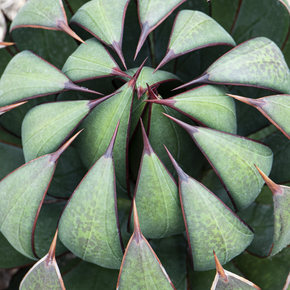
- Striking evergreen rosette of thick, arching, deep burgundy-red leaves edged with creamy teeth and tipped with cinnamon spines — a year-round showstopper in the garden or a decorative container.
- An elite intergeneric hybrid of Agave and Manfreda, combining Agave's sculptural refinement with Manfreda's faster growth rate and rich, intense coloration.
- Exceptionally low-maintenance and drought-tolerant once established — deer resistant, rabbit resistant, and highly tolerant of heat, poor soils, and neglect.
- A bold and versatile focal point for rock gardens, xeriscape designs, Mediterranean-style borders, poolside plantings, and patio containers alike.
Mangave 'Red Wing' (x Mangave 'Red Wing' PP31459) is a breathtaking tender perennial succulent and one of the most visually commanding selections from the Mad About Mangave collection. This rare intergeneric hybrid — a cross between Manfreda and Agave — masterfully blends the best traits of both parent genera, offering gardeners the structural elegance and refined rosette form of Agave alongside the vigorous growth rate and electrifying foliage color of Manfreda. The result is a compact, upright rosette of broad, lance-shaped, deep burgundy-red to dark purple leaves that arch gracefully outward and remain richly colored throughout all four seasons. Each leaf is edged with short, creamy marginal teeth and terminates in a sharp cinnamon-toned spine, lending the plant a refined yet architectural presence that few succulents can match. Mature plants reach 16 to 18 inches tall and spread 24 to 26 inches wide, making them perfectly scaled for accent use in the landscape or as a dramatic centerpiece in a stylish container arrangement. 'Red Wing' performs best in full sun with excellent drainage, tolerates a wide range of soil types and pH levels, and requires only minimal supplemental watering during active summer growth — making it an outstanding choice for water-wise and low-maintenance gardens throughout USDA Zones 9-11 and beyond with protection. Whether planted as a specimen in a sunny perennial border, nestled among boulders in a rock garden, or showcased solo in a decorative pot on the patio, Mangave 'Red Wing' delivers unmatched curb appeal, four-season interest, and effortless sophistication to any Southern Oregon or Northern California landscape.
Plant Description
Mangave 'Red Wing' is a tender perennial succulent forming a large, refined, symmetrical rosette of thick, rigid, lance-shaped leaves in a stunning deep burgundy-red to dark purple coloration. The broad, arching blades are edged with short creamy marginal teeth and terminate in a sharp cinnamon-colored spine at the tip. The foliage maintains its rich, saturated red and purple hues across spring, summer, and fall, deepening to dark purple tones in winter. Color intensity is enhanced by direct UV exposure — plants receiving full outdoor sun will display the most vivid pigmentation. The overall habit is compact and upright with gracefully arching foliage that gives the rosette a sculptural, tropical appearance. In summer, mature plants may send up tall flower stalks bearing cream-colored blooms. 'Red Wing' is an intergeneric hybrid (Manfreda x Agave), classified in the family Asparagaceae, and is protected under Plant Patent PP31459.
Mature Size
| Characteristic | Measurement |
|---|---|
| Mature Height | 16 to 18 inches |
| Mature Spread | 24 to 26 inches |
| Recommended Spacing | 24 to 30 inches on center |
| Growth Rate | Slow; will not quickly overtake its allotted space |
| Growth Habit | Compact, upright rosette with arching foliage |
Hardiness and Temperature Tolerance
Mangave 'Red Wing' is rated for USDA Hardiness Zones 9 through 11, making it an ideal permanent landscape plant throughout the warmer regions of Southern Oregon and Northern California, including low-elevation interior valleys. It can tolerate short-duration temperatures down to approximately 20°F (-6°C) with protection, but prolonged frost exposure will cause damage. In cooler climates at the edge of its hardiness range, planting in a sheltered microclimate — such as against a south-facing wall or in an urban heat island — can meaningfully extend its survivability. The plant thrives in heat and can tolerate temperatures up to 100°F (38°C), though extreme heat may temporarily increase its moisture requirements. During winter, plants should be kept on the dry side and protected from excess moisture. Color intensity in the foliage is at its peak when the plant receives direct outdoor sunlight and UV exposure.
Sunlight Requirements
Mangave 'Red Wing' performs best in full sun, defined as a minimum of 6 hours of direct sunlight per day. Full sun exposure is the key driver of its spectacular deep red and burgundy foliage coloration — the more direct UV light the plant receives, the more saturated and vivid the leaf color becomes. In regions with exceptionally intense summer afternoon heat, such as inland valleys, providing light afternoon shade can help reduce the risk of leaf scorch. Partial shade is tolerable but will result in less intense foliage color and somewhat softer growth. When grown indoors or overwintered in a greenhouse, foliage color will naturally fade but will re-intensify quickly once the plant is returned to full outdoor sunlight for a few weeks.
Soil and pH Preferences
The single most important soil requirement for Mangave 'Red Wing' is excellent drainage. This plant is highly adaptable to a wide range of soil types — including sandy soils, gravelly soils, loam, and even poor or rocky soils — as long as drainage is not compromised. It is well-suited to xeriscape plantings and thrives in the dry, well-drained soils common to Southern Oregon and Northern California landscapes. Heavy clay soils that retain moisture should be amended with coarse sand, decomposed granite, or perlite before planting. For container culture, use a specially formulated cactus and succulent potting mix. Soil pH is flexible; 'Red Wing' tolerates acidic, neutral, and alkaline soils, with an ideal pH range of approximately 6.2 to 6.8 for optimum nutrient availability. Avoid any planting situation where water pools or stands after rain.
Watering Guide
Mangave 'Red Wing' is drought-tolerant once established and thrives with a low to moderate watering regimen. Follow these season-specific guidelines for best results:
- Establishment period: Water moderately after planting to help the root system establish. Allow the top two inches of soil to dry out between waterings.
- Active growing season (spring and summer): Provide supplemental irrigation during dry spells, watering when the top layer of soil is dry. Extreme heat may temporarily increase the plant's moisture needs.
- Fall: Begin tapering off irrigation as temperatures cool and growth slows.
- Winter: Keep the plant dry. Excess winter moisture, especially combined with cool temperatures, is the most common cause of crown rot and root rot. Ensure drainage is excellent and avoid overhead irrigation.
- General rule: It is far better to underwater than overwater this plant. Never allow it to sit in standing water. Root rot resistance is low — good drainage is non-negotiable.
Fertilizing
Mangave 'Red Wing' has modest nutritional needs and does not require frequent fertilization. Overfeeding can actually diminish foliage color intensity and promote leggy, weak growth. Follow these recommendations for best results:
- Apply a light application of a balanced, slow-release granular fertilizer once per year in early spring as the plant enters its active growing season.
- During the summer growing season, an occasional half-strength application of a liquid balanced fertilizer can support healthy, vigorous growth.
- Do not fertilize in fall or winter when the plant is resting and moisture should be kept minimal.
- Avoid high-nitrogen fertilizers, which can reduce the intensity of the characteristic red and burgundy foliage color.
- Plants growing in naturally poor, sandy, or rocky soils may benefit from slightly more frequent light feeding than those in richer amended soils.
Planting Instructions
Follow these steps for successful establishment of Mangave 'Red Wing' in the garden or landscape:
- Select a planting site with full sun (6+ hours of direct sunlight daily) and excellent natural drainage. Avoid low spots, areas near irrigation lines, or spots where water pools after rain.
- Dig a planting hole slightly wider than the root ball but no deeper. The top of the root ball should sit level with or very slightly above the surrounding soil grade to ensure water drains away from the crown.
- If planting in heavy or clay-based soils, amend the backfill with coarse sand, perlite, or decomposed granite at a ratio of roughly 1 part amendment to 2 parts native soil to improve drainage.
- Set the plant in the hole so the crown — the point where leaves meet the roots — is at or just above the soil line. Planting too deeply encourages crown rot.
- Backfill, firm gently, and water thoroughly to settle the soil around the roots.
- A 1- to 2-inch layer of gravel or decomposed granite mulch around the base (kept clear of the crown) can help regulate soil moisture and temperature while reinforcing the plant's aesthetic in a rock garden or xeriscape setting.
- Spring and early summer are the preferred planting seasons for best establishment before cooler weather arrives.
Pruning and Maintenance
Mangave 'Red Wing' is a genuinely low-maintenance plant that requires very little hands-on care once established. Here is what to keep in mind:
- Dead leaf removal: Remove any dead, damaged, or unsightly leaves at the base of the rosette as needed to keep the plant tidy. The best time for a light cleanup is early spring before active growth resumes.
- Flower stalks: If a flower stalk appears, it can be left to complete its bloom cycle for ornamental interest or trimmed back after flowering for a tidier appearance. Note that after a Mangave flowers, that particular rosette will eventually decline — however, the plant typically produces offsets (pups) around the base that will perpetuate and replace it.
- Pups: Offset rosettes that emerge at the base can be left in place to form a cluster or carefully separated and replanted once they are a few inches in size.
- Avoid over-pruning: Do not remove healthy leaves unnecessarily, as each leaf contributes to the plant's energy production and overall form.
- Tools: Always use clean, sharp tools when cutting near the plant, and wear gloves — the leaf-tip spines are sharp.
Container Growing
Mangave 'Red Wing' is an outstanding container plant and one of the most popular uses for this cultivar. Its bold rosette form, compact footprint, and dramatic color make it a natural focal point in a pot on its own or as a thriller in a mixed succulent container arrangement. Keep the following tips in mind for container success:
- Always use a container with drainage holes — no exceptions. Standing water in a pot is the fastest way to cause root rot.
- Use a high-quality cactus and succulent potting mix, or blend standard potting soil with coarse perlite or coarse sand at a 1:1 ratio for added drainage.
- Choose a pot that is only slightly wider than the width of the rosette — overly large pots hold excess moisture and can encourage root problems.
- In winter, move containers to a covered patio, garage, or other sheltered area in colder climates to protect roots from freezing and to keep the plant dry.
- Container-grown plants may need slightly more frequent watering than in-ground plants during the active summer growing season, but always allow the soil to dry between waterings.
- Repot every 2 to 3 years or when the rosette has grown to fill the current container, using fresh succulent mix.
Seasonal Interest
One of the great virtues of Mangave 'Red Wing' is its genuine year-round ornamental value. Here is what to expect across the seasons:
- Spring: New growth emerges as temperatures warm, with fresh red and purple leaves unfurling from the center of the rosette. Color is bold and richly saturated as UV exposure increases.
- Summer: The plant is in its most active growth phase. Foliage color is vivid and deep. Mature plants may produce tall flower stalks bearing creamy blooms that attract pollinators. Full sun exposure maximizes color intensity.
- Fall: Foliage transitions toward brilliant red and deep purple as temperatures cool. The rosette remains full, sculptural, and eye-catching through the autumn garden.
- Winter: Foliage deepens to dark purple tones. The evergreen rosette maintains its form through mild winters, providing structure and color in the dormant garden when most other plants have disappeared.
Landscape Uses
The dramatic coloration, compact size, and bold architectural form of Mangave 'Red Wing' make it one of the most versatile accent plants available for warm-climate gardens. Recommended landscape applications include:
- Specimen or focal point planting: Use as a standalone statement plant in a sunny border, courtyard, or entryway planting where its color and form can be fully appreciated.
- Rock gardens and gravel gardens: The plant's love of excellent drainage and drought tolerance makes it a natural fit among boulders, decomposed granite, and other xeriscape elements.
- Mediterranean and desert-themed gardens: Pairs beautifully with ornamental grasses, agaves, aloes, lavender, and other drought-adapted plants in a water-wise landscape.
- Succulent gardens: A striking addition to mixed succulent beds, providing strong color contrast and structural variety among rosette succulents of different sizes and textures.
- Poolside plantings: The bold form and easy care make it well-suited to poolside or hardscape-adjacent plantings where low irrigation is preferred.
- Patio and container gardens: An excellent thriller in mixed succulent container arrangements or a showpiece planted solo in a decorative pot.
- Fire-resistant landscaping: Noted for fire-resistant qualities, making it a practical choice in fire-prone areas of Southern Oregon and Northern California.
Companion Plants
Mangave 'Red Wing' pairs beautifully with plants that share its preference for full sun, excellent drainage, and low water needs, while providing complementary or contrasting color and texture. Excellent companion plant options include:
- Blue Chalksticks (Senecio mandraliscae): The icy blue-silver trailing foliage creates a stunning contrast against 'Red Wing's deep burgundy rosette.
- Hens and Chicks (Sempervivum spp.): Low-growing rosette succulents that echo the form of 'Red Wing' at a smaller scale, ideal for foreground planting.
- Blue Oat Grass (Helictotrichon sempervirens): The silver-blue arching blades of this ornamental grass provide a beautiful textural contrast to the bold foliage of 'Red Wing'.
- Stonecrop (Sedum nussbaumerianum): Warm-toned orange and golden succulent foliage harmonizes with 'Red Wing's red and burgundy hues.
- Plumbago (Ceratostigma plumbaginoides): Vivid cobalt blue flowers in late summer and fall offer a bold complementary color contrast.
- Lavender (Lavandula spp.): Silver-gray foliage and purple blooms pair naturally with the deep red rosette in a Mediterranean-style border.
- Other Mangave cultivars: Mixing 'Red Wing' with varieties such as 'Racing Stripes', 'Pineapple Punch', or 'Frosted Elegance' creates a diverse, visually dynamic succulent garden with varied color and texture.
Pests and Diseases
Mangave 'Red Wing' is notably resistant to most common garden pests and diseases when grown in appropriate conditions. The most important preventive measure is ensuring consistently well-drained soil and avoiding overwatering. Here is what to watch for:
- Mealybugs: May appear as white, cottony masses in leaf axils or on the undersides of leaves. Remove manually with a cotton swab dipped in rubbing alcohol, or treat with neem oil or insecticidal soap.
- Scale insects: Small, waxy, shell-like pests that attach to leaves and stems. Treat with horticultural oil or rubbing alcohol on a cotton swab.
- Thrips: Tiny insects that can cause silvery streaking or stippling on leaf surfaces. Treat with insecticidal soap or neem oil.
- Eriophyid mites: Very small mites that leave oily-looking discolored patches on foliage. Scout regularly and treat with appropriate miticides if detected.
- Aphids: Occasional infestations on new growth. A strong blast of water or insecticidal soap spray is usually sufficient for control.
- Root rot: The most serious disease risk, caused by overwatering or poorly drained soil. Symptoms include wilting, mushy roots, and foul odor. Prevention through proper drainage and careful watering is essential, as root rot resistance in Mangave is relatively low.
- Leaf spot: Fungal leaf spot can occur in overly moist or humid conditions. Remove affected leaves promptly and improve air circulation.
- Crown rot: Caused by water sitting at the base of the rosette, especially in winter. Avoid overhead watering and ensure the planting site drains freely.
Wildlife Value and Resistance
Mangave 'Red Wing' offers meaningful wildlife value while also being highly resistant to damage from common garden animals:
- Deer resistant: The stiff, spine-tipped leaves and succulent texture make this plant unappealing to deer, making it an excellent choice for gardens in areas with frequent deer pressure.
- Rabbit resistant: Similarly, rabbits tend to avoid the spiny leaves and tough texture of 'Red Wing'.
- Pollinator attraction: When Mangave 'Red Wing' produces its tall summer flower stalks bearing creamy blooms, the flowers attract hummingbirds, bees, and other nectar-feeding pollinators, adding ecological value to the garden during the bloom season.
- Low pest pressure: The plant's natural resistance to most common pests reduces the need for chemical treatments, making it a garden-friendly, low-impact choice.
Propagation
Mangave 'Red Wing' is a patented cultivar (PP31459), and propagation for resale or distribution is prohibited without a license. For personal garden use, propagation is possible through the following methods:
- Offsets (pups): The most reliable propagation method. After a Mangave flowers, the parent rosette will eventually decline and produce offshoots (pups) around its base. Once pups have reached a few inches in size and have begun to form their own root system, they can be carefully separated from the parent plant using a clean, sharp knife or trowel. Allow the cut ends to callous for 24 to 48 hours before planting in a well-draining succulent mix.
- Rhizome division: Mangave produces underground rhizomes that can be carefully excavated and divided. Each rhizome section should include at least one visible growth point. Allow cut sections to dry and callous before replanting.
- General propagation tips: Use sterilized tools to prevent disease transmission. Plant propagated sections in a gritty, well-draining mix and place in bright indirect light until new roots are established, then transition to full sun.
- Striking evergreen rosette of thick, arching, deep burgundy-red leaves edged with creamy teeth and tipped with cinnamon spines — a year-round showstopper in the garden or a decorative container.
- An elite intergeneric hybrid of Agave and Manfreda, combining Agave's sculptural refinement with Manfreda's faster growth rate and rich, intense coloration.
- Exceptionally low-maintenance and drought-tolerant once established — deer resistant, rabbit resistant, and highly tolerant of heat, poor soils, and neglect.
- A bold and versatile focal point for rock gardens, xeriscape designs, Mediterranean-style borders, poolside plantings, and patio containers alike.
Mangave 'Red Wing' (x Mangave 'Red Wing' PP31459) is a breathtaking tender perennial succulent and one of the most visually commanding selections from the Mad About Mangave collection. This rare intergeneric hybrid — a cross between Manfreda and Agave — masterfully blends the best traits of both parent genera, offering gardeners the structural elegance and refined rosette form of Agave alongside the vigorous growth rate and electrifying foliage color of Manfreda. The result is a compact, upright rosette of broad, lance-shaped, deep burgundy-red to dark purple leaves that arch gracefully outward and remain richly colored throughout all four seasons. Each leaf is edged with short, creamy marginal teeth and terminates in a sharp cinnamon-toned spine, lending the plant a refined yet architectural presence that few succulents can match. Mature plants reach 16 to 18 inches tall and spread 24 to 26 inches wide, making them perfectly scaled for accent use in the landscape or as a dramatic centerpiece in a stylish container arrangement. 'Red Wing' performs best in full sun with excellent drainage, tolerates a wide range of soil types and pH levels, and requires only minimal supplemental watering during active summer growth — making it an outstanding choice for water-wise and low-maintenance gardens throughout USDA Zones 9-11 and beyond with protection. Whether planted as a specimen in a sunny perennial border, nestled among boulders in a rock garden, or showcased solo in a decorative pot on the patio, Mangave 'Red Wing' delivers unmatched curb appeal, four-season interest, and effortless sophistication to any Southern Oregon or Northern California landscape.
Plant Description
Mangave 'Red Wing' is a tender perennial succulent forming a large, refined, symmetrical rosette of thick, rigid, lance-shaped leaves in a stunning deep burgundy-red to dark purple coloration. The broad, arching blades are edged with short creamy marginal teeth and terminate in a sharp cinnamon-colored spine at the tip. The foliage maintains its rich, saturated red and purple hues across spring, summer, and fall, deepening to dark purple tones in winter. Color intensity is enhanced by direct UV exposure — plants receiving full outdoor sun will display the most vivid pigmentation. The overall habit is compact and upright with gracefully arching foliage that gives the rosette a sculptural, tropical appearance. In summer, mature plants may send up tall flower stalks bearing cream-colored blooms. 'Red Wing' is an intergeneric hybrid (Manfreda x Agave), classified in the family Asparagaceae, and is protected under Plant Patent PP31459.
Mature Size
| Characteristic | Measurement |
|---|---|
| Mature Height | 16 to 18 inches |
| Mature Spread | 24 to 26 inches |
| Recommended Spacing | 24 to 30 inches on center |
| Growth Rate | Slow; will not quickly overtake its allotted space |
| Growth Habit | Compact, upright rosette with arching foliage |
Hardiness and Temperature Tolerance
Mangave 'Red Wing' is rated for USDA Hardiness Zones 9 through 11, making it an ideal permanent landscape plant throughout the warmer regions of Southern Oregon and Northern California, including low-elevation interior valleys. It can tolerate short-duration temperatures down to approximately 20°F (-6°C) with protection, but prolonged frost exposure will cause damage. In cooler climates at the edge of its hardiness range, planting in a sheltered microclimate — such as against a south-facing wall or in an urban heat island — can meaningfully extend its survivability. The plant thrives in heat and can tolerate temperatures up to 100°F (38°C), though extreme heat may temporarily increase its moisture requirements. During winter, plants should be kept on the dry side and protected from excess moisture. Color intensity in the foliage is at its peak when the plant receives direct outdoor sunlight and UV exposure.
Sunlight Requirements
Mangave 'Red Wing' performs best in full sun, defined as a minimum of 6 hours of direct sunlight per day. Full sun exposure is the key driver of its spectacular deep red and burgundy foliage coloration — the more direct UV light the plant receives, the more saturated and vivid the leaf color becomes. In regions with exceptionally intense summer afternoon heat, such as inland valleys, providing light afternoon shade can help reduce the risk of leaf scorch. Partial shade is tolerable but will result in less intense foliage color and somewhat softer growth. When grown indoors or overwintered in a greenhouse, foliage color will naturally fade but will re-intensify quickly once the plant is returned to full outdoor sunlight for a few weeks.
Soil and pH Preferences
The single most important soil requirement for Mangave 'Red Wing' is excellent drainage. This plant is highly adaptable to a wide range of soil types — including sandy soils, gravelly soils, loam, and even poor or rocky soils — as long as drainage is not compromised. It is well-suited to xeriscape plantings and thrives in the dry, well-drained soils common to Southern Oregon and Northern California landscapes. Heavy clay soils that retain moisture should be amended with coarse sand, decomposed granite, or perlite before planting. For container culture, use a specially formulated cactus and succulent potting mix. Soil pH is flexible; 'Red Wing' tolerates acidic, neutral, and alkaline soils, with an ideal pH range of approximately 6.2 to 6.8 for optimum nutrient availability. Avoid any planting situation where water pools or stands after rain.
Watering Guide
Mangave 'Red Wing' is drought-tolerant once established and thrives with a low to moderate watering regimen. Follow these season-specific guidelines for best results:
- Establishment period: Water moderately after planting to help the root system establish. Allow the top two inches of soil to dry out between waterings.
- Active growing season (spring and summer): Provide supplemental irrigation during dry spells, watering when the top layer of soil is dry. Extreme heat may temporarily increase the plant's moisture needs.
- Fall: Begin tapering off irrigation as temperatures cool and growth slows.
- Winter: Keep the plant dry. Excess winter moisture, especially combined with cool temperatures, is the most common cause of crown rot and root rot. Ensure drainage is excellent and avoid overhead irrigation.
- General rule: It is far better to underwater than overwater this plant. Never allow it to sit in standing water. Root rot resistance is low — good drainage is non-negotiable.
Fertilizing
Mangave 'Red Wing' has modest nutritional needs and does not require frequent fertilization. Overfeeding can actually diminish foliage color intensity and promote leggy, weak growth. Follow these recommendations for best results:
- Apply a light application of a balanced, slow-release granular fertilizer once per year in early spring as the plant enters its active growing season.
- During the summer growing season, an occasional half-strength application of a liquid balanced fertilizer can support healthy, vigorous growth.
- Do not fertilize in fall or winter when the plant is resting and moisture should be kept minimal.
- Avoid high-nitrogen fertilizers, which can reduce the intensity of the characteristic red and burgundy foliage color.
- Plants growing in naturally poor, sandy, or rocky soils may benefit from slightly more frequent light feeding than those in richer amended soils.
Planting Instructions
Follow these steps for successful establishment of Mangave 'Red Wing' in the garden or landscape:
- Select a planting site with full sun (6+ hours of direct sunlight daily) and excellent natural drainage. Avoid low spots, areas near irrigation lines, or spots where water pools after rain.
- Dig a planting hole slightly wider than the root ball but no deeper. The top of the root ball should sit level with or very slightly above the surrounding soil grade to ensure water drains away from the crown.
- If planting in heavy or clay-based soils, amend the backfill with coarse sand, perlite, or decomposed granite at a ratio of roughly 1 part amendment to 2 parts native soil to improve drainage.
- Set the plant in the hole so the crown — the point where leaves meet the roots — is at or just above the soil line. Planting too deeply encourages crown rot.
- Backfill, firm gently, and water thoroughly to settle the soil around the roots.
- A 1- to 2-inch layer of gravel or decomposed granite mulch around the base (kept clear of the crown) can help regulate soil moisture and temperature while reinforcing the plant's aesthetic in a rock garden or xeriscape setting.
- Spring and early summer are the preferred planting seasons for best establishment before cooler weather arrives.
Pruning and Maintenance
Mangave 'Red Wing' is a genuinely low-maintenance plant that requires very little hands-on care once established. Here is what to keep in mind:
- Dead leaf removal: Remove any dead, damaged, or unsightly leaves at the base of the rosette as needed to keep the plant tidy. The best time for a light cleanup is early spring before active growth resumes.
- Flower stalks: If a flower stalk appears, it can be left to complete its bloom cycle for ornamental interest or trimmed back after flowering for a tidier appearance. Note that after a Mangave flowers, that particular rosette will eventually decline — however, the plant typically produces offsets (pups) around the base that will perpetuate and replace it.
- Pups: Offset rosettes that emerge at the base can be left in place to form a cluster or carefully separated and replanted once they are a few inches in size.
- Avoid over-pruning: Do not remove healthy leaves unnecessarily, as each leaf contributes to the plant's energy production and overall form.
- Tools: Always use clean, sharp tools when cutting near the plant, and wear gloves — the leaf-tip spines are sharp.
Container Growing
Mangave 'Red Wing' is an outstanding container plant and one of the most popular uses for this cultivar. Its bold rosette form, compact footprint, and dramatic color make it a natural focal point in a pot on its own or as a thriller in a mixed succulent container arrangement. Keep the following tips in mind for container success:
- Always use a container with drainage holes — no exceptions. Standing water in a pot is the fastest way to cause root rot.
- Use a high-quality cactus and succulent potting mix, or blend standard potting soil with coarse perlite or coarse sand at a 1:1 ratio for added drainage.
- Choose a pot that is only slightly wider than the width of the rosette — overly large pots hold excess moisture and can encourage root problems.
- In winter, move containers to a covered patio, garage, or other sheltered area in colder climates to protect roots from freezing and to keep the plant dry.
- Container-grown plants may need slightly more frequent watering than in-ground plants during the active summer growing season, but always allow the soil to dry between waterings.
- Repot every 2 to 3 years or when the rosette has grown to fill the current container, using fresh succulent mix.
Seasonal Interest
One of the great virtues of Mangave 'Red Wing' is its genuine year-round ornamental value. Here is what to expect across the seasons:
- Spring: New growth emerges as temperatures warm, with fresh red and purple leaves unfurling from the center of the rosette. Color is bold and richly saturated as UV exposure increases.
- Summer: The plant is in its most active growth phase. Foliage color is vivid and deep. Mature plants may produce tall flower stalks bearing creamy blooms that attract pollinators. Full sun exposure maximizes color intensity.
- Fall: Foliage transitions toward brilliant red and deep purple as temperatures cool. The rosette remains full, sculptural, and eye-catching through the autumn garden.
- Winter: Foliage deepens to dark purple tones. The evergreen rosette maintains its form through mild winters, providing structure and color in the dormant garden when most other plants have disappeared.
Landscape Uses
The dramatic coloration, compact size, and bold architectural form of Mangave 'Red Wing' make it one of the most versatile accent plants available for warm-climate gardens. Recommended landscape applications include:
- Specimen or focal point planting: Use as a standalone statement plant in a sunny border, courtyard, or entryway planting where its color and form can be fully appreciated.
- Rock gardens and gravel gardens: The plant's love of excellent drainage and drought tolerance makes it a natural fit among boulders, decomposed granite, and other xeriscape elements.
- Mediterranean and desert-themed gardens: Pairs beautifully with ornamental grasses, agaves, aloes, lavender, and other drought-adapted plants in a water-wise landscape.
- Succulent gardens: A striking addition to mixed succulent beds, providing strong color contrast and structural variety among rosette succulents of different sizes and textures.
- Poolside plantings: The bold form and easy care make it well-suited to poolside or hardscape-adjacent plantings where low irrigation is preferred.
- Patio and container gardens: An excellent thriller in mixed succulent container arrangements or a showpiece planted solo in a decorative pot.
- Fire-resistant landscaping: Noted for fire-resistant qualities, making it a practical choice in fire-prone areas of Southern Oregon and Northern California.
Companion Plants
Mangave 'Red Wing' pairs beautifully with plants that share its preference for full sun, excellent drainage, and low water needs, while providing complementary or contrasting color and texture. Excellent companion plant options include:
- Blue Chalksticks (Senecio mandraliscae): The icy blue-silver trailing foliage creates a stunning contrast against 'Red Wing's deep burgundy rosette.
- Hens and Chicks (Sempervivum spp.): Low-growing rosette succulents that echo the form of 'Red Wing' at a smaller scale, ideal for foreground planting.
- Blue Oat Grass (Helictotrichon sempervirens): The silver-blue arching blades of this ornamental grass provide a beautiful textural contrast to the bold foliage of 'Red Wing'.
- Stonecrop (Sedum nussbaumerianum): Warm-toned orange and golden succulent foliage harmonizes with 'Red Wing's red and burgundy hues.
- Plumbago (Ceratostigma plumbaginoides): Vivid cobalt blue flowers in late summer and fall offer a bold complementary color contrast.
- Lavender (Lavandula spp.): Silver-gray foliage and purple blooms pair naturally with the deep red rosette in a Mediterranean-style border.
- Other Mangave cultivars: Mixing 'Red Wing' with varieties such as 'Racing Stripes', 'Pineapple Punch', or 'Frosted Elegance' creates a diverse, visually dynamic succulent garden with varied color and texture.
Pests and Diseases
Mangave 'Red Wing' is notably resistant to most common garden pests and diseases when grown in appropriate conditions. The most important preventive measure is ensuring consistently well-drained soil and avoiding overwatering. Here is what to watch for:
- Mealybugs: May appear as white, cottony masses in leaf axils or on the undersides of leaves. Remove manually with a cotton swab dipped in rubbing alcohol, or treat with neem oil or insecticidal soap.
- Scale insects: Small, waxy, shell-like pests that attach to leaves and stems. Treat with horticultural oil or rubbing alcohol on a cotton swab.
- Thrips: Tiny insects that can cause silvery streaking or stippling on leaf surfaces. Treat with insecticidal soap or neem oil.
- Eriophyid mites: Very small mites that leave oily-looking discolored patches on foliage. Scout regularly and treat with appropriate miticides if detected.
- Aphids: Occasional infestations on new growth. A strong blast of water or insecticidal soap spray is usually sufficient for control.
- Root rot: The most serious disease risk, caused by overwatering or poorly drained soil. Symptoms include wilting, mushy roots, and foul odor. Prevention through proper drainage and careful watering is essential, as root rot resistance in Mangave is relatively low.
- Leaf spot: Fungal leaf spot can occur in overly moist or humid conditions. Remove affected leaves promptly and improve air circulation.
- Crown rot: Caused by water sitting at the base of the rosette, especially in winter. Avoid overhead watering and ensure the planting site drains freely.
Wildlife Value and Resistance
Mangave 'Red Wing' offers meaningful wildlife value while also being highly resistant to damage from common garden animals:
- Deer resistant: The stiff, spine-tipped leaves and succulent texture make this plant unappealing to deer, making it an excellent choice for gardens in areas with frequent deer pressure.
- Rabbit resistant: Similarly, rabbits tend to avoid the spiny leaves and tough texture of 'Red Wing'.
- Pollinator attraction: When Mangave 'Red Wing' produces its tall summer flower stalks bearing creamy blooms, the flowers attract hummingbirds, bees, and other nectar-feeding pollinators, adding ecological value to the garden during the bloom season.
- Low pest pressure: The plant's natural resistance to most common pests reduces the need for chemical treatments, making it a garden-friendly, low-impact choice.
Propagation
Mangave 'Red Wing' is a patented cultivar (PP31459), and propagation for resale or distribution is prohibited without a license. For personal garden use, propagation is possible through the following methods:
- Offsets (pups): The most reliable propagation method. After a Mangave flowers, the parent rosette will eventually decline and produce offshoots (pups) around its base. Once pups have reached a few inches in size and have begun to form their own root system, they can be carefully separated from the parent plant using a clean, sharp knife or trowel. Allow the cut ends to callous for 24 to 48 hours before planting in a well-draining succulent mix.
- Rhizome division: Mangave produces underground rhizomes that can be carefully excavated and divided. Each rhizome section should include at least one visible growth point. Allow cut sections to dry and callous before replanting.
- General propagation tips: Use sterilized tools to prevent disease transmission. Plant propagated sections in a gritty, well-draining mix and place in bright indirect light until new roots are established, then transition to full sun.