

Zoom the image with the mouse
Praying Hands Mangave - 2 Gallon
SKU:
2173455
UPC:
014949052945
$23.99
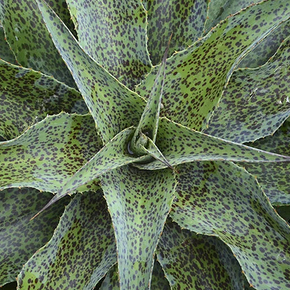
- Strikingly sculptural rosette with dark emerald green leaves that curl tightly upward like clasped hands in prayer, topped with dramatic cinnamon-brown terminal spines — a living work of art unlike any other succulent.
- Award-winning intergeneric hybrid (Manfreda x Agave) from the Mad About Mangave collection, combining the architectural elegance of agave with the faster growth rate and vivid markings of manfreda.
- Exceptionally drought-tolerant and low-maintenance, thriving in full sun with minimal watering once established — an ideal choice for water-wise gardens, xeriscaping, rock gardens, and patio containers.
- Naturally deer and rabbit resistant, compact at just 8-10 inches tall and wide, and evergreen in frost-free climates, delivering year-round sculptural interest with virtually no fuss.
Mangave 'Praying Hands' (x Mangave 'Praying Hands' PP#34,508) is one of the most architecturally captivating succulents available to home gardeners today — a bold, patent-protected hybrid from the celebrated Mad About Mangave collection that fuses the refined structure of Agave with the vigorous growth and ornamental patterning of Manfreda. Its signature upright leaves are thick, fleshy, and dark emerald green with cool blue overtones, curling inward so tightly that they form a columnar, artichoke-like rosette — a habit inherited directly from one of its parents, Agave ocahui. Cinnamon-brown terminal spines crown each leaf tip and nearly touch one another at the center, adding a dramatic, jewel-like finish to the symmetrical form. Subtle reddish-maroon speckling on the leaf faces adds further color depth, a characteristic that intensifies with increased UV exposure outdoors. Reaching a compact 8 to 10 inches in both height and spread, 'Praying Hands' is perfectly suited to decorative containers, rock and gravel gardens, succulent beds, and modern or Mediterranean-style landscapes throughout USDA hardiness zones 9-11, and makes a stunning indoor specimen in bright, sunny spaces where outdoor growing is not possible. Its slow, tidy growth rate means it will never outgrow its space, while its exceptional drought tolerance, fire resistance, and resistance to deer and rabbits make it a highly practical as well as deeply beautiful addition to any low-water or low-maintenance garden.
Plant Description
Mangave 'Praying Hands' is a rare and distinctive intergeneric hybrid succulent, a cross between Manfreda and Agave, belonging to the family Asparagaceae. Unlike the flat, spreading rosettes typical of most agaves and mangaves, 'Praying Hands' forms a tightly columnar, upright rosette in which each thick, fleshy leaf curves gracefully inward and upward, so the leaves nearly clasp together at their tips — strongly resembling hands pressed together in prayer or the layered scales of an artichoke. The leaves are dark emerald green with a cool blue-green sheen and a lightly waxy surface, decorated with subtle reddish-maroon flecking that becomes more pronounced under strong sunlight. Each leaf terminates in a pointed cinnamon-brown spine. This cultivar earns its name from the growth habit inherited from one of its parents, Agave ocahui, while its faster growth rate and ornamental patterning come from its Manfreda lineage. It is an evergreen succulent in frost-free climates and is grown primarily for its extraordinary foliage.
Mature Size
| Characteristic | Measurement |
|---|---|
| Mature Height | 8 to 10 inches |
| Mature Spread | 8 to 10 inches |
| Recommended Spacing | 8 to 10 inches apart |
| Growth Rate | Slow to moderate; faster than a typical agave |
| Growth Habit | Compact, upright, columnar rosette |
The compact, dwarf stature of 'Praying Hands' makes it one of the most versatile mangaves available. It will not quickly overtake the space it is given in the landscape and rarely requires intervention to stay tidy. Its slow, controlled growth means it is well suited to small-scale plantings, tabletop containers, and tight rock garden pockets where larger succulents would overwhelm the composition.
Hardiness and Climate
Mangave 'Praying Hands' is rated hardy in USDA zones 9 through 11, making it an excellent year-round outdoor plant throughout Southern California, coastal and inland Southern Oregon, and the warmer valleys of Northern California. It thrives in temperatures between 60 and 75 degrees F and should be protected from hard frost. In zones 8 and colder it is best grown in containers that can be moved to a frost-free location during winter. Extended exposure to cool temperatures below 60 degrees F can cause the plant to decline, and prolonged frost will damage or kill the foliage. During winter, plants should be kept slightly drier than during the growing season to reduce cold sensitivity. This is not a plant for high-rainfall or consistently wet, cool climates.
Sunlight Requirements
Full sun is strongly preferred, with a minimum of 6 hours of direct sunlight per day for optimal growth, color intensity, and the tightest leaf formation. The reddish speckling on the foliage deepens and becomes more vibrant under intense UV exposure — plants kept in lower light tend to show faded patterning and more loosely arranged leaves. In the hottest inland climates, afternoon shade can be beneficial, but the plant should never be placed in full shade. When grown indoors, position it directly in front of the brightest south- or west-facing window available. If transitioning a plant from lower light to full outdoor sun, acclimate it gradually over one to two weeks to prevent sun scald.
Soil and pH Preferences
'Praying Hands' is adaptable to a wide range of soil pH levels, tolerating acidic, neutral, and alkaline conditions with equal ease. The single non-negotiable requirement is excellent drainage. Standing water or consistently soggy soil will lead to crown rot and root rot, which are the most common causes of failure with this plant. Ideal soil types include sandy loam, decomposed granite, or a high-quality cactus and succulent mix amended with additional perlite or coarse sand. The plant performs well even in poor soils of low fertility, reflecting its adaptation to the rocky, arid habitats of its parent species. Avoid heavy clay soils unless they have been significantly amended to improve drainage. When planting in the ground, it is beneficial to raise the planting area slightly or create a mounded bed to ensure excess water drains away freely.
Watering Guide
Mangave 'Praying Hands' is highly drought-tolerant once established and stores water in its thick, succulent leaves. The guiding principle for watering is to allow the soil to dry out completely between waterings before watering again deeply. During the active growing season in spring and summer, supplemental watering every one to two weeks is generally sufficient depending on temperature and sun exposure. In fall and winter, reduce watering significantly — the plant should be kept nearly dry, but not so parched that the leaves begin to wrinkle. Overwatering is far more dangerous to this plant than underwatering. When in doubt, wait a few extra days before watering. Container-grown plants will generally dry out more quickly than in-ground plants and will need monitoring more closely during hot weather. Never allow a container to sit in a saucer of standing water.
Fertilizing
Mangave 'Praying Hands' has modest fertilizer needs and thrives without heavy feeding. During the active growing season — spring through summer — a single application of a balanced, slow-release granular fertilizer, or a monthly application of a balanced liquid fertilizer diluted to half strength, is sufficient to support healthy growth. Avoid high-nitrogen fertilizers, which can cause soft, weak growth that is more susceptible to pests and less compact in form. Do not fertilize during fall and winter when the plant is resting. Over-fertilizing is more harmful than under-fertilizing for this succulent hybrid. An annual top-dressing with a slow-release, low-nitrogen fertilizer at the start of the growing season is a straightforward, low-effort approach for in-ground plants.
Pruning and Maintenance
Mangave 'Praying Hands' is one of the lowest-maintenance succulents available and requires very little intervention. No regular pruning is necessary. The primary maintenance task is the removal of any dried, damaged, or discolored leaves at the base of the rosette, which can be done at any time of year. In climates where the plant experiences some winter dieback, clean up spent or frost-nipped foliage in early spring before new growth resumes. Take care not to disturb the crown in late winter, as new growth may not yet be visible. Always handle the plant with care due to the sharp terminal spines on each leaf — a pair of thick gloves is recommended. If the plant produces offsets (pups) around its base, these can be left to form a cluster or carefully separated and repotted to propagate new plants.
Planting Instructions
- Choose a location in full sun with excellent natural drainage, or prepare a raised or mounded planting area if your native soil is heavy or clay-based.
- Dig a hole twice as wide as the root ball and no deeper than the container the plant is currently growing in. The top of the root ball should be level with or very slightly above the surrounding soil grade.
- Amend the backfill soil generously with coarse sand, perlite, or decomposed granite to improve drainage if needed.
- Set the plant in place and backfill, firming the soil gently around the roots. Avoid burying the base of the rosette below the soil line.
- Water in thoroughly once at planting to settle the soil, then allow the soil to dry completely before watering again.
- Apply a thin layer of coarse gravel or decomposed granite mulch around the base (not touching the crown) to retain heat, improve drainage, and reduce weed pressure.
- Spring through early summer is the ideal planting time for in-ground installation. Avoid planting in the heat of summer or when frost is imminent.
Container Growing
Mangave 'Praying Hands' is an outstanding container plant and thrives when grown in a pot that is only slightly wider than the diameter of the rosette. This compact sizing prevents excess moisture from building up in unused soil around the roots. Use a premium cactus and succulent potting mix, or blend a standard potting mix with 50% perlite or coarse sand for added drainage. Always choose a container with at least one large drainage hole. Unglazed terracotta pots are ideal because they allow excess moisture to evaporate through the pot walls. Place containers in the sunniest available spot on a patio, balcony, or entryway. Container plants can be moved indoors to a bright window when temperatures drop near freezing, making 'Praying Hands' a practical choice for gardeners in cooler climates who still want to enjoy this exotic succulent. Water container plants deeply but infrequently, and never leave them sitting in a drainage saucer filled with water.
Landscape Uses
The bold, sculptural form of 'Praying Hands' gives it remarkable versatility in the designed landscape. Its most impactful uses include:
- Specimen or focal point plant — its unique upright rosette draws the eye and anchors a planting composition.
- Rock and gravel gardens — perfectly suited to dry, rocky settings where drainage is naturally excellent.
- Xeriscape and water-wise landscapes — an ideal low-water ornamental for water-conscious garden designs.
- Mediterranean and modern garden styles — its architectural form complements clean lines, geometric hardscaping, and bold texture contrasts.
- Container arrangements — works beautifully as a thriller or textural filler in succulent pot combinations on patios and entryways.
- Mass plantings — repeated groupings of 'Praying Hands' create a striking, low-care ground-level tapestry in sunny beds and borders.
- Indoor accent plant — can be grown as a long-term houseplant in a very bright, sunny window location.
Companion Plants
Mangave 'Praying Hands' pairs beautifully with plants that share its preference for full sun, excellent drainage, and low water needs, while offering contrasting or complementary textures and forms. Consider the following companions:
- Agave spp. — bold, structural neighbors that echo the spiny, rosette form on a larger scale.
- Aeonium spp. — rosette-forming succulents with contrasting flatter forms and rich foliage colors.
- Echeveria spp. — lower-growing, soft-hued rosettes that create a pleasing color and texture contrast at the base of 'Praying Hands.'
- Yucca spp. — tall, spiky vertical accents that anchor the background while 'Praying Hands' commands the foreground.
- Sedum spp. — low, spreading sedums fill gaps beautifully around taller succulent specimens in rock garden settings.
- Ornamental grasses — fine-textured grasses such as blue fescue (Festuca glauca) provide a soft foil to the bold, angular foliage.
- Other Mangave varieties — combining multiple Mad About Mangave cultivars with contrasting leaf shapes, colors, and markings creates a dynamic, cohesive succulent collection.
Pests and Diseases
Mangave 'Praying Hands' is generally quite resistant to most common garden pests and diseases, but a few issues to be aware of include:
- Mealybugs — small, cottony white insects that cluster at leaf bases and in tight leaf crevices. Treat with isopropyl alcohol applied with a cotton swab, or with a neem oil or insecticidal soap spray.
- Scale insects — flat or rounded, shell-like insects that attach to leaves and stems. Treat with horticultural oil or systemic insecticide for heavy infestations.
- Thrips — tiny insects that rasp leaf surfaces, causing silvery streaking. Addressed with insecticidal soap or spinosad-based sprays.
- Eriophyid mites — microscopic mites whose feeding causes oily-looking discoloration or irregular patches on the foliage. Miticide treatments may be needed for severe infestations.
- Root and crown rot — the most serious disease risk, caused entirely by overwatering or poor drainage. Prevention through proper soil preparation and careful watering is the only reliable remedy. Affected plants often cannot be saved.
Inspect plants regularly, especially at the base of the rosette, where pests tend to hide. Excellent drainage and avoiding prolonged moisture on the foliage will prevent the majority of disease issues.
Toxicity and Safe Handling
Like other members of the Asparagaceae family, Mangave 'Praying Hands' contains sap that can be irritating to the skin and mucous membranes of sensitive individuals. Direct contact with the sap may cause dermatitis or skin irritation in some people, and the plant is considered harmful if ingested by pets, including dogs and cats. Always wear thick gloves when handling the plant, particularly when pruning or repotting, both to protect against sap contact and to protect your hands from the sharp terminal spines. Keep children and pets from chewing on the foliage. The plant is not considered an invasive species and poses no environmental toxicity concern.
Seasonal Interest and Flowering
Mangave 'Praying Hands' delivers year-round ornamental interest through its dramatic evergreen foliage, which remains attractive through all four seasons in frost-free climates. The interplay of deep green leaves, blue-toned sheen, and reddish-brown speckling shifts subtly with changing light and temperature, keeping the plant visually dynamic throughout the year. The reddish flecking on the leaf faces tends to intensify during summer under maximum UV exposure and may soften during winter, particularly if the plant is moved indoors or grown under shade cloth.
Like agaves, mangaves are monocarpic — meaning the individual rosette that produces a flower spike will eventually die after blooming. However, before it does, it typically sends out offsets (pups) around the base that will perpetuate the plant. Not all cultivars flower readily or predictably, and for many gardeners 'Praying Hands' may be enjoyed for years without flowering. When a flower spike does emerge, it is considered an exciting event and an opportunity to collect new plants from the resulting pups.
Wildlife Value and Deer Resistance
Mangave 'Praying Hands' is strongly resistant to browsing by deer and rabbits, making it a reliable choice for gardens in areas where these animals are common. The firm, spiny leaves are unappealing and physically deterring to most browsing animals. While the flowers of related Agave and Manfreda species can attract hummingbirds and native bees when in bloom, 'Praying Hands' is grown primarily for its foliage and is not particularly known as a significant pollinator plant during its vegetative growth phase. Its dense, low form does not provide significant wildlife habitat value, but its fire-resistant classification and deer-resistant qualities make it an excellent choice for defensible-space plantings and low-maintenance wildlife-resistant landscapes in fire-prone areas of Southern Oregon and Northern California.
- Strikingly sculptural rosette with dark emerald green leaves that curl tightly upward like clasped hands in prayer, topped with dramatic cinnamon-brown terminal spines — a living work of art unlike any other succulent.
- Award-winning intergeneric hybrid (Manfreda x Agave) from the Mad About Mangave collection, combining the architectural elegance of agave with the faster growth rate and vivid markings of manfreda.
- Exceptionally drought-tolerant and low-maintenance, thriving in full sun with minimal watering once established — an ideal choice for water-wise gardens, xeriscaping, rock gardens, and patio containers.
- Naturally deer and rabbit resistant, compact at just 8-10 inches tall and wide, and evergreen in frost-free climates, delivering year-round sculptural interest with virtually no fuss.
Mangave 'Praying Hands' (x Mangave 'Praying Hands' PP#34,508) is one of the most architecturally captivating succulents available to home gardeners today — a bold, patent-protected hybrid from the celebrated Mad About Mangave collection that fuses the refined structure of Agave with the vigorous growth and ornamental patterning of Manfreda. Its signature upright leaves are thick, fleshy, and dark emerald green with cool blue overtones, curling inward so tightly that they form a columnar, artichoke-like rosette — a habit inherited directly from one of its parents, Agave ocahui. Cinnamon-brown terminal spines crown each leaf tip and nearly touch one another at the center, adding a dramatic, jewel-like finish to the symmetrical form. Subtle reddish-maroon speckling on the leaf faces adds further color depth, a characteristic that intensifies with increased UV exposure outdoors. Reaching a compact 8 to 10 inches in both height and spread, 'Praying Hands' is perfectly suited to decorative containers, rock and gravel gardens, succulent beds, and modern or Mediterranean-style landscapes throughout USDA hardiness zones 9-11, and makes a stunning indoor specimen in bright, sunny spaces where outdoor growing is not possible. Its slow, tidy growth rate means it will never outgrow its space, while its exceptional drought tolerance, fire resistance, and resistance to deer and rabbits make it a highly practical as well as deeply beautiful addition to any low-water or low-maintenance garden.
Plant Description
Mangave 'Praying Hands' is a rare and distinctive intergeneric hybrid succulent, a cross between Manfreda and Agave, belonging to the family Asparagaceae. Unlike the flat, spreading rosettes typical of most agaves and mangaves, 'Praying Hands' forms a tightly columnar, upright rosette in which each thick, fleshy leaf curves gracefully inward and upward, so the leaves nearly clasp together at their tips — strongly resembling hands pressed together in prayer or the layered scales of an artichoke. The leaves are dark emerald green with a cool blue-green sheen and a lightly waxy surface, decorated with subtle reddish-maroon flecking that becomes more pronounced under strong sunlight. Each leaf terminates in a pointed cinnamon-brown spine. This cultivar earns its name from the growth habit inherited from one of its parents, Agave ocahui, while its faster growth rate and ornamental patterning come from its Manfreda lineage. It is an evergreen succulent in frost-free climates and is grown primarily for its extraordinary foliage.
Mature Size
| Characteristic | Measurement |
|---|---|
| Mature Height | 8 to 10 inches |
| Mature Spread | 8 to 10 inches |
| Recommended Spacing | 8 to 10 inches apart |
| Growth Rate | Slow to moderate; faster than a typical agave |
| Growth Habit | Compact, upright, columnar rosette |
The compact, dwarf stature of 'Praying Hands' makes it one of the most versatile mangaves available. It will not quickly overtake the space it is given in the landscape and rarely requires intervention to stay tidy. Its slow, controlled growth means it is well suited to small-scale plantings, tabletop containers, and tight rock garden pockets where larger succulents would overwhelm the composition.
Hardiness and Climate
Mangave 'Praying Hands' is rated hardy in USDA zones 9 through 11, making it an excellent year-round outdoor plant throughout Southern California, coastal and inland Southern Oregon, and the warmer valleys of Northern California. It thrives in temperatures between 60 and 75 degrees F and should be protected from hard frost. In zones 8 and colder it is best grown in containers that can be moved to a frost-free location during winter. Extended exposure to cool temperatures below 60 degrees F can cause the plant to decline, and prolonged frost will damage or kill the foliage. During winter, plants should be kept slightly drier than during the growing season to reduce cold sensitivity. This is not a plant for high-rainfall or consistently wet, cool climates.
Sunlight Requirements
Full sun is strongly preferred, with a minimum of 6 hours of direct sunlight per day for optimal growth, color intensity, and the tightest leaf formation. The reddish speckling on the foliage deepens and becomes more vibrant under intense UV exposure — plants kept in lower light tend to show faded patterning and more loosely arranged leaves. In the hottest inland climates, afternoon shade can be beneficial, but the plant should never be placed in full shade. When grown indoors, position it directly in front of the brightest south- or west-facing window available. If transitioning a plant from lower light to full outdoor sun, acclimate it gradually over one to two weeks to prevent sun scald.
Soil and pH Preferences
'Praying Hands' is adaptable to a wide range of soil pH levels, tolerating acidic, neutral, and alkaline conditions with equal ease. The single non-negotiable requirement is excellent drainage. Standing water or consistently soggy soil will lead to crown rot and root rot, which are the most common causes of failure with this plant. Ideal soil types include sandy loam, decomposed granite, or a high-quality cactus and succulent mix amended with additional perlite or coarse sand. The plant performs well even in poor soils of low fertility, reflecting its adaptation to the rocky, arid habitats of its parent species. Avoid heavy clay soils unless they have been significantly amended to improve drainage. When planting in the ground, it is beneficial to raise the planting area slightly or create a mounded bed to ensure excess water drains away freely.
Watering Guide
Mangave 'Praying Hands' is highly drought-tolerant once established and stores water in its thick, succulent leaves. The guiding principle for watering is to allow the soil to dry out completely between waterings before watering again deeply. During the active growing season in spring and summer, supplemental watering every one to two weeks is generally sufficient depending on temperature and sun exposure. In fall and winter, reduce watering significantly — the plant should be kept nearly dry, but not so parched that the leaves begin to wrinkle. Overwatering is far more dangerous to this plant than underwatering. When in doubt, wait a few extra days before watering. Container-grown plants will generally dry out more quickly than in-ground plants and will need monitoring more closely during hot weather. Never allow a container to sit in a saucer of standing water.
Fertilizing
Mangave 'Praying Hands' has modest fertilizer needs and thrives without heavy feeding. During the active growing season — spring through summer — a single application of a balanced, slow-release granular fertilizer, or a monthly application of a balanced liquid fertilizer diluted to half strength, is sufficient to support healthy growth. Avoid high-nitrogen fertilizers, which can cause soft, weak growth that is more susceptible to pests and less compact in form. Do not fertilize during fall and winter when the plant is resting. Over-fertilizing is more harmful than under-fertilizing for this succulent hybrid. An annual top-dressing with a slow-release, low-nitrogen fertilizer at the start of the growing season is a straightforward, low-effort approach for in-ground plants.
Pruning and Maintenance
Mangave 'Praying Hands' is one of the lowest-maintenance succulents available and requires very little intervention. No regular pruning is necessary. The primary maintenance task is the removal of any dried, damaged, or discolored leaves at the base of the rosette, which can be done at any time of year. In climates where the plant experiences some winter dieback, clean up spent or frost-nipped foliage in early spring before new growth resumes. Take care not to disturb the crown in late winter, as new growth may not yet be visible. Always handle the plant with care due to the sharp terminal spines on each leaf — a pair of thick gloves is recommended. If the plant produces offsets (pups) around its base, these can be left to form a cluster or carefully separated and repotted to propagate new plants.
Planting Instructions
- Choose a location in full sun with excellent natural drainage, or prepare a raised or mounded planting area if your native soil is heavy or clay-based.
- Dig a hole twice as wide as the root ball and no deeper than the container the plant is currently growing in. The top of the root ball should be level with or very slightly above the surrounding soil grade.
- Amend the backfill soil generously with coarse sand, perlite, or decomposed granite to improve drainage if needed.
- Set the plant in place and backfill, firming the soil gently around the roots. Avoid burying the base of the rosette below the soil line.
- Water in thoroughly once at planting to settle the soil, then allow the soil to dry completely before watering again.
- Apply a thin layer of coarse gravel or decomposed granite mulch around the base (not touching the crown) to retain heat, improve drainage, and reduce weed pressure.
- Spring through early summer is the ideal planting time for in-ground installation. Avoid planting in the heat of summer or when frost is imminent.
Container Growing
Mangave 'Praying Hands' is an outstanding container plant and thrives when grown in a pot that is only slightly wider than the diameter of the rosette. This compact sizing prevents excess moisture from building up in unused soil around the roots. Use a premium cactus and succulent potting mix, or blend a standard potting mix with 50% perlite or coarse sand for added drainage. Always choose a container with at least one large drainage hole. Unglazed terracotta pots are ideal because they allow excess moisture to evaporate through the pot walls. Place containers in the sunniest available spot on a patio, balcony, or entryway. Container plants can be moved indoors to a bright window when temperatures drop near freezing, making 'Praying Hands' a practical choice for gardeners in cooler climates who still want to enjoy this exotic succulent. Water container plants deeply but infrequently, and never leave them sitting in a drainage saucer filled with water.
Landscape Uses
The bold, sculptural form of 'Praying Hands' gives it remarkable versatility in the designed landscape. Its most impactful uses include:
- Specimen or focal point plant — its unique upright rosette draws the eye and anchors a planting composition.
- Rock and gravel gardens — perfectly suited to dry, rocky settings where drainage is naturally excellent.
- Xeriscape and water-wise landscapes — an ideal low-water ornamental for water-conscious garden designs.
- Mediterranean and modern garden styles — its architectural form complements clean lines, geometric hardscaping, and bold texture contrasts.
- Container arrangements — works beautifully as a thriller or textural filler in succulent pot combinations on patios and entryways.
- Mass plantings — repeated groupings of 'Praying Hands' create a striking, low-care ground-level tapestry in sunny beds and borders.
- Indoor accent plant — can be grown as a long-term houseplant in a very bright, sunny window location.
Companion Plants
Mangave 'Praying Hands' pairs beautifully with plants that share its preference for full sun, excellent drainage, and low water needs, while offering contrasting or complementary textures and forms. Consider the following companions:
- Agave spp. — bold, structural neighbors that echo the spiny, rosette form on a larger scale.
- Aeonium spp. — rosette-forming succulents with contrasting flatter forms and rich foliage colors.
- Echeveria spp. — lower-growing, soft-hued rosettes that create a pleasing color and texture contrast at the base of 'Praying Hands.'
- Yucca spp. — tall, spiky vertical accents that anchor the background while 'Praying Hands' commands the foreground.
- Sedum spp. — low, spreading sedums fill gaps beautifully around taller succulent specimens in rock garden settings.
- Ornamental grasses — fine-textured grasses such as blue fescue (Festuca glauca) provide a soft foil to the bold, angular foliage.
- Other Mangave varieties — combining multiple Mad About Mangave cultivars with contrasting leaf shapes, colors, and markings creates a dynamic, cohesive succulent collection.
Pests and Diseases
Mangave 'Praying Hands' is generally quite resistant to most common garden pests and diseases, but a few issues to be aware of include:
- Mealybugs — small, cottony white insects that cluster at leaf bases and in tight leaf crevices. Treat with isopropyl alcohol applied with a cotton swab, or with a neem oil or insecticidal soap spray.
- Scale insects — flat or rounded, shell-like insects that attach to leaves and stems. Treat with horticultural oil or systemic insecticide for heavy infestations.
- Thrips — tiny insects that rasp leaf surfaces, causing silvery streaking. Addressed with insecticidal soap or spinosad-based sprays.
- Eriophyid mites — microscopic mites whose feeding causes oily-looking discoloration or irregular patches on the foliage. Miticide treatments may be needed for severe infestations.
- Root and crown rot — the most serious disease risk, caused entirely by overwatering or poor drainage. Prevention through proper soil preparation and careful watering is the only reliable remedy. Affected plants often cannot be saved.
Inspect plants regularly, especially at the base of the rosette, where pests tend to hide. Excellent drainage and avoiding prolonged moisture on the foliage will prevent the majority of disease issues.
Toxicity and Safe Handling
Like other members of the Asparagaceae family, Mangave 'Praying Hands' contains sap that can be irritating to the skin and mucous membranes of sensitive individuals. Direct contact with the sap may cause dermatitis or skin irritation in some people, and the plant is considered harmful if ingested by pets, including dogs and cats. Always wear thick gloves when handling the plant, particularly when pruning or repotting, both to protect against sap contact and to protect your hands from the sharp terminal spines. Keep children and pets from chewing on the foliage. The plant is not considered an invasive species and poses no environmental toxicity concern.
Seasonal Interest and Flowering
Mangave 'Praying Hands' delivers year-round ornamental interest through its dramatic evergreen foliage, which remains attractive through all four seasons in frost-free climates. The interplay of deep green leaves, blue-toned sheen, and reddish-brown speckling shifts subtly with changing light and temperature, keeping the plant visually dynamic throughout the year. The reddish flecking on the leaf faces tends to intensify during summer under maximum UV exposure and may soften during winter, particularly if the plant is moved indoors or grown under shade cloth.
Like agaves, mangaves are monocarpic — meaning the individual rosette that produces a flower spike will eventually die after blooming. However, before it does, it typically sends out offsets (pups) around the base that will perpetuate the plant. Not all cultivars flower readily or predictably, and for many gardeners 'Praying Hands' may be enjoyed for years without flowering. When a flower spike does emerge, it is considered an exciting event and an opportunity to collect new plants from the resulting pups.
Wildlife Value and Deer Resistance
Mangave 'Praying Hands' is strongly resistant to browsing by deer and rabbits, making it a reliable choice for gardens in areas where these animals are common. The firm, spiny leaves are unappealing and physically deterring to most browsing animals. While the flowers of related Agave and Manfreda species can attract hummingbirds and native bees when in bloom, 'Praying Hands' is grown primarily for its foliage and is not particularly known as a significant pollinator plant during its vegetative growth phase. Its dense, low form does not provide significant wildlife habitat value, but its fire-resistant classification and deer-resistant qualities make it an excellent choice for defensible-space plantings and low-maintenance wildlife-resistant landscapes in fire-prone areas of Southern Oregon and Northern California.
Related Products