
Zoom the image with the mouse
Red-Leaf Japanese Maple -2 Gallon
SKU:
105520
$27.99
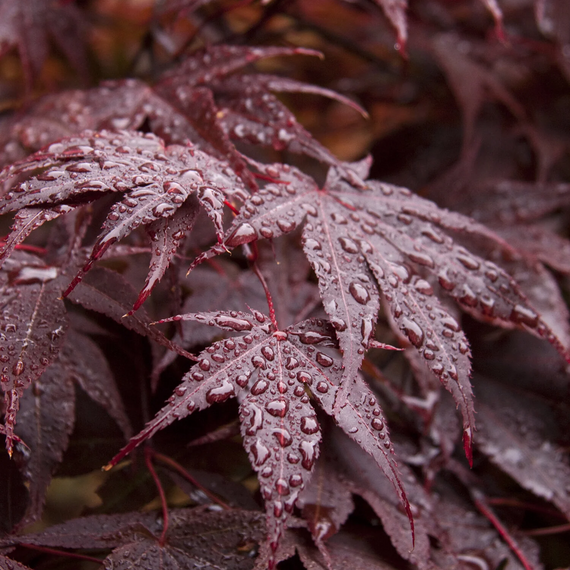
- Stunning red-purple palmate foliage emerges in spring and holds its rich color through summer before igniting into brilliant scarlet in fall — delivering three full seasons of dramatic color.
- A graceful, slow-growing deciduous tree with elegantly branched stems, reaching 15-25 feet tall, making it an ideal focal point specimen for smaller gardens and landscapes.
- Adaptable and low-maintenance once established — thrives in partial shade to full sun in well-drained, slightly acidic soil across USDA Hardiness Zones 5-8.
- Incredibly versatile in the landscape — perfect as a lawn specimen, woodland accent, courtyard tree, Asian-style garden focal point, or even a striking container planting.
The Red-Leaf Japanese Maple (Acer palmatum 'Atropurpureum') is one of the most celebrated and commercially sought-after ornamental trees in the landscape world, and it's easy to see why. This small, deciduous tree commands attention from the moment its deeply lobed, 5-to-7-pointed palmate leaves unfurl in a rich burgundy-red each spring. Unlike many colored-leaf trees, this maple holds its stunning red-purple hue remarkably well through the heat of summer, then transitions to a breathtaking brilliant scarlet as fall arrives — making it a true three-season showstopper. Native to Japan, Korea, and China, Acer palmatum 'Atropurpureum' grows at a slow, steady pace with gracefully layered, arching branches that develop into an elegant, bushy upright form over time. Maturing at 15 to 25 feet tall and up to 20 feet wide, it fits naturally into a wide range of garden styles, from formal Japanese and Asian-inspired designs to relaxed cottage gardens, urban courtyards, and woodland borders. Its fine-textured foliage, architectural branching, and year-round presence — including delicate small red spring flowers and ornamental winged samaras — make it a true four-season tree. Whether planted as a refined lawn specimen, used to cast dappled shade over a patio or deck, or positioned as a bold contrast against evergreen backdrops, the Red-Leaf Japanese Maple brings an unmatched combination of elegance, color, and drama to any outdoor space.
Plant Description
Acer palmatum 'Atropurpureum', commonly known as the Red-Leaf Japanese Maple, is a small to medium deciduous tree belonging to the Sapindaceae family. It is celebrated worldwide for its striking palmate leaves, each divided into 5 to 7 moderately deep, serrated lobes that radiate from the stem like an open hand — the meaning behind the species name palmatum. The foliage emerges in spring as a vivid red-purple, deepens to a rich burgundy through summer, and transforms into a spectacular brilliant scarlet or crimson red in autumn before the tree drops its leaves for winter. Small, inconspicuous purplish-red flowers appear in spring on upright stalked clusters called umbels, followed by decorative winged fruit (samaras) that add subtle interest. The tree's branching structure is gracefully layered and arching, giving it a refined, architectural quality even when bare in winter. Its slow growth rate and naturally compact, bushy-upright habit make it one of the most manageable and rewarding ornamental trees available to home gardeners.
Mature Size
| Attribute | Measurement |
|---|---|
| Mature Height | 15 to 25 feet (4.6 to 7.6 m) |
| Mature Spread | Up to 20 feet (6.1 m) |
| Growth Rate | Slow — can take 10 to 50 years to approach full height |
| Growth Form | Bushy, upright, with gracefully layered branching |
| Typical Young Tree Height | 6 to 8 feet in early garden life |
Hardiness Zones and Climate
The Red-Leaf Japanese Maple is reliably hardy in USDA Hardiness Zones 5 through 8, tolerating minimum winter temperatures down to -20°F (-29°C) in Zone 5. It performs well across a broad range of climates, including the mild winters and warm summers typical of Southern Oregon and Northern California. In warmer portions of Zone 8 and in hot inland valleys, the tree benefits from afternoon shade to protect foliage from heat stress and leaf scorch. It may experience some fading of red leaf color to a bronze-green tone during peak summer heat in very warm climates, which is a normal seasonal response. The tree is also susceptible to damage from late spring frosts, which can injure newly emerged foliage; choosing a planting site with some overhead canopy protection or a north-facing aspect can help mitigate this risk in frost-prone areas.
Sunlight Requirements
Red-Leaf Japanese Maple performs best in a location that receives full morning sun combined with dappled or partial afternoon shade, especially in warmer climates. This light combination promotes the deepest, richest foliage color while protecting the delicate leaves from intense afternoon heat that can cause browning at the leaf margins (leaf scorch). In cooler climates or coastal areas, the tree can tolerate full sun (6 or more hours of direct sunlight per day) without significant issues. In hot inland environments, afternoon shade is not just beneficial — it is strongly recommended. Conversely, too little light can cause the foliage to shift toward a greenish-bronze rather than displaying its signature deep red-purple. Avoid planting in dense, full shade where the leaf color will be significantly diminished.
Soil and pH Preferences
This maple thrives in soil that is moist, organically rich, and well-drained. It is adaptable to a range of soil textures including loam, sandy loam, clay loam, and even chalky or sandy soils, provided drainage is adequate — waterlogged or chronically wet soils are not tolerated and can lead to root rot and decline. The ideal soil pH is slightly acidic to neutral, in the range of 5.5 to 7.0. Acidic soils enhance both nutrient availability and the vibrancy of the foliage color. If your native soil is heavy clay or compacted, amending the planting area with compost or aged organic matter before planting will significantly improve drainage, aeration, and root establishment. A 2-to-3-inch layer of organic mulch around the root zone helps maintain soil moisture, moderate soil temperature, and gradually improve soil structure over time. Notably, this tree is also tolerant of soils near black walnut trees, which produce the chemical juglone that is toxic to many landscape plants.
Watering Guide
Consistent moisture is key to the health and appearance of a Red-Leaf Japanese Maple, particularly during its first two to three growing seasons while it is establishing a deep root system. Water newly planted trees generously at planting to settle the soil and eliminate air pockets around the roots. During the first two years, water deeply and regularly — at least once or twice per week during dry periods — keeping the soil evenly moist but never saturated. Once established, the tree has average water needs and generally requires supplemental irrigation only during extended dry spells or periods of high heat. Dry soil is one of the primary causes of leaf scorch, so do not allow the root zone to completely dry out during summer. Applying a 2-to-3-inch layer of mulch over the root zone is one of the most effective ways to retain soil moisture between watering. Avoid overhead watering in hot weather, as wet foliage combined with intense sun can increase the risk of leaf scorch and fungal issues.
Fertilizing
Red-Leaf Japanese Maples have modest fertilizer needs and are sensitive to over-fertilization, which can result in excessive leafy growth at the expense of the tree's signature deep red foliage color. Fertilize once annually in early spring, just before new growth begins to emerge, using a slow-release, balanced granular fertilizer formulated for trees and shrubs or for acid-loving plants. A product with a balanced N-P-K ratio such as 10-10-10 or a formulation slightly lower in nitrogen works well. Avoid high-nitrogen fertilizers, as excess nitrogen promotes lush green vegetative growth that can dilute the intensity of the red leaf color. Do not fertilize in late summer or fall, as this encourages tender new growth that is vulnerable to early frost damage. Young trees in their first year may not require any supplemental fertilizer at all if the planting hole was amended with compost.
Pruning and Maintenance
One of the most appealing qualities of the Red-Leaf Japanese Maple is its naturally elegant form, which requires very little corrective pruning. In most cases, routine pruning is limited to the removal of dead, damaged, crossing, or crowded branches to maintain good air circulation and reveal the tree's graceful branching structure. The best time to prune is during the dormant season in late winter, before new growth begins in spring. Avoid pruning in spring and early summer when the sap is actively running, as cuts made during this period can cause the tree to "bleed" sap excessively, stressing the tree. Light shaping can also be done in mid to late summer if needed, when the sap flow has slowed. Never perform heavy or hard pruning on this species, as aggressive cutting disrupts the natural form and can cause significant stress or decline. Remove any suckers that arise from the rootstock at the base of the tree promptly to prevent them from overtaking the grafted variety above.
Planting Instructions
- Choose a planting site with morning sun and afternoon shade, protected from strong drying winds, with well-drained soil.
- The best times to plant are spring (after the last frost) or fall (at least 6 weeks before the first hard frost) to minimize transplant stress.
- Dig a planting hole that is two to three times as wide as the root ball and equal in depth — a wide, shallow hole encourages lateral root spread.
- Mix the removed native soil with compost or aged organic matter to enrich the backfill; avoid placing pure compost in the hole as this can create a moisture trap.
- Remove the tree from its container and gently loosen any circling roots. Place the root ball in the center of the hole so the top of the root ball sits at or slightly above the surrounding grade.
- Backfill with the amended soil, firming gently in layers to eliminate air pockets. Do not bury the trunk flare.
- Water thoroughly and deeply immediately after planting to settle the soil.
- Apply a 2-to-3-inch layer of organic mulch (such as bark or wood chips) in a wide ring around the tree, keeping mulch at least 3 to 4 inches away from the trunk to prevent rot.
- Water regularly throughout the first growing season, keeping the soil consistently moist but not waterlogged.
Seasonal Interest
| Season | What to Expect |
|---|---|
| Spring | Vivid red-purple foliage emerges alongside small, delicate purplish-red flowers on stalked clusters; fresh samara fruits begin to develop |
| Summer | Foliage deepens to rich burgundy-purple; ornamental winged samaras mature; graceful canopy provides dappled shade |
| Fall | Foliage transforms to brilliant scarlet and crimson red — one of the most spectacular fall color displays of any deciduous tree |
| Winter | Elegant, layered branching architecture is revealed after leaf drop; graceful branch silhouettes add sculptural interest to the winter garden |
Landscape Uses
Few ornamental trees offer the versatility and visual impact of the Red-Leaf Japanese Maple across such a wide range of landscape applications. Its manageable mature size, refined form, and extraordinary foliage color make it suitable for both intimate residential gardens and larger estate or commercial landscapes. Consider these uses:
- Specimen or Focal Point Tree: Plant solo in a lawn, courtyard, or garden bed where its color and form can be fully appreciated from multiple angles.
- Small Patio or Deck Tree: Its canopy provides dappled shade over seating areas while adding ornamental beauty close to the home.
- Woodland Garden Accent: Nestle it at the edge of a tree canopy where filtered light accentuates the foliage color and the natural setting complements its graceful habit.
- Asian or Japanese Garden: A quintessential element of Japanese-inspired garden design; pairs beautifully with ornamental grasses, bamboo, stone lanterns, and water features.
- Mixed Border: Use as a mid-border anchor to provide height, color contrast, and structure against lower perennials and shrubs.
- Foundation Planting: Plant near a building corner or entryway to provide year-round ornamental interest at an architectural transition point.
- Container Planting: Well-suited for large decorative containers on patios, decks, or courtyards, especially in urban settings.
Companion Plants
The rich red-purple foliage of the Red-Leaf Japanese Maple creates beautiful contrasts and harmonious pairings with a wide variety of garden plants. Its preference for slightly acidic, well-drained, organically rich soil makes it a natural companion for many popular ornamental plants. Consider pairing it with:
- Rhododendrons and Azaleas: Share the same acidic soil preference; their spring blooms in pink, white, or purple create a stunning color composition beneath the emerging maple foliage.
- Hydrangeas: Bigleaf and oakleaf hydrangeas thrive in similar moist, part-shade conditions and provide bold summer flower clusters that complement the maple's foliage texture.
- Hostas: Large-leafed hostas planted beneath the maple's canopy create a lush, layered understory with striking textural contrast.
- Japanese Forest Grass (Hakonechloa macra): Its golden-green or variegated foliage glows brilliantly against the deep burgundy maple leaves.
- Dwarf Conifers: Evergreen forms such as dwarf spruce, hinoki cypress, or columnar junipers provide year-round green contrast that makes the maple's seasonal color changes even more dramatic.
- Ornamental Grasses: Fine-textured grasses add movement and contrast alongside the bold leaf color of the maple.
- Ferns: Japanese painted ferns or autumn ferns complement the woodland character of the maple and thrive in its dappled shade.
- Flowering Cherry Trees (Prunus): Combine with ornamental cherries for a spectacular spring display of blossom and emerging red foliage together.
Pests and Diseases
The Red-Leaf Japanese Maple is generally a robust and resilient tree when grown in appropriate conditions, but it can be affected by a handful of common pests and diseases. Monitoring the tree regularly and addressing problems early keeps it healthy and attractive.
- Aphids: Small, soft-bodied insects that cluster on new growth and undersides of leaves. A strong spray of water or insecticidal soap is usually sufficient for control.
- Japanese Maple Scale (Lopholeucaspis japonica): A type of armored scale insect that can encrust stems and branches. Treat with horticultural oil sprays during the dormant season.
- Leafhoppers: Can cause stippling and minor cosmetic damage to foliage; seldom requires treatment in well-maintained trees.
- Leafrollers: Caterpillars that roll leaves and feed within; hand-picking or targeted insecticide application resolves most infestations.
- Verticillium Wilt: A soilborne fungal disease that can cause branch dieback and wilting. There is no chemical cure; prune out affected branches with sterilized tools and improve soil drainage.
- Leaf Scorch: Not a disease but a physiological response to heat, drought, or excessive sun exposure. Characterized by browning and crispy leaf margins; corrected by improving watering and providing afternoon shade.
- Anthracnose: A fungal disease causing irregular brown spots or blotches on leaves, typically in cool, wet spring conditions. Improve air circulation and avoid overhead irrigation.
- Frost Damage: Late spring frosts can damage newly emerged foliage. Protect young trees with frost cloth if a late freeze is forecast.
Container Growing
Red-Leaf Japanese Maple adapts surprisingly well to container culture, making it an excellent choice for patios, decks, courtyards, and entryways where in-ground planting is not possible. When growing in a container, keep the following tips in mind:
- Container Size: Choose a large, sturdy container with ample drainage holes — at minimum 18 to 24 inches in diameter. A larger pot allows for a more established root system and reduces the frequency of watering and repotting.
- Potting Mix: Use a high-quality, well-draining potting mix amended with perlite or coarse grit to promote drainage. Adding compost improves nutrient retention and moisture balance.
- Watering: Container-grown trees dry out much faster than those in the ground. Check soil moisture frequently — especially during hot summer months — and water thoroughly whenever the top inch of soil feels dry.
- Fertilizing: Apply a slow-release, balanced fertilizer formulated for acid-loving plants once in early spring. Avoid over-fertilizing in containers, as salt buildup can damage roots.
- Winter Protection: Container roots are more exposed to freezing temperatures than in-ground roots. In colder climates (Zone 6 and below), move containers to an unheated garage or sheltered location during the coldest months, or wrap the pot with burlap and insulating material to protect the root ball.
- Repotting: Repot every 2 to 3 years in late winter or early spring before new growth begins, stepping up to the next container size to prevent the tree from becoming root-bound.
Wildlife Value
While the Red-Leaf Japanese Maple is primarily valued as an ornamental specimen, it does provide modest benefits to local wildlife. The small red spring flowers, though inconspicuous, attract pollinators including bees and other beneficial insects seeking early-season nectar. The ornamental winged samaras (seed pods) that develop in summer and fall can be consumed by small birds and mammals. The dense, layered branching of a mature tree provides shelter and nesting habitat for songbirds. The tree is also noted for its tolerance of rabbit browsing on the bark, suggesting a moderate level of resistance to deer and small mammal feeding pressure, though young trees should still be protected with wire guards or repellents in areas with high deer or rabbit populations. For gardeners in Southern Oregon and Northern California, the Red-Leaf Japanese Maple can serve as a beautiful component of a wildlife-friendly garden when surrounded by companion plants that support a broader range of pollinators, birds, and beneficial insects.
- Stunning red-purple palmate foliage emerges in spring and holds its rich color through summer before igniting into brilliant scarlet in fall — delivering three full seasons of dramatic color.
- A graceful, slow-growing deciduous tree with elegantly branched stems, reaching 15-25 feet tall, making it an ideal focal point specimen for smaller gardens and landscapes.
- Adaptable and low-maintenance once established — thrives in partial shade to full sun in well-drained, slightly acidic soil across USDA Hardiness Zones 5-8.
- Incredibly versatile in the landscape — perfect as a lawn specimen, woodland accent, courtyard tree, Asian-style garden focal point, or even a striking container planting.
The Red-Leaf Japanese Maple (Acer palmatum 'Atropurpureum') is one of the most celebrated and commercially sought-after ornamental trees in the landscape world, and it's easy to see why. This small, deciduous tree commands attention from the moment its deeply lobed, 5-to-7-pointed palmate leaves unfurl in a rich burgundy-red each spring. Unlike many colored-leaf trees, this maple holds its stunning red-purple hue remarkably well through the heat of summer, then transitions to a breathtaking brilliant scarlet as fall arrives — making it a true three-season showstopper. Native to Japan, Korea, and China, Acer palmatum 'Atropurpureum' grows at a slow, steady pace with gracefully layered, arching branches that develop into an elegant, bushy upright form over time. Maturing at 15 to 25 feet tall and up to 20 feet wide, it fits naturally into a wide range of garden styles, from formal Japanese and Asian-inspired designs to relaxed cottage gardens, urban courtyards, and woodland borders. Its fine-textured foliage, architectural branching, and year-round presence — including delicate small red spring flowers and ornamental winged samaras — make it a true four-season tree. Whether planted as a refined lawn specimen, used to cast dappled shade over a patio or deck, or positioned as a bold contrast against evergreen backdrops, the Red-Leaf Japanese Maple brings an unmatched combination of elegance, color, and drama to any outdoor space.
Plant Description
Acer palmatum 'Atropurpureum', commonly known as the Red-Leaf Japanese Maple, is a small to medium deciduous tree belonging to the Sapindaceae family. It is celebrated worldwide for its striking palmate leaves, each divided into 5 to 7 moderately deep, serrated lobes that radiate from the stem like an open hand — the meaning behind the species name palmatum. The foliage emerges in spring as a vivid red-purple, deepens to a rich burgundy through summer, and transforms into a spectacular brilliant scarlet or crimson red in autumn before the tree drops its leaves for winter. Small, inconspicuous purplish-red flowers appear in spring on upright stalked clusters called umbels, followed by decorative winged fruit (samaras) that add subtle interest. The tree's branching structure is gracefully layered and arching, giving it a refined, architectural quality even when bare in winter. Its slow growth rate and naturally compact, bushy-upright habit make it one of the most manageable and rewarding ornamental trees available to home gardeners.
Mature Size
| Attribute | Measurement |
|---|---|
| Mature Height | 15 to 25 feet (4.6 to 7.6 m) |
| Mature Spread | Up to 20 feet (6.1 m) |
| Growth Rate | Slow — can take 10 to 50 years to approach full height |
| Growth Form | Bushy, upright, with gracefully layered branching |
| Typical Young Tree Height | 6 to 8 feet in early garden life |
Hardiness Zones and Climate
The Red-Leaf Japanese Maple is reliably hardy in USDA Hardiness Zones 5 through 8, tolerating minimum winter temperatures down to -20°F (-29°C) in Zone 5. It performs well across a broad range of climates, including the mild winters and warm summers typical of Southern Oregon and Northern California. In warmer portions of Zone 8 and in hot inland valleys, the tree benefits from afternoon shade to protect foliage from heat stress and leaf scorch. It may experience some fading of red leaf color to a bronze-green tone during peak summer heat in very warm climates, which is a normal seasonal response. The tree is also susceptible to damage from late spring frosts, which can injure newly emerged foliage; choosing a planting site with some overhead canopy protection or a north-facing aspect can help mitigate this risk in frost-prone areas.
Sunlight Requirements
Red-Leaf Japanese Maple performs best in a location that receives full morning sun combined with dappled or partial afternoon shade, especially in warmer climates. This light combination promotes the deepest, richest foliage color while protecting the delicate leaves from intense afternoon heat that can cause browning at the leaf margins (leaf scorch). In cooler climates or coastal areas, the tree can tolerate full sun (6 or more hours of direct sunlight per day) without significant issues. In hot inland environments, afternoon shade is not just beneficial — it is strongly recommended. Conversely, too little light can cause the foliage to shift toward a greenish-bronze rather than displaying its signature deep red-purple. Avoid planting in dense, full shade where the leaf color will be significantly diminished.
Soil and pH Preferences
This maple thrives in soil that is moist, organically rich, and well-drained. It is adaptable to a range of soil textures including loam, sandy loam, clay loam, and even chalky or sandy soils, provided drainage is adequate — waterlogged or chronically wet soils are not tolerated and can lead to root rot and decline. The ideal soil pH is slightly acidic to neutral, in the range of 5.5 to 7.0. Acidic soils enhance both nutrient availability and the vibrancy of the foliage color. If your native soil is heavy clay or compacted, amending the planting area with compost or aged organic matter before planting will significantly improve drainage, aeration, and root establishment. A 2-to-3-inch layer of organic mulch around the root zone helps maintain soil moisture, moderate soil temperature, and gradually improve soil structure over time. Notably, this tree is also tolerant of soils near black walnut trees, which produce the chemical juglone that is toxic to many landscape plants.
Watering Guide
Consistent moisture is key to the health and appearance of a Red-Leaf Japanese Maple, particularly during its first two to three growing seasons while it is establishing a deep root system. Water newly planted trees generously at planting to settle the soil and eliminate air pockets around the roots. During the first two years, water deeply and regularly — at least once or twice per week during dry periods — keeping the soil evenly moist but never saturated. Once established, the tree has average water needs and generally requires supplemental irrigation only during extended dry spells or periods of high heat. Dry soil is one of the primary causes of leaf scorch, so do not allow the root zone to completely dry out during summer. Applying a 2-to-3-inch layer of mulch over the root zone is one of the most effective ways to retain soil moisture between watering. Avoid overhead watering in hot weather, as wet foliage combined with intense sun can increase the risk of leaf scorch and fungal issues.
Fertilizing
Red-Leaf Japanese Maples have modest fertilizer needs and are sensitive to over-fertilization, which can result in excessive leafy growth at the expense of the tree's signature deep red foliage color. Fertilize once annually in early spring, just before new growth begins to emerge, using a slow-release, balanced granular fertilizer formulated for trees and shrubs or for acid-loving plants. A product with a balanced N-P-K ratio such as 10-10-10 or a formulation slightly lower in nitrogen works well. Avoid high-nitrogen fertilizers, as excess nitrogen promotes lush green vegetative growth that can dilute the intensity of the red leaf color. Do not fertilize in late summer or fall, as this encourages tender new growth that is vulnerable to early frost damage. Young trees in their first year may not require any supplemental fertilizer at all if the planting hole was amended with compost.
Pruning and Maintenance
One of the most appealing qualities of the Red-Leaf Japanese Maple is its naturally elegant form, which requires very little corrective pruning. In most cases, routine pruning is limited to the removal of dead, damaged, crossing, or crowded branches to maintain good air circulation and reveal the tree's graceful branching structure. The best time to prune is during the dormant season in late winter, before new growth begins in spring. Avoid pruning in spring and early summer when the sap is actively running, as cuts made during this period can cause the tree to "bleed" sap excessively, stressing the tree. Light shaping can also be done in mid to late summer if needed, when the sap flow has slowed. Never perform heavy or hard pruning on this species, as aggressive cutting disrupts the natural form and can cause significant stress or decline. Remove any suckers that arise from the rootstock at the base of the tree promptly to prevent them from overtaking the grafted variety above.
Planting Instructions
- Choose a planting site with morning sun and afternoon shade, protected from strong drying winds, with well-drained soil.
- The best times to plant are spring (after the last frost) or fall (at least 6 weeks before the first hard frost) to minimize transplant stress.
- Dig a planting hole that is two to three times as wide as the root ball and equal in depth — a wide, shallow hole encourages lateral root spread.
- Mix the removed native soil with compost or aged organic matter to enrich the backfill; avoid placing pure compost in the hole as this can create a moisture trap.
- Remove the tree from its container and gently loosen any circling roots. Place the root ball in the center of the hole so the top of the root ball sits at or slightly above the surrounding grade.
- Backfill with the amended soil, firming gently in layers to eliminate air pockets. Do not bury the trunk flare.
- Water thoroughly and deeply immediately after planting to settle the soil.
- Apply a 2-to-3-inch layer of organic mulch (such as bark or wood chips) in a wide ring around the tree, keeping mulch at least 3 to 4 inches away from the trunk to prevent rot.
- Water regularly throughout the first growing season, keeping the soil consistently moist but not waterlogged.
Seasonal Interest
| Season | What to Expect |
|---|---|
| Spring | Vivid red-purple foliage emerges alongside small, delicate purplish-red flowers on stalked clusters; fresh samara fruits begin to develop |
| Summer | Foliage deepens to rich burgundy-purple; ornamental winged samaras mature; graceful canopy provides dappled shade |
| Fall | Foliage transforms to brilliant scarlet and crimson red — one of the most spectacular fall color displays of any deciduous tree |
| Winter | Elegant, layered branching architecture is revealed after leaf drop; graceful branch silhouettes add sculptural interest to the winter garden |
Landscape Uses
Few ornamental trees offer the versatility and visual impact of the Red-Leaf Japanese Maple across such a wide range of landscape applications. Its manageable mature size, refined form, and extraordinary foliage color make it suitable for both intimate residential gardens and larger estate or commercial landscapes. Consider these uses:
- Specimen or Focal Point Tree: Plant solo in a lawn, courtyard, or garden bed where its color and form can be fully appreciated from multiple angles.
- Small Patio or Deck Tree: Its canopy provides dappled shade over seating areas while adding ornamental beauty close to the home.
- Woodland Garden Accent: Nestle it at the edge of a tree canopy where filtered light accentuates the foliage color and the natural setting complements its graceful habit.
- Asian or Japanese Garden: A quintessential element of Japanese-inspired garden design; pairs beautifully with ornamental grasses, bamboo, stone lanterns, and water features.
- Mixed Border: Use as a mid-border anchor to provide height, color contrast, and structure against lower perennials and shrubs.
- Foundation Planting: Plant near a building corner or entryway to provide year-round ornamental interest at an architectural transition point.
- Container Planting: Well-suited for large decorative containers on patios, decks, or courtyards, especially in urban settings.
Companion Plants
The rich red-purple foliage of the Red-Leaf Japanese Maple creates beautiful contrasts and harmonious pairings with a wide variety of garden plants. Its preference for slightly acidic, well-drained, organically rich soil makes it a natural companion for many popular ornamental plants. Consider pairing it with:
- Rhododendrons and Azaleas: Share the same acidic soil preference; their spring blooms in pink, white, or purple create a stunning color composition beneath the emerging maple foliage.
- Hydrangeas: Bigleaf and oakleaf hydrangeas thrive in similar moist, part-shade conditions and provide bold summer flower clusters that complement the maple's foliage texture.
- Hostas: Large-leafed hostas planted beneath the maple's canopy create a lush, layered understory with striking textural contrast.
- Japanese Forest Grass (Hakonechloa macra): Its golden-green or variegated foliage glows brilliantly against the deep burgundy maple leaves.
- Dwarf Conifers: Evergreen forms such as dwarf spruce, hinoki cypress, or columnar junipers provide year-round green contrast that makes the maple's seasonal color changes even more dramatic.
- Ornamental Grasses: Fine-textured grasses add movement and contrast alongside the bold leaf color of the maple.
- Ferns: Japanese painted ferns or autumn ferns complement the woodland character of the maple and thrive in its dappled shade.
- Flowering Cherry Trees (Prunus): Combine with ornamental cherries for a spectacular spring display of blossom and emerging red foliage together.
Pests and Diseases
The Red-Leaf Japanese Maple is generally a robust and resilient tree when grown in appropriate conditions, but it can be affected by a handful of common pests and diseases. Monitoring the tree regularly and addressing problems early keeps it healthy and attractive.
- Aphids: Small, soft-bodied insects that cluster on new growth and undersides of leaves. A strong spray of water or insecticidal soap is usually sufficient for control.
- Japanese Maple Scale (Lopholeucaspis japonica): A type of armored scale insect that can encrust stems and branches. Treat with horticultural oil sprays during the dormant season.
- Leafhoppers: Can cause stippling and minor cosmetic damage to foliage; seldom requires treatment in well-maintained trees.
- Leafrollers: Caterpillars that roll leaves and feed within; hand-picking or targeted insecticide application resolves most infestations.
- Verticillium Wilt: A soilborne fungal disease that can cause branch dieback and wilting. There is no chemical cure; prune out affected branches with sterilized tools and improve soil drainage.
- Leaf Scorch: Not a disease but a physiological response to heat, drought, or excessive sun exposure. Characterized by browning and crispy leaf margins; corrected by improving watering and providing afternoon shade.
- Anthracnose: A fungal disease causing irregular brown spots or blotches on leaves, typically in cool, wet spring conditions. Improve air circulation and avoid overhead irrigation.
- Frost Damage: Late spring frosts can damage newly emerged foliage. Protect young trees with frost cloth if a late freeze is forecast.
Container Growing
Red-Leaf Japanese Maple adapts surprisingly well to container culture, making it an excellent choice for patios, decks, courtyards, and entryways where in-ground planting is not possible. When growing in a container, keep the following tips in mind:
- Container Size: Choose a large, sturdy container with ample drainage holes — at minimum 18 to 24 inches in diameter. A larger pot allows for a more established root system and reduces the frequency of watering and repotting.
- Potting Mix: Use a high-quality, well-draining potting mix amended with perlite or coarse grit to promote drainage. Adding compost improves nutrient retention and moisture balance.
- Watering: Container-grown trees dry out much faster than those in the ground. Check soil moisture frequently — especially during hot summer months — and water thoroughly whenever the top inch of soil feels dry.
- Fertilizing: Apply a slow-release, balanced fertilizer formulated for acid-loving plants once in early spring. Avoid over-fertilizing in containers, as salt buildup can damage roots.
- Winter Protection: Container roots are more exposed to freezing temperatures than in-ground roots. In colder climates (Zone 6 and below), move containers to an unheated garage or sheltered location during the coldest months, or wrap the pot with burlap and insulating material to protect the root ball.
- Repotting: Repot every 2 to 3 years in late winter or early spring before new growth begins, stepping up to the next container size to prevent the tree from becoming root-bound.
Wildlife Value
While the Red-Leaf Japanese Maple is primarily valued as an ornamental specimen, it does provide modest benefits to local wildlife. The small red spring flowers, though inconspicuous, attract pollinators including bees and other beneficial insects seeking early-season nectar. The ornamental winged samaras (seed pods) that develop in summer and fall can be consumed by small birds and mammals. The dense, layered branching of a mature tree provides shelter and nesting habitat for songbirds. The tree is also noted for its tolerance of rabbit browsing on the bark, suggesting a moderate level of resistance to deer and small mammal feeding pressure, though young trees should still be protected with wire guards or repellents in areas with high deer or rabbit populations. For gardeners in Southern Oregon and Northern California, the Red-Leaf Japanese Maple can serve as a beautiful component of a wildlife-friendly garden when surrounded by companion plants that support a broader range of pollinators, birds, and beneficial insects.