
Zoom the image with the mouse
Spotty Dotty Mangave - 2 Gallon
SKU:
2173465
UPC:
014949486108
$24.99
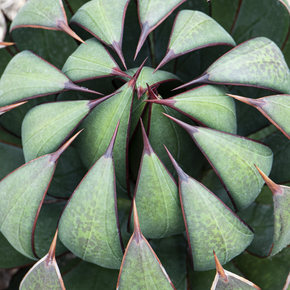
- Striking rosette of wide, sea-green succulent leaves densely freckled with bold burgundy-purple spots — color intensifies with more sun exposure
- A remarkable intergeneric hybrid (Agave x Manfreda) combining agave's architectural structure with manfreda's faster growth rate and eye-catching spotted foliage
- Exceptionally low-maintenance, drought-tolerant, and deer and rabbit resistant — ideal for water-wise gardens, rock gardens, and stylish patio containers
- Compact and well-proportioned at 10-12 inches tall and up to 30 inches wide, making it a standout thriller or specimen plant in beds and mixed container designs
Mangave 'Spotty Dotty' (x Mangave 'Spotty Dotty', PP #29,917) is a head-turning succulent rosette that brings dramatic, year-round foliage interest to Southern Oregon and Northern California gardens. Bred by Hans Hansen at Walters Gardens as part of the Mad About Mangave collection, this patented 2017 introduction is a triple-cross hybrid of Agave pablocarrilloi, Agave bovicornuta, and Manfreda maculosa — a lineage that gives its broad, fleshy, blue-green leaves their distinctive lightly wavy form, soft reddish-orange marginal teeth, and a dense constellation of rich burgundy-purple spots. Growing to a tidy 10-12 inches tall with a graceful spreading rosette up to 28-30 inches wide, 'Spotty Dotty' thrives in full sun with well-draining soil, rewarding gardeners with increasingly vivid spotting as UV exposure increases. More forgiving of occasional irrigation than a true agave, it is nonetheless highly drought tolerant once established and handles the heat of inland valleys with ease. Deer resistant, rabbit resistant, non-toxic, and virtually pest-free, this low-care beauty shines in xeriscape landscapes, rock gardens, raised beds, and decorative containers alike, and can be overwintered indoors in colder microclimates — making it a remarkably versatile ornamental for the water-wise modern garden.
Plant Description
Mangave 'Spotty Dotty' is a rosette-forming succulent that captivates with its broad, fleshy, sea-green to blue-green leaves densely covered with small, rich burgundy-purple spots — a trait inherited directly from its Manfreda maculosa parentage. The leaves are up to 3 inches wide, lightly wavy, and fold slightly upward along their length, edging in soft, reddish-orange teeth with a flexible terminal spine at each tip. The rosette is open and gracefully arching in habit, giving the plant a fluid, sculptural quality. Foliage spotting becomes significantly more pronounced and vivid when the plant receives ample direct sunlight, making sun exposure a key factor in achieving the most dramatic display. 'Spotty Dotty' is a patented cultivar (US Plant Patent PP29,917, granted November 2018) and was introduced to the trade in 2017 as part of the Mad About Mangave collection by Walters Gardens of Zeeland, Michigan.
Mature Size
| Characteristic | Measurement |
|---|---|
| Mature Height | 10 - 12 inches |
| Mature Spread | 24 - 30 inches |
| Leaf Width | Up to 3 inches |
| Growth Rate | Fast relative to agave |
| Plant Habit | Open, gracefully arching rosette |
Note that regular watering speeds growth, while reducing irrigation keeps the plant more compact — a useful trick for managing size in container plantings. The rosette's spread can vary somewhat based on light and water levels.
Hardiness Zones and Temperature Tolerance
Mangave 'Spotty Dotty' is rated for USDA Hardiness Zones 9a through 11b. It can tolerate temperatures down to approximately 20-25 degrees F, but performs best when temperatures consistently remain above 60 degrees F. In the warmer portions of Southern Oregon and Northern California — including inland valleys, lower elevations, and coastal zones — it can be grown as a perennial outdoors year-round with appropriate drainage and frost protection during hard freezes. In areas with occasional frost, planting against a south-facing wall or in a sheltered microclimate provides added protection. Container-grown plants can be moved indoors during cold snaps or through the winter season.
Sunlight Requirements
Full sun is strongly preferred — at least 6 hours of direct sunlight per day. Greater sun exposure directly enhances the intensity of the plant's signature burgundy spotting and blue-green leaf coloration, making placement in a sunny, open site the best strategy for achieving the most visually dramatic effect. Mangave 'Spotty Dotty' can tolerate partial shade or mostly-sun conditions, but foliage color and spot intensity will fade noticeably in lower light. If a plant becomes pale or washed out, moving it to a brighter location will restore vibrancy over time. Protect from intense reflected heat from walls or pavement during extreme summer temperatures above 85 degrees F, as prolonged intense heat combined with reflected radiation can stress the plant.
Soil and pH Preferences
'Spotty Dotty' is not fussy about soil type or pH, but it has one non-negotiable requirement: excellent drainage. Standing water or consistently wet soil will cause root rot and kill the plant. Ideal soils are gritty, sandy, or loamy with rapid drainage. In native garden beds, amend heavy or clay soils thoroughly with coarse sand, perlite, or pumice at a ratio of roughly 50% mineral amendment to 50% existing soil before planting. For container culture, use a potting mix specifically formulated for cacti and succulents, or improve a standard all-purpose potting mix with added perlite or coarse sand. This plant is noted to be resistant to verticillium wilt, making it well-suited to soils in areas where that fungal pathogen is a concern.
Watering Guide
Mangave 'Spotty Dotty' is considerably more forgiving of irrigation than a true agave, yet still highly drought tolerant once established. Follow these general watering guidelines:
- Newly planted or establishing plants: Water regularly to encourage strong root development. Keep the soil evenly moist but never waterlogged during the first growing season.
- Established plants in-ground: Water deeply but infrequently, allowing the soil to dry out between waterings. In hot inland summers, deep irrigation every 2-3 weeks is typically sufficient.
- Container plants: Water when the top inch or two of soil feels dry. Containers dry out faster than the ground, so check more frequently during summer heat.
- Winter watering: Significantly reduce watering frequency in winter. Allow soil to dry out more thoroughly between waterings to prevent crown rot and root rot during cool, wet months.
- Avoid overhead watering: Water at the base of the plant rather than overhead to prevent crown rot and unsightly foliage spotting from water deposits.
Keep in mind that more frequent watering will accelerate growth, while less water slows growth — a handy way to manage plant size in containers.
Fertilizing
Mangave 'Spotty Dotty' is a light feeder and can thrive in nutrient-lean soils without supplemental fertilizer. However, if you wish to encourage vigorous growth, apply a balanced fertilizer formulated for cacti and succulents once monthly during the active growing season (spring through early fall), following the manufacturer's recommended dosage. Avoid over-fertilizing, as excessive nutrients can result in overly lush, soft growth that is less resilient. Do not fertilize during the winter months when the plant is semi-dormant, as feeding during this period serves no benefit and can stress the root system.
Pruning and Maintenance
Mangave 'Spotty Dotty' is an exceptionally low-maintenance plant that requires minimal grooming to look its best. Follow these simple care steps:
- Remove any brown, yellowing, or damaged outer leaves by cutting them cleanly near the base of the leaf, as close to the stem as possible.
- In late winter or early spring, before the plant resumes active growth, do a general cleanup of any winter-damaged foliage. Take care not to disturb the crown, which may not be readily visible at this time of year.
- No shaping, trimming, or deadheading is required to maintain the plant's natural rosette form.
- If the plant flowers (typically after several years under ideal conditions), a tall spike bearing tubular cream to pale yellow blossoms will emerge. After blooming, the main rosette will typically decline. Small offsets (pups) that develop around the base can be separated and replanted to continue the plant.
Planting Instructions
- Select a site with full sun and well-draining soil. Avoid low spots or areas where water pools after rain.
- Loosen and amend the soil with coarse sand, perlite, or pumice if drainage is insufficient. Heavy clay soils should be amended generously.
- Dig a hole slightly wider and no deeper than the root ball. Place the plant so the crown sits at or slightly above the surrounding soil level to encourage drainage away from the base.
- Backfill with the amended soil, firming gently around the root ball to eliminate air pockets.
- Water thoroughly at planting, then allow the soil to partially dry before the next watering.
- Space plants approximately 24-30 inches apart when used in mass plantings to allow for full rosette development.
- A top dressing of decorative gravel or crushed rock around the base helps reflect heat, improve drainage, and keep moisture from sitting against the crown.
Container Growing
Mangave 'Spotty Dotty' is an outstanding container plant, and its compact, architectural rosette makes it particularly effective as a bold thriller in mixed patio arrangements or as a solitary specimen in a decorative pot. Select a container with ample drainage holes and use a cactus and succulent potting mix. The pot should be only slightly wider than the rosette spread to avoid excess moisture retention in the soil. Place containers in the sunniest location available to maximize foliage color and spot intensity. Container plants will dry out faster than in-ground plants, especially during summer heat, so check soil moisture more frequently. Repot every 2-3 years in fresh potting medium, ideally in spring. One of the greatest advantages of container growing in our region is the ability to move the plant to a sheltered location or indoors during hard freezes, extending its life through colder winters.
Landscape Uses
The bold, spotted rosette of 'Spotty Dotty' lends itself to a wide range of landscape applications:
- Xeriscape and water-wise gardens: A natural fit for low-water landscapes due to its drought tolerance and low irrigation needs once established.
- Rock and alpine gardens: Its love of excellent drainage and striking form make it a perfect candidate for rock garden settings.
- Mass plantings: A repeated mass planting of 'Spotty Dotty' creates a dramatic, low-maintenance groundcover effect with consistent color and texture.
- Mixed containers: Use as the starring "thriller" in combination pots alongside trailing succulents, ornamental grasses, or drought-tolerant annuals.
- Accent or specimen planting: A single well-placed rosette draws the eye and anchors a bed, border, or entry planting with year-round structure.
- Fire-wise landscapes: As a succulent with high moisture content in its leaves, it is considered relatively fire-resistant and suitable for fire-wise planting zones.
- Edging: Its compact spread makes it effective as a bold, low-growing edging plant along paths or garden borders.
Companion Plants
Pair Mangave 'Spotty Dotty' with plants that share its preference for full sun and well-draining, low-water conditions. Excellent companions include:
- Echeveria and Sedum species — rosette-forming succulents that complement the Spotty Dotty's form and color palette
- Ornamental grasses (e.g., blue fescue, little bluestem) — fine-textured foliage contrasts beautifully with the broad, spotted mangave leaves
- Agave species — related architectural succulents that reinforce the structural theme in rock gardens or xeriscape beds
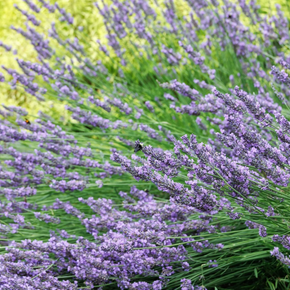
- Lavender — a sun-loving, drought-tolerant perennial whose soft purple flower spikes complement the burgundy spotting of the foliage
- Yarrow — feathery foliage and flat-topped flowers in warm tones contrast nicely with the bold rosette
- Yucca — upright, spiky form provides dramatic vertical contrast to the spreading rosette habit
- Stonecrop (Sedum): low-growing, drought-tolerant groundcover fills in around the base without competing for resources
- Coneflower (Echinacea) — adds vertical and seasonal flowering interest in mixed perennial and xeriscape beds
Wildlife Value and Pest Resistance
Mangave 'Spotty Dotty' offers practical resistance to common garden nuisances while providing some benefits to wildlife:
- Deer resistant: The thick, spine-edged leaves and tough texture make this plant unappealing to deer, which will typically browse past it in favor of more palatable plants.
- Rabbit resistant: Similarly, rabbits tend to avoid the plant due to its leaf texture and marginal teeth.
- Pollinators: On mature plants that flower, the tall bloom spikes bearing tubular cream blossoms can attract hummingbirds and various native bees and pollinators.
- Non-toxic: Mangave is considered non-toxic to humans and pets, making it a safer choice for households with dogs, cats, or children compared to some other succulents.
- Pests: Thanks to its thick, succulent leaves, 'Spotty Dotty' is rarely troubled by insect pests. Occasional mealybugs or scale insects may appear, particularly on container plants, and can be treated with isopropyl alcohol applied with a cotton swab or a diluted insecticidal soap spray. Root rot from overwatering is the most common cultural problem, so good drainage practices are the best prevention.
Overwintering and Cold Climate Care
In the warmer portions of Southern Oregon and Northern California (USDA Zones 9a and above), Mangave 'Spotty Dotty' can typically remain outdoors year-round with minimal protection. For colder microclimates or higher-elevation gardens, follow these overwintering steps:
- Reduce watering significantly in fall and through winter to prevent root rot in cool, wet conditions.
- If planted in the ground, mulch lightly around the base with gravel or coarse material to insulate roots and divert excess moisture away from the crown.
- Move container-grown plants to a sheltered location — such as under an overhang, against a south-facing wall, or inside a frost-free greenhouse or garage — when hard freezes below 25 degrees F are forecast.
- Indoors, place the plant in the brightest available window or under grow lights to maintain foliage color and prevent etiolation (stretching). Water sparingly every 2-4 weeks indoors during winter semi-dormancy.
- Return plants outdoors in spring after the last frost date, gradually re-acclimating them to full outdoor sun over 1-2 weeks to prevent sunburn on leaves that have adapted to indoor light levels.
Propagation
Mangave 'Spotty Dotty' is a patented cultivar (PP29,917), and vegetative propagation for sale or distribution is prohibited without a license from the patent holder. For personal, non-commercial use, propagation is possible through the following means:
- Offsets (pups): After several years of growth, or following a bloom cycle, small offset rosettes (pups) may form around the base of the parent plant. These can be carefully separated with a clean, sharp knife once they have developed their own root systems, allowed to callous for a day or two, then potted in dry, well-draining cactus mix and watered lightly once established.
- Note on monocarpy: Like agaves, mangaves are generally monocarpic — the main rosette will typically decline and die after flowering, but the offsets left behind will carry on. Not all individual plants will bloom, and blooming is more likely after many years of growth under optimal conditions.
- Striking rosette of wide, sea-green succulent leaves densely freckled with bold burgundy-purple spots — color intensifies with more sun exposure
- A remarkable intergeneric hybrid (Agave x Manfreda) combining agave's architectural structure with manfreda's faster growth rate and eye-catching spotted foliage
- Exceptionally low-maintenance, drought-tolerant, and deer and rabbit resistant — ideal for water-wise gardens, rock gardens, and stylish patio containers
- Compact and well-proportioned at 10-12 inches tall and up to 30 inches wide, making it a standout thriller or specimen plant in beds and mixed container designs
Mangave 'Spotty Dotty' (x Mangave 'Spotty Dotty', PP #29,917) is a head-turning succulent rosette that brings dramatic, year-round foliage interest to Southern Oregon and Northern California gardens. Bred by Hans Hansen at Walters Gardens as part of the Mad About Mangave collection, this patented 2017 introduction is a triple-cross hybrid of Agave pablocarrilloi, Agave bovicornuta, and Manfreda maculosa — a lineage that gives its broad, fleshy, blue-green leaves their distinctive lightly wavy form, soft reddish-orange marginal teeth, and a dense constellation of rich burgundy-purple spots. Growing to a tidy 10-12 inches tall with a graceful spreading rosette up to 28-30 inches wide, 'Spotty Dotty' thrives in full sun with well-draining soil, rewarding gardeners with increasingly vivid spotting as UV exposure increases. More forgiving of occasional irrigation than a true agave, it is nonetheless highly drought tolerant once established and handles the heat of inland valleys with ease. Deer resistant, rabbit resistant, non-toxic, and virtually pest-free, this low-care beauty shines in xeriscape landscapes, rock gardens, raised beds, and decorative containers alike, and can be overwintered indoors in colder microclimates — making it a remarkably versatile ornamental for the water-wise modern garden.
Plant Description
Mangave 'Spotty Dotty' is a rosette-forming succulent that captivates with its broad, fleshy, sea-green to blue-green leaves densely covered with small, rich burgundy-purple spots — a trait inherited directly from its Manfreda maculosa parentage. The leaves are up to 3 inches wide, lightly wavy, and fold slightly upward along their length, edging in soft, reddish-orange teeth with a flexible terminal spine at each tip. The rosette is open and gracefully arching in habit, giving the plant a fluid, sculptural quality. Foliage spotting becomes significantly more pronounced and vivid when the plant receives ample direct sunlight, making sun exposure a key factor in achieving the most dramatic display. 'Spotty Dotty' is a patented cultivar (US Plant Patent PP29,917, granted November 2018) and was introduced to the trade in 2017 as part of the Mad About Mangave collection by Walters Gardens of Zeeland, Michigan.
Mature Size
| Characteristic | Measurement |
|---|---|
| Mature Height | 10 - 12 inches |
| Mature Spread | 24 - 30 inches |
| Leaf Width | Up to 3 inches |
| Growth Rate | Fast relative to agave |
| Plant Habit | Open, gracefully arching rosette |
Note that regular watering speeds growth, while reducing irrigation keeps the plant more compact — a useful trick for managing size in container plantings. The rosette's spread can vary somewhat based on light and water levels.
Hardiness Zones and Temperature Tolerance
Mangave 'Spotty Dotty' is rated for USDA Hardiness Zones 9a through 11b. It can tolerate temperatures down to approximately 20-25 degrees F, but performs best when temperatures consistently remain above 60 degrees F. In the warmer portions of Southern Oregon and Northern California — including inland valleys, lower elevations, and coastal zones — it can be grown as a perennial outdoors year-round with appropriate drainage and frost protection during hard freezes. In areas with occasional frost, planting against a south-facing wall or in a sheltered microclimate provides added protection. Container-grown plants can be moved indoors during cold snaps or through the winter season.
Sunlight Requirements
Full sun is strongly preferred — at least 6 hours of direct sunlight per day. Greater sun exposure directly enhances the intensity of the plant's signature burgundy spotting and blue-green leaf coloration, making placement in a sunny, open site the best strategy for achieving the most visually dramatic effect. Mangave 'Spotty Dotty' can tolerate partial shade or mostly-sun conditions, but foliage color and spot intensity will fade noticeably in lower light. If a plant becomes pale or washed out, moving it to a brighter location will restore vibrancy over time. Protect from intense reflected heat from walls or pavement during extreme summer temperatures above 85 degrees F, as prolonged intense heat combined with reflected radiation can stress the plant.
Soil and pH Preferences
'Spotty Dotty' is not fussy about soil type or pH, but it has one non-negotiable requirement: excellent drainage. Standing water or consistently wet soil will cause root rot and kill the plant. Ideal soils are gritty, sandy, or loamy with rapid drainage. In native garden beds, amend heavy or clay soils thoroughly with coarse sand, perlite, or pumice at a ratio of roughly 50% mineral amendment to 50% existing soil before planting. For container culture, use a potting mix specifically formulated for cacti and succulents, or improve a standard all-purpose potting mix with added perlite or coarse sand. This plant is noted to be resistant to verticillium wilt, making it well-suited to soils in areas where that fungal pathogen is a concern.
Watering Guide
Mangave 'Spotty Dotty' is considerably more forgiving of irrigation than a true agave, yet still highly drought tolerant once established. Follow these general watering guidelines:
- Newly planted or establishing plants: Water regularly to encourage strong root development. Keep the soil evenly moist but never waterlogged during the first growing season.
- Established plants in-ground: Water deeply but infrequently, allowing the soil to dry out between waterings. In hot inland summers, deep irrigation every 2-3 weeks is typically sufficient.
- Container plants: Water when the top inch or two of soil feels dry. Containers dry out faster than the ground, so check more frequently during summer heat.
- Winter watering: Significantly reduce watering frequency in winter. Allow soil to dry out more thoroughly between waterings to prevent crown rot and root rot during cool, wet months.
- Avoid overhead watering: Water at the base of the plant rather than overhead to prevent crown rot and unsightly foliage spotting from water deposits.
Keep in mind that more frequent watering will accelerate growth, while less water slows growth — a handy way to manage plant size in containers.
Fertilizing
Mangave 'Spotty Dotty' is a light feeder and can thrive in nutrient-lean soils without supplemental fertilizer. However, if you wish to encourage vigorous growth, apply a balanced fertilizer formulated for cacti and succulents once monthly during the active growing season (spring through early fall), following the manufacturer's recommended dosage. Avoid over-fertilizing, as excessive nutrients can result in overly lush, soft growth that is less resilient. Do not fertilize during the winter months when the plant is semi-dormant, as feeding during this period serves no benefit and can stress the root system.
Pruning and Maintenance
Mangave 'Spotty Dotty' is an exceptionally low-maintenance plant that requires minimal grooming to look its best. Follow these simple care steps:
- Remove any brown, yellowing, or damaged outer leaves by cutting them cleanly near the base of the leaf, as close to the stem as possible.
- In late winter or early spring, before the plant resumes active growth, do a general cleanup of any winter-damaged foliage. Take care not to disturb the crown, which may not be readily visible at this time of year.
- No shaping, trimming, or deadheading is required to maintain the plant's natural rosette form.
- If the plant flowers (typically after several years under ideal conditions), a tall spike bearing tubular cream to pale yellow blossoms will emerge. After blooming, the main rosette will typically decline. Small offsets (pups) that develop around the base can be separated and replanted to continue the plant.
Planting Instructions
- Select a site with full sun and well-draining soil. Avoid low spots or areas where water pools after rain.
- Loosen and amend the soil with coarse sand, perlite, or pumice if drainage is insufficient. Heavy clay soils should be amended generously.
- Dig a hole slightly wider and no deeper than the root ball. Place the plant so the crown sits at or slightly above the surrounding soil level to encourage drainage away from the base.
- Backfill with the amended soil, firming gently around the root ball to eliminate air pockets.
- Water thoroughly at planting, then allow the soil to partially dry before the next watering.
- Space plants approximately 24-30 inches apart when used in mass plantings to allow for full rosette development.
- A top dressing of decorative gravel or crushed rock around the base helps reflect heat, improve drainage, and keep moisture from sitting against the crown.
Container Growing
Mangave 'Spotty Dotty' is an outstanding container plant, and its compact, architectural rosette makes it particularly effective as a bold thriller in mixed patio arrangements or as a solitary specimen in a decorative pot. Select a container with ample drainage holes and use a cactus and succulent potting mix. The pot should be only slightly wider than the rosette spread to avoid excess moisture retention in the soil. Place containers in the sunniest location available to maximize foliage color and spot intensity. Container plants will dry out faster than in-ground plants, especially during summer heat, so check soil moisture more frequently. Repot every 2-3 years in fresh potting medium, ideally in spring. One of the greatest advantages of container growing in our region is the ability to move the plant to a sheltered location or indoors during hard freezes, extending its life through colder winters.
Landscape Uses
The bold, spotted rosette of 'Spotty Dotty' lends itself to a wide range of landscape applications:
- Xeriscape and water-wise gardens: A natural fit for low-water landscapes due to its drought tolerance and low irrigation needs once established.
- Rock and alpine gardens: Its love of excellent drainage and striking form make it a perfect candidate for rock garden settings.
- Mass plantings: A repeated mass planting of 'Spotty Dotty' creates a dramatic, low-maintenance groundcover effect with consistent color and texture.
- Mixed containers: Use as the starring "thriller" in combination pots alongside trailing succulents, ornamental grasses, or drought-tolerant annuals.
- Accent or specimen planting: A single well-placed rosette draws the eye and anchors a bed, border, or entry planting with year-round structure.
- Fire-wise landscapes: As a succulent with high moisture content in its leaves, it is considered relatively fire-resistant and suitable for fire-wise planting zones.
- Edging: Its compact spread makes it effective as a bold, low-growing edging plant along paths or garden borders.
Companion Plants
Pair Mangave 'Spotty Dotty' with plants that share its preference for full sun and well-draining, low-water conditions. Excellent companions include:
- Echeveria and Sedum species — rosette-forming succulents that complement the Spotty Dotty's form and color palette
- Ornamental grasses (e.g., blue fescue, little bluestem) — fine-textured foliage contrasts beautifully with the broad, spotted mangave leaves
- Agave species — related architectural succulents that reinforce the structural theme in rock gardens or xeriscape beds
- Lavender — a sun-loving, drought-tolerant perennial whose soft purple flower spikes complement the burgundy spotting of the foliage
- Yarrow — feathery foliage and flat-topped flowers in warm tones contrast nicely with the bold rosette
- Yucca — upright, spiky form provides dramatic vertical contrast to the spreading rosette habit
- Stonecrop (Sedum): low-growing, drought-tolerant groundcover fills in around the base without competing for resources
- Coneflower (Echinacea) — adds vertical and seasonal flowering interest in mixed perennial and xeriscape beds
Wildlife Value and Pest Resistance
Mangave 'Spotty Dotty' offers practical resistance to common garden nuisances while providing some benefits to wildlife:
- Deer resistant: The thick, spine-edged leaves and tough texture make this plant unappealing to deer, which will typically browse past it in favor of more palatable plants.
- Rabbit resistant: Similarly, rabbits tend to avoid the plant due to its leaf texture and marginal teeth.
- Pollinators: On mature plants that flower, the tall bloom spikes bearing tubular cream blossoms can attract hummingbirds and various native bees and pollinators.
- Non-toxic: Mangave is considered non-toxic to humans and pets, making it a safer choice for households with dogs, cats, or children compared to some other succulents.
- Pests: Thanks to its thick, succulent leaves, 'Spotty Dotty' is rarely troubled by insect pests. Occasional mealybugs or scale insects may appear, particularly on container plants, and can be treated with isopropyl alcohol applied with a cotton swab or a diluted insecticidal soap spray. Root rot from overwatering is the most common cultural problem, so good drainage practices are the best prevention.
Overwintering and Cold Climate Care
In the warmer portions of Southern Oregon and Northern California (USDA Zones 9a and above), Mangave 'Spotty Dotty' can typically remain outdoors year-round with minimal protection. For colder microclimates or higher-elevation gardens, follow these overwintering steps:
- Reduce watering significantly in fall and through winter to prevent root rot in cool, wet conditions.
- If planted in the ground, mulch lightly around the base with gravel or coarse material to insulate roots and divert excess moisture away from the crown.
- Move container-grown plants to a sheltered location — such as under an overhang, against a south-facing wall, or inside a frost-free greenhouse or garage — when hard freezes below 25 degrees F are forecast.
- Indoors, place the plant in the brightest available window or under grow lights to maintain foliage color and prevent etiolation (stretching). Water sparingly every 2-4 weeks indoors during winter semi-dormancy.
- Return plants outdoors in spring after the last frost date, gradually re-acclimating them to full outdoor sun over 1-2 weeks to prevent sunburn on leaves that have adapted to indoor light levels.
Propagation
Mangave 'Spotty Dotty' is a patented cultivar (PP29,917), and vegetative propagation for sale or distribution is prohibited without a license from the patent holder. For personal, non-commercial use, propagation is possible through the following means:
- Offsets (pups): After several years of growth, or following a bloom cycle, small offset rosettes (pups) may form around the base of the parent plant. These can be carefully separated with a clean, sharp knife once they have developed their own root systems, allowed to callous for a day or two, then potted in dry, well-draining cactus mix and watered lightly once established.
- Note on monocarpy: Like agaves, mangaves are generally monocarpic — the main rosette will typically decline and die after flowering, but the offsets left behind will carry on. Not all individual plants will bloom, and blooming is more likely after many years of growth under optimal conditions.
Related Products