

Zoom the image with the mouse
Multi Blue Clematis - 1 Gallon
SKU:
2056705
UPC:
014949270615
$21.99
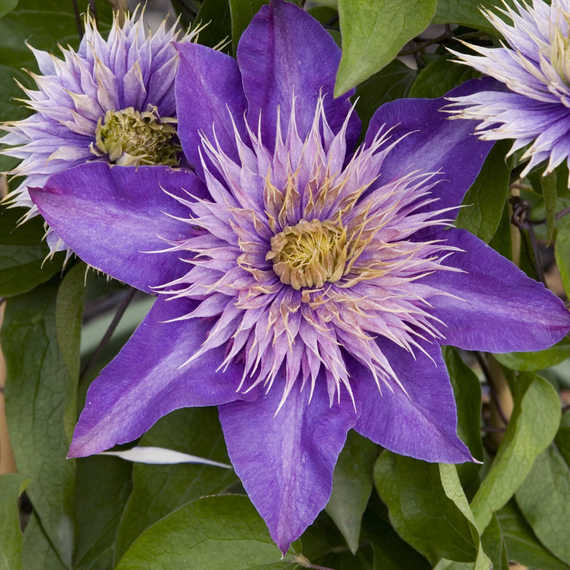
- Spectacular fully double, deep blue-violet blooms measuring 4-6 inches across emerge in a unique pom-pom style, with silvery-blue central petals that gradually expand as the flower matures
- A true repeat bloomer — produces a lavish first flush from late spring into early summer, then rewards again with a second wave of blooms in late summer to early fall
- Compact and versatile, reaching just 6-8 feet tall, making it an excellent choice for trellises, arbors, fences, and decorative containers on patios and in small gardens
- Hardy in USDA Zones 4-9, low maintenance, and tolerant of deer and rabbits — a long-lived perennial vine that attracts hummingbirds, bees, and butterflies
Clematis 'Multi Blue' (Clematis x 'Multi Blue') is a breathtaking deciduous climbing vine celebrated for its extraordinarily glamorous, fully double blooms that set it apart from nearly every other clematis in cultivation. A sport of the classic 'The President,' this compact hybrid produces a profusion of rich blue-violet flowers with an intricate, multi-layered structure — the broad outer tepals frame a starburst center of pointed, fringe-like petals that gradually open to reveal silvery-blue tones as the blossoms mature, creating a dramatic, pom-pom-like effect that is truly one-of-a-kind. Flowering arrives in two impressive flushes: first in late spring to early summer, and again in late summer to early fall, ensuring months of spectacular color in the landscape. Growing to a manageable 6-8 feet tall with a spread of 2-4 feet, this well-behaved vine is perfectly suited for smaller gardens, intimate courtyard spaces, and container plantings, as well as traditional uses on trellises, arbors, pergolas, and fences. Classified as a Pruning Group 2 clematis, it blooms on both old and new wood, rewarding gardeners with minimal pruning effort and maximum floral impact. Hardy in USDA Zones 4-9, tolerant of deer and rabbits, and attractive to hummingbirds, butterflies, and bees, Clematis 'Multi Blue' is a showstopping, low-maintenance perennial vine that delivers season-long elegance and unmatched double-flower drama to any garden setting.
Plant Description
Clematis 'Multi Blue' is a deciduous, large-flowered hybrid clematis belonging to the Early Large-Flowered Group and the Ranunculaceae family. It is a natural sport, or mutation, of the well-known variety 'The President,' and is distinguished from its parent by its extraordinary fully double blooms. Each flower measures 4-6 inches (10-15 cm) across and features two distinct layers: broad, lance-shaped outer tepals in rich lavender-blue to deep violet-blue, and a densely packed central cluster of shorter, pointed, fringe-like inner tepals in silvery-blue that gradually expand and deepen in color as the flower ages. The overall effect is that of a multi-layered, pom-pom-like button flower that is exceptionally showy and bold. The foliage consists of dark green, pinnately compound leaves that grow in opposite pairs along the twining stems, providing a lush and attractive backdrop for the vivid blooms. Like all clematis, the plant climbs by twisting its leaf stalks (petioles) around any nearby support. In winter, the plant is fully deciduous, dropping all of its foliage before re-emerging vigorously in spring.
Mature Size
| Attribute | Measurement |
|---|---|
| Mature Height | 6-8 feet (180-240 cm) |
| Mature Spread | 2-4 feet (60-120 cm) |
| Growth Rate | Medium |
| Plant Form | Upright twining vine; somewhat spreading |
| Expected Lifespan | Approximately 20 years under ideal conditions |
As a climbing vine, 'Multi Blue' tends to be somewhat bare and leggy near the base. Underplanting with low-growing perennials or ground covers is recommended to fill in that lower area while also keeping the roots cool and shaded — a condition this clematis especially appreciates.
Hardiness Zones
Clematis 'Multi Blue' is reliably hardy in USDA Hardiness Zones 4-9, tolerating winter temperatures as low as -20 to -30 degrees F (-28 to -34 degrees C) in the appropriate zone. In colder climates at the lower end of its hardiness range, a generous layer of organic mulch applied around the root zone in late fall provides beneficial insulation against extreme freezes. In the warmer end of its range (Zones 8-9), the plant benefits from afternoon shade to protect blooms from excessive heat and to keep the root zone cool. It is an excellent choice for gardens throughout Southern Oregon and Northern California, performing strongly across a wide variety of microclimates in those regions.
Sunlight Requirements
Clematis 'Multi Blue' performs best in full sun to partial shade, ideally receiving a minimum of 6 hours of direct sunlight per day for the most prolific flowering. In hotter climates or during peak summer heat, some afternoon shade is beneficial and helps preserve the vivid color of the blooms. This variety follows the classic clematis principle of preferring its "head in the sun and its feet in the shade" — meaning the upper portions of the vine thrive with ample sunlight, while the root zone should be kept cool and shaded. Achieve this by underplanting with low perennials or ground covers, or by applying a layer of mulch or placing flat stones around the base of the plant. A location that is somewhat sheltered from strong winds is also advisable, as the slender twining stems can be damaged by sustained gusts.
Soil and pH Preferences
This clematis grows in a wide range of soil types, including chalk, clay, loam, and sandy soils, provided drainage is adequate. It strongly dislikes standing water or persistently waterlogged conditions, which can lead to root rot and clematis wilt. The ideal soil is fertile, moisture-retentive, and well-draining — a rich, loamy consistency is optimal. In terms of pH, 'Multi Blue' prefers neutral to slightly alkaline soil, generally in the range of 6.5 to 7.5. If your native soil is heavy clay, amend it at planting time with compost, aged manure, or coarse grit to improve both drainage and nutrient availability. Overly sandy or dry soils should be enriched with organic compost to improve moisture retention. Conducting a simple soil pH test before planting is a good practice; if the soil is too acidic, incorporation of garden lime can help bring it into the preferred range.
Planting Instructions
- Select a location that receives at least 6 hours of sun daily, with afternoon shade in hotter areas, and near a sturdy support structure such as a trellis, fence, arbor, or pergola.
- Before planting, soak the root ball in a bucket of water for 10-15 minutes to thoroughly hydrate the roots.
- Dig a planting hole approximately twice the width and depth of the root ball — deeper than you would for most plants.
- Set the crown of the plant 2-3 inches below the soil surface. Planting deeper encourages the development of multiple stems from below ground and helps protect the plant from clematis wilt; if wilt affects the above-ground stems, the buried crown can re-sprout.
- Amend the backfill soil with compost if needed, then fill in around the root ball and firm gently to eliminate air pockets.
- Form a shallow watering basin around the plant and water thoroughly.
- Apply a 2-3 inch layer of organic mulch (bark chips, wood chips, or compost) around the base, keeping mulch a few inches away from the stems to prevent rot and disease.
- Install or tie the plant to its support immediately. Space plants approximately 3-4 feet apart if planting multiples; for large areas, two plants per meter of coverage may be appropriate.
- If planting against a wall, position the plant at least 4-6 inches away from the wall base to allow air circulation and prevent moisture buildup.
Watering Guide
Clematis 'Multi Blue' requires consistently moist but never waterlogged soil throughout the growing season. Water deeply once or twice per week, particularly during dry spells, encouraging the roots to grow deep into the soil. Avoid shallow, frequent watering, which promotes surface rooting. Allow the top inch of soil to begin to dry between waterings as a guide — never let the soil dry out completely during the active growing season. Young, newly planted vines need more attentive and frequent watering until they are established, typically through their first full growing season. Established plants in garden beds are more drought-tolerant but will still benefit from supplemental irrigation during extended dry periods, especially when in bud and bloom. Container-grown plants dry out significantly faster than in-ground plants and may require daily checking and watering during hot weather. The application of a thick organic mulch layer around the root zone is one of the most effective strategies for conserving soil moisture and moderating soil temperature.
Fertilizing
Feed Clematis 'Multi Blue' to support strong growth and prolific double blooms throughout the season. Follow this fertilizing schedule for best results:
- Early Spring: Apply a balanced, slow-release granular fertilizer (such as a 10-10-10 formula) or work horn meal or bone meal into the soil around the root zone as new growth begins. This supports vigorous stem and foliage development.
- During the Growing Season: Apply a liquid fertilizer higher in phosphorus and potassium (such as a 5-10-10 or tomato-type formula) monthly from spring through midsummer to promote continued bud set and flowering, particularly to encourage the second late-summer flush.
- Late Summer: Discontinue all fertilizing by late August to early September. Continuing to feed into fall encourages tender new growth that may be damaged by early frosts and can interfere with the plant hardening off properly for winter dormancy.
- Organic Options: Composted aged manure worked in around the root zone in early spring, or rose fertilizer applied according to label directions, are excellent organic choices that also improve soil structure over time.
Pruning and Maintenance — Pruning Group 2
Clematis 'Multi Blue' belongs to Pruning Group 2 (sometimes called Type 2 or Group B). This means it blooms first on the previous season's old wood in late spring to early summer, and then again on new growth in late summer. Correct pruning is essential for maximizing both flushes of flowers.
- Late Winter / Early Spring (before growth begins): Inspect all stems from the top downward. Remove any dead, weak, or damaged stems entirely. Cut remaining stems back only to the topmost pair of healthy, plump buds. Avoid heavy or hard pruning at this stage, as doing so will remove the old wood that carries the first flush of blooms.
- After the First Flush of Blooms (early to midsummer): Deadhead spent flowers promptly to conserve energy for the second blooming. You may also lightly trim some stems back to a healthy pair of buds or a strong lateral shoot to help shape the plant and stimulate new growth for the second flowering cycle.
- Late Fall / Early Winter: Once the plant has gone dormant, a light tidying can be done to remove any remaining dead or weak growth. Avoid heavy fall pruning.
- Renovation Pruning: Overgrown or tangled plants can be gradually renovated over two to three seasons by cutting back harder after the first flush of flowers. Alternatively, a full hard renewal cut to 1-3 feet from the base can be done every 3-4 years in late winter; the plant will sacrifice a season of early flowers but will re-emerge more vigorously branched and full.
Seasonal Interest
Clematis 'Multi Blue' provides ornamental appeal across several seasons of the year:
- Spring: Fresh green compound foliage emerges, climbing rapidly up supports. Round, plump buds develop on the tips of last year's stems, building anticipation for the first bloom display.
- Late Spring to Early Summer: The spectacular first flush of fully double, rich blue-violet blooms opens in abundance. The multi-layered, pom-pom-like flowers create a stunning focal point in the garden and are at their most vibrant during this period.
- Midsummer: A brief rest period between bloom cycles. Lush, dark green compound foliage continues to cover the support structure attractively.
- Late Summer to Early Fall: The second wave of blooms arrives, often on new growth. These flowers may sometimes be single or semi-double rather than fully double, but are still attractive and richly colored in lavender-blue to violet hues.
- Fall: As temperatures cool, the foliage begins to fade. Feathery seed heads may develop, adding subtle textural interest before the plant drops its leaves.
- Winter: The plant is fully dormant and deciduous, with the bare woody stems remaining on the support structure until spring cleanup.
Landscape Uses
The compact, manageable size and spectacular floral display of Clematis 'Multi Blue' make it one of the most versatile clematis cultivars available for the home garden. Recommended landscape applications include:
- Trellises, Fences, and Arbors: The classic use — train the vine upward for a wall of vivid color through the growing season.
- Pergolas: Plant at the base of a pergola post and allow it to weave upward and across the structure.
- Growing Through Shrubs: Allow the vine to scramble through medium-sized shrubs, particularly those with golden, chartreuse, or variegated foliage, where the deep blue blooms create a stunning contrast.
- Small Gardens and Courtyard Gardens: Its compact nature makes it one of the best large-flowered clematis choices for tight spaces.
- Container Planting: Excellent for large patio pots and containers on decks, patios, and balconies when provided with an adequate support structure. Use a container with a minimum volume of 25 liters (about 6-7 gallons) with ample drainage holes.
- Retaining Walls and Slopes: Can be allowed to trail over a retaining wall or cascade down a slope for an informal, flowing effect.
- Screening and Accents: Useful as a vertical accent or to provide seasonal screening along boundaries.
Companion Plants
Clematis 'Multi Blue' pairs beautifully with a wide variety of garden plants. Consider these companion planting ideas to make the most of its deep blue-violet blooms and climbing habit:
- Roses: The classic clematis companion — climbing or shrub roses with warm-toned blooms (pink, red, coral, white, or golden yellow) create a striking contrast with the cool blue-violet flowers of 'Multi Blue.' The rose canes also provide a natural support structure.
- Shrubs with Golden or Variegated Foliage: Plant 'Multi Blue' to scramble through or alongside shrubs such as golden spirea, variegated weigela, or golden privet for a vivid color contrast.
- Hostas: Large-leaved hostas planted at the base of the clematis keep the root zone shaded and cool, while also filling in the leggy lower stems of the vine with bold foliage.
- Peonies: Both plants share similar soil and sunlight requirements and bloom in complementary seasons.
- Bee Balm (Monarda): The warm-toned, airy flowers of bee balm provide a lovely contrast to the deep blue clematis blooms while also attracting pollinators.
- Black-Eyed Susan (Rudbeckia): The golden-yellow daisies of rudbeckia planted nearby complement the blue-violet tones beautifully and bloom in the same late-summer window as the clematis's second flush.
- Low Perennial Ground Covers: Creeping thyme, ajuga, hardy geranium (cranesbill), or catmint planted at the base of the vine shade the roots, conserve moisture, and provide additional color at ground level.
Pests and Diseases
Clematis 'Multi Blue' is considered relatively low-maintenance with regard to pests and diseases, especially when sited correctly and given proper care. Be aware of the following potential issues:
- Clematis Wilt (Phoma clematidina): A fungal disease that can cause sudden collapse and wilting of one or more stems, even on otherwise healthy plants. 'Multi Blue' is reported to have good resistance to clematis wilt. If wilt does occur, cut affected stems back to the ground or below, and dispose of the cut material in the trash (not the compost). Because this variety is planted with the crown 2-3 inches below soil level, new shoots will typically emerge from the protected underground crown.
- Powdery Mildew: A white, powdery fungal coating may appear on leaves, particularly during periods of warm days and cool nights with low rainfall. Improve air circulation around the plant, avoid overhead watering, and treat with a fungicide labeled for powdery mildew if necessary. Removing heavily infected stems and disposing of them prevents spread.
- Aphids: Small colonies may appear on new growth in spring. Treat with insecticidal soap spray or neem oil. Heavy infestations can be knocked off with a strong stream of water.
- Spider Mites: More common during hot, dry conditions. Neem oil or insecticidal soap sprays are effective; improving watering and air circulation helps prevent infestations.
- Slugs and Snails: May chew on young emerging shoots in spring. Use organic iron phosphate slug bait or diatomaceous earth around the plant base as a deterrent.
- Voles: Can occasionally feed on clematis roots. A wire mesh basket placed around the root ball at planting time helps exclude them.
Container Growing
Clematis 'Multi Blue' is one of the most container-friendly of all the large-flowered clematis, making it an excellent choice for patios, decks, balconies, and entryways. Follow these guidelines for successful container culture:
- Container Size: Use a container with a minimum volume of 25 liters (approximately 6-7 gallons) or larger. Larger containers retain moisture more effectively and provide more root space for long-term health.
- Drainage: Ensure the container has multiple large drainage holes. Add a 2-3 inch layer of gravel or coarse grit at the bottom to prevent drainage holes from clogging.
- Potting Mix: Use a high-quality, fertile, well-draining potting mix. Avoid straight garden soil, which compacts too readily in containers.
- Support: Provide a sturdy trellis, obelisk, or other climbing support secured within or directly behind the container. The support must be stable enough to handle wind and the weight of the growing vine.
- Watering: Container-grown clematis dry out significantly faster than in-ground plants. Check soil moisture daily in warm weather and water thoroughly whenever the top inch of soil is dry. Never allow the container to fully dry out.
- Fertilizing: Container plants exhaust available nutrients more quickly. Feed with a balanced liquid fertilizer every 2-3 weeks during the active growing and flowering season.
- Winter Care: Move containers to a sheltered location, unheated garage, or covered porch during extreme freezes, or wrap the pot in burlap or horticultural fleece to insulate the roots. Roots in above-ground containers are far more vulnerable to freeze damage than in-ground roots.
- Repotting: Refresh the potting mix every 3-4 years, trimming the root ball by about one-third at that time to stimulate fresh root development.
Wildlife Value
Clematis 'Multi Blue' is a valued addition to the pollinator-friendly garden. Its large, open-faced double blooms are particularly attractive to beneficial wildlife:
- Hummingbirds: The richly colored blue-violet blooms are known to attract hummingbirds, which visit the flowers for nectar. The two-flush blooming season extends the window during which hummingbirds are drawn to the planting.
- Butterflies: Various butterfly species, including swallowtails and fritillaries, are attracted to the nectar-rich flowers throughout the bloom season.
- Bees: Bumblebees, native bees, and honeybees visit the blooms actively, making this clematis a solid contributor to the pollinator garden.
- Deer and Rabbit Resistance: 'Multi Blue' has demonstrated good tolerance of deer and rabbit browsing, making it a practical choice for gardens in areas where these animals are a concern.
Note: All parts of clematis plants are considered toxic to dogs, cats, and horses if ingested, and may cause mild skin irritation in sensitive individuals. Plant thoughtfully if pets have access to the garden area.
Toxicity and Safety
Clematis 'Multi Blue,' like all clematis species and cultivars, contains irritant compounds — primarily ranunculin, which converts to the toxic compound protoanemonin when plant tissue is chewed or crushed. Be aware of the following:
- Toxic to Pets: All parts of the plant are considered toxic to dogs, cats, and horses. Ingestion can cause drooling, vomiting, diarrhea, and in larger quantities, more serious symptoms. Contact a veterinarian immediately if a pet is suspected of consuming any part of the plant.
- Human Skin Irritation: The sap can cause mild skin irritation or dermatitis in sensitive individuals. Wearing gloves when pruning or handling the plant is recommended, especially for those with sensitive skin.
- Not for Human Consumption: No part of this plant should be eaten by people.
- Safe Handling: Always wash hands thoroughly after working with clematis. Keep children and pets away from freshly cut stems and pruning debris.
- Spectacular fully double, deep blue-violet blooms measuring 4-6 inches across emerge in a unique pom-pom style, with silvery-blue central petals that gradually expand as the flower matures
- A true repeat bloomer — produces a lavish first flush from late spring into early summer, then rewards again with a second wave of blooms in late summer to early fall
- Compact and versatile, reaching just 6-8 feet tall, making it an excellent choice for trellises, arbors, fences, and decorative containers on patios and in small gardens
- Hardy in USDA Zones 4-9, low maintenance, and tolerant of deer and rabbits — a long-lived perennial vine that attracts hummingbirds, bees, and butterflies
Clematis 'Multi Blue' (Clematis x 'Multi Blue') is a breathtaking deciduous climbing vine celebrated for its extraordinarily glamorous, fully double blooms that set it apart from nearly every other clematis in cultivation. A sport of the classic 'The President,' this compact hybrid produces a profusion of rich blue-violet flowers with an intricate, multi-layered structure — the broad outer tepals frame a starburst center of pointed, fringe-like petals that gradually open to reveal silvery-blue tones as the blossoms mature, creating a dramatic, pom-pom-like effect that is truly one-of-a-kind. Flowering arrives in two impressive flushes: first in late spring to early summer, and again in late summer to early fall, ensuring months of spectacular color in the landscape. Growing to a manageable 6-8 feet tall with a spread of 2-4 feet, this well-behaved vine is perfectly suited for smaller gardens, intimate courtyard spaces, and container plantings, as well as traditional uses on trellises, arbors, pergolas, and fences. Classified as a Pruning Group 2 clematis, it blooms on both old and new wood, rewarding gardeners with minimal pruning effort and maximum floral impact. Hardy in USDA Zones 4-9, tolerant of deer and rabbits, and attractive to hummingbirds, butterflies, and bees, Clematis 'Multi Blue' is a showstopping, low-maintenance perennial vine that delivers season-long elegance and unmatched double-flower drama to any garden setting.
Plant Description
Clematis 'Multi Blue' is a deciduous, large-flowered hybrid clematis belonging to the Early Large-Flowered Group and the Ranunculaceae family. It is a natural sport, or mutation, of the well-known variety 'The President,' and is distinguished from its parent by its extraordinary fully double blooms. Each flower measures 4-6 inches (10-15 cm) across and features two distinct layers: broad, lance-shaped outer tepals in rich lavender-blue to deep violet-blue, and a densely packed central cluster of shorter, pointed, fringe-like inner tepals in silvery-blue that gradually expand and deepen in color as the flower ages. The overall effect is that of a multi-layered, pom-pom-like button flower that is exceptionally showy and bold. The foliage consists of dark green, pinnately compound leaves that grow in opposite pairs along the twining stems, providing a lush and attractive backdrop for the vivid blooms. Like all clematis, the plant climbs by twisting its leaf stalks (petioles) around any nearby support. In winter, the plant is fully deciduous, dropping all of its foliage before re-emerging vigorously in spring.
Mature Size
| Attribute | Measurement |
|---|---|
| Mature Height | 6-8 feet (180-240 cm) |
| Mature Spread | 2-4 feet (60-120 cm) |
| Growth Rate | Medium |
| Plant Form | Upright twining vine; somewhat spreading |
| Expected Lifespan | Approximately 20 years under ideal conditions |
As a climbing vine, 'Multi Blue' tends to be somewhat bare and leggy near the base. Underplanting with low-growing perennials or ground covers is recommended to fill in that lower area while also keeping the roots cool and shaded — a condition this clematis especially appreciates.
Hardiness Zones
Clematis 'Multi Blue' is reliably hardy in USDA Hardiness Zones 4-9, tolerating winter temperatures as low as -20 to -30 degrees F (-28 to -34 degrees C) in the appropriate zone. In colder climates at the lower end of its hardiness range, a generous layer of organic mulch applied around the root zone in late fall provides beneficial insulation against extreme freezes. In the warmer end of its range (Zones 8-9), the plant benefits from afternoon shade to protect blooms from excessive heat and to keep the root zone cool. It is an excellent choice for gardens throughout Southern Oregon and Northern California, performing strongly across a wide variety of microclimates in those regions.
Sunlight Requirements
Clematis 'Multi Blue' performs best in full sun to partial shade, ideally receiving a minimum of 6 hours of direct sunlight per day for the most prolific flowering. In hotter climates or during peak summer heat, some afternoon shade is beneficial and helps preserve the vivid color of the blooms. This variety follows the classic clematis principle of preferring its "head in the sun and its feet in the shade" — meaning the upper portions of the vine thrive with ample sunlight, while the root zone should be kept cool and shaded. Achieve this by underplanting with low perennials or ground covers, or by applying a layer of mulch or placing flat stones around the base of the plant. A location that is somewhat sheltered from strong winds is also advisable, as the slender twining stems can be damaged by sustained gusts.
Soil and pH Preferences
This clematis grows in a wide range of soil types, including chalk, clay, loam, and sandy soils, provided drainage is adequate. It strongly dislikes standing water or persistently waterlogged conditions, which can lead to root rot and clematis wilt. The ideal soil is fertile, moisture-retentive, and well-draining — a rich, loamy consistency is optimal. In terms of pH, 'Multi Blue' prefers neutral to slightly alkaline soil, generally in the range of 6.5 to 7.5. If your native soil is heavy clay, amend it at planting time with compost, aged manure, or coarse grit to improve both drainage and nutrient availability. Overly sandy or dry soils should be enriched with organic compost to improve moisture retention. Conducting a simple soil pH test before planting is a good practice; if the soil is too acidic, incorporation of garden lime can help bring it into the preferred range.
Planting Instructions
- Select a location that receives at least 6 hours of sun daily, with afternoon shade in hotter areas, and near a sturdy support structure such as a trellis, fence, arbor, or pergola.
- Before planting, soak the root ball in a bucket of water for 10-15 minutes to thoroughly hydrate the roots.
- Dig a planting hole approximately twice the width and depth of the root ball — deeper than you would for most plants.
- Set the crown of the plant 2-3 inches below the soil surface. Planting deeper encourages the development of multiple stems from below ground and helps protect the plant from clematis wilt; if wilt affects the above-ground stems, the buried crown can re-sprout.
- Amend the backfill soil with compost if needed, then fill in around the root ball and firm gently to eliminate air pockets.
- Form a shallow watering basin around the plant and water thoroughly.
- Apply a 2-3 inch layer of organic mulch (bark chips, wood chips, or compost) around the base, keeping mulch a few inches away from the stems to prevent rot and disease.
- Install or tie the plant to its support immediately. Space plants approximately 3-4 feet apart if planting multiples; for large areas, two plants per meter of coverage may be appropriate.
- If planting against a wall, position the plant at least 4-6 inches away from the wall base to allow air circulation and prevent moisture buildup.
Watering Guide
Clematis 'Multi Blue' requires consistently moist but never waterlogged soil throughout the growing season. Water deeply once or twice per week, particularly during dry spells, encouraging the roots to grow deep into the soil. Avoid shallow, frequent watering, which promotes surface rooting. Allow the top inch of soil to begin to dry between waterings as a guide — never let the soil dry out completely during the active growing season. Young, newly planted vines need more attentive and frequent watering until they are established, typically through their first full growing season. Established plants in garden beds are more drought-tolerant but will still benefit from supplemental irrigation during extended dry periods, especially when in bud and bloom. Container-grown plants dry out significantly faster than in-ground plants and may require daily checking and watering during hot weather. The application of a thick organic mulch layer around the root zone is one of the most effective strategies for conserving soil moisture and moderating soil temperature.
Fertilizing
Feed Clematis 'Multi Blue' to support strong growth and prolific double blooms throughout the season. Follow this fertilizing schedule for best results:
- Early Spring: Apply a balanced, slow-release granular fertilizer (such as a 10-10-10 formula) or work horn meal or bone meal into the soil around the root zone as new growth begins. This supports vigorous stem and foliage development.
- During the Growing Season: Apply a liquid fertilizer higher in phosphorus and potassium (such as a 5-10-10 or tomato-type formula) monthly from spring through midsummer to promote continued bud set and flowering, particularly to encourage the second late-summer flush.
- Late Summer: Discontinue all fertilizing by late August to early September. Continuing to feed into fall encourages tender new growth that may be damaged by early frosts and can interfere with the plant hardening off properly for winter dormancy.
- Organic Options: Composted aged manure worked in around the root zone in early spring, or rose fertilizer applied according to label directions, are excellent organic choices that also improve soil structure over time.
Pruning and Maintenance — Pruning Group 2
Clematis 'Multi Blue' belongs to Pruning Group 2 (sometimes called Type 2 or Group B). This means it blooms first on the previous season's old wood in late spring to early summer, and then again on new growth in late summer. Correct pruning is essential for maximizing both flushes of flowers.
- Late Winter / Early Spring (before growth begins): Inspect all stems from the top downward. Remove any dead, weak, or damaged stems entirely. Cut remaining stems back only to the topmost pair of healthy, plump buds. Avoid heavy or hard pruning at this stage, as doing so will remove the old wood that carries the first flush of blooms.
- After the First Flush of Blooms (early to midsummer): Deadhead spent flowers promptly to conserve energy for the second blooming. You may also lightly trim some stems back to a healthy pair of buds or a strong lateral shoot to help shape the plant and stimulate new growth for the second flowering cycle.
- Late Fall / Early Winter: Once the plant has gone dormant, a light tidying can be done to remove any remaining dead or weak growth. Avoid heavy fall pruning.
- Renovation Pruning: Overgrown or tangled plants can be gradually renovated over two to three seasons by cutting back harder after the first flush of flowers. Alternatively, a full hard renewal cut to 1-3 feet from the base can be done every 3-4 years in late winter; the plant will sacrifice a season of early flowers but will re-emerge more vigorously branched and full.
Seasonal Interest
Clematis 'Multi Blue' provides ornamental appeal across several seasons of the year:
- Spring: Fresh green compound foliage emerges, climbing rapidly up supports. Round, plump buds develop on the tips of last year's stems, building anticipation for the first bloom display.
- Late Spring to Early Summer: The spectacular first flush of fully double, rich blue-violet blooms opens in abundance. The multi-layered, pom-pom-like flowers create a stunning focal point in the garden and are at their most vibrant during this period.
- Midsummer: A brief rest period between bloom cycles. Lush, dark green compound foliage continues to cover the support structure attractively.
- Late Summer to Early Fall: The second wave of blooms arrives, often on new growth. These flowers may sometimes be single or semi-double rather than fully double, but are still attractive and richly colored in lavender-blue to violet hues.
- Fall: As temperatures cool, the foliage begins to fade. Feathery seed heads may develop, adding subtle textural interest before the plant drops its leaves.
- Winter: The plant is fully dormant and deciduous, with the bare woody stems remaining on the support structure until spring cleanup.
Landscape Uses
The compact, manageable size and spectacular floral display of Clematis 'Multi Blue' make it one of the most versatile clematis cultivars available for the home garden. Recommended landscape applications include:
- Trellises, Fences, and Arbors: The classic use — train the vine upward for a wall of vivid color through the growing season.
- Pergolas: Plant at the base of a pergola post and allow it to weave upward and across the structure.
- Growing Through Shrubs: Allow the vine to scramble through medium-sized shrubs, particularly those with golden, chartreuse, or variegated foliage, where the deep blue blooms create a stunning contrast.
- Small Gardens and Courtyard Gardens: Its compact nature makes it one of the best large-flowered clematis choices for tight spaces.
- Container Planting: Excellent for large patio pots and containers on decks, patios, and balconies when provided with an adequate support structure. Use a container with a minimum volume of 25 liters (about 6-7 gallons) with ample drainage holes.
- Retaining Walls and Slopes: Can be allowed to trail over a retaining wall or cascade down a slope for an informal, flowing effect.
- Screening and Accents: Useful as a vertical accent or to provide seasonal screening along boundaries.
Companion Plants
Clematis 'Multi Blue' pairs beautifully with a wide variety of garden plants. Consider these companion planting ideas to make the most of its deep blue-violet blooms and climbing habit:
- Roses: The classic clematis companion — climbing or shrub roses with warm-toned blooms (pink, red, coral, white, or golden yellow) create a striking contrast with the cool blue-violet flowers of 'Multi Blue.' The rose canes also provide a natural support structure.
- Shrubs with Golden or Variegated Foliage: Plant 'Multi Blue' to scramble through or alongside shrubs such as golden spirea, variegated weigela, or golden privet for a vivid color contrast.
- Hostas: Large-leaved hostas planted at the base of the clematis keep the root zone shaded and cool, while also filling in the leggy lower stems of the vine with bold foliage.
- Peonies: Both plants share similar soil and sunlight requirements and bloom in complementary seasons.
- Bee Balm (Monarda): The warm-toned, airy flowers of bee balm provide a lovely contrast to the deep blue clematis blooms while also attracting pollinators.
- Black-Eyed Susan (Rudbeckia): The golden-yellow daisies of rudbeckia planted nearby complement the blue-violet tones beautifully and bloom in the same late-summer window as the clematis's second flush.
- Low Perennial Ground Covers: Creeping thyme, ajuga, hardy geranium (cranesbill), or catmint planted at the base of the vine shade the roots, conserve moisture, and provide additional color at ground level.
Pests and Diseases
Clematis 'Multi Blue' is considered relatively low-maintenance with regard to pests and diseases, especially when sited correctly and given proper care. Be aware of the following potential issues:
- Clematis Wilt (Phoma clematidina): A fungal disease that can cause sudden collapse and wilting of one or more stems, even on otherwise healthy plants. 'Multi Blue' is reported to have good resistance to clematis wilt. If wilt does occur, cut affected stems back to the ground or below, and dispose of the cut material in the trash (not the compost). Because this variety is planted with the crown 2-3 inches below soil level, new shoots will typically emerge from the protected underground crown.
- Powdery Mildew: A white, powdery fungal coating may appear on leaves, particularly during periods of warm days and cool nights with low rainfall. Improve air circulation around the plant, avoid overhead watering, and treat with a fungicide labeled for powdery mildew if necessary. Removing heavily infected stems and disposing of them prevents spread.
- Aphids: Small colonies may appear on new growth in spring. Treat with insecticidal soap spray or neem oil. Heavy infestations can be knocked off with a strong stream of water.
- Spider Mites: More common during hot, dry conditions. Neem oil or insecticidal soap sprays are effective; improving watering and air circulation helps prevent infestations.
- Slugs and Snails: May chew on young emerging shoots in spring. Use organic iron phosphate slug bait or diatomaceous earth around the plant base as a deterrent.
- Voles: Can occasionally feed on clematis roots. A wire mesh basket placed around the root ball at planting time helps exclude them.
Container Growing
Clematis 'Multi Blue' is one of the most container-friendly of all the large-flowered clematis, making it an excellent choice for patios, decks, balconies, and entryways. Follow these guidelines for successful container culture:
- Container Size: Use a container with a minimum volume of 25 liters (approximately 6-7 gallons) or larger. Larger containers retain moisture more effectively and provide more root space for long-term health.
- Drainage: Ensure the container has multiple large drainage holes. Add a 2-3 inch layer of gravel or coarse grit at the bottom to prevent drainage holes from clogging.
- Potting Mix: Use a high-quality, fertile, well-draining potting mix. Avoid straight garden soil, which compacts too readily in containers.
- Support: Provide a sturdy trellis, obelisk, or other climbing support secured within or directly behind the container. The support must be stable enough to handle wind and the weight of the growing vine.
- Watering: Container-grown clematis dry out significantly faster than in-ground plants. Check soil moisture daily in warm weather and water thoroughly whenever the top inch of soil is dry. Never allow the container to fully dry out.
- Fertilizing: Container plants exhaust available nutrients more quickly. Feed with a balanced liquid fertilizer every 2-3 weeks during the active growing and flowering season.
- Winter Care: Move containers to a sheltered location, unheated garage, or covered porch during extreme freezes, or wrap the pot in burlap or horticultural fleece to insulate the roots. Roots in above-ground containers are far more vulnerable to freeze damage than in-ground roots.
- Repotting: Refresh the potting mix every 3-4 years, trimming the root ball by about one-third at that time to stimulate fresh root development.
Wildlife Value
Clematis 'Multi Blue' is a valued addition to the pollinator-friendly garden. Its large, open-faced double blooms are particularly attractive to beneficial wildlife:
- Hummingbirds: The richly colored blue-violet blooms are known to attract hummingbirds, which visit the flowers for nectar. The two-flush blooming season extends the window during which hummingbirds are drawn to the planting.
- Butterflies: Various butterfly species, including swallowtails and fritillaries, are attracted to the nectar-rich flowers throughout the bloom season.
- Bees: Bumblebees, native bees, and honeybees visit the blooms actively, making this clematis a solid contributor to the pollinator garden.
- Deer and Rabbit Resistance: 'Multi Blue' has demonstrated good tolerance of deer and rabbit browsing, making it a practical choice for gardens in areas where these animals are a concern.
Note: All parts of clematis plants are considered toxic to dogs, cats, and horses if ingested, and may cause mild skin irritation in sensitive individuals. Plant thoughtfully if pets have access to the garden area.
Toxicity and Safety
Clematis 'Multi Blue,' like all clematis species and cultivars, contains irritant compounds — primarily ranunculin, which converts to the toxic compound protoanemonin when plant tissue is chewed or crushed. Be aware of the following:
- Toxic to Pets: All parts of the plant are considered toxic to dogs, cats, and horses. Ingestion can cause drooling, vomiting, diarrhea, and in larger quantities, more serious symptoms. Contact a veterinarian immediately if a pet is suspected of consuming any part of the plant.
- Human Skin Irritation: The sap can cause mild skin irritation or dermatitis in sensitive individuals. Wearing gloves when pruning or handling the plant is recommended, especially for those with sensitive skin.
- Not for Human Consumption: No part of this plant should be eaten by people.
- Safe Handling: Always wash hands thoroughly after working with clematis. Keep children and pets away from freshly cut stems and pruning debris.
Related Products