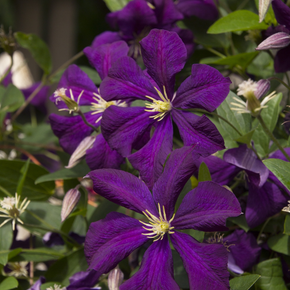
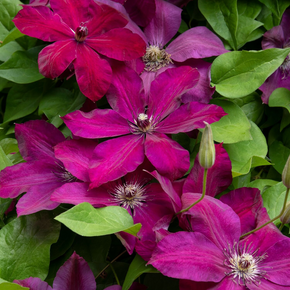
Zoom the image with the mouse
Blue Ribbons Bush Clematis - 1 Gallon
SKU:
1930205
UPC:
014949119181
$19.99
- Stunning non-vining, shrubby perennial bearing oversized, nodding, bell-shaped indigo blue flowers up to 2 inches across — up to three times larger than other integrifolia varieties
- After blooms fade, showy feathery silver seed heads develop and persist well into early winter for extended seasonal interest
- A true low-maintenance perennial in Pruning Group 3 — simply cut back hard in late winter and enjoy vigorous fresh growth every spring
- Hardy in USDA Zones 3–9, deer and rabbit resistant, and a proven pollinator magnet attracting bees, butterflies, and hummingbirds
Clematis integrifolia 'Blue Ribbons' Bush Clematis is a superb herbaceous perennial that breaks the mold of the typical climbing clematis, offering a compact, upright, shrubby form perfect for garden beds, mixed borders, and patio containers throughout Southern Oregon and Northern California landscapes. Bred from the European and Asian native species Clematis integrifolia, this exceptional cultivar produces an abundance of solitary, nodding, bell-shaped blooms in a rich indigo blue, each accented with creamy white stamens and delicately twisted sepals — and at up to 2 inches across, the flowers are dramatically larger and more prolific than similar bush clematis varieties. Blooming from late spring through summer with sporadic rebloom into early autumn, the floral show is followed by equally ornamental feathery silver seed heads that bring textural beauty to the garden through early winter. The foliage is lush and dense, with smooth, dark green, lance-shaped to ovate leaves that form an attractive mounding clump standing 12 to 18 inches tall and wide, making it ideal for the front to middle of perennial borders. As a Pruning Group 3 clematis, it is among the easiest to maintain, dying back to the ground each year and regenerating vigorously from the roots each spring. Resistant to deer and rabbits, tolerant of a wide range of soils, and a beloved pollinator plant, Blue Ribbons Bush Clematis is a standout four-season performer that rewards gardeners with elegance, color, and texture throughout the growing year.
Plant Description
Blue Ribbons Bush Clematis (Clematis integrifolia 'Blue Ribbons') is a herbaceous perennial in the buttercup family (Ranunculaceae) that forms a strong, upright, non-vining, shrubby clump. Unlike most clematis, it does not climb or produce tendrils. Its stems carry solitary, nodding, bell-shaped flowers with four slightly twisted, velvety indigo blue sepals and a contrasting center of creamy white anthers. Flowers can reach up to 2 inches in diameter — up to three times larger than those of typical Clematis integrifolia cultivars — and are produced in impressive numbers from late spring through summer. As blooms fade, they give way to highly ornamental, feathery silver-green seed heads (achenes) that are equally attractive and persist into early winter. The foliage consists of smooth, dark green, lanceolate to ovate leaves with entire (smooth) margins, arranged along upright stems that form a dense, mounding habit. The species name integrifolia is derived from Latin meaning "entire leaf," a reference to the undivided, unlobed character of the foliage. This plant is a selected cultivar introduced through Jelitto Seeds and has earned recognition as an outstanding improvement over older bush clematis forms.
Mature Size
| Attribute | Detail |
|---|---|
| Mature Height | 12 to 18 inches (some sources cite up to 3 feet in ideal conditions) |
| Mature Spread | 12 to 18 inches wide |
| Growth Rate | Medium |
| Growth Habit | Upright, mounding, dense; non-vining |
| Plant Type | Herbaceous perennial; dies back to ground each winter |
| Lifespan | Long-lived perennial; can be expected to perform reliably for 20+ years with proper care |
Hardiness Zones
Blue Ribbons Bush Clematis is exceptionally cold-hardy and is reliably perennial across a wide range of climates. It is rated for USDA Plant Hardiness Zones 3 through 9, making it well suited to the diverse conditions of Southern Oregon and Northern California — from mild coastal valleys to higher-elevation inland areas. Because it is herbaceous and dies back to the ground each winter, the crown and root system are naturally protected by soil, and a layer of mulch in Zone 3 or 4 provides additional cold protection. It thrives in the warm summers and mild winters typical of the Pacific Northwest and Northern California foothills.
Sunlight Requirements
For the best flowering performance, plant Blue Ribbons Bush Clematis in a location that receives full sun to partial shade, with a minimum of 6 hours of direct sunlight per day. Full sun exposure in the morning combined with some afternoon shade in the hottest inland climates can help protect the blooms and foliage from heat stress. In shadier conditions the plant tends to sprawl and lean more noticeably, which may require additional staking. In the Pacific Northwest and Northern California, a full sun position typically yields the most prolific and largest blooms. Following the classic clematis guideline of "head in the sun, feet in the shade" — where the root zone is shaded by mulch or low companion planting — produces the best results.
Soil and pH Preferences
Blue Ribbons Bush Clematis is adaptable to a range of soil types but performs best in rich, loamy, well-drained soil with high organic matter content. It prefers consistent moisture but will not tolerate waterlogged or poorly draining conditions, which can lead to root rot. Amending planting beds with compost or well-rotted organic matter before planting greatly improves both drainage and fertility. In terms of pH, this plant is quite flexible — it tolerates acidic, neutral, and slightly alkaline soils (roughly pH 6.0 to 7.5), with neutral to slightly alkaline conditions considered optimal. It is also noted for tolerance of black walnut toxicity, which can be a limiting factor for many garden plants in regions where black walnut trees are present.
Watering Guide
Water Blue Ribbons Bush Clematis regularly, particularly during the establishment period in the first growing season and during dry summer spells. The goal is to maintain evenly moist — but never waterlogged — soil throughout the growing season. Deep, infrequent watering is preferred over frequent shallow watering, as it encourages deep root development and greater drought resilience. Once established, the plant shows reasonable drought tolerance but will benefit from supplemental irrigation during extended dry periods, especially in the warmer inland climates of Southern Oregon and Northern California. Avoid overhead watering when possible, as wet foliage can promote fungal diseases such as powdery mildew. A 2- to 3-inch layer of organic mulch around the root zone helps retain soil moisture, moderate soil temperature, and reduce watering frequency.
Fertilizing
Feed Blue Ribbons Bush Clematis in early spring as new growth emerges from the ground. A balanced, slow-release granular fertilizer (such as a 10-10-10 or similar formulation) worked lightly into the soil around the root zone is an excellent choice for supporting healthy foliage and robust flowering. For extended bloom production, a supplemental application of a fertilizer higher in potassium (the third number in the N-P-K ratio) can be applied in late spring to early summer when buds are forming. Avoid high-nitrogen fertilizers, which promote lush leafy growth at the expense of flowers. Incorporating compost into the soil at planting time and as an annual top dressing reduces the need for synthetic fertilizer inputs. Do not fertilize in late summer or fall, as this can stimulate tender new growth that is vulnerable to cold damage.
Pruning and Maintenance
Blue Ribbons Bush Clematis belongs to Pruning Group 3 (also called Pruning Type C or Hard Pruning Group), which is the simplest pruning group to manage. Because it blooms on new wood produced each growing season, the entire plant can be cut back hard to approximately 6 inches above ground level in late winter or very early spring, just as the lowest buds begin to swell. This hard annual pruning encourages vigorous new growth, maximizes flower size and quantity, and keeps the plant tidy and well-shaped. There is no need to worry about accidentally removing next year's blooms. During the growing season, remove any dead or damaged stems as needed. Because the stems can become somewhat lax and sprawling — especially in partial shade — light staking with a grow-through support ring or bamboo canes placed early in the season can keep the plant looking its best. No deadheading is required; in fact, allowing spent blooms to mature produces the prized ornamental seed heads.
Planting Instructions
- Choose a site with full sun to partial shade and well-drained soil. Avoid low-lying areas where water pools after rain.
- Prepare the planting bed by digging in 2 to 3 inches of compost to improve soil structure, drainage, and fertility.
- Dig a hole slightly wider and deeper than the root ball. Set the plant so the crown sits approximately 2 to 3 inches below the soil surface — slightly deeper than it was in the nursery container — to protect the crown and encourage additional stem development.
- Space plants approximately 18 to 24 inches apart from one another and from neighboring plants to allow adequate air circulation and room for mature spread.
- Backfill with amended soil, firming gently around the roots to eliminate air pockets. Water thoroughly at planting.
- Apply a 2- to 3-inch layer of organic mulch (bark chips, straw, or shredded leaves) around the root zone, keeping mulch a few inches away from the crown to prevent rot.
- Consider placing a grow-through support hoop or ring at the time of planting to provide unobtrusive stem support as the plant grows.
- Water regularly throughout the first growing season to ensure strong root establishment before winter dormancy.
Seasonal Interest
| Season | What to Expect |
|---|---|
| Spring | Fresh green stems and foliage emerge rapidly from the crown following hard pruning. Buds develop on new growth, with the earliest blooms appearing in late spring. |
| Summer | Peak bloom period with a profusion of large, indigo blue, nodding bell-shaped flowers. Sporadic rebloom continues through summer into early fall. |
| Fall | Flowers transition to highly ornamental feathery silver seed heads that add texture and sparkle to the autumn garden. |
| Winter | Seed heads persist into early winter before the plant fully dies back to the ground. The root system remains dormant and fully hardy. |
Landscape Uses
Blue Ribbons Bush Clematis is a versatile performer in a wide range of landscape settings. Its compact, mounding form and non-climbing habit open up design possibilities beyond the trellis or fence:
- Front to mid-border perennial: Its tidy 12–18-inch height makes it ideal at the front or middle of mixed perennial borders where its bold indigo blooms provide a focal point.
- Cottage, rock, or Asian-style gardens: The romantic nodding flowers and naturalistic habit suit informal and naturalistic garden styles beautifully.
- Mass planting: Planted in drifts of three or more, it creates a striking carpet of blue in summer that few other perennials can match.
- Container gardening: Excellent in patio pots and outdoor containers, particularly as the "filler" element in a thriller-filler-spiller combination.
- Walkway edging: The low, spreading habit provides attractive, soft edging along pathways without becoming invasive.
- Pollinator garden: A superb addition to any garden designed to support bees, butterflies, and hummingbirds.
- Meadow planting: Works well naturalized in informal meadow-style plantings where it can weave through neighboring plants for support.
Companion Plants
Blue Ribbons Bush Clematis pairs beautifully with plants that share its preference for full sun to part shade and well-drained, organically rich soil. Consider these companion combinations:
- Roses: The indigo blue of the flowers creates a striking contrast against pink, red, or white rose blooms, and both share similar soil and sun requirements.
- Peonies: Overlapping bloom times in late spring create a lush, romantic combination in cottage garden settings.
- Salvia and Catmint (Nepeta): Fellow blue- and purple-toned perennials that reinforce the cool-toned color palette and attract the same pollinators.
- Ornamental grasses: Fine-textured grasses provide a neutral foil to the bold flowers and can also lend physical support to the lax stems.
- Alliums: The spherical purple flower heads of ornamental onions complement the bell-shaped clematis blooms and extend the season of interest.
- Coneflowers (Echinacea) and Black-eyed Susans (Rudbeckia): Warm-toned companions that create vibrant contrast in late summer when Blue Ribbons continues to bloom.
- Sturdy shrubs: When planted near low mounding shrubs such as dwarf spirea or potentilla, the clematis can weave through their branches for natural support while adding color.
Pests and Diseases
Blue Ribbons Bush Clematis is generally a healthy, robust perennial with few serious pest or disease problems. Being aware of the following issues allows for early intervention:
- Aphids: Small soft-bodied insects that cluster on new growth and buds. Dislodge with a strong spray of water or treat with insecticidal soap or neem oil.
- Spider mites: More common in hot, dry conditions. Symptoms include fine webbing and stippled foliage. Neem oil or horticultural oil sprays are effective organic controls.
- Scale insects: Armored and soft scales can occasionally appear. Treat with horticultural oil when scales are in the crawler stage.
- Earwigs and whiteflies: Occasional minor pests; typically manageable with good garden sanitation and organic controls.
- Powdery mildew: A fungal disease that appears as a white powdery coating on leaves, most common in conditions of poor air circulation and inconsistent moisture. Prevent by spacing plants adequately, avoiding overhead watering, and removing affected foliage promptly.
- Rust and fungal leaf spots: Can appear during wet seasons. Good air circulation and avoiding overhead irrigation reduce risk. Remove and dispose of affected plant material.
- Stem cankers: Rare but possible; promptly remove any affected stems and disinfect cutting tools between cuts.
Deer and rabbits generally leave this plant alone, making it a reliable choice in areas where wildlife browsing is a concern.
Wildlife Value
Blue Ribbons Bush Clematis is an outstanding plant for supporting local wildlife and pollinators throughout the growing season:
- Bees: Both native bees and honey bees are strongly attracted to the open, bell-shaped flowers, which offer accessible nectar and pollen.
- Butterflies: The blooms serve as a reliable nectar source for numerous butterfly species during the summer months.
- Hummingbirds: The tubular, bell-shaped flower form and indigo coloration are highly attractive to hummingbirds, making this a valuable addition to any hummingbird garden.
- Songbirds: The feathery seed heads that persist into fall and early winter provide texture and potential nesting material, and may attract seed-gleaning songbirds.
- Deer and rabbit resistant: The plant's natural compounds make it unpalatable to deer and rabbits, so it provides beauty without becoming a target for browsing wildlife.
Container Growing
Blue Ribbons Bush Clematis adapts well to life in outdoor pots and patio containers, making it an excellent choice for gardeners with limited ground space or those who want to add color to patios, decks, and entryways. Choose a container that is at least 12 to 16 inches in diameter with adequate drainage holes. Use a high-quality, well-draining potting mix amended with perlite and compost. Container-grown plants will require more frequent watering than those planted in the ground — check soil moisture every 1 to 2 days in warm weather and water deeply when the top inch of soil feels dry. Fertilize container plants with a balanced slow-release fertilizer at the start of the season, supplementing with a liquid fertilizer every 2 to 4 weeks during peak bloom periods. A small grow-through support hoop or a few bamboo canes can keep the plant tidy and upright in a container. In colder climates, move containers to a sheltered location or unheated garage over winter to protect the root zone from hard freezes. Repot every 2 to 3 years to refresh soil and accommodate root growth.
Toxicity and Safety
Like all members of the Ranunculaceae (buttercup) family, Clematis integrifolia 'Blue Ribbons' contains protoanemonin, a toxic compound found in the flowers, leaves, and sap. Gardeners and pet owners should be aware of the following:
- Toxic to pets: Ingestion by dogs, cats, or horses can cause salivation, vomiting, diarrhea, and mouth distress. Keep pets away from the plant and contact a veterinarian immediately if ingestion is suspected.
- Toxic to humans: Eating any part of the plant can cause severe mouth pain, ulcers, dizziness, confusion, and in rare cases more serious symptoms. Fatalities are rare due to the intensely bitter taste, which typically discourages consumption. Keep away from small children.
- Skin irritant: The sap can cause contact dermatitis in sensitive individuals, resulting in skin redness and a burning sensation. Always wear gardening gloves when pruning or handling broken stems, and wash hands thoroughly after contact.
- Eye and mucous membrane irritant: Avoid touching eyes or face after handling the plant without washing hands first.
Propagation
Blue Ribbons Bush Clematis can be propagated by several methods, though named cultivar characteristics are best preserved through vegetative propagation:
- Stem cuttings: Take softwood stem cuttings in early spring or semi-hardwood cuttings in late summer. Each cutting should be 4 to 6 inches long with at least one pair of leaves. Remove lower leaves, dip the cut end in rooting hormone, and insert into a pot filled with a moistened mix of perlite and potting soil. Cover with a clear plastic bag to maintain humidity and place in a warm, bright location out of direct sunlight. Roots typically develop within 4 to 6 weeks.
- Division: Established clumps can be divided in early spring as new growth emerges. Carefully dig up the root mass and separate into sections, each with healthy roots and at least one growing point. Replant immediately and water well.
- Layering: In early spring or late summer, bend a low-growing stem to the ground, nick the stem slightly, and bury a section 2 to 3 inches deep while leaving the growing tip exposed. Pin in place with a U-shaped wire. Once roots develop (typically 6 to 8 weeks), sever the new plant from the parent and transplant.
- Seed: Seeds can be sown but germination may be slow and results will be variable, potentially not matching the parent cultivar's characteristics. Seed propagation is best reserved for species plants rather than named cultivars.
- Stunning non-vining, shrubby perennial bearing oversized, nodding, bell-shaped indigo blue flowers up to 2 inches across — up to three times larger than other integrifolia varieties
- After blooms fade, showy feathery silver seed heads develop and persist well into early winter for extended seasonal interest
- A true low-maintenance perennial in Pruning Group 3 — simply cut back hard in late winter and enjoy vigorous fresh growth every spring
- Hardy in USDA Zones 3–9, deer and rabbit resistant, and a proven pollinator magnet attracting bees, butterflies, and hummingbirds
Clematis integrifolia 'Blue Ribbons' Bush Clematis is a superb herbaceous perennial that breaks the mold of the typical climbing clematis, offering a compact, upright, shrubby form perfect for garden beds, mixed borders, and patio containers throughout Southern Oregon and Northern California landscapes. Bred from the European and Asian native species Clematis integrifolia, this exceptional cultivar produces an abundance of solitary, nodding, bell-shaped blooms in a rich indigo blue, each accented with creamy white stamens and delicately twisted sepals — and at up to 2 inches across, the flowers are dramatically larger and more prolific than similar bush clematis varieties. Blooming from late spring through summer with sporadic rebloom into early autumn, the floral show is followed by equally ornamental feathery silver seed heads that bring textural beauty to the garden through early winter. The foliage is lush and dense, with smooth, dark green, lance-shaped to ovate leaves that form an attractive mounding clump standing 12 to 18 inches tall and wide, making it ideal for the front to middle of perennial borders. As a Pruning Group 3 clematis, it is among the easiest to maintain, dying back to the ground each year and regenerating vigorously from the roots each spring. Resistant to deer and rabbits, tolerant of a wide range of soils, and a beloved pollinator plant, Blue Ribbons Bush Clematis is a standout four-season performer that rewards gardeners with elegance, color, and texture throughout the growing year.
Plant Description
Blue Ribbons Bush Clematis (Clematis integrifolia 'Blue Ribbons') is a herbaceous perennial in the buttercup family (Ranunculaceae) that forms a strong, upright, non-vining, shrubby clump. Unlike most clematis, it does not climb or produce tendrils. Its stems carry solitary, nodding, bell-shaped flowers with four slightly twisted, velvety indigo blue sepals and a contrasting center of creamy white anthers. Flowers can reach up to 2 inches in diameter — up to three times larger than those of typical Clematis integrifolia cultivars — and are produced in impressive numbers from late spring through summer. As blooms fade, they give way to highly ornamental, feathery silver-green seed heads (achenes) that are equally attractive and persist into early winter. The foliage consists of smooth, dark green, lanceolate to ovate leaves with entire (smooth) margins, arranged along upright stems that form a dense, mounding habit. The species name integrifolia is derived from Latin meaning "entire leaf," a reference to the undivided, unlobed character of the foliage. This plant is a selected cultivar introduced through Jelitto Seeds and has earned recognition as an outstanding improvement over older bush clematis forms.
Mature Size
| Attribute | Detail |
|---|---|
| Mature Height | 12 to 18 inches (some sources cite up to 3 feet in ideal conditions) |
| Mature Spread | 12 to 18 inches wide |
| Growth Rate | Medium |
| Growth Habit | Upright, mounding, dense; non-vining |
| Plant Type | Herbaceous perennial; dies back to ground each winter |
| Lifespan | Long-lived perennial; can be expected to perform reliably for 20+ years with proper care |
Hardiness Zones
Blue Ribbons Bush Clematis is exceptionally cold-hardy and is reliably perennial across a wide range of climates. It is rated for USDA Plant Hardiness Zones 3 through 9, making it well suited to the diverse conditions of Southern Oregon and Northern California — from mild coastal valleys to higher-elevation inland areas. Because it is herbaceous and dies back to the ground each winter, the crown and root system are naturally protected by soil, and a layer of mulch in Zone 3 or 4 provides additional cold protection. It thrives in the warm summers and mild winters typical of the Pacific Northwest and Northern California foothills.
Sunlight Requirements
For the best flowering performance, plant Blue Ribbons Bush Clematis in a location that receives full sun to partial shade, with a minimum of 6 hours of direct sunlight per day. Full sun exposure in the morning combined with some afternoon shade in the hottest inland climates can help protect the blooms and foliage from heat stress. In shadier conditions the plant tends to sprawl and lean more noticeably, which may require additional staking. In the Pacific Northwest and Northern California, a full sun position typically yields the most prolific and largest blooms. Following the classic clematis guideline of "head in the sun, feet in the shade" — where the root zone is shaded by mulch or low companion planting — produces the best results.
Soil and pH Preferences
Blue Ribbons Bush Clematis is adaptable to a range of soil types but performs best in rich, loamy, well-drained soil with high organic matter content. It prefers consistent moisture but will not tolerate waterlogged or poorly draining conditions, which can lead to root rot. Amending planting beds with compost or well-rotted organic matter before planting greatly improves both drainage and fertility. In terms of pH, this plant is quite flexible — it tolerates acidic, neutral, and slightly alkaline soils (roughly pH 6.0 to 7.5), with neutral to slightly alkaline conditions considered optimal. It is also noted for tolerance of black walnut toxicity, which can be a limiting factor for many garden plants in regions where black walnut trees are present.
Watering Guide
Water Blue Ribbons Bush Clematis regularly, particularly during the establishment period in the first growing season and during dry summer spells. The goal is to maintain evenly moist — but never waterlogged — soil throughout the growing season. Deep, infrequent watering is preferred over frequent shallow watering, as it encourages deep root development and greater drought resilience. Once established, the plant shows reasonable drought tolerance but will benefit from supplemental irrigation during extended dry periods, especially in the warmer inland climates of Southern Oregon and Northern California. Avoid overhead watering when possible, as wet foliage can promote fungal diseases such as powdery mildew. A 2- to 3-inch layer of organic mulch around the root zone helps retain soil moisture, moderate soil temperature, and reduce watering frequency.
Fertilizing
Feed Blue Ribbons Bush Clematis in early spring as new growth emerges from the ground. A balanced, slow-release granular fertilizer (such as a 10-10-10 or similar formulation) worked lightly into the soil around the root zone is an excellent choice for supporting healthy foliage and robust flowering. For extended bloom production, a supplemental application of a fertilizer higher in potassium (the third number in the N-P-K ratio) can be applied in late spring to early summer when buds are forming. Avoid high-nitrogen fertilizers, which promote lush leafy growth at the expense of flowers. Incorporating compost into the soil at planting time and as an annual top dressing reduces the need for synthetic fertilizer inputs. Do not fertilize in late summer or fall, as this can stimulate tender new growth that is vulnerable to cold damage.
Pruning and Maintenance
Blue Ribbons Bush Clematis belongs to Pruning Group 3 (also called Pruning Type C or Hard Pruning Group), which is the simplest pruning group to manage. Because it blooms on new wood produced each growing season, the entire plant can be cut back hard to approximately 6 inches above ground level in late winter or very early spring, just as the lowest buds begin to swell. This hard annual pruning encourages vigorous new growth, maximizes flower size and quantity, and keeps the plant tidy and well-shaped. There is no need to worry about accidentally removing next year's blooms. During the growing season, remove any dead or damaged stems as needed. Because the stems can become somewhat lax and sprawling — especially in partial shade — light staking with a grow-through support ring or bamboo canes placed early in the season can keep the plant looking its best. No deadheading is required; in fact, allowing spent blooms to mature produces the prized ornamental seed heads.
Planting Instructions
- Choose a site with full sun to partial shade and well-drained soil. Avoid low-lying areas where water pools after rain.
- Prepare the planting bed by digging in 2 to 3 inches of compost to improve soil structure, drainage, and fertility.
- Dig a hole slightly wider and deeper than the root ball. Set the plant so the crown sits approximately 2 to 3 inches below the soil surface — slightly deeper than it was in the nursery container — to protect the crown and encourage additional stem development.
- Space plants approximately 18 to 24 inches apart from one another and from neighboring plants to allow adequate air circulation and room for mature spread.
- Backfill with amended soil, firming gently around the roots to eliminate air pockets. Water thoroughly at planting.
- Apply a 2- to 3-inch layer of organic mulch (bark chips, straw, or shredded leaves) around the root zone, keeping mulch a few inches away from the crown to prevent rot.
- Consider placing a grow-through support hoop or ring at the time of planting to provide unobtrusive stem support as the plant grows.
- Water regularly throughout the first growing season to ensure strong root establishment before winter dormancy.
Seasonal Interest
| Season | What to Expect |
|---|---|
| Spring | Fresh green stems and foliage emerge rapidly from the crown following hard pruning. Buds develop on new growth, with the earliest blooms appearing in late spring. |
| Summer | Peak bloom period with a profusion of large, indigo blue, nodding bell-shaped flowers. Sporadic rebloom continues through summer into early fall. |
| Fall | Flowers transition to highly ornamental feathery silver seed heads that add texture and sparkle to the autumn garden. |
| Winter | Seed heads persist into early winter before the plant fully dies back to the ground. The root system remains dormant and fully hardy. |
Landscape Uses
Blue Ribbons Bush Clematis is a versatile performer in a wide range of landscape settings. Its compact, mounding form and non-climbing habit open up design possibilities beyond the trellis or fence:
- Front to mid-border perennial: Its tidy 12–18-inch height makes it ideal at the front or middle of mixed perennial borders where its bold indigo blooms provide a focal point.
- Cottage, rock, or Asian-style gardens: The romantic nodding flowers and naturalistic habit suit informal and naturalistic garden styles beautifully.
- Mass planting: Planted in drifts of three or more, it creates a striking carpet of blue in summer that few other perennials can match.
- Container gardening: Excellent in patio pots and outdoor containers, particularly as the "filler" element in a thriller-filler-spiller combination.
- Walkway edging: The low, spreading habit provides attractive, soft edging along pathways without becoming invasive.
- Pollinator garden: A superb addition to any garden designed to support bees, butterflies, and hummingbirds.
- Meadow planting: Works well naturalized in informal meadow-style plantings where it can weave through neighboring plants for support.
Companion Plants
Blue Ribbons Bush Clematis pairs beautifully with plants that share its preference for full sun to part shade and well-drained, organically rich soil. Consider these companion combinations:
- Roses: The indigo blue of the flowers creates a striking contrast against pink, red, or white rose blooms, and both share similar soil and sun requirements.
- Peonies: Overlapping bloom times in late spring create a lush, romantic combination in cottage garden settings.
- Salvia and Catmint (Nepeta): Fellow blue- and purple-toned perennials that reinforce the cool-toned color palette and attract the same pollinators.
- Ornamental grasses: Fine-textured grasses provide a neutral foil to the bold flowers and can also lend physical support to the lax stems.
- Alliums: The spherical purple flower heads of ornamental onions complement the bell-shaped clematis blooms and extend the season of interest.
- Coneflowers (Echinacea) and Black-eyed Susans (Rudbeckia): Warm-toned companions that create vibrant contrast in late summer when Blue Ribbons continues to bloom.
- Sturdy shrubs: When planted near low mounding shrubs such as dwarf spirea or potentilla, the clematis can weave through their branches for natural support while adding color.
Pests and Diseases
Blue Ribbons Bush Clematis is generally a healthy, robust perennial with few serious pest or disease problems. Being aware of the following issues allows for early intervention:
- Aphids: Small soft-bodied insects that cluster on new growth and buds. Dislodge with a strong spray of water or treat with insecticidal soap or neem oil.
- Spider mites: More common in hot, dry conditions. Symptoms include fine webbing and stippled foliage. Neem oil or horticultural oil sprays are effective organic controls.
- Scale insects: Armored and soft scales can occasionally appear. Treat with horticultural oil when scales are in the crawler stage.
- Earwigs and whiteflies: Occasional minor pests; typically manageable with good garden sanitation and organic controls.
- Powdery mildew: A fungal disease that appears as a white powdery coating on leaves, most common in conditions of poor air circulation and inconsistent moisture. Prevent by spacing plants adequately, avoiding overhead watering, and removing affected foliage promptly.
- Rust and fungal leaf spots: Can appear during wet seasons. Good air circulation and avoiding overhead irrigation reduce risk. Remove and dispose of affected plant material.
- Stem cankers: Rare but possible; promptly remove any affected stems and disinfect cutting tools between cuts.
Deer and rabbits generally leave this plant alone, making it a reliable choice in areas where wildlife browsing is a concern.
Wildlife Value
Blue Ribbons Bush Clematis is an outstanding plant for supporting local wildlife and pollinators throughout the growing season:
- Bees: Both native bees and honey bees are strongly attracted to the open, bell-shaped flowers, which offer accessible nectar and pollen.
- Butterflies: The blooms serve as a reliable nectar source for numerous butterfly species during the summer months.
- Hummingbirds: The tubular, bell-shaped flower form and indigo coloration are highly attractive to hummingbirds, making this a valuable addition to any hummingbird garden.
- Songbirds: The feathery seed heads that persist into fall and early winter provide texture and potential nesting material, and may attract seed-gleaning songbirds.
- Deer and rabbit resistant: The plant's natural compounds make it unpalatable to deer and rabbits, so it provides beauty without becoming a target for browsing wildlife.
Container Growing
Blue Ribbons Bush Clematis adapts well to life in outdoor pots and patio containers, making it an excellent choice for gardeners with limited ground space or those who want to add color to patios, decks, and entryways. Choose a container that is at least 12 to 16 inches in diameter with adequate drainage holes. Use a high-quality, well-draining potting mix amended with perlite and compost. Container-grown plants will require more frequent watering than those planted in the ground — check soil moisture every 1 to 2 days in warm weather and water deeply when the top inch of soil feels dry. Fertilize container plants with a balanced slow-release fertilizer at the start of the season, supplementing with a liquid fertilizer every 2 to 4 weeks during peak bloom periods. A small grow-through support hoop or a few bamboo canes can keep the plant tidy and upright in a container. In colder climates, move containers to a sheltered location or unheated garage over winter to protect the root zone from hard freezes. Repot every 2 to 3 years to refresh soil and accommodate root growth.
Toxicity and Safety
Like all members of the Ranunculaceae (buttercup) family, Clematis integrifolia 'Blue Ribbons' contains protoanemonin, a toxic compound found in the flowers, leaves, and sap. Gardeners and pet owners should be aware of the following:
- Toxic to pets: Ingestion by dogs, cats, or horses can cause salivation, vomiting, diarrhea, and mouth distress. Keep pets away from the plant and contact a veterinarian immediately if ingestion is suspected.
- Toxic to humans: Eating any part of the plant can cause severe mouth pain, ulcers, dizziness, confusion, and in rare cases more serious symptoms. Fatalities are rare due to the intensely bitter taste, which typically discourages consumption. Keep away from small children.
- Skin irritant: The sap can cause contact dermatitis in sensitive individuals, resulting in skin redness and a burning sensation. Always wear gardening gloves when pruning or handling broken stems, and wash hands thoroughly after contact.
- Eye and mucous membrane irritant: Avoid touching eyes or face after handling the plant without washing hands first.
Propagation
Blue Ribbons Bush Clematis can be propagated by several methods, though named cultivar characteristics are best preserved through vegetative propagation:
- Stem cuttings: Take softwood stem cuttings in early spring or semi-hardwood cuttings in late summer. Each cutting should be 4 to 6 inches long with at least one pair of leaves. Remove lower leaves, dip the cut end in rooting hormone, and insert into a pot filled with a moistened mix of perlite and potting soil. Cover with a clear plastic bag to maintain humidity and place in a warm, bright location out of direct sunlight. Roots typically develop within 4 to 6 weeks.
- Division: Established clumps can be divided in early spring as new growth emerges. Carefully dig up the root mass and separate into sections, each with healthy roots and at least one growing point. Replant immediately and water well.
- Layering: In early spring or late summer, bend a low-growing stem to the ground, nick the stem slightly, and bury a section 2 to 3 inches deep while leaving the growing tip exposed. Pin in place with a U-shaped wire. Once roots develop (typically 6 to 8 weeks), sever the new plant from the parent and transplant.
- Seed: Seeds can be sown but germination may be slow and results will be variable, potentially not matching the parent cultivar's characteristics. Seed propagation is best reserved for species plants rather than named cultivars.
Related Products