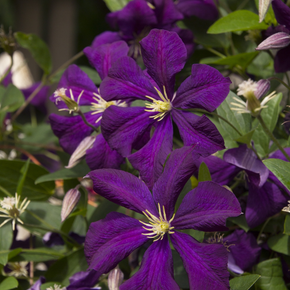
Zoom the image with the mouse
Blue Light Clematis - 1 Gallon
SKU:
2056635
$21.99
- Award-winning, large violet-blue to pale blue flowers measure 5 to 6 inches wide and bloom as stunning doubles in spring and charming semi-doubles in fall
- Fast-growing deciduous vine reaching 6 to 8 feet tall in a compact 3 to 4 foot spread, well-suited to small spaces, containers, and espalier
- Exceptional disease and pest resistance with black walnut tolerance, making it one of the easiest and most reliable clematis varieties to grow
- Hardy across USDA Zones 4 through 9 with prolific twice-yearly flowering and excellent performance as a cut flower for fresh arrangements
Blue Light Clematis (Clematis hybrid 'Vanso') is a delightful, award-winning sport of the classic Clematis 'Mrs. Cholmondeley,' celebrated for its extraordinary, large violet-blue to pale blue flowers that easily measure 5 to 6 inches wide. The distinctive, prolific blooms are exquisite full doubles in spring and charming semi-doubles in fall, making this vine one of the most rewarding twice-blooming clematis available. Growing quickly to 6 to 8 feet tall with a compact 3 to 4 foot spread with support, it is exceptionally well-suited to small spaces, containers, espalier on walls and fences, and pairing with climbing roses. Its excellent disease and pest resistance, combined with black walnut tolerance, make it one of the most reliable and easy-care clematis for home gardeners across USDA Zones 4 through 9 who want spectacular results with minimal effort.
Plant Details
| Attribute | Details |
|---|---|
| Botanical Name | Clematis hybrid 'Vanso' |
| Plant Type | Deciduous Vine |
| Flower Color | Violet-blue to pale blue |
| Flower Form | Full double in spring; semi-double in fall |
| Flower Size | 5-6 inches wide |
| Bloom Time | Spring and fall |
| Growth Rate | Fast |
| Growth Habit | Climbing (with support) |
| Mature Size | 6-8 ft. tall, 3-4 ft. wide |
| USDA Zones | 4 - 9 |
| Light | Full sun to partial sun |
| Water | Deeply when top inch of soil is dry |
| Special Features | Easy Care, Improved Pest and Disease Resistance, Fast Growing, Compact Form |
| Black Walnut Tolerant | Yes |
| Flower Attributes | Flowers for Cutting, Repeat Flowering, Showy Flowers |
The Spectacular Double Blooms
Blue Light Clematis produces two distinct types of flowers depending on the season, which is part of what makes it such a captivating garden plant. In spring, on the previous season's old wood, it produces breathtaking, full double flowers that look almost like powder-puff peony blooms, with numerous petals layered over each other in the classic violet-blue to pale blue tones. In fall, on new wood growth from the current season, it produces slightly smaller semi-double flowers that are equally beautiful but with a more refined, star-like form. After the petals fall, wispy, silvery seed heads remain on the plant for weeks, adding their own decorative dimension to the display.
Size and Growth Habit
Blue Light Clematis is notably more compact than many other large-flowered clematis varieties, reaching 6 to 8 feet tall while maintaining a narrow 3 to 4 foot spread with appropriate support. This more restrained habit makes it exceptionally well-suited to situations where larger, more vigorous clematis varieties would overwhelm the space. It climbs by twining its leaf petioles around support structures and benefits from a trellis, arbor, obelisk, or fence with narrow enough elements for the petioles to grasp. The compact form also makes it one of the few clematis varieties that performs genuinely well in large containers with an appropriate support structure.
Light Requirements
Blue Light Clematis thrives in full sun to partial sun. The classic clematis planting adage, "head in the sun, feet in the shade," applies here: ideally, the upper climbing stems and flowers should receive 6 or more hours of direct sunlight for the most prolific flowering and vibrant color, while the root zone is kept cool with mulch or low-growing companion plants. In very hot summer climates, some afternoon shade protection helps prevent flower color fading and extends the duration of individual bloom cycles.
Watering
Water Blue Light Clematis deeply when the top inch of soil feels dry. During the first growing season, water deeply and regularly to establish a strong, extensive root system. Once established, maintain consistent moisture without waterlogging. Mulching heavily around the root zone is one of the most beneficial practices for clematis, as it moderates soil temperature, retains consistent moisture, and keeps the root zone cool. Avoid allowing the soil to dry out completely during the growing season, as moisture stress can reduce flowering and increase susceptibility to clematis wilt.
Soil Requirements
Blue Light Clematis thrives in well-drained, lightly alkaline to neutral soil enriched with organic matter. Unlike many perennials that prefer acidic conditions, clematis generally performs best in neutral to slightly alkaline soils. Adding lime to acidic soils before planting can improve performance significantly. Rich, fertile, well-drained soils support the vigorous growth and prolific flowering this variety is known for. Heavy mulching of the root zone with 3 to 4 inches of compost or bark mulch after planting helps maintain the cool, moist root conditions that clematis requires.
Care and Maintenance
- Pruning group: Blue Light belongs to Pruning Group 2 (light pruning). In early spring, remove only dead or damaged stems and lightly trim back to a healthy pair of buds; avoid heavy cutting which removes the old wood that produces the spring double flowers.
- Root zone cooling: Mulch heavily around the base with 3-4 inches of bark mulch or plant low-growing companions to keep roots cool.
- Fertilizing: Feed regularly beginning in spring with a balanced fertilizer to support the two bloom cycles.
- Support: Provide a trellis, obelisk, or fence with elements narrow enough for the petioles to grasp; guide young stems as they begin to grow.
- Deadheading: Remove spent flowers after the spring bloom to encourage faster development of the fall bloom flush.
- Wilt monitoring: If clematis wilt occurs, cut affected stems back to healthy tissue at the base and the plant will typically resprout from the roots.
Landscape Uses
Blue Light Clematis is perhaps the most beautiful of all vines for training onto vertical trellis work. Its large, violet-blue double flowers belong in courtyards and around outdoor living spaces where the blossoms can be enjoyed up close. They are gorgeous spiraled up posts, columns, and obelisks. The plants can also be draped over walls and fences or used as groundcovers to cascade down banks and over retaining wall edges. In the Old World tradition, clematis are trained into the branches of host shrubs and small trees for a natural, romantic effect. Its compact habit makes it ideal for smaller gardens and container gardens where larger vines would overwhelm the space.
Companion Plants
| Plant | Why It Works |
|---|---|
| Rose (Rosa) | The classic pairing: climbing roses and clematis together create the ultimate romantic garden display, with the clematis weaving through and adorning the rose canes |
| Japanese Maple (Acer) | Delicate, colorful foliage provides a stunning living backdrop that highlights the blue flowers beautifully |
| Shasta Daisy (Chrysanthemum) | White daisy blooms at the clematis base provide crisp cool contrast and keep the root zone shaded |
| Salvia (Salvia) | Blue to purple flower spikes complement the violet-blue clematis blooms in a cool-toned summer display |
| Daylily (Hemerocallis) | Low-growing companion that shades the clematis root zone while providing warm-toned color at its feet |
Cut Flower Use
Blue Light Clematis produces excellent cut flowers, particularly during the spring flush of full double blooms. Harvest stems early in the morning when flowers are at their peak, cutting at a 45-degree angle and immediately placing in cool, clean water. The large, double blooms are show-stopping in arrangements and can last several days to a week in the vase with proper care. Even the wispy seed heads that follow flowering have decorative value in dried arrangements, adding a delicate, ethereal texture to autumn bouquets.
USDA Hardiness Zones
Blue Light Clematis is rated for USDA Zones 4 through 9. It reliably returns each spring from winter lows as cold as -30 degrees Fahrenheit in Zone 4, dying back to the ground or to the lowest healthy buds and re-emerging vigorously. In warmer zones through Zone 9, it retains some stem structure through winter, allowing the old wood to produce the spectacular spring double flower display. The spring double blooms are produced on the previous season's growth, which is why avoiding severe late-winter pruning is critical to preserving this variety's most dramatic floral display.
History and Background
Blue Light Clematis was selected by Frans Van Heasteert, a Boskoop nurseryman in Holland, as a sport of the venerable Clematis 'Mrs. Cholmondeley' (pronounced "Chumley"), a classic large-flowered hybrid that has been grown in English gardens for over a century. Blue Light retains the vigor and adaptability of its parent while offering significantly larger, more floriferous double blooms in an enchanting violet-blue to pale blue color palette. Clematis is often called the "Queen of Vines" because of its extraordinary flowers that have been continuously improved by breeders over decades. As a patented plant variety, asexual reproduction of Blue Light Clematis is prohibited under the Plant Patent Act.
- Award-winning, large violet-blue to pale blue flowers measure 5 to 6 inches wide and bloom as stunning doubles in spring and charming semi-doubles in fall
- Fast-growing deciduous vine reaching 6 to 8 feet tall in a compact 3 to 4 foot spread, well-suited to small spaces, containers, and espalier
- Exceptional disease and pest resistance with black walnut tolerance, making it one of the easiest and most reliable clematis varieties to grow
- Hardy across USDA Zones 4 through 9 with prolific twice-yearly flowering and excellent performance as a cut flower for fresh arrangements
Blue Light Clematis (Clematis hybrid 'Vanso') is a delightful, award-winning sport of the classic Clematis 'Mrs. Cholmondeley,' celebrated for its extraordinary, large violet-blue to pale blue flowers that easily measure 5 to 6 inches wide. The distinctive, prolific blooms are exquisite full doubles in spring and charming semi-doubles in fall, making this vine one of the most rewarding twice-blooming clematis available. Growing quickly to 6 to 8 feet tall with a compact 3 to 4 foot spread with support, it is exceptionally well-suited to small spaces, containers, espalier on walls and fences, and pairing with climbing roses. Its excellent disease and pest resistance, combined with black walnut tolerance, make it one of the most reliable and easy-care clematis for home gardeners across USDA Zones 4 through 9 who want spectacular results with minimal effort.
Plant Details
| Attribute | Details |
|---|---|
| Botanical Name | Clematis hybrid 'Vanso' |
| Plant Type | Deciduous Vine |
| Flower Color | Violet-blue to pale blue |
| Flower Form | Full double in spring; semi-double in fall |
| Flower Size | 5-6 inches wide |
| Bloom Time | Spring and fall |
| Growth Rate | Fast |
| Growth Habit | Climbing (with support) |
| Mature Size | 6-8 ft. tall, 3-4 ft. wide |
| USDA Zones | 4 - 9 |
| Light | Full sun to partial sun |
| Water | Deeply when top inch of soil is dry |
| Special Features | Easy Care, Improved Pest and Disease Resistance, Fast Growing, Compact Form |
| Black Walnut Tolerant | Yes |
| Flower Attributes | Flowers for Cutting, Repeat Flowering, Showy Flowers |
The Spectacular Double Blooms
Blue Light Clematis produces two distinct types of flowers depending on the season, which is part of what makes it such a captivating garden plant. In spring, on the previous season's old wood, it produces breathtaking, full double flowers that look almost like powder-puff peony blooms, with numerous petals layered over each other in the classic violet-blue to pale blue tones. In fall, on new wood growth from the current season, it produces slightly smaller semi-double flowers that are equally beautiful but with a more refined, star-like form. After the petals fall, wispy, silvery seed heads remain on the plant for weeks, adding their own decorative dimension to the display.
Size and Growth Habit
Blue Light Clematis is notably more compact than many other large-flowered clematis varieties, reaching 6 to 8 feet tall while maintaining a narrow 3 to 4 foot spread with appropriate support. This more restrained habit makes it exceptionally well-suited to situations where larger, more vigorous clematis varieties would overwhelm the space. It climbs by twining its leaf petioles around support structures and benefits from a trellis, arbor, obelisk, or fence with narrow enough elements for the petioles to grasp. The compact form also makes it one of the few clematis varieties that performs genuinely well in large containers with an appropriate support structure.
Light Requirements
Blue Light Clematis thrives in full sun to partial sun. The classic clematis planting adage, "head in the sun, feet in the shade," applies here: ideally, the upper climbing stems and flowers should receive 6 or more hours of direct sunlight for the most prolific flowering and vibrant color, while the root zone is kept cool with mulch or low-growing companion plants. In very hot summer climates, some afternoon shade protection helps prevent flower color fading and extends the duration of individual bloom cycles.
Watering
Water Blue Light Clematis deeply when the top inch of soil feels dry. During the first growing season, water deeply and regularly to establish a strong, extensive root system. Once established, maintain consistent moisture without waterlogging. Mulching heavily around the root zone is one of the most beneficial practices for clematis, as it moderates soil temperature, retains consistent moisture, and keeps the root zone cool. Avoid allowing the soil to dry out completely during the growing season, as moisture stress can reduce flowering and increase susceptibility to clematis wilt.
Soil Requirements
Blue Light Clematis thrives in well-drained, lightly alkaline to neutral soil enriched with organic matter. Unlike many perennials that prefer acidic conditions, clematis generally performs best in neutral to slightly alkaline soils. Adding lime to acidic soils before planting can improve performance significantly. Rich, fertile, well-drained soils support the vigorous growth and prolific flowering this variety is known for. Heavy mulching of the root zone with 3 to 4 inches of compost or bark mulch after planting helps maintain the cool, moist root conditions that clematis requires.
Care and Maintenance
- Pruning group: Blue Light belongs to Pruning Group 2 (light pruning). In early spring, remove only dead or damaged stems and lightly trim back to a healthy pair of buds; avoid heavy cutting which removes the old wood that produces the spring double flowers.
- Root zone cooling: Mulch heavily around the base with 3-4 inches of bark mulch or plant low-growing companions to keep roots cool.
- Fertilizing: Feed regularly beginning in spring with a balanced fertilizer to support the two bloom cycles.
- Support: Provide a trellis, obelisk, or fence with elements narrow enough for the petioles to grasp; guide young stems as they begin to grow.
- Deadheading: Remove spent flowers after the spring bloom to encourage faster development of the fall bloom flush.
- Wilt monitoring: If clematis wilt occurs, cut affected stems back to healthy tissue at the base and the plant will typically resprout from the roots.
Landscape Uses
Blue Light Clematis is perhaps the most beautiful of all vines for training onto vertical trellis work. Its large, violet-blue double flowers belong in courtyards and around outdoor living spaces where the blossoms can be enjoyed up close. They are gorgeous spiraled up posts, columns, and obelisks. The plants can also be draped over walls and fences or used as groundcovers to cascade down banks and over retaining wall edges. In the Old World tradition, clematis are trained into the branches of host shrubs and small trees for a natural, romantic effect. Its compact habit makes it ideal for smaller gardens and container gardens where larger vines would overwhelm the space.
Companion Plants
| Plant | Why It Works |
|---|---|
| Rose (Rosa) | The classic pairing: climbing roses and clematis together create the ultimate romantic garden display, with the clematis weaving through and adorning the rose canes |
| Japanese Maple (Acer) | Delicate, colorful foliage provides a stunning living backdrop that highlights the blue flowers beautifully |
| Shasta Daisy (Chrysanthemum) | White daisy blooms at the clematis base provide crisp cool contrast and keep the root zone shaded |
| Salvia (Salvia) | Blue to purple flower spikes complement the violet-blue clematis blooms in a cool-toned summer display |
| Daylily (Hemerocallis) | Low-growing companion that shades the clematis root zone while providing warm-toned color at its feet |
Cut Flower Use
Blue Light Clematis produces excellent cut flowers, particularly during the spring flush of full double blooms. Harvest stems early in the morning when flowers are at their peak, cutting at a 45-degree angle and immediately placing in cool, clean water. The large, double blooms are show-stopping in arrangements and can last several days to a week in the vase with proper care. Even the wispy seed heads that follow flowering have decorative value in dried arrangements, adding a delicate, ethereal texture to autumn bouquets.
USDA Hardiness Zones
Blue Light Clematis is rated for USDA Zones 4 through 9. It reliably returns each spring from winter lows as cold as -30 degrees Fahrenheit in Zone 4, dying back to the ground or to the lowest healthy buds and re-emerging vigorously. In warmer zones through Zone 9, it retains some stem structure through winter, allowing the old wood to produce the spectacular spring double flower display. The spring double blooms are produced on the previous season's growth, which is why avoiding severe late-winter pruning is critical to preserving this variety's most dramatic floral display.
History and Background
Blue Light Clematis was selected by Frans Van Heasteert, a Boskoop nurseryman in Holland, as a sport of the venerable Clematis 'Mrs. Cholmondeley' (pronounced "Chumley"), a classic large-flowered hybrid that has been grown in English gardens for over a century. Blue Light retains the vigor and adaptability of its parent while offering significantly larger, more floriferous double blooms in an enchanting violet-blue to pale blue color palette. Clematis is often called the "Queen of Vines" because of its extraordinary flowers that have been continuously improved by breeders over decades. As a patented plant variety, asexual reproduction of Blue Light Clematis is prohibited under the Plant Patent Act.
Related Products