


Zoom the image with the mouse
Jackman Superba Clematis
SKU:
1827525-P
UPC:
014949296981
$21.99 - $69.99
- Stunning deep velvety violet-purple blooms up to 5 inches across smother the vine from early summer through fall, making this one of the most floriferous large-flowered clematis available.
- A vigorous deciduous climbing vine reaching 10 to 12 feet tall, ideal for draping over trellises, arbors, fences, and pergolas with minimal maintenance once established.
- Hardy in USDA Zones 4 through 9, this time-tested garden classic has been a beloved landscape staple since its introduction in 1880 and returns reliably year after year.
- A proven pollinator magnet that draws bees, butterflies, and hummingbirds, while remaining resistant to browsing by deer and rabbits.
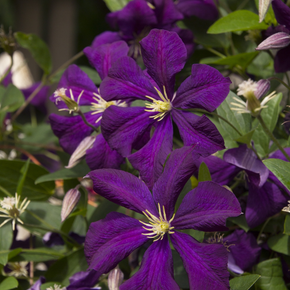
Clematis 'Jackmanii Superba' is the ultimate flowering vine for gardeners who crave bold, season-long color with surprisingly low effort. Considered an improved selection of the legendary Clematis x jackmanii, this deciduous perennial climber produces an exceptionally prolific display of large, rounded, velvety violet-purple flowers that measure up to 5 inches across, each featuring four to six broad, slightly overlapping tepals accented by a deeper reddish flush along the midrib and complemented by showy greenish-cream anthers. Blooming from early summer well into fall on vigorous new growth, the vine climbs quickly to 10 to 12 feet and covers itself so densely in flowers that the foliage is barely visible at peak bloom. After flowering, silky, ornamental seed heads extend the display into autumn. Hardy in USDA Zones 4 through 9 and low maintenance by nature, Clematis 'Jackmanii Superba' thrives in full sun to partial shade in fertile, moist, well-drained soil and is perfectly suited to Southern Oregon and Northern California landscapes where it can be trained up a trellis, pergola, fence, or arbor, or paired romantically with climbing roses and other summer-blooming perennials to create a lush, cottage-style garden statement.
Plant Description
Clematis 'Jackmanii Superba' is a deciduous perennial vine and a standout cultivar in the Late Large-Flowered Clematis group. It is considered a superior selection of the classic Clematis x jackmanii, offering more rounded, slightly larger, and more profusely produced blooms. The flowers are a rich, dark velvety violet-purple, typically 4 to 5 inches in diameter (some sources note up to 6 to 7 inches under ideal conditions), and are composed of four to six broad tepals that overlap slightly at the edges. Each tepal is accented by a deeper reddish-purple flush running along the central midrib, creating a striking two-tone effect, while the contrasting greenish-cream stamens add a bright focal point at the center. Flowers are held wide open and face outward, making the blooms highly visible throughout the growing season. After flowering, fluffy, silky seed heads form and provide additional ornamental interest well into autumn. The foliage consists of dark green, ovate to elliptical leaves arranged in pairs along the stems, with a smooth, slightly glossy surface. The plant climbs by twining its leaf stalks around any available support structure. This hybrid cultivar has graced gardens since 1880 and remains one of the most popular and widely grown clematis in the world.
Mature Size
| Attribute | Measurement |
|---|---|
| Height | 10 to 12 feet (approximately 3 to 3.7 meters) |
| Spread / Width | 2 to 4 feet (approximately 60 to 120 cm) |
| Recommended Spacing | 48 inches (approximately 120 cm) from other plants |
| Growth Rate | Vigorous; can put on several feet of new growth per season once established |
| Plant Type | Deciduous perennial climbing vine |
Hardiness and Climate Zones
Clematis 'Jackmanii Superba' is rated hardy in USDA Plant Hardiness Zones 4 through 9, making it well-suited to a wide range of climates including the mild winters of Southern Oregon and Northern California. It also performs well across a broad range of AHS Heat Zones (1 through 9). The plant is reliably perennial throughout this range, dying back to the ground or to its hard-pruned stems in winter and re-emerging vigorously each spring. In hotter inland climates, some afternoon shade during the peak of summer helps maintain flower quality and prevents heat stress. In colder zones, a generous layer of mulch applied over the root zone before winter provides additional protection and helps the plant break dormancy successfully in spring.
Sunlight Requirements
For the most prolific bloom display, plant Clematis 'Jackmanii Superba' in a location that receives full sun to partial shade, with a minimum of 6 hours of direct sunlight per day. The classic advice for clematis applies well here: keep the "head in the sun and the feet in the shade." This means the upper portions of the vine should receive ample sunlight to fuel flowering, while the root zone is kept cool and protected from direct sun. This can be achieved by planting low-growing perennials, ornamental grasses, or groundcovers around the base of the vine, or by placing flat stones or a layer of organic mulch over the root zone. In the warmer regions of Southern Oregon and Northern California, some afternoon shade is beneficial during the hottest summer months to prevent flower bleaching and excessive moisture loss.
Soil and pH Preferences
- Soil type: Prefers fertile, humus-rich loam but adapts to chalk, clay, and sandy soils as long as drainage is adequate.
- Drainage: Soil must be moist but well-drained. Clematis is very intolerant of waterlogged or consistently saturated soil, which rapidly leads to root rot and crown rot.
- Soil pH: Performs best in neutral to slightly alkaline soil, with a pH range of approximately 6.5 to 7.5. It can tolerate mildly acidic conditions but does not thrive in highly acidic soils.
- Soil amendment: Before planting, incorporate generous amounts of compost or well-rotted organic matter to improve soil structure, fertility, and moisture retention.
- Avoid: Heavy, compacted clay soils with poor drainage, and nutrient-poor, fast-draining sandy soils without organic matter amendment.
Watering Guide
Clematis 'Jackmanii Superba' requires consistent, moderate moisture throughout the growing season. Water deeply and thoroughly at the base of the plant so that moisture penetrates to the root zone, rather than applying light, frequent surface watering. Allow the top inch or so of soil to begin to dry slightly between waterings, but do not allow the root zone to dry out completely, especially during hot or windy weather. During periods of drought or extreme summer heat, supplemental watering is essential. Newly planted vines require more frequent attention to watering during their first growing season while the root system establishes. Avoid overhead watering, which can promote fungal diseases on the foliage. A 2 to 3 inch layer of organic mulch applied around the base of the plant (kept a few inches back from the crown) is highly recommended to help conserve soil moisture, moderate soil temperature, and reduce watering frequency.
Fertilizing
Clematis 'Jackmanii Superba' is a vigorous, heavy feeder that benefits from regular fertilization to support its rapid seasonal growth and prolific flower production. Begin feeding in spring as new growth emerges, applying a balanced slow-release granular fertilizer or a general-purpose flower fertilizer according to package directions. Monthly applications of a liquid fertilizer during the active growing season (spring through midsummer) will further encourage strong vine development. Switching to or supplementing with a low-nitrogen, high-potassium fertilizer (such as a tomato or bloom fertilizer) as the plant approaches its bloom period helps maximize flower production. Pause fertilizing while the plant is in full bloom to encourage the vine to direct its energy into maintaining flowers rather than pushing new vegetative growth. Discontinue all fertilizing in late summer to early fall to allow the plant to begin hardening off naturally for winter. Avoid over-fertilizing with high-nitrogen products, which will promote excessive leafy growth at the expense of blooms.
Pruning and Maintenance
Clematis 'Jackmanii Superba' belongs to Pruning Group 3 (sometimes called Hard Prune Group or Group C). Plants in this group flower exclusively on the current season's new growth, which means that hard pruning each late winter or early spring is not only safe but actively encouraged to produce the best bloom display. Follow these steps for ideal pruning:
- When to prune: Late winter to early spring, just before new growth begins, typically February through early March in Southern Oregon and Northern California.
- How hard to prune: Cut all stems back to a pair of strong, healthy leaf buds approximately 8 to 12 inches (20 to 30 cm) above ground level.
- Why hard pruning works: Because blooms form only on new wood produced in the current season, cutting back hard each year encourages the plant to push a large flush of vigorous new stems, maximizing the bloom coverage from top to bottom of the vine.
- Optional second pruning: A light trim after the first major flush of bloom can encourage a second wave of flowering in late summer to early fall.
- If unpruned: The vine will eventually become a tangled mass of older woody stems with flowers forming only at the very top, out of easy viewing range. Annual hard pruning prevents this.
- General maintenance: Remove dead or damaged stems at any time. Keep the trellis or support structure in good repair before new growth begins each season.
Planting Instructions
- Choose the right time: Plant in early spring or fall when temperatures are cool and conditions are less stressful for the plant. Mid-summer planting is possible but requires extra attention to watering and shade protection.
- Select the location: Choose a spot with at least 6 hours of sun, with access to a sturdy support structure such as a trellis, fence, arbor, or pergola.
- Prepare the soil: Dig a planting hole at least twice as wide and as deep as the root ball. Amend the excavated soil with compost or well-rotted organic matter to improve fertility and drainage.
- Plant deep: Set the crown of the plant 2 to 3 inches below the soil surface. Planting slightly deeper than the nursery pot level encourages the plant to produce additional shoots from below the soil surface and can help the plant recover if clematis wilt strikes the above-ground stems.
- Install support: Set up your trellis or other support before or at the time of planting to avoid disturbing the roots later. Gently train the existing stems toward the support using soft garden ties.
- Backfill and water: Fill in the hole with the amended soil, firming gently around the roots to eliminate air pockets. Water thoroughly immediately after planting.
- Mulch: Apply a 2 to 3 inch layer of organic mulch (bark chips, shredded leaves, or compost) around the base of the plant, keeping it a few inches away from the crown to prevent rot and discourage pests.
- Shade the roots: Plant low-growing companion plants, place flat stones, or use mulch to keep the root zone shaded and cool.
Bloom Season and Seasonal Interest
Clematis 'Jackmanii Superba' provides an exceptionally long season of ornamental interest. The first major flush of large, velvety violet-purple blooms typically opens in early to midsummer (June to July in most climates) and continues in waves through late summer into early fall (September to October). In favorable climates, such as the mild conditions of Southern Oregon and Northern California, bloom time can extend from as early as late May all the way through October. After the main flowering period, the vine produces attractive, feathery silky seed heads that catch the light and add texture and visual interest to the autumn garden. In winter, after the vine has died back, the bare framework or pruned stubs rest quietly until spring, when new growth emerges quickly and the cycle begins again. The combination of extended summer bloom, ornamental seed heads, and lush dark green foliage makes this a plant with something to offer from late spring through the first hard frost.
Landscape Uses
- Trellises and obelisks: One of the most classic and rewarding uses, allowing the vine to form a dramatic vertical column of purple flowers.
- Fences and walls: Easily trained along wooden, wire, or masonry supports to create a flowering privacy screen or wall feature.
- Arbors and pergolas: Perfectly suited to growing up and over structures where the blooms can be enjoyed from below.
- Through shrubs and roses: A time-honored cottage garden technique of allowing the vine to weave through the branches of robust shrubs or climbing roses, creating a layered, multi-textured display.
- Over old stumps or rock piles: The vine can be allowed to sprawl naturally over unsightly features in the landscape, covering them in lush foliage and blooms.
- As a groundcover: In areas where no vertical support is available, the vine can be allowed to cascade across a slope or bank.
- Cottage, informal, and traditional gardens: The rich purple flowers combine effortlessly with the romantic, lush planting style of these popular garden design approaches.
- Large containers: With a sturdy support structure and consistent moisture and fertilizing, 'Jackmanii Superba' can be grown successfully in a large patio container.
Companion Plants
Clematis 'Jackmanii Superba' is a highly versatile companion in the garden. Its rich violet-purple blooms pair beautifully with a wide range of flowering plants and foliage. Consider the following combinations:
- Climbing roses: The classic pairing. White, pink, or red climbing roses provide structural support and stunning color contrast. The clematis threads through the rose canes, filling gaps and extending the flowering season.
- Other clematis: Pairing with early-blooming or different-colored clematis varieties extends the overall display through more of the year.
- Peonies: Share similar soil and sun preferences; their large, lush blooms complement the clematis flowers in early summer.
- Roses (shrub types): Purple clematis blooms are striking against the warm tones of orange, coral, and yellow shrub roses.
- Salvia and nepeta: Low-growing blue and purple salvias and catmints planted at the base of the clematis echo the color theme while shading the root zone.
- Ornamental grasses: Fine-textured grasses provide root shade and contrast beautifully with the bold clematis blooms.
- Lavender: A fragrant, silvery-gray companion that keeps the root zone shaded and the overall planting cohesive in color.
- Hostas or ferns: Planted at the base to shade roots and provide lush, contrasting foliage texture in shadier spots.
Pests and Diseases
Clematis 'Jackmanii Superba' is generally a robust and resilient plant, but there are a few pests and diseases to be aware of:
- Clematis wilt (Phoma clematidina): The most serious disease of large-flowered clematis. Entire stems may suddenly wilt, blacken, and die, often at the height of the growing season. Remove and dispose of all affected stems immediately, cutting back to healthy tissue or to ground level. Because 'Jackmanii Superba' is planted deeply and belongs to Pruning Group 3, it almost always recovers from wilt by re-sprouting from below ground. Improved air circulation and avoiding overhead watering helps minimize risk.
- Powdery mildew: A fungal disease that causes a white to grayish powder on foliage, especially during warm days and cool nights. Improve air circulation, avoid overhead watering, and treat with a sulfur-based or copper fungicide if needed.
- Leaf spot and rust: Fungal leaf spots may appear in wet conditions. Remove and discard affected foliage and avoid wetting the leaves when watering.
- Aphids: May cluster on new growth in spring. Dislodge with a strong jet of water or treat with insecticidal soap or neem oil.
- Spider mites: More common in hot, dry conditions. Treat with insecticidal soap or neem oil and ensure adequate soil moisture.
- Vine weevils, slugs, and snails: Can damage young growth at the base of the plant. Use physical barriers or organic slug controls as needed.
- Scale insects and earwigs: Occasional pests; monitor and treat as needed with appropriate organic controls.
- Root rot: Caused by persistently waterlogged soil. Prevented by ensuring excellent drainage and not overwatering.
Important toxicity note: All parts of Clematis 'Jackmanii Superba' are considered toxic to dogs, cats, and horses if ingested. Plant accordingly in households with pets.
Container Growing
While Clematis 'Jackmanii Superba' is most spectacular when planted in the ground, it can be successfully grown in a large container on a patio, deck, or courtyard, making it an excellent option for smaller spaces or for gardeners who want to enjoy its blooms up close. For container growing, keep the following in mind:
- Container size: Use the largest container available, ideally at least 18 to 24 inches in diameter and depth. Larger containers hold more moisture and nutrients and allow the root system to develop properly.
- Potting mix: Use a high-quality, well-draining potting mix amended with compost or a slow-release fertilizer at planting time.
- Support structure: Provide a sturdy trellis, obelisk, or other support within or beside the container. The vine will need secure anchoring as it grows.
- Watering: Container plants dry out much faster than in-ground plants. Check soil moisture daily during warm weather and water whenever the top inch of the mix feels dry.
- Fertilizing: Feed container-grown plants more frequently than in-ground specimens — every two to three weeks with a liquid balanced or bloom-boosting fertilizer during the growing season.
- Winter care: In cold climates, move containers to a sheltered but frost-free location over winter, or insulate the pot with burlap or bubble wrap to protect the roots from freezing.
- Repotting: Repot every two to three years or when the plant becomes noticeably root-bound, refreshing the potting mix at the same time.
Wildlife Value
Clematis 'Jackmanii Superba' is a valuable addition to a wildlife-friendly garden. The large, open, nectar-rich flowers are readily visited by bees, including both honeybees and native bumble bees, as well as a wide variety of butterflies throughout the summer blooming period. Hummingbirds have also been observed feeding at the flowers, making this vine a particularly rewarding choice for gardeners in the Pacific Coast and mountain regions of the western United States. The silky, feathery seed heads that form after flowering provide texture and visual interest in autumn and may provide nesting material for small birds. The dense vine structure itself can offer protective cover for small songbirds. Importantly, this plant demonstrates good tolerance to browsing by deer and rabbits, so the wildlife benefit is not undermined by wildlife damage in areas where these animals are prevalent.
Propagation
Clematis 'Jackmanii Superba' is most commonly propagated by softwood stem cuttings taken in late spring to early summer when the vine is in active growth. Here is a step-by-step overview:
- Select healthy, non-flowering stems with fresh green growth. Cut several 4 to 6 inch lengths, each with at least one healthy pair of leaves and a section of stem below the leaf node.
- Remove the lowest set of leaves and any flower buds from the cutting.
- Dip the cut end in rooting hormone powder or gel to encourage faster root development.
- Insert cuttings into small pots or trays filled with moist, well-draining propagation mix (equal parts perlite and peat or coco coir works well).
- Cover with a clear plastic dome or bag to maintain high humidity around the cuttings while roots form.
- Place in a warm location with bright, indirect light. Avoid direct sun, which can cause cuttings to wilt before roots form.
- Check for root development after 4 to 6 weeks by gently tugging on the cutting. Resistance indicates rooting has occurred.
- Once rooted, gradually acclimate the young plants to less humidity, then pot them on into larger containers with quality potting mix.
- Grow on for at least one full season before planting out into the garden.
Layering, in which a flexible stem is pinned to the soil surface and allowed to root while still attached to the parent plant, is another reliable propagation method and can be attempted in spring or late summer.
- Stunning deep velvety violet-purple blooms up to 5 inches across smother the vine from early summer through fall, making this one of the most floriferous large-flowered clematis available.
- A vigorous deciduous climbing vine reaching 10 to 12 feet tall, ideal for draping over trellises, arbors, fences, and pergolas with minimal maintenance once established.
- Hardy in USDA Zones 4 through 9, this time-tested garden classic has been a beloved landscape staple since its introduction in 1880 and returns reliably year after year.
- A proven pollinator magnet that draws bees, butterflies, and hummingbirds, while remaining resistant to browsing by deer and rabbits.
Clematis 'Jackmanii Superba' is the ultimate flowering vine for gardeners who crave bold, season-long color with surprisingly low effort. Considered an improved selection of the legendary Clematis x jackmanii, this deciduous perennial climber produces an exceptionally prolific display of large, rounded, velvety violet-purple flowers that measure up to 5 inches across, each featuring four to six broad, slightly overlapping tepals accented by a deeper reddish flush along the midrib and complemented by showy greenish-cream anthers. Blooming from early summer well into fall on vigorous new growth, the vine climbs quickly to 10 to 12 feet and covers itself so densely in flowers that the foliage is barely visible at peak bloom. After flowering, silky, ornamental seed heads extend the display into autumn. Hardy in USDA Zones 4 through 9 and low maintenance by nature, Clematis 'Jackmanii Superba' thrives in full sun to partial shade in fertile, moist, well-drained soil and is perfectly suited to Southern Oregon and Northern California landscapes where it can be trained up a trellis, pergola, fence, or arbor, or paired romantically with climbing roses and other summer-blooming perennials to create a lush, cottage-style garden statement.
Plant Description
Clematis 'Jackmanii Superba' is a deciduous perennial vine and a standout cultivar in the Late Large-Flowered Clematis group. It is considered a superior selection of the classic Clematis x jackmanii, offering more rounded, slightly larger, and more profusely produced blooms. The flowers are a rich, dark velvety violet-purple, typically 4 to 5 inches in diameter (some sources note up to 6 to 7 inches under ideal conditions), and are composed of four to six broad tepals that overlap slightly at the edges. Each tepal is accented by a deeper reddish-purple flush running along the central midrib, creating a striking two-tone effect, while the contrasting greenish-cream stamens add a bright focal point at the center. Flowers are held wide open and face outward, making the blooms highly visible throughout the growing season. After flowering, fluffy, silky seed heads form and provide additional ornamental interest well into autumn. The foliage consists of dark green, ovate to elliptical leaves arranged in pairs along the stems, with a smooth, slightly glossy surface. The plant climbs by twining its leaf stalks around any available support structure. This hybrid cultivar has graced gardens since 1880 and remains one of the most popular and widely grown clematis in the world.
Mature Size
| Attribute | Measurement |
|---|---|
| Height | 10 to 12 feet (approximately 3 to 3.7 meters) |
| Spread / Width | 2 to 4 feet (approximately 60 to 120 cm) |
| Recommended Spacing | 48 inches (approximately 120 cm) from other plants |
| Growth Rate | Vigorous; can put on several feet of new growth per season once established |
| Plant Type | Deciduous perennial climbing vine |
Hardiness and Climate Zones
Clematis 'Jackmanii Superba' is rated hardy in USDA Plant Hardiness Zones 4 through 9, making it well-suited to a wide range of climates including the mild winters of Southern Oregon and Northern California. It also performs well across a broad range of AHS Heat Zones (1 through 9). The plant is reliably perennial throughout this range, dying back to the ground or to its hard-pruned stems in winter and re-emerging vigorously each spring. In hotter inland climates, some afternoon shade during the peak of summer helps maintain flower quality and prevents heat stress. In colder zones, a generous layer of mulch applied over the root zone before winter provides additional protection and helps the plant break dormancy successfully in spring.
Sunlight Requirements
For the most prolific bloom display, plant Clematis 'Jackmanii Superba' in a location that receives full sun to partial shade, with a minimum of 6 hours of direct sunlight per day. The classic advice for clematis applies well here: keep the "head in the sun and the feet in the shade." This means the upper portions of the vine should receive ample sunlight to fuel flowering, while the root zone is kept cool and protected from direct sun. This can be achieved by planting low-growing perennials, ornamental grasses, or groundcovers around the base of the vine, or by placing flat stones or a layer of organic mulch over the root zone. In the warmer regions of Southern Oregon and Northern California, some afternoon shade is beneficial during the hottest summer months to prevent flower bleaching and excessive moisture loss.
Soil and pH Preferences
- Soil type: Prefers fertile, humus-rich loam but adapts to chalk, clay, and sandy soils as long as drainage is adequate.
- Drainage: Soil must be moist but well-drained. Clematis is very intolerant of waterlogged or consistently saturated soil, which rapidly leads to root rot and crown rot.
- Soil pH: Performs best in neutral to slightly alkaline soil, with a pH range of approximately 6.5 to 7.5. It can tolerate mildly acidic conditions but does not thrive in highly acidic soils.
- Soil amendment: Before planting, incorporate generous amounts of compost or well-rotted organic matter to improve soil structure, fertility, and moisture retention.
- Avoid: Heavy, compacted clay soils with poor drainage, and nutrient-poor, fast-draining sandy soils without organic matter amendment.
Watering Guide
Clematis 'Jackmanii Superba' requires consistent, moderate moisture throughout the growing season. Water deeply and thoroughly at the base of the plant so that moisture penetrates to the root zone, rather than applying light, frequent surface watering. Allow the top inch or so of soil to begin to dry slightly between waterings, but do not allow the root zone to dry out completely, especially during hot or windy weather. During periods of drought or extreme summer heat, supplemental watering is essential. Newly planted vines require more frequent attention to watering during their first growing season while the root system establishes. Avoid overhead watering, which can promote fungal diseases on the foliage. A 2 to 3 inch layer of organic mulch applied around the base of the plant (kept a few inches back from the crown) is highly recommended to help conserve soil moisture, moderate soil temperature, and reduce watering frequency.
Fertilizing
Clematis 'Jackmanii Superba' is a vigorous, heavy feeder that benefits from regular fertilization to support its rapid seasonal growth and prolific flower production. Begin feeding in spring as new growth emerges, applying a balanced slow-release granular fertilizer or a general-purpose flower fertilizer according to package directions. Monthly applications of a liquid fertilizer during the active growing season (spring through midsummer) will further encourage strong vine development. Switching to or supplementing with a low-nitrogen, high-potassium fertilizer (such as a tomato or bloom fertilizer) as the plant approaches its bloom period helps maximize flower production. Pause fertilizing while the plant is in full bloom to encourage the vine to direct its energy into maintaining flowers rather than pushing new vegetative growth. Discontinue all fertilizing in late summer to early fall to allow the plant to begin hardening off naturally for winter. Avoid over-fertilizing with high-nitrogen products, which will promote excessive leafy growth at the expense of blooms.
Pruning and Maintenance
Clematis 'Jackmanii Superba' belongs to Pruning Group 3 (sometimes called Hard Prune Group or Group C). Plants in this group flower exclusively on the current season's new growth, which means that hard pruning each late winter or early spring is not only safe but actively encouraged to produce the best bloom display. Follow these steps for ideal pruning:
- When to prune: Late winter to early spring, just before new growth begins, typically February through early March in Southern Oregon and Northern California.
- How hard to prune: Cut all stems back to a pair of strong, healthy leaf buds approximately 8 to 12 inches (20 to 30 cm) above ground level.
- Why hard pruning works: Because blooms form only on new wood produced in the current season, cutting back hard each year encourages the plant to push a large flush of vigorous new stems, maximizing the bloom coverage from top to bottom of the vine.
- Optional second pruning: A light trim after the first major flush of bloom can encourage a second wave of flowering in late summer to early fall.
- If unpruned: The vine will eventually become a tangled mass of older woody stems with flowers forming only at the very top, out of easy viewing range. Annual hard pruning prevents this.
- General maintenance: Remove dead or damaged stems at any time. Keep the trellis or support structure in good repair before new growth begins each season.
Planting Instructions
- Choose the right time: Plant in early spring or fall when temperatures are cool and conditions are less stressful for the plant. Mid-summer planting is possible but requires extra attention to watering and shade protection.
- Select the location: Choose a spot with at least 6 hours of sun, with access to a sturdy support structure such as a trellis, fence, arbor, or pergola.
- Prepare the soil: Dig a planting hole at least twice as wide and as deep as the root ball. Amend the excavated soil with compost or well-rotted organic matter to improve fertility and drainage.
- Plant deep: Set the crown of the plant 2 to 3 inches below the soil surface. Planting slightly deeper than the nursery pot level encourages the plant to produce additional shoots from below the soil surface and can help the plant recover if clematis wilt strikes the above-ground stems.
- Install support: Set up your trellis or other support before or at the time of planting to avoid disturbing the roots later. Gently train the existing stems toward the support using soft garden ties.
- Backfill and water: Fill in the hole with the amended soil, firming gently around the roots to eliminate air pockets. Water thoroughly immediately after planting.
- Mulch: Apply a 2 to 3 inch layer of organic mulch (bark chips, shredded leaves, or compost) around the base of the plant, keeping it a few inches away from the crown to prevent rot and discourage pests.
- Shade the roots: Plant low-growing companion plants, place flat stones, or use mulch to keep the root zone shaded and cool.
Bloom Season and Seasonal Interest
Clematis 'Jackmanii Superba' provides an exceptionally long season of ornamental interest. The first major flush of large, velvety violet-purple blooms typically opens in early to midsummer (June to July in most climates) and continues in waves through late summer into early fall (September to October). In favorable climates, such as the mild conditions of Southern Oregon and Northern California, bloom time can extend from as early as late May all the way through October. After the main flowering period, the vine produces attractive, feathery silky seed heads that catch the light and add texture and visual interest to the autumn garden. In winter, after the vine has died back, the bare framework or pruned stubs rest quietly until spring, when new growth emerges quickly and the cycle begins again. The combination of extended summer bloom, ornamental seed heads, and lush dark green foliage makes this a plant with something to offer from late spring through the first hard frost.
Landscape Uses
- Trellises and obelisks: One of the most classic and rewarding uses, allowing the vine to form a dramatic vertical column of purple flowers.
- Fences and walls: Easily trained along wooden, wire, or masonry supports to create a flowering privacy screen or wall feature.
- Arbors and pergolas: Perfectly suited to growing up and over structures where the blooms can be enjoyed from below.
- Through shrubs and roses: A time-honored cottage garden technique of allowing the vine to weave through the branches of robust shrubs or climbing roses, creating a layered, multi-textured display.
- Over old stumps or rock piles: The vine can be allowed to sprawl naturally over unsightly features in the landscape, covering them in lush foliage and blooms.
- As a groundcover: In areas where no vertical support is available, the vine can be allowed to cascade across a slope or bank.
- Cottage, informal, and traditional gardens: The rich purple flowers combine effortlessly with the romantic, lush planting style of these popular garden design approaches.
- Large containers: With a sturdy support structure and consistent moisture and fertilizing, 'Jackmanii Superba' can be grown successfully in a large patio container.
Companion Plants
Clematis 'Jackmanii Superba' is a highly versatile companion in the garden. Its rich violet-purple blooms pair beautifully with a wide range of flowering plants and foliage. Consider the following combinations:
- Climbing roses: The classic pairing. White, pink, or red climbing roses provide structural support and stunning color contrast. The clematis threads through the rose canes, filling gaps and extending the flowering season.
- Other clematis: Pairing with early-blooming or different-colored clematis varieties extends the overall display through more of the year.
- Peonies: Share similar soil and sun preferences; their large, lush blooms complement the clematis flowers in early summer.
- Roses (shrub types): Purple clematis blooms are striking against the warm tones of orange, coral, and yellow shrub roses.
- Salvia and nepeta: Low-growing blue and purple salvias and catmints planted at the base of the clematis echo the color theme while shading the root zone.
- Ornamental grasses: Fine-textured grasses provide root shade and contrast beautifully with the bold clematis blooms.
- Lavender: A fragrant, silvery-gray companion that keeps the root zone shaded and the overall planting cohesive in color.
- Hostas or ferns: Planted at the base to shade roots and provide lush, contrasting foliage texture in shadier spots.
Pests and Diseases
Clematis 'Jackmanii Superba' is generally a robust and resilient plant, but there are a few pests and diseases to be aware of:
- Clematis wilt (Phoma clematidina): The most serious disease of large-flowered clematis. Entire stems may suddenly wilt, blacken, and die, often at the height of the growing season. Remove and dispose of all affected stems immediately, cutting back to healthy tissue or to ground level. Because 'Jackmanii Superba' is planted deeply and belongs to Pruning Group 3, it almost always recovers from wilt by re-sprouting from below ground. Improved air circulation and avoiding overhead watering helps minimize risk.
- Powdery mildew: A fungal disease that causes a white to grayish powder on foliage, especially during warm days and cool nights. Improve air circulation, avoid overhead watering, and treat with a sulfur-based or copper fungicide if needed.
- Leaf spot and rust: Fungal leaf spots may appear in wet conditions. Remove and discard affected foliage and avoid wetting the leaves when watering.
- Aphids: May cluster on new growth in spring. Dislodge with a strong jet of water or treat with insecticidal soap or neem oil.
- Spider mites: More common in hot, dry conditions. Treat with insecticidal soap or neem oil and ensure adequate soil moisture.
- Vine weevils, slugs, and snails: Can damage young growth at the base of the plant. Use physical barriers or organic slug controls as needed.
- Scale insects and earwigs: Occasional pests; monitor and treat as needed with appropriate organic controls.
- Root rot: Caused by persistently waterlogged soil. Prevented by ensuring excellent drainage and not overwatering.
Important toxicity note: All parts of Clematis 'Jackmanii Superba' are considered toxic to dogs, cats, and horses if ingested. Plant accordingly in households with pets.
Container Growing
While Clematis 'Jackmanii Superba' is most spectacular when planted in the ground, it can be successfully grown in a large container on a patio, deck, or courtyard, making it an excellent option for smaller spaces or for gardeners who want to enjoy its blooms up close. For container growing, keep the following in mind:
- Container size: Use the largest container available, ideally at least 18 to 24 inches in diameter and depth. Larger containers hold more moisture and nutrients and allow the root system to develop properly.
- Potting mix: Use a high-quality, well-draining potting mix amended with compost or a slow-release fertilizer at planting time.
- Support structure: Provide a sturdy trellis, obelisk, or other support within or beside the container. The vine will need secure anchoring as it grows.
- Watering: Container plants dry out much faster than in-ground plants. Check soil moisture daily during warm weather and water whenever the top inch of the mix feels dry.
- Fertilizing: Feed container-grown plants more frequently than in-ground specimens — every two to three weeks with a liquid balanced or bloom-boosting fertilizer during the growing season.
- Winter care: In cold climates, move containers to a sheltered but frost-free location over winter, or insulate the pot with burlap or bubble wrap to protect the roots from freezing.
- Repotting: Repot every two to three years or when the plant becomes noticeably root-bound, refreshing the potting mix at the same time.
Wildlife Value
Clematis 'Jackmanii Superba' is a valuable addition to a wildlife-friendly garden. The large, open, nectar-rich flowers are readily visited by bees, including both honeybees and native bumble bees, as well as a wide variety of butterflies throughout the summer blooming period. Hummingbirds have also been observed feeding at the flowers, making this vine a particularly rewarding choice for gardeners in the Pacific Coast and mountain regions of the western United States. The silky, feathery seed heads that form after flowering provide texture and visual interest in autumn and may provide nesting material for small birds. The dense vine structure itself can offer protective cover for small songbirds. Importantly, this plant demonstrates good tolerance to browsing by deer and rabbits, so the wildlife benefit is not undermined by wildlife damage in areas where these animals are prevalent.
Propagation
Clematis 'Jackmanii Superba' is most commonly propagated by softwood stem cuttings taken in late spring to early summer when the vine is in active growth. Here is a step-by-step overview:
- Select healthy, non-flowering stems with fresh green growth. Cut several 4 to 6 inch lengths, each with at least one healthy pair of leaves and a section of stem below the leaf node.
- Remove the lowest set of leaves and any flower buds from the cutting.
- Dip the cut end in rooting hormone powder or gel to encourage faster root development.
- Insert cuttings into small pots or trays filled with moist, well-draining propagation mix (equal parts perlite and peat or coco coir works well).
- Cover with a clear plastic dome or bag to maintain high humidity around the cuttings while roots form.
- Place in a warm location with bright, indirect light. Avoid direct sun, which can cause cuttings to wilt before roots form.
- Check for root development after 4 to 6 weeks by gently tugging on the cutting. Resistance indicates rooting has occurred.
- Once rooted, gradually acclimate the young plants to less humidity, then pot them on into larger containers with quality potting mix.
- Grow on for at least one full season before planting out into the garden.
Layering, in which a flexible stem is pinned to the soil surface and allowed to root while still attached to the parent plant, is another reliable propagation method and can be attempted in spring or late summer.
Related Products


