
Zoom the image with the mouse
Ice N' Roses Red Hellebore - 1 Gallon
SKU:
2012850
UPC:
014949481486
$19.99
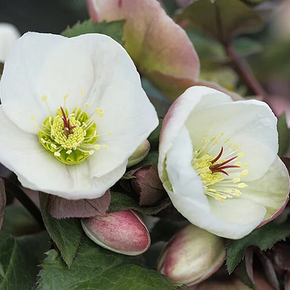
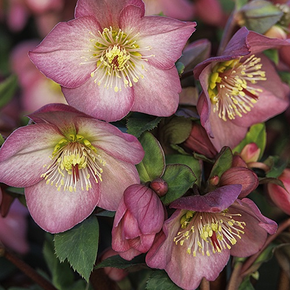
- Stunning outward-facing, deep ruby-red blooms up to 3-4 inches across emerge on strong, upright stems from late winter into mid-spring, delivering vivid jewel-toned color when the garden needs it most.
- A Gold Collection hybrid breakthrough — this evergreen perennial retains its rich, saturated red color as blooms age, unlike many hellebores that fade, providing weeks of continuous interest from late January through April.
- Glossy, dark green leathery foliage remains attractive and dense year-round, forming a tidy, low-growing clump that requires virtually no maintenance once established.
- Naturally deer and rabbit resistant, cold hardy in USDA Zones 5-9, and tolerant of shade — a perfect low-maintenance anchor for woodland gardens, shaded borders, and winter containers.
Helleborus Ice N' Roses Red (Helleborus x glandorfensis 'COSEH 4100', PP28,296) is a revolutionary evergreen perennial from the Gold Collection series, representing a remarkable interspecific hybrid cross between the Christmas Rose and the Lenten Rose, developed by master breeder Josef Heucke in Glandorf, Germany. Unlike traditional hellebores whose blossoms nod shyly toward the ground, Ice N' Roses Red holds its large, single, cup-shaped blooms facing boldly outward — and even upward — allowing the full, rich ruby-red coloration to be admired from every angle. Blooms open from dark, wine-purple buds and are adorned with a striking crown of creamy-yellow stamens, creating a luminous contrast that glows brilliantly when backlit by low winter sun. With a bloom window stretching from late winter through mid-spring, this hellebore fills the critical color gap between the last of the winter bulbs and the arrival of spring perennials. The handsome, deeply serrated, leathery foliage stays a lush, dark glossy green through all four seasons, providing reliable year-round structure and a refined backdrop for companion plants. Reaching a mature height and spread of approximately 12-18 inches, this compact, bushy clump integrates beautifully into shaded borders, woodland gardens, foundation plantings, rock and alpine gardens, and container displays. Hardy from USDA Zones 5 through 9, tolerant of full shade to partial sun, and largely unbothered by deer, rabbits, pests, or diseases, Ice N' Roses Red is one of the most dependable and rewarding shade-garden perennials available for the Pacific Coast and beyond.
Plant Description
Ice N' Roses Red is a patented interspecific hybrid hellebore (Helleborus x glandorfensis 'COSEH 4100', PP28,296) developed in Glandorf, Germany as part of the prestigious Gold Collection series. It is a cross between Helleborus x ericsmithii (Christmas Rose) and Helleborus x hybridus (Lenten Rose), combining the best traits of both parents. The result is a vigorous, bushy, evergreen perennial clump with an exceptionally upright habit. The flowers are single, rounded, and cup-shaped — measuring 2 to 4 inches across — and, unlike most hellebores, face distinctly outward and upward on strong, sturdy stems. Blooms emerge from dark burgundy-purple buds and open to a rich, saturated ruby-red with delicate deeper veining and an eye-catching center of creamy-yellow to pale gold stamens. One of the most celebrated traits of this variety is that its flowers hold their intense red color as they age, rather than fading to a muted tone. The foliage is equally impressive: deeply lobed, serrated, and leathery with a glossy dark green surface that persists through all four seasons, providing an attractive backdrop even when not in bloom.
Mature Size
| Attribute | Measurement |
|---|---|
| Mature Height | 12 to 18 inches |
| Mature Spread | 18 to 24 inches |
| Recommended Spacing | 18 to 24 inches on center |
| Growth Rate | Medium; slow to establish, long-lived once settled |
| Plant Habit | Bushy, upright, spreading clump |
| Foliage Density | Dense to the ground; no facer plants needed |
Hardiness and Climate
| Attribute | Detail |
|---|---|
| USDA Hardiness Zones | 5 to 9 |
| AHS Heat Zones | 5 to 9 |
| Sunset Climate Zones | 3, 4, 5, 6, 7, 14, 15, 16, 17 |
| Cold Hardiness | Exceptional for a hellebore; withstands hard frosts and light snow |
| Heat Tolerance | Good in zones up to 9 with afternoon shade and consistent moisture |
| Wind Protection | Select a sheltered site to protect foliage and blooms from cold, desiccating winter winds |
In Southern Oregon and Northern California, Ice N' Roses Red performs exceptionally well in Zones 7 through 9 and is ideally suited to the mild winters and warm summers of the region when given a shaded or dappled-light position. In Sunset Zones 14 through 17, afternoon shade and consistent moisture through the dry summer months are especially important.
Sunlight Requirements
Ice N' Roses Red is more adaptable to varying light conditions than many hellebore varieties. While it thrives in partial shade to full shade, it can also tolerate mostly sunny positions — particularly in cool-summer climates. Here are the ideal scenarios:
- Best exposure: Partial shade with morning sun and afternoon shade, or dappled light filtering through a deciduous tree canopy.
- Full shade: Performs well and will bloom reliably, though flower count may be slightly reduced compared to dappled light situations.
- Mostly sunny: Acceptable in cooler Zones 5 and 6 where summer temperatures are mild; ensure consistent moisture.
- Avoid: Harsh, direct afternoon sun in Zones 7 through 9, which can cause leaf scorch and faded blooms. North- and east-facing exposures are ideal in warmer climates.
Soil and pH Preferences
Providing the right soil environment is the single most important factor in establishing a thriving, long-lived clump of Ice N' Roses Red.
- Soil type: Humus-rich loam, sandy loam, or well-amended clay. The plant adapts to chalk, clay, and loam types provided drainage is adequate.
- Soil pH: Neutral to slightly alkaline is ideal (pH 6.5 to 7.5). Tolerates slightly acidic soils but may show reduced vigor below pH 6.0.
- Drainage: Moist but well-drained is essential. Waterlogged soils — especially in winter — promote crown rot and root rot and should be avoided entirely.
- Organic matter: Amend planting sites generously with compost or aged leaf mold before planting. A top-dressing of compost applied annually in fall or early spring further enriches the soil and helps retain moisture.
- Avoid: Poorly draining, compacted soils or sites prone to standing water after rain.
Watering Guide
Ice N' Roses Red has moderate water needs that shift with its stage of growth and the season.
- At planting: Water deeply and thoroughly immediately after planting to settle the soil around the roots.
- First growing season: Water regularly and consistently to help the root system establish. Aim to keep the soil evenly moist but never saturated.
- Established plants: Once established, Ice N' Roses Red develops a moderate level of drought tolerance, especially in cool, shaded settings. Water during extended dry spells, particularly in late summer when the plant is setting bud for the following season.
- Winter: Avoid overwatering in winter. Soggy, waterlogged soil during cold months is far more damaging than dry conditions.
- Watering method: Always water at the base of the plant rather than overhead. Keeping foliage dry reduces the risk of fungal leaf diseases.
- Mulching: A 2 to 3 inch layer of organic mulch — kept a few inches away from the crown — helps conserve soil moisture between waterings and moderates soil temperature year-round.
Fertilizing
Ice N' Roses Red is not a heavy feeder, but a thoughtful fertilizing program will reward you with stronger growth and more prolific flowering.
- Best approach: Apply a balanced, slow-release granular fertilizer or a generous top-dressing of well-aged compost in early spring, just as new growth begins to emerge.
- After bloom: A light application of an acid-forming or balanced fertilizer after the flowering period supports healthy foliage and root development through summer.
- Avoid high-nitrogen fertilizers: Excess nitrogen promotes lush, vigorous foliage at the direct expense of flower production. Choose a formula with a balanced or slightly higher phosphorus-to-nitrogen ratio to support blooming.
- Compost top-dressing: An annual application of 1 to 2 inches of well-composted leaf mold or garden compost in fall provides slow-release nutrition while improving soil structure and moisture retention throughout winter.
- Frequency: One to two light applications per year is sufficient. Over-fertilizing can be counterproductive and may increase susceptibility to disease.
Pruning and Maintenance
One of the great advantages of Ice N' Roses Red is its genuinely low-maintenance nature once established. A few simple tasks each year will keep the planting looking its best.
- Late winter / early spring foliage cleanup: Before or as flower stems emerge, cut back any old, damaged, or tatty leaves from the previous season to ground level. This cleanup improves air circulation, reduces disease carryover, and allows the flowers to be showcased without obstruction.
- Spent blooms: Deadheading spent flowers is optional. Removing them keeps the planting tidy and can redirect energy into the foliage and roots. If you want to allow some seed set, leave a few spent flowers in place — seedlings, though not identical to the parent, will appear and bloom in two to three years.
- Late fall: Some gardeners cut the plant back lightly in late fall in preparation for winter, removing any leaves that are yellowing or showing signs of disease. This is particularly useful in regions with wet winters.
- Division: Division is generally not necessary or recommended for Ice N' Roses Red, as hellebores resent root disturbance and may sulk for a season or two after being moved. If division is desired, do it in very early spring. Carefully remove small side offsets that have developed their own root systems, and replant them immediately at the same depth, watering well.
- Mulching: Refresh the mulch layer each fall to protect the crown and roots.
Planting Instructions
- Choose the right site: Select a location with partial to full shade, sheltered from harsh drying winds, with well-draining soil. North- or east-facing beds, or sites under the canopy of deciduous trees, are ideal in Zones 7 through 9.
- Prepare the soil: Dig in generous amounts of compost or aged leaf mold to improve drainage, moisture retention, and organic content. If working in heavier clay soils, consider raising the bed slightly to improve drainage.
- Dig the planting hole: Dig a hole twice as wide as the root ball and no deeper than the height of the root ball. Hellebores are sensitive to being planted too deeply — the crown should sit at or slightly above the surrounding soil level.
- Plant: Set the plant in the hole, backfill with amended soil, and firm gently around the roots. Do not bury the crown.
- Water thoroughly: Water deeply immediately after planting to eliminate air pockets and settle the soil around the roots.
- Mulch: Apply a 2 to 3 inch layer of organic mulch around the plant, keeping it a few inches away from the crown to prevent rot.
- Spacing: Space individual plants 18 to 24 inches apart on center to allow room for each clump to develop fully without crowding.
- Establishment period: Keep the soil consistently moist through the first growing season. Resist the urge to move or disturb the plant once settled — hellebores establish best when left undisturbed.
Seasonal Interest
| Season | What to Expect |
|---|---|
| Late Winter (January – February) | Dark burgundy-purple buds emerge and begin to open into rich ruby-red blooms. In Zones 8 and 9, flowering can begin as early as January. |
| Early Spring (March – April) | Peak bloom period. Large, outward-facing flowers hold their saturated red color without fading, and the plant is at its most spectacular. Individual flowers can last up to 6 weeks on the plant. |
| Mid to Late Spring (April – May) | Blooming concludes. Fresh new foliage emerges, and the glossy dark green leaves expand. Seed pods form and are decorative in their own right. |
| Summer (June – August) | The plant remains fully evergreen with a handsome, dense mound of glossy foliage providing structural interest in the shade garden throughout the warm months. |
| Fall (September – November) | Foliage continues to look attractive. Bud development for the next season's bloom is occurring below the surface. A great time to apply compost top-dressing. |
| Winter (December – January) | Leathery evergreen foliage holds its form and color even through frost and light snow, providing visual interest and ground-level structure in dormant winter beds. |
Landscape Uses
The combination of bold late-winter flowers, year-round evergreen foliage, compact habit, and exceptional shade tolerance makes Ice N' Roses Red one of the most versatile perennials for Pacific Coast shade gardens. Consider the following uses:
- Woodland gardens: Plant in drifts under the canopy of deciduous oaks, maples, or dogwoods where dappled winter sun encourages flowering and summer shade keeps the foliage lush.
- Shaded borders and beds: Use as a low-growing front-of-border plant or mid-border anchor in north- or east-facing beds. Masses of three or more create a striking visual impact in late winter.
- Foundation plantings: Excellent on the shaded north or east side of a structure where few other flowering perennials perform reliably.
- Walkway and pathway edging: Plant along shaded pathways and garden walks so the outward-facing flowers can be appreciated at eye level during their long winter bloom season.
- Rock and alpine gardens: The compact habit and tolerance for well-draining rocky soil make this a fine choice for shaded rock garden pockets.
- Under large shrubs and trees: Works beautifully as an understory planting beneath camellias, rhododendrons, azaleas, and large deciduous shrubs.
- Winter containers: A standout specimen in large patio containers and winter window boxes, especially when combined with cool-season companions.
- Mass plantings and groundcover: When spaced 18 to 24 inches apart in groups, Ice N' Roses Red will gradually fill in to form a weed-suppressing, low-maintenance evergreen groundcover in shade.
- Cut flowers: Flowers can be floated in shallow bowls of water as an elegant centerpiece or used as cut flowers after seed pods have begun to form to prevent wilting.
Companion Plants
Ice N' Roses Red pairs beautifully with a wide range of shade-garden companions. Choose plants that complement its late-winter to early-spring bloom window, or that provide visual interest after the hellebore's flowering season ends:
- Early bulbs: Snowdrops (Galanthus), winter aconite (Eranthis hyemalis), early crocus, and Narcissus 'Thalia' bloom in the same season, creating a layered tapestry of late-winter color at the same level as the hellebore flowers.
- Foliage companions: Heuchera (coral bells), Brunnera macrophylla (Siberian bugloss), Pulmonaria (lungwort), and Tiarella offer contrasting leaf shapes and textures that carry the bed long after hellebore bloom ends.
- Ferns: Evergreen and deciduous ferns provide fine-textured contrast to the bold, leathery hellebore foliage. Japanese painted fern (Athyrium niponicum) and autumn fern (Dryopteris erythrosora) are particularly attractive choices.
- Hostas: Plant behind the hellebore for bold summer foliage volume. As the hellebore finishes blooming, the hostas emerge and take visual prominence.
- Astilbe and Solomon's Seal: Both emerge after the hellebore blooms, providing summer-season interest in the same shaded location.
- Spring ephemerals: Trillium, Virginia bluebells (Mertensia), and trout lily (Erythronium 'Pagoda') naturalize beautifully in the same woodland conditions and bloom alongside or just after the hellebore.
- Shrub companions: Plant beneath or in front of camellias, rhododendrons, leucothoe, or witch hazel (Hamamelis) for a layered shrub-and-perennial winter garden display.
Pests and Diseases
Ice N' Roses Red is one of the more trouble-free perennials available, with notably good resistance to pests and diseases. However, a few issues are worth monitoring:
- Hellebore leaf spot (Coniothyrium hellebori): The most common disease issue, appearing as dark brown or black blotches on foliage. Prevent it by removing old and damaged leaves each spring, avoiding overhead irrigation, and ensuring good air circulation around the plant. Remove and dispose of infected leaves promptly.
- Hellebore black death: A serious viral disease spread by aphids. Symptoms include black streaking on stems and distorted growth. There is no cure; affected plants should be removed and destroyed. Control aphid populations to reduce spread.
- Aphids: Occasionally appear on new growth in spring. A strong spray of water or insecticidal soap will typically control light infestations. Avoid aphid problems by maintaining plant vigor through proper soil and watering practices.
- Slugs and snails: May occasionally target young emerging foliage in damp conditions, though the thick, leathery mature leaves of Ice N' Roses Red are generally unappealing to them. Iron phosphate slug bait is an effective, pet-safe treatment if needed.
- Root rot: Caused by waterlogged or poorly draining soils, particularly during winter. Always plant in well-drained conditions and avoid overwatering in cold months.
- Deer and rabbits: The toxic compounds naturally present in all hellebore tissues make Ice N' Roses Red highly unpalatable to deer and rabbits. It is considered one of the most reliable deer-resistant shade perennials available.
Container Growing
Ice N' Roses Red is an outstanding choice for container and patio displays, bringing rich winter color to patios, entryways, and covered porch areas. Follow these guidelines for success:
- Container size: Choose a container at least 12 to 16 inches wide and 12 inches deep to allow adequate room for root development. Larger is better for long-term container plantings.
- Drainage: Drainage holes are non-negotiable. Use a high-quality, well-draining potting mix amended with compost and a small amount of perlite. Never allow the container to sit in a saucer of standing water.
- Light: Position the container in a spot with bright indirect light or morning sun. Avoid harsh midday sun exposure, which will stress the plant and dry the container too quickly.
- Watering: Containers dry out faster than in-ground plantings. Check moisture regularly during the growing season and water when the top inch of potting mix feels dry. Reduce watering frequency in winter but never allow the root ball to dry out completely.
- Fertilizing: Container-grown plants benefit from a light application of slow-release balanced fertilizer in early spring and a second light feeding after the bloom period.
- Winter care: In Zone 5 and 6, move containers to a sheltered, unheated garage or covered porch during the coldest months to protect the root ball from hard freezes, as container roots are more exposed to cold than in-ground roots.
- Companion container plants: Pair with winter pansies, ornamental kale, trailing ivy, early-season primrose, or small ornamental grasses for a full, multi-textured winter container display.
Wildlife Value and Toxicity
Wildlife Value:
Ice N' Roses Red is a valuable early-season nectar source for pollinators. Its flowers appear when very few other plants are in bloom, making them a critical food source for early-emerging bees — including native bumblebees and honeybees — that are searching for nectar during late winter and early spring. The plant also supports other early pollinators including beneficial flies and beetles that visit the creamy-yellow stamens.
Deer and Rabbit Resistance:
All parts of the plant contain toxic alkaloids and glycosides that make it strongly unpalatable to deer, rabbits, and most other browsing mammals. This makes Ice N' Roses Red an excellent choice for landscapes with heavy deer pressure, and it is widely regarded as one of the most reliably deer-resistant shade perennials available.
Toxicity Warning:
All parts of this plant — including roots, leaves, stems, and flowers — are toxic to humans, dogs, cats, and horses if ingested. Ingestion can cause nausea, vomiting, drooling, abdominal pain, and more serious symptoms depending on the amount consumed. The sap may also cause mild skin irritation in sensitive individuals. Wear gloves when pruning or handling the plant, and keep it away from areas where children and pets may chew on plant material. If ingestion is suspected, contact a physician or veterinarian immediately.
- Stunning outward-facing, deep ruby-red blooms up to 3-4 inches across emerge on strong, upright stems from late winter into mid-spring, delivering vivid jewel-toned color when the garden needs it most.
- A Gold Collection hybrid breakthrough — this evergreen perennial retains its rich, saturated red color as blooms age, unlike many hellebores that fade, providing weeks of continuous interest from late January through April.
- Glossy, dark green leathery foliage remains attractive and dense year-round, forming a tidy, low-growing clump that requires virtually no maintenance once established.
- Naturally deer and rabbit resistant, cold hardy in USDA Zones 5-9, and tolerant of shade — a perfect low-maintenance anchor for woodland gardens, shaded borders, and winter containers.
Helleborus Ice N' Roses Red (Helleborus x glandorfensis 'COSEH 4100', PP28,296) is a revolutionary evergreen perennial from the Gold Collection series, representing a remarkable interspecific hybrid cross between the Christmas Rose and the Lenten Rose, developed by master breeder Josef Heucke in Glandorf, Germany. Unlike traditional hellebores whose blossoms nod shyly toward the ground, Ice N' Roses Red holds its large, single, cup-shaped blooms facing boldly outward — and even upward — allowing the full, rich ruby-red coloration to be admired from every angle. Blooms open from dark, wine-purple buds and are adorned with a striking crown of creamy-yellow stamens, creating a luminous contrast that glows brilliantly when backlit by low winter sun. With a bloom window stretching from late winter through mid-spring, this hellebore fills the critical color gap between the last of the winter bulbs and the arrival of spring perennials. The handsome, deeply serrated, leathery foliage stays a lush, dark glossy green through all four seasons, providing reliable year-round structure and a refined backdrop for companion plants. Reaching a mature height and spread of approximately 12-18 inches, this compact, bushy clump integrates beautifully into shaded borders, woodland gardens, foundation plantings, rock and alpine gardens, and container displays. Hardy from USDA Zones 5 through 9, tolerant of full shade to partial sun, and largely unbothered by deer, rabbits, pests, or diseases, Ice N' Roses Red is one of the most dependable and rewarding shade-garden perennials available for the Pacific Coast and beyond.
Plant Description
Ice N' Roses Red is a patented interspecific hybrid hellebore (Helleborus x glandorfensis 'COSEH 4100', PP28,296) developed in Glandorf, Germany as part of the prestigious Gold Collection series. It is a cross between Helleborus x ericsmithii (Christmas Rose) and Helleborus x hybridus (Lenten Rose), combining the best traits of both parents. The result is a vigorous, bushy, evergreen perennial clump with an exceptionally upright habit. The flowers are single, rounded, and cup-shaped — measuring 2 to 4 inches across — and, unlike most hellebores, face distinctly outward and upward on strong, sturdy stems. Blooms emerge from dark burgundy-purple buds and open to a rich, saturated ruby-red with delicate deeper veining and an eye-catching center of creamy-yellow to pale gold stamens. One of the most celebrated traits of this variety is that its flowers hold their intense red color as they age, rather than fading to a muted tone. The foliage is equally impressive: deeply lobed, serrated, and leathery with a glossy dark green surface that persists through all four seasons, providing an attractive backdrop even when not in bloom.
Mature Size
| Attribute | Measurement |
|---|---|
| Mature Height | 12 to 18 inches |
| Mature Spread | 18 to 24 inches |
| Recommended Spacing | 18 to 24 inches on center |
| Growth Rate | Medium; slow to establish, long-lived once settled |
| Plant Habit | Bushy, upright, spreading clump |
| Foliage Density | Dense to the ground; no facer plants needed |
Hardiness and Climate
| Attribute | Detail |
|---|---|
| USDA Hardiness Zones | 5 to 9 |
| AHS Heat Zones | 5 to 9 |
| Sunset Climate Zones | 3, 4, 5, 6, 7, 14, 15, 16, 17 |
| Cold Hardiness | Exceptional for a hellebore; withstands hard frosts and light snow |
| Heat Tolerance | Good in zones up to 9 with afternoon shade and consistent moisture |
| Wind Protection | Select a sheltered site to protect foliage and blooms from cold, desiccating winter winds |
In Southern Oregon and Northern California, Ice N' Roses Red performs exceptionally well in Zones 7 through 9 and is ideally suited to the mild winters and warm summers of the region when given a shaded or dappled-light position. In Sunset Zones 14 through 17, afternoon shade and consistent moisture through the dry summer months are especially important.
Sunlight Requirements
Ice N' Roses Red is more adaptable to varying light conditions than many hellebore varieties. While it thrives in partial shade to full shade, it can also tolerate mostly sunny positions — particularly in cool-summer climates. Here are the ideal scenarios:
- Best exposure: Partial shade with morning sun and afternoon shade, or dappled light filtering through a deciduous tree canopy.
- Full shade: Performs well and will bloom reliably, though flower count may be slightly reduced compared to dappled light situations.
- Mostly sunny: Acceptable in cooler Zones 5 and 6 where summer temperatures are mild; ensure consistent moisture.
- Avoid: Harsh, direct afternoon sun in Zones 7 through 9, which can cause leaf scorch and faded blooms. North- and east-facing exposures are ideal in warmer climates.
Soil and pH Preferences
Providing the right soil environment is the single most important factor in establishing a thriving, long-lived clump of Ice N' Roses Red.
- Soil type: Humus-rich loam, sandy loam, or well-amended clay. The plant adapts to chalk, clay, and loam types provided drainage is adequate.
- Soil pH: Neutral to slightly alkaline is ideal (pH 6.5 to 7.5). Tolerates slightly acidic soils but may show reduced vigor below pH 6.0.
- Drainage: Moist but well-drained is essential. Waterlogged soils — especially in winter — promote crown rot and root rot and should be avoided entirely.
- Organic matter: Amend planting sites generously with compost or aged leaf mold before planting. A top-dressing of compost applied annually in fall or early spring further enriches the soil and helps retain moisture.
- Avoid: Poorly draining, compacted soils or sites prone to standing water after rain.
Watering Guide
Ice N' Roses Red has moderate water needs that shift with its stage of growth and the season.
- At planting: Water deeply and thoroughly immediately after planting to settle the soil around the roots.
- First growing season: Water regularly and consistently to help the root system establish. Aim to keep the soil evenly moist but never saturated.
- Established plants: Once established, Ice N' Roses Red develops a moderate level of drought tolerance, especially in cool, shaded settings. Water during extended dry spells, particularly in late summer when the plant is setting bud for the following season.
- Winter: Avoid overwatering in winter. Soggy, waterlogged soil during cold months is far more damaging than dry conditions.
- Watering method: Always water at the base of the plant rather than overhead. Keeping foliage dry reduces the risk of fungal leaf diseases.
- Mulching: A 2 to 3 inch layer of organic mulch — kept a few inches away from the crown — helps conserve soil moisture between waterings and moderates soil temperature year-round.
Fertilizing
Ice N' Roses Red is not a heavy feeder, but a thoughtful fertilizing program will reward you with stronger growth and more prolific flowering.
- Best approach: Apply a balanced, slow-release granular fertilizer or a generous top-dressing of well-aged compost in early spring, just as new growth begins to emerge.
- After bloom: A light application of an acid-forming or balanced fertilizer after the flowering period supports healthy foliage and root development through summer.
- Avoid high-nitrogen fertilizers: Excess nitrogen promotes lush, vigorous foliage at the direct expense of flower production. Choose a formula with a balanced or slightly higher phosphorus-to-nitrogen ratio to support blooming.
- Compost top-dressing: An annual application of 1 to 2 inches of well-composted leaf mold or garden compost in fall provides slow-release nutrition while improving soil structure and moisture retention throughout winter.
- Frequency: One to two light applications per year is sufficient. Over-fertilizing can be counterproductive and may increase susceptibility to disease.
Pruning and Maintenance
One of the great advantages of Ice N' Roses Red is its genuinely low-maintenance nature once established. A few simple tasks each year will keep the planting looking its best.
- Late winter / early spring foliage cleanup: Before or as flower stems emerge, cut back any old, damaged, or tatty leaves from the previous season to ground level. This cleanup improves air circulation, reduces disease carryover, and allows the flowers to be showcased without obstruction.
- Spent blooms: Deadheading spent flowers is optional. Removing them keeps the planting tidy and can redirect energy into the foliage and roots. If you want to allow some seed set, leave a few spent flowers in place — seedlings, though not identical to the parent, will appear and bloom in two to three years.
- Late fall: Some gardeners cut the plant back lightly in late fall in preparation for winter, removing any leaves that are yellowing or showing signs of disease. This is particularly useful in regions with wet winters.
- Division: Division is generally not necessary or recommended for Ice N' Roses Red, as hellebores resent root disturbance and may sulk for a season or two after being moved. If division is desired, do it in very early spring. Carefully remove small side offsets that have developed their own root systems, and replant them immediately at the same depth, watering well.
- Mulching: Refresh the mulch layer each fall to protect the crown and roots.
Planting Instructions
- Choose the right site: Select a location with partial to full shade, sheltered from harsh drying winds, with well-draining soil. North- or east-facing beds, or sites under the canopy of deciduous trees, are ideal in Zones 7 through 9.
- Prepare the soil: Dig in generous amounts of compost or aged leaf mold to improve drainage, moisture retention, and organic content. If working in heavier clay soils, consider raising the bed slightly to improve drainage.
- Dig the planting hole: Dig a hole twice as wide as the root ball and no deeper than the height of the root ball. Hellebores are sensitive to being planted too deeply — the crown should sit at or slightly above the surrounding soil level.
- Plant: Set the plant in the hole, backfill with amended soil, and firm gently around the roots. Do not bury the crown.
- Water thoroughly: Water deeply immediately after planting to eliminate air pockets and settle the soil around the roots.
- Mulch: Apply a 2 to 3 inch layer of organic mulch around the plant, keeping it a few inches away from the crown to prevent rot.
- Spacing: Space individual plants 18 to 24 inches apart on center to allow room for each clump to develop fully without crowding.
- Establishment period: Keep the soil consistently moist through the first growing season. Resist the urge to move or disturb the plant once settled — hellebores establish best when left undisturbed.
Seasonal Interest
| Season | What to Expect |
|---|---|
| Late Winter (January – February) | Dark burgundy-purple buds emerge and begin to open into rich ruby-red blooms. In Zones 8 and 9, flowering can begin as early as January. |
| Early Spring (March – April) | Peak bloom period. Large, outward-facing flowers hold their saturated red color without fading, and the plant is at its most spectacular. Individual flowers can last up to 6 weeks on the plant. |
| Mid to Late Spring (April – May) | Blooming concludes. Fresh new foliage emerges, and the glossy dark green leaves expand. Seed pods form and are decorative in their own right. |
| Summer (June – August) | The plant remains fully evergreen with a handsome, dense mound of glossy foliage providing structural interest in the shade garden throughout the warm months. |
| Fall (September – November) | Foliage continues to look attractive. Bud development for the next season's bloom is occurring below the surface. A great time to apply compost top-dressing. |
| Winter (December – January) | Leathery evergreen foliage holds its form and color even through frost and light snow, providing visual interest and ground-level structure in dormant winter beds. |
Landscape Uses
The combination of bold late-winter flowers, year-round evergreen foliage, compact habit, and exceptional shade tolerance makes Ice N' Roses Red one of the most versatile perennials for Pacific Coast shade gardens. Consider the following uses:
- Woodland gardens: Plant in drifts under the canopy of deciduous oaks, maples, or dogwoods where dappled winter sun encourages flowering and summer shade keeps the foliage lush.
- Shaded borders and beds: Use as a low-growing front-of-border plant or mid-border anchor in north- or east-facing beds. Masses of three or more create a striking visual impact in late winter.
- Foundation plantings: Excellent on the shaded north or east side of a structure where few other flowering perennials perform reliably.
- Walkway and pathway edging: Plant along shaded pathways and garden walks so the outward-facing flowers can be appreciated at eye level during their long winter bloom season.
- Rock and alpine gardens: The compact habit and tolerance for well-draining rocky soil make this a fine choice for shaded rock garden pockets.
- Under large shrubs and trees: Works beautifully as an understory planting beneath camellias, rhododendrons, azaleas, and large deciduous shrubs.
- Winter containers: A standout specimen in large patio containers and winter window boxes, especially when combined with cool-season companions.
- Mass plantings and groundcover: When spaced 18 to 24 inches apart in groups, Ice N' Roses Red will gradually fill in to form a weed-suppressing, low-maintenance evergreen groundcover in shade.
- Cut flowers: Flowers can be floated in shallow bowls of water as an elegant centerpiece or used as cut flowers after seed pods have begun to form to prevent wilting.
Companion Plants
Ice N' Roses Red pairs beautifully with a wide range of shade-garden companions. Choose plants that complement its late-winter to early-spring bloom window, or that provide visual interest after the hellebore's flowering season ends:
- Early bulbs: Snowdrops (Galanthus), winter aconite (Eranthis hyemalis), early crocus, and Narcissus 'Thalia' bloom in the same season, creating a layered tapestry of late-winter color at the same level as the hellebore flowers.
- Foliage companions: Heuchera (coral bells), Brunnera macrophylla (Siberian bugloss), Pulmonaria (lungwort), and Tiarella offer contrasting leaf shapes and textures that carry the bed long after hellebore bloom ends.
- Ferns: Evergreen and deciduous ferns provide fine-textured contrast to the bold, leathery hellebore foliage. Japanese painted fern (Athyrium niponicum) and autumn fern (Dryopteris erythrosora) are particularly attractive choices.
- Hostas: Plant behind the hellebore for bold summer foliage volume. As the hellebore finishes blooming, the hostas emerge and take visual prominence.
- Astilbe and Solomon's Seal: Both emerge after the hellebore blooms, providing summer-season interest in the same shaded location.
- Spring ephemerals: Trillium, Virginia bluebells (Mertensia), and trout lily (Erythronium 'Pagoda') naturalize beautifully in the same woodland conditions and bloom alongside or just after the hellebore.
- Shrub companions: Plant beneath or in front of camellias, rhododendrons, leucothoe, or witch hazel (Hamamelis) for a layered shrub-and-perennial winter garden display.
Pests and Diseases
Ice N' Roses Red is one of the more trouble-free perennials available, with notably good resistance to pests and diseases. However, a few issues are worth monitoring:
- Hellebore leaf spot (Coniothyrium hellebori): The most common disease issue, appearing as dark brown or black blotches on foliage. Prevent it by removing old and damaged leaves each spring, avoiding overhead irrigation, and ensuring good air circulation around the plant. Remove and dispose of infected leaves promptly.
- Hellebore black death: A serious viral disease spread by aphids. Symptoms include black streaking on stems and distorted growth. There is no cure; affected plants should be removed and destroyed. Control aphid populations to reduce spread.
- Aphids: Occasionally appear on new growth in spring. A strong spray of water or insecticidal soap will typically control light infestations. Avoid aphid problems by maintaining plant vigor through proper soil and watering practices.
- Slugs and snails: May occasionally target young emerging foliage in damp conditions, though the thick, leathery mature leaves of Ice N' Roses Red are generally unappealing to them. Iron phosphate slug bait is an effective, pet-safe treatment if needed.
- Root rot: Caused by waterlogged or poorly draining soils, particularly during winter. Always plant in well-drained conditions and avoid overwatering in cold months.
- Deer and rabbits: The toxic compounds naturally present in all hellebore tissues make Ice N' Roses Red highly unpalatable to deer and rabbits. It is considered one of the most reliable deer-resistant shade perennials available.
Container Growing
Ice N' Roses Red is an outstanding choice for container and patio displays, bringing rich winter color to patios, entryways, and covered porch areas. Follow these guidelines for success:
- Container size: Choose a container at least 12 to 16 inches wide and 12 inches deep to allow adequate room for root development. Larger is better for long-term container plantings.
- Drainage: Drainage holes are non-negotiable. Use a high-quality, well-draining potting mix amended with compost and a small amount of perlite. Never allow the container to sit in a saucer of standing water.
- Light: Position the container in a spot with bright indirect light or morning sun. Avoid harsh midday sun exposure, which will stress the plant and dry the container too quickly.
- Watering: Containers dry out faster than in-ground plantings. Check moisture regularly during the growing season and water when the top inch of potting mix feels dry. Reduce watering frequency in winter but never allow the root ball to dry out completely.
- Fertilizing: Container-grown plants benefit from a light application of slow-release balanced fertilizer in early spring and a second light feeding after the bloom period.
- Winter care: In Zone 5 and 6, move containers to a sheltered, unheated garage or covered porch during the coldest months to protect the root ball from hard freezes, as container roots are more exposed to cold than in-ground roots.
- Companion container plants: Pair with winter pansies, ornamental kale, trailing ivy, early-season primrose, or small ornamental grasses for a full, multi-textured winter container display.
Wildlife Value and Toxicity
Wildlife Value:
Ice N' Roses Red is a valuable early-season nectar source for pollinators. Its flowers appear when very few other plants are in bloom, making them a critical food source for early-emerging bees — including native bumblebees and honeybees — that are searching for nectar during late winter and early spring. The plant also supports other early pollinators including beneficial flies and beetles that visit the creamy-yellow stamens.
Deer and Rabbit Resistance:
All parts of the plant contain toxic alkaloids and glycosides that make it strongly unpalatable to deer, rabbits, and most other browsing mammals. This makes Ice N' Roses Red an excellent choice for landscapes with heavy deer pressure, and it is widely regarded as one of the most reliably deer-resistant shade perennials available.
Toxicity Warning:
All parts of this plant — including roots, leaves, stems, and flowers — are toxic to humans, dogs, cats, and horses if ingested. Ingestion can cause nausea, vomiting, drooling, abdominal pain, and more serious symptoms depending on the amount consumed. The sap may also cause mild skin irritation in sensitive individuals. Wear gloves when pruning or handling the plant, and keep it away from areas where children and pets may chew on plant material. If ingestion is suspected, contact a physician or veterinarian immediately.