
Zoom the image with the mouse
Cascade Blush Hellebore - 1 Gallon
SKU:
2071655
UPC:
014949433720
$19.99
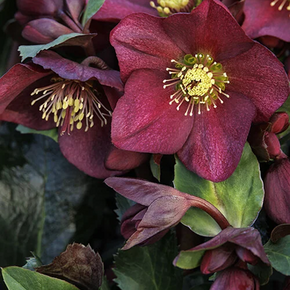
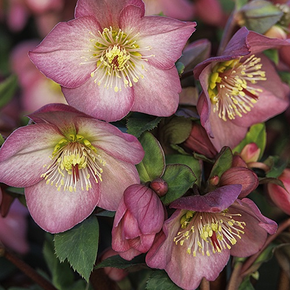
- Stunning nodding cup-shaped blooms in rich fuchsia and deep purple-pink with creamy white eyes light up shaded borders from late winter into early spring, delivering bold color when little else is in flower.
- Evergreen, deeply lobed leathery foliage forms dense mounding clumps that remain attractive year-round, offering structure and texture throughout every season.
- Exceptionally deer and rabbit resistant thanks to naturally occurring toxic alkaloids — a top-performing, low-maintenance choice for woodland gardens and shaded landscapes under persistent browsing pressure.
- Remarkably cold and heat adaptable across USDA Zones 4a-9b, and once established, tolerates drought, humidity, and a wide range of soil types with minimal intervention.
Cascade Blush Hellebore (Helleborus hybrid 'Monobyrn1', PP29349) is a showstopping evergreen perennial that brings rare late-winter drama to shaded gardens across a wide range of climates. A distinguished member of the Cascade Series, this Lenten Rose produces an abundance of large, nodding, cup-shaped blooms in a captivating fuchsia with rich purple overtones and distinctive creamy white eyes — flowers that persist for 8 to 10 weeks or more, making it one of the longest-blooming shade perennials available. The deeply serrated, leathery compound leaves emerge in a fresh chartreuse in spring before maturing to a lush forest green that holds beautifully through summer, fall, and winter, ensuring the plant contributes meaningful year-round presence in the landscape. Forming a tidy, upright-spreading mound reaching 18 to 22 inches tall and spreading 18 to 24 inches wide, Cascade Blush is ideally suited to naturalizing under deciduous trees, brightening shaded borders, anchoring woodland garden compositions, or spilling over a rock wall. Its robust cold hardiness from Zone 4a through Zone 9b, combined with proven drought tolerance once established, deer and rabbit resistance, and adaptability to clay, loamy, sandy, and organically rich soils, makes this patented Lenten Rose an exceptional long-lived performer for gardeners in Southern Oregon and Northern California seeking low-maintenance elegance in challenging shaded spaces.
Plant Description
Cascade Blush Hellebore is an herbaceous evergreen perennial in the Ranunculaceae (Buttercup) family, sold under the trade name Cascade and carrying the cultivar designation 'Monobyrn1' (US Plant Patent PP29349). It is commonly known as Lenten Rose or Winter Rose. This interspecific hybrid was developed as part of a seedling selection program and belongs to the elite Cascade Series, which is celebrated for oversized, richly colored blooms and vigorous foliage. The plant forms a dense, rounded, upright-spreading clump with foliage that holds to the ground, eliminating the need for facer plants in front of borders. Its medium texture complements a wide range of companion plantings and blends naturally into woodland-inspired designs. All parts of the plant are toxic if ingested by humans or animals, so care should be taken when siting around children and pets.
Ornamental Features
The flowers of Cascade Blush are among the most striking in the hellebore world — large, showy, nodding cups in a vivid fuchsia-pink with deep purple overtones and luminous creamy white eyes at their centers. Blooms appear at the ends of sturdy upright stems and persist for an extraordinary 8 to 10 weeks or longer because the colorful structures are actually sepals that do not drop after pollination. Leaf color transitions add additional ornamental value: new spring foliage emerges in a bright chartreuse before deepening to a rich forest green that is retained year-round. The serrated, oval, compound leaves have an attractive leathery texture that catches both light and shadow effectively in shaded garden settings.
Mature Size and Growth Habit
| Attribute | Detail |
|---|---|
| Mature Height | 18 to 22 inches |
| Mature Spread | 18 to 24 inches |
| Growth Habit | Clumping, dense, mounding, rounded, upright-spreading |
| Growth Rate | Moderate |
| Recommended Spacing | 18 inches apart for mass plantings |
| Plant Type | Herbaceous evergreen perennial |
Hardiness Zones and Climate Tolerance
Cascade Blush Hellebore is adapted to a remarkably broad climate range, performing reliably from USDA Hardiness Zone 4a through Zone 9b. It tolerates hard freezes, frost events, and cold conditions typical of mountain and inland climates, yet equally handles the heat and humidity of warmer coastal zones. Once established, the plant demonstrates good drought tolerance during dry summers — a particularly valuable trait for gardeners in Southern Oregon and Northern California where summer moisture can be limited. It is also noted for some tolerance of urban pollution and benefits from a sheltered planting location that shields delicate late-winter blooms from harsh desiccating winds.
Sunlight Requirements
Cascade Blush Hellebore thrives in partial shade to full shade and should never be exposed to intense hot afternoon sun, which can scorch its foliage and stress the plant. The ideal situation is a spot beneath deciduous trees, where it receives bright, dappled light filtering through bare branches in late winter and early spring — right when it blooms — and then benefits from the cooling canopy shade through summer. A northern or eastern exposure, or a location shielded by taller shrubs, also works well. Morning sun with afternoon shade is acceptable, particularly in cooler coastal climates. Avoid south- or west-facing sites with full, unobstructed afternoon sun exposure.
Soil and pH Preferences
This hellebore is adaptable to a range of soil types including clay, loamy, sandy, and organically amended soils, provided drainage is adequate. Standing water and consistently waterlogged conditions are harmful and can lead to crown rot. For best growth and bloom performance, plant in rich, humus-laden soil amended with compost or aged leaf mold. Cascade Blush tolerates a soil pH ranging from acidic (below 6.0) to neutral (6.5 to 7.5), though it slightly prefers neutral to mildly alkaline conditions. In heavy clay soils, incorporate generous amounts of organic matter before planting to improve both drainage and aeration. A 3- to 4-inch layer of organic mulch such as shredded bark or leaf mold maintained around — but not touching — the crown helps retain moisture, moderate soil temperature, and suppress weeds.
Watering Guide
Consistent, moderate moisture is ideal for Cascade Blush Hellebore, especially during the first growing season when roots are becoming established. Water deeply after planting and continue to provide regular supplemental irrigation during the first one to two seasons. Once established, the plant develops meaningful drought tolerance and generally requires only supplemental watering during extended dry spells or prolonged summer heat. Avoid overhead irrigation, which encourages the spread of fungal leaf spot; drip irrigation or hand watering at the base of the plant is preferred. The plant must never sit in standing water or be planted in poorly drained areas, as wet crowns and saturated roots lead to crown rot, the most serious cultural problem for hellebores.
Fertilizing
Cascade Blush Hellebore is not a heavy feeder, but it responds noticeably to annual fertilization with improved vigor and bloom quality. Apply a balanced, slow-release granular fertilizer or topdress with a 1- to 2-inch layer of finished compost in late winter to early spring, just as new buds begin to emerge. This is the most impactful feeding window. A second light application in fall, as plants prepare for winter, can further support root development heading into the dormant season. Avoid high-nitrogen fertilizers that promote excessive leafy growth at the expense of flowers. In naturally rich, organically amended soils, annual compost topdressing alone may be sufficient to keep plants performing at their best.
Pruning and Maintenance
Cascade Blush Hellebore is considered a low- to moderate-maintenance plant. The single most important annual task is cutting back all of the previous year's foliage to the base of the plant in late winter — just as new flower buds and fresh growth begin to emerge from the crown, typically January through March depending on your local climate. Removing old leaves at this time serves two key purposes: it eliminates overwintering fungal spores that cause hellebore leaf spot, and it dramatically showcases the emerging blooms without visual competition from tattered old foliage. Use clean, sharp pruners and wear gloves, as the sap can irritate skin. Beyond this annual cut-back, spent flower stems can be removed after seed pods have matured. The plant does not require staking, deadheading for rebloom, or any other intensive ongoing care once established.
Planting Instructions
- Choose a site with partial to full shade and well-drained, organically rich soil. Avoid areas prone to standing water or heavy afternoon sun.
- Dig a planting hole twice as wide as the root ball and equal to its depth. Do not plant too deeply — the crown should sit at or very slightly above the surrounding soil level to prevent rot.
- Amend the backfill soil generously with compost or aged leaf mold to improve drainage and organic content.
- Set the plant in the hole, ensuring the crown is at the correct height, and backfill firmly, eliminating air pockets.
- Water thoroughly immediately after planting to settle the soil around the roots.
- Apply a 3- to 4-inch layer of organic mulch — shredded bark, wood chips, or leaf mold — in a ring around the plant, keeping mulch pulled back 2 to 3 inches from the crown.
- Space multiple plants approximately 18 inches apart for mass plantings or border use.
- Best planting times are early spring (after last frost) or fall. Once established, avoid transplanting, as hellebores dislike root disturbance and may take a full season to recover if moved.
Bloom Time and Seasonal Interest
Cascade Blush delivers its most dramatic seasonal impact from late winter through mid-spring — a window when very few other garden plants are in color. In the milder climates of Southern Oregon and Northern California, expect flowering to begin as early as late January or February, extending well into April. Because the showy sepals do not drop after pollination, the blooms persist for 8 to 10 weeks or longer, providing an unusually extended season of interest compared to most spring perennials. Complementing this winter-to-spring floral display, the foliage itself offers year-round garden presence: fresh chartreuse in spring, deep forest green through summer and fall, and sturdy evergreen structure through winter. The plant is classified as a Season of Interest: Year-Round performer.
Landscape Uses
Cascade Blush Hellebore is a highly versatile landscape plant suited to a wide range of applications:
- Woodland and Shade Gardens: Naturally at home under deciduous trees, alongside ferns, hostas, and other shade-adapted plants.
- Shaded Borders and Edging: Dense, ground-hugging foliage mounds make it an excellent front-of-border or edging plant without requiring additional facer plantings.
- Mass Planting and Naturalizing: Superb planted in drifts under tree canopies where it creates a weed-suppressing, evergreen ground layer with seasonal floral interest.
- Rock and Alpine Gardens: Well-suited to shaded rockery pockets where good drainage combines with cool root conditions.
- Slope and Bank Stabilization: Dense root systems and low-maintenance nature make it functional on shaded slopes.
- Foundation Plantings: Performs beautifully on north- or east-facing foundation beds where little else blooms in winter.
- Cut Flower Use: Blooms can be cut and used as elegant, long-lasting cut flowers indoors when stems are seared immediately after cutting.
- Container Gardening: Grows well in large containers with adequate drainage; insulate containers in Zone 6 and colder during winter.
Companion Plants
Cascade Blush Hellebore pairs beautifully with a wide range of shade-loving and early-season plants. For a layered woodland garden composition, consider combining it with:
- Hostas — Bold foliage in summer fills in as hellebore blooms fade; textural contrast is excellent.
- Ferns (Japanese painted fern, lady fern, autumn fern) — Delicate fronds complement the leathery hellebore foliage perfectly.
- Bleeding Heart (Dicentra) — Overlapping bloom times in early spring create a romantic woodland display.
- Snowdrops (Galanthus) and Winter Aconite (Eranthis) — Plant these small bulbs nearby for a coordinated late-winter flowering sequence.
- Daffodils and Species Tulips — Early spring bulbs emerge just as hellebore blooms are at their peak, layering color at multiple heights.
- Epimedium (Barrenwort) — A similarly tough shade perennial that extends the season of interest and shares drought tolerance.
- Coral Bells (Heuchera) — Colorful foliage complements the deep green hellebore leaves and thrives in the same light conditions.
- Astilbe — Summer-blooming plumes in shade provide color after hellebore bloom season concludes.
Pests and Diseases
Cascade Blush Hellebore is notably resistant to most pests and diseases, making it one of the more trouble-free shade perennials available. The following issues occasionally arise:
- Hellebore Leaf Spot (Coniothyrium hellebori): The most common disease, presenting as black or brown spots with yellow halos on foliage. Prevent and manage by cutting back all old foliage to the base in late winter before new growth emerges, avoiding overhead watering, and ensuring good air circulation around plants. Remove and dispose of affected leaves promptly.
- Crown Rot (Phytophthora and Pythium species): Caused by overly wet conditions or planting the crown too deeply. Ensure excellent drainage and that the crown is never buried or smothered by mulch.
- Aphids: Occasionally colonize flower stems in early spring. A firm spray of water is usually sufficient to dislodge them; beneficial insects naturally attracted to hellebore blooms help control populations.
- Slugs and Snails: May damage young foliage in wet conditions. Iron phosphate baits applied around plants are effective and pet-safe.
- Deer and Rabbits: Highly resistant — the plant's naturally occurring toxic alkaloids and saponins make it unpalatable to browsing wildlife.
Toxicity and Safe Handling
All parts of Cascade Blush Hellebore — including roots, stems, leaves, and flowers — are toxic to humans and animals if ingested. The plant contains glycoside and saponin compounds that can cause nausea, vomiting, and mouth irritation. Exercise caution when siting this plant in gardens frequented by young children or pets. When pruning, dividing, or otherwise handling the plant, wear gloves as the sap can cause skin irritation in sensitive individuals. Despite its toxicity to mammals, this characteristic is precisely what makes Cascade Blush one of the most reliably deer-resistant and rabbit-resistant flowering perennials available for shaded garden spaces.
Wildlife Value
While Cascade Blush Hellebore is avoided by deer, rabbits, and other browsing mammals, it provides meaningful value to beneficial wildlife. Its late-winter to early-spring bloom period is critically timed — flowers open when very few other nectar and pollen sources are available, making them an important early-season food resource for emerging queen bumblebees, honeybees, and other early-flying pollinators. The nodding flower shape and deep cup structure are particularly well adapted to bumblebee foraging. The dense evergreen foliage mounds also provide ground-level shelter and overwintering habitat for beneficial insects. Cascade Blush is well suited for inclusion in pollinator gardens, cottage gardens, and informal garden designs where supporting beneficial insect populations is a priority.
- Stunning nodding cup-shaped blooms in rich fuchsia and deep purple-pink with creamy white eyes light up shaded borders from late winter into early spring, delivering bold color when little else is in flower.
- Evergreen, deeply lobed leathery foliage forms dense mounding clumps that remain attractive year-round, offering structure and texture throughout every season.
- Exceptionally deer and rabbit resistant thanks to naturally occurring toxic alkaloids — a top-performing, low-maintenance choice for woodland gardens and shaded landscapes under persistent browsing pressure.
- Remarkably cold and heat adaptable across USDA Zones 4a-9b, and once established, tolerates drought, humidity, and a wide range of soil types with minimal intervention.
Cascade Blush Hellebore (Helleborus hybrid 'Monobyrn1', PP29349) is a showstopping evergreen perennial that brings rare late-winter drama to shaded gardens across a wide range of climates. A distinguished member of the Cascade Series, this Lenten Rose produces an abundance of large, nodding, cup-shaped blooms in a captivating fuchsia with rich purple overtones and distinctive creamy white eyes — flowers that persist for 8 to 10 weeks or more, making it one of the longest-blooming shade perennials available. The deeply serrated, leathery compound leaves emerge in a fresh chartreuse in spring before maturing to a lush forest green that holds beautifully through summer, fall, and winter, ensuring the plant contributes meaningful year-round presence in the landscape. Forming a tidy, upright-spreading mound reaching 18 to 22 inches tall and spreading 18 to 24 inches wide, Cascade Blush is ideally suited to naturalizing under deciduous trees, brightening shaded borders, anchoring woodland garden compositions, or spilling over a rock wall. Its robust cold hardiness from Zone 4a through Zone 9b, combined with proven drought tolerance once established, deer and rabbit resistance, and adaptability to clay, loamy, sandy, and organically rich soils, makes this patented Lenten Rose an exceptional long-lived performer for gardeners in Southern Oregon and Northern California seeking low-maintenance elegance in challenging shaded spaces.
Plant Description
Cascade Blush Hellebore is an herbaceous evergreen perennial in the Ranunculaceae (Buttercup) family, sold under the trade name Cascade and carrying the cultivar designation 'Monobyrn1' (US Plant Patent PP29349). It is commonly known as Lenten Rose or Winter Rose. This interspecific hybrid was developed as part of a seedling selection program and belongs to the elite Cascade Series, which is celebrated for oversized, richly colored blooms and vigorous foliage. The plant forms a dense, rounded, upright-spreading clump with foliage that holds to the ground, eliminating the need for facer plants in front of borders. Its medium texture complements a wide range of companion plantings and blends naturally into woodland-inspired designs. All parts of the plant are toxic if ingested by humans or animals, so care should be taken when siting around children and pets.
Ornamental Features
The flowers of Cascade Blush are among the most striking in the hellebore world — large, showy, nodding cups in a vivid fuchsia-pink with deep purple overtones and luminous creamy white eyes at their centers. Blooms appear at the ends of sturdy upright stems and persist for an extraordinary 8 to 10 weeks or longer because the colorful structures are actually sepals that do not drop after pollination. Leaf color transitions add additional ornamental value: new spring foliage emerges in a bright chartreuse before deepening to a rich forest green that is retained year-round. The serrated, oval, compound leaves have an attractive leathery texture that catches both light and shadow effectively in shaded garden settings.
Mature Size and Growth Habit
| Attribute | Detail |
|---|---|
| Mature Height | 18 to 22 inches |
| Mature Spread | 18 to 24 inches |
| Growth Habit | Clumping, dense, mounding, rounded, upright-spreading |
| Growth Rate | Moderate |
| Recommended Spacing | 18 inches apart for mass plantings |
| Plant Type | Herbaceous evergreen perennial |
Hardiness Zones and Climate Tolerance
Cascade Blush Hellebore is adapted to a remarkably broad climate range, performing reliably from USDA Hardiness Zone 4a through Zone 9b. It tolerates hard freezes, frost events, and cold conditions typical of mountain and inland climates, yet equally handles the heat and humidity of warmer coastal zones. Once established, the plant demonstrates good drought tolerance during dry summers — a particularly valuable trait for gardeners in Southern Oregon and Northern California where summer moisture can be limited. It is also noted for some tolerance of urban pollution and benefits from a sheltered planting location that shields delicate late-winter blooms from harsh desiccating winds.
Sunlight Requirements
Cascade Blush Hellebore thrives in partial shade to full shade and should never be exposed to intense hot afternoon sun, which can scorch its foliage and stress the plant. The ideal situation is a spot beneath deciduous trees, where it receives bright, dappled light filtering through bare branches in late winter and early spring — right when it blooms — and then benefits from the cooling canopy shade through summer. A northern or eastern exposure, or a location shielded by taller shrubs, also works well. Morning sun with afternoon shade is acceptable, particularly in cooler coastal climates. Avoid south- or west-facing sites with full, unobstructed afternoon sun exposure.
Soil and pH Preferences
This hellebore is adaptable to a range of soil types including clay, loamy, sandy, and organically amended soils, provided drainage is adequate. Standing water and consistently waterlogged conditions are harmful and can lead to crown rot. For best growth and bloom performance, plant in rich, humus-laden soil amended with compost or aged leaf mold. Cascade Blush tolerates a soil pH ranging from acidic (below 6.0) to neutral (6.5 to 7.5), though it slightly prefers neutral to mildly alkaline conditions. In heavy clay soils, incorporate generous amounts of organic matter before planting to improve both drainage and aeration. A 3- to 4-inch layer of organic mulch such as shredded bark or leaf mold maintained around — but not touching — the crown helps retain moisture, moderate soil temperature, and suppress weeds.
Watering Guide
Consistent, moderate moisture is ideal for Cascade Blush Hellebore, especially during the first growing season when roots are becoming established. Water deeply after planting and continue to provide regular supplemental irrigation during the first one to two seasons. Once established, the plant develops meaningful drought tolerance and generally requires only supplemental watering during extended dry spells or prolonged summer heat. Avoid overhead irrigation, which encourages the spread of fungal leaf spot; drip irrigation or hand watering at the base of the plant is preferred. The plant must never sit in standing water or be planted in poorly drained areas, as wet crowns and saturated roots lead to crown rot, the most serious cultural problem for hellebores.
Fertilizing
Cascade Blush Hellebore is not a heavy feeder, but it responds noticeably to annual fertilization with improved vigor and bloom quality. Apply a balanced, slow-release granular fertilizer or topdress with a 1- to 2-inch layer of finished compost in late winter to early spring, just as new buds begin to emerge. This is the most impactful feeding window. A second light application in fall, as plants prepare for winter, can further support root development heading into the dormant season. Avoid high-nitrogen fertilizers that promote excessive leafy growth at the expense of flowers. In naturally rich, organically amended soils, annual compost topdressing alone may be sufficient to keep plants performing at their best.
Pruning and Maintenance
Cascade Blush Hellebore is considered a low- to moderate-maintenance plant. The single most important annual task is cutting back all of the previous year's foliage to the base of the plant in late winter — just as new flower buds and fresh growth begin to emerge from the crown, typically January through March depending on your local climate. Removing old leaves at this time serves two key purposes: it eliminates overwintering fungal spores that cause hellebore leaf spot, and it dramatically showcases the emerging blooms without visual competition from tattered old foliage. Use clean, sharp pruners and wear gloves, as the sap can irritate skin. Beyond this annual cut-back, spent flower stems can be removed after seed pods have matured. The plant does not require staking, deadheading for rebloom, or any other intensive ongoing care once established.
Planting Instructions
- Choose a site with partial to full shade and well-drained, organically rich soil. Avoid areas prone to standing water or heavy afternoon sun.
- Dig a planting hole twice as wide as the root ball and equal to its depth. Do not plant too deeply — the crown should sit at or very slightly above the surrounding soil level to prevent rot.
- Amend the backfill soil generously with compost or aged leaf mold to improve drainage and organic content.
- Set the plant in the hole, ensuring the crown is at the correct height, and backfill firmly, eliminating air pockets.
- Water thoroughly immediately after planting to settle the soil around the roots.
- Apply a 3- to 4-inch layer of organic mulch — shredded bark, wood chips, or leaf mold — in a ring around the plant, keeping mulch pulled back 2 to 3 inches from the crown.
- Space multiple plants approximately 18 inches apart for mass plantings or border use.
- Best planting times are early spring (after last frost) or fall. Once established, avoid transplanting, as hellebores dislike root disturbance and may take a full season to recover if moved.
Bloom Time and Seasonal Interest
Cascade Blush delivers its most dramatic seasonal impact from late winter through mid-spring — a window when very few other garden plants are in color. In the milder climates of Southern Oregon and Northern California, expect flowering to begin as early as late January or February, extending well into April. Because the showy sepals do not drop after pollination, the blooms persist for 8 to 10 weeks or longer, providing an unusually extended season of interest compared to most spring perennials. Complementing this winter-to-spring floral display, the foliage itself offers year-round garden presence: fresh chartreuse in spring, deep forest green through summer and fall, and sturdy evergreen structure through winter. The plant is classified as a Season of Interest: Year-Round performer.
Landscape Uses
Cascade Blush Hellebore is a highly versatile landscape plant suited to a wide range of applications:
- Woodland and Shade Gardens: Naturally at home under deciduous trees, alongside ferns, hostas, and other shade-adapted plants.
- Shaded Borders and Edging: Dense, ground-hugging foliage mounds make it an excellent front-of-border or edging plant without requiring additional facer plantings.
- Mass Planting and Naturalizing: Superb planted in drifts under tree canopies where it creates a weed-suppressing, evergreen ground layer with seasonal floral interest.
- Rock and Alpine Gardens: Well-suited to shaded rockery pockets where good drainage combines with cool root conditions.
- Slope and Bank Stabilization: Dense root systems and low-maintenance nature make it functional on shaded slopes.
- Foundation Plantings: Performs beautifully on north- or east-facing foundation beds where little else blooms in winter.
- Cut Flower Use: Blooms can be cut and used as elegant, long-lasting cut flowers indoors when stems are seared immediately after cutting.
- Container Gardening: Grows well in large containers with adequate drainage; insulate containers in Zone 6 and colder during winter.
Companion Plants
Cascade Blush Hellebore pairs beautifully with a wide range of shade-loving and early-season plants. For a layered woodland garden composition, consider combining it with:
- Hostas — Bold foliage in summer fills in as hellebore blooms fade; textural contrast is excellent.
- Ferns (Japanese painted fern, lady fern, autumn fern) — Delicate fronds complement the leathery hellebore foliage perfectly.
- Bleeding Heart (Dicentra) — Overlapping bloom times in early spring create a romantic woodland display.
- Snowdrops (Galanthus) and Winter Aconite (Eranthis) — Plant these small bulbs nearby for a coordinated late-winter flowering sequence.
- Daffodils and Species Tulips — Early spring bulbs emerge just as hellebore blooms are at their peak, layering color at multiple heights.
- Epimedium (Barrenwort) — A similarly tough shade perennial that extends the season of interest and shares drought tolerance.
- Coral Bells (Heuchera) — Colorful foliage complements the deep green hellebore leaves and thrives in the same light conditions.
- Astilbe — Summer-blooming plumes in shade provide color after hellebore bloom season concludes.
Pests and Diseases
Cascade Blush Hellebore is notably resistant to most pests and diseases, making it one of the more trouble-free shade perennials available. The following issues occasionally arise:
- Hellebore Leaf Spot (Coniothyrium hellebori): The most common disease, presenting as black or brown spots with yellow halos on foliage. Prevent and manage by cutting back all old foliage to the base in late winter before new growth emerges, avoiding overhead watering, and ensuring good air circulation around plants. Remove and dispose of affected leaves promptly.
- Crown Rot (Phytophthora and Pythium species): Caused by overly wet conditions or planting the crown too deeply. Ensure excellent drainage and that the crown is never buried or smothered by mulch.
- Aphids: Occasionally colonize flower stems in early spring. A firm spray of water is usually sufficient to dislodge them; beneficial insects naturally attracted to hellebore blooms help control populations.
- Slugs and Snails: May damage young foliage in wet conditions. Iron phosphate baits applied around plants are effective and pet-safe.
- Deer and Rabbits: Highly resistant — the plant's naturally occurring toxic alkaloids and saponins make it unpalatable to browsing wildlife.
Toxicity and Safe Handling
All parts of Cascade Blush Hellebore — including roots, stems, leaves, and flowers — are toxic to humans and animals if ingested. The plant contains glycoside and saponin compounds that can cause nausea, vomiting, and mouth irritation. Exercise caution when siting this plant in gardens frequented by young children or pets. When pruning, dividing, or otherwise handling the plant, wear gloves as the sap can cause skin irritation in sensitive individuals. Despite its toxicity to mammals, this characteristic is precisely what makes Cascade Blush one of the most reliably deer-resistant and rabbit-resistant flowering perennials available for shaded garden spaces.
Wildlife Value
While Cascade Blush Hellebore is avoided by deer, rabbits, and other browsing mammals, it provides meaningful value to beneficial wildlife. Its late-winter to early-spring bloom period is critically timed — flowers open when very few other nectar and pollen sources are available, making them an important early-season food resource for emerging queen bumblebees, honeybees, and other early-flying pollinators. The nodding flower shape and deep cup structure are particularly well adapted to bumblebee foraging. The dense evergreen foliage mounds also provide ground-level shelter and overwintering habitat for beneficial insects. Cascade Blush is well suited for inclusion in pollinator gardens, cottage gardens, and informal garden designs where supporting beneficial insect populations is a priority.