

Zoom the image with the mouse
Hosta August Moon - 1 Gallon
SKU:
2106060
UPC:
014949016985
$14.99
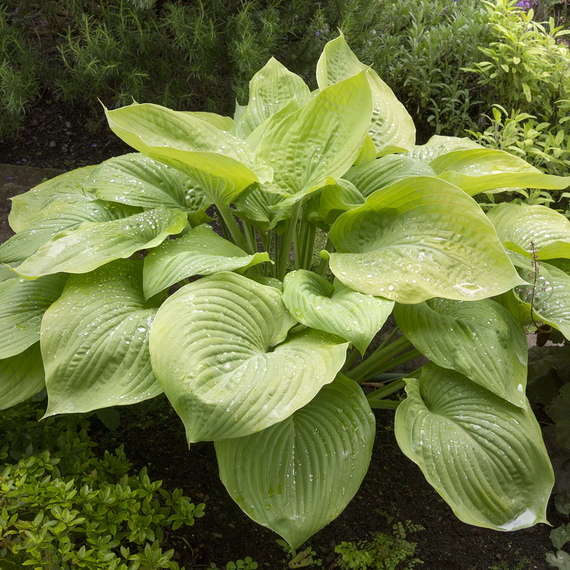
- One of the first and most iconic gold-leaved hostas ever introduced, 'August Moon' dazzles the shade garden with large, deeply puckered, heart-shaped leaves that emerge bright chartreuse in spring and mature to a luminous golden yellow by summer.
- More sun tolerant than most hostas, this vigorous perennial thrives in part shade to full shade and performs exceptionally well with a few hours of gentle morning sun, which intensifies its glowing golden foliage color.
- A low-maintenance, fast-growing shade perennial that reaches an impressive mound up to 20 inches tall and 42 inches wide, topped by tall scapes of pale lavender to white bell-shaped flowers in mid to late summer that attract hummingbirds and pollinators.
- Exceptionally cold hardy from USDA Zones 3 to 9, featuring thick, corrugated leaves with better-than-average slug resistance, and tolerance for heavy shade, black walnut, and a wide range of soil types.
Hosta 'August Moon' is a timeless, award-worthy shade perennial that has remained one of the most popular and best-selling gold hostas in American gardens for decades — and for very good reason. Among the earliest yellow-leaved hosta cultivars ever introduced, this vigorous, clump-forming herbaceous perennial produces a dense, symmetrical mound of large, wide-oval, heart-shaped leaves up to 9 inches long that emerge a vivid chartreuse-green each spring before gradually maturing to a brilliant, warm golden yellow as the season progresses — a glowing transformation that earns the cultivar its evocative name. The heavily puckered and seersucker-textured foliage is boldly veined and notably thick, lending better slug resistance than many thinner-leaved shade perennials. In mid to late summer, graceful scapes rise up to 32 inches above the foliage mound, bearing elegant racemes of pale lavender to white, bell-shaped blooms that attract hummingbirds and butterflies. Reaching a mature spread of up to 42 inches wide, 'August Moon' makes a commanding specimen plant, a striking mass planting, or a luminous border anchor in shaded beds, woodland gardens, and cottage-style landscapes. Hardy from USDA Zones 3 through 9, this reliable, low-maintenance perennial thrives in the challenging shady spots where few other plants can deliver such dramatic foliage color, making it an indispensable staple for Pacific Northwest, Northern California, and Southern Oregon gardens alike.
Plant Description
Hosta 'August Moon' is a medium-large, herbaceous perennial forming a dense, rounded mound of foliage. The wide-oval, heart-shaped leaves are deeply puckered and seersucker-textured with prominent, strongly marked veins and pointed (cuspidate) tips. Individual leaves can reach up to 9 inches long and 8 inches wide. Foliage emerges in spring as a fresh, bright chartreuse-green and gradually transitions to a soft yellow, then a rich, luminous golden yellow through summer — a color shift that is more pronounced with some morning sun exposure. The thick, leathery leaf substance gives 'August Moon' notably better slug resistance than many thinner-leaved hosta cultivars. In mid to late summer, slender, grayish-yellow scapes rise up to 32 inches above the foliage, bearing one-sided racemes of bell-shaped, pale lavender to white flowers that are lightly fragrant. This cultivar is considered one of the most sun-tolerant gold hostas available, a trait that sets it apart from the majority of shade-dependent varieties.
Mature Size
| Attribute | Measurement |
|---|---|
| Foliage Height | 16 to 20 inches |
| Foliage Spread | 36 to 42 inches |
| Flower Scape Height | Up to 32 inches above the foliage |
| Leaf Size | Up to 9 inches long x 8 inches wide |
| Recommended Spacing | 36 to 42 inches center to center |
| Growth Rate | Fast; reaches mature size in approximately 4 to 5 years |
'August Moon' is considered a fast-growing hosta that establishes and fills in its allocated space relatively quickly compared to many other cultivars. Mature clumps can be divided every 4 to 6 years to maintain vigor and to propagate new plants.
Hardiness Zones
Hosta 'August Moon' is exceptionally cold hardy and adaptable across a very wide range of climates. Once established, mature plants can tolerate winter temperatures as low as -40 degrees F without damage.
- USDA Hardiness Zones: 3 to 9
- AHS Heat Zones: 2 to 9
- Well suited to Southern Oregon and Northern California gardens in Zones 7 and 8
- Performs well across the Pacific Northwest, the Upper Midwest, the Northeast, and much of the South with afternoon shade protection
- In hotter climates (Zones 8 to 9), site carefully with afternoon shade to prevent leaf scorch and to maintain best foliage color
Sunlight Requirements
'August Moon' is notably more sun tolerant than the vast majority of hosta cultivars, which is one of its most valued traits. However, the right light balance is key to bringing out its best golden color and keeping the foliage in top condition.
- Ideal exposure: Part shade — approximately 2 to 5 hours of gentle morning sun followed by shade or dappled light in the afternoon
- Acceptable exposure: Full shade (less than 2 hours of direct sun); foliage will lean more lime-green than gold in deep shade
- Avoid: Hot, direct afternoon sun, especially in Zones 7 to 9, which can bleach, scorch, or discolor the leaves
- East-facing beds, the north side of structures with open sky above, and planting under high-canopy deciduous trees are all excellent positioning strategies
- More morning sun exposure generally intensifies the golden yellow color of the foliage
Soil and pH Preferences
Like most hostas, 'August Moon' is not extremely fussy about soil type but performs best in conditions that are rich, moisture-retentive, and well-drained. It is notably tolerant of clay and chalk soils in addition to loam.
- Preferred soil types: Loam, amended clay, or chalk-based soils enriched with organic matter
- Soil pH: Adaptable to acid, neutral, and slightly alkaline soils; ideal range is approximately 6.0 to 7.5
- Drainage: Moist but well-drained is essential — 'August Moon' does not tolerate waterlogged or soggy conditions, which can cause crown rot
- Amend heavy clay soils with generous amounts of compost, aged leaf mold, or well-rotted organic matter to a depth of 12 to 18 inches before planting
- Raised beds or bermed planting areas are recommended in areas with persistently poor drainage
- 'August Moon' is one of the few hostas noted for tolerance of black walnut (Juglans nigra) toxicity, making it suitable for planting in the root zones of black walnut trees
Watering Guide
'August Moon' prefers consistent, even moisture throughout the growing season. While established plants develop some tolerance for occasional dry spells due to their thick leaves, prolonged drought will diminish foliage quality and color.
- Water deeply and consistently, aiming for approximately 1 to 1.5 inches of water per week during the active growing season (spring through late summer)
- Always water at the base of the plant, directing moisture to the soil rather than the leaves — wet foliage overnight encourages slugs, snails, and fungal issues
- Morning watering is strongly preferred to allow any incidental leaf moisture to evaporate during the day
- During heat waves or dry spells, increase watering frequency and monitor the top 1 to 2 inches of soil; water when that layer begins to dry out
- Reduce watering gradually in fall as the plant enters dormancy; no supplemental irrigation is needed once leaves die back
- Apply a 2 to 3 inch layer of shredded bark or leaf mulch around the base (but not against the crown) to help retain soil moisture and regulate temperature
- Avoid allowing the soil to completely dry out, as this can cause premature browning of leaf edges and reduce the intensity of the golden color
Fertilizing
'August Moon' is a moderately heavy feeder that responds beautifully to consistent nutrition, particularly in the first few years of establishment. Avoid over-fertilizing with high-nitrogen products, as excess nitrogen can shift the foliage color toward green rather than gold.
- Apply a balanced slow-release granular fertilizer (such as a 10-10-10 formulation) in early spring as new growth emerges from the soil
- A second application of a balanced or slightly low-nitrogen fertilizer (such as 5-10-10) can be made in mid-spring to support leaf development
- Organic fertilizers such as compost, well-aged manure, or plant-based granular fertilizers are excellent options that feed slowly and improve soil biology
- Avoid fertilizing after mid-summer (typically after July), as late-season feeding encourages soft new growth that is susceptible to frost damage
- Top-dressing the planting area annually with 1 to 2 inches of quality compost in spring is one of the simplest and most effective ways to maintain long-term soil fertility and foliage health
- Container-grown plants benefit from monthly applications of a balanced liquid fertilizer from spring through midsummer
Planting Instructions
- Select a site with appropriate light (morning sun and afternoon shade is ideal) and well-drained soil rich in organic matter.
- Prepare the planting area by working generous amounts of compost or aged leaf mold into the soil to a depth of 12 to 18 inches.
- Dig a planting hole twice as wide as the root ball and only as deep as the original soil line of the plant — the crown must sit exactly at or just slightly above the surrounding soil surface to prevent crown rot.
- If the roots are tightly bound, gently loosen or tease them apart before placing the plant in the hole.
- Backfill with the amended soil, gently firming it around the root ball to eliminate large air pockets without compacting tightly.
- Water deeply and thoroughly immediately after planting to settle the soil and reduce transplant shock.
- Apply a 2 to 3 inch layer of shredded bark or leaf mulch over the root zone, keeping mulch at least 1 inch away from the crown to prevent rot.
- Space individual plants 36 to 42 inches apart (center to center) to allow for mature spread and adequate air circulation.
- Best planting windows are spring (after soil temperatures reach approximately 50 degrees F) and early fall (at least 6 to 8 weeks before the first expected hard frost).
- Protect plants in locations sheltered from strong, drying winds to prevent leaf damage and excessive moisture loss.
Pruning and Seasonal Maintenance
'August Moon' is a genuinely low-maintenance perennial. Routine care is minimal and focuses primarily on keeping the foliage looking its best and managing the plant's seasonal cycle.
- Deadheading: Remove spent flower scapes after blooming by cutting them back to the base. This redirects the plant's energy into foliage growth and keeps the clump looking tidy, though deadheading is not strictly required.
- Discolored or damaged leaves: Trim individual damaged, scorched, or slug-damaged leaves back to the base of the plant at any time during the growing season to maintain a clean appearance.
- Fall cleanup: After the first hard frost kills the foliage, cut all leaves back to the ground. This removes overwintering habitat for slugs, snails, and foliar nematode debris.
- Winter mulching: After the ground begins to freeze in fall, apply 3 to 4 inches of shredded leaf or pine needle mulch over the crown area to protect roots. Remove mulch gradually in early spring as temperatures warm.
- Division: Divide established clumps every 4 to 6 years in early spring (just as the "eyes" emerge) or in early fall to rejuvenate the plant and propagate new divisions. Each division should contain at least 3 to 5 healthy eyes.
- Avoid working around hostas in very early spring when new shoots are emerging — the tender new growth is easily broken and slow to re-emerge.
Seasonal Interest
'August Moon' provides outstanding ornamental interest across multiple seasons, making it a true workhorse in the shade garden.
- Spring: Vibrant, bright chartreuse-green leaves unfurl from the crown in mid to late spring, creating a fresh, luminous burst of color as the garden awakens. The emerging foliage is particularly striking paired with spring bulbs and early-blooming perennials.
- Early Summer: Foliage continues to develop and deepen in color, transitioning from chartreuse toward soft yellow-gold as temperatures rise and sun exposure accumulates.
- Mid to Late Summer: Foliage reaches its peak golden-yellow intensity. Tall scapes bearing pale lavender to white bell-shaped flowers rise dramatically above the mound from July through September, adding vertical interest and attracting hummingbirds and bees.
- Fall: Foliage may begin to soften in color and texture as temperatures cool. The mound holds its presence well into autumn before the first hard frosts signal dormancy.
- Winter: Fully dormant; crowns rest below ground. The previous season's leaf litter can provide some textural interest in the garden bed before cleanup.
Landscape Uses
'August Moon' is one of the most versatile and impactful shade plants available, filling a wide variety of roles in the landscape with ease.
- Shade and woodland gardens: An ideal anchor or mass planting plant for shaded beds under trees or along woodland garden edges, where its golden foliage provides natural light and visual warmth
- Mixed perennial borders: Works beautifully as a mid-border bold foliage plant among ferns, astilbes, coral bells, and other shade-loving perennials
- Specimen plant: Planted alone as a focal point, a mature clump commands significant attention and anchors a garden area with its impressive size and glowing color
- Mass plantings: Massed in groups of three, five, or seven plants in gentle drifts to create a river of shimmering gold through shaded areas
- Foundation plantings: Excellent along the north or east sides of structures where shade is reliable and consistent
- Pathways and borders: Lines shaded garden paths or defines bed edges with its dense, symmetrical mounding habit
- Container growing: Thrives in large containers (24 to 30 inch diameter) on shaded patios, porches, and entryways
- Under black walnut trees: One of the few ornamental perennials tolerant of juglone toxicity produced by black walnut roots
Container Growing
'August Moon' adapts very well to container culture, bringing its glowing golden foliage to patios, shaded entryways, and covered porches where in-ground planting is not possible.
- Choose a container at least 24 to 30 inches in diameter and 18 inches deep to accommodate the plant's mature spread and root system
- Use a high-quality, well-draining potting mix amended with additional compost or aged bark fines for moisture retention
- Ensure the container has ample drainage holes — standing water in the bottom of a pot will quickly cause root and crown rot
- Container plants dry out faster than in-ground plantings and will need more frequent watering, particularly during warm summer months; check soil moisture every 1 to 2 days in hot weather
- Feed container plants with a balanced liquid fertilizer monthly from spring through midsummer
- In USDA Zones 7 to 9, container plants can often be overwintered outdoors in a sheltered location; in colder zones, move containers into an unheated garage or shed after dormancy begins to protect roots from freeze-thaw damage
- Repot or divide container-grown plants every 2 to 3 years to prevent the root mass from becoming too crowded
Companion Plants
The bold golden-yellow foliage of 'August Moon' creates striking contrasts and harmonious combinations with a wide range of shade-loving plants. When selecting companions, choose plants that share similar moisture and light preferences.
- Ferns (Matteuccia struthiopteris — Ostrich Fern; Dryopteris species — Wood Ferns): The airy, fine-textured green fronds of ferns create an elegant contrast to the bold, puckered golden leaves of 'August Moon'
- Astilbe (various): Feathery plumes in white, pink, red, or lavender rising above the hosta mound add vertical floral interest while sharing the same moist, shaded conditions
- Heuchera / Coral Bells (dark-leaved varieties such as 'Plum Pudding', 'Obsidian', or 'Palace Purple'): Deep purple foliage provides stunning color contrast against the bright gold of 'August Moon'
- Hakonechloa macra 'Aureola' (Japanese Forest Grass): Cascading golden-green striped blades complement and echo the warm golden tones of the hosta
- Bleeding Heart (Lamprocapnos spectabilis): Graceful arching stems and fern-like foliage pair beautifully in the early-season shade garden alongside emerging hosta mounds
- Blue-leaved Hostas (such as Hosta 'Halcyon' or 'Elegans'): The cool blue-green of these companion hostas creates a classic, sophisticated color pairing with 'August Moon's' warm gold
- Hydrangea (shade-tolerant varieties): Large-flowering shrubs provide height and seasonal floral drama behind hosta plantings
- Tiarella / Foamflower: Low-growing, shade-loving ground cover with delicate foliage and frothy spring blooms that weave naturally among hosta clumps
Pests and Diseases
While 'August Moon' is considered a relatively tough and resilient hosta, there are a handful of pests and diseases to monitor throughout the growing season. Early detection and prevention are the most effective management strategies.
- Slugs and Snails: The most common hosta pest. They chew irregular, jagged holes in leaves, primarily at night or after rain. 'August Moon's' thick, puckered leaves offer better resistance than thin-leaved varieties, but monitoring is still important. Control with iron phosphate baits (safe for pets and wildlife), diatomaceous earth barriers, or nematode drenches. Avoid overhead watering at night and keep the area around plants clean of debris.
- Deer and Rabbits: Both animals find hosta foliage highly palatable and can cause severe damage in a single night. Use repellent sprays, motion-activated deterrents, or physical fencing in high-pressure areas. Reapply repellents regularly, especially after rain.
- Foliar Nematodes: Microscopic roundworms that move through water films on leaves, causing distinctive brown streaking between leaf veins in mid to late summer. Remove and destroy affected leaves immediately; avoid all overhead watering. There is no chemical cure — prevention through sanitation and dry foliage practices is key.
- Hosta Virus X (HVX): A serious viral disease causing mottled, inky-blue blotching or unusual patterns on the foliage. Infected plants must be removed and destroyed immediately; there is no treatment. Purchase only from reputable growers and never divide tools between infected and healthy plants without thorough sterilization.
- Crown Rot: Caused by fungal pathogens in overly wet or poorly drained conditions. Prevent by ensuring excellent soil drainage, planting the crown at the correct depth, and keeping mulch away from the crown. Remove and destroy severely infected plants.
- Leaf Spots: Occasional fungal or bacterial leaf spots may appear in periods of prolonged wet weather. Improve air circulation by spacing plants correctly and avoid overhead watering. Remove affected leaves promptly.
Wildlife Value
'August Moon' offers genuine value for wildlife, particularly beneficial pollinators and garden birds, making it a worthwhile addition to wildlife-friendly shade gardens.
- Hummingbirds: The pale lavender to white tubular bell-shaped flowers are a known attractant for hummingbirds, which visit the blooms during their mid to late summer flowering period
- Bees and Pollinators: Hosta flowers produce nectar that attracts bumblebees and other native pollinators, particularly during the mid to late summer period when many other garden plants are past peak bloom
- Butterflies: While not a primary butterfly plant, the flowers do attract some butterfly species foraging for nectar in shaded garden settings
- Deer note: While hosta foliage is highly attractive to deer, the showy flowers and dense foliage canopy can provide shelter for small ground-nesting birds and beneficial insects at lower levels of the garden
- Toxicity: All parts of Hosta 'August Moon' are considered toxic to dogs, cats, and horses if ingested. Plant with caution in gardens frequented by pets and consult a veterinarian if ingestion is suspected.
- One of the first and most iconic gold-leaved hostas ever introduced, 'August Moon' dazzles the shade garden with large, deeply puckered, heart-shaped leaves that emerge bright chartreuse in spring and mature to a luminous golden yellow by summer.
- More sun tolerant than most hostas, this vigorous perennial thrives in part shade to full shade and performs exceptionally well with a few hours of gentle morning sun, which intensifies its glowing golden foliage color.
- A low-maintenance, fast-growing shade perennial that reaches an impressive mound up to 20 inches tall and 42 inches wide, topped by tall scapes of pale lavender to white bell-shaped flowers in mid to late summer that attract hummingbirds and pollinators.
- Exceptionally cold hardy from USDA Zones 3 to 9, featuring thick, corrugated leaves with better-than-average slug resistance, and tolerance for heavy shade, black walnut, and a wide range of soil types.
Hosta 'August Moon' is a timeless, award-worthy shade perennial that has remained one of the most popular and best-selling gold hostas in American gardens for decades — and for very good reason. Among the earliest yellow-leaved hosta cultivars ever introduced, this vigorous, clump-forming herbaceous perennial produces a dense, symmetrical mound of large, wide-oval, heart-shaped leaves up to 9 inches long that emerge a vivid chartreuse-green each spring before gradually maturing to a brilliant, warm golden yellow as the season progresses — a glowing transformation that earns the cultivar its evocative name. The heavily puckered and seersucker-textured foliage is boldly veined and notably thick, lending better slug resistance than many thinner-leaved shade perennials. In mid to late summer, graceful scapes rise up to 32 inches above the foliage mound, bearing elegant racemes of pale lavender to white, bell-shaped blooms that attract hummingbirds and butterflies. Reaching a mature spread of up to 42 inches wide, 'August Moon' makes a commanding specimen plant, a striking mass planting, or a luminous border anchor in shaded beds, woodland gardens, and cottage-style landscapes. Hardy from USDA Zones 3 through 9, this reliable, low-maintenance perennial thrives in the challenging shady spots where few other plants can deliver such dramatic foliage color, making it an indispensable staple for Pacific Northwest, Northern California, and Southern Oregon gardens alike.
Plant Description
Hosta 'August Moon' is a medium-large, herbaceous perennial forming a dense, rounded mound of foliage. The wide-oval, heart-shaped leaves are deeply puckered and seersucker-textured with prominent, strongly marked veins and pointed (cuspidate) tips. Individual leaves can reach up to 9 inches long and 8 inches wide. Foliage emerges in spring as a fresh, bright chartreuse-green and gradually transitions to a soft yellow, then a rich, luminous golden yellow through summer — a color shift that is more pronounced with some morning sun exposure. The thick, leathery leaf substance gives 'August Moon' notably better slug resistance than many thinner-leaved hosta cultivars. In mid to late summer, slender, grayish-yellow scapes rise up to 32 inches above the foliage, bearing one-sided racemes of bell-shaped, pale lavender to white flowers that are lightly fragrant. This cultivar is considered one of the most sun-tolerant gold hostas available, a trait that sets it apart from the majority of shade-dependent varieties.
Mature Size
| Attribute | Measurement |
|---|---|
| Foliage Height | 16 to 20 inches |
| Foliage Spread | 36 to 42 inches |
| Flower Scape Height | Up to 32 inches above the foliage |
| Leaf Size | Up to 9 inches long x 8 inches wide |
| Recommended Spacing | 36 to 42 inches center to center |
| Growth Rate | Fast; reaches mature size in approximately 4 to 5 years |
'August Moon' is considered a fast-growing hosta that establishes and fills in its allocated space relatively quickly compared to many other cultivars. Mature clumps can be divided every 4 to 6 years to maintain vigor and to propagate new plants.
Hardiness Zones
Hosta 'August Moon' is exceptionally cold hardy and adaptable across a very wide range of climates. Once established, mature plants can tolerate winter temperatures as low as -40 degrees F without damage.
- USDA Hardiness Zones: 3 to 9
- AHS Heat Zones: 2 to 9
- Well suited to Southern Oregon and Northern California gardens in Zones 7 and 8
- Performs well across the Pacific Northwest, the Upper Midwest, the Northeast, and much of the South with afternoon shade protection
- In hotter climates (Zones 8 to 9), site carefully with afternoon shade to prevent leaf scorch and to maintain best foliage color
Sunlight Requirements
'August Moon' is notably more sun tolerant than the vast majority of hosta cultivars, which is one of its most valued traits. However, the right light balance is key to bringing out its best golden color and keeping the foliage in top condition.
- Ideal exposure: Part shade — approximately 2 to 5 hours of gentle morning sun followed by shade or dappled light in the afternoon
- Acceptable exposure: Full shade (less than 2 hours of direct sun); foliage will lean more lime-green than gold in deep shade
- Avoid: Hot, direct afternoon sun, especially in Zones 7 to 9, which can bleach, scorch, or discolor the leaves
- East-facing beds, the north side of structures with open sky above, and planting under high-canopy deciduous trees are all excellent positioning strategies
- More morning sun exposure generally intensifies the golden yellow color of the foliage
Soil and pH Preferences
Like most hostas, 'August Moon' is not extremely fussy about soil type but performs best in conditions that are rich, moisture-retentive, and well-drained. It is notably tolerant of clay and chalk soils in addition to loam.
- Preferred soil types: Loam, amended clay, or chalk-based soils enriched with organic matter
- Soil pH: Adaptable to acid, neutral, and slightly alkaline soils; ideal range is approximately 6.0 to 7.5
- Drainage: Moist but well-drained is essential — 'August Moon' does not tolerate waterlogged or soggy conditions, which can cause crown rot
- Amend heavy clay soils with generous amounts of compost, aged leaf mold, or well-rotted organic matter to a depth of 12 to 18 inches before planting
- Raised beds or bermed planting areas are recommended in areas with persistently poor drainage
- 'August Moon' is one of the few hostas noted for tolerance of black walnut (Juglans nigra) toxicity, making it suitable for planting in the root zones of black walnut trees
Watering Guide
'August Moon' prefers consistent, even moisture throughout the growing season. While established plants develop some tolerance for occasional dry spells due to their thick leaves, prolonged drought will diminish foliage quality and color.
- Water deeply and consistently, aiming for approximately 1 to 1.5 inches of water per week during the active growing season (spring through late summer)
- Always water at the base of the plant, directing moisture to the soil rather than the leaves — wet foliage overnight encourages slugs, snails, and fungal issues
- Morning watering is strongly preferred to allow any incidental leaf moisture to evaporate during the day
- During heat waves or dry spells, increase watering frequency and monitor the top 1 to 2 inches of soil; water when that layer begins to dry out
- Reduce watering gradually in fall as the plant enters dormancy; no supplemental irrigation is needed once leaves die back
- Apply a 2 to 3 inch layer of shredded bark or leaf mulch around the base (but not against the crown) to help retain soil moisture and regulate temperature
- Avoid allowing the soil to completely dry out, as this can cause premature browning of leaf edges and reduce the intensity of the golden color
Fertilizing
'August Moon' is a moderately heavy feeder that responds beautifully to consistent nutrition, particularly in the first few years of establishment. Avoid over-fertilizing with high-nitrogen products, as excess nitrogen can shift the foliage color toward green rather than gold.
- Apply a balanced slow-release granular fertilizer (such as a 10-10-10 formulation) in early spring as new growth emerges from the soil
- A second application of a balanced or slightly low-nitrogen fertilizer (such as 5-10-10) can be made in mid-spring to support leaf development
- Organic fertilizers such as compost, well-aged manure, or plant-based granular fertilizers are excellent options that feed slowly and improve soil biology
- Avoid fertilizing after mid-summer (typically after July), as late-season feeding encourages soft new growth that is susceptible to frost damage
- Top-dressing the planting area annually with 1 to 2 inches of quality compost in spring is one of the simplest and most effective ways to maintain long-term soil fertility and foliage health
- Container-grown plants benefit from monthly applications of a balanced liquid fertilizer from spring through midsummer
Planting Instructions
- Select a site with appropriate light (morning sun and afternoon shade is ideal) and well-drained soil rich in organic matter.
- Prepare the planting area by working generous amounts of compost or aged leaf mold into the soil to a depth of 12 to 18 inches.
- Dig a planting hole twice as wide as the root ball and only as deep as the original soil line of the plant — the crown must sit exactly at or just slightly above the surrounding soil surface to prevent crown rot.
- If the roots are tightly bound, gently loosen or tease them apart before placing the plant in the hole.
- Backfill with the amended soil, gently firming it around the root ball to eliminate large air pockets without compacting tightly.
- Water deeply and thoroughly immediately after planting to settle the soil and reduce transplant shock.
- Apply a 2 to 3 inch layer of shredded bark or leaf mulch over the root zone, keeping mulch at least 1 inch away from the crown to prevent rot.
- Space individual plants 36 to 42 inches apart (center to center) to allow for mature spread and adequate air circulation.
- Best planting windows are spring (after soil temperatures reach approximately 50 degrees F) and early fall (at least 6 to 8 weeks before the first expected hard frost).
- Protect plants in locations sheltered from strong, drying winds to prevent leaf damage and excessive moisture loss.
Pruning and Seasonal Maintenance
'August Moon' is a genuinely low-maintenance perennial. Routine care is minimal and focuses primarily on keeping the foliage looking its best and managing the plant's seasonal cycle.
- Deadheading: Remove spent flower scapes after blooming by cutting them back to the base. This redirects the plant's energy into foliage growth and keeps the clump looking tidy, though deadheading is not strictly required.
- Discolored or damaged leaves: Trim individual damaged, scorched, or slug-damaged leaves back to the base of the plant at any time during the growing season to maintain a clean appearance.
- Fall cleanup: After the first hard frost kills the foliage, cut all leaves back to the ground. This removes overwintering habitat for slugs, snails, and foliar nematode debris.
- Winter mulching: After the ground begins to freeze in fall, apply 3 to 4 inches of shredded leaf or pine needle mulch over the crown area to protect roots. Remove mulch gradually in early spring as temperatures warm.
- Division: Divide established clumps every 4 to 6 years in early spring (just as the "eyes" emerge) or in early fall to rejuvenate the plant and propagate new divisions. Each division should contain at least 3 to 5 healthy eyes.
- Avoid working around hostas in very early spring when new shoots are emerging — the tender new growth is easily broken and slow to re-emerge.
Seasonal Interest
'August Moon' provides outstanding ornamental interest across multiple seasons, making it a true workhorse in the shade garden.
- Spring: Vibrant, bright chartreuse-green leaves unfurl from the crown in mid to late spring, creating a fresh, luminous burst of color as the garden awakens. The emerging foliage is particularly striking paired with spring bulbs and early-blooming perennials.
- Early Summer: Foliage continues to develop and deepen in color, transitioning from chartreuse toward soft yellow-gold as temperatures rise and sun exposure accumulates.
- Mid to Late Summer: Foliage reaches its peak golden-yellow intensity. Tall scapes bearing pale lavender to white bell-shaped flowers rise dramatically above the mound from July through September, adding vertical interest and attracting hummingbirds and bees.
- Fall: Foliage may begin to soften in color and texture as temperatures cool. The mound holds its presence well into autumn before the first hard frosts signal dormancy.
- Winter: Fully dormant; crowns rest below ground. The previous season's leaf litter can provide some textural interest in the garden bed before cleanup.
Landscape Uses
'August Moon' is one of the most versatile and impactful shade plants available, filling a wide variety of roles in the landscape with ease.
- Shade and woodland gardens: An ideal anchor or mass planting plant for shaded beds under trees or along woodland garden edges, where its golden foliage provides natural light and visual warmth
- Mixed perennial borders: Works beautifully as a mid-border bold foliage plant among ferns, astilbes, coral bells, and other shade-loving perennials
- Specimen plant: Planted alone as a focal point, a mature clump commands significant attention and anchors a garden area with its impressive size and glowing color
- Mass plantings: Massed in groups of three, five, or seven plants in gentle drifts to create a river of shimmering gold through shaded areas
- Foundation plantings: Excellent along the north or east sides of structures where shade is reliable and consistent
- Pathways and borders: Lines shaded garden paths or defines bed edges with its dense, symmetrical mounding habit
- Container growing: Thrives in large containers (24 to 30 inch diameter) on shaded patios, porches, and entryways
- Under black walnut trees: One of the few ornamental perennials tolerant of juglone toxicity produced by black walnut roots
Container Growing
'August Moon' adapts very well to container culture, bringing its glowing golden foliage to patios, shaded entryways, and covered porches where in-ground planting is not possible.
- Choose a container at least 24 to 30 inches in diameter and 18 inches deep to accommodate the plant's mature spread and root system
- Use a high-quality, well-draining potting mix amended with additional compost or aged bark fines for moisture retention
- Ensure the container has ample drainage holes — standing water in the bottom of a pot will quickly cause root and crown rot
- Container plants dry out faster than in-ground plantings and will need more frequent watering, particularly during warm summer months; check soil moisture every 1 to 2 days in hot weather
- Feed container plants with a balanced liquid fertilizer monthly from spring through midsummer
- In USDA Zones 7 to 9, container plants can often be overwintered outdoors in a sheltered location; in colder zones, move containers into an unheated garage or shed after dormancy begins to protect roots from freeze-thaw damage
- Repot or divide container-grown plants every 2 to 3 years to prevent the root mass from becoming too crowded
Companion Plants
The bold golden-yellow foliage of 'August Moon' creates striking contrasts and harmonious combinations with a wide range of shade-loving plants. When selecting companions, choose plants that share similar moisture and light preferences.
- Ferns (Matteuccia struthiopteris — Ostrich Fern; Dryopteris species — Wood Ferns): The airy, fine-textured green fronds of ferns create an elegant contrast to the bold, puckered golden leaves of 'August Moon'
- Astilbe (various): Feathery plumes in white, pink, red, or lavender rising above the hosta mound add vertical floral interest while sharing the same moist, shaded conditions
- Heuchera / Coral Bells (dark-leaved varieties such as 'Plum Pudding', 'Obsidian', or 'Palace Purple'): Deep purple foliage provides stunning color contrast against the bright gold of 'August Moon'
- Hakonechloa macra 'Aureola' (Japanese Forest Grass): Cascading golden-green striped blades complement and echo the warm golden tones of the hosta
- Bleeding Heart (Lamprocapnos spectabilis): Graceful arching stems and fern-like foliage pair beautifully in the early-season shade garden alongside emerging hosta mounds
- Blue-leaved Hostas (such as Hosta 'Halcyon' or 'Elegans'): The cool blue-green of these companion hostas creates a classic, sophisticated color pairing with 'August Moon's' warm gold
- Hydrangea (shade-tolerant varieties): Large-flowering shrubs provide height and seasonal floral drama behind hosta plantings
- Tiarella / Foamflower: Low-growing, shade-loving ground cover with delicate foliage and frothy spring blooms that weave naturally among hosta clumps
Pests and Diseases
While 'August Moon' is considered a relatively tough and resilient hosta, there are a handful of pests and diseases to monitor throughout the growing season. Early detection and prevention are the most effective management strategies.
- Slugs and Snails: The most common hosta pest. They chew irregular, jagged holes in leaves, primarily at night or after rain. 'August Moon's' thick, puckered leaves offer better resistance than thin-leaved varieties, but monitoring is still important. Control with iron phosphate baits (safe for pets and wildlife), diatomaceous earth barriers, or nematode drenches. Avoid overhead watering at night and keep the area around plants clean of debris.
- Deer and Rabbits: Both animals find hosta foliage highly palatable and can cause severe damage in a single night. Use repellent sprays, motion-activated deterrents, or physical fencing in high-pressure areas. Reapply repellents regularly, especially after rain.
- Foliar Nematodes: Microscopic roundworms that move through water films on leaves, causing distinctive brown streaking between leaf veins in mid to late summer. Remove and destroy affected leaves immediately; avoid all overhead watering. There is no chemical cure — prevention through sanitation and dry foliage practices is key.
- Hosta Virus X (HVX): A serious viral disease causing mottled, inky-blue blotching or unusual patterns on the foliage. Infected plants must be removed and destroyed immediately; there is no treatment. Purchase only from reputable growers and never divide tools between infected and healthy plants without thorough sterilization.
- Crown Rot: Caused by fungal pathogens in overly wet or poorly drained conditions. Prevent by ensuring excellent soil drainage, planting the crown at the correct depth, and keeping mulch away from the crown. Remove and destroy severely infected plants.
- Leaf Spots: Occasional fungal or bacterial leaf spots may appear in periods of prolonged wet weather. Improve air circulation by spacing plants correctly and avoid overhead watering. Remove affected leaves promptly.
Wildlife Value
'August Moon' offers genuine value for wildlife, particularly beneficial pollinators and garden birds, making it a worthwhile addition to wildlife-friendly shade gardens.
- Hummingbirds: The pale lavender to white tubular bell-shaped flowers are a known attractant for hummingbirds, which visit the blooms during their mid to late summer flowering period
- Bees and Pollinators: Hosta flowers produce nectar that attracts bumblebees and other native pollinators, particularly during the mid to late summer period when many other garden plants are past peak bloom
- Butterflies: While not a primary butterfly plant, the flowers do attract some butterfly species foraging for nectar in shaded garden settings
- Deer note: While hosta foliage is highly attractive to deer, the showy flowers and dense foliage canopy can provide shelter for small ground-nesting birds and beneficial insects at lower levels of the garden
- Toxicity: All parts of Hosta 'August Moon' are considered toxic to dogs, cats, and horses if ingested. Plant with caution in gardens frequented by pets and consult a veterinarian if ingestion is suspected.
Related Products