
Zoom the image with the mouse
Francee Hosta - 5 Gallon
SKU:
2018375
UPC:
014949416952
$59.99
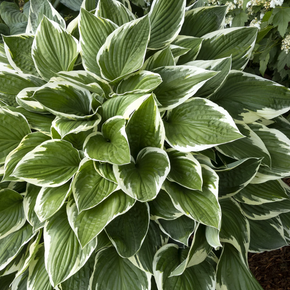
- Striking dark green, heart-shaped leaves rimmed with crisp narrow white margins form a bold, dense mound that brightens shady spots from spring through fall.
- A multiple award-winner recognized by the American Hosta Society and the Royal Horticultural Society's Award of Garden Merit - widely regarded as one of the finest white-margined hostas available.
- Tall lavender flower scapes rise up to 30 inches above the foliage in mid to late summer, attracting hummingbirds and pollinators to the shade garden.
- Exceptionally low-maintenance and cold-hardy in USDA Zones 3-9, thriving in part shade to full shade as a groundcover, border plant, woodland accent, or container specimen.
Hosta 'Francee' (Hosta x 'Francee') is a classic, award-winning herbaceous perennial celebrated as one of the quintessential shade garden plants in American horticulture. Forming a dense, arching mound typically 18-24 inches tall and spreading 30-36 inches wide, 'Francee' produces broadly heart-shaped, rich dark green leaves up to 8 inches long, each elegantly edged with a narrow, clean white margin that holds its crisp variegation beautifully throughout the entire growing season. A sport of Hosta 'Fortunei Albomarginata', 'Francee' is prized for its rapid growth rate, reliable vigor, and exceptional adaptability across USDA Hardiness Zones 3 through 9. In mid to late summer, tall leafy scapes rise 28-30 inches above the foliage and bear funnel-shaped pale lavender blooms in dense racemes that attract hummingbirds and bees. This versatile perennial excels as a groundcover beneath trees and shrubs, as a bold border edging plant, massed in woodland gardens, or as a striking container specimen on shaded patios and entryways. Whether used as a single focal point or planted in sweeping drifts, Hosta 'Francee' delivers season-long elegance with minimal effort, making it an indispensable choice for gardeners looking to add texture, contrast, and lush foliage interest to challenging shaded areas.
Plant Description
Hosta 'Francee' is a rhizomatous, clump-forming herbaceous perennial in the family Asparagaceae, originating as a sport of Hosta 'Fortunei Albomarginata'. It is widely considered one of the best white-margined hostas ever introduced and has earned multiple prestigious awards from both the American Hosta Society and the Royal Horticultural Society. The plant forms a dense, arching mound of broadly heart-shaped leaves that are rich dark green with conspicuous narrow white margins. The variegation is stable and holds excellent color from spring emergence through fall senescence. In mid to late summer, tall, leafy scapes rise well above the foliage mound and bear funnel-shaped, pale lavender flowers in one-sided racemes. 'Francee' is noted for its relatively rapid growth rate compared to many other hostas, making it especially effective for filling in landscape areas efficiently. As a true herbaceous perennial, it dies back completely to the ground each winter and re-emerges reliably each spring.
Mature Size
| Characteristic | Measurement |
|---|---|
| Foliage Height | 18 - 24 inches (45 - 60 cm) |
| Mature Spread | 30 - 36 inches (75 - 90 cm) |
| Leaf Length | Up to 8 inches (20 cm) |
| Flower Scape Height | 28 - 30 inches (70 - 76 cm) above foliage |
| Habit | Dense, arching mound |
| Growth Rate | Rapid for a hosta |
Hardiness Zones
Hosta 'Francee' is exceptionally cold-hardy and adaptable, thriving across a wide range of climates throughout the United States and beyond.
- USDA Hardiness Zones: 3 - 9
- AHS Heat Zones: 2 - 9
- Hardy from the coldest regions of the northern US and Canada all the way through the warm summers of the South and Pacific Coast.
- In Southern Oregon and Northern California, 'Francee' performs exceptionally well and is reliably winter-hardy with minimal protection needed.
- In Zones 8 and 9, providing afternoon shade and consistent moisture during the hottest months is especially important to prevent leaf scorch.
- In the coldest zones, apply a layer of mulch over the crown in late fall after the foliage has died back to insulate against hard freezes and prevent winter heaving.
- Tolerant of black walnut toxicity (juglone), making it a suitable candidate for planting beneath black walnut trees where many other perennials fail.
Sunlight Requirements
'Francee' performs best in part shade to full shade and is one of the more sun-tolerant hostas available, though it still requires protection from intense direct afternoon sun.
- Ideal exposure: Part shade - dappled or filtered light, or morning sun with afternoon shade.
- Full shade: Tolerated well; growth may be slightly slower but leaf color remains excellent.
- 'Francee' exhibits greater sun tolerance than many other hostas, and some morning sun can actually help to intensify the contrast between the white margins and dark green leaf centers.
- Hot, direct afternoon sun - especially in Zones 7-9 - is the main cause of leaf scorch, bleaching, and wilting. Always protect from afternoon sun in warmer climates.
- Under deep shade conditions, 'Francee' will still produce lush foliage but may flower less prolifically and grow more slowly.
- Ideal settings include beneath deciduous trees, on the north or east side of a building, or along shaded borders and woodland paths.
Soil and pH Preferences
Like all hostas, 'Francee' thrives in fertile, organically rich soils with good drainage and consistent moisture. Soil preparation is key to long-term performance.
- Preferred soil types: Loam or sandy loam with high organic matter; amended clay soils can also work well.
- Soil pH: Slightly acidic to neutral - ideally between 5.8 and 6.5, but acceptable up to 7.0 to 7.5.
- Drainage: Moist but well-drained; 'Francee' does not tolerate waterlogged or constantly soggy conditions, which can lead to crown and root rot.
- Amend planting areas generously with compost or well-rotted organic matter before planting to improve both drainage and moisture retention.
- Sandy loam is preferable to heavy clay because it provides better root aeration, though clay soils can be improved with organic amendments.
- An annual top-dressing of compost or shredded leaf mulch each fall helps maintain ideal soil conditions and feeds the plant naturally over time.
- Avoid planting in low-lying areas prone to standing water, especially during winter dormancy.
Watering Guide
Consistent moisture is important for 'Francee' to develop its characteristic lush, full mounds of foliage and to prevent premature dormancy during hot weather.
- Keep soil evenly moist throughout the active growing season, particularly during spring emergence and summer flowering.
- Water deeply and early in the morning, directing water at the soil level rather than overhead on the foliage to reduce disease risk and slug attraction.
- Avoid overwatering - allow the top layer of soil to approach dryness between waterings, especially later in the season as days shorten.
- Established plants in the ground develop some tolerance for short dry spells, particularly those with thicker leaves, but prolonged drought can force early dormancy and reduce plant vigor and size the following year.
- A 2-3 inch layer of organic mulch around (but not directly touching) the crown will help retain soil moisture, moderate temperature, and reduce watering frequency.
- During the dormant winter period, water needs are minimal; dormant plants in the ground rarely need supplemental irrigation.
- Container-grown plants dry out faster than in-ground plants and will typically need more frequent monitoring and watering, especially during warm summer months.
Fertilizing
Hosta 'Francee' is not a heavy feeder, but it does respond well to modest, well-timed fertilizing that supports vigorous, healthy foliage growth.
- Apply a balanced, slow-release granular fertilizer (such as a 10-10-10 or similar formulation) in early spring as new growth begins to emerge.
- Alternatively, use a liquid fertilizer application in early spring; a balanced formulation such as 20-10-20 applied lightly is effective.
- Important: Keep all granular fertilizers well away from the crown of the plant, as direct contact can cause burning and injury. Liquid applications are the safest method near the crown.
- Avoid over-fertilizing, which can encourage excessive, soft growth more susceptible to pest damage and can lead to root rot if nitrogen levels are too high.
- Reduce or eliminate nitrogen-rich fertilizing by late summer to allow the plant to begin hardening off naturally for winter dormancy.
- An annual top-dressing of compost around the plant each spring or fall can serve as a gentle, organic slow-release fertilizer and soil conditioner.
- Container-grown plants will need more regular fertilizing throughout the growing season, as nutrients leach out more quickly with frequent watering.
Planting Instructions
Follow these steps to give your Hosta 'Francee' the best possible start in the ground or in a container.
- Choose the right site: Select a location with part shade to full shade, protected from hot afternoon sun, with well-drained soil. Morning sun exposure is ideal for best color contrast.
- Prepare the soil: Loosen the soil to a depth of 12-18 inches and incorporate generous amounts of compost or aged organic matter to improve fertility and drainage.
- Dig the hole: Dig a hole roughly twice as wide as the root ball and just deep enough so the crown (the growing eyes) sits at or just slightly below the soil surface.
- Position the plant: Spread or fan out the roots gently before backfilling to encourage outward root growth and establishment.
- Backfill and firm: Fill the hole with amended soil and firm it gently around the roots to eliminate air pockets. Do not bury the crown deeply.
- Water thoroughly: Water deeply after planting, and maintain consistent moisture for the first several weeks during establishment.
- Mulch: Apply 2-3 inches of shredded bark or leaf mulch around the plant, keeping mulch a few inches away from the crown to prevent rot.
- Spacing: Space plants 30-48 inches on center to allow for the mature spread of 30-36 inches and adequate air circulation between plants. Closer spacing creates a faster groundcover effect.
Pruning and Maintenance
Hosta 'Francee' is a low-maintenance perennial that requires only minimal seasonal care to look its best year after year.
- During the growing season: Remove any dead, damaged, discolored, or slug-damaged leaves by cutting them cleanly at the base of the petiole to keep the mound looking tidy and to improve air circulation.
- After blooming: Cut flower scapes back to the base of the plant after blooming is complete. Removing spent scapes redirects energy back into the foliage and keeps the plant looking neat.
- Fall cleanup: After the first hard frost kills the foliage, cut all stems and leaves down to the ground. Removing all plant debris in fall eliminates overwintering sites for slug eggs and other pest insects.
- Division: Divide clumps every 3-5 years to maintain vigor and control spread. Division is easiest in early spring just as the "eyes" (growing points) begin to emerge from the soil, or in early fall. Each division should contain at least 3 growing eyes.
- Winter mulching: In colder zones (Zones 3-5), apply a fresh layer of shredded mulch or straw over the crown after the ground begins to freeze in late fall to prevent frost heaving.
- No deadheading is required if flower scape removal is not a priority, as the scapes do not set significant seed and the plant will not become invasive.
Seasonal Interest
'Francee' provides multi-season ornamental interest from early spring through late fall, making it a workhorse plant in the shade garden calendar.
- Spring: New growth emerges as tightly rolled, spear-like shoots in mid-spring, quickly unfurling to reveal fresh, dark green leaves with bright white margins. The emerging foliage is especially attractive and can be viewed as a seasonal spectacle.
- Early to mid summer: The mound of boldly variegated foliage reaches its full size and density, creating a striking, weed-suppressing carpet of green and white in the shade garden.
- Mid to late summer: Tall lavender flower scapes rise 28-30 inches above the foliage, bearing funnel-shaped pale lavender blooms. This is also when 'Francee' is at its peak for attracting hummingbirds.
- Fall: Foliage remains attractive and holds good color well into autumn before the first frosts. As temperatures cool, the foliage takes on golden-yellow tones before dying back for the season.
- Winter: The plant is fully dormant and invisible above ground, allowing the garden bed to be refreshed or underplanted with spring bulbs to fill the seasonal gap.
Landscape Uses
Hosta 'Francee' is one of the most versatile shade perennials available, lending itself to a wide range of landscape applications thanks to its bold texture, attractive variegation, and vigorous spreading habit.
- Groundcover: Forms a dense, weed-suppressing mat when massed; ideal for carpeting large areas under trees or along shaded slopes.
- Shade and woodland garden: A classic cornerstone plant for shaded borders, woodland paths, and naturalized garden areas.
- Border edging: The clean, consistent mounding habit and contrasting white-edged foliage make 'Francee' an excellent edging plant along walkways, driveways, and garden beds in shaded settings.
- Underplanting: Spectacular when used to underplant deciduous trees, large shrubs, roses, and rhododendrons, where it fills the space at a lower tier beautifully.
- Container planting: Thrives in large patio containers and urns (minimum 16-inch diameter), bringing a lush, tropical feel to shaded entryways, decks, and patios.
- Focal point or specimen plant: A mature, well-established clump is bold enough to stand alone as a specimen plant in the right setting.
- Mass planting: Planting multiples together creates high-impact swaths of contrasting foliage that are dramatic in the landscape.
- Bulb cover: The large, emerging leaves of 'Francee' are excellent for concealing the fading foliage of spring-blooming bulbs such as tulips and daffodils.
- City and courtyard gardens: Tolerates the air quality and reflected light typical of urban environments, making it suitable for city gardens and enclosed courtyard spaces.
Companion Plants
Hosta 'Francee' pairs beautifully with a wide variety of shade-loving perennials, grasses, ferns, and shrubs. Choose companions that share similar moisture and light requirements.
- Astilbe: Feathery plumes in pink, red, or white provide vertical contrast and bloom at a similar time, creating a classic shade garden combination.
- Ferns (Ostrich Fern, Japanese Painted Fern): Delicate, airy fronds beautifully contrast 'Francee's broad, bold leaves; both thrive in moist, shady conditions.
- Brunnera macrophylla (Siberian Bugloss): Heart-shaped silvery foliage echoes the leaf shape of 'Francee' while adding a lighter tone to the planting.
- Hakone Grass (Hakonechloa macra 'Aureola'): Cascading golden-variegated grass provides a graceful, contrasting texture alongside 'Francee's structured mound.
- Heuchera (Coral Bells): Colorful, mounding foliage in burgundy, caramel, or lime creates vivid color contrast in the shaded border.
- Hydrangea: Large flowering shrubs provide a dramatic backdrop and complement 'Francee's foliage beautifully in woodland-style plantings.
- Solomon's Seal (Polygonatum): Arching stems with pendant white flowers and clean foliage create an elegant layered effect alongside hostas.
- Tiarella (Foamflower): A low-growing, spreading groundcover with attractive foliage and delicate spring flowers that weaves nicely between hosta clumps.
- Hellebores (Lenten Rose): Evergreen foliage and early spring blooms bridge the gap before hostas fully emerge, and both thrive in the same shaded, well-drained conditions.
- Aruncus dioicus (Goatsbeard): Tall, creamy-white plumes provide bold vertical interest above the hosta mound in summer.
Pests and Diseases
Hosta 'Francee' is generally quite tough and trouble-free, but a few common pests and diseases are worth monitoring for, especially early in the season.
- Slugs and Snails: The most common and damaging pest of hostas. They feed at night and leave ragged, irregular holes in leaves. Monitor closely in spring when new growth is tender. Apply iron phosphate or other slug bait in early spring before damage begins, especially under mulch where slugs hide. Removing fall leaf debris eliminates overwintering egg masses.
- Deer and Rabbits: Both animals readily browse hosta foliage. While 'Francee' is sometimes listed with moderate deer resistance, it is not deer-proof. Physical barriers, repellent sprays, or companion planting with deer-deterrent species are the most reliable strategies.
- Aphids: May cluster on new spring growth, causing leaves to appear distorted or puckered when they unfurl. Knock off with a strong water spray or treat with insecticidal soap if infestations are heavy.
- Foliar Nematodes: Microscopic roundworms that feed inside leaf tissue, causing distinctive interveinal browning or yellowing that follows the leaf veins. There is no chemical cure; remove and destroy affected leaves and avoid overhead watering to limit spread.
- Hosta Virus X (HVX): A serious viral disease that causes unusual mottling, ink-bleed patterns, or twisted, distorted foliage. There is no cure. Remove and destroy any infected plants immediately. Never divide or share infected plants.
- Crown Rot and Root Rot: Caused by overly wet or waterlogged conditions, especially in poorly drained soils. Prevent by ensuring good soil drainage and avoiding overwatering.
- Leaf Scorch: Not a disease, but a cultural issue caused by too much direct sun, especially afternoon sun in warmer climates. Relocate plants or provide additional shade as needed.
- Voles and Mice: Can feed on hosta roots and crowns during winter, particularly under heavy mulch. Use rodent traps or bait stations near planting areas if damage is observed.
Container Growing
Hosta 'Francee' adapts very well to container culture and makes a stunning, architectural statement on shaded patios, decks, porches, and entryways.
- Container size: Use a container with a minimum diameter of 16 inches to allow room for the mature spread. Larger containers retain moisture more evenly and support bigger, more impressive specimens.
- Potting mix: Use a high-quality, well-draining potting mix. A bark-based or peat-based mix with added perlite for aeration is ideal. Avoid heavy garden soil in containers, which can compact and restrict drainage.
- Drainage: Ensure containers have adequate drainage holes to prevent soggy roots. Never allow pots to sit in standing water for prolonged periods.
- Sunlight: Container-grown hostas are more susceptible to sunscald than those in the ground, as root zone temperatures can fluctuate more dramatically in pots. Keep containers in a location with morning sun and afternoon shade, or full filtered shade.
- Watering: Containers dry out significantly faster than in-ground plants. Check soil moisture frequently during warm weather and water thoroughly when the top inch of soil feels dry.
- Fertilizing: Feed container-grown plants with a balanced liquid fertilizer every 4-6 weeks during the active growing season, as nutrients leach out more rapidly with regular watering.
- Winter care: In colder climates, containers can be moved to an unheated garage, shed, or sheltered area to protect the roots from hard freezing, as pot-grown plants are more vulnerable to freeze damage than in-ground plants. Alternatively, sink the container into the ground for the winter months.
- Repot every 2-3 years or when the plant visibly outgrows its container, refreshing the potting mix at the same time.
Wildlife Value
While 'Francee' is primarily grown as an ornamental foliage plant, it does provide meaningful benefits to garden wildlife, particularly during its summer bloom period.
- Hummingbirds: The tubular, funnel-shaped pale lavender flowers are a known attractant for hummingbirds, which are drawn to the blooms during their summer feeding rounds.
- Bees and Pollinators: The flowers also attract bees and other beneficial pollinators, adding ecological value to the shade garden even in low-light conditions where flowering plants are often scarce.
- Butterflies: The nectar-bearing lavender flowers can attract certain butterfly species seeking shade garden nectar sources in summer.
- Deer and Rabbits: While this is more of a challenge than a benefit, it is worth noting that both deer and rabbits are attracted to hosta foliage as a food source, requiring protective measures in areas with high wildlife pressure.
- Toxicity note: All parts of Hosta 'Francee' are considered toxic to dogs, cats, and horses if ingested. The saponins present in the plant can cause vomiting, diarrhea, and lethargy in pets. Plant with caution in gardens frequented by pets.
Awards and Recognition
Hosta 'Francee' is one of the most decorated hostas in cultivation, with a long list of awards reflecting its outstanding garden performance over many decades.
- American Hosta Society Best Green Hosta in a Garden Award - 1976
- American Hosta Society Eunice Fisher Award - Best Large Leaf Hosta
- Royal Horticultural Society Award of Garden Merit (AGM) - 1993
- American Hosta Society Benedict Garden Performance Award - Honorable Mention - 2006
- American Hosta Society Benedict Garden Performance Award of Merit - 2009
- 'Francee' was originally selected by M. Klopping and recognized by the American Hosta Society in 1986, and has remained one of the best-selling and most widely planted hostas in the world ever since.
- Consistently rated by hosta enthusiasts and landscape professionals as one of the top white-margined hostas for overall garden performance, reliability, and visual impact.
- Striking dark green, heart-shaped leaves rimmed with crisp narrow white margins form a bold, dense mound that brightens shady spots from spring through fall.
- A multiple award-winner recognized by the American Hosta Society and the Royal Horticultural Society's Award of Garden Merit - widely regarded as one of the finest white-margined hostas available.
- Tall lavender flower scapes rise up to 30 inches above the foliage in mid to late summer, attracting hummingbirds and pollinators to the shade garden.
- Exceptionally low-maintenance and cold-hardy in USDA Zones 3-9, thriving in part shade to full shade as a groundcover, border plant, woodland accent, or container specimen.
Hosta 'Francee' (Hosta x 'Francee') is a classic, award-winning herbaceous perennial celebrated as one of the quintessential shade garden plants in American horticulture. Forming a dense, arching mound typically 18-24 inches tall and spreading 30-36 inches wide, 'Francee' produces broadly heart-shaped, rich dark green leaves up to 8 inches long, each elegantly edged with a narrow, clean white margin that holds its crisp variegation beautifully throughout the entire growing season. A sport of Hosta 'Fortunei Albomarginata', 'Francee' is prized for its rapid growth rate, reliable vigor, and exceptional adaptability across USDA Hardiness Zones 3 through 9. In mid to late summer, tall leafy scapes rise 28-30 inches above the foliage and bear funnel-shaped pale lavender blooms in dense racemes that attract hummingbirds and bees. This versatile perennial excels as a groundcover beneath trees and shrubs, as a bold border edging plant, massed in woodland gardens, or as a striking container specimen on shaded patios and entryways. Whether used as a single focal point or planted in sweeping drifts, Hosta 'Francee' delivers season-long elegance with minimal effort, making it an indispensable choice for gardeners looking to add texture, contrast, and lush foliage interest to challenging shaded areas.
Plant Description
Hosta 'Francee' is a rhizomatous, clump-forming herbaceous perennial in the family Asparagaceae, originating as a sport of Hosta 'Fortunei Albomarginata'. It is widely considered one of the best white-margined hostas ever introduced and has earned multiple prestigious awards from both the American Hosta Society and the Royal Horticultural Society. The plant forms a dense, arching mound of broadly heart-shaped leaves that are rich dark green with conspicuous narrow white margins. The variegation is stable and holds excellent color from spring emergence through fall senescence. In mid to late summer, tall, leafy scapes rise well above the foliage mound and bear funnel-shaped, pale lavender flowers in one-sided racemes. 'Francee' is noted for its relatively rapid growth rate compared to many other hostas, making it especially effective for filling in landscape areas efficiently. As a true herbaceous perennial, it dies back completely to the ground each winter and re-emerges reliably each spring.
Mature Size
| Characteristic | Measurement |
|---|---|
| Foliage Height | 18 - 24 inches (45 - 60 cm) |
| Mature Spread | 30 - 36 inches (75 - 90 cm) |
| Leaf Length | Up to 8 inches (20 cm) |
| Flower Scape Height | 28 - 30 inches (70 - 76 cm) above foliage |
| Habit | Dense, arching mound |
| Growth Rate | Rapid for a hosta |
Hardiness Zones
Hosta 'Francee' is exceptionally cold-hardy and adaptable, thriving across a wide range of climates throughout the United States and beyond.
- USDA Hardiness Zones: 3 - 9
- AHS Heat Zones: 2 - 9
- Hardy from the coldest regions of the northern US and Canada all the way through the warm summers of the South and Pacific Coast.
- In Southern Oregon and Northern California, 'Francee' performs exceptionally well and is reliably winter-hardy with minimal protection needed.
- In Zones 8 and 9, providing afternoon shade and consistent moisture during the hottest months is especially important to prevent leaf scorch.
- In the coldest zones, apply a layer of mulch over the crown in late fall after the foliage has died back to insulate against hard freezes and prevent winter heaving.
- Tolerant of black walnut toxicity (juglone), making it a suitable candidate for planting beneath black walnut trees where many other perennials fail.
Sunlight Requirements
'Francee' performs best in part shade to full shade and is one of the more sun-tolerant hostas available, though it still requires protection from intense direct afternoon sun.
- Ideal exposure: Part shade - dappled or filtered light, or morning sun with afternoon shade.
- Full shade: Tolerated well; growth may be slightly slower but leaf color remains excellent.
- 'Francee' exhibits greater sun tolerance than many other hostas, and some morning sun can actually help to intensify the contrast between the white margins and dark green leaf centers.
- Hot, direct afternoon sun - especially in Zones 7-9 - is the main cause of leaf scorch, bleaching, and wilting. Always protect from afternoon sun in warmer climates.
- Under deep shade conditions, 'Francee' will still produce lush foliage but may flower less prolifically and grow more slowly.
- Ideal settings include beneath deciduous trees, on the north or east side of a building, or along shaded borders and woodland paths.
Soil and pH Preferences
Like all hostas, 'Francee' thrives in fertile, organically rich soils with good drainage and consistent moisture. Soil preparation is key to long-term performance.
- Preferred soil types: Loam or sandy loam with high organic matter; amended clay soils can also work well.
- Soil pH: Slightly acidic to neutral - ideally between 5.8 and 6.5, but acceptable up to 7.0 to 7.5.
- Drainage: Moist but well-drained; 'Francee' does not tolerate waterlogged or constantly soggy conditions, which can lead to crown and root rot.
- Amend planting areas generously with compost or well-rotted organic matter before planting to improve both drainage and moisture retention.
- Sandy loam is preferable to heavy clay because it provides better root aeration, though clay soils can be improved with organic amendments.
- An annual top-dressing of compost or shredded leaf mulch each fall helps maintain ideal soil conditions and feeds the plant naturally over time.
- Avoid planting in low-lying areas prone to standing water, especially during winter dormancy.
Watering Guide
Consistent moisture is important for 'Francee' to develop its characteristic lush, full mounds of foliage and to prevent premature dormancy during hot weather.
- Keep soil evenly moist throughout the active growing season, particularly during spring emergence and summer flowering.
- Water deeply and early in the morning, directing water at the soil level rather than overhead on the foliage to reduce disease risk and slug attraction.
- Avoid overwatering - allow the top layer of soil to approach dryness between waterings, especially later in the season as days shorten.
- Established plants in the ground develop some tolerance for short dry spells, particularly those with thicker leaves, but prolonged drought can force early dormancy and reduce plant vigor and size the following year.
- A 2-3 inch layer of organic mulch around (but not directly touching) the crown will help retain soil moisture, moderate temperature, and reduce watering frequency.
- During the dormant winter period, water needs are minimal; dormant plants in the ground rarely need supplemental irrigation.
- Container-grown plants dry out faster than in-ground plants and will typically need more frequent monitoring and watering, especially during warm summer months.
Fertilizing
Hosta 'Francee' is not a heavy feeder, but it does respond well to modest, well-timed fertilizing that supports vigorous, healthy foliage growth.
- Apply a balanced, slow-release granular fertilizer (such as a 10-10-10 or similar formulation) in early spring as new growth begins to emerge.
- Alternatively, use a liquid fertilizer application in early spring; a balanced formulation such as 20-10-20 applied lightly is effective.
- Important: Keep all granular fertilizers well away from the crown of the plant, as direct contact can cause burning and injury. Liquid applications are the safest method near the crown.
- Avoid over-fertilizing, which can encourage excessive, soft growth more susceptible to pest damage and can lead to root rot if nitrogen levels are too high.
- Reduce or eliminate nitrogen-rich fertilizing by late summer to allow the plant to begin hardening off naturally for winter dormancy.
- An annual top-dressing of compost around the plant each spring or fall can serve as a gentle, organic slow-release fertilizer and soil conditioner.
- Container-grown plants will need more regular fertilizing throughout the growing season, as nutrients leach out more quickly with frequent watering.
Planting Instructions
Follow these steps to give your Hosta 'Francee' the best possible start in the ground or in a container.
- Choose the right site: Select a location with part shade to full shade, protected from hot afternoon sun, with well-drained soil. Morning sun exposure is ideal for best color contrast.
- Prepare the soil: Loosen the soil to a depth of 12-18 inches and incorporate generous amounts of compost or aged organic matter to improve fertility and drainage.
- Dig the hole: Dig a hole roughly twice as wide as the root ball and just deep enough so the crown (the growing eyes) sits at or just slightly below the soil surface.
- Position the plant: Spread or fan out the roots gently before backfilling to encourage outward root growth and establishment.
- Backfill and firm: Fill the hole with amended soil and firm it gently around the roots to eliminate air pockets. Do not bury the crown deeply.
- Water thoroughly: Water deeply after planting, and maintain consistent moisture for the first several weeks during establishment.
- Mulch: Apply 2-3 inches of shredded bark or leaf mulch around the plant, keeping mulch a few inches away from the crown to prevent rot.
- Spacing: Space plants 30-48 inches on center to allow for the mature spread of 30-36 inches and adequate air circulation between plants. Closer spacing creates a faster groundcover effect.
Pruning and Maintenance
Hosta 'Francee' is a low-maintenance perennial that requires only minimal seasonal care to look its best year after year.
- During the growing season: Remove any dead, damaged, discolored, or slug-damaged leaves by cutting them cleanly at the base of the petiole to keep the mound looking tidy and to improve air circulation.
- After blooming: Cut flower scapes back to the base of the plant after blooming is complete. Removing spent scapes redirects energy back into the foliage and keeps the plant looking neat.
- Fall cleanup: After the first hard frost kills the foliage, cut all stems and leaves down to the ground. Removing all plant debris in fall eliminates overwintering sites for slug eggs and other pest insects.
- Division: Divide clumps every 3-5 years to maintain vigor and control spread. Division is easiest in early spring just as the "eyes" (growing points) begin to emerge from the soil, or in early fall. Each division should contain at least 3 growing eyes.
- Winter mulching: In colder zones (Zones 3-5), apply a fresh layer of shredded mulch or straw over the crown after the ground begins to freeze in late fall to prevent frost heaving.
- No deadheading is required if flower scape removal is not a priority, as the scapes do not set significant seed and the plant will not become invasive.
Seasonal Interest
'Francee' provides multi-season ornamental interest from early spring through late fall, making it a workhorse plant in the shade garden calendar.
- Spring: New growth emerges as tightly rolled, spear-like shoots in mid-spring, quickly unfurling to reveal fresh, dark green leaves with bright white margins. The emerging foliage is especially attractive and can be viewed as a seasonal spectacle.
- Early to mid summer: The mound of boldly variegated foliage reaches its full size and density, creating a striking, weed-suppressing carpet of green and white in the shade garden.
- Mid to late summer: Tall lavender flower scapes rise 28-30 inches above the foliage, bearing funnel-shaped pale lavender blooms. This is also when 'Francee' is at its peak for attracting hummingbirds.
- Fall: Foliage remains attractive and holds good color well into autumn before the first frosts. As temperatures cool, the foliage takes on golden-yellow tones before dying back for the season.
- Winter: The plant is fully dormant and invisible above ground, allowing the garden bed to be refreshed or underplanted with spring bulbs to fill the seasonal gap.
Landscape Uses
Hosta 'Francee' is one of the most versatile shade perennials available, lending itself to a wide range of landscape applications thanks to its bold texture, attractive variegation, and vigorous spreading habit.
- Groundcover: Forms a dense, weed-suppressing mat when massed; ideal for carpeting large areas under trees or along shaded slopes.
- Shade and woodland garden: A classic cornerstone plant for shaded borders, woodland paths, and naturalized garden areas.
- Border edging: The clean, consistent mounding habit and contrasting white-edged foliage make 'Francee' an excellent edging plant along walkways, driveways, and garden beds in shaded settings.
- Underplanting: Spectacular when used to underplant deciduous trees, large shrubs, roses, and rhododendrons, where it fills the space at a lower tier beautifully.
- Container planting: Thrives in large patio containers and urns (minimum 16-inch diameter), bringing a lush, tropical feel to shaded entryways, decks, and patios.
- Focal point or specimen plant: A mature, well-established clump is bold enough to stand alone as a specimen plant in the right setting.
- Mass planting: Planting multiples together creates high-impact swaths of contrasting foliage that are dramatic in the landscape.
- Bulb cover: The large, emerging leaves of 'Francee' are excellent for concealing the fading foliage of spring-blooming bulbs such as tulips and daffodils.
- City and courtyard gardens: Tolerates the air quality and reflected light typical of urban environments, making it suitable for city gardens and enclosed courtyard spaces.
Companion Plants
Hosta 'Francee' pairs beautifully with a wide variety of shade-loving perennials, grasses, ferns, and shrubs. Choose companions that share similar moisture and light requirements.
- Astilbe: Feathery plumes in pink, red, or white provide vertical contrast and bloom at a similar time, creating a classic shade garden combination.
- Ferns (Ostrich Fern, Japanese Painted Fern): Delicate, airy fronds beautifully contrast 'Francee's broad, bold leaves; both thrive in moist, shady conditions.
- Brunnera macrophylla (Siberian Bugloss): Heart-shaped silvery foliage echoes the leaf shape of 'Francee' while adding a lighter tone to the planting.
- Hakone Grass (Hakonechloa macra 'Aureola'): Cascading golden-variegated grass provides a graceful, contrasting texture alongside 'Francee's structured mound.
- Heuchera (Coral Bells): Colorful, mounding foliage in burgundy, caramel, or lime creates vivid color contrast in the shaded border.
- Hydrangea: Large flowering shrubs provide a dramatic backdrop and complement 'Francee's foliage beautifully in woodland-style plantings.
- Solomon's Seal (Polygonatum): Arching stems with pendant white flowers and clean foliage create an elegant layered effect alongside hostas.
- Tiarella (Foamflower): A low-growing, spreading groundcover with attractive foliage and delicate spring flowers that weaves nicely between hosta clumps.
- Hellebores (Lenten Rose): Evergreen foliage and early spring blooms bridge the gap before hostas fully emerge, and both thrive in the same shaded, well-drained conditions.
- Aruncus dioicus (Goatsbeard): Tall, creamy-white plumes provide bold vertical interest above the hosta mound in summer.
Pests and Diseases
Hosta 'Francee' is generally quite tough and trouble-free, but a few common pests and diseases are worth monitoring for, especially early in the season.
- Slugs and Snails: The most common and damaging pest of hostas. They feed at night and leave ragged, irregular holes in leaves. Monitor closely in spring when new growth is tender. Apply iron phosphate or other slug bait in early spring before damage begins, especially under mulch where slugs hide. Removing fall leaf debris eliminates overwintering egg masses.
- Deer and Rabbits: Both animals readily browse hosta foliage. While 'Francee' is sometimes listed with moderate deer resistance, it is not deer-proof. Physical barriers, repellent sprays, or companion planting with deer-deterrent species are the most reliable strategies.
- Aphids: May cluster on new spring growth, causing leaves to appear distorted or puckered when they unfurl. Knock off with a strong water spray or treat with insecticidal soap if infestations are heavy.
- Foliar Nematodes: Microscopic roundworms that feed inside leaf tissue, causing distinctive interveinal browning or yellowing that follows the leaf veins. There is no chemical cure; remove and destroy affected leaves and avoid overhead watering to limit spread.
- Hosta Virus X (HVX): A serious viral disease that causes unusual mottling, ink-bleed patterns, or twisted, distorted foliage. There is no cure. Remove and destroy any infected plants immediately. Never divide or share infected plants.
- Crown Rot and Root Rot: Caused by overly wet or waterlogged conditions, especially in poorly drained soils. Prevent by ensuring good soil drainage and avoiding overwatering.
- Leaf Scorch: Not a disease, but a cultural issue caused by too much direct sun, especially afternoon sun in warmer climates. Relocate plants or provide additional shade as needed.
- Voles and Mice: Can feed on hosta roots and crowns during winter, particularly under heavy mulch. Use rodent traps or bait stations near planting areas if damage is observed.
Container Growing
Hosta 'Francee' adapts very well to container culture and makes a stunning, architectural statement on shaded patios, decks, porches, and entryways.
- Container size: Use a container with a minimum diameter of 16 inches to allow room for the mature spread. Larger containers retain moisture more evenly and support bigger, more impressive specimens.
- Potting mix: Use a high-quality, well-draining potting mix. A bark-based or peat-based mix with added perlite for aeration is ideal. Avoid heavy garden soil in containers, which can compact and restrict drainage.
- Drainage: Ensure containers have adequate drainage holes to prevent soggy roots. Never allow pots to sit in standing water for prolonged periods.
- Sunlight: Container-grown hostas are more susceptible to sunscald than those in the ground, as root zone temperatures can fluctuate more dramatically in pots. Keep containers in a location with morning sun and afternoon shade, or full filtered shade.
- Watering: Containers dry out significantly faster than in-ground plants. Check soil moisture frequently during warm weather and water thoroughly when the top inch of soil feels dry.
- Fertilizing: Feed container-grown plants with a balanced liquid fertilizer every 4-6 weeks during the active growing season, as nutrients leach out more rapidly with regular watering.
- Winter care: In colder climates, containers can be moved to an unheated garage, shed, or sheltered area to protect the roots from hard freezing, as pot-grown plants are more vulnerable to freeze damage than in-ground plants. Alternatively, sink the container into the ground for the winter months.
- Repot every 2-3 years or when the plant visibly outgrows its container, refreshing the potting mix at the same time.
Wildlife Value
While 'Francee' is primarily grown as an ornamental foliage plant, it does provide meaningful benefits to garden wildlife, particularly during its summer bloom period.
- Hummingbirds: The tubular, funnel-shaped pale lavender flowers are a known attractant for hummingbirds, which are drawn to the blooms during their summer feeding rounds.
- Bees and Pollinators: The flowers also attract bees and other beneficial pollinators, adding ecological value to the shade garden even in low-light conditions where flowering plants are often scarce.
- Butterflies: The nectar-bearing lavender flowers can attract certain butterfly species seeking shade garden nectar sources in summer.
- Deer and Rabbits: While this is more of a challenge than a benefit, it is worth noting that both deer and rabbits are attracted to hosta foliage as a food source, requiring protective measures in areas with high wildlife pressure.
- Toxicity note: All parts of Hosta 'Francee' are considered toxic to dogs, cats, and horses if ingested. The saponins present in the plant can cause vomiting, diarrhea, and lethargy in pets. Plant with caution in gardens frequented by pets.
Awards and Recognition
Hosta 'Francee' is one of the most decorated hostas in cultivation, with a long list of awards reflecting its outstanding garden performance over many decades.
- American Hosta Society Best Green Hosta in a Garden Award - 1976
- American Hosta Society Eunice Fisher Award - Best Large Leaf Hosta
- Royal Horticultural Society Award of Garden Merit (AGM) - 1993
- American Hosta Society Benedict Garden Performance Award - Honorable Mention - 2006
- American Hosta Society Benedict Garden Performance Award of Merit - 2009
- 'Francee' was originally selected by M. Klopping and recognized by the American Hosta Society in 1986, and has remained one of the best-selling and most widely planted hostas in the world ever since.
- Consistently rated by hosta enthusiasts and landscape professionals as one of the top white-margined hostas for overall garden performance, reliability, and visual impact.
Related Products