
Zoom the image with the mouse
Ernest Markham Clematis - 1 Gallon
SKU:
1614295
UPC:
014949270110
$21.99
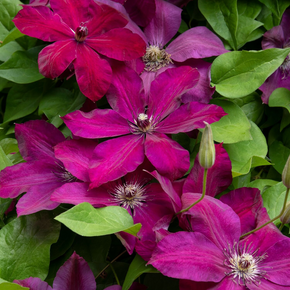
- Vivid magenta blooms up to 6 inches across with a distinctive velvety sheen and rich chocolate-buff anthers light up the garden from mid-summer through early fall
- Recipient of the Royal Horticultural Society's prestigious Award of Garden Merit, a trusted and reliable cultivar beloved by gardeners since its introduction in 1926
- Vigorous deciduous climber reaching 10-12 feet tall, ideal for training on trellises, arbors, fences, and walls or pairing dramatically with climbing roses
- Deer and rabbit resistant with strong wildlife appeal, attracting bees, butterflies, and hummingbirds throughout its long summer blooming season
Clematis 'Ernest Markham' is a showstopping deciduous climbing vine that has earned its place as one of the most celebrated large-flowered clematis cultivars in the world. Introduced in 1926 and honored with the Royal Horticultural Society's Award of Garden Merit, this vigorous perennial vine produces an abundant flush of bold, 4- to 6-inch magenta-red flowers with blunt-tipped, velvety overlapping petals and striking chocolate-buff anthers from mid-summer into early fall, offering one of the longest and most spectacular bloom seasons in the clematis world. Classified as a Pruning Group 3 clematis, 'Ernest Markham' flowers on new wood produced each season, making it easy to manage with a simple hard prune in late winter or early spring. It thrives in full sun to partial shade and prefers moist, well-drained soil with a neutral to slightly alkaline pH, performing best when its upper growth basks in sunlight while its root zone remains cool and shaded beneath mulch or low companion plantings. Hardy in USDA Zones 4-9, this reliable and free-flowering vine grows 10 to 12 feet tall and serves beautifully as a vertical accent on trellises, arbors, pergolas, and walls, or cascading over fences alongside climbing roses for a breathtaking summer display. Its resistance to deer and rabbits, combined with its powerful attraction to pollinators including bees, butterflies, and hummingbirds, makes Clematis 'Ernest Markham' an outstanding choice for gardeners in Southern Oregon and Northern California seeking bold, season-long color with minimal fuss.
Plant Description
Clematis 'Ernest Markham' is a large-flowered, deciduous climbing vine in the Ranunculaceae family. Its blooms are among the most eye-catching in the clematis world, each flower reaching 4 to 6 inches in diameter and featuring six broad, blunt-tipped sepals in a vivid magenta-red hue with a distinctive velvety texture and a luminous sheen. The central boss of chocolate to buff-colored anthers provides a rich contrast against the bold petals, creating a flower of exceptional visual impact. Flower buds are elongated and slightly fuzzy before opening. The foliage is a clean, rich green with ovate to lanceolate leaflets arranged in pairs or threes along twining stems, providing a lush, attractive backdrop to the brilliant blooms. This cultivar was raised by Ernest Markham himself at Gravetye Manor in England and introduced in 1926, going on to earn the Royal Horticultural Society's Award of Garden Merit for its outstanding and consistent garden performance over nearly a century.
Mature Size
| Characteristic | Measurement |
|---|---|
| Mature Height | 10-12 feet (approximately 3-3.7 meters) |
| Mature Spread | 2-3 feet (approximately 60-90 cm) |
| Flower Diameter | 4-6 inches (10-15 cm) |
| Growth Rate | Medium to vigorous |
| Time to Reach Mature Height | 2-5 years |
| Plant Habit | Climbing vine, twining by leaf stalks |
Hardiness and Climate
Clematis 'Ernest Markham' is reliably hardy in USDA Zones 4 through 9, tolerating winter minimum temperatures down to around -30°F with proper mulching and root protection. It performs exceptionally well across the mild, temperate climates of Southern Oregon and Northern California, thriving in the range of Sunset Climate Zones 2 through 24, A2, and A3. In hotter summer climates, afternoon shade is appreciated to protect the flowers from bleaching and the roots from overheating. Mulching the root zone is especially important in warm inland areas to maintain the cool, moist soil conditions this vine prefers. Once established, it is quite adaptable and returns vigorously each spring from its root system, even if top growth is killed back by an unusually harsh winter.
Sunlight Requirements
Clematis 'Ernest Markham' performs best with at least 6 hours of direct sunlight per day and thrives in full sun to partial shade. It follows the classic clematis principle of preferring its "head in the sun and feet in the shade" — meaning the top growth and flowering stems benefit from generous sun exposure, while the base of the plant and root zone must be kept cool and shaded at all times. In warmer inland climates such as those found in parts of Southern Oregon and Northern California, positioning the plant where it receives morning sun and some afternoon shade will protect the vibrant magenta blooms from fading and prevent root stress. South- or west-facing exposures are ideal. Never allow the root zone to bake in direct, intense sun without the protection of mulch or a companion groundcover.
Soil and pH Preferences
This clematis thrives in moist, well-drained soil and is adaptable to a wide range of soil types including chalk, clay, loam, and sand, as long as drainage is adequate and the soil does not become waterlogged. It strongly prefers a neutral to slightly alkaline soil pH, ideally between 6.5 and 7.5. In naturally acidic soils, incorporating garden lime at planting time and periodically thereafter will help shift the pH toward the preferred alkaline range and improve overall plant health. Enriching the planting area with well-aged compost or organic matter improves moisture retention and fertility. Avoid heavy clay that drains poorly, as standing water around the roots significantly increases the risk of root rot and clematis wilt. Salt-tolerant, making it a reasonable choice for gardens with moderate salt exposure.
Planting Instructions
- Choose a location with at least 6 hours of sun for the upper growth and where the root zone can be kept cool and shaded by mulch, low shrubs, or ground-covering perennials.
- Prepare the planting hole to be at least twice the width of the root ball and about 12-15 inches deep. Amend the soil with compost and, if needed, lime to raise pH toward neutral or slightly alkaline.
- Plant the crown 2-3 inches deeper than it was growing in its nursery container. Burying the first set of leaf nodes below soil level encourages the production of strong new shoots from below ground and is a key strategy for discouraging clematis wilt — if the top is affected, buried nodes can regenerate the plant.
- Install a trellis, arbor, or support structure before or at planting time to give the vine something to begin climbing immediately.
- Space plants 24-36 inches apart if planting multiples.
- Water thoroughly at planting and apply a 2-3 inch layer of organic mulch — such as bark chips or compost — over the root zone, keeping mulch several inches away from the base stem to prevent rot.
- Plant a low-growing shrub or perennial directly in front of the root zone if natural shade cannot be provided by the surrounding garden bed.
Watering Guide
Consistent moisture is key to keeping Clematis 'Ernest Markham' healthy and blooming at its best. Water deeply and regularly during the active growing season, particularly during dry spells. The goal is to keep the soil evenly moist but never waterlogged, as overly saturated soil promotes root rot and fungal disease. During the first growing season after planting, water more frequently to help establish a deep, robust root system. Once established, the plant becomes somewhat more drought-tolerant, but will perform significantly better with regular irrigation during dry summer months. A thick layer of organic mulch over the root zone is one of the best tools for retaining soil moisture between waterings and moderating soil temperature. Avoid overhead watering directly onto the foliage when possible, as wet leaves can encourage fungal issues like powdery mildew.
Fertilizing
Clematis 'Ernest Markham' benefits from regular but measured feeding to support its vigorous growth and prolific blooming. Apply a balanced, slow-release granular fertilizer in early spring just as new growth begins to emerge. As the season progresses into late spring and early summer, switching to or supplementing with a high-potassium (high-potash) fertilizer — similar to a tomato fertilizer — encourages stronger flower production and helps develop the current season's blooming stems. Avoid applying excessive nitrogen, which promotes lush, leafy growth at the expense of flowers. A light top-dressing of well-aged compost around the root zone in spring provides slow-release organic nutrition and improves soil health over time. Cease fertilizing by late summer to allow the plant to begin preparing for dormancy as cooler fall temperatures approach.
Pruning and Maintenance (Pruning Group 3)
Clematis 'Ernest Markham' belongs to Pruning Group 3 (also called Pruning Group C), which includes all late-flowering clematis that bloom on new growth produced in the current season. This group requires hard pruning once per year and is actually the easiest pruning group to manage.
- When to prune: Late winter to early spring, just as the lowest buds begin to swell — typically February through March in Southern Oregon and Northern California.
- How to prune: Cut all stems back hard to a pair of strong, healthy buds located approximately 12 inches (30 cm) above ground level. Remove all old, dead, or weak growth entirely.
- Why it works: Because 'Ernest Markham' blooms exclusively on new wood produced each spring and summer, this aggressive annual pruning stimulates vigorous new growth and maximizes flower production. Plants that are not pruned will become a tangled mass of woody stems with reduced flowering concentrated well above eye level.
- In the first year after planting: Prune back to 12 inches in early spring to encourage a strong, bushy framework from the base.
- Summer tidying: No additional pruning is required during the season, though spent flowers can be removed to keep the plant tidy.
Seasonal Interest
While Clematis 'Ernest Markham' is primarily a summer and early fall performer, it offers garden interest across multiple seasons. In spring, fresh green foliage emerges and climbs rapidly up its support structure, creating a lush green curtain of leafy growth. The main flower show begins in mid-summer, typically July, when the first wave of large, vivid magenta blooms opens and continues in abundant succession through August and into September or early October. In mild climates like Southern Oregon and Northern California, the blooming season can extend well into fall. As temperatures cool, the foliage begins to yellow before dropping for winter, revealing the plant's structural framework. Although this variety does not produce the showy, fluffy seedheads characteristic of some other clematis species, its long blooming window and bold flower color make it a star of the mid- to late-summer garden.
Landscape Uses
The versatility of Clematis 'Ernest Markham' makes it an excellent choice for a wide range of landscape applications. Its naturally climbing habit and eye-catching magenta blooms suit it perfectly for the following uses:
- Trellises and arbors: Train up a freestanding trellis or arbor for a bold vertical focal point in the garden or on a patio.
- Walls and fences: Attach to a wire framework on masonry or wooden fences to create a dramatic flowering screen or living wall accent.
- Pergolas: Allow stems to weave through pergola rafters for overhead floral coverage and dappled shade.
- Growing through shrubs and roses: Let the vine scramble through large shrubs or climbing roses for a naturalistic layered planting effect.
- Containers: Can be grown successfully in large patio containers with a suitable support structure, provided consistent watering and fertilizing are maintained.
- Cut flowers: Long stems with blooms can be cut for striking floral arrangements.
- Cottage and informal gardens: A natural fit for the romantic, abundant style of cottage garden designs.
Companion Plants
Clematis 'Ernest Markham' is an exceptional companion plant and pairs beautifully with a wide range of other garden favorites. When planning combinations, consider plants that can help shade the clematis root zone while allowing the vine to climb freely above them.
- Climbing Roses: The classic pairing — the deep magenta of 'Ernest Markham' contrasts or harmonizes strikingly with white, cream, yellow, or deep crimson climbing rose blooms. The rose canes provide a ready-made natural trellis while their dense base shades the clematis roots.
- Clematis 'Jackmanii': Combining two late-flowering clematis in purple and magenta creates a spectacular two-toned summer display on the same structure.
- Lavender (Lavandula spp.): Low-growing lavender planted at the base shades clematis roots, repels pests, and offers a lovely color echo in cooler blue-purple tones.
- Salvia (Salvia spp.): Upright salvias in purple or blue planted in front of the root zone shade the base and complement the magenta flowers beautifully.
- Peonies (Paeonia spp.): Bold peonies planted nearby share similar soil and light preferences and provide early-season interest before the clematis takes center stage.
- Ornamental grasses: Mid-sized grasses like feather reed grass provide graceful texture and help conceal the lower stems of the vine while keeping roots cool.
Pests and Diseases
Common Pests:
- Aphids: May cluster on new growth and flower buds, causing distortion. Treat with a strong blast of water, insecticidal soap, or neem oil spray.
- Spider mites: Can appear during hot, dry weather. Increase humidity around the plant, remove affected growth, and apply neem oil or insecticidal soap as needed.
- Snails and slugs: May damage young emerging shoots in spring. Use physical barriers, iron phosphate baits, or diatomaceous earth around the base.
- Earwigs and caterpillars: Occasionally feed on petals and foliage. Hand-pick or treat as needed.
Common Diseases:
- Clematis wilt (Phoma clematidina): The most well-known clematis disease, causing one or more stems to wilt and blacken rapidly. Immediately cut affected stems back to healthy growth at or below soil level. Because 'Ernest Markham' is planted deeply with nodes below ground, new shoots will typically regenerate. Discard — do not compost — affected material. Wilt is less common in Group 3 clematis than in early large-flowered types.
- Powdery mildew: 'Ernest Markham' shows high resistance to powdery mildew but can be affected in poor airflow conditions. Ensure adequate spacing and avoid overhead watering. Treat with a sulfur-based or bicarbonate fungicide if needed.
- Root rot: Caused by poorly draining or waterlogged soil. Prevent by ensuring excellent drainage and never overwatering.
- Honey fungus: Rarely affects clematis but possible in infected soils. No chemical cure — improve drainage and remove infected material.
Container Growing
Clematis 'Ernest Markham' can be grown successfully in a large container, making it an excellent choice for patios, decks, and courtyard gardens where in-ground planting is not possible. For best results, follow these guidelines:
- Choose a container that is at least 18-24 inches wide and deep, with ample drainage holes. Large, heavy containers help stabilize a tall support structure and insulate roots from temperature extremes.
- Use a high-quality, well-draining potting mix amended with perlite for improved drainage and a small amount of lime to maintain a neutral to slightly alkaline pH.
- Install a sturdy obelisk, trellis, or cane structure in the container at planting time.
- Container plants dry out more quickly than in-ground plantings — check soil moisture regularly and water more frequently, especially during hot summer months.
- Feed container-grown plants with a slow-release balanced fertilizer in spring, then switch to a high-potassium liquid fertilizer every 2-3 weeks during the blooming season for best flower production.
- Repot every 2-3 years into fresh potting mix, or top-dress annually with compost if repotting is not practical.
- In cold winters in Zone 4-5 areas, move containers to a sheltered location or wrap the pot with burlap and mulch heavily to protect roots from hard freezes.
Wildlife Value
Clematis 'Ernest Markham' is a valuable addition to a wildlife-friendly garden. Its large, open, nectar-rich flowers attract a diverse range of beneficial pollinators and garden visitors throughout the summer and early fall blooming season:
- Bees: Both honeybees and native bumblebees are strongly attracted to the open-faced blooms, making this plant a meaningful contributor to supporting pollinator populations.
- Butterflies: A variety of butterfly species visit the flowers for nectar, adding an extra layer of living color to the garden.
- Hummingbirds: The vivid magenta color is highly attractive to hummingbirds, which frequently visit the blooms in search of nectar — a particularly notable benefit for gardens in Southern Oregon and Northern California where Anna's and Rufous hummingbirds are common.
- Deer and rabbit resistant: While welcoming pollinators and birds, 'Ernest Markham' is notably resistant to browsing by deer and rabbits, making it a low-maintenance choice in areas with heavy wildlife pressure.
Note: All parts of this plant are considered toxic if ingested and should be kept away from pets — particularly dogs, cats, and horses — and should be handled with gloves, as the sap can be a mild skin irritant in sensitive individuals.
Propagation
Clematis 'Ernest Markham' can be propagated at home using the following methods:
- Semi-hardwood cuttings: Take 3-4 inch stem cuttings in late spring to early summer, just after the first flush of growth has begun to firm up. Each cutting should include at least one pair of healthy leaves and a section of stem. Dip the cut end in rooting hormone powder and insert into a mix of perlite and peat or a sterile seed-starting medium. Keep cuttings warm, humid, and out of direct sun until roots develop.
- Layering: In late spring or early summer, select a long, flexible stem and bend it to the ground. Wound a small section of the stem where it contacts the soil, bury that section 2-3 inches deep, and secure it with a U-shaped pin or stone. Keep the soil moist and allow roots to develop over several months before severing the new plant from the parent.
- Division: Mature, well-established clumps can sometimes be carefully divided, though clematis can be sensitive to root disturbance. This method is best attempted in early spring before significant new growth begins.
Note: 'Ernest Markham' is a named cultivar, so plants propagated from cuttings or layers will be true to the parent. Seed propagation, if viable, will not reliably produce plants with the same flower characteristics.
- Vivid magenta blooms up to 6 inches across with a distinctive velvety sheen and rich chocolate-buff anthers light up the garden from mid-summer through early fall
- Recipient of the Royal Horticultural Society's prestigious Award of Garden Merit, a trusted and reliable cultivar beloved by gardeners since its introduction in 1926
- Vigorous deciduous climber reaching 10-12 feet tall, ideal for training on trellises, arbors, fences, and walls or pairing dramatically with climbing roses
- Deer and rabbit resistant with strong wildlife appeal, attracting bees, butterflies, and hummingbirds throughout its long summer blooming season
Clematis 'Ernest Markham' is a showstopping deciduous climbing vine that has earned its place as one of the most celebrated large-flowered clematis cultivars in the world. Introduced in 1926 and honored with the Royal Horticultural Society's Award of Garden Merit, this vigorous perennial vine produces an abundant flush of bold, 4- to 6-inch magenta-red flowers with blunt-tipped, velvety overlapping petals and striking chocolate-buff anthers from mid-summer into early fall, offering one of the longest and most spectacular bloom seasons in the clematis world. Classified as a Pruning Group 3 clematis, 'Ernest Markham' flowers on new wood produced each season, making it easy to manage with a simple hard prune in late winter or early spring. It thrives in full sun to partial shade and prefers moist, well-drained soil with a neutral to slightly alkaline pH, performing best when its upper growth basks in sunlight while its root zone remains cool and shaded beneath mulch or low companion plantings. Hardy in USDA Zones 4-9, this reliable and free-flowering vine grows 10 to 12 feet tall and serves beautifully as a vertical accent on trellises, arbors, pergolas, and walls, or cascading over fences alongside climbing roses for a breathtaking summer display. Its resistance to deer and rabbits, combined with its powerful attraction to pollinators including bees, butterflies, and hummingbirds, makes Clematis 'Ernest Markham' an outstanding choice for gardeners in Southern Oregon and Northern California seeking bold, season-long color with minimal fuss.
Plant Description
Clematis 'Ernest Markham' is a large-flowered, deciduous climbing vine in the Ranunculaceae family. Its blooms are among the most eye-catching in the clematis world, each flower reaching 4 to 6 inches in diameter and featuring six broad, blunt-tipped sepals in a vivid magenta-red hue with a distinctive velvety texture and a luminous sheen. The central boss of chocolate to buff-colored anthers provides a rich contrast against the bold petals, creating a flower of exceptional visual impact. Flower buds are elongated and slightly fuzzy before opening. The foliage is a clean, rich green with ovate to lanceolate leaflets arranged in pairs or threes along twining stems, providing a lush, attractive backdrop to the brilliant blooms. This cultivar was raised by Ernest Markham himself at Gravetye Manor in England and introduced in 1926, going on to earn the Royal Horticultural Society's Award of Garden Merit for its outstanding and consistent garden performance over nearly a century.
Mature Size
| Characteristic | Measurement |
|---|---|
| Mature Height | 10-12 feet (approximately 3-3.7 meters) |
| Mature Spread | 2-3 feet (approximately 60-90 cm) |
| Flower Diameter | 4-6 inches (10-15 cm) |
| Growth Rate | Medium to vigorous |
| Time to Reach Mature Height | 2-5 years |
| Plant Habit | Climbing vine, twining by leaf stalks |
Hardiness and Climate
Clematis 'Ernest Markham' is reliably hardy in USDA Zones 4 through 9, tolerating winter minimum temperatures down to around -30°F with proper mulching and root protection. It performs exceptionally well across the mild, temperate climates of Southern Oregon and Northern California, thriving in the range of Sunset Climate Zones 2 through 24, A2, and A3. In hotter summer climates, afternoon shade is appreciated to protect the flowers from bleaching and the roots from overheating. Mulching the root zone is especially important in warm inland areas to maintain the cool, moist soil conditions this vine prefers. Once established, it is quite adaptable and returns vigorously each spring from its root system, even if top growth is killed back by an unusually harsh winter.
Sunlight Requirements
Clematis 'Ernest Markham' performs best with at least 6 hours of direct sunlight per day and thrives in full sun to partial shade. It follows the classic clematis principle of preferring its "head in the sun and feet in the shade" — meaning the top growth and flowering stems benefit from generous sun exposure, while the base of the plant and root zone must be kept cool and shaded at all times. In warmer inland climates such as those found in parts of Southern Oregon and Northern California, positioning the plant where it receives morning sun and some afternoon shade will protect the vibrant magenta blooms from fading and prevent root stress. South- or west-facing exposures are ideal. Never allow the root zone to bake in direct, intense sun without the protection of mulch or a companion groundcover.
Soil and pH Preferences
This clematis thrives in moist, well-drained soil and is adaptable to a wide range of soil types including chalk, clay, loam, and sand, as long as drainage is adequate and the soil does not become waterlogged. It strongly prefers a neutral to slightly alkaline soil pH, ideally between 6.5 and 7.5. In naturally acidic soils, incorporating garden lime at planting time and periodically thereafter will help shift the pH toward the preferred alkaline range and improve overall plant health. Enriching the planting area with well-aged compost or organic matter improves moisture retention and fertility. Avoid heavy clay that drains poorly, as standing water around the roots significantly increases the risk of root rot and clematis wilt. Salt-tolerant, making it a reasonable choice for gardens with moderate salt exposure.
Planting Instructions
- Choose a location with at least 6 hours of sun for the upper growth and where the root zone can be kept cool and shaded by mulch, low shrubs, or ground-covering perennials.
- Prepare the planting hole to be at least twice the width of the root ball and about 12-15 inches deep. Amend the soil with compost and, if needed, lime to raise pH toward neutral or slightly alkaline.
- Plant the crown 2-3 inches deeper than it was growing in its nursery container. Burying the first set of leaf nodes below soil level encourages the production of strong new shoots from below ground and is a key strategy for discouraging clematis wilt — if the top is affected, buried nodes can regenerate the plant.
- Install a trellis, arbor, or support structure before or at planting time to give the vine something to begin climbing immediately.
- Space plants 24-36 inches apart if planting multiples.
- Water thoroughly at planting and apply a 2-3 inch layer of organic mulch — such as bark chips or compost — over the root zone, keeping mulch several inches away from the base stem to prevent rot.
- Plant a low-growing shrub or perennial directly in front of the root zone if natural shade cannot be provided by the surrounding garden bed.
Watering Guide
Consistent moisture is key to keeping Clematis 'Ernest Markham' healthy and blooming at its best. Water deeply and regularly during the active growing season, particularly during dry spells. The goal is to keep the soil evenly moist but never waterlogged, as overly saturated soil promotes root rot and fungal disease. During the first growing season after planting, water more frequently to help establish a deep, robust root system. Once established, the plant becomes somewhat more drought-tolerant, but will perform significantly better with regular irrigation during dry summer months. A thick layer of organic mulch over the root zone is one of the best tools for retaining soil moisture between waterings and moderating soil temperature. Avoid overhead watering directly onto the foliage when possible, as wet leaves can encourage fungal issues like powdery mildew.
Fertilizing
Clematis 'Ernest Markham' benefits from regular but measured feeding to support its vigorous growth and prolific blooming. Apply a balanced, slow-release granular fertilizer in early spring just as new growth begins to emerge. As the season progresses into late spring and early summer, switching to or supplementing with a high-potassium (high-potash) fertilizer — similar to a tomato fertilizer — encourages stronger flower production and helps develop the current season's blooming stems. Avoid applying excessive nitrogen, which promotes lush, leafy growth at the expense of flowers. A light top-dressing of well-aged compost around the root zone in spring provides slow-release organic nutrition and improves soil health over time. Cease fertilizing by late summer to allow the plant to begin preparing for dormancy as cooler fall temperatures approach.
Pruning and Maintenance (Pruning Group 3)
Clematis 'Ernest Markham' belongs to Pruning Group 3 (also called Pruning Group C), which includes all late-flowering clematis that bloom on new growth produced in the current season. This group requires hard pruning once per year and is actually the easiest pruning group to manage.
- When to prune: Late winter to early spring, just as the lowest buds begin to swell — typically February through March in Southern Oregon and Northern California.
- How to prune: Cut all stems back hard to a pair of strong, healthy buds located approximately 12 inches (30 cm) above ground level. Remove all old, dead, or weak growth entirely.
- Why it works: Because 'Ernest Markham' blooms exclusively on new wood produced each spring and summer, this aggressive annual pruning stimulates vigorous new growth and maximizes flower production. Plants that are not pruned will become a tangled mass of woody stems with reduced flowering concentrated well above eye level.
- In the first year after planting: Prune back to 12 inches in early spring to encourage a strong, bushy framework from the base.
- Summer tidying: No additional pruning is required during the season, though spent flowers can be removed to keep the plant tidy.
Seasonal Interest
While Clematis 'Ernest Markham' is primarily a summer and early fall performer, it offers garden interest across multiple seasons. In spring, fresh green foliage emerges and climbs rapidly up its support structure, creating a lush green curtain of leafy growth. The main flower show begins in mid-summer, typically July, when the first wave of large, vivid magenta blooms opens and continues in abundant succession through August and into September or early October. In mild climates like Southern Oregon and Northern California, the blooming season can extend well into fall. As temperatures cool, the foliage begins to yellow before dropping for winter, revealing the plant's structural framework. Although this variety does not produce the showy, fluffy seedheads characteristic of some other clematis species, its long blooming window and bold flower color make it a star of the mid- to late-summer garden.
Landscape Uses
The versatility of Clematis 'Ernest Markham' makes it an excellent choice for a wide range of landscape applications. Its naturally climbing habit and eye-catching magenta blooms suit it perfectly for the following uses:
- Trellises and arbors: Train up a freestanding trellis or arbor for a bold vertical focal point in the garden or on a patio.
- Walls and fences: Attach to a wire framework on masonry or wooden fences to create a dramatic flowering screen or living wall accent.
- Pergolas: Allow stems to weave through pergola rafters for overhead floral coverage and dappled shade.
- Growing through shrubs and roses: Let the vine scramble through large shrubs or climbing roses for a naturalistic layered planting effect.
- Containers: Can be grown successfully in large patio containers with a suitable support structure, provided consistent watering and fertilizing are maintained.
- Cut flowers: Long stems with blooms can be cut for striking floral arrangements.
- Cottage and informal gardens: A natural fit for the romantic, abundant style of cottage garden designs.
Companion Plants
Clematis 'Ernest Markham' is an exceptional companion plant and pairs beautifully with a wide range of other garden favorites. When planning combinations, consider plants that can help shade the clematis root zone while allowing the vine to climb freely above them.
- Climbing Roses: The classic pairing — the deep magenta of 'Ernest Markham' contrasts or harmonizes strikingly with white, cream, yellow, or deep crimson climbing rose blooms. The rose canes provide a ready-made natural trellis while their dense base shades the clematis roots.
- Clematis 'Jackmanii': Combining two late-flowering clematis in purple and magenta creates a spectacular two-toned summer display on the same structure.
- Lavender (Lavandula spp.): Low-growing lavender planted at the base shades clematis roots, repels pests, and offers a lovely color echo in cooler blue-purple tones.
- Salvia (Salvia spp.): Upright salvias in purple or blue planted in front of the root zone shade the base and complement the magenta flowers beautifully.
- Peonies (Paeonia spp.): Bold peonies planted nearby share similar soil and light preferences and provide early-season interest before the clematis takes center stage.
- Ornamental grasses: Mid-sized grasses like feather reed grass provide graceful texture and help conceal the lower stems of the vine while keeping roots cool.
Pests and Diseases
Common Pests:
- Aphids: May cluster on new growth and flower buds, causing distortion. Treat with a strong blast of water, insecticidal soap, or neem oil spray.
- Spider mites: Can appear during hot, dry weather. Increase humidity around the plant, remove affected growth, and apply neem oil or insecticidal soap as needed.
- Snails and slugs: May damage young emerging shoots in spring. Use physical barriers, iron phosphate baits, or diatomaceous earth around the base.
- Earwigs and caterpillars: Occasionally feed on petals and foliage. Hand-pick or treat as needed.
Common Diseases:
- Clematis wilt (Phoma clematidina): The most well-known clematis disease, causing one or more stems to wilt and blacken rapidly. Immediately cut affected stems back to healthy growth at or below soil level. Because 'Ernest Markham' is planted deeply with nodes below ground, new shoots will typically regenerate. Discard — do not compost — affected material. Wilt is less common in Group 3 clematis than in early large-flowered types.
- Powdery mildew: 'Ernest Markham' shows high resistance to powdery mildew but can be affected in poor airflow conditions. Ensure adequate spacing and avoid overhead watering. Treat with a sulfur-based or bicarbonate fungicide if needed.
- Root rot: Caused by poorly draining or waterlogged soil. Prevent by ensuring excellent drainage and never overwatering.
- Honey fungus: Rarely affects clematis but possible in infected soils. No chemical cure — improve drainage and remove infected material.
Container Growing
Clematis 'Ernest Markham' can be grown successfully in a large container, making it an excellent choice for patios, decks, and courtyard gardens where in-ground planting is not possible. For best results, follow these guidelines:
- Choose a container that is at least 18-24 inches wide and deep, with ample drainage holes. Large, heavy containers help stabilize a tall support structure and insulate roots from temperature extremes.
- Use a high-quality, well-draining potting mix amended with perlite for improved drainage and a small amount of lime to maintain a neutral to slightly alkaline pH.
- Install a sturdy obelisk, trellis, or cane structure in the container at planting time.
- Container plants dry out more quickly than in-ground plantings — check soil moisture regularly and water more frequently, especially during hot summer months.
- Feed container-grown plants with a slow-release balanced fertilizer in spring, then switch to a high-potassium liquid fertilizer every 2-3 weeks during the blooming season for best flower production.
- Repot every 2-3 years into fresh potting mix, or top-dress annually with compost if repotting is not practical.
- In cold winters in Zone 4-5 areas, move containers to a sheltered location or wrap the pot with burlap and mulch heavily to protect roots from hard freezes.
Wildlife Value
Clematis 'Ernest Markham' is a valuable addition to a wildlife-friendly garden. Its large, open, nectar-rich flowers attract a diverse range of beneficial pollinators and garden visitors throughout the summer and early fall blooming season:
- Bees: Both honeybees and native bumblebees are strongly attracted to the open-faced blooms, making this plant a meaningful contributor to supporting pollinator populations.
- Butterflies: A variety of butterfly species visit the flowers for nectar, adding an extra layer of living color to the garden.
- Hummingbirds: The vivid magenta color is highly attractive to hummingbirds, which frequently visit the blooms in search of nectar — a particularly notable benefit for gardens in Southern Oregon and Northern California where Anna's and Rufous hummingbirds are common.
- Deer and rabbit resistant: While welcoming pollinators and birds, 'Ernest Markham' is notably resistant to browsing by deer and rabbits, making it a low-maintenance choice in areas with heavy wildlife pressure.
Note: All parts of this plant are considered toxic if ingested and should be kept away from pets — particularly dogs, cats, and horses — and should be handled with gloves, as the sap can be a mild skin irritant in sensitive individuals.
Propagation
Clematis 'Ernest Markham' can be propagated at home using the following methods:
- Semi-hardwood cuttings: Take 3-4 inch stem cuttings in late spring to early summer, just after the first flush of growth has begun to firm up. Each cutting should include at least one pair of healthy leaves and a section of stem. Dip the cut end in rooting hormone powder and insert into a mix of perlite and peat or a sterile seed-starting medium. Keep cuttings warm, humid, and out of direct sun until roots develop.
- Layering: In late spring or early summer, select a long, flexible stem and bend it to the ground. Wound a small section of the stem where it contacts the soil, bury that section 2-3 inches deep, and secure it with a U-shaped pin or stone. Keep the soil moist and allow roots to develop over several months before severing the new plant from the parent.
- Division: Mature, well-established clumps can sometimes be carefully divided, though clematis can be sensitive to root disturbance. This method is best attempted in early spring before significant new growth begins.
Note: 'Ernest Markham' is a named cultivar, so plants propagated from cuttings or layers will be true to the parent. Seed propagation, if viable, will not reliably produce plants with the same flower characteristics.
Related Products