

Zoom the image with the mouse
Desert King Fig - 5 Gallon
SKU:
932883
UPC:
014949328835
$81.99
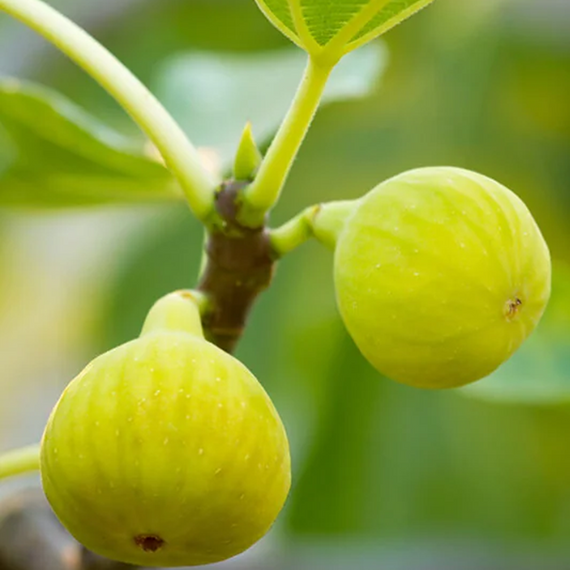
- Produces an exceptional early breba crop of large, green-skinned figs with striking strawberry-red flesh and a rich, honey-sweet flavor with berry undertones
- A San Pedro-type fig especially well adapted to the mild-summer climates of the Pacific Northwest, Northern California, and Southern Oregon
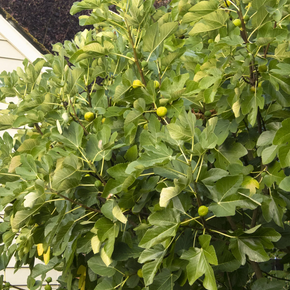
- Vigorous, deciduous tree with bold, deeply lobed tropical foliage; naturally low-maintenance and highly drought tolerant once established
- Outstanding resistance to fruit splitting and rain damage, plus high cold hardiness, making it one of the most reliable backyard fig varieties available
The Desert King Fig (Ficus carica 'Desert King') is a legendary, time-tested fruit tree that has earned a devoted following among home orchardists up and down the Pacific Coast for well over a century. Celebrated for its prolific and dependable breba crop — figs that ripen on the previous season's wood in early summer, well ahead of most other varieties — Desert King delivers large, beautiful green-to-yellowish-green fruits whose interiors burst with jammy, strawberry-red flesh and a luscious, honey-like sweetness with subtle berry undertones. As a San Pedro-type fig, its breba harvest requires no pollination whatsoever, making it a truly self-sufficient producer for home gardens throughout USDA Zones 7b–10b. The tree itself is a bold, vigorous grower with an open, spreading canopy clothed in large, deeply lobed, rich green leaves that lend a lush, almost tropical character to any landscape. Highly tolerant of drought once established, naturally resistant to fruit splitting and rain damage, and relatively unbothered by common pests and diseases, Desert King is an ideal low-maintenance edible landscape tree for sunny backyards, orchard rows, or even large patio containers. Whether enjoyed fresh from the tree, dried, preserved as jam, or folded into savory and sweet recipes alike, the fruit of the Desert King Fig is a genuine seasonal treasure that rewards patient gardeners year after year.
Plant Description
Desert King Fig is a vigorous, deciduous fruit tree belonging to the mulberry family (Moraceae). Its bark is smooth and silvery-gray, while the large, deeply 3- to 5-lobed leaves are dark green, slightly rough on the upper surface, and provide dramatic, bold texture throughout the growing season. Like all figs, the "fruit" is technically a syconium — an inverted flower structure that encloses hundreds of tiny flowers inside. The breba crop forms on last year's hardened wood in early summer, while a second main crop develops on the current season's new growth later in summer, though the main crop requires pollination by the fig wasp to ripen fully. Desert King is classified as a San Pedro-type fig, meaning its prized breba harvest is entirely parthenocarpic (no pollination needed), making it exceptionally productive and reliable in home garden settings throughout the Pacific Coast region.
Mature Size and Growth Rate
| Characteristic | Detail |
|---|---|
| Mature Height | 15 - 30 feet (can be kept smaller with pruning) |
| Mature Width / Spread | 15 - 30 feet |
| Growth Rate | Medium to fast; vigorous grower |
| Plant Type | Deciduous fruit tree or large multi-stemmed shrub |
| Vigor Rating | High |
Left unpruned, Desert King can develop into a large, broadly spreading tree. With regular maintenance pruning, it is easily kept to a more compact, manageable size — many home growers maintain it at 8 to 12 feet for easy harvesting without a ladder. In containers, size is naturally restricted by root volume.
Hardiness Zones and Climate Suitability
Desert King Fig is rated for USDA Hardiness Zones 7b through 10b, tolerating winter lows down to approximately 5-10°F when fully dormant. It is especially well-suited to the mild, dry-summer climates of Southern Oregon, Northern California, and the broader Pacific Northwest — regions where its reliable early breba crop can ripen fully even in years with cooler or shorter summers. Because the breba crop depends on the survival of the previous season's wood, preserving established branches through winter is critical to fruit production. In areas that experience brief dips below 23°F, providing light winter protection for young trees or exposed branch tips is recommended. This variety is not well-suited to tropical climates where the tree never fully enters dormancy, as breba bud formation requires a proper winter rest period.
Sunlight Requirements
Desert King Fig performs best in a full sun location receiving at least 6 to 8 hours of direct sunlight per day. Full sun exposure promotes vigorous growth, encourages maximum fruit production, and helps the figs develop their fullest sugar content and flavor. In regions with extremely hot summers, light afternoon shade can be tolerated and may even help reduce heat stress on the foliage, but too much shade will noticeably reduce fruit set and sweetness. When growing in a container, the pot can be repositioned to manage light exposure and limit overall tree size, though fruiting performance is best in the sunniest available spot.
Soil and pH Preferences
Desert King Fig is adaptable to a wide range of soil types, including sandy, loamy, and clay-based soils, as long as drainage is good. It strongly dislikes waterlogged or poorly drained soils, which promote root rot. Ideal soil conditions are:
- Soil type: Fertile, humus-rich, well-draining loam; sandy or loamy soils are preferred
- Soil pH: 6.0 to 7.5 (slightly acidic to neutral) — tolerates a broader range of 5.5 to 8.0
- Avoid heavy clay or low-lying areas prone to standing water
- Amending native soil with compost or aged organic matter at planting improves structure, drainage, and long-term fertility
- For containers, use a mix of one-third soilless potting mix, one-third compost or peat moss, and one-third perlite for ideal drainage and aeration
Watering Guide
While Desert King Fig develops excellent drought tolerance once fully established, consistent moisture during the first few growing seasons is essential for strong root development and robust early fruit production. Follow these watering guidelines:
- Newly planted trees: Water deeply once per week during the first growing season, more frequently during heat waves
- Established trees: Reduce watering to once every 10 to 14 days during the growing season, or when the top 2 inches of soil feel dry
- During fruiting: Maintain consistent soil moisture to prevent fruit drop and encourage full, sweet development of the breba crop
- Winter: Reduce watering significantly during dormancy; avoid waterlogging
- Container-grown trees: Require more frequent watering than in-ground trees — check soil moisture every few days in summer
- Always water deeply at the root zone rather than shallowly and frequently; fig roots are relatively shallow and appreciate even, deep moisture
- A 2 to 3 inch layer of organic mulch around the base helps retain soil moisture and regulates root zone temperature
Fertilizing
Desert King Fig is not a heavy feeder and excessive nitrogen will encourage lush vegetative growth at the expense of fruit production. A modest, well-timed fertilizer program is most effective:
- Apply a balanced, slow-release granular fertilizer (such as a 10-10-10 or organic 5-5-5 blend) in early spring as the tree breaks dormancy
- A second light application can be made in mid-summer if growth appears slow or foliage is pale
- Alternatively, apply fertilizer when the first fig bud is visible forming between the leaf node and central stem — when the tree transitions from growth to fruiting mode
- Organic options such as bone meal (for phosphorus and fruit development) or compost top-dressings are excellent long-term soil conditioners
- Avoid high-nitrogen fertilizers after midsummer, as this can stimulate late-season soft growth that is vulnerable to cold damage
- Container-grown trees benefit from a diluted liquid fertilizer applied every 3 to 4 weeks during the active growing season
Pruning and Maintenance
Pruning is one of the most important aspects of Desert King Fig care and directly influences both fruit production and tree health. Because the prized breba crop forms on the previous season's mature wood, the most important pruning rule is: preserve as much of last year's growth as possible going into winter.
- Late winter / early spring (dormant pruning): Remove dead, diseased, damaged, or crossing branches. Thin out the interior canopy to improve airflow and light penetration. Make clean, angled cuts just above an outward-facing bud
- June / early summer (maintenance pruning): Pinch or tip-prune vigorous new shoots that are not setting fruit to redirect energy, limit overall height, and encourage lateral branching for the following year's breba buds
- Avoid heavy pruning in fall or late summer, as this removes the wood that carries next year's breba crop
- Inspect branches each spring for cold-damaged wood or insect boreholes; remove and destroy any infested wood immediately
- Sterilize pruning tools between cuts with rubbing alcohol or a diluted bleach solution to prevent disease transmission
- Wear gloves when pruning — the milky latex sap of fig trees can cause skin irritation in sensitive individuals
Planting Instructions
- Select a sunny, well-drained location that receives at least 6 hours of direct sun daily. Choose a spot with protection from harsh north winds if possible.
- The best planting times are early spring (after the last frost date) or early fall while soil temperatures are still warm.
- Dig a hole twice as wide as the root ball and equal in depth. Do not plant too deep — the top of the root ball should sit level with or very slightly above the surrounding soil grade.
- Mix the removed soil with compost or aged organic matter (up to 25-30% by volume) and use this blend to backfill the hole.
- Gently firm the backfill soil around the root ball to eliminate air pockets, then water thoroughly and deeply.
- Apply a 2 to 3 inch layer of organic mulch (wood chips, bark, or compost) around the planting area, keeping mulch several inches away from the trunk to prevent rot and rodent damage.
- For the first growing season, stake the tree only if the site is particularly windy; remove stakes after 12 months to encourage strong trunk development.
- Space multiple trees 15 to 20 feet apart to allow for mature canopy spread, or closer if planning to train them as espaliers against a wall or fence.
Fruit Characteristics and Harvest
Desert King produces large, visually striking figs that are among the most distinctive of any home garden variety:
| Characteristic | Detail |
|---|---|
| Skin color | Green to yellowish-green at maturity |
| Interior / flesh color | Vivid strawberry-red to deep amber |
| Fruit size | Large; typically 2 to 3 inches in diameter |
| Flavor profile | Rich honey sweetness with mild berry undertones; jammy texture |
| Texture | Succulent, pleasantly chewy; jammy when fully ripe |
| Breba crop harvest | Early to midsummer (typically June - July) |
| Split and rain resistance | High — fruit holds up well in wet conditions |
Harvest figs only when fully ripe — they do not continue to ripen after being picked. Signs of ripeness include a slightly soft feel when gently squeezed, a subtle downward droop of the fruit on its stem, a sweet fragrance, and the absence of white latex sap at the stem end when the fruit is removed. Handle gently to avoid bruising. Fresh figs are perishable; refrigerate and use within 2 to 3 days, or freeze, dry, or preserve them as jam for longer storage.
Culinary Uses
The sweet, jammy fruit of the Desert King Fig is extraordinarily versatile in the kitchen and is prized by home cooks and professional chefs alike:
- Fresh eating: Halve or quarter ripe figs and enjoy out of hand — their honey-sweet flavor needs no embellishment
- Charcuterie and cheese boards: Pair beautifully with aged cheeses, cured meats, walnuts, and honey
- Baking: Use in tarts, galettes, cakes, muffins, and fig-and-walnut breads
- Preserves and jams: Desert King figs make exceptional fig jam, preserves, and chutneys — ideal for canning and gifting
- Salads: Sliced fresh figs add sweetness and color to arugula, spinach, or grain salads with balsamic and goat cheese
- Savory applications: Pair with roasted meats, poultry, and pork; use in fig glazes, sauces, and flatbread toppings
- Drying: Figs can be sun-dried or dehydrated for long-term storage and use in trail mixes, granola, and baked goods
- Grilling: Halved figs caramelize beautifully on the grill alongside prosciutto and balsamic reduction
Landscape Uses
Beyond its fruit production, Desert King Fig is a handsome ornamental landscape tree that earns its place in the garden through the entire growing season:
- Specimen or focal point tree: The bold, deeply lobed foliage and sculptural branching structure make it a striking standalone feature in lawn or garden beds
- Edible orchard or food forest: An essential anchor tree for home food forest plantings and kitchen orchards in the Pacific Coast region
- Espalier: Trains beautifully against a south- or west-facing wall or fence to maximize warmth and save space in smaller gardens
- Privacy screening: Large, spreading canopy provides excellent seasonal privacy screening during the growing season
- Shade tree: The broad, lush canopy creates comfortable dappled shade for seating areas, patios, and garden beds
- Container specimen: Can be grown in a large decorative container (minimum 18 to 24 inch diameter) on patios, decks, or terraces
- Slope and bank planting: Established trees are drought tolerant and can help stabilize slopes in dry-summer climates
Container Growing
Desert King Fig adapts well to container culture, making it an excellent option for patios, decks, and smaller garden spaces where an in-ground planting is not practical:
- Choose a container with a minimum diameter of 18 to 24 inches and adequate drainage holes; whiskey barrel planters and large terra cotta or resin pots work well
- Use a well-draining mix of one-third potting mix, one-third compost or peat moss, and one-third perlite
- Container-grown trees require more frequent watering than in-ground trees — check soil moisture every 2 to 3 days during summer heat
- Feed with a diluted, balanced liquid fertilizer every 3 to 4 weeks during the active growing season
- Repot into the next size container every 2 to 3 years, or root prune and return to the same container to maintain size
- In areas with harsh winters, containers can be moved to a sheltered, cool garage or shed during dormancy to protect roots from hard freezes
- Container trees naturally stay more compact than in-ground specimens, making fruit harvest easier and care more manageable
Pests and Diseases
Desert King Fig is notably resilient compared to many other fruit trees, but a few pests and diseases deserve attention:
- Spider mites: Can be problematic in hot, dry conditions; improve air circulation, keep foliage clean, and treat with insecticidal soap or neem oil if needed
- Aphids: May colonize new growth in spring; knock off with a strong stream of water or treat with insecticidal soap; beneficial insects such as ladybugs help naturally control populations
- Fig beetles (Cotinis spp.): Attracted to ripe and overripe fruit; harvest promptly when figs are ripe and remove fallen fruit from around the tree
- Scale insects and mealybugs: Occasional on stems and foliage; treat with horticultural oil during the dormant season
- Root-knot nematodes: Can affect trees in sandy soils; improve soil organic matter and consider beneficial nematode applications
- Fig rust (Cerotelium fici): Fungal disease presenting as small orange or rusty spots on leaves; more common in humid conditions; remove and dispose of affected foliage
- Fig mosaic virus: Causes mottled, distorted, or chlorotic leaves; spread by eriophyid mites; there is no cure — remove severely affected wood and control mite populations
- Root rot (Phytophthora spp.): Caused by poorly drained, waterlogged soil; prevent by ensuring excellent drainage and avoiding overwatering
- Internal fruit rot: More common during wet summer weather; Desert King's high rain and split resistance helps reduce incidence compared to other varieties
Companion Plants
Thoughtful companion planting around Desert King Fig can improve pollinator activity, suppress weeds, deter certain pests, and enhance the overall productivity and beauty of the planting area. Good companions include:
- Comfrey: A dynamic nutrient accumulator whose deep roots mine minerals and whose chop-and-drop leaves enrich soil; also attracts beneficial insects
- Lavender: Attracts pollinators, repels aphids and other soft-bodied insects, and thrives in the same well-drained, full-sun conditions as fig
- Thyme and oregano: Low-growing aromatic herbs that suppress weeds, attract beneficial insects, and tolerate the dry conditions under a fig's canopy
- Marigolds (Tagetes spp.): Deter nematodes in the soil and attract beneficial predatory insects
- Strawberries: Make an excellent living groundcover beneath the fig's spreading canopy; share similar sun and water requirements
- Nasturtiums: Attract aphids away from the fig as a trap crop while also attracting beneficial insects and adding color
- Rosemary: Drought tolerant and aromatic; thrives alongside fig in dry-summer Mediterranean-climate gardens
- Borage: Attracts pollinators and beneficial predatory wasps; edible flowers are a bonus
Wildlife Value
Desert King Fig is a highly valuable wildlife plant, particularly during the summer and early fall fruiting season. Its contributions to the local ecosystem include:
- Birds: Ripe and overripe figs are eagerly sought by a wide range of frugivorous birds including mockingbirds, robins, cedar waxwings, thrushes, and orioles; the tree can become a seasonal gathering point for bird activity in the garden
- Pollinators: While fig flowers are enclosed within the fruit structure, the tree's large floral canopy and companion plantings support bees, butterflies, and other beneficial insects in the surrounding garden
- Small mammals: Squirrels and other small mammals are attracted to fallen fruit, contributing to local food web diversity
- Insects: The dense, lobed foliage provides shelter and microhabitat for beneficial insects and spiders that help naturally control pest populations
- Shade and shelter: The broad spreading canopy provides important thermal cover for garden wildlife during hot summer months
To encourage bird visits while still enjoying a personal harvest, plant more than one tree or allow a portion of fruit to remain on the tree for wildlife after your harvest is complete.
Seasonal Interest
Desert King Fig delivers visual and sensory interest across multiple seasons, making it a rewarding landscape tree from spring through late fall:
- Spring: Fresh new growth emerges from silvery-gray branches; tiny developing breba fruits are already visible at the tips of last year's wood as buds break — an exciting early sign of the coming harvest
- Early to midsummer: Large, bold, deeply lobed leaves reach full size creating lush, tropical-looking canopy; breba figs swell and ripen, transitioning from firm and green to soft and yellowish-green with their characteristic sweet aroma
- Late summer: A second flush of main-crop figs may develop on new season growth (pollination-dependent in most home gardens); continued ornamental foliage value
- Fall: Leaves turn a warm golden-yellow before dropping, adding seasonal color to the landscape
- Winter: The smooth, silver-gray sculptural branching structure is revealed after leaf drop, providing architectural interest even in the dormant season; branch silhouette is particularly striking in morning or evening light
- Produces an exceptional early breba crop of large, green-skinned figs with striking strawberry-red flesh and a rich, honey-sweet flavor with berry undertones
- A San Pedro-type fig especially well adapted to the mild-summer climates of the Pacific Northwest, Northern California, and Southern Oregon
- Vigorous, deciduous tree with bold, deeply lobed tropical foliage; naturally low-maintenance and highly drought tolerant once established
- Outstanding resistance to fruit splitting and rain damage, plus high cold hardiness, making it one of the most reliable backyard fig varieties available
The Desert King Fig (Ficus carica 'Desert King') is a legendary, time-tested fruit tree that has earned a devoted following among home orchardists up and down the Pacific Coast for well over a century. Celebrated for its prolific and dependable breba crop — figs that ripen on the previous season's wood in early summer, well ahead of most other varieties — Desert King delivers large, beautiful green-to-yellowish-green fruits whose interiors burst with jammy, strawberry-red flesh and a luscious, honey-like sweetness with subtle berry undertones. As a San Pedro-type fig, its breba harvest requires no pollination whatsoever, making it a truly self-sufficient producer for home gardens throughout USDA Zones 7b–10b. The tree itself is a bold, vigorous grower with an open, spreading canopy clothed in large, deeply lobed, rich green leaves that lend a lush, almost tropical character to any landscape. Highly tolerant of drought once established, naturally resistant to fruit splitting and rain damage, and relatively unbothered by common pests and diseases, Desert King is an ideal low-maintenance edible landscape tree for sunny backyards, orchard rows, or even large patio containers. Whether enjoyed fresh from the tree, dried, preserved as jam, or folded into savory and sweet recipes alike, the fruit of the Desert King Fig is a genuine seasonal treasure that rewards patient gardeners year after year.
Plant Description
Desert King Fig is a vigorous, deciduous fruit tree belonging to the mulberry family (Moraceae). Its bark is smooth and silvery-gray, while the large, deeply 3- to 5-lobed leaves are dark green, slightly rough on the upper surface, and provide dramatic, bold texture throughout the growing season. Like all figs, the "fruit" is technically a syconium — an inverted flower structure that encloses hundreds of tiny flowers inside. The breba crop forms on last year's hardened wood in early summer, while a second main crop develops on the current season's new growth later in summer, though the main crop requires pollination by the fig wasp to ripen fully. Desert King is classified as a San Pedro-type fig, meaning its prized breba harvest is entirely parthenocarpic (no pollination needed), making it exceptionally productive and reliable in home garden settings throughout the Pacific Coast region.
Mature Size and Growth Rate
| Characteristic | Detail |
|---|---|
| Mature Height | 15 - 30 feet (can be kept smaller with pruning) |
| Mature Width / Spread | 15 - 30 feet |
| Growth Rate | Medium to fast; vigorous grower |
| Plant Type | Deciduous fruit tree or large multi-stemmed shrub |
| Vigor Rating | High |
Left unpruned, Desert King can develop into a large, broadly spreading tree. With regular maintenance pruning, it is easily kept to a more compact, manageable size — many home growers maintain it at 8 to 12 feet for easy harvesting without a ladder. In containers, size is naturally restricted by root volume.
Hardiness Zones and Climate Suitability
Desert King Fig is rated for USDA Hardiness Zones 7b through 10b, tolerating winter lows down to approximately 5-10°F when fully dormant. It is especially well-suited to the mild, dry-summer climates of Southern Oregon, Northern California, and the broader Pacific Northwest — regions where its reliable early breba crop can ripen fully even in years with cooler or shorter summers. Because the breba crop depends on the survival of the previous season's wood, preserving established branches through winter is critical to fruit production. In areas that experience brief dips below 23°F, providing light winter protection for young trees or exposed branch tips is recommended. This variety is not well-suited to tropical climates where the tree never fully enters dormancy, as breba bud formation requires a proper winter rest period.
Sunlight Requirements
Desert King Fig performs best in a full sun location receiving at least 6 to 8 hours of direct sunlight per day. Full sun exposure promotes vigorous growth, encourages maximum fruit production, and helps the figs develop their fullest sugar content and flavor. In regions with extremely hot summers, light afternoon shade can be tolerated and may even help reduce heat stress on the foliage, but too much shade will noticeably reduce fruit set and sweetness. When growing in a container, the pot can be repositioned to manage light exposure and limit overall tree size, though fruiting performance is best in the sunniest available spot.
Soil and pH Preferences
Desert King Fig is adaptable to a wide range of soil types, including sandy, loamy, and clay-based soils, as long as drainage is good. It strongly dislikes waterlogged or poorly drained soils, which promote root rot. Ideal soil conditions are:
- Soil type: Fertile, humus-rich, well-draining loam; sandy or loamy soils are preferred
- Soil pH: 6.0 to 7.5 (slightly acidic to neutral) — tolerates a broader range of 5.5 to 8.0
- Avoid heavy clay or low-lying areas prone to standing water
- Amending native soil with compost or aged organic matter at planting improves structure, drainage, and long-term fertility
- For containers, use a mix of one-third soilless potting mix, one-third compost or peat moss, and one-third perlite for ideal drainage and aeration
Watering Guide
While Desert King Fig develops excellent drought tolerance once fully established, consistent moisture during the first few growing seasons is essential for strong root development and robust early fruit production. Follow these watering guidelines:
- Newly planted trees: Water deeply once per week during the first growing season, more frequently during heat waves
- Established trees: Reduce watering to once every 10 to 14 days during the growing season, or when the top 2 inches of soil feel dry
- During fruiting: Maintain consistent soil moisture to prevent fruit drop and encourage full, sweet development of the breba crop
- Winter: Reduce watering significantly during dormancy; avoid waterlogging
- Container-grown trees: Require more frequent watering than in-ground trees — check soil moisture every few days in summer
- Always water deeply at the root zone rather than shallowly and frequently; fig roots are relatively shallow and appreciate even, deep moisture
- A 2 to 3 inch layer of organic mulch around the base helps retain soil moisture and regulates root zone temperature
Fertilizing
Desert King Fig is not a heavy feeder and excessive nitrogen will encourage lush vegetative growth at the expense of fruit production. A modest, well-timed fertilizer program is most effective:
- Apply a balanced, slow-release granular fertilizer (such as a 10-10-10 or organic 5-5-5 blend) in early spring as the tree breaks dormancy
- A second light application can be made in mid-summer if growth appears slow or foliage is pale
- Alternatively, apply fertilizer when the first fig bud is visible forming between the leaf node and central stem — when the tree transitions from growth to fruiting mode
- Organic options such as bone meal (for phosphorus and fruit development) or compost top-dressings are excellent long-term soil conditioners
- Avoid high-nitrogen fertilizers after midsummer, as this can stimulate late-season soft growth that is vulnerable to cold damage
- Container-grown trees benefit from a diluted liquid fertilizer applied every 3 to 4 weeks during the active growing season
Pruning and Maintenance
Pruning is one of the most important aspects of Desert King Fig care and directly influences both fruit production and tree health. Because the prized breba crop forms on the previous season's mature wood, the most important pruning rule is: preserve as much of last year's growth as possible going into winter.
- Late winter / early spring (dormant pruning): Remove dead, diseased, damaged, or crossing branches. Thin out the interior canopy to improve airflow and light penetration. Make clean, angled cuts just above an outward-facing bud
- June / early summer (maintenance pruning): Pinch or tip-prune vigorous new shoots that are not setting fruit to redirect energy, limit overall height, and encourage lateral branching for the following year's breba buds
- Avoid heavy pruning in fall or late summer, as this removes the wood that carries next year's breba crop
- Inspect branches each spring for cold-damaged wood or insect boreholes; remove and destroy any infested wood immediately
- Sterilize pruning tools between cuts with rubbing alcohol or a diluted bleach solution to prevent disease transmission
- Wear gloves when pruning — the milky latex sap of fig trees can cause skin irritation in sensitive individuals
Planting Instructions
- Select a sunny, well-drained location that receives at least 6 hours of direct sun daily. Choose a spot with protection from harsh north winds if possible.
- The best planting times are early spring (after the last frost date) or early fall while soil temperatures are still warm.
- Dig a hole twice as wide as the root ball and equal in depth. Do not plant too deep — the top of the root ball should sit level with or very slightly above the surrounding soil grade.
- Mix the removed soil with compost or aged organic matter (up to 25-30% by volume) and use this blend to backfill the hole.
- Gently firm the backfill soil around the root ball to eliminate air pockets, then water thoroughly and deeply.
- Apply a 2 to 3 inch layer of organic mulch (wood chips, bark, or compost) around the planting area, keeping mulch several inches away from the trunk to prevent rot and rodent damage.
- For the first growing season, stake the tree only if the site is particularly windy; remove stakes after 12 months to encourage strong trunk development.
- Space multiple trees 15 to 20 feet apart to allow for mature canopy spread, or closer if planning to train them as espaliers against a wall or fence.
Fruit Characteristics and Harvest
Desert King produces large, visually striking figs that are among the most distinctive of any home garden variety:
| Characteristic | Detail |
|---|---|
| Skin color | Green to yellowish-green at maturity |
| Interior / flesh color | Vivid strawberry-red to deep amber |
| Fruit size | Large; typically 2 to 3 inches in diameter |
| Flavor profile | Rich honey sweetness with mild berry undertones; jammy texture |
| Texture | Succulent, pleasantly chewy; jammy when fully ripe |
| Breba crop harvest | Early to midsummer (typically June - July) |
| Split and rain resistance | High — fruit holds up well in wet conditions |
Harvest figs only when fully ripe — they do not continue to ripen after being picked. Signs of ripeness include a slightly soft feel when gently squeezed, a subtle downward droop of the fruit on its stem, a sweet fragrance, and the absence of white latex sap at the stem end when the fruit is removed. Handle gently to avoid bruising. Fresh figs are perishable; refrigerate and use within 2 to 3 days, or freeze, dry, or preserve them as jam for longer storage.
Culinary Uses
The sweet, jammy fruit of the Desert King Fig is extraordinarily versatile in the kitchen and is prized by home cooks and professional chefs alike:
- Fresh eating: Halve or quarter ripe figs and enjoy out of hand — their honey-sweet flavor needs no embellishment
- Charcuterie and cheese boards: Pair beautifully with aged cheeses, cured meats, walnuts, and honey
- Baking: Use in tarts, galettes, cakes, muffins, and fig-and-walnut breads
- Preserves and jams: Desert King figs make exceptional fig jam, preserves, and chutneys — ideal for canning and gifting
- Salads: Sliced fresh figs add sweetness and color to arugula, spinach, or grain salads with balsamic and goat cheese
- Savory applications: Pair with roasted meats, poultry, and pork; use in fig glazes, sauces, and flatbread toppings
- Drying: Figs can be sun-dried or dehydrated for long-term storage and use in trail mixes, granola, and baked goods
- Grilling: Halved figs caramelize beautifully on the grill alongside prosciutto and balsamic reduction
Landscape Uses
Beyond its fruit production, Desert King Fig is a handsome ornamental landscape tree that earns its place in the garden through the entire growing season:
- Specimen or focal point tree: The bold, deeply lobed foliage and sculptural branching structure make it a striking standalone feature in lawn or garden beds
- Edible orchard or food forest: An essential anchor tree for home food forest plantings and kitchen orchards in the Pacific Coast region
- Espalier: Trains beautifully against a south- or west-facing wall or fence to maximize warmth and save space in smaller gardens
- Privacy screening: Large, spreading canopy provides excellent seasonal privacy screening during the growing season
- Shade tree: The broad, lush canopy creates comfortable dappled shade for seating areas, patios, and garden beds
- Container specimen: Can be grown in a large decorative container (minimum 18 to 24 inch diameter) on patios, decks, or terraces
- Slope and bank planting: Established trees are drought tolerant and can help stabilize slopes in dry-summer climates
Container Growing
Desert King Fig adapts well to container culture, making it an excellent option for patios, decks, and smaller garden spaces where an in-ground planting is not practical:
- Choose a container with a minimum diameter of 18 to 24 inches and adequate drainage holes; whiskey barrel planters and large terra cotta or resin pots work well
- Use a well-draining mix of one-third potting mix, one-third compost or peat moss, and one-third perlite
- Container-grown trees require more frequent watering than in-ground trees — check soil moisture every 2 to 3 days during summer heat
- Feed with a diluted, balanced liquid fertilizer every 3 to 4 weeks during the active growing season
- Repot into the next size container every 2 to 3 years, or root prune and return to the same container to maintain size
- In areas with harsh winters, containers can be moved to a sheltered, cool garage or shed during dormancy to protect roots from hard freezes
- Container trees naturally stay more compact than in-ground specimens, making fruit harvest easier and care more manageable
Pests and Diseases
Desert King Fig is notably resilient compared to many other fruit trees, but a few pests and diseases deserve attention:
- Spider mites: Can be problematic in hot, dry conditions; improve air circulation, keep foliage clean, and treat with insecticidal soap or neem oil if needed
- Aphids: May colonize new growth in spring; knock off with a strong stream of water or treat with insecticidal soap; beneficial insects such as ladybugs help naturally control populations
- Fig beetles (Cotinis spp.): Attracted to ripe and overripe fruit; harvest promptly when figs are ripe and remove fallen fruit from around the tree
- Scale insects and mealybugs: Occasional on stems and foliage; treat with horticultural oil during the dormant season
- Root-knot nematodes: Can affect trees in sandy soils; improve soil organic matter and consider beneficial nematode applications
- Fig rust (Cerotelium fici): Fungal disease presenting as small orange or rusty spots on leaves; more common in humid conditions; remove and dispose of affected foliage
- Fig mosaic virus: Causes mottled, distorted, or chlorotic leaves; spread by eriophyid mites; there is no cure — remove severely affected wood and control mite populations
- Root rot (Phytophthora spp.): Caused by poorly drained, waterlogged soil; prevent by ensuring excellent drainage and avoiding overwatering
- Internal fruit rot: More common during wet summer weather; Desert King's high rain and split resistance helps reduce incidence compared to other varieties
Companion Plants
Thoughtful companion planting around Desert King Fig can improve pollinator activity, suppress weeds, deter certain pests, and enhance the overall productivity and beauty of the planting area. Good companions include:
- Comfrey: A dynamic nutrient accumulator whose deep roots mine minerals and whose chop-and-drop leaves enrich soil; also attracts beneficial insects
- Lavender: Attracts pollinators, repels aphids and other soft-bodied insects, and thrives in the same well-drained, full-sun conditions as fig
- Thyme and oregano: Low-growing aromatic herbs that suppress weeds, attract beneficial insects, and tolerate the dry conditions under a fig's canopy
- Marigolds (Tagetes spp.): Deter nematodes in the soil and attract beneficial predatory insects
- Strawberries: Make an excellent living groundcover beneath the fig's spreading canopy; share similar sun and water requirements
- Nasturtiums: Attract aphids away from the fig as a trap crop while also attracting beneficial insects and adding color
- Rosemary: Drought tolerant and aromatic; thrives alongside fig in dry-summer Mediterranean-climate gardens
- Borage: Attracts pollinators and beneficial predatory wasps; edible flowers are a bonus
Wildlife Value
Desert King Fig is a highly valuable wildlife plant, particularly during the summer and early fall fruiting season. Its contributions to the local ecosystem include:
- Birds: Ripe and overripe figs are eagerly sought by a wide range of frugivorous birds including mockingbirds, robins, cedar waxwings, thrushes, and orioles; the tree can become a seasonal gathering point for bird activity in the garden
- Pollinators: While fig flowers are enclosed within the fruit structure, the tree's large floral canopy and companion plantings support bees, butterflies, and other beneficial insects in the surrounding garden
- Small mammals: Squirrels and other small mammals are attracted to fallen fruit, contributing to local food web diversity
- Insects: The dense, lobed foliage provides shelter and microhabitat for beneficial insects and spiders that help naturally control pest populations
- Shade and shelter: The broad spreading canopy provides important thermal cover for garden wildlife during hot summer months
To encourage bird visits while still enjoying a personal harvest, plant more than one tree or allow a portion of fruit to remain on the tree for wildlife after your harvest is complete.
Seasonal Interest
Desert King Fig delivers visual and sensory interest across multiple seasons, making it a rewarding landscape tree from spring through late fall:
- Spring: Fresh new growth emerges from silvery-gray branches; tiny developing breba fruits are already visible at the tips of last year's wood as buds break — an exciting early sign of the coming harvest
- Early to midsummer: Large, bold, deeply lobed leaves reach full size creating lush, tropical-looking canopy; breba figs swell and ripen, transitioning from firm and green to soft and yellowish-green with their characteristic sweet aroma
- Late summer: A second flush of main-crop figs may develop on new season growth (pollination-dependent in most home gardens); continued ornamental foliage value
- Fall: Leaves turn a warm golden-yellow before dropping, adding seasonal color to the landscape
- Winter: The smooth, silver-gray sculptural branching structure is revealed after leaf drop, providing architectural interest even in the dormant season; branch silhouette is particularly striking in morning or evening light
Related Products


