

Zoom the image with the mouse
Peter's Honey Fig - 5 Gallon
SKU:
1614385
UPC:
014949367452
$79.99
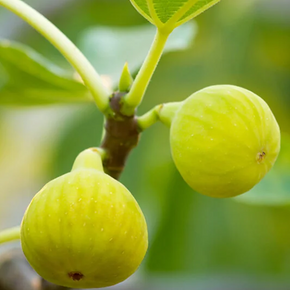
- Legendary honey-sweet flavor with a rich, syrupy amber interior and soft yellow-green skin that makes it one of the most prized fresh-eating figs available for home gardeners.
- A Sicilian heirloom variety introduced to the Pacific Northwest by Italian-born produce pioneer Peter Danna, bringing an authentic Mediterranean fruit-growing tradition to Western gardens.
- Self-fruitful and productive with no pollinator required, typically bearing its first harvest within 1 to 2 years of planting when given full sun and plenty of summer heat.
- Drought tolerant once established and adaptable to a wide range of well-drained soils, making it an excellent low-maintenance edible tree for Southern Oregon and Northern California gardens.
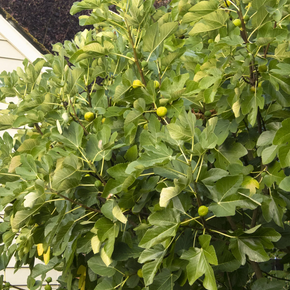
Peter's Honey Fig (Ficus carica 'Peter's Honey') is a celebrated heirloom fruit tree beloved for producing some of the sweetest, most intensely flavored figs you can grow at home. Originating in Sicily and brought to the Pacific Northwest by produce legend Peter Danna, this variety quickly earned a devoted following among growers throughout the mild-winter regions of the American West. The tree forms an attractive, rounded canopy with large, deeply lobed emerald-green leaves accented by chartreuse veins, providing lush ornamental interest from spring through fall. In summer, clusters of baseball-sized figs develop among the foliage, their skins ripening from soft green to a warm golden yellow that signals peak sweetness inside. The flesh is creamy near the skin and transitions to a deeply amber, syrupy center with a flavor that truly lives up to its name — pure, concentrated honey with floral undertones. Peter's Honey Fig is self-fruitful, requiring no second tree for pollination, and typically begins producing fruit within one to two years of planting. It thrives in USDA Hardiness Zones 7 through 10, performing especially well in the warm summers and mild winters of Southern Oregon and Northern California. Its drought tolerance, adaptability to various well-drained soils, and low-maintenance nature make it an outstanding choice for edible landscapes, home orchards, spacious containers, and Mediterranean-style garden designs. Whether eaten fresh off the branch, baked into desserts, layered on a charcuterie board, or preserved as jam, Peter's Honey Fig delivers an exceptional harvest season after season.
Plant Description
Peter's Honey Fig is a deciduous, medium-sized fruit tree with a naturally rounded, spreading habit. Its large, deeply 3- to 5-lobed leaves are bold and tropical in appearance, showcasing a rich emerald-green color accented by prominent chartreuse veins. The thick, grayish bark and sculptural branching structure give the tree excellent winter interest even after the leaves have dropped. In summer, the dense canopy is loaded with figs that begin as small green pomes blending into the foliage before swelling and turning a characteristic soft yellow to golden-green at full ripeness. The interior flesh is creamy white near the skin with a deeply amber, almost translucent center that is rich, syrupy, and intensely sweet with floral honey notes. The skin is relatively thin and tender compared to many other fig varieties, making the fruit highly enjoyable for fresh eating. Peter's Honey Fig is classified as a Common fig type, meaning it sets fruit without the need for fig wasp pollination, making it reliably productive for home gardeners. The tree is self-fruitful and typically produces a single large crop in late summer to early fall, though some established trees may develop a smaller breba (early) crop on prior-year wood in early summer.
Mature Size
| Attribute | Typical Range |
|---|---|
| Mature Height (in-ground) | 10 to 20 feet |
| Mature Spread | 10 to 15 feet |
| Growth Rate | Moderate; can add 1 to 2 feet per year under good conditions |
| Container Height (with pruning) | Maintained at 6 to 10 feet |
| Growth Habit | Rounded, spreading canopy; multi-stemmed or single-trunk |
Hardiness Zones
Peter's Honey Fig is best suited to USDA Hardiness Zones 7 through 10, making it an ideal edible tree for the warm-summer, mild-winter climates of Southern Oregon and Northern California. It can tolerate brief dips in temperature down to approximately 15 to 20 degrees Fahrenheit once well established, but young trees and new spring growth are more sensitive to late frosts. In Zone 6 or the colder edges of Zone 7, figs are often root-hardy and will re-sprout from the base even if the top growth is killed back by a hard freeze, particularly when planted against a south-facing wall or in a sheltered microclimate. In the inland valleys of Southern Oregon and Northern California where summers are long and hot, Peter's Honey Fig performs at its very best, producing the high sugar content and full ripeness this variety is famous for. Avoid planting in frost pockets or low-lying areas where cold air settles.
Sunlight Requirements
Peter's Honey Fig demands full sun for optimal fruit production and tree health. Aim to provide a minimum of 6 to 8 hours of direct sunlight daily during the growing season, with more being better in cooler coastal climates. Abundant sun exposure is directly tied to fruit sweetness and ripening — trees grown in partial shade will produce fewer figs with noticeably less sugar content and slower ripening. In regions with intense summer heat, the tree is tolerant of all-day sun and will actually thrive in hot, reflected heat from south- or west-facing walls. Choosing a south-facing planting site also helps extend the effective growing season and provides some frost protection in marginal zones. Avoid locations where surrounding structures or trees cast afternoon shade, as this is the period when solar energy is most critical for fruit development.
Soil and pH Preferences
One of the most adaptable edible fruit trees available, Peter's Honey Fig will grow in a broad range of soil types including loam, sandy soil, clay (with amendment), and rocky ground, provided drainage is adequate. The single most important soil requirement is excellent drainage — standing water or consistently waterlogged soil will quickly lead to root rot and tree decline. For best results, target a soil pH between 6.0 and 7.5, which is mildly acidic to neutral. Before planting, amend heavy clay soils generously with compost, aged bark, or coarse sand to improve drainage and soil structure. In raised beds or mounded planting areas, drainage challenges can be effectively overcome. Peter's Honey Fig does not demand rich or heavily fertilized soil; in fact, excessively fertile soil high in nitrogen tends to promote lush vegetative growth at the expense of fruit production. A lean, well-drained soil encourages the tree to channel its energy into ripening a generous crop of sweet figs.
Watering Guide
Proper watering is essential during the establishment period and for consistent, high-quality fruit production. Follow these guidelines:
- Newly planted trees: Water deeply and consistently for the first 1 to 2 years to support root establishment. Water every 7 to 10 days during dry periods, soaking the root zone thoroughly each time.
- Established trees: Peter's Honey Fig is drought tolerant once established and generally needs deep, infrequent watering. Allow the top few inches of soil to dry slightly between waterings. In typical Southern Oregon and Northern California summers, this means watering every 10 to 14 days during peak heat.
- During fruit development: Consistent soil moisture from late spring through harvest helps fruit size up properly and reduces the risk of fruit drop and splitting. Sudden swings from dry to very wet soil can crack ripe figs and invite spoilage.
- Fall and winter: Significantly reduce watering as temperatures cool and the tree enters dormancy. Overwatering during the dormant season is a leading cause of root rot.
- Method: Deep, slow watering at the root zone is far more effective than frequent shallow sprinkling. Drip irrigation or a slow soaker hose directed at the root zone is ideal.
- Mulch: Apply a 3- to 4-inch layer of organic mulch around the base of the tree, keeping it several inches away from the trunk, to conserve moisture and moderate soil temperature.
Fertilizing
Peter's Honey Fig has modest fertility needs and performs best without excessive feeding. Over-fertilizing — especially with high-nitrogen products — redirects the tree's energy toward lush leafy growth and delays or reduces fruit production. Follow these guidelines for best results:
- Established in-ground trees: Apply a light top-dressing of compost or a balanced granular fertilizer (such as a 10-10-10 formula) once in early spring as new growth begins. A second light application in early summer is optional if growth seems sluggish.
- Young trees in the first year: A single light application of balanced fertilizer in spring after planting is sufficient. Focus primarily on consistent watering and mulching to encourage root development.
- Container-grown trees: Potted figs deplete soil nutrients faster than in-ground trees. Use a slow-release balanced fertilizer at the beginning of the growing season, and supplement with a diluted liquid fertilizer monthly through summer. Refresh the potting soil annually or repot into a larger container with fresh potting mix.
- What to avoid: Do not fertilize after midsummer, as late-season feeding stimulates tender growth that is susceptible to early frost damage. Avoid fertilizers with very high nitrogen ratios.
- Organic options: Aged compost, worm castings, or fish-based fertilizers are excellent low-input options that feed slowly and improve soil structure over time.
Pruning and Maintenance
Annual pruning keeps Peter's Honey Fig productive, well-shaped, and easy to harvest. The best time to prune is in late winter or very early spring, just before new buds begin to swell and while the tree is still fully dormant. Key pruning practices include:
- Annual structural pruning: Remove dead, damaged, or diseased branches first. Then remove any crossing or rubbing branches to open the canopy for better air circulation and light penetration.
- Shoot thinning for fruit production: For maximum fruit quality, remove 1/2 to 2/3 of the long, flowing lateral shoots. This directs the tree's energy into fewer, better-developed fruiting points and encourages vigorous new growth which bears the heaviest crops.
- Suckers and water sprouts: Remove any suckers emerging from the base of the trunk promptly. Cut back upright water sprouts (vigorous, non-fruiting vertical shoots) to the parent branch to prevent crowding.
- Height management: Peter's Honey Fig can be kept at a manageable 8 to 12 feet through selective heading cuts, making it much easier to harvest the crop without ladders.
- Avoid heavy pruning in fall: Fall pruning removes fruiting wood needed for next year's crop and stimulates tender growth vulnerable to early frost.
- Tools: Always use clean, sharp bypass pruners or loppers. For larger cuts, a pruning saw is recommended. Disinfect tools between cuts when removing diseased wood.
Planting Instructions
- Timing: Plant in late winter to early spring after the danger of hard frost has passed, or in early fall in mild-winter climates like those of Southern Oregon and Northern California.
- Site selection: Choose a location in full sun with at least 6 to 8 hours of direct sun daily. A south- or west-facing exposure near a wall or fence is ideal for extra warmth and wind protection.
- Spacing: Allow at least 10 to 15 feet between Peter's Honey Fig and other trees, structures, or large shrubs to accommodate the mature canopy spread and avoid root competition.
- Digging the hole: Dig a hole twice as wide as the root ball and equal in depth. Avoid digging the hole deeper than the root ball to prevent the tree from settling too low.
- Soil preparation: Backfill with the native soil, amended with compost if drainage is poor. Do not over-enrich the backfill, as this can discourage roots from spreading beyond the planting hole.
- Planting depth: Set the tree so the top of the root ball is level with or slightly above the surrounding soil grade. Never bury the trunk.
- Backfilling: Firm the soil gently around the root ball to eliminate air pockets. Slightly loosen any circling roots before placing the tree in the hole.
- Watering in: Water thoroughly immediately after planting to settle the soil and saturate the root zone. Apply a 3- to 4-inch mulch ring extending out to the drip line, keeping mulch away from direct contact with the trunk.
- Staking: In windy locations, stake the tree loosely for the first growing season to allow the trunk to strengthen while preventing wind-rock damage to establishing roots.
Fruit Harvest and Use
Peter's Honey Fig typically produces its main crop in late summer through early fall — generally from August through September in Southern Oregon and Northern California. A smaller early breba crop may develop on the previous year's wood in June or July on well-established trees.
Signs of ripeness: Figs do not continue to ripen significantly after being picked, so harvesting at true maturity is critical. Look for:
- Skin color transitions from green to a soft golden yellow
- Fruit yields gently to light finger pressure
- The neck of the fig begins to soften and droop slightly on the branch
- A small droplet of sweet nectar may form at the eye (ostiole) of fully ripe fruit
Harvesting: Gently twist and lift ripe figs from the branch with a slight upward motion. Avoid bruising. Wear gloves or long sleeves when harvesting, as the milky latex in the stems and leaves can irritate sensitive skin.
Storage: Fresh figs are highly perishable. Store at room temperature and consume within 1 to 2 days of harvest, or refrigerate for up to 3 to 5 days. For longer storage, dry, freeze, or preserve as jam or preserves.
Culinary uses: Peter's Honey Fig is exceptional eaten fresh out of hand. It also pairs beautifully with cheese, prosciutto, and honey on charcuterie boards; is excellent halved and caramelized with butter; and works wonderfully in tarts, cakes, preserves, and savory glazes for roasted meats.
Seasonal Interest
| Season | What to Expect |
|---|---|
| Spring | Bold, deeply lobed leaves emerge in a fresh bright green; breba crop begins developing on prior-year wood on established trees; rapid, vigorous new shoot growth begins. |
| Summer | Dense, lush tropical-looking canopy at its peak; main crop figs swell and develop among the foliage; excellent shade tree at this stage; early breba figs ripen in June or July. |
| Late Summer / Fall | Main crop figs ripen to golden yellow; peak harvest season; leaves begin to turn yellow-green before drop; attractive open branching structure becomes visible. |
| Winter | Fully deciduous; sculptural gray-barked branching structure provides architectural winter interest; tree is fully dormant and cold hardy within its zone. |
Landscape Uses
Peter's Honey Fig is as ornamental as it is productive, offering exceptional versatility in the home landscape. Popular uses include:
- Edible accent tree: A stunning focal point in any edible or ornamental garden, with bold tropical foliage and a distinctive sculptural form year-round.
- Mediterranean and drought-tolerant gardens: Pairs naturally with lavender, rosemary, ornamental grasses, and olive trees in water-wise landscape designs inspired by Mediterranean aesthetics.
- Espalier: Peter's Honey Fig trains beautifully against a south- or west-facing wall in an espalier form, maximizing heat absorption, saving space, and creating a living wall feature while improving fruit quality.
- Privacy screen or informal hedge: When planted in a row, the dense summer canopy can function as an effective seasonal privacy screen or informal boundary planting.
- Home orchard anchor: An ideal centerpiece for a mixed backyard orchard, combining well with other heat-loving fruits such as pomegranate, olive, persimmon, and citrus.
- Patio container specimen: Potted specimens add bold Mediterranean character to patios, decks, and courtyards, and can be moved to shelter during exceptional cold snaps.
Container Growing
Peter's Honey Fig is an excellent candidate for container culture, making it accessible even for gardeners with limited space or those in colder zones who need to overwinter the tree indoors or in a sheltered space.
- Container size: Start in a 15- to 25-gallon container and up-pot as the tree grows. A half wine barrel is a classic and attractive choice. Ensure the container has multiple drainage holes.
- Potting mix: Use a high-quality, well-draining potting mix blended with perlite or coarse sand to improve drainage and prevent compaction. Avoid mixes with excessive moisture-retaining additions like water-retention crystals.
- Watering: Containers dry out faster than in-ground soil. Check moisture regularly and water thoroughly when the top 2 inches of soil are dry. Do not allow the container to sit in standing water.
- Fertilizing: Replenish nutrients with a slow-release balanced fertilizer at the start of the growing season and supplement with liquid fertilizer monthly during the growing season. Refresh potting soil annually or repot into fresh mix.
- Pruning for size control: Container-grown trees respond well to pruning and can be kept at 6 to 10 feet in height with annual dormant-season pruning. Root pruning at repotting time keeps the tree productive and manageable.
- Winter care: In frost-prone areas, move containers to an unheated garage, shed, or sheltered porch during the coldest months. The tree will drop its leaves and go dormant; water only minimally during this period.
- Fruit production: Container-grown trees can produce fruit, though yields may be somewhat smaller than in-ground trees. Maximizing sun exposure during the growing season is the key to good container fruit production.
Companion Plants
Choosing the right companion plants around Peter's Honey Fig can improve soil health, attract beneficial insects, and create a more diverse and productive edible garden. Consider these compatible companions:
- Basil (Ocimum basilicum): Planted beneath the canopy, basil repels certain insect pests, attracts pollinators, and complements the harvest with culinary uses that pair naturally with figs.
- Oregano and thyme: Low-growing Mediterranean herbs that act as living mulch under the fig canopy, cooling the soil, suppressing weeds, and attracting beneficial insects without competing aggressively for water.
- French marigold (Tagetes patula): Deters nematodes in the soil and attracts hoverflies and other beneficial predatory insects that help keep aphid and scale populations in check.
- Yarrow (Achillea millefolium): Planted along the drip line, yarrow attracts parasitic wasps and lacewings that prey on common fig pests.
- Comfrey (Symphytum officinale): A dynamic accumulator that mines deep soil minerals and can be cut and used as a nutrient-rich mulch around the base of the fig tree.
- Lavender and rosemary: Complement the Mediterranean character of the fig tree, tolerate similar dry, well-drained soil conditions, and attract pollinators throughout the growing season.
Plants to avoid: Do not plant brassicas (cabbage, broccoli, kale) or potatoes in close proximity, as they are not compatible companions. Avoid planting other large fruit trees or competitive shrubs within 10 to 12 feet of the fig's root zone.
Pests and Diseases
Peter's Honey Fig is generally a tough and pest-resistant tree, but gardeners in Southern Oregon and Northern California should be aware of the following common issues:
- Aphids: Small, soft-bodied insects that cluster on new growth and undersides of leaves, causing curling and sticky honeydew residue. Treat with a strong spray of water, insecticidal soap, or diluted neem oil. Encouraging beneficial insects like ladybugs and lacewings provides natural control.
- Scale insects: Brown or gray bumpy insects that attach to stems and branches, sucking sap and producing sooty mold. Treat with horticultural oil applied during the dormant season or with insecticidal soap during the growing season.
- Fig beetles (Cotinis mutabilis): Large, metallic-green beetles that can damage ripe fruit in late summer. Harvest figs promptly at full ripeness and remove fallen fruit to reduce beetle populations.
- Root knot nematodes: Microscopic soil-dwelling pests that can affect fig roots in sandy soils, causing stunting and reduced vigor. Planting French marigolds nearby and incorporating organic matter into the soil helps suppress nematode populations.
- Fig rust (Cerotelium fici): A fungal disease causing yellow-orange spots on the upper leaf surface and powdery orange pustules on the undersides, leading to premature leaf drop in humid conditions. Improve air circulation through pruning, avoid wetting foliage when watering, and remove fallen leaves promptly. Fungicide applications may be warranted in severe cases.
- Root rot (Pythium / Phytophthora): Caused by poorly drained or consistently waterlogged soil. The best prevention is planting in well-drained soil and avoiding overwatering, especially during the dormant season.
- Birds and squirrels: Ripe figs are highly attractive to wildlife. Protect ripening crops with bird netting and harvest promptly when fruit is at peak ripeness.
Wildlife Value
Peter's Honey Fig contributes meaningfully to the backyard ecosystem and supports local wildlife in several ways:
- Birds: Ripe figs are eagerly consumed by a wide variety of fruit-eating birds including robins, mockingbirds, cedar waxwings, and orioles. The dense summer canopy also provides nesting habitat and shelter for songbirds.
- Beneficial insects: The flowers of fig trees, borne internally within the fruit-like syconium, attract specialized fig wasps. The broader bloom period of companion plants growing beneath the fig canopy supports honeybees, native bees, and a wide variety of beneficial predatory insects.
- Pollinators: While Peter's Honey Fig does not require pollinator activity for fruit production (it is a self-fruitful Common type), the tree contributes to a garden ecosystem that supports pollinators through companion planting.
- Mammals: Fallen ripe figs are often visited by deer, foxes, and other wildlife as a late-summer food source. If deer pressure is a concern in your area, protect young trees with fencing or deer deterrents during the establishment period.
Toxicity and Safety Notes
While Peter's Honey Fig produces safe, edible fruit enjoyed by people of all ages, there are a few safety considerations to keep in mind:
- Latex sap: The milky white latex sap found in the leaves, stems, and unripe fruit of Ficus carica can cause contact dermatitis (skin irritation, redness, and blistering) in sensitive individuals, particularly when exposed to sunlight (phototoxic reaction). Always wear gloves and long sleeves when pruning or harvesting, and wash hands and exposed skin thoroughly after contact.
- Pets: Ficus carica is considered mildly toxic to dogs and cats. Ingestion of leaves or sap may cause gastrointestinal upset, drooling, or skin irritation. Keep pets away from fallen leaves and sap-dripping pruning cuts. If accidental ingestion occurs, contact your veterinarian.
- Edible fruit: The ripe fruit is safe and nutritious for human consumption and is not considered toxic. Unripe figs contain a higher concentration of latex and are not recommended for eating.
- Allergies: Individuals with known latex allergies or sensitivities to other members of the Moraceae family should exercise caution when handling the tree and consult a medical professional if reactions occur.
- Legendary honey-sweet flavor with a rich, syrupy amber interior and soft yellow-green skin that makes it one of the most prized fresh-eating figs available for home gardeners.
- A Sicilian heirloom variety introduced to the Pacific Northwest by Italian-born produce pioneer Peter Danna, bringing an authentic Mediterranean fruit-growing tradition to Western gardens.
- Self-fruitful and productive with no pollinator required, typically bearing its first harvest within 1 to 2 years of planting when given full sun and plenty of summer heat.
- Drought tolerant once established and adaptable to a wide range of well-drained soils, making it an excellent low-maintenance edible tree for Southern Oregon and Northern California gardens.
Peter's Honey Fig (Ficus carica 'Peter's Honey') is a celebrated heirloom fruit tree beloved for producing some of the sweetest, most intensely flavored figs you can grow at home. Originating in Sicily and brought to the Pacific Northwest by produce legend Peter Danna, this variety quickly earned a devoted following among growers throughout the mild-winter regions of the American West. The tree forms an attractive, rounded canopy with large, deeply lobed emerald-green leaves accented by chartreuse veins, providing lush ornamental interest from spring through fall. In summer, clusters of baseball-sized figs develop among the foliage, their skins ripening from soft green to a warm golden yellow that signals peak sweetness inside. The flesh is creamy near the skin and transitions to a deeply amber, syrupy center with a flavor that truly lives up to its name — pure, concentrated honey with floral undertones. Peter's Honey Fig is self-fruitful, requiring no second tree for pollination, and typically begins producing fruit within one to two years of planting. It thrives in USDA Hardiness Zones 7 through 10, performing especially well in the warm summers and mild winters of Southern Oregon and Northern California. Its drought tolerance, adaptability to various well-drained soils, and low-maintenance nature make it an outstanding choice for edible landscapes, home orchards, spacious containers, and Mediterranean-style garden designs. Whether eaten fresh off the branch, baked into desserts, layered on a charcuterie board, or preserved as jam, Peter's Honey Fig delivers an exceptional harvest season after season.
Plant Description
Peter's Honey Fig is a deciduous, medium-sized fruit tree with a naturally rounded, spreading habit. Its large, deeply 3- to 5-lobed leaves are bold and tropical in appearance, showcasing a rich emerald-green color accented by prominent chartreuse veins. The thick, grayish bark and sculptural branching structure give the tree excellent winter interest even after the leaves have dropped. In summer, the dense canopy is loaded with figs that begin as small green pomes blending into the foliage before swelling and turning a characteristic soft yellow to golden-green at full ripeness. The interior flesh is creamy white near the skin with a deeply amber, almost translucent center that is rich, syrupy, and intensely sweet with floral honey notes. The skin is relatively thin and tender compared to many other fig varieties, making the fruit highly enjoyable for fresh eating. Peter's Honey Fig is classified as a Common fig type, meaning it sets fruit without the need for fig wasp pollination, making it reliably productive for home gardeners. The tree is self-fruitful and typically produces a single large crop in late summer to early fall, though some established trees may develop a smaller breba (early) crop on prior-year wood in early summer.
Mature Size
| Attribute | Typical Range |
|---|---|
| Mature Height (in-ground) | 10 to 20 feet |
| Mature Spread | 10 to 15 feet |
| Growth Rate | Moderate; can add 1 to 2 feet per year under good conditions |
| Container Height (with pruning) | Maintained at 6 to 10 feet |
| Growth Habit | Rounded, spreading canopy; multi-stemmed or single-trunk |
Hardiness Zones
Peter's Honey Fig is best suited to USDA Hardiness Zones 7 through 10, making it an ideal edible tree for the warm-summer, mild-winter climates of Southern Oregon and Northern California. It can tolerate brief dips in temperature down to approximately 15 to 20 degrees Fahrenheit once well established, but young trees and new spring growth are more sensitive to late frosts. In Zone 6 or the colder edges of Zone 7, figs are often root-hardy and will re-sprout from the base even if the top growth is killed back by a hard freeze, particularly when planted against a south-facing wall or in a sheltered microclimate. In the inland valleys of Southern Oregon and Northern California where summers are long and hot, Peter's Honey Fig performs at its very best, producing the high sugar content and full ripeness this variety is famous for. Avoid planting in frost pockets or low-lying areas where cold air settles.
Sunlight Requirements
Peter's Honey Fig demands full sun for optimal fruit production and tree health. Aim to provide a minimum of 6 to 8 hours of direct sunlight daily during the growing season, with more being better in cooler coastal climates. Abundant sun exposure is directly tied to fruit sweetness and ripening — trees grown in partial shade will produce fewer figs with noticeably less sugar content and slower ripening. In regions with intense summer heat, the tree is tolerant of all-day sun and will actually thrive in hot, reflected heat from south- or west-facing walls. Choosing a south-facing planting site also helps extend the effective growing season and provides some frost protection in marginal zones. Avoid locations where surrounding structures or trees cast afternoon shade, as this is the period when solar energy is most critical for fruit development.
Soil and pH Preferences
One of the most adaptable edible fruit trees available, Peter's Honey Fig will grow in a broad range of soil types including loam, sandy soil, clay (with amendment), and rocky ground, provided drainage is adequate. The single most important soil requirement is excellent drainage — standing water or consistently waterlogged soil will quickly lead to root rot and tree decline. For best results, target a soil pH between 6.0 and 7.5, which is mildly acidic to neutral. Before planting, amend heavy clay soils generously with compost, aged bark, or coarse sand to improve drainage and soil structure. In raised beds or mounded planting areas, drainage challenges can be effectively overcome. Peter's Honey Fig does not demand rich or heavily fertilized soil; in fact, excessively fertile soil high in nitrogen tends to promote lush vegetative growth at the expense of fruit production. A lean, well-drained soil encourages the tree to channel its energy into ripening a generous crop of sweet figs.
Watering Guide
Proper watering is essential during the establishment period and for consistent, high-quality fruit production. Follow these guidelines:
- Newly planted trees: Water deeply and consistently for the first 1 to 2 years to support root establishment. Water every 7 to 10 days during dry periods, soaking the root zone thoroughly each time.
- Established trees: Peter's Honey Fig is drought tolerant once established and generally needs deep, infrequent watering. Allow the top few inches of soil to dry slightly between waterings. In typical Southern Oregon and Northern California summers, this means watering every 10 to 14 days during peak heat.
- During fruit development: Consistent soil moisture from late spring through harvest helps fruit size up properly and reduces the risk of fruit drop and splitting. Sudden swings from dry to very wet soil can crack ripe figs and invite spoilage.
- Fall and winter: Significantly reduce watering as temperatures cool and the tree enters dormancy. Overwatering during the dormant season is a leading cause of root rot.
- Method: Deep, slow watering at the root zone is far more effective than frequent shallow sprinkling. Drip irrigation or a slow soaker hose directed at the root zone is ideal.
- Mulch: Apply a 3- to 4-inch layer of organic mulch around the base of the tree, keeping it several inches away from the trunk, to conserve moisture and moderate soil temperature.
Fertilizing
Peter's Honey Fig has modest fertility needs and performs best without excessive feeding. Over-fertilizing — especially with high-nitrogen products — redirects the tree's energy toward lush leafy growth and delays or reduces fruit production. Follow these guidelines for best results:
- Established in-ground trees: Apply a light top-dressing of compost or a balanced granular fertilizer (such as a 10-10-10 formula) once in early spring as new growth begins. A second light application in early summer is optional if growth seems sluggish.
- Young trees in the first year: A single light application of balanced fertilizer in spring after planting is sufficient. Focus primarily on consistent watering and mulching to encourage root development.
- Container-grown trees: Potted figs deplete soil nutrients faster than in-ground trees. Use a slow-release balanced fertilizer at the beginning of the growing season, and supplement with a diluted liquid fertilizer monthly through summer. Refresh the potting soil annually or repot into a larger container with fresh potting mix.
- What to avoid: Do not fertilize after midsummer, as late-season feeding stimulates tender growth that is susceptible to early frost damage. Avoid fertilizers with very high nitrogen ratios.
- Organic options: Aged compost, worm castings, or fish-based fertilizers are excellent low-input options that feed slowly and improve soil structure over time.
Pruning and Maintenance
Annual pruning keeps Peter's Honey Fig productive, well-shaped, and easy to harvest. The best time to prune is in late winter or very early spring, just before new buds begin to swell and while the tree is still fully dormant. Key pruning practices include:
- Annual structural pruning: Remove dead, damaged, or diseased branches first. Then remove any crossing or rubbing branches to open the canopy for better air circulation and light penetration.
- Shoot thinning for fruit production: For maximum fruit quality, remove 1/2 to 2/3 of the long, flowing lateral shoots. This directs the tree's energy into fewer, better-developed fruiting points and encourages vigorous new growth which bears the heaviest crops.
- Suckers and water sprouts: Remove any suckers emerging from the base of the trunk promptly. Cut back upright water sprouts (vigorous, non-fruiting vertical shoots) to the parent branch to prevent crowding.
- Height management: Peter's Honey Fig can be kept at a manageable 8 to 12 feet through selective heading cuts, making it much easier to harvest the crop without ladders.
- Avoid heavy pruning in fall: Fall pruning removes fruiting wood needed for next year's crop and stimulates tender growth vulnerable to early frost.
- Tools: Always use clean, sharp bypass pruners or loppers. For larger cuts, a pruning saw is recommended. Disinfect tools between cuts when removing diseased wood.
Planting Instructions
- Timing: Plant in late winter to early spring after the danger of hard frost has passed, or in early fall in mild-winter climates like those of Southern Oregon and Northern California.
- Site selection: Choose a location in full sun with at least 6 to 8 hours of direct sun daily. A south- or west-facing exposure near a wall or fence is ideal for extra warmth and wind protection.
- Spacing: Allow at least 10 to 15 feet between Peter's Honey Fig and other trees, structures, or large shrubs to accommodate the mature canopy spread and avoid root competition.
- Digging the hole: Dig a hole twice as wide as the root ball and equal in depth. Avoid digging the hole deeper than the root ball to prevent the tree from settling too low.
- Soil preparation: Backfill with the native soil, amended with compost if drainage is poor. Do not over-enrich the backfill, as this can discourage roots from spreading beyond the planting hole.
- Planting depth: Set the tree so the top of the root ball is level with or slightly above the surrounding soil grade. Never bury the trunk.
- Backfilling: Firm the soil gently around the root ball to eliminate air pockets. Slightly loosen any circling roots before placing the tree in the hole.
- Watering in: Water thoroughly immediately after planting to settle the soil and saturate the root zone. Apply a 3- to 4-inch mulch ring extending out to the drip line, keeping mulch away from direct contact with the trunk.
- Staking: In windy locations, stake the tree loosely for the first growing season to allow the trunk to strengthen while preventing wind-rock damage to establishing roots.
Fruit Harvest and Use
Peter's Honey Fig typically produces its main crop in late summer through early fall — generally from August through September in Southern Oregon and Northern California. A smaller early breba crop may develop on the previous year's wood in June or July on well-established trees.
Signs of ripeness: Figs do not continue to ripen significantly after being picked, so harvesting at true maturity is critical. Look for:
- Skin color transitions from green to a soft golden yellow
- Fruit yields gently to light finger pressure
- The neck of the fig begins to soften and droop slightly on the branch
- A small droplet of sweet nectar may form at the eye (ostiole) of fully ripe fruit
Harvesting: Gently twist and lift ripe figs from the branch with a slight upward motion. Avoid bruising. Wear gloves or long sleeves when harvesting, as the milky latex in the stems and leaves can irritate sensitive skin.
Storage: Fresh figs are highly perishable. Store at room temperature and consume within 1 to 2 days of harvest, or refrigerate for up to 3 to 5 days. For longer storage, dry, freeze, or preserve as jam or preserves.
Culinary uses: Peter's Honey Fig is exceptional eaten fresh out of hand. It also pairs beautifully with cheese, prosciutto, and honey on charcuterie boards; is excellent halved and caramelized with butter; and works wonderfully in tarts, cakes, preserves, and savory glazes for roasted meats.
Seasonal Interest
| Season | What to Expect |
|---|---|
| Spring | Bold, deeply lobed leaves emerge in a fresh bright green; breba crop begins developing on prior-year wood on established trees; rapid, vigorous new shoot growth begins. |
| Summer | Dense, lush tropical-looking canopy at its peak; main crop figs swell and develop among the foliage; excellent shade tree at this stage; early breba figs ripen in June or July. |
| Late Summer / Fall | Main crop figs ripen to golden yellow; peak harvest season; leaves begin to turn yellow-green before drop; attractive open branching structure becomes visible. |
| Winter | Fully deciduous; sculptural gray-barked branching structure provides architectural winter interest; tree is fully dormant and cold hardy within its zone. |
Landscape Uses
Peter's Honey Fig is as ornamental as it is productive, offering exceptional versatility in the home landscape. Popular uses include:
- Edible accent tree: A stunning focal point in any edible or ornamental garden, with bold tropical foliage and a distinctive sculptural form year-round.
- Mediterranean and drought-tolerant gardens: Pairs naturally with lavender, rosemary, ornamental grasses, and olive trees in water-wise landscape designs inspired by Mediterranean aesthetics.
- Espalier: Peter's Honey Fig trains beautifully against a south- or west-facing wall in an espalier form, maximizing heat absorption, saving space, and creating a living wall feature while improving fruit quality.
- Privacy screen or informal hedge: When planted in a row, the dense summer canopy can function as an effective seasonal privacy screen or informal boundary planting.
- Home orchard anchor: An ideal centerpiece for a mixed backyard orchard, combining well with other heat-loving fruits such as pomegranate, olive, persimmon, and citrus.
- Patio container specimen: Potted specimens add bold Mediterranean character to patios, decks, and courtyards, and can be moved to shelter during exceptional cold snaps.
Container Growing
Peter's Honey Fig is an excellent candidate for container culture, making it accessible even for gardeners with limited space or those in colder zones who need to overwinter the tree indoors or in a sheltered space.
- Container size: Start in a 15- to 25-gallon container and up-pot as the tree grows. A half wine barrel is a classic and attractive choice. Ensure the container has multiple drainage holes.
- Potting mix: Use a high-quality, well-draining potting mix blended with perlite or coarse sand to improve drainage and prevent compaction. Avoid mixes with excessive moisture-retaining additions like water-retention crystals.
- Watering: Containers dry out faster than in-ground soil. Check moisture regularly and water thoroughly when the top 2 inches of soil are dry. Do not allow the container to sit in standing water.
- Fertilizing: Replenish nutrients with a slow-release balanced fertilizer at the start of the growing season and supplement with liquid fertilizer monthly during the growing season. Refresh potting soil annually or repot into fresh mix.
- Pruning for size control: Container-grown trees respond well to pruning and can be kept at 6 to 10 feet in height with annual dormant-season pruning. Root pruning at repotting time keeps the tree productive and manageable.
- Winter care: In frost-prone areas, move containers to an unheated garage, shed, or sheltered porch during the coldest months. The tree will drop its leaves and go dormant; water only minimally during this period.
- Fruit production: Container-grown trees can produce fruit, though yields may be somewhat smaller than in-ground trees. Maximizing sun exposure during the growing season is the key to good container fruit production.
Companion Plants
Choosing the right companion plants around Peter's Honey Fig can improve soil health, attract beneficial insects, and create a more diverse and productive edible garden. Consider these compatible companions:
- Basil (Ocimum basilicum): Planted beneath the canopy, basil repels certain insect pests, attracts pollinators, and complements the harvest with culinary uses that pair naturally with figs.
- Oregano and thyme: Low-growing Mediterranean herbs that act as living mulch under the fig canopy, cooling the soil, suppressing weeds, and attracting beneficial insects without competing aggressively for water.
- French marigold (Tagetes patula): Deters nematodes in the soil and attracts hoverflies and other beneficial predatory insects that help keep aphid and scale populations in check.
- Yarrow (Achillea millefolium): Planted along the drip line, yarrow attracts parasitic wasps and lacewings that prey on common fig pests.
- Comfrey (Symphytum officinale): A dynamic accumulator that mines deep soil minerals and can be cut and used as a nutrient-rich mulch around the base of the fig tree.
- Lavender and rosemary: Complement the Mediterranean character of the fig tree, tolerate similar dry, well-drained soil conditions, and attract pollinators throughout the growing season.
Plants to avoid: Do not plant brassicas (cabbage, broccoli, kale) or potatoes in close proximity, as they are not compatible companions. Avoid planting other large fruit trees or competitive shrubs within 10 to 12 feet of the fig's root zone.
Pests and Diseases
Peter's Honey Fig is generally a tough and pest-resistant tree, but gardeners in Southern Oregon and Northern California should be aware of the following common issues:
- Aphids: Small, soft-bodied insects that cluster on new growth and undersides of leaves, causing curling and sticky honeydew residue. Treat with a strong spray of water, insecticidal soap, or diluted neem oil. Encouraging beneficial insects like ladybugs and lacewings provides natural control.
- Scale insects: Brown or gray bumpy insects that attach to stems and branches, sucking sap and producing sooty mold. Treat with horticultural oil applied during the dormant season or with insecticidal soap during the growing season.
- Fig beetles (Cotinis mutabilis): Large, metallic-green beetles that can damage ripe fruit in late summer. Harvest figs promptly at full ripeness and remove fallen fruit to reduce beetle populations.
- Root knot nematodes: Microscopic soil-dwelling pests that can affect fig roots in sandy soils, causing stunting and reduced vigor. Planting French marigolds nearby and incorporating organic matter into the soil helps suppress nematode populations.
- Fig rust (Cerotelium fici): A fungal disease causing yellow-orange spots on the upper leaf surface and powdery orange pustules on the undersides, leading to premature leaf drop in humid conditions. Improve air circulation through pruning, avoid wetting foliage when watering, and remove fallen leaves promptly. Fungicide applications may be warranted in severe cases.
- Root rot (Pythium / Phytophthora): Caused by poorly drained or consistently waterlogged soil. The best prevention is planting in well-drained soil and avoiding overwatering, especially during the dormant season.
- Birds and squirrels: Ripe figs are highly attractive to wildlife. Protect ripening crops with bird netting and harvest promptly when fruit is at peak ripeness.
Wildlife Value
Peter's Honey Fig contributes meaningfully to the backyard ecosystem and supports local wildlife in several ways:
- Birds: Ripe figs are eagerly consumed by a wide variety of fruit-eating birds including robins, mockingbirds, cedar waxwings, and orioles. The dense summer canopy also provides nesting habitat and shelter for songbirds.
- Beneficial insects: The flowers of fig trees, borne internally within the fruit-like syconium, attract specialized fig wasps. The broader bloom period of companion plants growing beneath the fig canopy supports honeybees, native bees, and a wide variety of beneficial predatory insects.
- Pollinators: While Peter's Honey Fig does not require pollinator activity for fruit production (it is a self-fruitful Common type), the tree contributes to a garden ecosystem that supports pollinators through companion planting.
- Mammals: Fallen ripe figs are often visited by deer, foxes, and other wildlife as a late-summer food source. If deer pressure is a concern in your area, protect young trees with fencing or deer deterrents during the establishment period.
Toxicity and Safety Notes
While Peter's Honey Fig produces safe, edible fruit enjoyed by people of all ages, there are a few safety considerations to keep in mind:
- Latex sap: The milky white latex sap found in the leaves, stems, and unripe fruit of Ficus carica can cause contact dermatitis (skin irritation, redness, and blistering) in sensitive individuals, particularly when exposed to sunlight (phototoxic reaction). Always wear gloves and long sleeves when pruning or harvesting, and wash hands and exposed skin thoroughly after contact.
- Pets: Ficus carica is considered mildly toxic to dogs and cats. Ingestion of leaves or sap may cause gastrointestinal upset, drooling, or skin irritation. Keep pets away from fallen leaves and sap-dripping pruning cuts. If accidental ingestion occurs, contact your veterinarian.
- Edible fruit: The ripe fruit is safe and nutritious for human consumption and is not considered toxic. Unripe figs contain a higher concentration of latex and are not recommended for eating.
- Allergies: Individuals with known latex allergies or sensitivities to other members of the Moraceae family should exercise caution when handling the tree and consult a medical professional if reactions occur.
Related Products