
Zoom the image with the mouse
Black Jack Fig Tree - 5 Gallon
SKU:
2055820
$69.99
- Semi-dwarf Ficus carica variety that stays naturally compact at 10-15 feet and can be pruned to a tidy 6-8 feet, making it ideal for smaller gardens, patios, and containers
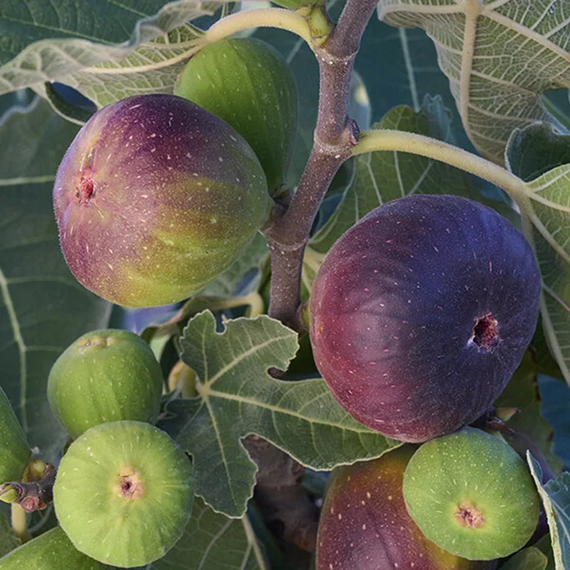
- Produces large, extra-sweet figs with striking deep purple-black skin and rich amber-red flesh in two crops per year — an early breba crop and a generous late-summer main crop
- Self-fertile and drought-tolerant once established, requiring no second tree for pollination and thriving in the warm, sunny climates of USDA Hardiness Zones 7-10
- Exceptionally versatile — enjoy the fruit fresh, dried, preserved as jam, or used in savory and sweet culinary creations straight from your own backyard
The Black Jack Fig (Ficus carica 'Black Jack') is a celebrated semi-dwarf fruit tree that delivers all the rich, jammy sweetness of a full-sized fig in a compact, manageable form perfectly suited to home gardens, patios, and urban landscapes across Southern Oregon and Northern California. A sport of the beloved 'Brown Turkey' fig, Black Jack sets itself apart with its naturally dense, bushy canopy and remarkably large fruit — sometimes rivaling a tennis ball in size — featuring deep purplish-black skin that conceals luscious, strawberry-red interior flesh loaded with complex, honeyed sweetness. In warm climates, this self-fertile tree rewards growers with two harvests per year: a breba crop on the prior season's wood in late spring, followed by a heavier and more abundant main crop on new wood from late summer through fall. Hardy to approximately 15°F and thriving in full sun with well-draining, moderately fertile soil, the Black Jack Fig is as forgiving as it is productive — drought-tolerant once established, adaptable to ground planting or container culture, and low-maintenance enough for first-time fruit tree growers. Whether trained as a small specimen tree in the landscape, grown in a large patio pot, or espaliered against a warm south-facing wall, this outstanding cultivar brings multi-season ornamental value and an annual bounty of exceptional, garden-fresh fruit to any sunny outdoor space.
Plant Description
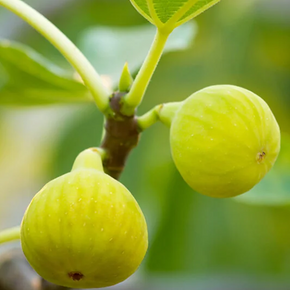
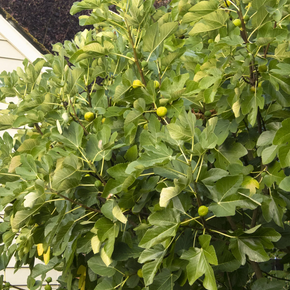
The Black Jack Fig is a semi-dwarf deciduous tree belonging to the Moraceae family. It is a cultivar of Ficus carica and is considered a sport of 'Brown Turkey,' sharing similar fruit appearance and flavor while offering a significantly more compact growth habit. The tree produces bold, deeply lobed, bright green leaves that are ornamentally attractive throughout the growing season, lending a distinctly Mediterranean character to the landscape. In winter, after leaf drop, the smooth silvery-gray bark and sculptural branching structure provide interesting architectural form. The fruit is among the most visually dramatic of all fig varieties — large to extra-large in size, with skin that transitions from green to a deep, rich purple-black as it fully ripens, revealing a soft, jammy interior of vibrant amber-red to strawberry-red flesh. The flavor profile is intensely sweet with a complex, honey-like richness that makes it exceptional for fresh eating as well as culinary applications. Black Jack is classified as a "common fig," meaning it sets fruit through parthenocarpy and requires no pollination by fig wasps or a second tree to produce a reliable, full crop.
Mature Size
| Characteristic | Detail |
|---|---|
| Natural Height (unpruned) | 10 to 15 feet |
| Natural Spread (unpruned) | 10 to 15 feet |
| Maintained Height (with pruning) | 6 to 8 feet |
| Growth Rate | Moderate; typically 1 to 3 feet of new growth per year under optimal conditions |
| Growth Habit | Dense, bushy, open canopy; naturally compact with short internodes |
| Root System | Moderately spreading; manageable in large containers |
Growth is noticeably faster when planted directly in the ground versus container culture, where root restriction naturally moderates vigor. Annual pruning easily keeps the tree at a harvest-friendly height without sacrificing fruit production, since Black Jack bears its main crop on new wood.
Hardiness Zones and Climate
Black Jack Fig is best suited to USDA Hardiness Zones 7 through 10, making it an excellent choice for the warm Mediterranean-influenced climates of Southern Oregon and Northern California. It tolerates temperatures down to approximately 15°F (-9°C) when established, though prolonged exposure to temperatures below 20°F may cause dieback of above-ground branches. Because the tree fruits heavily on new wood, even a plant that experiences winter dieback can often recover and still produce a main crop in the following season from vigorous new growth. In the hottest interior valleys, the tree particularly thrives when positioned in a full-sun location with good reflected heat. Coastal microclimates with cooler summers are suitable, though additional warmth — such as planting against a south-facing wall — aids in fruit ripening and sugar development. In the ideal climate zones of Northern California and Southern Oregon, the tree is well-adapted to the hot, dry summers and mild, wet winters typical of the region.
Sunlight Requirements
Black Jack Fig demands full sun and performs best with a minimum of 6 to 8 hours of direct, unfiltered sunlight per day. In warm inland climates, 8 to 10 hours of sun is ideal and will maximize fruit production, sugar content, and overall plant vigor. Insufficient sunlight leads to reduced fruiting, leggy or sparse growth, and figs that fail to fully ripen or develop their characteristic sweetness. When siting the tree, avoid locations shaded by structures, fences, or neighboring plants, particularly during the afternoon hours when solar intensity is greatest. A south- or west-facing exposure is preferred. Planting against a south-facing masonry wall is a particularly effective strategy in cooler microclimates, as the thermal mass absorbs daytime heat and releases it at night, extending the effective growing season and improving fruit quality.
Soil and pH Preferences
Black Jack Fig is adaptable to a wide range of soil types, including sandy loam, loam, and even moderately heavy clay soils, provided drainage is adequate. Standing water and chronically saturated soil are the primary soil-related threats to fig health, as they promote root rot and fungal disease. The ideal soil is loose, moderately fertile, and well-draining, with plenty of organic matter incorporated at planting to improve both soil structure and moisture retention.
- Preferred soil pH: 6.0 to 6.5 (slightly acidic to neutral)
- Tolerates mildly alkaline soils up to approximately pH 7.0 to 7.5
- Highly alkaline soils (above pH 7.5) can impede uptake of micronutrients — amend with sulfur or peat moss if needed
- For in-ground planting, amend native soil with compost and coarse pumice or grit to improve aeration and drainage
- For container planting, use a high-quality potting mix blended with 30 to 40% perlite or coarse bark fines to prevent compaction and ensure excellent drainage
- Avoid soils high in nitrogen, which tend to promote excessive leafy growth at the expense of fruit production
Watering Guide
Consistent and correctly timed watering is one of the most critical factors in producing high-quality Black Jack figs. Overwatering — especially in containers — is the leading cause of root rot and poor tree performance, while inconsistent moisture during fruit development can cause splitting and premature drop.
- Newly planted trees: Water deeply 2 to 3 times per week for the first 4 to 6 weeks to establish the root system; gradually reduce frequency as the tree settles in
- Established in-ground trees: Water deeply once per week or every 10 to 14 days during summer, delivering 15 to 20 gallons per watering to encourage deep root development; reduce to monthly or less in winter dormancy
- Container-grown trees: Check soil moisture every 3 to 4 days during warm weather; water thoroughly when the top 2 inches of soil feel dry; ensure pots drain freely after each watering
- Pre-harvest period: Gradually reduce watering as figs begin to swell and change color — excess moisture at this stage dilutes flavor and causes fruit to split
- Winter dormancy: Reduce watering significantly; provide only enough to prevent the root ball from completely desiccating
- Irrigation method: Drip irrigation at the base is preferred over overhead watering, as wet foliage encourages fungal diseases such as fig rust
Fertilizing
Black Jack Fig is a moderate to heavy feeder, particularly when grown in containers where nutrients are depleted more quickly. A well-planned fertilization schedule supports robust vegetative growth in spring and transitions to supporting fruit quality and wood hardening as the season progresses.
- Early spring (at bud break): Apply a balanced fertilizer such as 10-10-10 or an organic slow-release blend (5-5-5 or 8-8-8) to fuel new growth and early fruit development
- Late spring through midsummer: Switch to a low-nitrogen, higher-phosphorus and potassium formula to encourage fruit set, size, and sugar development rather than excessive leafy growth
- In-ground trees: Feed every 4 to 6 weeks from March through July
- Container-grown trees: Feed every 2 to 4 weeks from spring bud break through late August with a balanced liquid fertilizer
- After late August: Discontinue all fertilizing to allow the wood to harden in preparation for winter dormancy
- Caution: Avoid over-fertilizing with high-nitrogen products, which stimulate lush vegetative growth at the expense of fruiting and can produce tender new growth vulnerable to cold damage
Pruning and Maintenance
Pruning is essential to keeping the Black Jack Fig productive, manageable in size, and healthy over the long term. Because the heaviest fruit production occurs on new wood from the current growing season, pruning actually encourages more fruiting nodes and can be done fairly aggressively without sacrificing the main crop.
- Formative pruning (at planting): For young whip-style trees, cut back to approximately 24 inches high to stimulate low branching and establish a multi-stemmed open form
- Open center structure: Select 3 to 4 strong scaffold branches growing in different directions; remove everything else to create a wine-glass or "V" shape that maximizes light and airflow to ripening fruit
- Winter/dormant pruning: The primary annual pruning window is during full dormancy (late winter, before bud break); remove dead, diseased, or crossing branches and up to 50% of new growth to control size and stimulate vigorous fruiting wood
- Summer tip pruning: Lightly pinch or tip back new shoot growth in late spring to encourage lateral branching and increase the number of fruiting nodes for the upcoming season
- Size management: Regular pruning can maintain the tree at a comfortable 6 to 8 feet, keeping all fruit within easy reach without the need for a ladder
- Safety note: Wear gloves and protective clothing when pruning — the milky white latex sap found in fig stems and leaves is a known skin irritant that can cause phytophotodermatitis when exposed to sunlight
- Clean-up: Rake and dispose of fallen leaves and fruit promptly to reduce pest and disease pressure
Planting Instructions
The best time to plant Black Jack Fig is in spring after the last frost has passed, giving the tree a full warm season to establish before its first winter. Spring planting also provides the possibility of a partial harvest in the first growing season.
- Select a site with full sun (at least 6 to 8 hours daily) and well-draining soil; avoid low-lying areas where water pools after rain
- Dig a planting hole twice as wide as the root ball and equal in depth — do not plant deeper than the nursery soil line
- Amend the backfill soil with quality compost (up to 25 to 30% by volume) to improve fertility and structure; in heavy clay soils, also incorporate coarse grit or pumice to improve drainage
- Remove the tree from its container, gently loosen any circling roots, and set the root ball in the hole so the crown sits level with or very slightly above the surrounding soil grade
- Backfill with amended soil, firming gently to eliminate air pockets, and water thoroughly to settle the soil around the roots
- Create a shallow watering basin around the drip line to direct irrigation water to the root zone
- Apply a 3 to 4-inch layer of organic mulch (wood chips, straw, or shredded bark) in a ring around the tree, keeping mulch 4 to 6 inches away from the trunk to prevent crown rot
- For container planting, choose a pot with generous drainage holes and use a well-aerated potting mix blended with perlite; begin in a smaller container and up-pot gradually as the tree grows
Harvest Season and Ripeness
In the warm climates of Southern Oregon and Northern California, Black Jack Fig typically produces two harvests per year under favorable conditions. The breba (first) crop develops on the prior season's wood and may be available from late spring to early summer, though this crop tends to be modest in size. The main crop — the primary, most abundant harvest — develops on new growth from the current season and ripens from late summer through early fall, typically August through October depending on location and climate.
Knowing when figs are truly ripe is key to enjoying peak flavor. Watch for these signs of ripeness:
- Skin color deepens to a rich, dark purple-black
- The neck of the fruit softens and the fig droops or sags naturally on its stem
- The fruit feels soft and yielding to gentle touch
- The skin may show slight cracking or a glistening drop of honeyed nectar at the fruit's eye (ostiole)
- The fig separates cleanly from the branch with a gentle upward lift and twist — no force required
Fresh figs are highly perishable and should be consumed within 2 to 3 days of harvest or refrigerated immediately. For longer preservation, figs can be dried, frozen, canned in syrup, or made into jam and preserves.
Container Growing
Black Jack Fig is widely regarded as one of the finest fig cultivars for container culture, surpassing many full-sized varieties thanks to its naturally compact, bushy growth habit and its focus on a reliable main crop that aligns perfectly with container management. A well-grown Black Jack Fig in a large container can remain productive and healthy for a decade or more with proper care and periodic repotting.
- Starting container size: A 15 to 20-gallon container is appropriate for an established young tree; avoid starting in an oversized pot, which holds excess moisture around the roots
- Repotting progression: Move up to the next pot size as roots begin to fill the container; overly root-bound trees decline in productivity, while excessively large pots hold too much moisture
- Container material: Terracotta provides the best breathability; glazed ceramic and food-grade plastic containers work well provided drainage holes are ample
- Potting mix: Use a high-quality potting mix amended with 30 to 40% coarse perlite or bark fines for optimal drainage and aeration
- Placement: Position containers in the hottest, sunniest spot available — a south- or west-facing patio, deck, or driveway apron is ideal
- Winter management: In colder winters, containers can be moved to an unheated garage or sheltered space to protect the root ball from hard freezing, then returned outdoors in early spring
- Watering containers: Pots dry out significantly faster than in-ground planting; check soil moisture frequently and water thoroughly when the top 2 inches feel dry
Pests and Diseases
Black Jack Fig is relatively resistant to many common garden pests and diseases, but a few challenges can arise, particularly in humid conditions or where sanitation is poor. Being aware of potential issues allows for early intervention before damage becomes serious.
| Pest or Disease | Symptoms | Management |
|---|---|---|
| Fig Rust (Cerotelium fici) | Orange-yellow spots on leaf undersides; premature leaf drop | Improve air circulation; avoid overhead watering; remove and dispose of affected leaves; apply appropriate fungicide if severe |
| Aphids | Sticky residue; curled or distorted new growth; clusters of small insects on stems | Spray with a strong stream of water; apply neem oil solution; introduce natural predators such as ladybugs |
| Spider Mites | Fine webbing on leaf undersides; stippled, bronzed foliage | Increase humidity around foliage; apply neem oil or insecticidal soap; avoid over-fertilizing with nitrogen |
| Scale Insects | Waxy bumps on bark and stems; yellowing leaves; sticky honeydew | Scrape off manually; treat with horticultural oil during dormancy or neem oil during the growing season |
| Root Rot (Phytophthora spp.) | Wilting despite adequate moisture; yellowing leaves; mushy, discolored roots | Improve drainage; reduce watering frequency; avoid heavy clay soils; repot container plants into fresh, well-draining mix |
| Fruit Beetles / Fig Beetles | Damaged or hollow ripening figs; adult beetles feeding on fruit | Use fine organza mesh bags over individual figs as they begin to color; pick up and dispose of fallen fruit promptly |
| Birds and Squirrels | Partially eaten or missing ripe figs | Use bird netting draped over the canopy during ripening; harvest fruit promptly as it ripens |
Good cultural practices — full sun placement, proper spacing, drip irrigation rather than overhead watering, and prompt removal of fallen or rotting fruit — prevent the majority of pest and disease problems in Black Jack Fig.
Landscape Uses
Black Jack Fig is a highly versatile ornamental and productive fruit tree with numerous applications in the home landscape. Its semi-dwarf stature and attractive foliage make it a genuine dual-purpose plant that earns its place in the garden from multiple perspectives.
- Specimen or focal point tree: The bold, deeply lobed foliage and sculptural winter silhouette make Black Jack an eye-catching centerpiece in smaller gardens and courtyard plantings
- Edible landscape: Integrates seamlessly into food forests, kitchen gardens, and orchard plantings where both aesthetics and fruit production are priorities
- Espalier: Trains beautifully against a south- or west-facing wall or fence, maximizing reflected heat for superior fruit ripening while using minimal lateral space
- Patio and container specimen: One of the best fruiting trees for large pots on patios, decks, or balconies; can be moved to take advantage of seasonal sun exposure
- Privacy screening: Dense foliage on multiple trees planted in a row creates effective seasonal screening from late spring through early fall
- Courtyard or small garden tree: Its manageable size makes it well-suited to enclosed courtyard spaces and narrow side yards where full-sized fruit trees would be impractical
- Mediterranean-themed gardens: Pairs beautifully with lavender, rosemary, olive trees, ornamental grasses, and other drought-tolerant Mediterranean plants
Companion Plants
Thoughtful companion planting around Black Jack Fig can enhance soil health, deter pests, attract beneficial insects, and create a cohesive, attractive planting design. The following plants pair well with Black Jack Fig in Southern Oregon and Northern California gardens:
- Lavender (Lavandula spp.): Repels aphids and other soft-bodied pests while attracting pollinators; thrives in the same full-sun, well-draining conditions as fig
- Rosemary (Salvia rosmarinus): A drought-tolerant aromatic herb that deters certain pests and thrives in the warm, dry conditions preferred by fig
- Comfrey (Symphytum officinale): Deep tap roots mine nutrients from the subsoil; chop-and-drop leaves create an excellent nutrient-rich mulch around the fig's root zone
- Nasturtium (Tropaeolum majus): Serves as a trap crop for aphids, drawing them away from the fig; edible and easy to grow as a seasonal ground cover
- Chives or garlic (Allium spp.): Allium compounds help deter aphids, borers, and other insects when planted near the base of the tree
- Yarrow (Achillea millefolium): Attracts beneficial predatory insects including lacewings and parasitic wasps that keep pest populations in check
- Strawberries (Fragaria x ananassa): Make excellent ground cover companions under and around fig trees, utilizing the shaded understory and complementing the fig's harvest season
- Thyme (Thymus spp.): Low-growing, drought-tolerant ground cover that attracts pollinators and beneficial insects; tolerates the dry soil conditions preferred by established figs
Wildlife Value
Black Jack Fig provides meaningful wildlife value in the home garden and edible landscape, particularly during its fruiting season. While the tree is not a native species, its fruit and structure support a variety of garden wildlife.
- Birds: A wide range of fruit-eating birds including robins, mockingbirds, cedar waxwings, and orioles are attracted to ripening and overripe figs; the dense canopy also provides nesting and shelter habitat
- Pollinators: Although Black Jack Fig does not require pollinator visits to set fruit, its large, textured leaves and garden habitat value attract and support bees, butterflies, and beneficial insects in the surrounding planting
- Beneficial insects: The canopy offers shelter and hunting ground for predatory insects such as lacewings and ladybugs that help control aphid and mite populations throughout the garden
- Squirrels and small mammals: Will readily consume ripe and fallen figs; netting and prompt harvest are advisable if fruit protection is a priority
Note: The milky white latex sap produced by Black Jack Fig stems and leaves is a skin irritant and the leaves and unripe fruit are considered mildly toxic to cats, dogs, and horses. Keep pets away from plant material and fallen fruit, and contact a veterinarian if ingestion is suspected.
Culinary Uses and Fruit Storage
The Black Jack Fig produces some of the most flavorful and versatile fruit of any backyard edible. Its large size, intensely sweet flavor, and beautiful appearance make it a standout ingredient in both simple and sophisticated preparations.
- Fresh eating: Best enjoyed within hours of harvest — slice in half and eat as-is or drizzle with honey and pair with soft cheeses such as brie, ricotta, or gorgonzola
- Grilling and roasting: Halved figs caramelize beautifully on the grill or under a broiler; serve with goat cheese, prosciutto, or balsamic glaze as a savory appetizer
- Preserves and jams: The high natural sugar content makes Black Jack figs exceptional for fig jam, preserves, and compotes that capture the harvest at its peak
- Drying: Slice and dehydrate in a food dehydrator or low oven for a shelf-stable, naturally sweet snack with concentrated flavor
- Baking and cooking: Excellent in flatbreads, tarts, cakes, and pizzas; pairs well with nuts, aged cheeses, cured meats, and aromatic herbs
- Beverages: Fresh figs blend superbly into smoothies, cocktails, and shrubs (drinking vinegars)
Storage tips: Fresh Black Jack figs are highly perishable — refrigerate immediately after harvest and use within 2 to 3 days. For longer storage, freeze figs in a single layer on a baking sheet before transferring to airtight freezer bags. Dried, canned, or preserved figs will keep for 12 months or more when stored in a cool, dark location.
- Semi-dwarf Ficus carica variety that stays naturally compact at 10-15 feet and can be pruned to a tidy 6-8 feet, making it ideal for smaller gardens, patios, and containers
- Produces large, extra-sweet figs with striking deep purple-black skin and rich amber-red flesh in two crops per year — an early breba crop and a generous late-summer main crop
- Self-fertile and drought-tolerant once established, requiring no second tree for pollination and thriving in the warm, sunny climates of USDA Hardiness Zones 7-10
- Exceptionally versatile — enjoy the fruit fresh, dried, preserved as jam, or used in savory and sweet culinary creations straight from your own backyard
The Black Jack Fig (Ficus carica 'Black Jack') is a celebrated semi-dwarf fruit tree that delivers all the rich, jammy sweetness of a full-sized fig in a compact, manageable form perfectly suited to home gardens, patios, and urban landscapes across Southern Oregon and Northern California. A sport of the beloved 'Brown Turkey' fig, Black Jack sets itself apart with its naturally dense, bushy canopy and remarkably large fruit — sometimes rivaling a tennis ball in size — featuring deep purplish-black skin that conceals luscious, strawberry-red interior flesh loaded with complex, honeyed sweetness. In warm climates, this self-fertile tree rewards growers with two harvests per year: a breba crop on the prior season's wood in late spring, followed by a heavier and more abundant main crop on new wood from late summer through fall. Hardy to approximately 15°F and thriving in full sun with well-draining, moderately fertile soil, the Black Jack Fig is as forgiving as it is productive — drought-tolerant once established, adaptable to ground planting or container culture, and low-maintenance enough for first-time fruit tree growers. Whether trained as a small specimen tree in the landscape, grown in a large patio pot, or espaliered against a warm south-facing wall, this outstanding cultivar brings multi-season ornamental value and an annual bounty of exceptional, garden-fresh fruit to any sunny outdoor space.
Plant Description
The Black Jack Fig is a semi-dwarf deciduous tree belonging to the Moraceae family. It is a cultivar of Ficus carica and is considered a sport of 'Brown Turkey,' sharing similar fruit appearance and flavor while offering a significantly more compact growth habit. The tree produces bold, deeply lobed, bright green leaves that are ornamentally attractive throughout the growing season, lending a distinctly Mediterranean character to the landscape. In winter, after leaf drop, the smooth silvery-gray bark and sculptural branching structure provide interesting architectural form. The fruit is among the most visually dramatic of all fig varieties — large to extra-large in size, with skin that transitions from green to a deep, rich purple-black as it fully ripens, revealing a soft, jammy interior of vibrant amber-red to strawberry-red flesh. The flavor profile is intensely sweet with a complex, honey-like richness that makes it exceptional for fresh eating as well as culinary applications. Black Jack is classified as a "common fig," meaning it sets fruit through parthenocarpy and requires no pollination by fig wasps or a second tree to produce a reliable, full crop.
Mature Size
| Characteristic | Detail |
|---|---|
| Natural Height (unpruned) | 10 to 15 feet |
| Natural Spread (unpruned) | 10 to 15 feet |
| Maintained Height (with pruning) | 6 to 8 feet |
| Growth Rate | Moderate; typically 1 to 3 feet of new growth per year under optimal conditions |
| Growth Habit | Dense, bushy, open canopy; naturally compact with short internodes |
| Root System | Moderately spreading; manageable in large containers |
Growth is noticeably faster when planted directly in the ground versus container culture, where root restriction naturally moderates vigor. Annual pruning easily keeps the tree at a harvest-friendly height without sacrificing fruit production, since Black Jack bears its main crop on new wood.
Hardiness Zones and Climate
Black Jack Fig is best suited to USDA Hardiness Zones 7 through 10, making it an excellent choice for the warm Mediterranean-influenced climates of Southern Oregon and Northern California. It tolerates temperatures down to approximately 15°F (-9°C) when established, though prolonged exposure to temperatures below 20°F may cause dieback of above-ground branches. Because the tree fruits heavily on new wood, even a plant that experiences winter dieback can often recover and still produce a main crop in the following season from vigorous new growth. In the hottest interior valleys, the tree particularly thrives when positioned in a full-sun location with good reflected heat. Coastal microclimates with cooler summers are suitable, though additional warmth — such as planting against a south-facing wall — aids in fruit ripening and sugar development. In the ideal climate zones of Northern California and Southern Oregon, the tree is well-adapted to the hot, dry summers and mild, wet winters typical of the region.
Sunlight Requirements
Black Jack Fig demands full sun and performs best with a minimum of 6 to 8 hours of direct, unfiltered sunlight per day. In warm inland climates, 8 to 10 hours of sun is ideal and will maximize fruit production, sugar content, and overall plant vigor. Insufficient sunlight leads to reduced fruiting, leggy or sparse growth, and figs that fail to fully ripen or develop their characteristic sweetness. When siting the tree, avoid locations shaded by structures, fences, or neighboring plants, particularly during the afternoon hours when solar intensity is greatest. A south- or west-facing exposure is preferred. Planting against a south-facing masonry wall is a particularly effective strategy in cooler microclimates, as the thermal mass absorbs daytime heat and releases it at night, extending the effective growing season and improving fruit quality.
Soil and pH Preferences
Black Jack Fig is adaptable to a wide range of soil types, including sandy loam, loam, and even moderately heavy clay soils, provided drainage is adequate. Standing water and chronically saturated soil are the primary soil-related threats to fig health, as they promote root rot and fungal disease. The ideal soil is loose, moderately fertile, and well-draining, with plenty of organic matter incorporated at planting to improve both soil structure and moisture retention.
- Preferred soil pH: 6.0 to 6.5 (slightly acidic to neutral)
- Tolerates mildly alkaline soils up to approximately pH 7.0 to 7.5
- Highly alkaline soils (above pH 7.5) can impede uptake of micronutrients — amend with sulfur or peat moss if needed
- For in-ground planting, amend native soil with compost and coarse pumice or grit to improve aeration and drainage
- For container planting, use a high-quality potting mix blended with 30 to 40% perlite or coarse bark fines to prevent compaction and ensure excellent drainage
- Avoid soils high in nitrogen, which tend to promote excessive leafy growth at the expense of fruit production
Watering Guide
Consistent and correctly timed watering is one of the most critical factors in producing high-quality Black Jack figs. Overwatering — especially in containers — is the leading cause of root rot and poor tree performance, while inconsistent moisture during fruit development can cause splitting and premature drop.
- Newly planted trees: Water deeply 2 to 3 times per week for the first 4 to 6 weeks to establish the root system; gradually reduce frequency as the tree settles in
- Established in-ground trees: Water deeply once per week or every 10 to 14 days during summer, delivering 15 to 20 gallons per watering to encourage deep root development; reduce to monthly or less in winter dormancy
- Container-grown trees: Check soil moisture every 3 to 4 days during warm weather; water thoroughly when the top 2 inches of soil feel dry; ensure pots drain freely after each watering
- Pre-harvest period: Gradually reduce watering as figs begin to swell and change color — excess moisture at this stage dilutes flavor and causes fruit to split
- Winter dormancy: Reduce watering significantly; provide only enough to prevent the root ball from completely desiccating
- Irrigation method: Drip irrigation at the base is preferred over overhead watering, as wet foliage encourages fungal diseases such as fig rust
Fertilizing
Black Jack Fig is a moderate to heavy feeder, particularly when grown in containers where nutrients are depleted more quickly. A well-planned fertilization schedule supports robust vegetative growth in spring and transitions to supporting fruit quality and wood hardening as the season progresses.
- Early spring (at bud break): Apply a balanced fertilizer such as 10-10-10 or an organic slow-release blend (5-5-5 or 8-8-8) to fuel new growth and early fruit development
- Late spring through midsummer: Switch to a low-nitrogen, higher-phosphorus and potassium formula to encourage fruit set, size, and sugar development rather than excessive leafy growth
- In-ground trees: Feed every 4 to 6 weeks from March through July
- Container-grown trees: Feed every 2 to 4 weeks from spring bud break through late August with a balanced liquid fertilizer
- After late August: Discontinue all fertilizing to allow the wood to harden in preparation for winter dormancy
- Caution: Avoid over-fertilizing with high-nitrogen products, which stimulate lush vegetative growth at the expense of fruiting and can produce tender new growth vulnerable to cold damage
Pruning and Maintenance
Pruning is essential to keeping the Black Jack Fig productive, manageable in size, and healthy over the long term. Because the heaviest fruit production occurs on new wood from the current growing season, pruning actually encourages more fruiting nodes and can be done fairly aggressively without sacrificing the main crop.
- Formative pruning (at planting): For young whip-style trees, cut back to approximately 24 inches high to stimulate low branching and establish a multi-stemmed open form
- Open center structure: Select 3 to 4 strong scaffold branches growing in different directions; remove everything else to create a wine-glass or "V" shape that maximizes light and airflow to ripening fruit
- Winter/dormant pruning: The primary annual pruning window is during full dormancy (late winter, before bud break); remove dead, diseased, or crossing branches and up to 50% of new growth to control size and stimulate vigorous fruiting wood
- Summer tip pruning: Lightly pinch or tip back new shoot growth in late spring to encourage lateral branching and increase the number of fruiting nodes for the upcoming season
- Size management: Regular pruning can maintain the tree at a comfortable 6 to 8 feet, keeping all fruit within easy reach without the need for a ladder
- Safety note: Wear gloves and protective clothing when pruning — the milky white latex sap found in fig stems and leaves is a known skin irritant that can cause phytophotodermatitis when exposed to sunlight
- Clean-up: Rake and dispose of fallen leaves and fruit promptly to reduce pest and disease pressure
Planting Instructions
The best time to plant Black Jack Fig is in spring after the last frost has passed, giving the tree a full warm season to establish before its first winter. Spring planting also provides the possibility of a partial harvest in the first growing season.
- Select a site with full sun (at least 6 to 8 hours daily) and well-draining soil; avoid low-lying areas where water pools after rain
- Dig a planting hole twice as wide as the root ball and equal in depth — do not plant deeper than the nursery soil line
- Amend the backfill soil with quality compost (up to 25 to 30% by volume) to improve fertility and structure; in heavy clay soils, also incorporate coarse grit or pumice to improve drainage
- Remove the tree from its container, gently loosen any circling roots, and set the root ball in the hole so the crown sits level with or very slightly above the surrounding soil grade
- Backfill with amended soil, firming gently to eliminate air pockets, and water thoroughly to settle the soil around the roots
- Create a shallow watering basin around the drip line to direct irrigation water to the root zone
- Apply a 3 to 4-inch layer of organic mulch (wood chips, straw, or shredded bark) in a ring around the tree, keeping mulch 4 to 6 inches away from the trunk to prevent crown rot
- For container planting, choose a pot with generous drainage holes and use a well-aerated potting mix blended with perlite; begin in a smaller container and up-pot gradually as the tree grows
Harvest Season and Ripeness
In the warm climates of Southern Oregon and Northern California, Black Jack Fig typically produces two harvests per year under favorable conditions. The breba (first) crop develops on the prior season's wood and may be available from late spring to early summer, though this crop tends to be modest in size. The main crop — the primary, most abundant harvest — develops on new growth from the current season and ripens from late summer through early fall, typically August through October depending on location and climate.
Knowing when figs are truly ripe is key to enjoying peak flavor. Watch for these signs of ripeness:
- Skin color deepens to a rich, dark purple-black
- The neck of the fruit softens and the fig droops or sags naturally on its stem
- The fruit feels soft and yielding to gentle touch
- The skin may show slight cracking or a glistening drop of honeyed nectar at the fruit's eye (ostiole)
- The fig separates cleanly from the branch with a gentle upward lift and twist — no force required
Fresh figs are highly perishable and should be consumed within 2 to 3 days of harvest or refrigerated immediately. For longer preservation, figs can be dried, frozen, canned in syrup, or made into jam and preserves.
Container Growing
Black Jack Fig is widely regarded as one of the finest fig cultivars for container culture, surpassing many full-sized varieties thanks to its naturally compact, bushy growth habit and its focus on a reliable main crop that aligns perfectly with container management. A well-grown Black Jack Fig in a large container can remain productive and healthy for a decade or more with proper care and periodic repotting.
- Starting container size: A 15 to 20-gallon container is appropriate for an established young tree; avoid starting in an oversized pot, which holds excess moisture around the roots
- Repotting progression: Move up to the next pot size as roots begin to fill the container; overly root-bound trees decline in productivity, while excessively large pots hold too much moisture
- Container material: Terracotta provides the best breathability; glazed ceramic and food-grade plastic containers work well provided drainage holes are ample
- Potting mix: Use a high-quality potting mix amended with 30 to 40% coarse perlite or bark fines for optimal drainage and aeration
- Placement: Position containers in the hottest, sunniest spot available — a south- or west-facing patio, deck, or driveway apron is ideal
- Winter management: In colder winters, containers can be moved to an unheated garage or sheltered space to protect the root ball from hard freezing, then returned outdoors in early spring
- Watering containers: Pots dry out significantly faster than in-ground planting; check soil moisture frequently and water thoroughly when the top 2 inches feel dry
Pests and Diseases
Black Jack Fig is relatively resistant to many common garden pests and diseases, but a few challenges can arise, particularly in humid conditions or where sanitation is poor. Being aware of potential issues allows for early intervention before damage becomes serious.
| Pest or Disease | Symptoms | Management |
|---|---|---|
| Fig Rust (Cerotelium fici) | Orange-yellow spots on leaf undersides; premature leaf drop | Improve air circulation; avoid overhead watering; remove and dispose of affected leaves; apply appropriate fungicide if severe |
| Aphids | Sticky residue; curled or distorted new growth; clusters of small insects on stems | Spray with a strong stream of water; apply neem oil solution; introduce natural predators such as ladybugs |
| Spider Mites | Fine webbing on leaf undersides; stippled, bronzed foliage | Increase humidity around foliage; apply neem oil or insecticidal soap; avoid over-fertilizing with nitrogen |
| Scale Insects | Waxy bumps on bark and stems; yellowing leaves; sticky honeydew | Scrape off manually; treat with horticultural oil during dormancy or neem oil during the growing season |
| Root Rot (Phytophthora spp.) | Wilting despite adequate moisture; yellowing leaves; mushy, discolored roots | Improve drainage; reduce watering frequency; avoid heavy clay soils; repot container plants into fresh, well-draining mix |
| Fruit Beetles / Fig Beetles | Damaged or hollow ripening figs; adult beetles feeding on fruit | Use fine organza mesh bags over individual figs as they begin to color; pick up and dispose of fallen fruit promptly |
| Birds and Squirrels | Partially eaten or missing ripe figs | Use bird netting draped over the canopy during ripening; harvest fruit promptly as it ripens |
Good cultural practices — full sun placement, proper spacing, drip irrigation rather than overhead watering, and prompt removal of fallen or rotting fruit — prevent the majority of pest and disease problems in Black Jack Fig.
Landscape Uses
Black Jack Fig is a highly versatile ornamental and productive fruit tree with numerous applications in the home landscape. Its semi-dwarf stature and attractive foliage make it a genuine dual-purpose plant that earns its place in the garden from multiple perspectives.
- Specimen or focal point tree: The bold, deeply lobed foliage and sculptural winter silhouette make Black Jack an eye-catching centerpiece in smaller gardens and courtyard plantings
- Edible landscape: Integrates seamlessly into food forests, kitchen gardens, and orchard plantings where both aesthetics and fruit production are priorities
- Espalier: Trains beautifully against a south- or west-facing wall or fence, maximizing reflected heat for superior fruit ripening while using minimal lateral space
- Patio and container specimen: One of the best fruiting trees for large pots on patios, decks, or balconies; can be moved to take advantage of seasonal sun exposure
- Privacy screening: Dense foliage on multiple trees planted in a row creates effective seasonal screening from late spring through early fall
- Courtyard or small garden tree: Its manageable size makes it well-suited to enclosed courtyard spaces and narrow side yards where full-sized fruit trees would be impractical
- Mediterranean-themed gardens: Pairs beautifully with lavender, rosemary, olive trees, ornamental grasses, and other drought-tolerant Mediterranean plants
Companion Plants
Thoughtful companion planting around Black Jack Fig can enhance soil health, deter pests, attract beneficial insects, and create a cohesive, attractive planting design. The following plants pair well with Black Jack Fig in Southern Oregon and Northern California gardens:
- Lavender (Lavandula spp.): Repels aphids and other soft-bodied pests while attracting pollinators; thrives in the same full-sun, well-draining conditions as fig
- Rosemary (Salvia rosmarinus): A drought-tolerant aromatic herb that deters certain pests and thrives in the warm, dry conditions preferred by fig
- Comfrey (Symphytum officinale): Deep tap roots mine nutrients from the subsoil; chop-and-drop leaves create an excellent nutrient-rich mulch around the fig's root zone
- Nasturtium (Tropaeolum majus): Serves as a trap crop for aphids, drawing them away from the fig; edible and easy to grow as a seasonal ground cover
- Chives or garlic (Allium spp.): Allium compounds help deter aphids, borers, and other insects when planted near the base of the tree
- Yarrow (Achillea millefolium): Attracts beneficial predatory insects including lacewings and parasitic wasps that keep pest populations in check
- Strawberries (Fragaria x ananassa): Make excellent ground cover companions under and around fig trees, utilizing the shaded understory and complementing the fig's harvest season
- Thyme (Thymus spp.): Low-growing, drought-tolerant ground cover that attracts pollinators and beneficial insects; tolerates the dry soil conditions preferred by established figs
Wildlife Value
Black Jack Fig provides meaningful wildlife value in the home garden and edible landscape, particularly during its fruiting season. While the tree is not a native species, its fruit and structure support a variety of garden wildlife.
- Birds: A wide range of fruit-eating birds including robins, mockingbirds, cedar waxwings, and orioles are attracted to ripening and overripe figs; the dense canopy also provides nesting and shelter habitat
- Pollinators: Although Black Jack Fig does not require pollinator visits to set fruit, its large, textured leaves and garden habitat value attract and support bees, butterflies, and beneficial insects in the surrounding planting
- Beneficial insects: The canopy offers shelter and hunting ground for predatory insects such as lacewings and ladybugs that help control aphid and mite populations throughout the garden
- Squirrels and small mammals: Will readily consume ripe and fallen figs; netting and prompt harvest are advisable if fruit protection is a priority
Note: The milky white latex sap produced by Black Jack Fig stems and leaves is a skin irritant and the leaves and unripe fruit are considered mildly toxic to cats, dogs, and horses. Keep pets away from plant material and fallen fruit, and contact a veterinarian if ingestion is suspected.
Culinary Uses and Fruit Storage
The Black Jack Fig produces some of the most flavorful and versatile fruit of any backyard edible. Its large size, intensely sweet flavor, and beautiful appearance make it a standout ingredient in both simple and sophisticated preparations.
- Fresh eating: Best enjoyed within hours of harvest — slice in half and eat as-is or drizzle with honey and pair with soft cheeses such as brie, ricotta, or gorgonzola
- Grilling and roasting: Halved figs caramelize beautifully on the grill or under a broiler; serve with goat cheese, prosciutto, or balsamic glaze as a savory appetizer
- Preserves and jams: The high natural sugar content makes Black Jack figs exceptional for fig jam, preserves, and compotes that capture the harvest at its peak
- Drying: Slice and dehydrate in a food dehydrator or low oven for a shelf-stable, naturally sweet snack with concentrated flavor
- Baking and cooking: Excellent in flatbreads, tarts, cakes, and pizzas; pairs well with nuts, aged cheeses, cured meats, and aromatic herbs
- Beverages: Fresh figs blend superbly into smoothies, cocktails, and shrubs (drinking vinegars)
Storage tips: Fresh Black Jack figs are highly perishable — refrigerate immediately after harvest and use within 2 to 3 days. For longer storage, freeze figs in a single layer on a baking sheet before transferring to airtight freezer bags. Dried, canned, or preserved figs will keep for 12 months or more when stored in a cool, dark location.
Related Products