
Zoom the image with the mouse
Brown Turkey Fig - 5 Gallon
SKU:
104695
UPC:
052199780126
$81.99
- Self-fertile deciduous fig tree bearing two generous crops of sweet, brownish-purple fruit each year — one in late spring to early summer and a second in late summer to early fall
- Among the most cold-hardy fig cultivars available, performing reliably in USDA Zones 6-9 with extra protection in the coldest zones, and an outstanding choice for the mild climates of Southern Oregon and Northern California
- Striking four-season appeal with bold, deeply lobed tropical-looking leaves, richly ornamental ripe fruit, and smooth silver-gray bark that creates a dramatic silhouette through winter
- Low-maintenance and fast-growing, requiring only light annual pruning and no cross-pollinator — just plant in full sun and enjoy an abundant harvest of rich, sweet figs straight from your own backyard
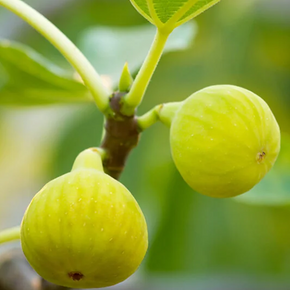
The Brown Turkey Fig (Ficus carica 'Brown Turkey') is one of the most beloved and widely grown edible fig cultivars in the United States, prized equally for its ornamental beauty and its reliably generous harvests of sweet, flavorful fruit. A fast-growing, multi-stemmed deciduous tree or large shrub native to the Mediterranean and Central Asia, it develops a broad, spreading crown adorned with dramatically large, deeply palmately lobed leaves that measure up to 10 inches long, giving the garden an unmistakably lush, bold texture throughout spring and summer before transitioning to warm yellow and bronze tones in fall. The smooth, silver-gray bark remains an eye-catching feature through the leafless winter months, making Brown Turkey Fig a true four-season landscape specimen. Fruits reach up to 4 inches long and ripen from green to a rich brownish-purple skin with a soft, sweet, pink-amber flesh that is exceptional eaten fresh off the tree, sliced into salads or charcuterie boards, baked into pastries, preserved as jam, or dried for long-term enjoyment. Unlike many fruit trees, Brown Turkey Fig is completely self-fertile — no second tree is needed for pollination — and it produces two distinct crops annually, providing a long season of harvest. Its reputation for cold-hardiness among fig cultivars, combined with its adaptability to a wide range of well-drained soils, tolerance of heat, and resistance to deer, makes it an outstanding choice for home orchards, edible landscape designs, espalier applications, and patio container culture throughout Southern Oregon and Northern California.
Plant Description
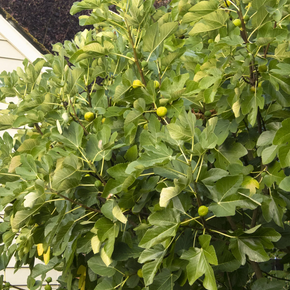
Brown Turkey Fig is a woody, deciduous, multi-stemmed tree or large shrub belonging to the mulberry family (Moraceae). Its canopy is broad and spreading with a rounded, somewhat informal habit. The large, alternate leaves are simple and deeply palmately lobed with three to five lobes, measuring 5 to 10 inches long and 4 to 7 inches wide. The upper leaf surface is deep green and slightly rough with fine hairs, while the underside is paler and smoother. In fall, foliage turns golden yellow to warm bronze before dropping to reveal a striking winter branch structure. The bark is smooth and silvery gray on young stems, becoming slightly ridged and textured with age. Like all figs, the flowers are technically enclosed inside a hollow, fig-shaped receptacle (called a syconium) and are never visible — what we recognize as the edible fig fruit is actually the swollen, ripened receptacle. The milky-white sap found in leaves and stems contains furanocoumarins and can cause contact dermatitis or phytophotodermatitis in sensitive individuals; wearing gloves when pruning or harvesting is recommended.
Fruit Description and Flavor
Brown Turkey figs are medium to large in size, reaching up to 4 inches in length. They begin as small, firm, dark green fruits and gradually enlarge, eventually blushing into their characteristic brownish-purple to deep maroon skin as they approach ripeness. The skin is thin and extremely tender when fully ripe — no peeling required. Inside, the flesh is soft and juicy with a pink-amber to rose color and is packed with tiny, edible seeds that contribute a subtle crunch. The flavor is mild, sweet, and richly satisfying — described as sugary and faintly berry-like — though somewhat milder than darker varieties such as Black Mission. The tree produces two distinct crops each year: a smaller early crop (known as the breba crop) that ripens in late spring to early summer on wood from the previous season, and a larger, more prolific main crop that ripens in late summer to early fall on new wood. Fruits are exceptional eaten fresh, dried, or preserved as jam, and pair beautifully with cheeses, cured meats, honey, and nuts. They are also rich in fiber, potassium, calcium, and antioxidants.
Mature Size
| Attribute | Measurement |
|---|---|
| Mature Height | 10 to 30 feet |
| Mature Spread | 10 to 30 feet |
| Growth Rate | Fast (can exceed 12 inches per year under ideal conditions) |
| Growth Habit | Rounded, spreading, multi-stemmed |
| Texture | Coarse |
With regular pruning, Brown Turkey Fig can easily be kept much smaller — in the 8 to 12 foot range — for easier fruit harvest and a tidier landscape presence. When grown in a large container, it can be maintained as a compact patio specimen through consistent annual pruning.
Hardiness Zones and Climate
Brown Turkey Fig is hardy in USDA Zones 6 through 9, making it one of the most cold-tolerant fig cultivars available. It can withstand temperatures down to approximately 10 degrees Fahrenheit, and when planted in a sheltered, south- or west-facing location — such as against a masonry wall or solid fence — it may survive and even thrive in Zone 5 or Zone 6 conditions as the root system can be quite cold-hardy. In Zone 7 and warmer, no special winter protection is typically needed. It is perfectly suited to the Mediterranean-influenced climates of Southern Oregon and Northern California, where warm, dry summers and mild winters provide near-ideal conditions. It is also highly heat-tolerant and can handle the hot, dry summers common throughout the region. In the coldest part of its range, mulching the root zone heavily in fall and providing wind protection for the canopy will help ensure the tree comes through winter in good condition.
Sunlight Requirements
Brown Turkey Fig performs best in full sun, requiring a minimum of 6 to 8 hours of direct sunlight daily for optimal growth, fruiting, and fruit quality. Trees grown in partial shade will tend to produce fewer and less flavorful fruits and may develop a more open, leggy growth habit. In hot inland climates, a site with bright morning sun and light afternoon shade can help reduce heat stress, but in most Pacific Coast and Southern Oregon climates, a fully open, south- or west-facing exposure is ideal. Planting against a south- or west-facing wall or solid fence is particularly advantageous in marginal zones, as the reflected warmth and radiant heat from the structure significantly extends the effective growing season and improves winter hardiness.
Soil and pH Preferences
Brown Turkey Fig is adaptable to a wide range of soil types, including loam, sand, chalk, and even moderately heavy clay, provided drainage is adequate. It performs best in organically rich, moist, well-drained soil. Heavy, waterlogged soils should be avoided, as standing water around the roots can lead to root rot and poor performance. The ideal soil pH is neutral to slightly acidic, in the range of 6.0 to 6.5, though the tree shows reasonable tolerance of slightly alkaline conditions as well. Amending the planting hole and surrounding soil with quality compost or aged organic matter at planting time will help establish a healthy, productive root system. Brown Turkey Fig demonstrates good salt tolerance, making it suitable for coastal garden settings. Avoid soils with known root-knot nematode infestations, as this tree is susceptible.
Watering Guide
Consistent moisture is important during the establishment period. Newly planted trees should be watered two to three times per week for the first several months, ensuring the root zone stays evenly moist but never waterlogged. Once established — typically after one to two growing seasons — Brown Turkey Fig becomes moderately drought-tolerant, though regular watering continues to produce the best fruit set and quality. Established trees generally benefit from approximately 1 to 1.5 inches of water per week, either from rainfall or supplemental irrigation. During prolonged dry spells, check soil moisture 2 inches below the surface; if dry, water deeply and slowly to encourage deep root growth. Avoid overhead irrigation during fruiting season, as excessive moisture on ripening figs can cause them to split or rot. Applying a 2 to 4 inch layer of organic mulch around the root zone helps conserve soil moisture between waterings.
Fertilizing
Brown Turkey Fig has modest fertilizer needs and should not be over-fertilized, as excessive nitrogen promotes lush vegetative growth at the expense of fruit production. Do not fertilize in the first year after planting. Beginning in the second year, a light application of a balanced, slow-release fertilizer in early spring is generally sufficient. If the tree is growing less than 12 inches of new growth per season, apply a nitrogen supplement split into three to four light feedings from late winter through midsummer. Avoid fertilizing after midsummer, as late-season growth is more susceptible to frost damage in colder zones. As an alternative to synthetic fertilizers, topdressing with quality compost or well-aged organic matter each spring is an excellent, gentle approach to feeding the tree while simultaneously improving soil structure and moisture retention.
Pruning and Maintenance
Brown Turkey Fig is a relatively low-maintenance tree that does not require heavy pruning to fruit well. Light annual pruning in late winter or early spring — just before new growth emerges — is all that is typically needed. Pruning goals should focus on removing dead, damaged, or crossing branches, opening up the interior canopy for better air circulation and light penetration, and controlling the overall size and shape. Remove suckers from the base of the tree promptly, as they can divert energy from the main plant and, if left unchecked, form thickets. When making cuts, use clean, sharp bypass pruners and cut just outside the branch collar. Avoid removing more than one-third of the canopy in any single year. If espalier training is desired, begin shaping the tree in its early years by selecting and tying in lateral scaffold branches against a wall or fence. Because Brown Turkey Fig produces fruit on both old wood (breba crop) and new wood (main crop), minimal pruning preserves both crops.
Planting Instructions
- Select a planting site that receives full sun (6 to 8 hours minimum) with well-drained soil. A south- or west-facing wall or fence is ideal in cooler zones.
- Plant in early spring after the last frost threat has passed, or in early fall at least 6 weeks before the first expected frost.
- Dig a hole 2 to 3 times as wide as the root ball and equal in depth, so the root flare sits at or just slightly above the surrounding grade.
- Amend the backfill soil with quality compost (up to 25% by volume) to improve fertility and drainage.
- If the roots are circling or root-bound, gently tease them outward before placing the tree in the hole.
- Backfill the hole, gently firming soil around the roots to eliminate air pockets.
- Water thoroughly and deeply immediately after planting.
- Apply a 2 to 4 inch layer of organic mulch (wood chips, bark, or straw) over the root zone, keeping it 3 to 4 inches away from the trunk.
- Space multiple trees at least 15 to 20 feet apart (up to 30 feet for full size). Avoid planting near sidewalks, foundations, or shallow irrigation lines, as the root system is extensive and shallow.
Seasonal Interest
| Season | Features |
|---|---|
| Spring | Fresh, bright green leaves emerge with bold lobed form; breba (early) fruit crop develops and ripens in late spring to early summer |
| Summer | Full, lush tropical-looking canopy provides dramatic texture; main fruit crop develops and ripens in late summer |
| Fall | Foliage transitions to golden yellow and warm bronze tones before dropping; final fruits of the main crop are harvested in early fall |
| Winter | Bare, smooth, silvery gray branches create a striking architectural silhouette; interesting bud structure visible on branch tips |
Landscape Uses
Brown Turkey Fig is a highly versatile landscape plant well beyond its role as a fruit producer. Its bold, tropical-textured foliage, attractive bark, and dramatic winter silhouette earn it a rightful place as a focal point or specimen tree in a wide variety of garden styles. Consider these applications:
- Edible landscape: An outstanding centerpiece for a formal or informal edible garden design, mixing beautifully with herbs, berry shrubs, and vegetable beds
- Specimen or accent tree: Bold enough to stand alone as a garden focal point in courtyards, patios, or open lawn areas
- Espalier: Trains easily against south- or west-facing walls or fences, saving space while maximizing solar exposure and fruit production
- Mediterranean or cottage garden: A natural fit for drought-tolerant, relaxed garden styles common throughout Southern Oregon and Northern California
- Patio or courtyard tree: Its manageable size when pruned and attractive multi-season interest make it ideal near outdoor living areas
- Container planting: Grows well in a large container (15 to 25+ gallon) on patios or decks; must be overwintered in a protected location in colder zones
- Children's or edible education garden: An engaging, easy-to-grow, and immediately rewarding tree for family gardens
Container Growing
Brown Turkey Fig adapts very well to container culture, making it an excellent option for gardeners with limited space, renters, or those in marginally cold climates who want to protect the tree indoors during winter. Choose a large, sturdy container — at least 15 to 25 gallons — with adequate drainage holes. Use a high-quality, well-draining potting mix enriched with compost. Container-grown figs require more frequent watering than in-ground plants, as pots dry out faster; check soil moisture regularly and water when the top 1 to 2 inches feel dry. Feed with a balanced, slow-release fertilizer in spring. Annual root pruning and top pruning will keep the tree productive and appropriately sized for its container. In USDA Zones 7 and below, move the container to a cool, frost-free garage, shed, or basement for the winter. Provide just enough water to keep the roots from completely drying out, and return the container to a sunny outdoor location in spring after frost danger has passed.
Wildlife Value
Brown Turkey Fig is a valuable wildlife plant, particularly for birds and small mammals. Songbirds such as mockingbirds, catbirds, robins, and cedar waxwings are especially attracted to the ripe fruit. Small mammals including squirrels may also visit to feed on fallen figs. Because the tree is so prolific, there is generally more than enough fruit to share with local wildlife while still enjoying a plentiful harvest. The dense canopy also provides nesting habitat and shelter for various bird species. Note that deer tend to avoid browsing on fig trees, making it a relatively deer-resistant choice for gardens in rural and semi-rural areas of Southern Oregon and Northern California where deer pressure is common.
Pests and Diseases
Brown Turkey Fig is generally considered a low-maintenance, pest- and disease-resistant tree when grown in the right conditions. However, the following issues are occasionally encountered:
- Root-knot nematodes: Microscopic soil parasites that cause swollen, knotted roots, yellowing foliage, and poor growth — most problematic in sandy soils. Avoid planting in infested areas.
- Aphids: Soft-bodied insects that cluster on new growth; typically manageable with a strong spray of water or insecticidal soap.
- Spider mites: Can be an issue in hot, dry conditions; treat with neem oil or horticultural oil if populations become damaging.
- Mealybugs and scale: Occasional problems; treat with horticultural oil.
- Fig rust: A fungal disease presenting as rust-colored spots on leaf undersides in warm, humid conditions; remove affected leaves and treat with neem oil if severe.
- Leaf blight and leaf spot: Fungal issues that develop in wet weather; improve air circulation through pruning and avoid overhead watering.
- Fig mosaic virus: Causes yellow-mottled leaves; no cure, but rarely fatal to the tree.
- Fruit souring and fruit rot: Overripe fruit attracts fruit flies and yeasts; harvest promptly to prevent buildup of rotting fruit.
- Birds: Can be deterred with reflective tape or wire netting during harvest season.
The milky sap of fig leaves and stems can cause contact dermatitis in sensitive individuals. Wear gloves and long sleeves when pruning or harvesting.
Companion Plants
Brown Turkey Fig pairs beautifully with other Mediterranean-climate plants that share its preference for full sun, well-drained soil, and minimal summer water once established. Consider these companions for an attractive and productive planting:
- Lavender (Lavandula spp.): Fragrant, drought-tolerant groundcover that thrives in the same sunny, well-drained conditions and deters many pest insects
- Rosemary (Salvia rosmarinus): Evergreen culinary herb with excellent heat and drought tolerance; complements the fig's Mediterranean heritage
- Blueberry (Vaccinium spp.): Another edible fruiting shrub that pairs well in an edible garden layout, though it prefers slightly more acidic soil
- Pomegranate (Punica granatum): Shares the same Mediterranean origins, climate adaptability, and ornamental appeal; creates a lush edible garden feel
- Salvias and ornamental grasses: Textural contrast at the base of the tree without competing root systems
- Grapevines (Vitis vinifera): A classic Mediterranean pairing that works beautifully in edible landscape designs throughout Northern California and Southern Oregon wine country
- Strawberries: Can be planted as a low groundcover beneath young fig trees before the canopy closes in, providing an early-season harvest
Avoid planting directly under or immediately adjacent to large surface-rooting companions, as the fig's extensive shallow root system can out-compete nearby plants for moisture and nutrients.
Harvesting and Using Brown Turkey Figs
Knowing when and how to harvest figs is key to enjoying the best flavor. Brown Turkey figs are ready to pick when the skin turns a deep brownish-purple, the fruit feels noticeably soft and heavy, and the stem bends downward rather than pointing upright. Small skin cracks near the eye of the fruit are also a sign of peak ripeness. Harvest by gently twisting or cutting the fruit from the stem, leaving a short stub of stem attached to help preserve freshness. Handle ripe figs with care, as they bruise very easily. Harvest every day or two during peak season, as figs ripen rapidly and will overripen, split, and attract pests if left on the tree too long.
- Fresh eating: Enjoy at room temperature the same day as picking for the best flavor; can be refrigerated in a single layer for 2 to 3 days
- Drying: Slice in half and dry in a dehydrator or low oven (150-170 degrees F) until leathery; dried figs keep for several months in an airtight container
- Freezing: Freeze whole or halved on a baking sheet, then transfer to freezer bags for up to 6 months
- Preserves and jam: Brown Turkey figs make outstanding jams, chutneys, and preserves
- Culinary uses: Excellent grilled with honey and blue cheese, roasted alongside pork or duck, baked into tarts, or served fresh on charcuterie boards with prosciutto and aged cheeses
- Self-fertile deciduous fig tree bearing two generous crops of sweet, brownish-purple fruit each year — one in late spring to early summer and a second in late summer to early fall
- Among the most cold-hardy fig cultivars available, performing reliably in USDA Zones 6-9 with extra protection in the coldest zones, and an outstanding choice for the mild climates of Southern Oregon and Northern California
- Striking four-season appeal with bold, deeply lobed tropical-looking leaves, richly ornamental ripe fruit, and smooth silver-gray bark that creates a dramatic silhouette through winter
- Low-maintenance and fast-growing, requiring only light annual pruning and no cross-pollinator — just plant in full sun and enjoy an abundant harvest of rich, sweet figs straight from your own backyard
The Brown Turkey Fig (Ficus carica 'Brown Turkey') is one of the most beloved and widely grown edible fig cultivars in the United States, prized equally for its ornamental beauty and its reliably generous harvests of sweet, flavorful fruit. A fast-growing, multi-stemmed deciduous tree or large shrub native to the Mediterranean and Central Asia, it develops a broad, spreading crown adorned with dramatically large, deeply palmately lobed leaves that measure up to 10 inches long, giving the garden an unmistakably lush, bold texture throughout spring and summer before transitioning to warm yellow and bronze tones in fall. The smooth, silver-gray bark remains an eye-catching feature through the leafless winter months, making Brown Turkey Fig a true four-season landscape specimen. Fruits reach up to 4 inches long and ripen from green to a rich brownish-purple skin with a soft, sweet, pink-amber flesh that is exceptional eaten fresh off the tree, sliced into salads or charcuterie boards, baked into pastries, preserved as jam, or dried for long-term enjoyment. Unlike many fruit trees, Brown Turkey Fig is completely self-fertile — no second tree is needed for pollination — and it produces two distinct crops annually, providing a long season of harvest. Its reputation for cold-hardiness among fig cultivars, combined with its adaptability to a wide range of well-drained soils, tolerance of heat, and resistance to deer, makes it an outstanding choice for home orchards, edible landscape designs, espalier applications, and patio container culture throughout Southern Oregon and Northern California.
Plant Description
Brown Turkey Fig is a woody, deciduous, multi-stemmed tree or large shrub belonging to the mulberry family (Moraceae). Its canopy is broad and spreading with a rounded, somewhat informal habit. The large, alternate leaves are simple and deeply palmately lobed with three to five lobes, measuring 5 to 10 inches long and 4 to 7 inches wide. The upper leaf surface is deep green and slightly rough with fine hairs, while the underside is paler and smoother. In fall, foliage turns golden yellow to warm bronze before dropping to reveal a striking winter branch structure. The bark is smooth and silvery gray on young stems, becoming slightly ridged and textured with age. Like all figs, the flowers are technically enclosed inside a hollow, fig-shaped receptacle (called a syconium) and are never visible — what we recognize as the edible fig fruit is actually the swollen, ripened receptacle. The milky-white sap found in leaves and stems contains furanocoumarins and can cause contact dermatitis or phytophotodermatitis in sensitive individuals; wearing gloves when pruning or harvesting is recommended.
Fruit Description and Flavor
Brown Turkey figs are medium to large in size, reaching up to 4 inches in length. They begin as small, firm, dark green fruits and gradually enlarge, eventually blushing into their characteristic brownish-purple to deep maroon skin as they approach ripeness. The skin is thin and extremely tender when fully ripe — no peeling required. Inside, the flesh is soft and juicy with a pink-amber to rose color and is packed with tiny, edible seeds that contribute a subtle crunch. The flavor is mild, sweet, and richly satisfying — described as sugary and faintly berry-like — though somewhat milder than darker varieties such as Black Mission. The tree produces two distinct crops each year: a smaller early crop (known as the breba crop) that ripens in late spring to early summer on wood from the previous season, and a larger, more prolific main crop that ripens in late summer to early fall on new wood. Fruits are exceptional eaten fresh, dried, or preserved as jam, and pair beautifully with cheeses, cured meats, honey, and nuts. They are also rich in fiber, potassium, calcium, and antioxidants.
Mature Size
| Attribute | Measurement |
|---|---|
| Mature Height | 10 to 30 feet |
| Mature Spread | 10 to 30 feet |
| Growth Rate | Fast (can exceed 12 inches per year under ideal conditions) |
| Growth Habit | Rounded, spreading, multi-stemmed |
| Texture | Coarse |
With regular pruning, Brown Turkey Fig can easily be kept much smaller — in the 8 to 12 foot range — for easier fruit harvest and a tidier landscape presence. When grown in a large container, it can be maintained as a compact patio specimen through consistent annual pruning.
Hardiness Zones and Climate
Brown Turkey Fig is hardy in USDA Zones 6 through 9, making it one of the most cold-tolerant fig cultivars available. It can withstand temperatures down to approximately 10 degrees Fahrenheit, and when planted in a sheltered, south- or west-facing location — such as against a masonry wall or solid fence — it may survive and even thrive in Zone 5 or Zone 6 conditions as the root system can be quite cold-hardy. In Zone 7 and warmer, no special winter protection is typically needed. It is perfectly suited to the Mediterranean-influenced climates of Southern Oregon and Northern California, where warm, dry summers and mild winters provide near-ideal conditions. It is also highly heat-tolerant and can handle the hot, dry summers common throughout the region. In the coldest part of its range, mulching the root zone heavily in fall and providing wind protection for the canopy will help ensure the tree comes through winter in good condition.
Sunlight Requirements
Brown Turkey Fig performs best in full sun, requiring a minimum of 6 to 8 hours of direct sunlight daily for optimal growth, fruiting, and fruit quality. Trees grown in partial shade will tend to produce fewer and less flavorful fruits and may develop a more open, leggy growth habit. In hot inland climates, a site with bright morning sun and light afternoon shade can help reduce heat stress, but in most Pacific Coast and Southern Oregon climates, a fully open, south- or west-facing exposure is ideal. Planting against a south- or west-facing wall or solid fence is particularly advantageous in marginal zones, as the reflected warmth and radiant heat from the structure significantly extends the effective growing season and improves winter hardiness.
Soil and pH Preferences
Brown Turkey Fig is adaptable to a wide range of soil types, including loam, sand, chalk, and even moderately heavy clay, provided drainage is adequate. It performs best in organically rich, moist, well-drained soil. Heavy, waterlogged soils should be avoided, as standing water around the roots can lead to root rot and poor performance. The ideal soil pH is neutral to slightly acidic, in the range of 6.0 to 6.5, though the tree shows reasonable tolerance of slightly alkaline conditions as well. Amending the planting hole and surrounding soil with quality compost or aged organic matter at planting time will help establish a healthy, productive root system. Brown Turkey Fig demonstrates good salt tolerance, making it suitable for coastal garden settings. Avoid soils with known root-knot nematode infestations, as this tree is susceptible.
Watering Guide
Consistent moisture is important during the establishment period. Newly planted trees should be watered two to three times per week for the first several months, ensuring the root zone stays evenly moist but never waterlogged. Once established — typically after one to two growing seasons — Brown Turkey Fig becomes moderately drought-tolerant, though regular watering continues to produce the best fruit set and quality. Established trees generally benefit from approximately 1 to 1.5 inches of water per week, either from rainfall or supplemental irrigation. During prolonged dry spells, check soil moisture 2 inches below the surface; if dry, water deeply and slowly to encourage deep root growth. Avoid overhead irrigation during fruiting season, as excessive moisture on ripening figs can cause them to split or rot. Applying a 2 to 4 inch layer of organic mulch around the root zone helps conserve soil moisture between waterings.
Fertilizing
Brown Turkey Fig has modest fertilizer needs and should not be over-fertilized, as excessive nitrogen promotes lush vegetative growth at the expense of fruit production. Do not fertilize in the first year after planting. Beginning in the second year, a light application of a balanced, slow-release fertilizer in early spring is generally sufficient. If the tree is growing less than 12 inches of new growth per season, apply a nitrogen supplement split into three to four light feedings from late winter through midsummer. Avoid fertilizing after midsummer, as late-season growth is more susceptible to frost damage in colder zones. As an alternative to synthetic fertilizers, topdressing with quality compost or well-aged organic matter each spring is an excellent, gentle approach to feeding the tree while simultaneously improving soil structure and moisture retention.
Pruning and Maintenance
Brown Turkey Fig is a relatively low-maintenance tree that does not require heavy pruning to fruit well. Light annual pruning in late winter or early spring — just before new growth emerges — is all that is typically needed. Pruning goals should focus on removing dead, damaged, or crossing branches, opening up the interior canopy for better air circulation and light penetration, and controlling the overall size and shape. Remove suckers from the base of the tree promptly, as they can divert energy from the main plant and, if left unchecked, form thickets. When making cuts, use clean, sharp bypass pruners and cut just outside the branch collar. Avoid removing more than one-third of the canopy in any single year. If espalier training is desired, begin shaping the tree in its early years by selecting and tying in lateral scaffold branches against a wall or fence. Because Brown Turkey Fig produces fruit on both old wood (breba crop) and new wood (main crop), minimal pruning preserves both crops.
Planting Instructions
- Select a planting site that receives full sun (6 to 8 hours minimum) with well-drained soil. A south- or west-facing wall or fence is ideal in cooler zones.
- Plant in early spring after the last frost threat has passed, or in early fall at least 6 weeks before the first expected frost.
- Dig a hole 2 to 3 times as wide as the root ball and equal in depth, so the root flare sits at or just slightly above the surrounding grade.
- Amend the backfill soil with quality compost (up to 25% by volume) to improve fertility and drainage.
- If the roots are circling or root-bound, gently tease them outward before placing the tree in the hole.
- Backfill the hole, gently firming soil around the roots to eliminate air pockets.
- Water thoroughly and deeply immediately after planting.
- Apply a 2 to 4 inch layer of organic mulch (wood chips, bark, or straw) over the root zone, keeping it 3 to 4 inches away from the trunk.
- Space multiple trees at least 15 to 20 feet apart (up to 30 feet for full size). Avoid planting near sidewalks, foundations, or shallow irrigation lines, as the root system is extensive and shallow.
Seasonal Interest
| Season | Features |
|---|---|
| Spring | Fresh, bright green leaves emerge with bold lobed form; breba (early) fruit crop develops and ripens in late spring to early summer |
| Summer | Full, lush tropical-looking canopy provides dramatic texture; main fruit crop develops and ripens in late summer |
| Fall | Foliage transitions to golden yellow and warm bronze tones before dropping; final fruits of the main crop are harvested in early fall |
| Winter | Bare, smooth, silvery gray branches create a striking architectural silhouette; interesting bud structure visible on branch tips |
Landscape Uses
Brown Turkey Fig is a highly versatile landscape plant well beyond its role as a fruit producer. Its bold, tropical-textured foliage, attractive bark, and dramatic winter silhouette earn it a rightful place as a focal point or specimen tree in a wide variety of garden styles. Consider these applications:
- Edible landscape: An outstanding centerpiece for a formal or informal edible garden design, mixing beautifully with herbs, berry shrubs, and vegetable beds
- Specimen or accent tree: Bold enough to stand alone as a garden focal point in courtyards, patios, or open lawn areas
- Espalier: Trains easily against south- or west-facing walls or fences, saving space while maximizing solar exposure and fruit production
- Mediterranean or cottage garden: A natural fit for drought-tolerant, relaxed garden styles common throughout Southern Oregon and Northern California
- Patio or courtyard tree: Its manageable size when pruned and attractive multi-season interest make it ideal near outdoor living areas
- Container planting: Grows well in a large container (15 to 25+ gallon) on patios or decks; must be overwintered in a protected location in colder zones
- Children's or edible education garden: An engaging, easy-to-grow, and immediately rewarding tree for family gardens
Container Growing
Brown Turkey Fig adapts very well to container culture, making it an excellent option for gardeners with limited space, renters, or those in marginally cold climates who want to protect the tree indoors during winter. Choose a large, sturdy container — at least 15 to 25 gallons — with adequate drainage holes. Use a high-quality, well-draining potting mix enriched with compost. Container-grown figs require more frequent watering than in-ground plants, as pots dry out faster; check soil moisture regularly and water when the top 1 to 2 inches feel dry. Feed with a balanced, slow-release fertilizer in spring. Annual root pruning and top pruning will keep the tree productive and appropriately sized for its container. In USDA Zones 7 and below, move the container to a cool, frost-free garage, shed, or basement for the winter. Provide just enough water to keep the roots from completely drying out, and return the container to a sunny outdoor location in spring after frost danger has passed.
Wildlife Value
Brown Turkey Fig is a valuable wildlife plant, particularly for birds and small mammals. Songbirds such as mockingbirds, catbirds, robins, and cedar waxwings are especially attracted to the ripe fruit. Small mammals including squirrels may also visit to feed on fallen figs. Because the tree is so prolific, there is generally more than enough fruit to share with local wildlife while still enjoying a plentiful harvest. The dense canopy also provides nesting habitat and shelter for various bird species. Note that deer tend to avoid browsing on fig trees, making it a relatively deer-resistant choice for gardens in rural and semi-rural areas of Southern Oregon and Northern California where deer pressure is common.
Pests and Diseases
Brown Turkey Fig is generally considered a low-maintenance, pest- and disease-resistant tree when grown in the right conditions. However, the following issues are occasionally encountered:
- Root-knot nematodes: Microscopic soil parasites that cause swollen, knotted roots, yellowing foliage, and poor growth — most problematic in sandy soils. Avoid planting in infested areas.
- Aphids: Soft-bodied insects that cluster on new growth; typically manageable with a strong spray of water or insecticidal soap.
- Spider mites: Can be an issue in hot, dry conditions; treat with neem oil or horticultural oil if populations become damaging.
- Mealybugs and scale: Occasional problems; treat with horticultural oil.
- Fig rust: A fungal disease presenting as rust-colored spots on leaf undersides in warm, humid conditions; remove affected leaves and treat with neem oil if severe.
- Leaf blight and leaf spot: Fungal issues that develop in wet weather; improve air circulation through pruning and avoid overhead watering.
- Fig mosaic virus: Causes yellow-mottled leaves; no cure, but rarely fatal to the tree.
- Fruit souring and fruit rot: Overripe fruit attracts fruit flies and yeasts; harvest promptly to prevent buildup of rotting fruit.
- Birds: Can be deterred with reflective tape or wire netting during harvest season.
The milky sap of fig leaves and stems can cause contact dermatitis in sensitive individuals. Wear gloves and long sleeves when pruning or harvesting.
Companion Plants
Brown Turkey Fig pairs beautifully with other Mediterranean-climate plants that share its preference for full sun, well-drained soil, and minimal summer water once established. Consider these companions for an attractive and productive planting:
- Lavender (Lavandula spp.): Fragrant, drought-tolerant groundcover that thrives in the same sunny, well-drained conditions and deters many pest insects
- Rosemary (Salvia rosmarinus): Evergreen culinary herb with excellent heat and drought tolerance; complements the fig's Mediterranean heritage
- Blueberry (Vaccinium spp.): Another edible fruiting shrub that pairs well in an edible garden layout, though it prefers slightly more acidic soil
- Pomegranate (Punica granatum): Shares the same Mediterranean origins, climate adaptability, and ornamental appeal; creates a lush edible garden feel
- Salvias and ornamental grasses: Textural contrast at the base of the tree without competing root systems
- Grapevines (Vitis vinifera): A classic Mediterranean pairing that works beautifully in edible landscape designs throughout Northern California and Southern Oregon wine country
- Strawberries: Can be planted as a low groundcover beneath young fig trees before the canopy closes in, providing an early-season harvest
Avoid planting directly under or immediately adjacent to large surface-rooting companions, as the fig's extensive shallow root system can out-compete nearby plants for moisture and nutrients.
Harvesting and Using Brown Turkey Figs
Knowing when and how to harvest figs is key to enjoying the best flavor. Brown Turkey figs are ready to pick when the skin turns a deep brownish-purple, the fruit feels noticeably soft and heavy, and the stem bends downward rather than pointing upright. Small skin cracks near the eye of the fruit are also a sign of peak ripeness. Harvest by gently twisting or cutting the fruit from the stem, leaving a short stub of stem attached to help preserve freshness. Handle ripe figs with care, as they bruise very easily. Harvest every day or two during peak season, as figs ripen rapidly and will overripen, split, and attract pests if left on the tree too long.
- Fresh eating: Enjoy at room temperature the same day as picking for the best flavor; can be refrigerated in a single layer for 2 to 3 days
- Drying: Slice in half and dry in a dehydrator or low oven (150-170 degrees F) until leathery; dried figs keep for several months in an airtight container
- Freezing: Freeze whole or halved on a baking sheet, then transfer to freezer bags for up to 6 months
- Preserves and jam: Brown Turkey figs make outstanding jams, chutneys, and preserves
- Culinary uses: Excellent grilled with honey and blue cheese, roasted alongside pork or duck, baked into tarts, or served fresh on charcuterie boards with prosciutto and aged cheeses
Related Products