Zoom the image with the mouse
Tangerine Beauty Crossvine - 1 Gallon
SKU:
1980220
UPC:
014949125113
$21.99
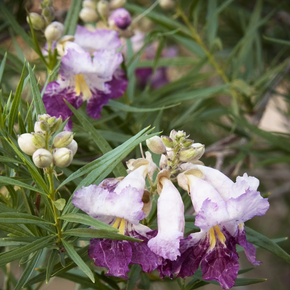
- Vigorous, self‑clinging vine with blankets of lush green foliage and tangerine‑orange trumpet blooms.
- Fast growth; quickly reaches ~30 ft. with support—ideal for trellises, walls, arbors, and privacy screens.
- Blooms from late spring into summer; attracts pollinators and provides a long seasonal show.
- Adaptable and easy‑care: thrives in full sun, tolerates shade and average, well‑drained soils; semi‑evergreen in mild climates.
Tangerine Beauty Crossvine (Bignonia capreolata ‘Tangerine Beauty’) is a hardworking, self‑clinging climber that delivers abundant, vibrant tangerine‑orange flowers over a long season. Its fast, upright habit quickly covers structures with handsome, semi‑evergreen foliage. Highly adaptable—even tolerating shade and less‑than‑perfect soils—this low‑maintenance vine thrives in full sun for best bloom, making it a standout choice for arbors, trellises, fences, or a sunny wall where a bold, pollinator‑friendly display is welcome.
Botanical Name
Bignonia capreolata ‘Tangerine Beauty’ — commonly called Tangerine Beauty Crossvine (family Bignoniaceae).
Plant Type & Habit
Woody, self‑clinging climber with a fast growth rate; attaches via tendrils and adheres to many surfaces without additional ties.
Mature Size
Typically reaches about 30 ft. long with support; width depends on training and structure size.
Hardiness & Foliage
USDA Zones 6–9. Semi‑evergreen in mild climates; may thin or go deciduous in colder winters.
Light & Exposure
Full sun for best flowering; tolerates shade (bloom may lessen with lower light). Provide a warm, sheltered exposure when possible.
Soil & Water
Performs in most average, well‑drained soils; adaptable to poorer soils. Keep soil consistently moist during establishment, then water as needed to maintain healthy growth.
Flowers & Bloom Season
Late spring into summer display of showy, trumpet‑shaped, tangerine‑orange flowers; lightly fragrant and long‑blooming with good sun.
Pollinators & Wildlife
Attracts pollinators, including bees and hummingbirds, adding movement and ecological value to the garden.
Uses & Landscape Ideas
- Espalier on sunny walls or to mask utility areas.
- Privacy screen on fences, pergolas, and arbors.
- Groundcover on slopes or large rocks when allowed to sprawl.
Training & Support
Provide a sturdy structure (trellis, fence, arbor, or masonry). The vine self‑clings with tendrils; guide new shoots early to encourage even coverage.
Pruning & Maintenance
Prune after flowering to control size and shape. Refresh mulch annually, and feed with a general‑purpose fertilizer during the growing season if soils are lean.
Planting & Spacing
Plant at the same depth as the nursery container near the support. For coverage, space plants roughly 6–10 ft. apart, adjusting by structure and desired density.
Regional Notes
Adaptable and resilient; foliage is fuller and more evergreen in mild winters. In colder areas, expect partial leaf drop and slightly later spring growth.
- Vigorous, self‑clinging vine with blankets of lush green foliage and tangerine‑orange trumpet blooms.
- Fast growth; quickly reaches ~30 ft. with support—ideal for trellises, walls, arbors, and privacy screens.
- Blooms from late spring into summer; attracts pollinators and provides a long seasonal show.
- Adaptable and easy‑care: thrives in full sun, tolerates shade and average, well‑drained soils; semi‑evergreen in mild climates.
Tangerine Beauty Crossvine (Bignonia capreolata ‘Tangerine Beauty’) is a hardworking, self‑clinging climber that delivers abundant, vibrant tangerine‑orange flowers over a long season. Its fast, upright habit quickly covers structures with handsome, semi‑evergreen foliage. Highly adaptable—even tolerating shade and less‑than‑perfect soils—this low‑maintenance vine thrives in full sun for best bloom, making it a standout choice for arbors, trellises, fences, or a sunny wall where a bold, pollinator‑friendly display is welcome.
Botanical Name
Bignonia capreolata ‘Tangerine Beauty’ — commonly called Tangerine Beauty Crossvine (family Bignoniaceae).
Plant Type & Habit
Woody, self‑clinging climber with a fast growth rate; attaches via tendrils and adheres to many surfaces without additional ties.
Mature Size
Typically reaches about 30 ft. long with support; width depends on training and structure size.
Hardiness & Foliage
USDA Zones 6–9. Semi‑evergreen in mild climates; may thin or go deciduous in colder winters.
Light & Exposure
Full sun for best flowering; tolerates shade (bloom may lessen with lower light). Provide a warm, sheltered exposure when possible.
Soil & Water
Performs in most average, well‑drained soils; adaptable to poorer soils. Keep soil consistently moist during establishment, then water as needed to maintain healthy growth.
Flowers & Bloom Season
Late spring into summer display of showy, trumpet‑shaped, tangerine‑orange flowers; lightly fragrant and long‑blooming with good sun.
Pollinators & Wildlife
Attracts pollinators, including bees and hummingbirds, adding movement and ecological value to the garden.
Uses & Landscape Ideas
- Espalier on sunny walls or to mask utility areas.
- Privacy screen on fences, pergolas, and arbors.
- Groundcover on slopes or large rocks when allowed to sprawl.
Training & Support
Provide a sturdy structure (trellis, fence, arbor, or masonry). The vine self‑clings with tendrils; guide new shoots early to encourage even coverage.
Pruning & Maintenance
Prune after flowering to control size and shape. Refresh mulch annually, and feed with a general‑purpose fertilizer during the growing season if soils are lean.
Planting & Spacing
Plant at the same depth as the nursery container near the support. For coverage, space plants roughly 6–10 ft. apart, adjusting by structure and desired density.
Regional Notes
Adaptable and resilient; foliage is fuller and more evergreen in mild winters. In colder areas, expect partial leaf drop and slightly later spring growth.