


Zoom the image with the mouse
Coral Bells Marmalade - 1 Gallon
SKU:
2036915
UPC:
014949065846
$12.99
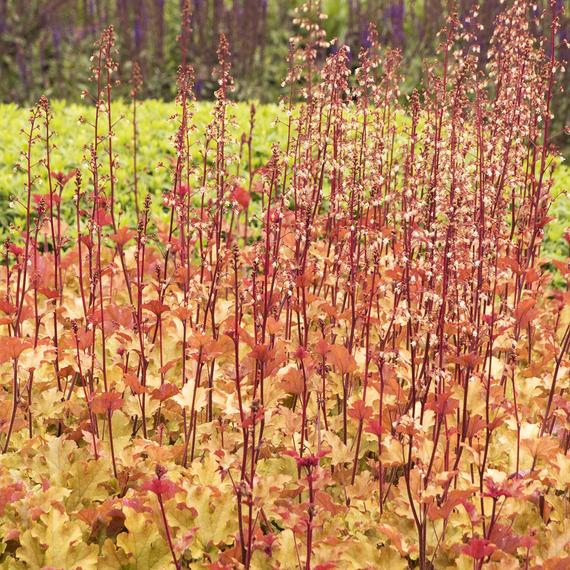
- Stunning year-round foliage transitions from glowing copper-orange in spring to rich amber, russet, and deep sienna tones through summer and fall, all with eye-catching hot pink leaf undersides that set this variety apart.
- A tough, low-maintenance perennial that tolerates drought, heat, humidity, and deer browse, making it a reliable, virtually carefree choice for a wide range of garden conditions.
- Delicate wands of reddish-brown, bell-shaped flowers rise on slender stems above the foliage mound in late spring to early summer, attracting hummingbirds, bees, and butterflies to the garden.
- Incredibly versatile in the landscape - equally at home in borders, woodland gardens, rock gardens, pathway edging, ground cover plantings, and container combinations in sun or shade.
Heuchera 'Marmalade' (Coral Bells) is a vigorous, award-winning perennial that brings bold, jewel-toned warmth to gardens from late spring through fall and even into winter in mild climates. Bred as a cross between H. 'Amber Waves' and H. 'Huntsman', this patented cultivar forms a compact, mounding clump of richly textured, undulating foliage that shifts from brilliant copper-orange in spring through deep amber, umber, and sienna as the season progresses, always showcasing its trademark hot pink leaf undersides for a truly multi-dimensional display. In late spring through early summer, slender red stems carry airy panicles of small reddish-brown, bell-shaped flowers that rise well above the foliage and are irresistible to hummingbirds and pollinators. Hardy in USDA Zones 4-9 and semi-evergreen to evergreen depending on climate, 'Marmalade' thrives in part shade to full sun with well-drained, organically rich soil, and once established exhibits excellent drought, heat, and deer tolerance. A first-place winner at the Royal Dutch Flower Bulb Association show in 2008, this heavy-substanced, weather-resistant coral bells variety performs beautifully massed as a ground cover, planted along borders and pathways, tucked into rock and woodland gardens, or featured as a striking container accent - making it one of the most versatile and rewarding foliage perennials available for home gardens across a wide range of climates.
Plant Description
Heuchera 'Marmalade' is a clump-forming, herbaceous to semi-evergreen perennial in the family Saxifragaceae, bred by Terra Nova Nurseries of Oregon as part of the Heuchera MARMALADE Landscape Series. It is a hybrid cross between H. 'Amber Waves' (seed parent) and H. 'Huntsman' (pollen parent), holding U.S. Plant Patent PP15,945. The plant is distinguished by its richly shiny, heavily textured foliage with deeply undulated, lobed leaf margins. Leaf color begins as vivid copper-orange in spring, matures to a warm amber and sienna through summer, and can deepen to reddish-bronze tones in cooler fall and winter weather. The most celebrated feature of this variety is the brilliant hot pink coloration of the leaf undersides, which catches the light dramatically and adds an unexpected pop of color visible from multiple angles. In late spring to early summer, slender red-tinged stems rise 16 inches or more above the foliage, carrying loose, airy panicles of small, bell-shaped reddish-brown flowers. The plant is noted for its vigorous growth habit, heavy leaf substance, and excellent ability to hold up to inclement weather conditions throughout the growing season.
Mature Size
| Measurement | Dimension |
|---|---|
| Foliage Height | Approximately 8-10 inches tall |
| Foliage Spread | Approximately 16-18 inches wide |
| Flower Stem Height | Up to 16 inches above the foliage mound |
| Growth Habit | Mounding, clump-forming |
| Growth Rate | Fast |
Hardiness Zones
Heuchera 'Marmalade' is hardy in USDA Zones 4 through 9, making it adaptable to a very wide range of climates across North America. It also performs well across a broad range of Sunset Climate Zones, including Zones 1-9 and 14-24, which encompasses much of the Pacific Coast, the Pacific Northwest, the intermountain West, and large portions of the South and Mid-Atlantic. In warmer zones (7-9), the foliage remains semi-evergreen to fully evergreen through winter, providing year-round color. In colder zones (4-6), the plant may die back partially or fully to the crown after hard frosts but reliably regrows in spring. It has demonstrated exceptional toughness, reportedly surviving hot, dry summers and cold, wet winters with minimal stress even when grown in full sun on a southern exposure. AHS Heat Zones 1-8 are also supported.
Sunlight Requirements
Heuchera 'Marmalade' thrives in full sun to part shade. The ideal exposure is part shade, meaning 4 to 6 hours of direct sunlight per day, ideally with protection from intense afternoon sun. In cooler climates such as those in the Pacific Northwest and the northern United States, it performs very well in full sun as long as consistent moisture is maintained. In warmer inland and southern regions, afternoon shade is beneficial to prevent leaf scorch and maintain the richest foliage color. Unlike lighter-colored or yellow-leafed heuchera varieties, 'Marmalade' possesses saturated, dark-toned foliage that gives it greater sun tolerance than most. The most intense and vivid leaf coloration is typically achieved when the plant receives a good balance of bright light without excessive heat stress. It can also be grown in full shade, though flower production and foliage color intensity may be reduced.
Soil and pH Preferences
Heuchera 'Marmalade' grows best in organically rich, humus-amended, medium-moisture, well-drained soil. Loamy or sandy soil types are ideal, though this variety is notably adaptable and can tolerate clay or rocky soils provided drainage is adequate. Waterlogged or consistently soggy soil should be avoided at all costs, as overly wet conditions - particularly in winter - are the most common cause of plant decline or death. If your native soil is heavy clay, amending with compost and perlite or planting in a raised bed will improve conditions significantly. The preferred soil pH is neutral to slightly acidic, ideally in the range of 5.5 to 6.5. Enriching the planting site with compost before planting will improve soil structure, nutrition, and moisture retention while ensuring adequate drainage.
Watering Guide
- Newly planted: Water regularly and consistently for the first several weeks after planting to help the root system establish. Keep the soil evenly moist but never waterlogged during this period.
- Established plants: Once established, 'Marmalade' develops good drought tolerance. Water deeply when the top inch of soil feels dry to the touch, allowing the soil to partially dry between waterings.
- Hot weather: Increase watering frequency during prolonged heat spells, especially in full-sun plantings, to prevent foliage scorch and leaf decline.
- Watering method: Always water at the base of the plant, directing water to the soil rather than the foliage. Overhead watering promotes fungal diseases such as powdery mildew and rust.
- Winter caution: Soggy, wet soil during winter months is more damaging to heucheras than cold temperatures alone. Ensure good drainage year-round and avoid planting in low spots where water pools.
- Container plants: Water containers more frequently than in-ground plants, as pots dry out faster. Allow the top inch to dry between waterings and ensure containers have adequate drainage holes.
Fertilizing
Heuchera 'Marmalade' has relatively modest fertilizer needs and does not require heavy feeding. In early spring, as new growth emerges, apply a thin layer of compost around the base of the plant or use a balanced, slow-release granular fertilizer formulated for perennials. This single spring application is typically sufficient for in-ground plants growing in reasonably fertile soil. A mid-summer feeding may be beneficial if the plant appears to lack vigor or if foliage color is fading, but avoid fertilizing late in the growing season as this can encourage tender new growth that is vulnerable to winter damage. For container-grown plants, supplement with a diluted, balanced water-soluble fertilizer every 3 to 4 weeks during the active growing season following product label directions. Organic options such as compost, aged manure, or fish emulsion are excellent choices and support a healthy soil microbiome around the plant's crown.
Planting Instructions
- Choose a planting site with well-drained soil and appropriate light - part shade is ideal, though full sun is acceptable in cooler climates with consistent moisture.
- Prepare the planting bed by working 2-3 inches of compost into the top 8-10 inches of soil to improve drainage and fertility. Correct any heavy clay conditions at this stage.
- Plant in spring after the last frost date, or in early fall to allow the plant time to establish before winter. Fall planting is excellent in mild-winter regions like Southern Oregon and Northern California.
- Dig a planting hole slightly wider than the root ball and equal in depth. Set the plant so the crown (where the stems meet the roots) sits at or just barely above the surrounding soil level. Never bury the crown deeply, as this encourages rot.
- Space plants 10 to 18 inches apart to allow for mature spread, air circulation, and an attractive massed appearance.
- Backfill, firm the soil gently around the roots, and water thoroughly to eliminate air pockets.
- Apply a 1-2 inch layer of mulch around the plant, keeping it a few inches away from the crown to prevent rot and discourage pests.
Pruning and Maintenance
Heuchera 'Marmalade' is one of the lowest-maintenance perennials available and requires very little intervention to look its best. In early spring, before new growth begins, remove any dead, damaged, or winter-tattered leaves by cutting or pulling them away cleanly from the crown. Avoid heavy fall cutbacks - the foliage, even if somewhat tattered, helps insulate and protect the crown from cold and desiccating winter winds. Spent flower stalks should be trimmed back to the foliage mound after blooming to encourage potential rebloom and to keep the plant tidy. Every 3 to 4 years, the clumps should be divided in early spring to maintain vigor, prevent overcrowding, and propagate new plants. If the plant begins to develop a woody, elongated crown that lifts out of the soil (a condition called frost heaving), replant it at the correct depth in early spring. Use sharp, clean pruning shears for any cuts to reduce disease transmission, and disinfect tools with rubbing alcohol between plants.
Seasonal Interest
Heuchera 'Marmalade' delivers exceptional ornamental value across all four seasons, making it one of the most reliable multi-season performers in the perennial garden.
- Spring: Fresh new foliage emerges in brilliant copper-orange tones, often at its most vivid and eye-catching intensity. Flower stems begin to rise in mid-to-late spring, adding vertical interest above the foliage mound.
- Early Summer: Peak bloom time brings airy wands of small reddish-brown, bell-shaped flowers on slender stems up to 16 inches tall. Foliage shifts into warm amber and sienna tones as temperatures rise.
- Summer: Rich amber, umber, and deep sienna foliage continues to provide bold color contrast in the border. The hot pink undersides of the leaves remain a standout feature throughout the season.
- Fall: Cooler temperatures may deepen and intensify leaf coloration, sometimes bringing out richer reddish and coppery hues as the season progresses.
- Winter: In mild climates (Zones 7-9) such as Southern Oregon and Northern California, the foliage remains semi-evergreen to fully evergreen, providing color and structure in the winter garden. In colder zones, it may go partially dormant but regrows reliably from the crown each spring.
Landscape Uses
The bold foliage color, compact mounding habit, and multi-season interest of Heuchera 'Marmalade' make it one of the most versatile plants available for residential and commercial landscapes. Recommended uses include:
- Mass planting as a low-maintenance, weed-suppressing ground cover on slopes, banks, or beneath trees
- Front-of-border accent or edging plant along pathways, garden beds, and driveways
- Mixed perennial or shrub borders as a foliage color contrast plant
- Woodland or shade garden planting beneath deciduous trees and large shrubs
- Rock garden and gravel garden plantings where excellent drainage is available
- Underplanting roses and ornamental shrubs for layered color combinations
- Container and patio plantings as a standalone specimen or mixed combination planting
- Cutting garden use - both the flower stems and foliage are attractive in fresh-cut arrangements
- Naturalized woodland settings combined with native and shade-loving perennials
Companion Plants
The warm copper-orange and amber tones of Heuchera 'Marmalade' combine beautifully with a wide range of perennials, shrubs, and ornamental grasses. Consider these companion planting ideas:
- Shade and part-shade companions: Hostas, astilbes, bleeding heart (Dicentra), ferns, hellebores, Japanese forest grass (Hakonechloa), lamium, and tiarella all make excellent woodland garden partners.
- Sun companions: Ornamental grasses, daylilies, hardy geraniums, lady's mantle (Alchemilla), artemisia, iris, lysimachia, and bugleweed (Ajuga) pair well in sunnier borders.
- Color contrast combinations: Deep purple or near-black heucheras such as 'Obsidian', blue-green hostas, or chartreuse-leafed plants like golden creeping Jenny create dramatic foliage contrasts.
- Warm-toned combinations: Apricot or orange English roses, warm-toned dahlias, rudbeckia, helenium, and crocosmia echo and amplify the amber-orange foliage palette.
- Texture and structure: Finely textured plants like ferns, Japanese forest grass, or threadleaf coreopsis provide excellent textural contrast to 'Marmalade's bold, ruffled foliage.
Container Growing
Heuchera 'Marmalade' is an outstanding container plant that thrives in pots, planters, and mixed combination containers on patios, decks, and entryways. When growing in containers, keep these tips in mind:
- Choose a container with drainage holes in the bottom to prevent waterlogging, which is the most common cause of heuchera decline in pots.
- Use a high-quality, well-draining potting mix amended with perlite for additional drainage. Avoid heavy, moisture-retaining mixes.
- Water more frequently than in-ground plants, as containers dry out faster - especially in warm weather. Check soil moisture regularly and water when the top inch feels dry.
- Feed container-grown plants every 3 to 4 weeks during the growing season with a diluted, balanced water-soluble fertilizer, as nutrients leach from pots more quickly than from garden soil.
- In Zones 6b and warmer, containers can be overwintered outdoors if protected from hard freezes. In colder zones, move pots to a sheltered, unheated garage or shed for winter protection, or transplant into the garden in early fall before the ground freezes.
- 'Marmalade' makes a striking "thriller" element in mixed container recipes when paired with trailing plants (such as sweet potato vine or creeping Jenny) and upright accent plants.
Pests and Diseases
Heuchera 'Marmalade' is notably pest- and disease-resistant and is reported to have good resistance to powdery mildew compared to many other heuchera cultivars. However, the following issues can occasionally arise:
- Powdery mildew: A fungal disease that produces a white, powdery coating on leaf surfaces. Minimize risk by ensuring good air circulation and avoiding overhead watering. 'Marmalade' has demonstrated good resistance to this disease.
- Heuchera rust (Puccinia heucherae): Causes orange or rust-colored pustules on leaf undersides. Remove and dispose of affected foliage in the trash (not the compost pile) promptly. The disease spreads via wind and rain splash.
- Bacterial leaf spot: Causes dark, water-soaked lesions on foliage. Improve air circulation and avoid wetting foliage when watering.
- Root rot: Caused by consistently waterlogged soil. Ensure excellent drainage and avoid overwatering, particularly in winter.
- Aphids: Small sap-sucking insects that may cluster on new growth. Treat with insecticidal soap or a strong stream of water to dislodge them.
- Slugs and snails: Can be a problem in moist, shaded environments. Use diatomaceous earth, copper tape, or slug bait around the base of the plant as a deterrent.
- Vine weevils: Larvae can feed on roots underground. Look for irregular notching on leaf margins (a sign of adult feeding) and treat with beneficial nematodes or an appropriate soil drench if an infestation is suspected.
- Spider mites: May appear in hot, dry conditions. Treat with insecticidal soap or neem oil and increase watering frequency.
Wildlife Value
Heuchera 'Marmalade' is a pollinator-friendly perennial that supports local wildlife in several meaningful ways while also offering notable resistance to browsing animals:
- Hummingbirds: The tubular, bell-shaped flowers are a favored nectar source for hummingbirds. The plant is specifically listed as a hummingbird attractor by its breeder and is excellent for supporting these birds in the garden.
- Bees and butterflies: The flowers attract native bees, honeybees, and various butterfly species during the late spring and early summer bloom period, making it a beneficial addition to pollinator gardens.
- Deer resistance: Heuchera 'Marmalade' is generally ignored by deer, making it a reliable choice for gardens in areas with high deer pressure such as the foothills and rural areas of Southern Oregon and Northern California.
- Other wildlife: The dense, mounding foliage can provide ground-level shelter for small beneficial insects and ground beetles that help control garden pests.
Division and Propagation
Heuchera 'Marmalade' is best propagated by crown division, which also serves as important routine maintenance to keep established clumps vigorous. Note that as a patented cultivar (U.S. Patent PP15,945), vegetative propagation for resale or commercial purposes is prohibited, but home gardeners may divide plants for their own personal use.
- When to divide: Divide clumps every 3 to 4 years in early spring just as new growth begins, or in early fall at least 6 weeks before the first expected frost.
- How to divide: Carefully dig up the entire clump with a garden fork, trying to keep as many roots intact as possible. Use clean, sharp shears or a knife to separate the crown into sections, ensuring each division has healthy roots and at least one growing point or rosette of leaves.
- Replanting divisions: Replant divisions immediately at the correct crown depth (crown at or just above soil level), water thoroughly, and keep consistently moist until new growth is established. Provide light shade for a few weeks if dividing in warm weather.
- Frost heaving: If the crown has been pushed up out of the soil by frost heaving, gently replant it at the correct depth in early spring and firm the soil around it. Apply mulch to prevent recurrence.
- Stunning year-round foliage transitions from glowing copper-orange in spring to rich amber, russet, and deep sienna tones through summer and fall, all with eye-catching hot pink leaf undersides that set this variety apart.
- A tough, low-maintenance perennial that tolerates drought, heat, humidity, and deer browse, making it a reliable, virtually carefree choice for a wide range of garden conditions.
- Delicate wands of reddish-brown, bell-shaped flowers rise on slender stems above the foliage mound in late spring to early summer, attracting hummingbirds, bees, and butterflies to the garden.
- Incredibly versatile in the landscape - equally at home in borders, woodland gardens, rock gardens, pathway edging, ground cover plantings, and container combinations in sun or shade.
Heuchera 'Marmalade' (Coral Bells) is a vigorous, award-winning perennial that brings bold, jewel-toned warmth to gardens from late spring through fall and even into winter in mild climates. Bred as a cross between H. 'Amber Waves' and H. 'Huntsman', this patented cultivar forms a compact, mounding clump of richly textured, undulating foliage that shifts from brilliant copper-orange in spring through deep amber, umber, and sienna as the season progresses, always showcasing its trademark hot pink leaf undersides for a truly multi-dimensional display. In late spring through early summer, slender red stems carry airy panicles of small reddish-brown, bell-shaped flowers that rise well above the foliage and are irresistible to hummingbirds and pollinators. Hardy in USDA Zones 4-9 and semi-evergreen to evergreen depending on climate, 'Marmalade' thrives in part shade to full sun with well-drained, organically rich soil, and once established exhibits excellent drought, heat, and deer tolerance. A first-place winner at the Royal Dutch Flower Bulb Association show in 2008, this heavy-substanced, weather-resistant coral bells variety performs beautifully massed as a ground cover, planted along borders and pathways, tucked into rock and woodland gardens, or featured as a striking container accent - making it one of the most versatile and rewarding foliage perennials available for home gardens across a wide range of climates.
Plant Description
Heuchera 'Marmalade' is a clump-forming, herbaceous to semi-evergreen perennial in the family Saxifragaceae, bred by Terra Nova Nurseries of Oregon as part of the Heuchera MARMALADE Landscape Series. It is a hybrid cross between H. 'Amber Waves' (seed parent) and H. 'Huntsman' (pollen parent), holding U.S. Plant Patent PP15,945. The plant is distinguished by its richly shiny, heavily textured foliage with deeply undulated, lobed leaf margins. Leaf color begins as vivid copper-orange in spring, matures to a warm amber and sienna through summer, and can deepen to reddish-bronze tones in cooler fall and winter weather. The most celebrated feature of this variety is the brilliant hot pink coloration of the leaf undersides, which catches the light dramatically and adds an unexpected pop of color visible from multiple angles. In late spring to early summer, slender red-tinged stems rise 16 inches or more above the foliage, carrying loose, airy panicles of small, bell-shaped reddish-brown flowers. The plant is noted for its vigorous growth habit, heavy leaf substance, and excellent ability to hold up to inclement weather conditions throughout the growing season.
Mature Size
| Measurement | Dimension |
|---|---|
| Foliage Height | Approximately 8-10 inches tall |
| Foliage Spread | Approximately 16-18 inches wide |
| Flower Stem Height | Up to 16 inches above the foliage mound |
| Growth Habit | Mounding, clump-forming |
| Growth Rate | Fast |
Hardiness Zones
Heuchera 'Marmalade' is hardy in USDA Zones 4 through 9, making it adaptable to a very wide range of climates across North America. It also performs well across a broad range of Sunset Climate Zones, including Zones 1-9 and 14-24, which encompasses much of the Pacific Coast, the Pacific Northwest, the intermountain West, and large portions of the South and Mid-Atlantic. In warmer zones (7-9), the foliage remains semi-evergreen to fully evergreen through winter, providing year-round color. In colder zones (4-6), the plant may die back partially or fully to the crown after hard frosts but reliably regrows in spring. It has demonstrated exceptional toughness, reportedly surviving hot, dry summers and cold, wet winters with minimal stress even when grown in full sun on a southern exposure. AHS Heat Zones 1-8 are also supported.
Sunlight Requirements
Heuchera 'Marmalade' thrives in full sun to part shade. The ideal exposure is part shade, meaning 4 to 6 hours of direct sunlight per day, ideally with protection from intense afternoon sun. In cooler climates such as those in the Pacific Northwest and the northern United States, it performs very well in full sun as long as consistent moisture is maintained. In warmer inland and southern regions, afternoon shade is beneficial to prevent leaf scorch and maintain the richest foliage color. Unlike lighter-colored or yellow-leafed heuchera varieties, 'Marmalade' possesses saturated, dark-toned foliage that gives it greater sun tolerance than most. The most intense and vivid leaf coloration is typically achieved when the plant receives a good balance of bright light without excessive heat stress. It can also be grown in full shade, though flower production and foliage color intensity may be reduced.
Soil and pH Preferences
Heuchera 'Marmalade' grows best in organically rich, humus-amended, medium-moisture, well-drained soil. Loamy or sandy soil types are ideal, though this variety is notably adaptable and can tolerate clay or rocky soils provided drainage is adequate. Waterlogged or consistently soggy soil should be avoided at all costs, as overly wet conditions - particularly in winter - are the most common cause of plant decline or death. If your native soil is heavy clay, amending with compost and perlite or planting in a raised bed will improve conditions significantly. The preferred soil pH is neutral to slightly acidic, ideally in the range of 5.5 to 6.5. Enriching the planting site with compost before planting will improve soil structure, nutrition, and moisture retention while ensuring adequate drainage.
Watering Guide
- Newly planted: Water regularly and consistently for the first several weeks after planting to help the root system establish. Keep the soil evenly moist but never waterlogged during this period.
- Established plants: Once established, 'Marmalade' develops good drought tolerance. Water deeply when the top inch of soil feels dry to the touch, allowing the soil to partially dry between waterings.
- Hot weather: Increase watering frequency during prolonged heat spells, especially in full-sun plantings, to prevent foliage scorch and leaf decline.
- Watering method: Always water at the base of the plant, directing water to the soil rather than the foliage. Overhead watering promotes fungal diseases such as powdery mildew and rust.
- Winter caution: Soggy, wet soil during winter months is more damaging to heucheras than cold temperatures alone. Ensure good drainage year-round and avoid planting in low spots where water pools.
- Container plants: Water containers more frequently than in-ground plants, as pots dry out faster. Allow the top inch to dry between waterings and ensure containers have adequate drainage holes.
Fertilizing
Heuchera 'Marmalade' has relatively modest fertilizer needs and does not require heavy feeding. In early spring, as new growth emerges, apply a thin layer of compost around the base of the plant or use a balanced, slow-release granular fertilizer formulated for perennials. This single spring application is typically sufficient for in-ground plants growing in reasonably fertile soil. A mid-summer feeding may be beneficial if the plant appears to lack vigor or if foliage color is fading, but avoid fertilizing late in the growing season as this can encourage tender new growth that is vulnerable to winter damage. For container-grown plants, supplement with a diluted, balanced water-soluble fertilizer every 3 to 4 weeks during the active growing season following product label directions. Organic options such as compost, aged manure, or fish emulsion are excellent choices and support a healthy soil microbiome around the plant's crown.
Planting Instructions
- Choose a planting site with well-drained soil and appropriate light - part shade is ideal, though full sun is acceptable in cooler climates with consistent moisture.
- Prepare the planting bed by working 2-3 inches of compost into the top 8-10 inches of soil to improve drainage and fertility. Correct any heavy clay conditions at this stage.
- Plant in spring after the last frost date, or in early fall to allow the plant time to establish before winter. Fall planting is excellent in mild-winter regions like Southern Oregon and Northern California.
- Dig a planting hole slightly wider than the root ball and equal in depth. Set the plant so the crown (where the stems meet the roots) sits at or just barely above the surrounding soil level. Never bury the crown deeply, as this encourages rot.
- Space plants 10 to 18 inches apart to allow for mature spread, air circulation, and an attractive massed appearance.
- Backfill, firm the soil gently around the roots, and water thoroughly to eliminate air pockets.
- Apply a 1-2 inch layer of mulch around the plant, keeping it a few inches away from the crown to prevent rot and discourage pests.
Pruning and Maintenance
Heuchera 'Marmalade' is one of the lowest-maintenance perennials available and requires very little intervention to look its best. In early spring, before new growth begins, remove any dead, damaged, or winter-tattered leaves by cutting or pulling them away cleanly from the crown. Avoid heavy fall cutbacks - the foliage, even if somewhat tattered, helps insulate and protect the crown from cold and desiccating winter winds. Spent flower stalks should be trimmed back to the foliage mound after blooming to encourage potential rebloom and to keep the plant tidy. Every 3 to 4 years, the clumps should be divided in early spring to maintain vigor, prevent overcrowding, and propagate new plants. If the plant begins to develop a woody, elongated crown that lifts out of the soil (a condition called frost heaving), replant it at the correct depth in early spring. Use sharp, clean pruning shears for any cuts to reduce disease transmission, and disinfect tools with rubbing alcohol between plants.
Seasonal Interest
Heuchera 'Marmalade' delivers exceptional ornamental value across all four seasons, making it one of the most reliable multi-season performers in the perennial garden.
- Spring: Fresh new foliage emerges in brilliant copper-orange tones, often at its most vivid and eye-catching intensity. Flower stems begin to rise in mid-to-late spring, adding vertical interest above the foliage mound.
- Early Summer: Peak bloom time brings airy wands of small reddish-brown, bell-shaped flowers on slender stems up to 16 inches tall. Foliage shifts into warm amber and sienna tones as temperatures rise.
- Summer: Rich amber, umber, and deep sienna foliage continues to provide bold color contrast in the border. The hot pink undersides of the leaves remain a standout feature throughout the season.
- Fall: Cooler temperatures may deepen and intensify leaf coloration, sometimes bringing out richer reddish and coppery hues as the season progresses.
- Winter: In mild climates (Zones 7-9) such as Southern Oregon and Northern California, the foliage remains semi-evergreen to fully evergreen, providing color and structure in the winter garden. In colder zones, it may go partially dormant but regrows reliably from the crown each spring.
Landscape Uses
The bold foliage color, compact mounding habit, and multi-season interest of Heuchera 'Marmalade' make it one of the most versatile plants available for residential and commercial landscapes. Recommended uses include:
- Mass planting as a low-maintenance, weed-suppressing ground cover on slopes, banks, or beneath trees
- Front-of-border accent or edging plant along pathways, garden beds, and driveways
- Mixed perennial or shrub borders as a foliage color contrast plant
- Woodland or shade garden planting beneath deciduous trees and large shrubs
- Rock garden and gravel garden plantings where excellent drainage is available
- Underplanting roses and ornamental shrubs for layered color combinations
- Container and patio plantings as a standalone specimen or mixed combination planting
- Cutting garden use - both the flower stems and foliage are attractive in fresh-cut arrangements
- Naturalized woodland settings combined with native and shade-loving perennials
Companion Plants
The warm copper-orange and amber tones of Heuchera 'Marmalade' combine beautifully with a wide range of perennials, shrubs, and ornamental grasses. Consider these companion planting ideas:
- Shade and part-shade companions: Hostas, astilbes, bleeding heart (Dicentra), ferns, hellebores, Japanese forest grass (Hakonechloa), lamium, and tiarella all make excellent woodland garden partners.
- Sun companions: Ornamental grasses, daylilies, hardy geraniums, lady's mantle (Alchemilla), artemisia, iris, lysimachia, and bugleweed (Ajuga) pair well in sunnier borders.
- Color contrast combinations: Deep purple or near-black heucheras such as 'Obsidian', blue-green hostas, or chartreuse-leafed plants like golden creeping Jenny create dramatic foliage contrasts.
- Warm-toned combinations: Apricot or orange English roses, warm-toned dahlias, rudbeckia, helenium, and crocosmia echo and amplify the amber-orange foliage palette.
- Texture and structure: Finely textured plants like ferns, Japanese forest grass, or threadleaf coreopsis provide excellent textural contrast to 'Marmalade's bold, ruffled foliage.
Container Growing
Heuchera 'Marmalade' is an outstanding container plant that thrives in pots, planters, and mixed combination containers on patios, decks, and entryways. When growing in containers, keep these tips in mind:
- Choose a container with drainage holes in the bottom to prevent waterlogging, which is the most common cause of heuchera decline in pots.
- Use a high-quality, well-draining potting mix amended with perlite for additional drainage. Avoid heavy, moisture-retaining mixes.
- Water more frequently than in-ground plants, as containers dry out faster - especially in warm weather. Check soil moisture regularly and water when the top inch feels dry.
- Feed container-grown plants every 3 to 4 weeks during the growing season with a diluted, balanced water-soluble fertilizer, as nutrients leach from pots more quickly than from garden soil.
- In Zones 6b and warmer, containers can be overwintered outdoors if protected from hard freezes. In colder zones, move pots to a sheltered, unheated garage or shed for winter protection, or transplant into the garden in early fall before the ground freezes.
- 'Marmalade' makes a striking "thriller" element in mixed container recipes when paired with trailing plants (such as sweet potato vine or creeping Jenny) and upright accent plants.
Pests and Diseases
Heuchera 'Marmalade' is notably pest- and disease-resistant and is reported to have good resistance to powdery mildew compared to many other heuchera cultivars. However, the following issues can occasionally arise:
- Powdery mildew: A fungal disease that produces a white, powdery coating on leaf surfaces. Minimize risk by ensuring good air circulation and avoiding overhead watering. 'Marmalade' has demonstrated good resistance to this disease.
- Heuchera rust (Puccinia heucherae): Causes orange or rust-colored pustules on leaf undersides. Remove and dispose of affected foliage in the trash (not the compost pile) promptly. The disease spreads via wind and rain splash.
- Bacterial leaf spot: Causes dark, water-soaked lesions on foliage. Improve air circulation and avoid wetting foliage when watering.
- Root rot: Caused by consistently waterlogged soil. Ensure excellent drainage and avoid overwatering, particularly in winter.
- Aphids: Small sap-sucking insects that may cluster on new growth. Treat with insecticidal soap or a strong stream of water to dislodge them.
- Slugs and snails: Can be a problem in moist, shaded environments. Use diatomaceous earth, copper tape, or slug bait around the base of the plant as a deterrent.
- Vine weevils: Larvae can feed on roots underground. Look for irregular notching on leaf margins (a sign of adult feeding) and treat with beneficial nematodes or an appropriate soil drench if an infestation is suspected.
- Spider mites: May appear in hot, dry conditions. Treat with insecticidal soap or neem oil and increase watering frequency.
Wildlife Value
Heuchera 'Marmalade' is a pollinator-friendly perennial that supports local wildlife in several meaningful ways while also offering notable resistance to browsing animals:
- Hummingbirds: The tubular, bell-shaped flowers are a favored nectar source for hummingbirds. The plant is specifically listed as a hummingbird attractor by its breeder and is excellent for supporting these birds in the garden.
- Bees and butterflies: The flowers attract native bees, honeybees, and various butterfly species during the late spring and early summer bloom period, making it a beneficial addition to pollinator gardens.
- Deer resistance: Heuchera 'Marmalade' is generally ignored by deer, making it a reliable choice for gardens in areas with high deer pressure such as the foothills and rural areas of Southern Oregon and Northern California.
- Other wildlife: The dense, mounding foliage can provide ground-level shelter for small beneficial insects and ground beetles that help control garden pests.
Division and Propagation
Heuchera 'Marmalade' is best propagated by crown division, which also serves as important routine maintenance to keep established clumps vigorous. Note that as a patented cultivar (U.S. Patent PP15,945), vegetative propagation for resale or commercial purposes is prohibited, but home gardeners may divide plants for their own personal use.
- When to divide: Divide clumps every 3 to 4 years in early spring just as new growth begins, or in early fall at least 6 weeks before the first expected frost.
- How to divide: Carefully dig up the entire clump with a garden fork, trying to keep as many roots intact as possible. Use clean, sharp shears or a knife to separate the crown into sections, ensuring each division has healthy roots and at least one growing point or rosette of leaves.
- Replanting divisions: Replant divisions immediately at the correct crown depth (crown at or just above soil level), water thoroughly, and keep consistently moist until new growth is established. Provide light shade for a few weeks if dividing in warm weather.
- Frost heaving: If the crown has been pushed up out of the soil by frost heaving, gently replant it at the correct depth in early spring and firm the soil around it. Apply mulch to prevent recurrence.


