


Zoom the image with the mouse
Cherie Hibiscus - 1 Gallon
SKU:
1876660
UPC:
014949409817
$19.99
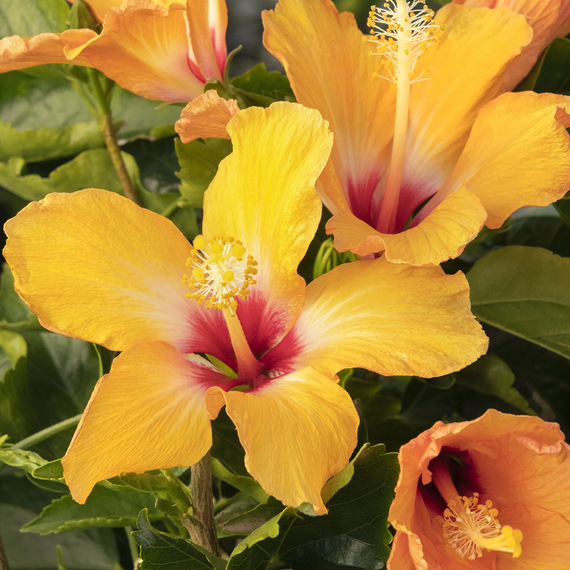
- Showstopping iridescent golden-orange blooms with deep rosy-pink centers and prominent stamens deliver vivid tropical color from spring through fall, and nearly year-round in frost-free climates.
- Fast-growing, upright evergreen shrub with lush, dark glossy foliage reaches 6-8 feet tall, making it an outstanding hedge, privacy screen, or bold landscape focal point.
- Irresistible to butterflies and hummingbirds, Cherie Hibiscus brings vibrant wildlife activity to patios, poolsides, and garden borders all season long.
- Thrives in containers as well as in the ground, making it easy to move indoors for protection in cooler climates and to enjoy on decks and patios all summer.
Hibiscus rosa-sinensis 'Cherie' is a stunning tropical evergreen shrub that brings an unmistakably exotic flair to gardens and outdoor living spaces across USDA Zones 9-11. Prized for its nearly fluorescent, single golden-orange flowers accented by deep rosy-pink centers and showy extended stamens, Cherie Hibiscus produces blooms in abundance from spring through fall, flowering virtually non-stop in frost-free climates. Each individual flower lasts a single day, yet the plant generates such a prolific succession of buds that it appears perpetually in bloom throughout the warmer months. Its fast, upright growth habit reaches a mature size of 6-8 feet tall by 3-5 feet wide, clothed in rich, dark green, glossy, toothed foliage that maintains year-round appeal. Equally versatile in the landscape and in containers, Cherie Hibiscus excels as a flowering hedge, privacy screen, foundation accent, or eye-catching patio specimen. In climates with winter frost, it can be grown in a large container and brought indoors to overwinter successfully, ensuring years of spectacular blooms. Its trumpet-shaped flowers attract butterflies and hummingbirds, making it a rewarding choice for pollinator-friendly gardens. Heat-loving and sun-worshipping, this handsome tropical shrub thrives with regular watering and feeding to reward gardeners with continuous, flamboyant color season after season.
Plant Description
Cherie Hibiscus (Hibiscus rosa-sinensis 'Cherie') is a tropical evergreen shrub belonging to the mallow family (Malvaceae). It produces large, single, funnel-shaped flowers in a striking iridescent golden-orange with deep rosy-pink to red centers and a showy, prominently extended stamen column. The blooms carry a warm salmon-orange quality that shifts subtly in different light, giving the flowers an almost luminous appearance. The foliage consists of glossy, dark green, pointed leaves with toothed margins that remain attractive throughout the year. The plant grows with a naturally upright, slightly spreading habit, developing multiple stems from the base. Individual flowers last just one day, but the plant generates new buds continuously throughout the growing season, keeping it in near-constant bloom. In climates without frost, flowering can continue well into winter. Cherie Hibiscus is also known by the common names Tropical Hibiscus, Chinese Hibiscus, and China Rose.
Mature Size and Growth Rate
| Characteristic | Details |
|---|---|
| Mature Height | 6-8 feet |
| Mature Spread | 3-5 feet |
| Growth Rate | Moderate to fast; up to 24 inches per year under ideal conditions |
| Overall Size Class | Medium shrub |
| Growth Habit | Upright, multi-stemmed, slightly spreading |
| Training Options | Can be pruned to maintain a smaller, compact size or trained as a single-trunk patio tree |
Hardiness and Climate
Cherie Hibiscus is a frost-tender tropical shrub that performs best in warm, mild climates. It is suited to the following zones:
- USDA Hardiness Zones: 9-11
- Sunset Garden Zones: 9, 12-16, 19-24, H1, H2
- Optimal Temperature Range: 60-95°F for best growth and flowering
- Growth and flowering slow or halt when temperatures drop below 50°F
- A short cold snap approaching 30°F can severely damage or kill the plant; sustained freezing temperatures are fatal
- Temperatures above 95°F may cause flower bud drop; ensure consistent moisture during heat spikes
- In USDA Zone 9 and areas with occasional light frost, plant in a sheltered location and protect the root zone with a generous layer of mulch
- In cooler climates (Zones 8 and below), grow in containers and bring indoors before the first frost
Sunlight Requirements
Cherie Hibiscus is a sun-loving plant that thrives in full to partial sun exposure. For the best flowering performance, provide at least 6 hours of direct sunlight per day. In hotter inland climates — such as those common in Southern Oregon and Northern California valleys — some afternoon shade can help prevent bud drop during peak summer heat and protect blooms from fading. Too much shade results in leggy, stretched growth and a significant reduction in flower production. When grown indoors or on a covered patio, place the plant in the brightest available location, ideally near a south- or west-facing window that receives several hours of direct sun daily.
Soil and pH Preferences
Cherie Hibiscus performs best in well-drained soil enriched with organic matter. Heavy clay or waterlogged soils are not suitable and can lead to root rot. Key soil requirements include:
- Soil Type: Rich, loose, well-drained soil; sandy loam is ideal
- Soil pH: Neutral to slightly acidic, approximately 6.0 to 7.0
- Clay Soils: Amend generously with compost and consider raised beds to improve drainage
- Sandy Soils: Incorporate decomposed organic matter to improve water retention and nutrient availability
- Container Mix: Use a rich, friable, well-draining potting mix; a blend of approximately 80% premium potting mix and 20% perlite or coarse sand works well to ensure excellent drainage
- A 2-3 inch layer of mulch around the base helps retain soil moisture, moderate temperature, and suppress weeds — keep mulch pulled back from the stems
Watering Guide
Tropical Hibiscus are water-loving plants, and consistent moisture is essential for healthy growth and continuous flowering. Follow these guidelines for best results:
- Water deeply and regularly throughout the growing season; never allow the soil to dry out to the point of wilting
- During warm weather (70-80°F), water thoroughly at least once per day; during extreme heat (above 85-90°F), twice-daily watering may be necessary for container plants
- Always direct water at the root zone rather than overhead to reduce the risk of fungal disease on foliage
- In the ground, dig a shallow well around the plant's base to ensure water penetrates the full root zone
- In containers, water until it drains freely from the bottom; do not allow pots to sit in standing water for prolonged periods, as this promotes root rot
- Reduce watering frequency in fall and winter when growth slows; allow the soil surface to become slightly drier between waterings during cooler months
- Yellow leaves can indicate both overwatering and underwatering — check soil moisture before adjusting your schedule
Fertilizing
Cherie Hibiscus is a heavy feeder and requires consistent nutrition to support its fast growth rate and prolific bloom production. Without adequate fertilizing, plants may become stressed, foliage can yellow, and flowering will decline significantly.
- Begin fertilizing in spring as new growth emerges and continue through fall; reduce or cease feeding in winter when growth slows
- Use a balanced, water-soluble fertilizer (such as a 10-10-10 formulation) regularly during the growing season, following label directions
- Tropical hibiscus benefit from high potassium levels, which promote robust blooming; choose a fertilizer with a higher third number (potassium) for best flower production
- Avoid fertilizers high in phosphorus (the middle number in the N-P-K ratio), as excess phosphorus can gradually damage tropical hibiscus and cause yellowing
- Ensure the fertilizer includes trace elements such as copper, magnesium, and iron, which are important for vibrant foliage and bloom color
- At planting time, incorporate a slow-release all-purpose fertilizer into the backfill soil to give the plant a strong start
- Supplement with well-aged compost or organic matter to feed the soil naturally and promote healthy microbial activity
- Do not over-fertilize — salt buildup from excess feeding can burn roots and cause plant decline
Pruning and Maintenance
Regular pruning is key to maintaining a full, attractive shape and encouraging the maximum number of flowers. Tropical hibiscus blooms on new, current-season growth, so pruning stimulates fresh branching and a greater number of bloom sites.
- Primary Pruning Time: Early spring, just as new growth buds begin to swell — do not wait for the buds to fully open
- Cut the plant back by approximately one-third to one-half of its height in spring to reinvigorate growth, improve shape, and open the interior canopy to light and air circulation
- For each stem pruned, expect 2-3 new stems to emerge in its place, multiplying potential bloom sites for the season ahead
- In warm, frost-free climates, light pruning can also be performed in late fall to tidy the plant before winter
- Remove any dead, diseased, broken, or crossing branches at any time of year
- Deadhead spent flowers regularly to encourage continuous bud production throughout the season
- If overwintering a container plant in a cool, dark space such as a garage or basement, prune before bringing it inside; if overwintering in a bright, sunny indoor space, prune in fall before moving indoors so the plant rebounds quickly for spring
- Avoid heavy pruning in late summer or fall in areas with frost, as this stimulates tender new growth that can be damaged by cold
Planting Instructions
Follow these steps for successful establishment of Cherie Hibiscus in the garden or in a container:
- Timing: Plant in spring once nighttime temperatures are consistently above 50°F. In mild Northern California and Southern Oregon coastal areas, spring planting is ideal; avoid planting during expected cold snaps.
- Site Selection: Choose a location with full to partial sun (minimum 6 hours of direct sun), sheltered from strong winds, with well-drained soil.
- Soil Preparation: Loosen the planting area and incorporate compost or aged organic matter. In heavy clay soils, amend thoroughly or build a raised bed.
- Digging the Hole: Dig a hole twice as wide as the root ball and the same depth. The top of the root ball should sit level with, or very slightly above, the surrounding soil grade.
- Planting: Remove the plant from its nursery container and gently loosen any circling roots. Set it in the hole, backfill with amended native soil, and firm gently to eliminate air pockets.
- Watering In: Water thoroughly after planting to settle the soil around the roots. Continue deep, regular watering through the first growing season to establish a strong root system.
- Mulching: Apply a 2-3 inch layer of mulch around the base, keeping it several inches away from the stems, to conserve moisture and moderate soil temperature.
- Spacing: Space plants approximately 3-4 feet apart for hedging or mass plantings to allow for mature spread while still achieving a full, screening effect.
Container Growing
Cherie Hibiscus is exceptionally well-suited to container culture, making it a top choice for patios, decks, and poolside settings — and the ideal solution for gardeners in areas with occasional frost who want to enjoy this tropical beauty year after year.
- Choose a large, sturdy container with ample drainage holes; a 15-gallon or larger pot provides enough root room for vigorous growth and heavy flowering
- Use a rich, well-draining potting mix; blend with perlite or coarse sand (approximately 80/20 ratio) to ensure excellent drainage
- Container plants dry out faster than in-ground plants and will need more frequent watering — check soil moisture daily during warm weather
- Fertilize container-grown plants more frequently than garden plants, as nutrients leach out with regular watering; feed every 1-2 weeks with a water-soluble balanced fertilizer during the growing season
- Repot every 1-2 years: remove the plant, shake off old soil, and repot in fresh mix; if root-bound, move up to a container 2 inches larger in diameter
- In fall, before the first frost, bring containers indoors to a bright, warm location such as a sunny south-facing window where temperatures stay above 55°F
- While overwintering indoors, reduce watering and cease fertilizing; mist foliage occasionally to boost humidity and monitor for indoor pests such as spider mites and aphids
- Move containers back outdoors in spring only after nighttime temperatures reliably stay above 50°F; acclimate gradually to prevent shock
Seasonal Interest
| Season | What to Expect |
|---|---|
| Spring | New growth emerges vigorously; flowering begins as temperatures warm. Ideal time for planting and for pruning established plants. |
| Summer | Peak blooming season. Large, golden-orange flowers with deep pink centers appear in a continuous succession throughout the warmest months. Attracts butterflies and hummingbirds at their peak activity. |
| Fall | Flowering continues well into autumn as long as temperatures remain warm. Glossy foliage stays rich and green. Bring containers indoors before the first frost event. |
| Winter (frost-free climates) | In USDA Zones 10-11 and in sheltered Sunset Zone 9 microclimates, flowering can continue through winter. Foliage remains evergreen year-round. |
| Winter (cooler climates) | Container plants overwintered indoors in a bright location may continue to hold foliage and even produce some blooms. Plants kept in a cool, low-light location will rest and rebound strongly in spring. |
Landscape Uses
Cherie Hibiscus is one of the most versatile tropical shrubs available for warm-climate landscaping. Its combination of bold floral color, lush evergreen foliage, and adaptable size makes it suitable for a wide range of applications:
- Flowering Hedge or Privacy Screen: Plant in a row 3-4 feet apart to create a dense, colorful living fence or screen along property lines, fences, or driveways
- Foundation Planting: Use as a large, colorful anchor in mixed foundation borders alongside other shrubs of varying heights and textures
- Specimen or Focal Point: Plant singly as a bold landscape statement in a bed, lawn, or at an entryway
- Patio and Poolside Container: Display in a large decorative pot on a patio, deck, or poolside for a resort-style tropical atmosphere
- Mixed Tropical Border: Combine with other bold tropicals such as canna lily, elephant ears, bird of paradise, and palms for a lush, layered tropical display
- Patio Tree: Train as a single-trunk standard to create a dramatic, elevated form for formal or contemporary garden designs
- Slope Planting: Mass planting on gentle slopes provides color, visual interest, and helps stabilize soil
- Pollinator Garden: Include as a premier nectar source to attract butterflies and hummingbirds throughout the season
Wildlife Value
Cherie Hibiscus is a magnet for beneficial wildlife, making it an outstanding addition to any pollinator-friendly or wildlife garden. The large, trumpet-shaped flowers with their long, showy stamen columns are perfectly designed to attract and reward visiting wildlife:
- Hummingbirds: The brightly colored, tubular blooms are a top hummingbird nectar source. Hummingbirds are drawn reliably to Cherie Hibiscus throughout its long blooming season
- Butterflies: A wide variety of butterfly species visit the flowers for nectar, particularly during the peak summer and early fall blooming period
- Bees: Native bees and honeybees also forage actively on the blooms, supporting local pollinator populations
- Deer: Tropical hibiscus is generally considered resistant to deer browsing, though deer may sample any plant when food sources are scarce
Companion Plants
Cherie Hibiscus pairs beautifully with other heat-loving, sun-tolerant plants that share its tropical aesthetic and growing requirements. Consider these companion plants to create a lush, layered tropical display:
- Bird of Paradise (Strelitzia reginae): Bold, architectural blooms complement the soft, rounded form of Cherie Hibiscus
- Canna Lily: Bold foliage in green, burgundy, or variegated patterns and vibrant flowers echo the tropical scale and color palette
- Elephant Ears (Alocasia/Colocasia): Giant, dramatic foliage provides striking textural contrast behind or beside hibiscus
- Lantana: A prolific summer bloomer that attracts similar pollinators; excellent at the feet of taller hibiscus plantings
- Bougainvillea: Vivid magenta or orange bracts add complementary tropical color in warm climates
- Mandevilla: Lush vining companion with large tropical flowers; great for a nearby trellis or fence
- Plumeria: Another frost-tender tropical shrub with fragrant flowers; pairs well for a Hawaiian or resort-style garden theme
- Ginger Lily (Hedychium): Fragrant, exotic-looking flower spikes and bold foliage complement hibiscus in tropical mixed borders
- Coleus: Richly colored foliage in shades of burgundy, gold, and lime adds color at the base of hibiscus without competing for attention
- Palms (Chamaerops, Washingtonia, Phoenix): Vertical form and feathery or fan-shaped foliage create a classic tropical backdrop for Cherie Hibiscus
Pests and Diseases
When grown in its preferred conditions with good air circulation and consistent care, Cherie Hibiscus is generally healthy and problem-free. However, be aware of the following potential issues and how to address them:
- Aphids: Soft-bodied insects that cluster on new growth and buds; knock off with a strong spray of water or treat with insecticidal soap or neem oil
- Spider Mites: More common in hot, dry conditions or on indoor overwintering plants; look for fine webbing on leaf undersides; treat with neem oil or insecticidal soap and increase humidity
- Mealybugs: White, cottony clusters on stems and leaf nodes; treat with isopropyl alcohol on a cotton swab for minor infestations or apply neem oil for broader control
- Scale Insects: Hard or soft bumps on stems; scrape off manually and treat with horticultural oil
- Whiteflies and Thrips: Monitor for stippled foliage or tiny insects; yellow sticky traps and neem oil are effective control measures
- Powdery Mildew: A fungal issue favored by poor air circulation and temperature fluctuations; improve airflow through pruning and avoid overhead watering
- Root Rot: Caused by overwatering or poor drainage; ensure well-draining soil and containers; reduce watering if roots appear brown and mushy
- Bud Drop: Sudden changes in temperature, light, or moisture can cause buds to fall before opening; maintain consistent growing conditions and adequate watering to minimize this issue
- Yellow Leaves: May indicate overwatering, underwatering, nutrient deficiency (especially iron or nitrogen), or natural aging of lower leaves; adjust care accordingly
Overwintering in Cooler Climates
For gardeners in Southern Oregon, Northern California inland valleys, or other areas that experience occasional frost, Cherie Hibiscus can be successfully carried over from year to year with a few simple steps:
- Monitor nighttime temperatures in fall. When they consistently approach 50°F, plan to move container plants indoors. For in-ground plants in marginal frost zones, protect the root zone with a thick layer of mulch and wrap stems with frost cloth during cold snaps.
- Before bringing container plants inside, inspect carefully for pests and treat any infestations to avoid introducing them indoors.
- Prune the plant back by one-third to one-half its size for easier indoor management and to stimulate vigorous regrowth in spring.
- Place indoors in the brightest available location — a south or west-facing window with direct sunlight is ideal. Temperatures should remain above 55°F.
- Reduce watering significantly but do not allow the soil to dry out completely. Water approximately once a week and let the top inch of soil dry between waterings.
- Do not fertilize while the plant is resting in a cool, low-light environment. Resume fertilizing when new growth emerges in late winter or spring.
- Mist foliage occasionally to combat the dry air typical of heated indoor spaces, and monitor for spider mites and aphids which thrive in warm, dry indoor conditions.
- In spring, begin moving the plant to a sheltered outdoor location to acclimate it gradually to outdoor conditions before returning it to its full-sun spot once nighttime temperatures stay reliably above 50°F.
- Showstopping iridescent golden-orange blooms with deep rosy-pink centers and prominent stamens deliver vivid tropical color from spring through fall, and nearly year-round in frost-free climates.
- Fast-growing, upright evergreen shrub with lush, dark glossy foliage reaches 6-8 feet tall, making it an outstanding hedge, privacy screen, or bold landscape focal point.
- Irresistible to butterflies and hummingbirds, Cherie Hibiscus brings vibrant wildlife activity to patios, poolsides, and garden borders all season long.
- Thrives in containers as well as in the ground, making it easy to move indoors for protection in cooler climates and to enjoy on decks and patios all summer.
Hibiscus rosa-sinensis 'Cherie' is a stunning tropical evergreen shrub that brings an unmistakably exotic flair to gardens and outdoor living spaces across USDA Zones 9-11. Prized for its nearly fluorescent, single golden-orange flowers accented by deep rosy-pink centers and showy extended stamens, Cherie Hibiscus produces blooms in abundance from spring through fall, flowering virtually non-stop in frost-free climates. Each individual flower lasts a single day, yet the plant generates such a prolific succession of buds that it appears perpetually in bloom throughout the warmer months. Its fast, upright growth habit reaches a mature size of 6-8 feet tall by 3-5 feet wide, clothed in rich, dark green, glossy, toothed foliage that maintains year-round appeal. Equally versatile in the landscape and in containers, Cherie Hibiscus excels as a flowering hedge, privacy screen, foundation accent, or eye-catching patio specimen. In climates with winter frost, it can be grown in a large container and brought indoors to overwinter successfully, ensuring years of spectacular blooms. Its trumpet-shaped flowers attract butterflies and hummingbirds, making it a rewarding choice for pollinator-friendly gardens. Heat-loving and sun-worshipping, this handsome tropical shrub thrives with regular watering and feeding to reward gardeners with continuous, flamboyant color season after season.
Plant Description
Cherie Hibiscus (Hibiscus rosa-sinensis 'Cherie') is a tropical evergreen shrub belonging to the mallow family (Malvaceae). It produces large, single, funnel-shaped flowers in a striking iridescent golden-orange with deep rosy-pink to red centers and a showy, prominently extended stamen column. The blooms carry a warm salmon-orange quality that shifts subtly in different light, giving the flowers an almost luminous appearance. The foliage consists of glossy, dark green, pointed leaves with toothed margins that remain attractive throughout the year. The plant grows with a naturally upright, slightly spreading habit, developing multiple stems from the base. Individual flowers last just one day, but the plant generates new buds continuously throughout the growing season, keeping it in near-constant bloom. In climates without frost, flowering can continue well into winter. Cherie Hibiscus is also known by the common names Tropical Hibiscus, Chinese Hibiscus, and China Rose.
Mature Size and Growth Rate
| Characteristic | Details |
|---|---|
| Mature Height | 6-8 feet |
| Mature Spread | 3-5 feet |
| Growth Rate | Moderate to fast; up to 24 inches per year under ideal conditions |
| Overall Size Class | Medium shrub |
| Growth Habit | Upright, multi-stemmed, slightly spreading |
| Training Options | Can be pruned to maintain a smaller, compact size or trained as a single-trunk patio tree |
Hardiness and Climate
Cherie Hibiscus is a frost-tender tropical shrub that performs best in warm, mild climates. It is suited to the following zones:
- USDA Hardiness Zones: 9-11
- Sunset Garden Zones: 9, 12-16, 19-24, H1, H2
- Optimal Temperature Range: 60-95°F for best growth and flowering
- Growth and flowering slow or halt when temperatures drop below 50°F
- A short cold snap approaching 30°F can severely damage or kill the plant; sustained freezing temperatures are fatal
- Temperatures above 95°F may cause flower bud drop; ensure consistent moisture during heat spikes
- In USDA Zone 9 and areas with occasional light frost, plant in a sheltered location and protect the root zone with a generous layer of mulch
- In cooler climates (Zones 8 and below), grow in containers and bring indoors before the first frost
Sunlight Requirements
Cherie Hibiscus is a sun-loving plant that thrives in full to partial sun exposure. For the best flowering performance, provide at least 6 hours of direct sunlight per day. In hotter inland climates — such as those common in Southern Oregon and Northern California valleys — some afternoon shade can help prevent bud drop during peak summer heat and protect blooms from fading. Too much shade results in leggy, stretched growth and a significant reduction in flower production. When grown indoors or on a covered patio, place the plant in the brightest available location, ideally near a south- or west-facing window that receives several hours of direct sun daily.
Soil and pH Preferences
Cherie Hibiscus performs best in well-drained soil enriched with organic matter. Heavy clay or waterlogged soils are not suitable and can lead to root rot. Key soil requirements include:
- Soil Type: Rich, loose, well-drained soil; sandy loam is ideal
- Soil pH: Neutral to slightly acidic, approximately 6.0 to 7.0
- Clay Soils: Amend generously with compost and consider raised beds to improve drainage
- Sandy Soils: Incorporate decomposed organic matter to improve water retention and nutrient availability
- Container Mix: Use a rich, friable, well-draining potting mix; a blend of approximately 80% premium potting mix and 20% perlite or coarse sand works well to ensure excellent drainage
- A 2-3 inch layer of mulch around the base helps retain soil moisture, moderate temperature, and suppress weeds — keep mulch pulled back from the stems
Watering Guide
Tropical Hibiscus are water-loving plants, and consistent moisture is essential for healthy growth and continuous flowering. Follow these guidelines for best results:
- Water deeply and regularly throughout the growing season; never allow the soil to dry out to the point of wilting
- During warm weather (70-80°F), water thoroughly at least once per day; during extreme heat (above 85-90°F), twice-daily watering may be necessary for container plants
- Always direct water at the root zone rather than overhead to reduce the risk of fungal disease on foliage
- In the ground, dig a shallow well around the plant's base to ensure water penetrates the full root zone
- In containers, water until it drains freely from the bottom; do not allow pots to sit in standing water for prolonged periods, as this promotes root rot
- Reduce watering frequency in fall and winter when growth slows; allow the soil surface to become slightly drier between waterings during cooler months
- Yellow leaves can indicate both overwatering and underwatering — check soil moisture before adjusting your schedule
Fertilizing
Cherie Hibiscus is a heavy feeder and requires consistent nutrition to support its fast growth rate and prolific bloom production. Without adequate fertilizing, plants may become stressed, foliage can yellow, and flowering will decline significantly.
- Begin fertilizing in spring as new growth emerges and continue through fall; reduce or cease feeding in winter when growth slows
- Use a balanced, water-soluble fertilizer (such as a 10-10-10 formulation) regularly during the growing season, following label directions
- Tropical hibiscus benefit from high potassium levels, which promote robust blooming; choose a fertilizer with a higher third number (potassium) for best flower production
- Avoid fertilizers high in phosphorus (the middle number in the N-P-K ratio), as excess phosphorus can gradually damage tropical hibiscus and cause yellowing
- Ensure the fertilizer includes trace elements such as copper, magnesium, and iron, which are important for vibrant foliage and bloom color
- At planting time, incorporate a slow-release all-purpose fertilizer into the backfill soil to give the plant a strong start
- Supplement with well-aged compost or organic matter to feed the soil naturally and promote healthy microbial activity
- Do not over-fertilize — salt buildup from excess feeding can burn roots and cause plant decline
Pruning and Maintenance
Regular pruning is key to maintaining a full, attractive shape and encouraging the maximum number of flowers. Tropical hibiscus blooms on new, current-season growth, so pruning stimulates fresh branching and a greater number of bloom sites.
- Primary Pruning Time: Early spring, just as new growth buds begin to swell — do not wait for the buds to fully open
- Cut the plant back by approximately one-third to one-half of its height in spring to reinvigorate growth, improve shape, and open the interior canopy to light and air circulation
- For each stem pruned, expect 2-3 new stems to emerge in its place, multiplying potential bloom sites for the season ahead
- In warm, frost-free climates, light pruning can also be performed in late fall to tidy the plant before winter
- Remove any dead, diseased, broken, or crossing branches at any time of year
- Deadhead spent flowers regularly to encourage continuous bud production throughout the season
- If overwintering a container plant in a cool, dark space such as a garage or basement, prune before bringing it inside; if overwintering in a bright, sunny indoor space, prune in fall before moving indoors so the plant rebounds quickly for spring
- Avoid heavy pruning in late summer or fall in areas with frost, as this stimulates tender new growth that can be damaged by cold
Planting Instructions
Follow these steps for successful establishment of Cherie Hibiscus in the garden or in a container:
- Timing: Plant in spring once nighttime temperatures are consistently above 50°F. In mild Northern California and Southern Oregon coastal areas, spring planting is ideal; avoid planting during expected cold snaps.
- Site Selection: Choose a location with full to partial sun (minimum 6 hours of direct sun), sheltered from strong winds, with well-drained soil.
- Soil Preparation: Loosen the planting area and incorporate compost or aged organic matter. In heavy clay soils, amend thoroughly or build a raised bed.
- Digging the Hole: Dig a hole twice as wide as the root ball and the same depth. The top of the root ball should sit level with, or very slightly above, the surrounding soil grade.
- Planting: Remove the plant from its nursery container and gently loosen any circling roots. Set it in the hole, backfill with amended native soil, and firm gently to eliminate air pockets.
- Watering In: Water thoroughly after planting to settle the soil around the roots. Continue deep, regular watering through the first growing season to establish a strong root system.
- Mulching: Apply a 2-3 inch layer of mulch around the base, keeping it several inches away from the stems, to conserve moisture and moderate soil temperature.
- Spacing: Space plants approximately 3-4 feet apart for hedging or mass plantings to allow for mature spread while still achieving a full, screening effect.
Container Growing
Cherie Hibiscus is exceptionally well-suited to container culture, making it a top choice for patios, decks, and poolside settings — and the ideal solution for gardeners in areas with occasional frost who want to enjoy this tropical beauty year after year.
- Choose a large, sturdy container with ample drainage holes; a 15-gallon or larger pot provides enough root room for vigorous growth and heavy flowering
- Use a rich, well-draining potting mix; blend with perlite or coarse sand (approximately 80/20 ratio) to ensure excellent drainage
- Container plants dry out faster than in-ground plants and will need more frequent watering — check soil moisture daily during warm weather
- Fertilize container-grown plants more frequently than garden plants, as nutrients leach out with regular watering; feed every 1-2 weeks with a water-soluble balanced fertilizer during the growing season
- Repot every 1-2 years: remove the plant, shake off old soil, and repot in fresh mix; if root-bound, move up to a container 2 inches larger in diameter
- In fall, before the first frost, bring containers indoors to a bright, warm location such as a sunny south-facing window where temperatures stay above 55°F
- While overwintering indoors, reduce watering and cease fertilizing; mist foliage occasionally to boost humidity and monitor for indoor pests such as spider mites and aphids
- Move containers back outdoors in spring only after nighttime temperatures reliably stay above 50°F; acclimate gradually to prevent shock
Seasonal Interest
| Season | What to Expect |
|---|---|
| Spring | New growth emerges vigorously; flowering begins as temperatures warm. Ideal time for planting and for pruning established plants. |
| Summer | Peak blooming season. Large, golden-orange flowers with deep pink centers appear in a continuous succession throughout the warmest months. Attracts butterflies and hummingbirds at their peak activity. |
| Fall | Flowering continues well into autumn as long as temperatures remain warm. Glossy foliage stays rich and green. Bring containers indoors before the first frost event. |
| Winter (frost-free climates) | In USDA Zones 10-11 and in sheltered Sunset Zone 9 microclimates, flowering can continue through winter. Foliage remains evergreen year-round. |
| Winter (cooler climates) | Container plants overwintered indoors in a bright location may continue to hold foliage and even produce some blooms. Plants kept in a cool, low-light location will rest and rebound strongly in spring. |
Landscape Uses
Cherie Hibiscus is one of the most versatile tropical shrubs available for warm-climate landscaping. Its combination of bold floral color, lush evergreen foliage, and adaptable size makes it suitable for a wide range of applications:
- Flowering Hedge or Privacy Screen: Plant in a row 3-4 feet apart to create a dense, colorful living fence or screen along property lines, fences, or driveways
- Foundation Planting: Use as a large, colorful anchor in mixed foundation borders alongside other shrubs of varying heights and textures
- Specimen or Focal Point: Plant singly as a bold landscape statement in a bed, lawn, or at an entryway
- Patio and Poolside Container: Display in a large decorative pot on a patio, deck, or poolside for a resort-style tropical atmosphere
- Mixed Tropical Border: Combine with other bold tropicals such as canna lily, elephant ears, bird of paradise, and palms for a lush, layered tropical display
- Patio Tree: Train as a single-trunk standard to create a dramatic, elevated form for formal or contemporary garden designs
- Slope Planting: Mass planting on gentle slopes provides color, visual interest, and helps stabilize soil
- Pollinator Garden: Include as a premier nectar source to attract butterflies and hummingbirds throughout the season
Wildlife Value
Cherie Hibiscus is a magnet for beneficial wildlife, making it an outstanding addition to any pollinator-friendly or wildlife garden. The large, trumpet-shaped flowers with their long, showy stamen columns are perfectly designed to attract and reward visiting wildlife:
- Hummingbirds: The brightly colored, tubular blooms are a top hummingbird nectar source. Hummingbirds are drawn reliably to Cherie Hibiscus throughout its long blooming season
- Butterflies: A wide variety of butterfly species visit the flowers for nectar, particularly during the peak summer and early fall blooming period
- Bees: Native bees and honeybees also forage actively on the blooms, supporting local pollinator populations
- Deer: Tropical hibiscus is generally considered resistant to deer browsing, though deer may sample any plant when food sources are scarce
Companion Plants
Cherie Hibiscus pairs beautifully with other heat-loving, sun-tolerant plants that share its tropical aesthetic and growing requirements. Consider these companion plants to create a lush, layered tropical display:
- Bird of Paradise (Strelitzia reginae): Bold, architectural blooms complement the soft, rounded form of Cherie Hibiscus
- Canna Lily: Bold foliage in green, burgundy, or variegated patterns and vibrant flowers echo the tropical scale and color palette
- Elephant Ears (Alocasia/Colocasia): Giant, dramatic foliage provides striking textural contrast behind or beside hibiscus
- Lantana: A prolific summer bloomer that attracts similar pollinators; excellent at the feet of taller hibiscus plantings
- Bougainvillea: Vivid magenta or orange bracts add complementary tropical color in warm climates
- Mandevilla: Lush vining companion with large tropical flowers; great for a nearby trellis or fence
- Plumeria: Another frost-tender tropical shrub with fragrant flowers; pairs well for a Hawaiian or resort-style garden theme
- Ginger Lily (Hedychium): Fragrant, exotic-looking flower spikes and bold foliage complement hibiscus in tropical mixed borders
- Coleus: Richly colored foliage in shades of burgundy, gold, and lime adds color at the base of hibiscus without competing for attention
- Palms (Chamaerops, Washingtonia, Phoenix): Vertical form and feathery or fan-shaped foliage create a classic tropical backdrop for Cherie Hibiscus
Pests and Diseases
When grown in its preferred conditions with good air circulation and consistent care, Cherie Hibiscus is generally healthy and problem-free. However, be aware of the following potential issues and how to address them:
- Aphids: Soft-bodied insects that cluster on new growth and buds; knock off with a strong spray of water or treat with insecticidal soap or neem oil
- Spider Mites: More common in hot, dry conditions or on indoor overwintering plants; look for fine webbing on leaf undersides; treat with neem oil or insecticidal soap and increase humidity
- Mealybugs: White, cottony clusters on stems and leaf nodes; treat with isopropyl alcohol on a cotton swab for minor infestations or apply neem oil for broader control
- Scale Insects: Hard or soft bumps on stems; scrape off manually and treat with horticultural oil
- Whiteflies and Thrips: Monitor for stippled foliage or tiny insects; yellow sticky traps and neem oil are effective control measures
- Powdery Mildew: A fungal issue favored by poor air circulation and temperature fluctuations; improve airflow through pruning and avoid overhead watering
- Root Rot: Caused by overwatering or poor drainage; ensure well-draining soil and containers; reduce watering if roots appear brown and mushy
- Bud Drop: Sudden changes in temperature, light, or moisture can cause buds to fall before opening; maintain consistent growing conditions and adequate watering to minimize this issue
- Yellow Leaves: May indicate overwatering, underwatering, nutrient deficiency (especially iron or nitrogen), or natural aging of lower leaves; adjust care accordingly
Overwintering in Cooler Climates
For gardeners in Southern Oregon, Northern California inland valleys, or other areas that experience occasional frost, Cherie Hibiscus can be successfully carried over from year to year with a few simple steps:
- Monitor nighttime temperatures in fall. When they consistently approach 50°F, plan to move container plants indoors. For in-ground plants in marginal frost zones, protect the root zone with a thick layer of mulch and wrap stems with frost cloth during cold snaps.
- Before bringing container plants inside, inspect carefully for pests and treat any infestations to avoid introducing them indoors.
- Prune the plant back by one-third to one-half its size for easier indoor management and to stimulate vigorous regrowth in spring.
- Place indoors in the brightest available location — a south or west-facing window with direct sunlight is ideal. Temperatures should remain above 55°F.
- Reduce watering significantly but do not allow the soil to dry out completely. Water approximately once a week and let the top inch of soil dry between waterings.
- Do not fertilize while the plant is resting in a cool, low-light environment. Resume fertilizing when new growth emerges in late winter or spring.
- Mist foliage occasionally to combat the dry air typical of heated indoor spaces, and monitor for spider mites and aphids which thrive in warm, dry indoor conditions.
- In spring, begin moving the plant to a sheltered outdoor location to acclimate it gradually to outdoor conditions before returning it to its full-sun spot once nighttime temperatures stay reliably above 50°F.
Related Products


